
The most dangerous mistake doctor-founders make is choosing B2B vs DTC on “vibes” instead of numbers.
You hear it over and over at healthcare startup meetups:
“I want to empower patients directly.”
Or: “I’ll just sell to hospitals; they have the money.”
That is not a strategy. That is a slogan.
The data is very clear: your choice between B2B (selling to employers, payers, health systems) and DTC (selling directly to patients/consumers) will lock in your conversion economics, churn profile, and capital needs for years. If you pick wrong for your product and your personality, you will either:
- Burn out doing 18‑month enterprise sales cycles.
- Or bleed out on ad spend trying to acquire consumers at $300+ per paying user.
Let me walk through the numbers the way investors do when you are out of the room.
1. The Core Math: Funnel, CAC, LTV, Churn
Strip away the buzzwords. You are choosing between two different math problems.
For each model, the same four metrics dominate:
- Conversion rate (by stage of funnel)
- Customer Acquisition Cost (CAC)
- Lifetime Value (LTV)
- Churn (and payback period)
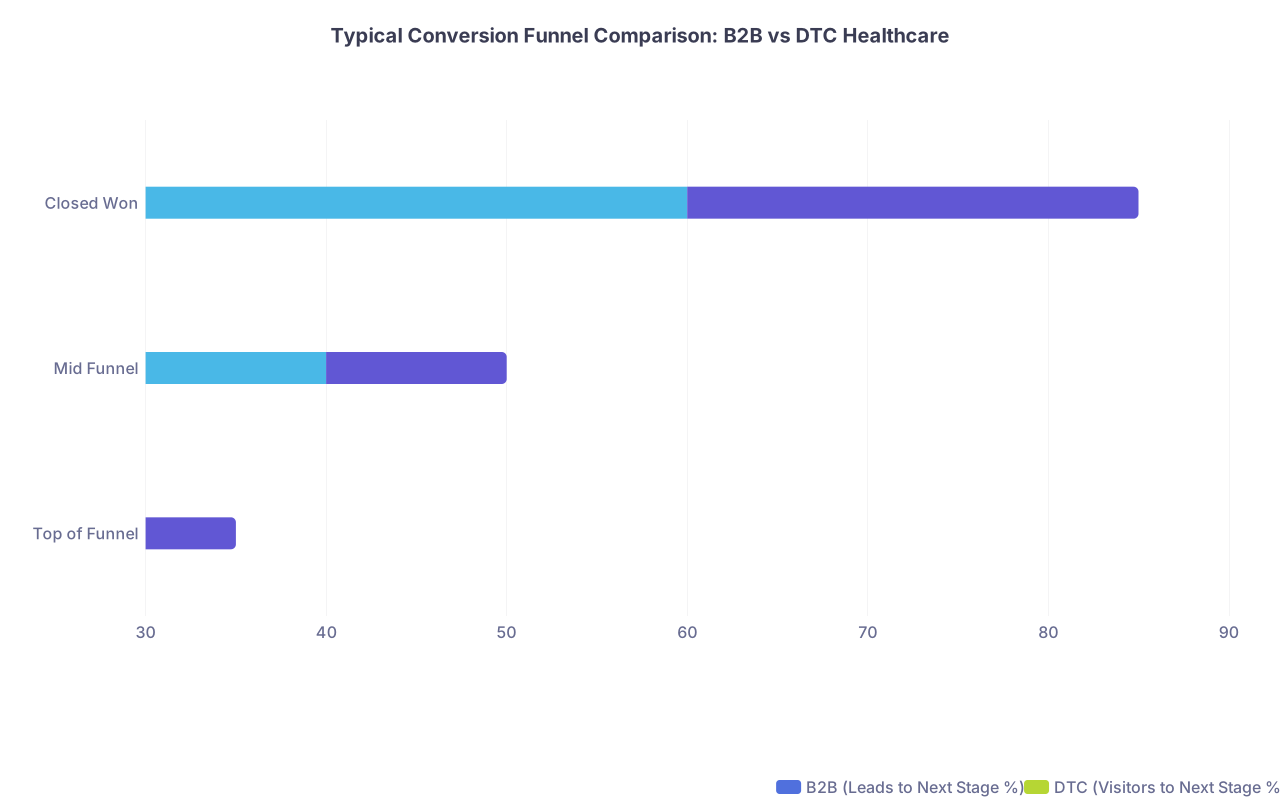
| Category | B2B (Leads to Next Stage %) | DTC (Visitors to Next Stage %) |
|---|---|---|
| Top of Funnel | 30 | 5 |
| Mid Funnel | 40 | 10 |
| Closed Won | 60 | 25 |
Interpretation:
- B2B funnels are narrow but relatively high-converting at each stage. Getting each qualified buyer to the next step is painful but often efficient.
- DTC funnels are wide but brutally leaky. You can drive thousands of visitors, but conversion from “saw ad” to “paying” is tiny without excellent product-led growth.
Here is a simplified comparison using realistic (not “pitch deck fantasy”) numbers for early-stage digital health:
| Metric | B2B (Employer/Payer) | DTC (Consumer) |
|---|---|---|
| Sales cycle length | 6–18 months | Minutes–days |
| CAC (per paying account/user) | $5,000–$50,000 per account | $150–$400 per paying user |
| Average contract value (ACV) | $30,000–$250,000/year | $300–$900/year/user |
| Logo churn (accounts) | 5–15% per year | 20–60% per year |
| User churn (within 3 months) | 30–50% (engagement attrition) | 50–80% |
| Gross margins | 60–80% | 60–85% |
These are not theoretical. They match real numbers I have seen from:
- Virtual chronic care management selling to payers (B2B).
- Online mental health platforms selling both via employers and directly to patients (hybrid).
- Cash-pay niche services (e.g., fertility, sleep optimization, GLP‑1 weight loss) selling DTC.
If your product cannot survive under either column, you do not have a business yet. You have a prototype.
2. B2B in Healthcare: Conversion and Churn Reality
Most physicians underestimate the brutality of healthcare B2B sales, but they also underestimate the power of the economics once you get in.
2.1 The Conversion Funnel for B2B
A realistic B2B path looks roughly like this:
- 100 “leads” (emails from conferences, intros, cold outbound)
- 40–50 agree to an initial call
- 20–25 move to a real demo / discovery
- 10–15 reach serious evaluation / pilot talk
- 3–5 pilots
- 1–3 paying contracts
So: 1–3% close rate from “lead” to “paying” over 6–18 months.

| Step | Description |
|---|---|
| Step 1 | Lead generated |
| Step 2 | Intro call |
| Step 3 | Product demo |
| Step 4 | Pilot discussion |
| Step 5 | Pilot live |
| Step 6 | Contract signed |
| Step 7 | Lost |
The conversion looks terrible at first glance. But each win is large.
Say you are selling a virtual diabetes management program to self‑insured employers:
- ACV per employer: $120,000/year
- Gross margin: 70%
- You close 10 employers over 2 years
You now have:
- $1.2M ARR with decent visibility
- ~$840k gross profit
- CAC might be $20k per employer (sales + marketing + your time), so ~$200k fully loaded
Your CAC payback period on a per‑employer basis:
[ \text{Payback months} = \frac{\text{CAC}}{\text{Gross profit per month}} ]
Per employer:
- Gross profit per year = $120,000 × 0.7 = $84,000
- Gross profit per month ≈ $7,000
- CAC = $20,000
Payback ≈ $20,000 / $7,000 ≈ 2.9 months.
Extremely strong on paper. The catch: most of that CAC is time and salary; you must survive almost a year to even see those payback months.
2.2 B2B Churn: Logos vs Lives
Do not confuse patient churn with account churn.
In a B2B healthcare model, you typically track:
- Logo churn (accounts that cancel)
- Revenue churn (dollars lost, including downgrades)
- Patient/user churn (how many eligible lives or enrolled patients stop engaging)
A pattern I see:
- Logo churn: 5–10% per year if you are integrated in workflows or have outcomes data.
- Revenue churn: 0–20% depending on renewals/expansions. Great products get net revenue retention >100%.
- Patient churn: 30–50% disengagement within 3–6 months unless the intervention is high‑touch or heavily incentivized.
From a startup survival perspective, logo churn is the killer. If you are losing 20–30% of employer customers yearly, you are running on a treadmill.
For a doctor-founder, the hidden risk is clinical pride. You focus on patient adherence metrics and ignore the economic truth: one CFO churn hurts more than 200 patients dropping off your app.
3. DTC in Healthcare: Fast Conversion, Fast Churn
DTC healthcare looks seductively simple:
- Launch a landing page.
- Spend on Google/Facebook/TikTok.
- Watch Stripe notifications pop.
Then you see the churn curve. And the CAC bill.
3.1 The Conversion Funnel for DTC
A typical self‑pay consumer funnel:
- 10,000 ad impressions
- 500 site visits (5% CTR)
- 100 signups or free trials (20% conversion on landing)
- 20 paying users (20% trial-to-paid conversion)
Overall: 0.2% of impressions lead to payments.
Let us put numbers on this.
Assume:
- Blended CPM (cost per 1,000 impressions) = $20
- 10,000 impressions cost = $200
- 20 paying users from those impressions
CAC = $200 / 20 = $10.
Perfect? No. Those CPMs are fantasy for regulated health verticals. In many medical niches:
- CPC > $5–15
- Landing page conversion (click to trial) ≈ 5–15%
- Trial to paid ≈ 20–40%
Run a more honest example:
- CPC = $8
- 1,000 clicks = $8,000 spend
- 10% of clicks start trial → 100 trials
- 30% of trials convert to paid → 30 paying users
CAC = $8,000 / 30 ≈ $267 per paying user.
Now check if it is viable.
Say you are offering a $99/month subscription for online ADHD coaching:
- Average retention: 4 months
- Gross margin: 65%
LTV (gross) = 4 × $99 × 0.65 ≈ $257.
So you spend $267 to get $257 of gross profit. You are losing money on each customer before overhead. You are not a startup; you are a nonprofit with extra legal paperwork.
That is the DTC trap.
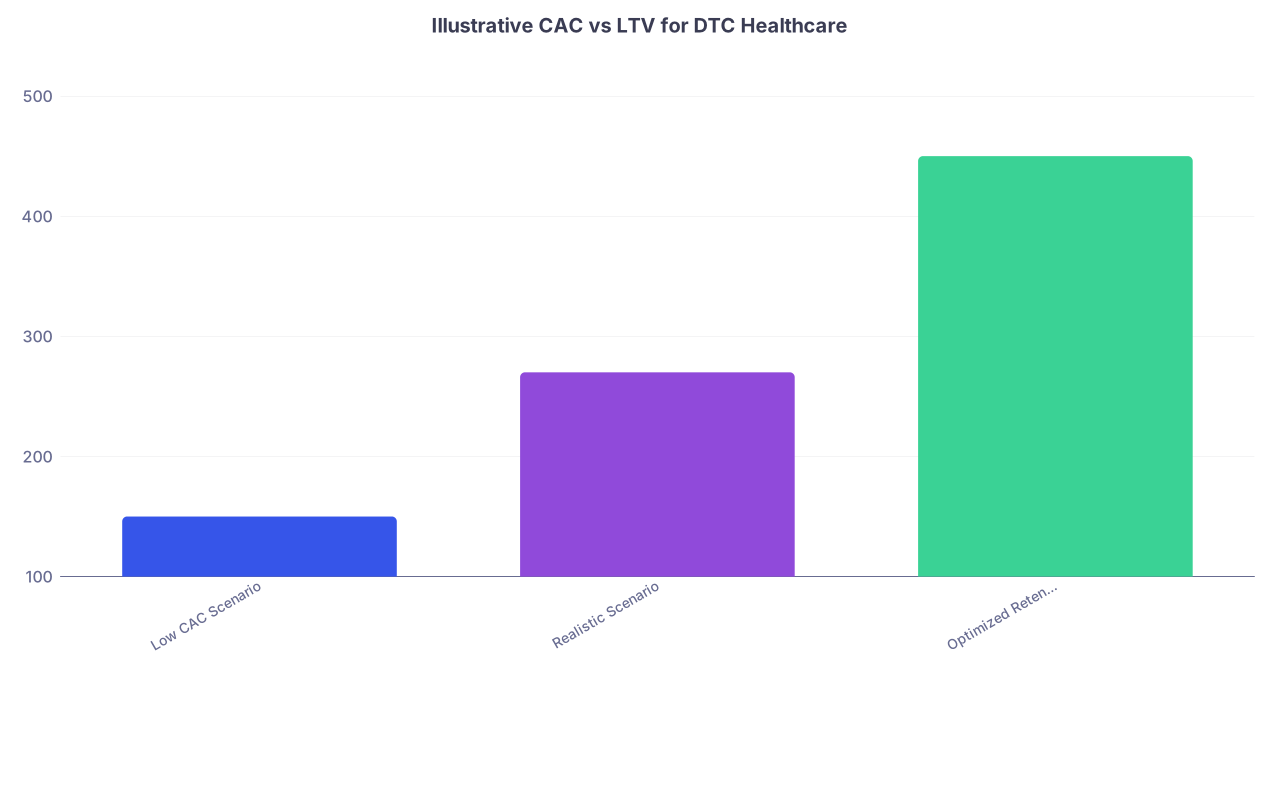
| Category | Value |
|---|---|
| Low CAC Scenario | 150 |
| Realistic Scenario | 270 |
| Optimized Retention Scenario | 450 |
Interpretation for that chart:
- Low CAC scenario: You somehow acquire users at $150, with LTV ≈ $300. Good.
- Realistic scenario: CAC ≈ $270, LTV ≈ $260. Marginal or negative.
- Optimized retention: Same CAC $270, but better retention drives LTV to $450. Now it works.
The math is simple:
[ \text{LTV} = \text{ARPU per month} \times \text{Average months retained} \times \text{Gross margin} ]
If your LTV:CAC ratio is not at least 3:1, and preferably closer to 4–5:1, fundraising will be difficult. Investors know what happens to ad costs over time: they go up.
3.2 DTC Churn: It Is Worse Than You Think
In consumer health, churn is brutal:
- Monthly churn of 10–25% is common for subscriptions.
- That means 40–70% of users gone by month 3.
- Lumpy pay‑per‑visit models are even more volatile.
Let us quantify retention with a simple geometric decay:
- Start with 100 users.
- Monthly churn = 20%.
- Retention after n months ≈ 0.8ⁿ.
After:
- 3 months: 0.8³ ≈ 51%
- 6 months: 0.8⁶ ≈ 26%
- 12 months: 0.8¹² ≈ 6.9%
So the median user is probably churning around 3–4 months unless your product hits a very deep, recurring need (chronic disease, fertility, continuous meds).
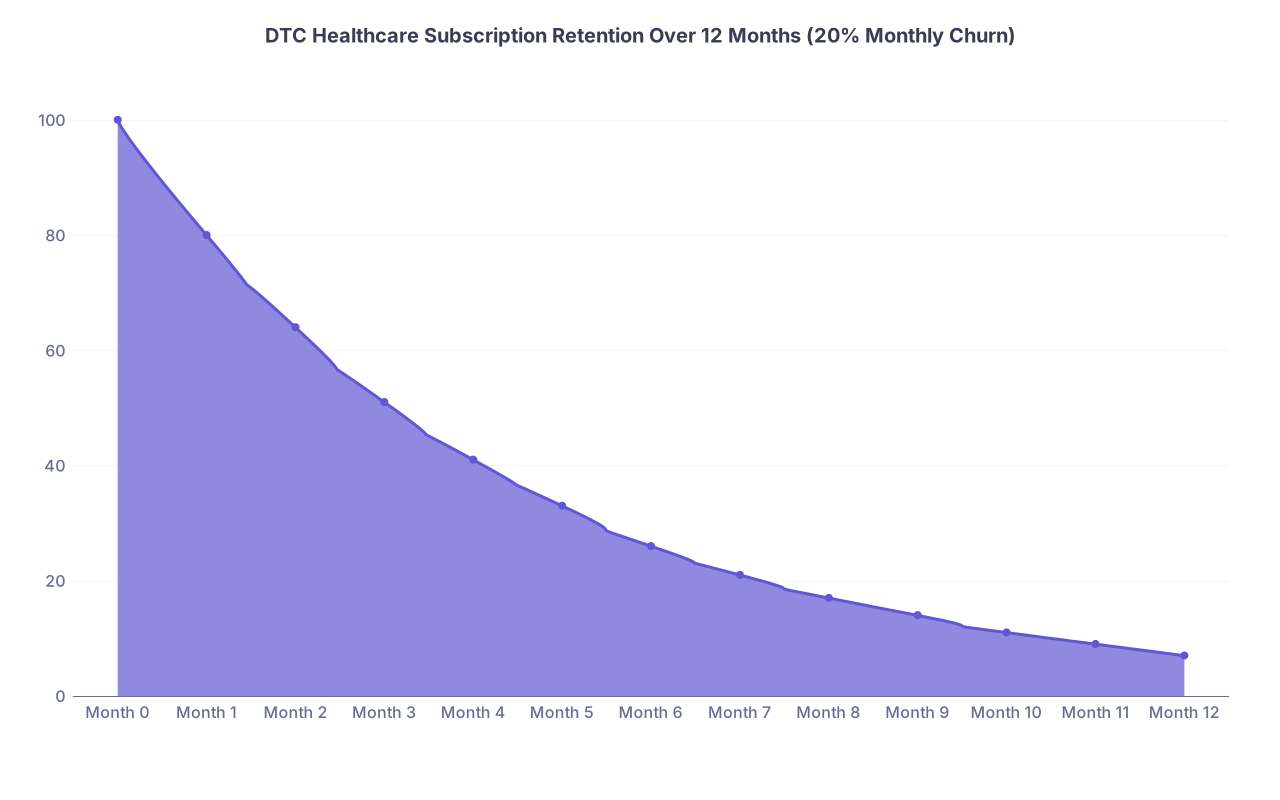
| Category | Value |
|---|---|
| Month 0 | 100 |
| Month 1 | 80 |
| Month 2 | 64 |
| Month 3 | 51 |
| Month 4 | 41 |
| Month 5 | 33 |
| Month 6 | 26 |
| Month 7 | 21 |
| Month 8 | 17 |
| Month 9 | 14 |
| Month 10 | 11 |
| Month 11 | 9 |
| Month 12 | 7 |
If you are planning a DTC play, your entire product strategy must revolve around pushing that retention curve up. Small improvements matter:
- Drop churn from 20% to 15% monthly → 0.85¹² ≈ 14% retained at 1 year instead of 7%.
- That roughly doubles LTV for the same CAC.
4. How Doctor-Founders Should Choose: A Data-Backed Framework
Forget what sounds inspiring on a podcast. Compare B2B and DTC on four concrete axes, with your actual product in mind.
4.1 Sales Motion vs Your Time
You just finished residency or a few years as an attending. Your real constraint is time and emotional stamina, not intelligence.
B2B requires:
- Long, repetitive sales cycles.
- Multiple stakeholders (clinical leaders, IT, finance, procurement).
- Compliance and contracting overhead.
You might talk to a VP of Population Health for 9 months and then lose the deal because their budget got cut when the system missed earnings. Does not matter how good your RCT data looks.
DTC requires:
- High‑velocity experimentation with ads, landing pages, pricing.
- Ruthless measurement of cohorts, funnels, and retention.
- Less face‑to‑face persuasion, more analytics and product iteration.
Roughly:
- If you like physician‑to‑physician persuasion and navigating hospital politics, you will tolerate B2B pain.
- If you like A/B testing and growth metrics dashboards, you will do better DTC.
4.2 Unit Economics by Model
Let’s put the two models side by side with specific fictional but realistic examples.
Scenario A: B2B virtual heart failure management for payers.
- ACV per contract: $200k/year
- Gross margin: 65%
- CAC per payer: $40k
- Logo churn: 10% per year
- Average contract lifetime: 5 years (assuming you survive and keep delivering)
LTV (gross) per payer = $200k × 0.65 × 5 = $650k.
LTV:CAC ≈ 650k / 40k ≈ 16:1.
Exceptionally strong. The problem is not the ratio; it is the absolute time and capital required to close each contract.
Scenario B: DTC weight management telehealth.
- Price: $149/month subscription
- Gross margin: 60%
- Average retention: 5 months
- CAC: $250/patient (realistic for GLP‑1 keywords and social)
LTV (gross) = $149 × 0.60 × 5 ≈ $447.
LTV:CAC ≈ 447 / 250 ≈ 1.8:1.
Barely acceptable, and only if overhead is minimal. If you drive retention to 8 months:
New LTV = $149 × 0.60 × 8 ≈ $715.
LTV:CAC ≈ 2.9:1. Now it is investable, but still not elite.
5. Post-Residency Reality: Capital, Risk, and Job Market
You are not a 22‑year‑old with no expenses. You likely have:
- $200k–$600k in loans.
- A potential attending salary of $200k–$400k on the table.
- Limited savings to tolerate multi‑year zero‑income experiments.
So your startup model must be compatible with your risk profile.

5.1 B2B for Post-Residency Founders
Strengths:
- Big contracts can offset your low volume of deals.
- Easier narrative for payers/employers: “We save you X dollars per member per month.”
- Your MD credential is an asset in enterprise sales; you speak the buyer’s language.
Weaknesses:
- You cannot realistically run a full enterprise sales cycle as a nights-and-weekends project.
- Funding is often required earlier to hire sales and implementation staff.
- Long delay between effort and revenue makes burn management tricky.
If you are considering B2B while working clinically 0.6–1.0 FTE, assume:
- You will close almost zero large logos without a full-time sales-focused co‑founder or early hire.
- Your early “conversion” metrics are going to be pilot agreements, not real revenue.
From an investor’s lens: early B2B pilot metrics are discounted heavily. 10 unpaid pilots with no strong outcome data is not traction. It is noise.
5.2 DTC for Post-Residency Founders
Strengths:
- You can move faster with small tests nights and weekends.
- Early data (ad click‑through, trial conversion) appears quickly.
- You can get to real revenue without formal sales.
Weaknesses:
- You are competing in the most crowded, overfunded consumer marketing environment.
- Paid acquisition can silently drain tens of thousands before you see signal.
- Churn can destroy apparent traction.
If you have limited runway and want real data in 3–6 months, a DTC or DTC‑like product-led motion can be more compatible with your life. The tradeoff is extreme discipline about shutting down what does not work.
6. Hybrid and “B2B2C”: Where Most Smart Teams Land
A lot of the best performing health startups do not pick a pure side. They start where conversion is easier, then migrate.
Common patterns:
- Start DTC → prove engagement and outcomes → use that data to sell B2B.
- Start B2B → spin off a consumer tier once trust and supply are built.

| Step | Description |
|---|---|
| Step 1 | Build core product |
| Step 2 | Launch DTC pilot |
| Step 3 | Collect engagement and outcome data |
| Step 4 | Refine product and funnel |
| Step 5 | Approach employers and payers |
| Step 6 | Land first B2B contracts |
| Step 7 | Scale hybrid B2B plus DTC |
The data shows why this works:
DTC early:
- Lets you estimate real willingness to pay.
- Forces you to understand usage patterns and churn.
- Gives you outcome data you can package for enterprise buyers.
Then B2B:
- Smooths revenue with larger ACVs.
- Reduces per‑user CAC (employer pays to expose your solution to thousands of eligible lives).
- LTV soars if you achieve net revenue retention >100% at the account level.
You are essentially converting a leaky DTC funnel into an acquisition engine for funded B2B expansion, as long as you survive the first phase.

7. Concrete Benchmarks: What “Good” Looks Like
To make this useful, here is what healthy metrics look like for early but functioning healthcare startups (Seed to Series A), simplified.
| Metric | Solid B2B Range | Solid DTC Range |
|---|---|---|
| LTV:CAC | 5–10:1 | 3–5:1 |
| CAC payback period | < 12 months | < 6 months |
| Logo churn (annual) | < 10% | N/A |
| Monthly user churn | 3–6% (enterprise users) | 5–12% (subscriptions) |
| Gross margin | 65–80% | 60–85% |
| Sales cycle length | 6–12 months (initial) | Instant to a few days |
If your numbers are meaningfully worse than these, be honest:
- Either your product is too expensive for the value delivered.
- Or your marketing/sales motion is wrong for your buyer.
- Or you are in a segment where the economics simply do not support venture‑backed growth.
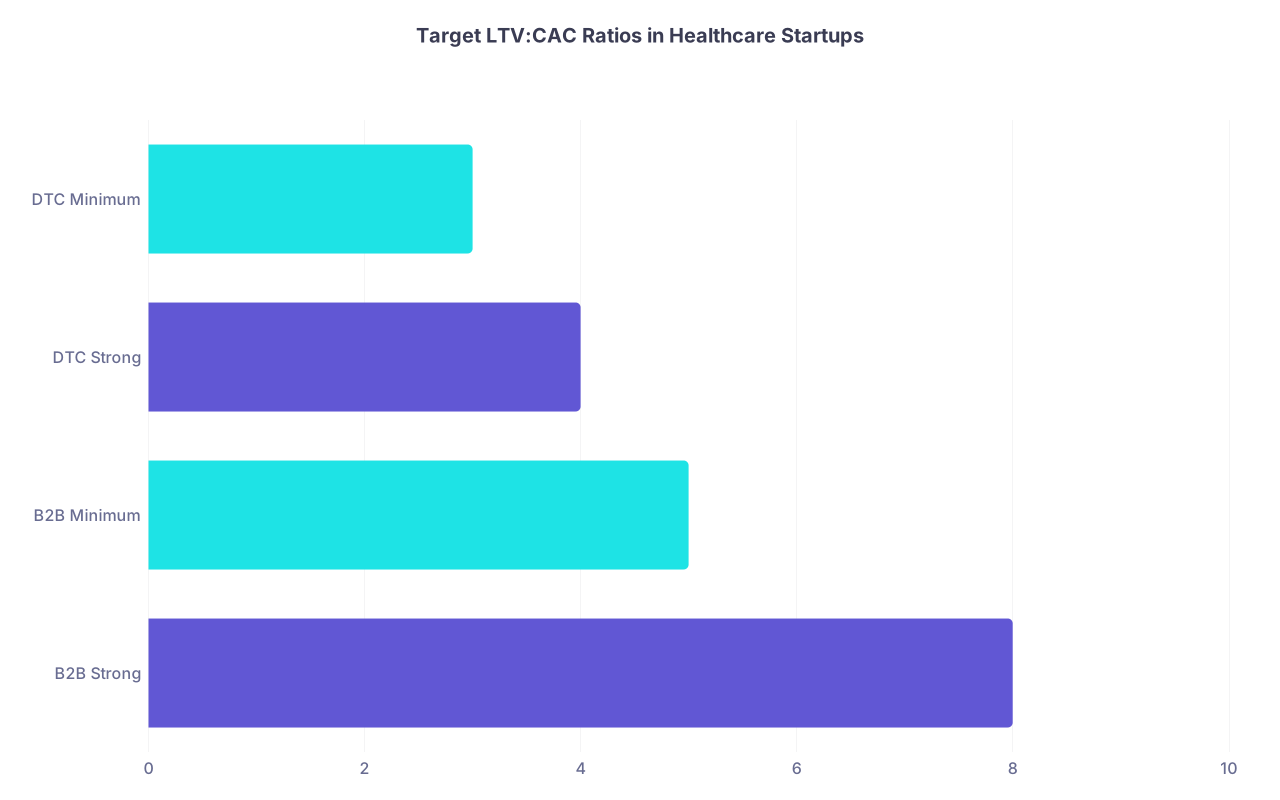
| Category | Value |
|---|---|
| B2B Strong | 8 |
| B2B Minimum | 5 |
| DTC Strong | 4 |
| DTC Minimum | 3 |
8. How to Stress-Test Your Idea Before You Commit
If you are still reading, you probably have a specific idea in mind. So here is the fast, data-first way to validate B2B vs DTC before you quit your job or pour savings into lawyers and branding.
Quantify the value in dollars.
- B2B: How many dollars per patient per year do you save or generate? Back it with literature or pilot data.
- DTC: How much are individuals actually paying today for similar outcomes (cash clinics, apps, coaches)?
Build a simple spreadsheet with 3 scenarios (optimistic, realistic, pessimistic) for:
- Price
- CAC
- Retention/churn
- Gross margin
- Sales cycle length (for B2B)
For each scenario, calculate:
- LTV
- LTV:CAC
- Payback period
Impose constraints based on your personal runway:
- Maximum capital you are willing to risk (money + foregone salary).
- Maximum time you can wait before meaningful revenue.
See which model breaks first.
If your DTC model only works with 10% monthly churn and CAC <$100, toss it. The platform ad markets will not be that kind to you. If your B2B model only works with 3‑month sales cycles, also toss it. Hospitals and payers do not move that fast.

9. The Bottom Line for Doctor Founders
You do not need a 50‑slide strategy deck. You need a clean table, a few realistic assumptions, and the courage to kill ideas that do not pencil out.
Three key points:
- B2B and DTC have radically different conversion and churn profiles. Pick the one whose math works for your product and your personal runway, not the one that sounds more glamorous.
- The critical ratios are LTV:CAC and payback period. If you cannot get to ~5–10:1 LTV:CAC in B2B or ~3–5:1 in DTC with believable assumptions, the model is weak.
- As a post‑residency founder, your constraint is time and risk tolerance. Use small, fast experiments—especially on DTC-style funnels—to generate real data before you commit fully to either path.
The data will tell you what your ego does not want to hear. Listen to it.