

The fastest way to get flagged by the NRMP is not cheating on rank lists. It is saying the wrong thing during a casual “second look” visit in February.
You are not paranoid. The rules here are strict, often misunderstood, and enforced when people get sloppy. The good news: if you plan your late-season second looks week by week, you can get what you need without putting yourself or programs at risk.
Below is a chronological, practical guide: how to plan, what to say, what not to say, and how to stay inside NRMP rules from the moment you think about a second look to the week you certify your rank list.
8–10 Weeks Before Rank List Deadline: Decide Whether You Even Need a Second Look
At this point (usually early January), you should not be scheduling anything yet. You should be deciding if second looks are worth it.
Second looks are overrated for:
- Programs you already know are at the top of your list
- Programs that clearly told you second looks do not affect ranking
- Situations where travel cost and time are brutal and add nothing new
Second looks can be useful when:
- You are torn between 2–3 programs that feel similar on paper
- You never saw the main hospital (off-site interview day, virtual day, etc.)
- You need to get a realistic feel for call rooms, resident morale, or city living
- Your initial visit was virtual and you have never physically been there
At this decision point, stay clean with NRMP rules by:
- Not asking programs anything suggesting “If I rank you first, will you rank me highly?”
- Not implying any ranking commitments in email, text, or phone calls
Your communication right now should be purely logistical and curiosity-driven.
Example safe email template:
“Thank you again for the opportunity to interview. I am strongly interested in learning more about day-to-day resident life and was wondering whether your program allows informal second look visits. If so, could you share available dates and any guidelines or policies you follow for these visits?”
No mention of rank. No hint of quid pro quo. Exactly how you want it.
6–8 Weeks Before Deadline: Check Policies and Schedule (Or Decide Not To)
This is usually late January. At this point you should:
Read the program’s official policy
- Check the interview invite email
- Re-read the pre-interview packet or website
- Many programs now explicitly state:
- “Second looks are allowed but do not affect ranking,” or
- “We do not host second look visits,” or
- “Only self-guided tours; no faculty or PD contact”
Prioritize which programs (max 2–4) You do not need a second look at every place you interviewed. That looks desperate and burns time.
Criteria to choose:
- Programs clustered in the same city (low travel friction)
- Programs in very different cities where lifestyle is a big factor
- Any program where you felt “off” during interview but cannot say why
Match your timeline with theirs You want these visits before your own internal “almost-final” rank list.
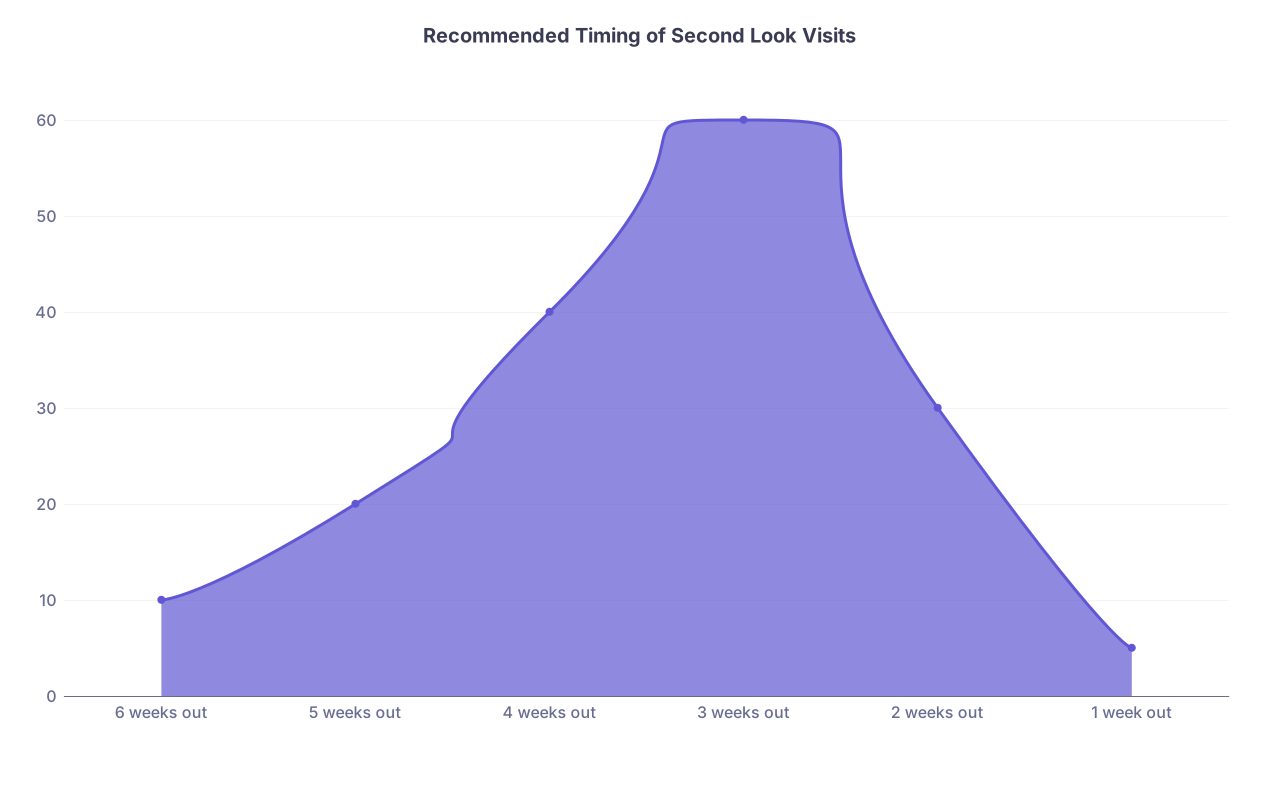
| Category | Value |
|---|---|
| 6 weeks out | 10 |
| 5 weeks out | 20 |
| 4 weeks out | 40 |
| 3 weeks out | 60 |
| 2 weeks out | 30 |
| 1 week out | 5 |
Interpretation: Most second looks, in practice, cluster 3–4 weeks before the ROL deadline. Aim there.
When you actually schedule, keep your communication sterile from an NRMP standpoint:
- Do: “I am hoping to visit between Feb 5–16; do you have suggested dates for applicants?”
- Do not: “This visit will likely make you my first choice.”
Programs are not allowed to ask you how you will rank them. You are not allowed to pressure them about how they will rank you. Remember that every email is discoverable if there is a complaint later.
3–5 Weeks Before Deadline: Prepare What You Will Ask (And What You Will Not Say)
At this point, you should have your second look dates on the calendar. Now you script your behavior.
Build your “safe questions” list
Focus on content that:
- Clarifies training quality
- Clarifies lifestyle, logistics, and support
- Does not touch rank lists, commitments, or promises
Examples of safe, useful questions to ask residents or faculty:
- “How is the night float schedule structured for interns vs seniors?”
- “How often do residents rotate at outside sites, and how is the commute?”
- “What kind of support do residents get for board prep and conference travel?”
- “If a resident is struggling, what does remediation support look like?”
- “How many graduates land fellowships in [your field of interest] and where?”
Borderline, but usually fine:
- “If I end up here, what is one thing you would recommend I do before starting?”
- “If someone is interested in academic medicine, how easy is it to get plugged into research here?”
Build your “off-limits” list
You do not say or ask anything that creates an expectation about ranking.
Off-limits phrases (do not say these in any form):
- “If I rank you first, will you rank me to match?”
- “Where do I stand on your list?”
- “If you rank me highly, I will rank you highly.”
- “I am committing to you if you commit to me.”
Also avoid vague but risky language:
- “I will definitely match here if we both do the right thing.”
- “I really hope we can make this happen on Match Day.”
- “I am yours if you want me.”
You can express interest. You cannot trade rankings.
2–4 Weeks Before Deadline: Second Look Visit Day – Hour-by-Hour Conduct
Now for the actual visit. This is where people get casual, say something dumb during lunch, and end up in a gray zone.
Assume everything can be repeated to the PD.
Morning of the visit: Clarify the structure
At this point, you should:
- Reconfirm the schedule: who you are meeting, whether the PD/APD will be present
- Re-read NRMP rules quickly (NRMP’s “Match Participation Agreement” summary for applicants)
The key rule in plain English:
- No solicitations or requirements of statements implying ranking commitments.
- No coercion, undue pressure, or misleading communications about ranking.
If the program sent any “second look guidelines,” actually follow them. Many explicitly say:
- No additional evaluation will occur
- No PD 1:1 meetings
- Conversations should be with residents only
During resident interactions
Focus your questions on reality, not romance.
Good topics:
- Day-to-day workflow on wards, ICU, clinics
- Call burden by PGY year
- Culture: how attendings treat residents, how mistakes are handled
- Housing, commute, childcare, parking
What you may say about interest:
- “I am very interested in this program.”
- “You are definitely one of my top choices.”
- “This visit is helping me see how well I would fit here.”
Those are all fine. They do not create a contract.
What you should avoid:
- “I will rank you first” (you might change your mind; NRMP hates this)
- “You are my only real option” (invites emotional manipulation)
- “I turned down other interviews because of you” (now they feel leveraged)
If you meet the PD or APD unexpectedly
Sometimes a “no PD meetings” policy mysteriously becomes a 10-minute “drop in and say hi.” It happens.
At that point, you should:
- Keep it brief and content-focused
- Avoid ranking talk even if they fish for it
If a PD says:
- “We think you would be a good fit here.”
- “You are a strong candidate.”
These are coded ways to show interest. Fine, as long as they are not promising rank positions.
If a PD asks directly:
- “So where do you think we fall on your list?”
You have two safe options:
Option A – Polite deflection:
“I am still finalizing my rank order list, but I can say I am very interested and this visit is helping me gather the information I need.”
Option B – General but non-binding:
“You are among the programs I am strongly considering near the top of my list, but I have not finalized anything yet.”
Do not give a numeric position. Do not say “I am ranking you first” even if that is true. You can tell a program they are one of your top choices. You are not obligated to commit.
1–2 Weeks Before Deadline: Post–Second Look Follow-Up Without Crossing Lines
By now you have completed your visits. You are tired, overscheduled, and full of half-remembered resident quotes. This is where you will be tempted to send over-the-top “love letters.”
Resist.
Write a short, safe thank-you email
Structure:
- Thank them for the second look opportunity
- Mention 1–2 concrete things you learned
- Express general interest without ranking commitments
Example:
“Thank you again for arranging my second look visit last week. I appreciated the chance to see the main inpatient site and speak with several of the residents about their experience with night float and ICU rotations. The residents’ camaraderie and the breadth of clinical exposure reinforced my strong interest in your program. I am grateful for the time and transparency everyone offered during a very busy season.”
This tells them:
- You cared enough to visit
- You are seriously considering them
- You understood what you saw
It does not:
- Promise to rank them first
- Ask how they will rank you
- Create a binding expectation
What about “I will rank you to match” emails?
Some applicants and some programs still do this. It is a bad habit.
From an NRMP perspective:
- Statements of intent are not illegal in themselves.
- Coercive or conditional statements are the problem.
But in practice, those “I am ranking you first” emails:
- Create drama when you change your mind
- Get screenshotted and forwarded
- Fuel complaints if someone feels misled after Match
My stance:
Do not tell more than one program that you are ranking them first.
Better: do not tell any program your exact numeric rank. Keep it at “very highly” or “one of my top choices.”
Final Week Before Deadline: Finalize Your Rank List Independently
At this point, you should be done with second looks. No more visits. No more new information unless something major happens (program losing accreditation, leadership change, etc.).
Now you lock in your list based on:
- Training quality
- Fit and culture
- City/life factors
- Personal priorities
Here is where second looks actually matter: refining your own internal order. They should not affect your choices based on:
- Guilt about something you said or did not say
- Feeling “owed” to a program because they seemed enthusiastic
- Fear that a program will punish you for not declaring them first
You rank programs:
- In the order you actually want to train there
- Independent of who “showed you love”
NRMP’s algorithm favors your preferences. Not theirs.
What To Do If A Program Crosses the Line
Occasionally, programs get sloppy or blatantly break the rules. Yes, even big-name ones.
Red flags:
- “If you tell us you will rank us first, we will rank you to match.”
- “We need your commitment before we can decide.”
- “We will only rank applicants who tell us they are ranking us highly.”
- Repeated emails or calls asking for your rank position after you decline to say
At that point, you should:
- Document everything – keep the emails/messages.
- Stop engaging on rank-related questions.
- If it feels coercive, you have the option to report to NRMP after the Match (complaints are typically reviewed post-Match).
Do not threaten the program. Just protect yourself and move on.
Quick Comparison: Safe vs Risky Second Look Behaviors
| Situation | Safe Approach | Risky Approach |
|---|---|---|
| Emailing to schedule | Ask about dates and logistics only | Mention ranking or promises in scheduling email |
| Talking to residents | Ask about schedule, culture, training | Ask where you stand on their list |
| Talking to PD | Express strong interest, no numbers | Promise to rank first or ask for reciprocal ranking |
| Thank-you email | “Reinforced my strong interest” | “I will rank you first if you rank me” |
| Multiple programs | “You are one of my top choices” | Telling several programs they are #1 |
Visual NRMP-Safe Second Look Timeline
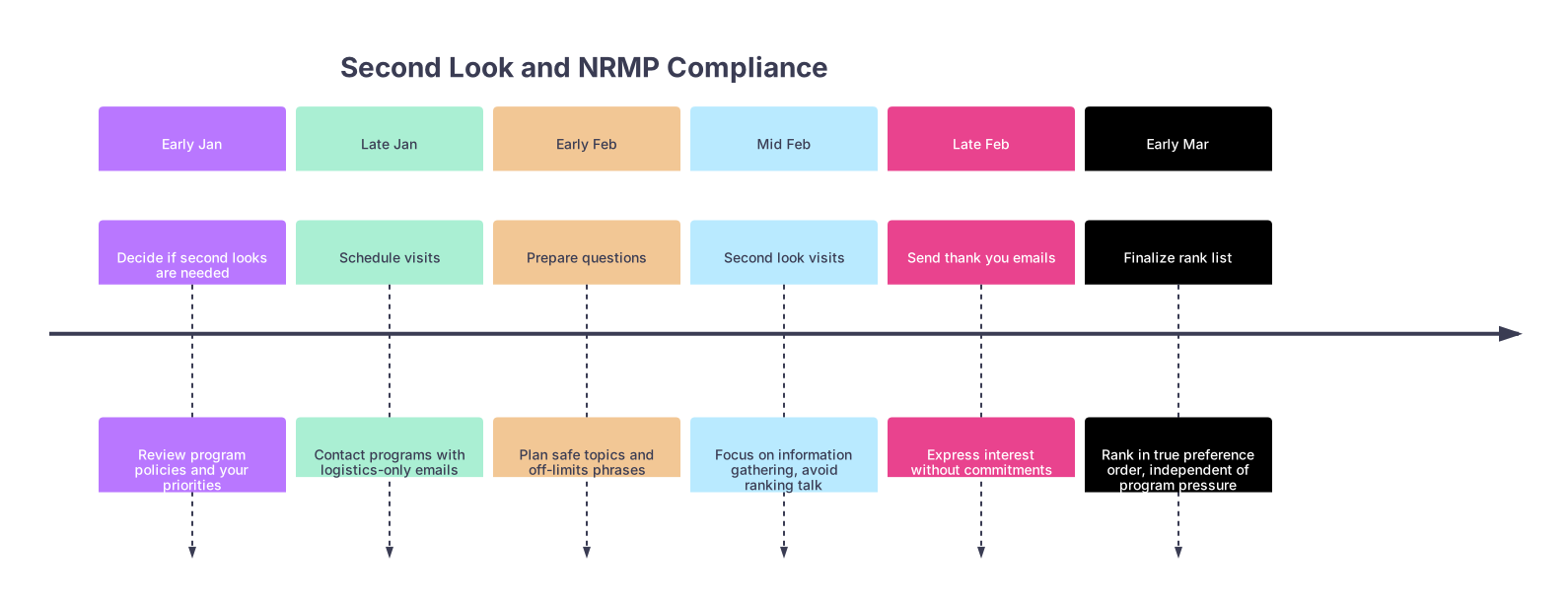
| Period | Event |
|---|---|
| Early Jan - Decide if second looks are needed | Review program policies and your priorities |
| Late Jan - Schedule visits | Contact programs with logistics-only emails |
| Early Feb - Prepare questions | Plan safe topics and off-limits phrases |
| Mid Feb - Second look visits | Focus on information gathering, avoid ranking talk |
| Late Feb - Send thank you emails | Express interest without commitments |
| Early Mar - Finalize rank list | Rank in true preference order, independent of program pressure |
Last 3 Days Before Certifying Your Rank List: Sanity Check
At this point, you should not be:
- Asking programs if they will “move you up” if you bump them higher
- Changing your list based on last-minute guilt emails
- Sending new love letters trying to “game” the system
Instead, you should:
- Re-read your notes from interviews and second looks
- Ask yourself where you would be happiest and best trained
- Certify your rank list once, then stop touching it
If a program emails you late:
- “We plan to rank you highly” → You may acknowledge and say thank you. That is all.
- “Please confirm whether you are ranking us first” → You can reply:
“Thank you for your message and for considering my application. I am still finalizing my rank order list and am very interested in your program.”
Then leave it.
Key Takeaways
- Use second looks to gather better information, not to negotiate rankings.
- During every interaction, avoid giving or asking for explicit rank commitments; keep language at “strong interest” and “top choices,” not “first.”
- Build your rank list based on your genuine preferences, independent of any second look flattery or pressure.


