

The most dangerous part of interview season is not overbooking your flights. It is forgetting that the NRMP is watching while you are tired, flattered, and tempted to say yes to the wrong thing.
You do not get extra lives with NRMP violations. One careless email in December can haunt you for years. So you need a calendar-based plan for the highest‑risk months, with clear rules for what to say, what to save, and when to shut up.
Below is your month‑by‑month, then week‑by‑week walkthrough of interview season and Match rules pressure points.
Big Picture: When NRMP Risk Peaks
At this point you should understand the rhythm of risk across the year:
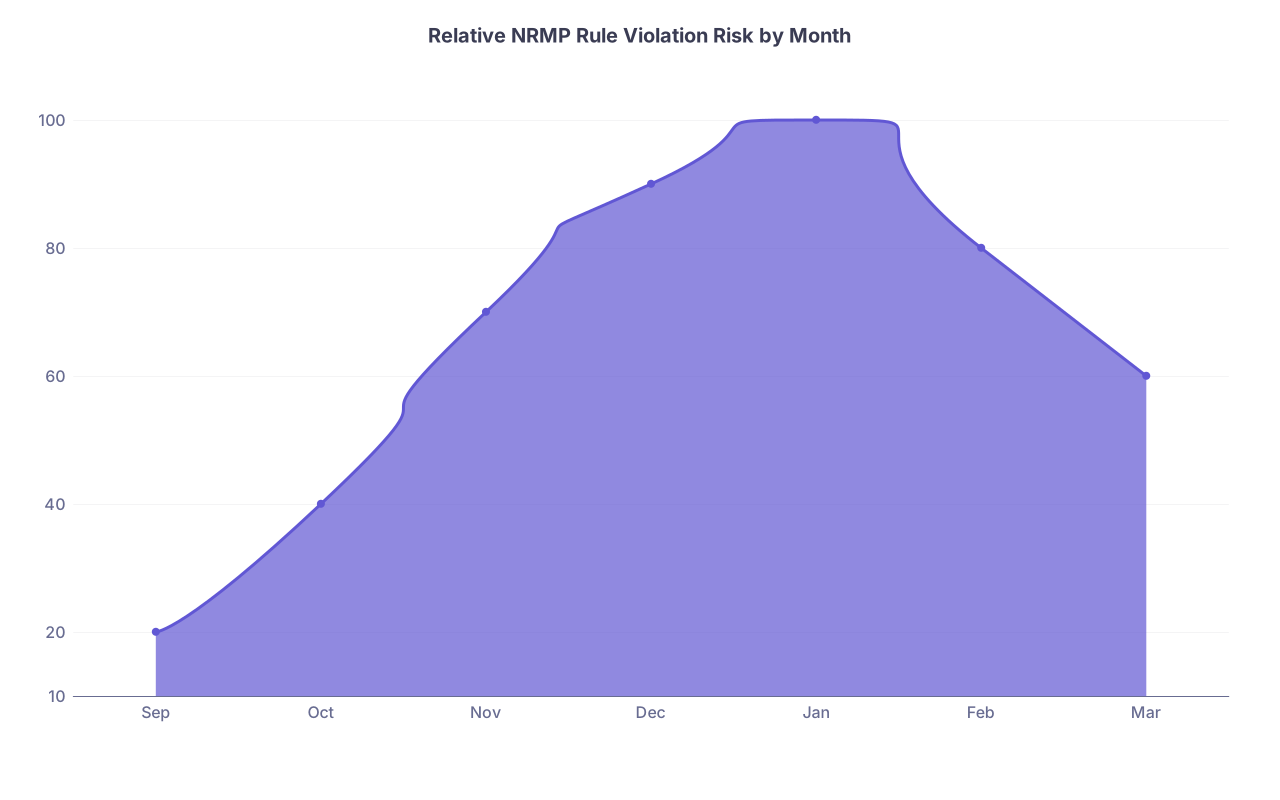
| Category | Value |
|---|---|
| Sep | 20 |
| Oct | 40 |
| Nov | 70 |
| Dec | 90 |
| Jan | 100 |
| Feb | 80 |
| Mar | 60 |
- Low risk: September–early October (applications sent, few interviews yet)
- Climbing: Late October–November (interview invites, first scheduling chaos)
- Peak: December–January (heavy interview volume, “love letters,” ranking discussions)
- Still high: February (rank list conversations, inappropriate commitments)
- Flash point: Match Week in March (post‑Match offers, SOAP, “handshake deal” temptations)
Keep this model in your head. Your guard should be highest when you are the most exhausted and the most flattered.
September–October: Early Invites, Subtle Pressure Starts
At this point you should…
- Have read the NRMP Match Participation Agreement once. Slowly.
- Know the three non‑negotiables:
- No offers or acceptance of positions outside the Match once you are registered.
- No soliciting or giving commitments about ranks (“I will rank you first if you rank me first”).
- No coercive or misleading communication from programs or applicants.
Late September – Early October: Application Out, Silence Loud
Risk category: Low, but not zero.
Common high‑risk scenarios:
- A staff physician or mentor says, “If our program does not rank you high enough, I’ll make a spot for you outside the Match.”
- A small program director (PD) emails you pre‑ERAS review: “If you commit to us now, we can basically guarantee you a spot.”
At this point you should:
Shut down any talk of “saving a spot” or “going outside the Match.”
Response script:
- “Thank you so much for your support. I am committed to going through the Match process properly and fairly.”
Document anything that sounds like:
- “Guaranteed position,”
- “We can take you outside the Match,”
- “You should withdraw from the Match and come here.”
Save the email. Screenshot the text. Do not confront angrily; just stop it from going further and loop in your school’s dean or advisor.
Late October – November: Invite Wave & Scheduling Chaos
At this point you should be…
- Tracking every invite, waitlist, and cancellation.
- Starting to feel the temptation to over‑promise your interest.
This is when programs (and applicants) start pushing the edges of NRMP communication rules.
High‑Risk Situations This Period
Programs fishing for commitment when inviting you
- “We want to offer you an interview only if we are one of your top choices.”
- “Will you rank us highly if we give you one of our last interview spots?”
You must not:
- Promise rank position.
- Trade commitment for an interview.
Safe script:
- “I am very interested in your program and grateful for the opportunity to interview. I will be creating my rank list after completing all of my interviews, in line with NRMP policy.”
You emailing programs in desperation
- “If you invite me, I will rank you highly.”
- “You’re my number one, please give me an interview.”
Do not do this. You can:
- Express strong interest.
- Explain fit and regional ties. You cannot bargain with future rank behavior.
Pressure through faculty who know PDs
- “I’ll tell them you will rank them first if they interview you.” Shut this down. Calmly.
Script:
- “I really appreciate you advocating for me. I just want to stay within NRMP rules, so I do not want anyone promising ranking commitments on my behalf.”

| Step | Description |
|---|---|
| Step 1 | Program asks about rank intentions |
| Step 2 | State you follow NRMP rules and rank after interviews |
| Step 3 | Express interest honestly |
| Step 4 | Faculty offers to promise a spot |
| Step 5 | Tell them you must stay within Match rules |
| Step 6 | You want to send interest email |
| Step 7 | Rewrite - focus on interest and fit |
| Step 8 | Send professionally |
| Step 9 | Are they asking for a promise? |
| Step 10 | Mention rank position? |
December: Peak Interview Volume, Peak NRMP Exposure
This is where people slip. Fatigue, flattery, and too many flights.
At this point you should:
- Have clear internal rules about what you will and will not say.
- Recognize that programs also have rules. Some will ignore them. Some will not.
On Interview Day: What You Can And Cannot Say
Risk spikes in these precise moments:
End of interview when PD or faculty says:
- “Where will we be on your rank list?”
- “If we are your first choice, tell us.”
- “We want people who will rank us highly. Will you?”
Your job is to avoid:
- Any numeric commitment (“You’re 1st/2nd/3rd”).
- Quid pro quo (“If you rank me high, I’ll rank you high”).
Safe scripts that keep you compliant:
- “I am very impressed with your program and could absolutely see myself here.”
- “I plan to rank based on overall fit after all interviews. This program will be seriously considered at the top of my list.”
That is firm, positive, but not a contract.
Post‑interview “exit room” with residents
- “We’re fighting for you, will you come here if you match?”
- “Are we your number one?”
Do not lock yourself in verbally. Stick to:
- “I would be very happy to match here.”
- “This is one of the programs I am most excited about.”
December Email Landmines: “Love Letters” From Programs
You will start seeing messages like:
- “You will be ranked to match.”
- “We intend to rank you very highly.”
- “You are in our top group of applicants.”
Some are genuine. Some are copy‑paste to 50 people.
At this point you should:
- Avoid reading too much into any ranking language.
- Absolutely avoid responding with reciprocal commitments.
Unsafe response:
- “Thank you, I will be ranking you first.”
Safe response:
- “Thank you for the update and for your continued interest. I remain very excited about your program and appreciate the opportunity to have interviewed.”
Save all such emails. If something feels coercive:
- Forward (quietly) to your Dean or GME office.
- You do not need to fight them yourself.
January: Maximum Risk – Interviews + Early Rank List Thinking
January is the real danger zone. Interview volume is still high, rank lists are forming, and people start saying more than they should.
At this point you should:
- Have a single document where you note:
- Any program using explicit ranking promises.
- Any time someone asked you to commit.
- Be mentally ready for “off the record” conversations that are absolutely not off the record.
Common January Violations and How To Handle Them
Explicit barter offers from programs
Examples:
- “If you rank us first, I can guarantee you a position.”
- “Tell us you will come here, and we will make sure you match.”
These are NRMP red lines. You must not:
- Agree verbally.
- Put anything in writing that sounds like an acceptance of an offer outside of the Match algorithm.
Your response:
- “I am committed to following the NRMP Match process and creating my rank list based on overall fit. I am very interested in your program, but I cannot make any binding commitments about rank order.”
You sending “You are my number one” emails
Controversial opinion: These “love letters” are overused and overrated. And some applicants accidentally cross into violation territory when they link “you are my number one” to expectations of being ranked to match.
Safe approach:
- If you genuinely know your first choice, you can state it without implying a contract or demanding reciprocity.
Example:
- “After completing my interviews, your program stands as my first choice. I believe the training environment and location are the best fit for my goals. I look forward to the possibility of training with you.”
What you must avoid:
- “I will rank you first if you rank me to match.”
- “Please confirm that I will match at your program if I put you first.”
Faculty intermediaries escalating beyond the rules
I have seen this: An attending calls a PD, then returns and tells the student, “You’re in. They promised you a spot. Rank them first and you are guaranteed.”
NRMP reality:
- No one can guarantee anything outside the algorithm.
- Even if they intend to rank you highly, it is not binding.
Your internal rule:
- Never alter your rank list based on “guarantees.”
- Rank in your true preference order. Period.
February: Rank List Month – Commitment Pressure Everywhere
By this point you should…
- Have 90% of your rank list built.
- Be expecting a final wave of “Just checking in” messages from programs and maybe from you.
Early February: Final Program Emails
Programs may send:
- “We will be ranking you highly.”
- “Our committee was very impressed by you.”
- “You remain one of our top candidates.”
Again, you:
- Do not owe them a rank position.
- Do not need to reply with your list order.
Safe, generic reply:
- “Thank you very much for the update and the kind words. I truly enjoyed meeting the faculty and residents and remain very interested in your program.”
If a program asks directly:
- “Will you rank us first?”
You respond:
- “I am still finalizing my rank list and will be ranking programs based on overall fit. Your program will be very high on my list.”
That is honest. That is compliant.
Mid–Late February: You Submitting Your Rank List
Here is where self‑sabotage can happen.
At this point you should:
- Rank programs in true preference order, not:
- Where you think you are “safe.”
- Where someone “promised” you a spot.
- Where your friend matched last year.
Typical NRMP myth that ruins lists:
- “I should not rank that dream program first if they did not say they will rank me highly.”
Wrong. The algorithm is designed to favor your preferences, not punish you for aiming high.
High‑risk communication mistakes now:
Emailing a program after rank list submission saying:
- “I ranked you first, so I know I will match there.” Reads like you are assuming a contract. Just do not.
Asking programs:
- “Did your committee rank me to match?”
- “Where am I on your list?” You put them in a position to break rules or lie. Unnecessary and risky.
Match Week (March): Post‑Match Offers, SOAP, and Panic Deals
Match Week creates a new category of risk: people trying to fix bad outcomes with bad decisions.
At this point you should:
- Know your exact status (Matched / Unmatched / Partially Matched).
- Be extremely cautious about any “informal offers.”
Monday – Tuesday: Unmatched or Partially Matched
If you are in SOAP:
High‑risk behaviors:
Programs contacting you outside the SOAP process with:
- “If you pull out of SOAP, we can give you a prelim year directly.”
- “Withdraw from NRMP and we can take you off cycle.”
You reaching out to programs not in SOAP offering to take an unfilled spot on the side.
NRMP stance: Very clear. Positions for Match‑participating programs must be filled through the Match/SOAP.
You:
- Only communicate through the SOAP‑approved channels.
- Loop your school into anything that smells off immediately.
Thursday: Match Results Released to Programs
Occasionally:
- A program that did not fill starts emailing or calling unmatched applicants outside SOAP windows, probing for commitments.
Your rule:
- If it is outside SOAP structure and involves a Match‑participating program, do not accept or commit without GME / dean review.
Friday: Match Day Joy and Post‑Match Temptations
You matched. Relief. Now a new trap:
- PD or faculty at your home institution says:
- “If you do not like where you matched, we can work something out off cycle.”
- Another program where you interviewed but did not match hints:
- “If our intern backs out, we can slide you in.”
These “workarounds” can easily violate NRMP rules and place your current Match contract at risk.
At this point you should:
- Treat your Match as a binding commitment (because it is).
- Channel all “what if” scenarios through your dean or institutional NRMP contact.
- Avoid any talk of leaving a matched position for another offer.
Quick Reference: High‑Risk Situations by Month
| Month | Risk Level | Common Triggers |
|---|---|---|
| Oct | Low–Med | Early “guaranteed” spot talk |
| Nov | Medium | Invite bargaining, rank promises |
| Dec | High | On‑site rank questions, love letters |
| Jan | Very High | Explicit barter: rank‑for‑rank offers |
| Feb | High | Rank list pressure, final commitments |
| Match Week | High | Post‑Match offers, SOAP workarounds |
What You Should Be Doing Month‑by‑Month (Checklist Style)

October–November
At this point you should:
- Read:
- NRMP Match Participation Agreement.
- NRMP “Communications Code of Conduct” summary from AAMC/NRMP.
- Set up:
- One folder in your email for “NRMP‑sensitive” communications.
- Behaviors:
- Practice 2–3 safe scripts for “Where will you rank us?” questions.
- Ask your school who the NRMP point person is (Student Affairs, GME, etc.).
December
At this point you should:
- During interviews:
- Respond positively but non‑committally to rank questions.
- Note any program that crosses the line.
- After interviews:
- Save any “ranked to match” or “top tier” emails.
- Debrief with a trusted advisor on anything that feels off.
January
At this point you should:
- Start building your rank list:
- Sort first by gut preference.
- Ignore all “guarantees” while sorting.
- Communication:
- If you send “You are my first choice” letters, keep them clean:
- No quid pro quo.
- No asking where you sit on their list.
- If you send “You are my first choice” letters, keep them clean:
- Safety check:
- Review NRMP rules one more time, focusing on violations examples.
February
At this point you should:
- Finalize rank list:
- Lock it in true preference order.
- Submit a day or two before the deadline to avoid panic moves.
- Communication:
- Avoid initiating any new “clarification” about ranking with programs.
- Keep replies polite and generic.
Match Week
At this point you should:
- If matched:
- Ignore any suggestion of “switching” or “upgrading” programs outside official channels.
- If unmatched / SOAP:
- Work only within SOAP.
- Report any side‑channel offers or pressure to your school.
- After Match:
- Treat your Match as final.
- Do not entertain informal offers to break it.


