
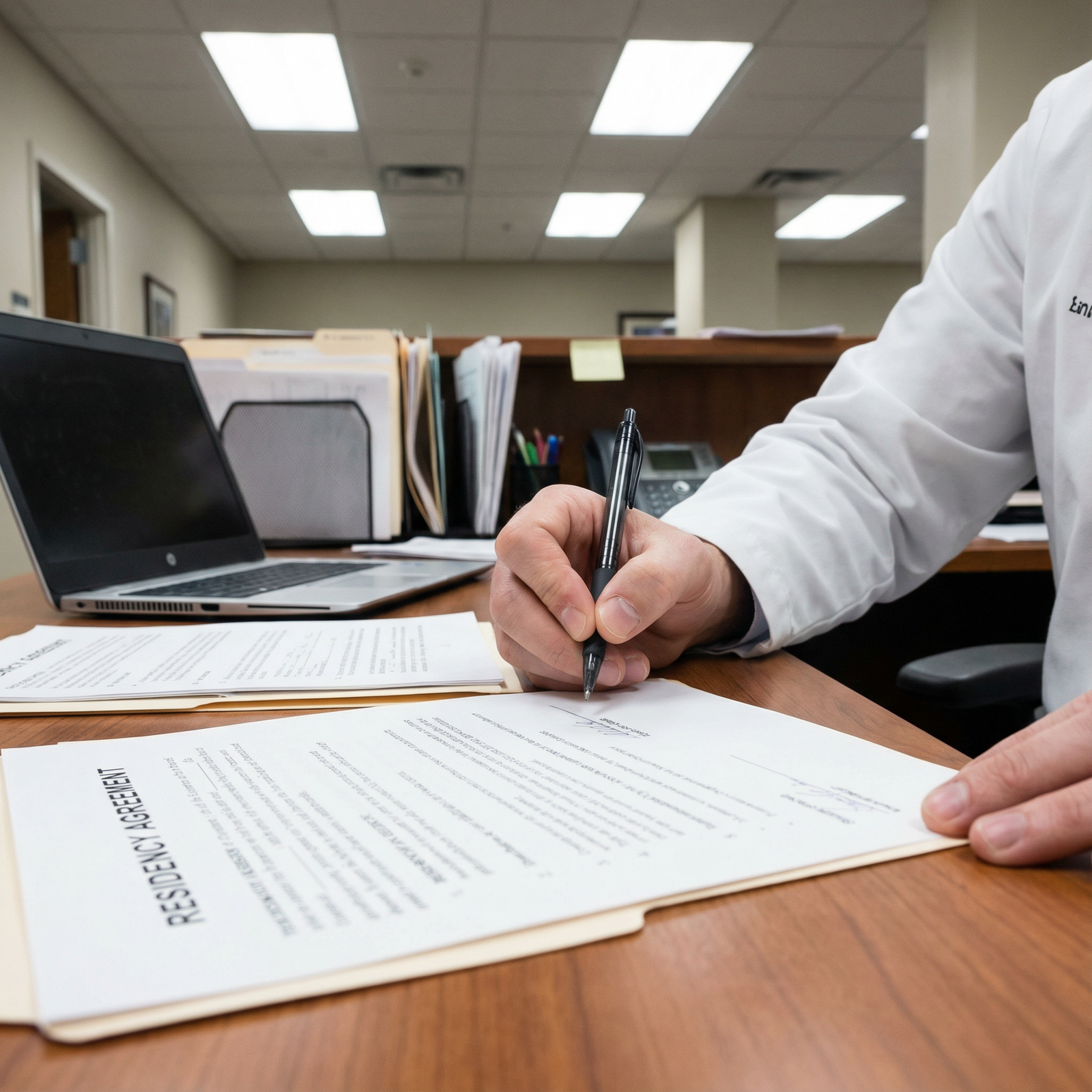
The biggest mistakes after Match Day do not happen in the NRMP algorithm. They happen in the confused, exhausted weeks between your email saying “Congratulations” and you signing a binding employment contract you barely understand.
Here is how to not be that person.
Big Picture Timeline: Match Day to Day 1
At this point you should think in phases, not random tasks. The sequence matters.
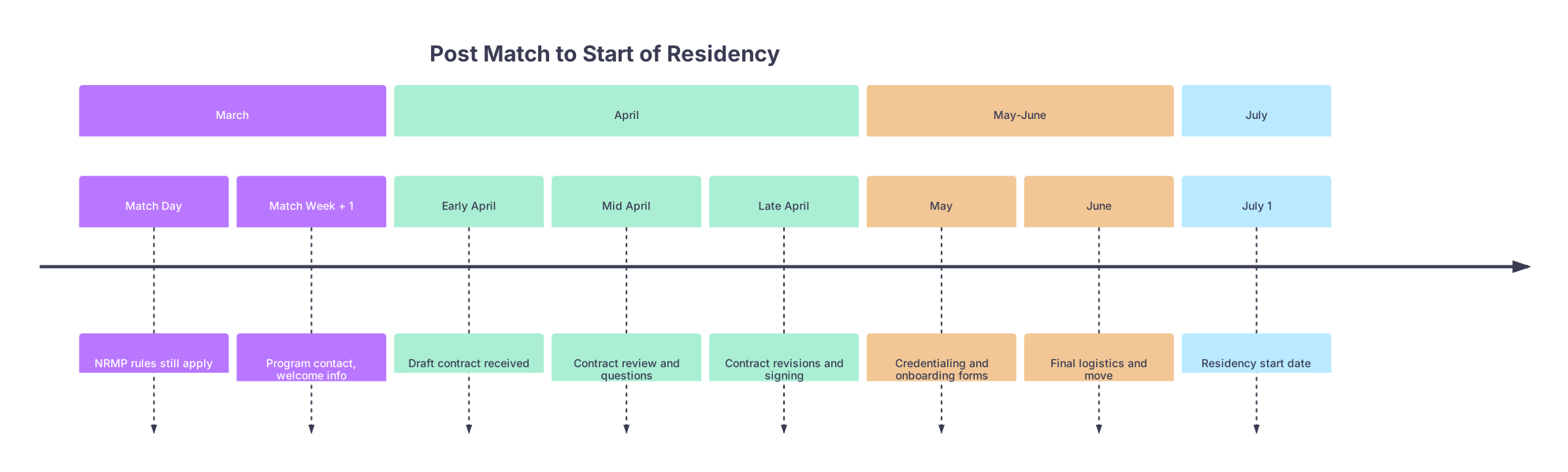
| Period | Event |
|---|---|
| March - Match Day | NRMP rules still apply |
| March - Match Week + 1 | Program contact, welcome info |
| April - Early April | Draft contract received |
| April - Mid April | Contract review and questions |
| April - Late April | Contract revisions and signing |
| May-June - May | Credentialing and onboarding forms |
| May-June - June | Final logistics and move |
| July - July 1 | Residency start date |
You are under NRMP rules from Rank List certification through 45 days after the start of training. That window is where people get into trouble.
Match Week: What You Can and Cannot Do
Match Day (Friday of Match Week)
At this point you should:
- Confirm your Match result and program details.
- Read the NRMP Match Participation Agreement section on “Breach of Contract” and “Waivers.” Not optional.
- Stop “shopping” for other positions. The Match result is a binding commitment.
What you must not do:
- Hint to other programs that you might be available.
- Reach out to unfilled programs asking for a spot. You matched. You are off the market.
- Tell your matched program you are “considering other options” or “might reapply.” That kind of language has been used in NRMP violation reports.
Think of Match Day as: you now have an accepted job offer. The paper contract is the formality that implements an already-binding Match commitment.
Week 1–2 After Match: Communication and Red Flags
Days 1–7 after Match
At this point you should:
Acknowledge the program
- Reply promptly to welcome emails.
- Confirm your contact info and anticipated graduation date.
- Ask who handles HR / GME contracts and onboarding.
Clarify the contract timeline
Use a short message like:- “Could you share the anticipated timeline for employment contracts and onboarding documents?”
-
- Keep a Match folder (email label + cloud folder) for:
- NRMP emails
- ERAS application you submitted
- All communication with the program
- Contract drafts and signed versions
- Keep a Match folder (email label + cloud folder) for:
Why this matters: if something goes sideways later, NRMP cares about written records, dates, and whether you acted in good faith.
What you should not do yet:
- Threaten to withhold signing to gain leverage. You already agreed to train there.
- Float ultimatums like “I will only sign if you guarantee X fellowship spot.” That is how people end up in the Program Director’s office with legal and GME present.
Red flags in Week 1–2
If you see any of these, document them and stay calm:
- Program says, “We are not sure we can fund your position this year.”
- They hint at changing your specialty track (e.g., you matched categorical IM, they talk like it is prelim).
- They imply you are “optional” or “backup.”
In these scenarios, you do not walk away on your own. You contact:
- Your med school’s Dean’s office / GME liaison.
- NRMP Policy (by email) for guidance if the program suggests they may not honor the Match.
Do not be the one to break first; NRMP takes “program failure to provide a position” extremely seriously, and you want the record to show the program moved away from the commitment, not you.
Late March–Early April: Receiving the Contract
By now you should either have your contract or a clear date for when it is coming.
| Phase | Usual Timing After Match |
|---|---|
| Welcome / initial contact | 0–7 days |
| Draft contract sent | 2–6 weeks |
| Review + questions | 1–3 weeks |
| Signing deadline | 4–10 weeks |
| Start of residency | ~3.5 months (July 1) |
If it is mid-April and you have nothing, you should:
- Email GME: “I wanted to check on the expected timing of the residency appointment contract. I want to be sure I complete everything on time.”
- Loop your school in if there is prolonged silence.
When the contract arrives
At this point you should:
- Check that the position matches the NRMP result
- Same specialty (categorical vs prelim vs advanced).
- Same institution and training program (AAMC/NRMP code).
- Same start year.
If the contract does not match the NRMP result:
- Do not sign.
- Screenshot and forward to your Dean and NRMP policy staff.
- Ask the program to explain the discrepancy in writing.
- Note deadlines
- Mark the signature deadline on your calendar.
- If the turnaround is ridiculously short (24–48 hours), ask for a reasonable extension:
- “I intend to sign; I just need time to review this thoroughly.”
Reasonable programs agree. Programs that push hard against any review period are showing you their culture.
How NRMP Rules Interact With Your Contract
This is where people get confused.
- NRMP commitment: You are obligated to train at that program for the first year. They are obligated to provide you the position.
- Employment contract: Governs salary, benefits, non-compete, policies, termination conditions, moonlighting, etc.
You cannot use “I dislike the contract” as a reason to unilaterally walk away from the Match. That is a potential NRMP violation unless you obtain an NRMP waiver.

You are allowed to:
- Ask questions.
- Negotiate non-core items (we will define that).
- Request clarification or minor changes.
You are not allowed to:
- Use threat of NRMP breach as a negotiation tool.
- Sign somewhere else while still bound to your matched program.
- Secretly interview for other PGY-1 spots in the same cycle.
NRMP views both programs and applicants as bound by specific professional standards. Violations show up in the NRMP’s R3 system, and serious ones can be reported to your state board. That follows you.
Reading the Contract: Week-by-Week Checklist
Assume you have roughly 2 weeks to review. Here is how to use them without stalling or panicking.
Week 1: First Pass and Issue List
At this point you should read the contract once straight through. No law degree. Just a pen and a notepad.
Flag:
Position details
- Title (Resident Physician, PGY-1).
- Program name and department.
- Start and end dates of the appointment term.
Compensation and benefits
- Base salary (compare against your state’s norms; big outliers deserve questions).
- Health, disability, life insurance.
- Vacation days (often 3–4 weeks) and sick leave.
- Education funds / CME allowance (if any).
Schedule and duty hours
- Call expectations (home vs in-house).
- Statement referencing the 80-hour ACGME work-week rule.
Termination language
- “For cause” and “without cause” clauses.
- Notice periods.
- Who can terminate and under what conditions.
Restrictive covenants (non-compete / non-solicit)
- Any restriction on where you can work after training.
- Any geographic radius or time period.
Moonlighting
- Allowed vs prohibited.
- If allowed, internal vs external.
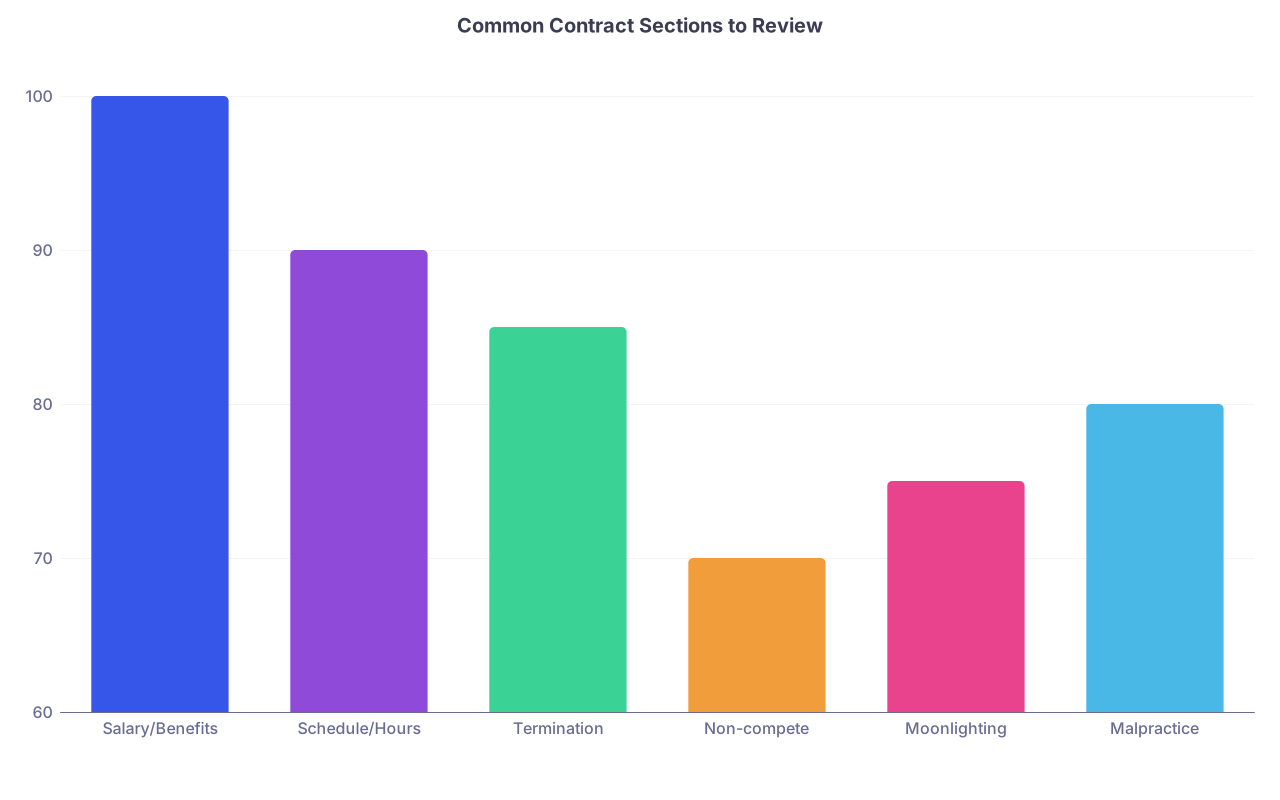
| Category | Value |
|---|---|
| Salary/Benefits | 100 |
| Schedule/Hours | 90 |
| Termination | 85 |
| Non-compete | 70 |
| Moonlighting | 75 |
| Malpractice | 80 |
The numbers here are “importance” scores. Salary and benefits matter, but restrictive covenants and termination language are where people end up in actual conflict.
Make a list of:
- Items you understand and accept.
- Items you do not understand.
- Items you understand and dislike.
Do not fire off an angry email yet. Sit on it for a day.
Week 2: Get Help and Ask Targeted Questions
At this point you should:
Get a competent review
Options, in order of usefulness:- Your med school’s legal counsel / GME office. They have seen dozens of similar contracts.
- A local attorney with employment or health-care contract experience.
- State medical society physician contract review service (many offer low-cost reviews for members).
Pay a few hundred dollars now. It is cheaper than a year of misery or a legal fight later.
Separate “NRMP issues” from “employment issues”
- If the contract tries to change your specialty or Match-obligated position, that is an NRMP-level problem.
- If the contract has a tough moonlighting clause, that is an employment negotiation (or reality you accept).
Draft one clean email with questions
Programs appreciate clarity. Example structure:- Bulleted list of 5–10 questions or concerns.
- Polite, professional tone.
- Pre-face with: “I fully intend to start my training with you on [date]; I just want to fully understand the terms of the appointment.”
You are not in a private practice negotiation. You are a resident in a large institution. Some terms are adjustable; others are standardized across all trainees.
What You Can Reasonably Negotiate (And What You Cannot)
Let me be blunt. You are unlikely to negotiate a higher PGY-1 salary or extra weeks of vacation. Those are usually GME-wide or union-determined.
You may be able to:
- Clarify vague termination language (“subjective” vs “objective” criteria).
- Remove or soften a non-compete if it is overly broad for a trainee.
- Clarify moonlighting policy or get written confirmation of what is allowed.
- Confirm coverage for tail malpractice if you moonlight under the program’s auspices.
| Clause Type | Usually Fixed | Sometimes Negotiable |
|---|---|---|
| Base PGY salary | ✓ | |
| Vacation weeks | ✓ | |
| Health insurance | ✓ | |
| Moonlighting rules | ✓ | |
| Non-compete scope | ✓ | |
| Termination details | ✓ |
If a program refuses any clarification, stonewalls your questions, or says “Just sign, everyone else did,” that tells you about their culture. You still remain bound by NRMP, but you go in with open eyes.
When Things Go Really Wrong: Waivers and Breach
Most residents never need this section. Some do.
Scenario 1: You want to leave before starting
Examples:
- Significant change in family circumstances.
- Severe illness.
- Catastrophic misalignment (e.g., major misrepresentation by the program).
At this point you should understand: you cannot unilaterally walk away. You must request a waiver from NRMP.
High-level process:
- Notify the program and your Dean that you are considering a waiver.
- Submit a written waiver request to NRMP with documentation.
- NRMP reviews, may ask the program for input, and then decides.
While that is pending, do not sign another contract or Match with another program. That can escalate to a violation finding.
Scenario 2: Program wants to back out
This is rare but serious: funding issues, lost accreditation, program closure.
You should:
- Get everything in writing.
- Contact your Dean and NRMP immediately.
- Do not agree to informal alternative arrangements without NRMP involvement.
If the program fails to provide the position, NRMP may:
- Facilitate placement in another program.
- Sanction the program for breach.
Your goal is to protect your ability to train and your professional record. Let NRMP and your school do their jobs.
Final Weeks Before Signing: Lock It Down
Once your questions are answered, revisions (if any) are incorporated, and your adviser or attorney has reviewed:
At this point you should:
- Confirm the final version matches what you discussed (do not assume they updated everything).
- Sign by the agreed deadline.
- Save a PDF copy of the fully executed contract (with all signatures) to multiple locations.
Then shift to:
- Credentialing packets.
- Occupational health requirements.
- Moving logistics.
One more legal/NRMP trap here: do not sign any other PGY-1 or PGY-2 employment agreements that start within the NRMP-restricted period (through 45 days after residency start) unless NRMP has formally released or waived you. Multiple overlapping commitments are a classic violation pattern.
From Contract to Day 1: Staying Out of Trouble
After signing, the big pitfalls are less about NRMP and more about policy violations that get you fired.
Still, there are a few NRMP-adjacent rules post-start:
- You are generally locked into the program for that first year. Transfers mid-year are complicated and often involve NRMP or ACGME oversight.
- If you want to change specialties or institutions for PGY-2, start talking to your PD very early and understand whether another Match cycle is required.
- Never secretly arrange a PGY-2 spot somewhere else and plan to “inform” your PD later. That can blow up into both institutional and NRMP issues.
Think long-term: your PD’s evaluation and your program’s reputation matter for fellowships, jobs, and licensure. You want them describing you as “professional and transparent,” not “tried to game the system.”
Core Takeaways
- The Match result is the real commitment; the contract implements it. You cannot walk away from the Match just because you do not like the boilerplate.
- Use the 4–8 weeks after Match Day to methodically review the contract, ask targeted questions, and fix real problems, not to renegotiate your entire life.
- When in serious doubt—possible breach, program instability, desire to leave—loop in your Dean and NRMP early. Quiet, solo decisions are how careers get scarred.


