
Introduction: Why Your Medical School Personal Statement Matters More Than You Think
For many applicants, the medical school personal statement is the most intimidating part of the application. You can quantify your GPA, MCAT, and activities, but the personal statement asks a different question: Who are you, and why should we train you to care for patients?
Admissions committees across the country consistently report that a strong, well‑written personal statement can:
- Differentiate you from applicants with similar metrics
- Provide critical context for your academic record and experiences
- Offer insight into your maturity, communication skills, and readiness for medicine
This Writing Guide walks you through the essential dos and don’ts—from planning and drafting to revising and polishing—so you can tell a compelling story that strengthens your entire application. Think of this as practical, expert-driven Admissions Advice that takes you from vague ideas to a polished, persuasive narrative.
The Essential “Dos” of a Strong Medical School Personal Statement
Do: Start Early and Treat It Like a Long-Term Project
Procrastination is the enemy of a thoughtful personal statement. Starting early gives you:
- Time to reflect on your motivations and experiences
- Space to experiment with different angles and openings
- Multiple rounds for feedback and revision without panic
Application Tip:
Aim to begin brainstorming 4–6 months before you plan to submit your application. A realistic timeline might look like:
- Week 1–2: Brainstorming and free‑writing
- Week 3–4: Outlining and drafting version 1
- Week 5–8: Multiple revision cycles
- Week 9–10: Final polishing, proofreading, and formatting
Rushing leads to generic statements, missed details, and unforced errors that can undermine an otherwise strong application.
Do: Create a Clear, Intentional Structure
Unstructured essays are difficult to follow and often feel unfocused. An outline keeps your Medical School Personal Statement organized and impactful.
A common and effective structure:
Introduction (Hook + Focus)
- Engage the reader with a specific moment, scene, or question.
- Signal what this essay will be about (e.g., your path to medicine, a defining experience, or a theme like resilience or curiosity).
Body Paragraphs (2–4 paragraphs)
- Each paragraph should have a clear purpose:
- Your path to medicine and early exposure
- Clinical or volunteer experiences that shaped your understanding
- Research, leadership, advocacy, or teaching that reveal core skills
- Use specific examples and reflection—not just lists of experiences.
- Each paragraph should have a clear purpose:
Conclusion (Integration + Forward Vision)
- Connect your past to your future in medicine.
- Show insight into the realities of medicine and your readiness for training.
- End with a confident, grounded forward-looking statement (avoid grandiose promises).
This structure isn’t the only option, but any effective Writing Guide emphasizes: the reader should never be wondering “Where is this going?”

Do: Be Deeply Authentic and Personal
Admissions readers have reviewed thousands of essays. They can quickly sense when an essay is:
- Overly polished but emotionally flat
- Trying to tell them what they “want to hear”
- Built on clichés instead of specific, personal experiences
Authenticity means:
- Choosing stories that truly shaped you, even if they’re not the most “impressive” on paper
- Being honest about uncertainty, growth, and evolving motivations
- Showing your voice—how you think, process experiences, and talk about patients and people
For example, instead of:
“I have always been passionate about helping others.”
Try:
“In the quiet moments between vital checks on the night shift, I found myself listening to patients’ stories—about jobs lost, families strained, and fears about diagnosis. Those conversations made me realize that medicine is as much about presence and trust as it is about physiology.”
Same theme—“helping others”—but expressed through a specific, lived moment.
Do: Highlight Distinctive and Diverse Experiences
Strong personal statements don’t just repeat the activities section. They select and deepen 2–4 key experiences that show:
- How you understand the role of a physician
- What kind of teammate, learner, and advocate you are
- How your background, identity, or path adds diversity to a class
Examples of distinctive experiences to consider:
- Long‑term work as a medical assistant or scribe
- Caregiving for a family member with chronic illness
- Research that changed how you think about evidence or health equity
- Community organizing, public health outreach, or health education
- Non-traditional paths: military, business, engineering, arts, or athletics
You don’t need to have gone abroad to “stand out.” Depth, reflection, and impact in any context are more powerful than exotic but shallow experiences.
Do: Reflect, Don’t Just Report
One of the most common weaknesses admissions committees mention: “It reads like a CV in paragraph form.”
Simply stating what you did is not enough. Always ask yourself:
- What did this teach me about patients, health systems, or myself?
- How did this confirm, challenge, or complicate my desire to pursue medicine?
- What skills did I develop (empathy, resilience, teamwork, adaptability)?
Weak description:
“I volunteered in a clinic where I took vitals and stocked supplies.”
Stronger reflective version:
“Taking vitals felt routine at first, but over time I noticed how a few extra minutes of conversation could transform a rushed encounter into a moment of trust. When one patient, who had previously avoided care, began asking questions about managing her diabetes, I realized that small interactions can open doors to long‑term change. This insight reshaped how I think about the daily work of a physician.”
Reflection is where your personality, values, and insight come through—and that’s what admissions committees want to see.
Do: Maintain a Positive, Growth-Oriented Tone
You can—and often should—discuss challenges: illness, family responsibilities, academic setbacks, financial hardship, or discrimination. These can provide essential context and show resilience.
However, keep the tone:
- Forward-looking: Emphasize how you grew and what you learned.
- Balanced: Don’t minimize real hardship, but don’t dwell solely on adversity.
- Mature: Show responsibility and self-awareness rather than blame.
For example, instead of:
“My poor grades were due to unfair grading and an unsupportive environment.”
Try:
“During my first year, I struggled to balance work and coursework, and my grades suffered. Recognizing this, I sought academic support, adjusted my schedule, and learned more effective study strategies. The experience taught me how to adapt under pressure—an ability I’ve carried into my later coursework and clinical experiences.”
Do: Revise Ruthlessly and Seek Strategic Feedback
Excellent personal statements rarely emerge in a single draft. Build in time for:
- Content revision: Are my main themes clear? Are my examples specific and reflective?
- Organization revision: Does the essay flow logically? Do transitions make sense?
- Language polishing: Are sentences clear, concise, and active?
Useful feedback sources:
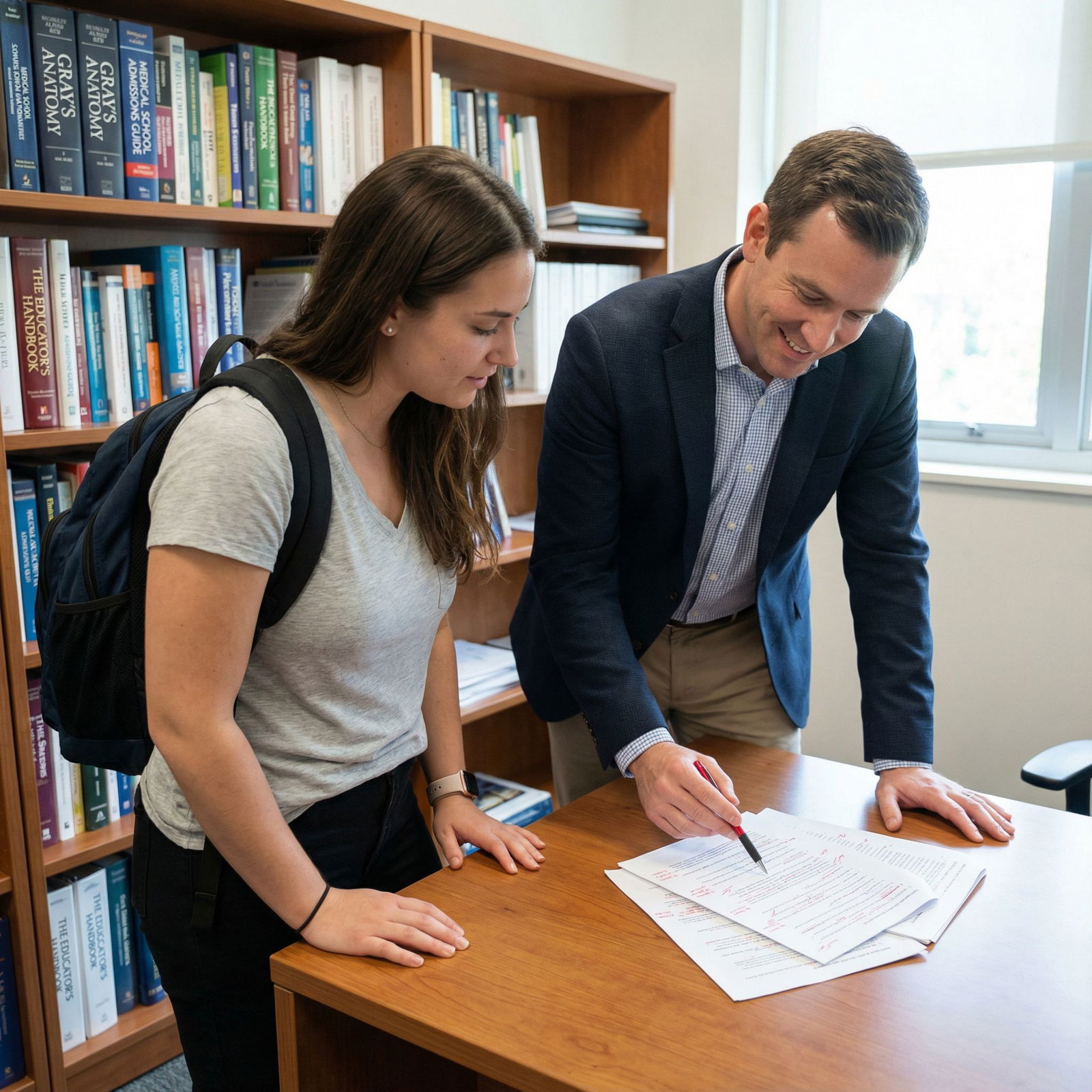
- Pre-health advisors or writing centers
- Mentors or physicians who know you
- Peers or alumni who successfully matriculated
When asking for feedback, be specific:
“Can you tell me what you think my main theme is?” or “Where do you feel less engaged as a reader?”
Avoid over‑editing by committee; 2–3 thoughtful readers are usually enough.
Do: Follow Every Guideline Exactly
Every application platform (AMCAS, AACOMAS, TMDSAS, or school-specific systems) has its own:
- Character or word limits
- Formatting rules (no bold/italics, single spacing, etc.)
- Submission procedures
Ignoring these makes you appear careless. A core Application Tip: stay comfortably within the character limit; don’t try to squeeze in every last word at the expense of readability.
Do: Consider Professional or Institutional Support When Needed
If you’re struggling with:
- Organization and structure
- English as a second language issues
- Making your story coherent and compelling
Then it may be appropriate to seek:
- University writing center assistance
- Pre-health advising office guidance
- Reputable, ethical professional editing services focused on clarity, not fabrication
Any outside help must never write your essay for you. The voice, ideas, and content must be entirely your own.
The Critical “Don’ts” of Personal Statement Writing
Don’t: Lean on Clichés and Vague Generalities
Phrases like:
- “I’ve always wanted to be a doctor.”
- “I want to help people.”
- “This experience changed my life.”
signal to readers that you’re not yet digging deeply into your story.
Replace clichés with:
- Specific moments: “The first time I watched a code in the ICU…”
- Concrete insights: “I realized that listening to patients often mattered more than having quick answers.”
- Clear connections: “This experience showed me that I am drawn to medicine not just for the science, but for the privilege of walking with people through uncertain times.”
If a sentence could appear in a hundred other essays, revise until it could only belong to you.
Don’t: Be Excessively Wordy or Overly Technical
Admissions committees are busy. Dense, verbose writing is hard to read and dilutes your message.
Avoid:
- Long wind‑up phrases (“In order to be able to…”)
- Overly complex sentences that require rereading
- Heavy use of medical jargon or research terms without explanation
Instead:
- Use direct, active sentences.
- Prioritize clarity over sounding “sophisticated.”
- Explain technical work in accessible language, focusing on what you did and learned.
Don’t: Overuse the Passive Voice
Passive voice (“was done,” “was given,” “was inspired”) can make your writing feel detached and less impactful.
Compare:
- Passive: “I was exposed to healthcare disparities during my volunteer work.”
- Active: “Volunteering in the free clinic confronted me with the reality of healthcare disparities.”
You don’t need to eliminate passive voice completely, but favor active constructions that highlight your role, choices, and reflections.
Don’t: Make It All About Grades, Scores, or Achievements
Your transcript and activity list already show:
- GPA and MCAT
- Awards and honors
- Hours spent in research or volunteering
The personal statement should humanize those facts, not repeat them. If you discuss an academic or research achievement, focus on:
- The challenge or question you were grappling with
- The skills you developed (critical thinking, perseverance, collaboration)
- How it shaped your understanding of medicine, science, or patient care
Don’t: Include Unrelated or Overly Personal Material
Admissions committees do not need:
- Detailed romantic relationship histories
- Political rants
- Long descriptions of hobbies without a link to your development or values
You can absolutely mention non-medical interests (music, athletics, art, entrepreneurship), but always connect them to skills, character, or perspective that matter for a future physician: discipline, creativity, teamwork, resilience, or empathy.
Don’t: Criticize, Blame, or Sound Cynical
It’s acceptable to discuss:
- Systemic issues in healthcare
- Negative experiences with the healthcare system
- Conflicts or hardships
But do so with professionalism and nuance. Avoid:
- Harsh criticism of individual providers or institutions
- Self-pitying or angry tone
- Assigning blame without taking any responsibility
Instead, emphasize:
- How the experience increased your awareness of systemic problems
- How it motivated you toward advocacy, quality improvement, or patient-centered care
- How it informs the kind of physician you want to become
Don’t: Use Slang or Overly Casual Language
Your personal statement is a formal professional document. Avoid:
- Text‑speak (“u,” “LOL,” “kinda,” “wanna”)
- Overly casual phrases (“totally blown away,” “super into science”)
- Jokes that may not translate well or could be misinterpreted
Aim for a tone that is:
- Professional but not stiff
- Warm and human, not robotic
- Clear, respectful, and thoughtfully phrased
Don’t: Rush the Final Proofreading and Formatting
Many strong essays are undermined by:
- Typos and grammatical errors
- Inconsistencies in tense
- Awkward line breaks caused by copy‑pasting between programs
Before submission:
- Read your essay out loud to catch awkward phrasing.
- Print it and review on paper if possible.
- Check that the formatting looks correct on the actual application platform.
A polished, error‑free essay reinforces the message that you are organized, careful, and ready for the demands of medical training.
Expert Insights: Real-World Lessons from Applicants
Case Study #1: Emphasizing Authenticity and Reflection
Sarah initially drafted a personal statement that read like a highlight reel: GPA, MCAT, research, leadership. It was technically polished but emotionally flat.
After meeting with an advisor, she rewrote her introduction around a quiet moment during her hospital volunteering: sitting with a non‑English‑speaking patient and using a phone interpreter to help the patient call her family.
In her revised essay, Sarah:
- Described the discomfort and uncertainty she felt navigating the interaction
- Reflected on language barriers, trust, and health equity
- Connected this moment to her desire to work with underserved communities
Her narrative became more memorable, human, and clearly aligned with her long‑term goals. She ultimately received multiple acceptances, including from her top‑choice program.
Case Study #2: The Cost of Skipping Feedback
Mark was anxious about his application and wanted to submit as early as possible. He wrote one draft of his personal statement, did a quick spell check, and submitted it without external review.
The result? In later feedback from an advisor who reviewed his file, he learned that:
- His essay lacked a clear theme—just a series of loosely connected stories
- Several paragraphs repeated information already present in his activity section
- There were minor grammatical errors that suggested rushing
He realized that taking even two weeks to revise and gather feedback could have significantly strengthened his application. For his reapplication cycle, he built in more time for writing and editing, and his subsequent cycle was much more successful.
Case Study #3: Transforming Clichés into a Compelling Narrative
Jessica began her essay with, “I want to alleviate human suffering.” Her draft centered on generalized statements about compassion and helping others—values that are important but expressed in ways that felt generic.
With guidance, she shifted focus to caring for her terminally ill grandfather:
- She described learning to manage medications and coordinate appointments
- She reflected on the emotional complexity of watching someone she loved decline
- She acknowledged her own fear and growth in navigating end‑of‑life conversations
By rooting her desire to alleviate suffering in a specific, emotionally honest story, her Personal Statement became far more powerful and memorable.
FAQs: Common Questions About Medical School Personal Statements
1. What is the ideal length for a medical school personal statement?
Most Medical School application platforms set strict limits:
- AMCAS (MD): 5,300 characters (including spaces)
- AACOMAS (DO): 5,300 characters
- TMDSAS (Texas): 5,000 characters
Aim to use most of the allowed space, but don’t feel pressured to max it out if it makes your essay dense or repetitive. A clear, well-structured statement slightly under the limit is better than a cluttered one at 100%.
2. Should I discuss personal challenges or red flags (e.g., low grades, gaps)?
Yes—when done thoughtfully. Application Tips:
- Address significant academic issues, prolonged gaps, or major life disruptions.
- Briefly explain the context without making excuses.
- Focus on what you learned, what you changed, and how you’ve improved.
If your challenges are extensive, you may want to use both the personal statement and any “Additional Information” or “Disadvantaged” sections (if applicable) strategically, so your main essay can still showcase your strengths and motivations.
3. Can I use a narrative or storytelling style, or should I be more formal and expository?
A narrative style is not only acceptable but often more engaging—if it remains focused and purposeful. Strong essays often:
- Open with a brief, vivid scene or moment
- Shift into reflection and broader context
- Return to that theme or growth arc in the conclusion
Avoid turning the entire essay into a short story with excessive dialogue or drama. Storytelling is a tool to support your message, not the goal in itself.
4. How many people should review my personal statement?
Typically, 2–4 thoughtful reviewers is ideal:
- One person who knows you well (to check authenticity and accuracy)
- One experienced advisor, mentor, or faculty member (for structure and content)
- Optional: a strong writer or editor for language and clarity
Too many reviewers can lead to conflicting feedback and a diluted voice. Ultimately, you must decide which suggestions align with your authentic story and the Admissions Advice you trust.
5. Should I tailor my personal statement for each medical school?
For centralized applications (AMCAS, AACOMAS), you usually submit one primary personal statement to all schools. That said:
- You can and should tailor secondary essays to each school’s mission and values.
- In your primary personal statement, you can emphasize themes (e.g., rural health, research, primary care, health equity) that align with the types of programs you’re applying to.
For schools that require a separate, school-specific statement (rare but possible), adjust your focus to highlight how your goals and experiences match that program’s unique strengths.
By following these evidence-informed Application Tips, avoiding common pitfalls, and investing time in genuine reflection and revision, you can craft a Medical School Personal Statement that does more than “check a box.” It can serve as a clear, compelling argument for why you are ready—and uniquely suited—for the responsibilities and privileges of a career in medicine.