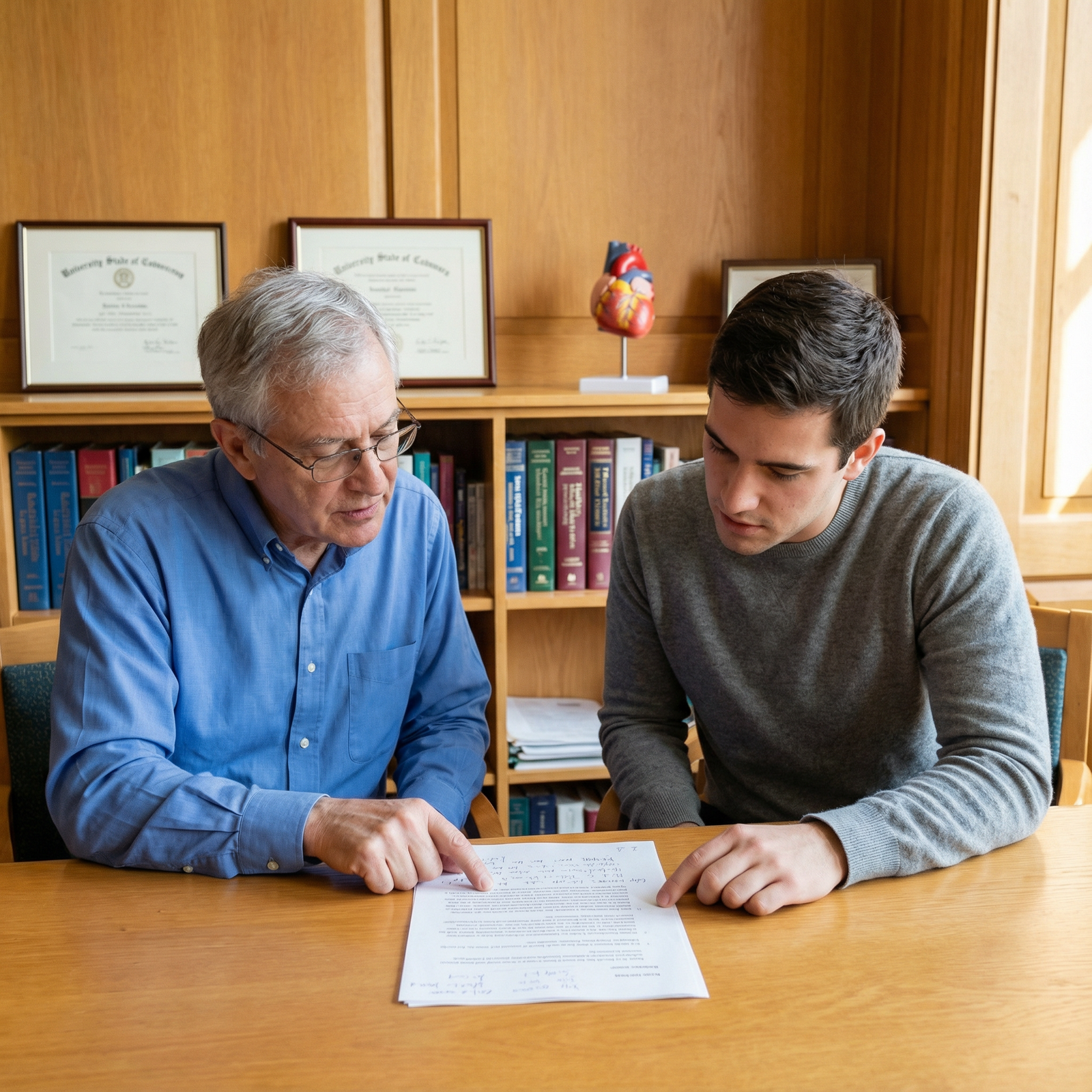
Writing a strong personal statement is one of the most high‑stakes parts of your medical school, residency, or fellowship application. It’s the one component where numbers fall away and your story, your voice, and your motivation for a career in medicine take center stage.
Yet many otherwise excellent applicants struggle: Where do you start? How personal is too personal? How do you avoid sounding generic when everyone is “passionate about helping people”?
This expanded guide walks you through the key dos of Personal Statement Writing, with practical Writing Tips and admissions-informed advice tailored to medical school and residency applicants. Use it to craft a compelling, authentic narrative that supports your application and resonates with admissions committees.
Understanding the Purpose of Your Personal Statement in Medical Admissions
Before tackling sentences and word counts, you need clarity on why the personal statement exists and how it is used in the Medical School Application and residency selection process.
What Admissions Committees Really Want to Learn About You
Beyond MCAT/USMLE scores, grades, and CVs, your personal statement helps programs answer:
Who are you as a person and future colleague?
Are you someone they’d want on rounds or in their clinic?Why medicine—and why this stage of training?
For medical school applicants: Why a career in medicine rather than another health field?
For residency/fellowship applicants: Why this specialty or subspecialty?How have your experiences shaped your values and skills?
Do you show empathy, resilience, curiosity, leadership, and integrity through concrete examples?Can you reflect and learn from experiences?
Strong statements show not just what you did, but what it meant and how you grew.
How Personal Statements Are Used in Selection
In many medical schools and residency programs, personal statements are used to:
- Screen applicants for interview invitations
- Prepare interview questions (interviewers often reference your essay directly)
- Differentiate between applicants with similar metrics
- Evaluate professionalism, maturity, and communication skills
Your goal is not to be “impressive” in the abstract; it’s to present a coherent, credible story that makes admissions readers think: “This person understands what they’re getting into and seems like a great fit for medicine and for our program.”
Do #1: Start Early and Make Revision a Non‑Negotiable
One of the most common—and most damaging—mistakes is treating the personal statement like a last‑minute assignment. Good medical writing, especially about yourself, requires time.
Build a Realistic Timeline
Aim to start:
- Medical school personal statement: 3–4 months before submission
- Residency personal statement: 2–3 months before ERAS opens
- Fellowship personal statement: 2–3 months before applications are due
A practical timeline might look like:
- Week 1–2: Brainstorming and reflecting (no pressure to write full paragraphs yet)
- Week 3–4: First rough draft (focus on content, not perfection)
- Week 5–6: Major revisions—structure, theme, and flow
- Week 7–8: Multiple rounds of polishing, style, and language
- Final 2 weeks: Fine-tuning, proofreading, and tailoring to specific programs (where appropriate)
Protect Dedicated Writing Time
Treat your personal statement like a critical clinical responsibility:
- Block regular time slots (e.g., two 1–2 hour sessions per week).
- Turn off notifications; close email and social media.
- Use focused writing methods (e.g., Pomodoro: 25 min writing, 5 min break).
Use Feedback Strategically
Revisions are where your essay becomes powerful.
Seek feedback from:
- Faculty mentors or advisors who understand admissions
- Residents or senior students who recently went through the process
- A trusted friend for clarity, tone, and grammar
But avoid “editing by committee.” Too many opinions can dilute your voice. Choose 2–3 key reviewers and prioritize those who understand both professionalism and the realities of a career in medicine.

Do #2: Center Your Statement on a Clear Theme or Narrative
The most memorable personal statements feel cohesive. Rather than a disjointed list of activities, they revolve around a central theme, question, or thread that ties your experiences together.
How to Discover Your Core Theme
Ask yourself:
- What pivotal moments have shifted how you see medicine or yourself?
- Are there recurring patterns in your experiences—advocacy, teaching, global health, research, patient communication?
- What values do you keep returning to—equity, curiosity, resilience, teamwork?
Common—but effective when authentic—themes include:
- Growing from personal or family health experiences into a commitment to patient-centered care
- A sustained interest in health disparities or underserved populations
- A thread of teaching and mentorship leading to academic medicine
- The evolution from self-doubt to confidence in clinical environments
Make sure your theme:
- Aligns with your actual experiences
- Supports the specialty or stage you’re applying for
- Can be illustrated through specific stories, not vague statements
Structure Your Narrative Around the Theme
A simple, high-yield structure:
- Opening hook: A brief, vivid moment or reflection that introduces your theme.
- Body paragraphs: 2–4 experiences that show how your theme has developed over time.
- Reflection and growth: What you learned about medicine and yourself.
- Future direction: How your journey and theme prepare you for the next step (medical school, residency, fellowship, specific specialty).
This keeps your essay focused, readable, and easier for an overworked reviewer to remember.
Do #3: Be Authentic, Honest, and Professionally Vulnerable
Authenticity is one of the most powerful differentiators in Personal Statement Writing. Admissions committees read hundreds of essays; generic, “perfect” narratives blur together.
Write in Your Own Professional Voice
Your tone should be:
- Professional but natural: Avoid slang, but don’t force vocabulary you wouldn’t use when speaking.
- Confident but not arrogant: Acknowledge strengths without dismissing areas of growth.
- Reflective instead of performative: Focus on what you’ve genuinely learned, not what you think they want to hear.
If a sentence sounds like it came from a brochure—“I have always been passionate about helping others”—revise it into something more grounded and specific.
Share Challenges—But Focus on Insight and Growth
It is acceptable, and often powerful, to discuss:
- Personal or family illness
- Academic struggles or a bad semester
- Burnout, stress, or impostor syndrome
- Cultural, financial, or immigration challenges
However:
- Avoid oversharing or graphic details.
- Stay away from blaming others; focus on agency and resilience.
- Always end difficult topics with:
- How you coped
- What you changed
- How it made you a better future physician
Programs look for resilience and insight, not perfection.
Avoid Common Clichés and Overused Tropes
Try to minimize:
- “I’ve wanted to be a doctor since I was five.”
- “I love science and helping people.”
- “This experience changed my life.”
- Long retellings of a single shadowing encounter without deeper insight.
You can include early interests or moving experiences—but they must lead to specific reflections and later actions, not stand alone as the sole justification for a career in medicine.
Do #4: Show, Don’t Tell—Use Concrete Clinical and Personal Examples
One of the most repeated Writing Tips in admissions is also one of the most misunderstood: “Show, don’t tell.”
Turn Traits into Stories
Rather than telling the reader you are compassionate, hardworking, or a good communicator, demonstrate those qualities through scenes and actions.
Telling:
“I am empathetic and dedicated to my patients.”
Showing:
“During my internal medicine rotation, I noticed Mr. R., a non–English-speaking patient, nodded through explanations but kept his medication bottles unopened on his nightstand. With the interpreter’s help, I learned he was afraid of side effects he’d heard about from neighbors. Over the next few days, I sat with him to answer questions and used pictures to explain how each medication worked. Watching him later manage his pillbox independently reinforced for me how critical communication is to safe patient care.”
The second example:
- Paints a clear picture
- Highlights clinical insight
- Demonstrates empathy and initiative
- Feels real and memorable
Balance Detail with Brevity
You don’t have space for full short stories. Aim for:
- Brief but vivid scenes (1–4 sentences)
- Focused details: one or two sensory details or specific actions
- Rapid transition to reflection: what you took away and how it informs your approach to medicine
Remember: You’re writing a personal statement, not a creative writing piece. Storytelling should serve your core message and admissions goals.
Do #5: Clearly Articulate Your Motivation for a Career in Medicine
Admissions committees want to see that your decision to pursue medicine—or a specific specialty—is informed, thoughtful, and grounded in real experience.
Move Beyond “I Want to Help People”
Helping people is important, but it’s not unique to medicine. Clarify:
- Why medicine instead of nursing, public health, research, or another path?
- What aspects of patient care do you find energizing?
Diagnostic reasoning? Longitudinal relationships? Procedures? Systems improvement? - How have your experiences tested your motivation?
Did difficult rotations make you more certain, or did they change your direction within medicine?
Tailor Motivation to Your Stage and Specialty
For medical school applicants, focus on:
- The evolution from early interest to sustained exposure (volunteering, shadowing, scribing)
- What you’ve learned about physician roles and healthcare teams
- The kind of physician you aspire to be
For residency applicants, emphasize:
- Why this specific specialty fits your skills, values, and temperament
- Experiences that confirm your interest (e.g., continuity clinic reinforcing a love for primary care; emergency department showing you thrive under acute pressure)
- Your understanding of the realities and challenges of the field (night shifts, emotional toll, complex patients)
For fellowship applicants, show:
- A clear trajectory into subspecialty interests
- How research, electives, and mentors shaped this direction
- What you hope to contribute to the field long-term (academics, leadership, innovation)
Do #6: Write with Your Audience and Their Priorities in Mind
Your readers are busy physicians, educators, and administrators. They often skim dozens of essays in compressed time.
Understand What Programs Look For
Most medical schools and residency programs value:
- Professionalism and maturity
- Self-awareness and humility
- Commitment to learning and improvement
- Compassion and respect for patients and colleagues
- Alignment with their mission (e.g., primary care, research, underserved care)
Study:
- Program or school mission statements
- Website descriptions of core values and ideal applicants
- Any stated focus on community engagement, innovation, diversity, or research
Then, subtly align your essay:
- If a program emphasizes underserved care, highlight your own relevant experiences and values.
- If a school values research, mention how inquiry and evidence-based practice excite you.
Avoid forced name-dropping or excessive flattery. Show fit through your story and priorities, not generic praise.
Maintain a Professional, Reader-Friendly Style
To keep committees engaged:
- Use clear, straightforward language.
- Prefer short to medium-length paragraphs to avoid dense walls of text.
- Use transitions to guide the reader through your narrative.
- Avoid medical jargon unless necessary—and explain when used.
Remember: Admissions readers are evaluating your communication skills as much as your content.
Do #7: Edit Ruthlessly for Clarity, Quality, and Word Limits
Even the best content can be undermined by poor organization, typos, or rambling paragraphs. Strong editing is essential.
A Stepwise Editing Process
Content and structure first
- Does every paragraph support your main theme?
- Are there any redundant or weak stories that can be cut?
- Is your motivation for medicine or the specialty unmistakable?
Clarity and style next
- Replace vague phrases (“I learned a lot”) with specifics (“I learned to prioritize patient concerns over my checklist”).
- Simplify complex sentences; avoid convoluted structure.
Proofreading last
- Check grammar, spelling, and punctuation.
- Ensure consistent tense (typically past tense for experiences; present/future for reflections and goals).
- Read the entire essay aloud—this is one of the best ways to catch awkward phrasing.
Respect Word and Character Limits
Ignoring guidelines signals poor professionalism.
Typical limits:
- AMCAS personal statement (MD): 5,300 characters (~1.5 pages)
- AACOMAS (DO): similar character limits
- ERAS residency personal statement: 3,500 characters recommended (one page)
- Fellowship: often one page, program specific
To manage length:
- Prioritize depth over breadth (fewer experiences, more meaning).
- Cut filler phrases: “It was very interesting to note that…” → “I noticed…”
- Remove repeated ideas or overlapping stories.

Do #8: Craft a Memorable Opening and a Strong, Integrated Conclusion
The beginning and end of your personal statement are often what readers remember most.
Open with Purpose—Not Gimmicks
You don’t need a dramatic trauma scene or a childhood hospital story to be compelling. In fact, over‑dramatic openings can feel artificial.
Effective opening strategies:
- A brief clinical or volunteer vignette that introduces your theme
- A moment of self-reflection: “During my third year of medical school, I realized…”
- A concise description of a turning point: “I did not expect a community health fair to reshape my understanding of medicine, but…”
Keep it:
- Short (1–3 sentences)
- Directly relevant to your path into medicine or your chosen specialty
- Clearly connected to the rest of the essay
Close with Forward-Looking Reflection
Your conclusion should:
- Reconnect with your central theme or opening vignette
- Summarize your growth and readiness for the next stage
- Look ahead to the kind of physician you aspire to become
For example:
“Caring for patients like Ms. L. has taught me that effective internal medicine extends beyond diagnostic reasoning—it depends on trust, communication, and an understanding of each patient’s context. As I enter residency, I am committed to developing the clinical excellence, teaching skills, and humility needed to serve my patients and colleagues. I look forward to growing within a program that values both rigorous thinking and compassionate care.”
Avoid new stories or topics in the final paragraph; focus on tying everything together.
Do #9: Learn from Examples—But Never Imitate or Reuse Content
Reviewing examples of successful essays can sharpen your instincts for structure and tone—but copying, reusing, or even heavily modeling your work after another essay is risky and unprofessional.
Use Examples the Right Way
Healthy uses of sample statements:
- Analyze how the writer introduces their theme.
- Note how much space they devote to reflection vs. describing events.
- Observe their transitions, opening, and conclusion techniques.
Unhealthy uses:
- Adopting someone else’s storyline or structure with only superficial changes.
- Reusing phrases or metaphors that “sound good” but aren’t yours.
- Letting examples override your authentic voice and experiences.
Protect Yourself from Plagiarism and AI Concerns
Admissions offices increasingly use tools to detect plagiarism and AI-generated content. To protect your integrity:
- Write your first drafts offline, in your own words.
- Use any external help (mentors, editors, even AI tools for brainstorming) as advisory, not as content copy-paste.
- Ensure that every sentence reflects your genuine experiences, beliefs, and style.
Your personal statement should be exactly that—personal.
Frequently Asked Questions About Medical Personal Statement Writing
1. What should I definitely include in my personal statement?
Aim to include:
- A clear narrative of how you arrived at pursuing a career in medicine (or a specific specialty)
- 2–4 specific experiences (clinical, volunteer, research, leadership) that shaped your perspective
- Reflections on what you learned about yourself, patients, and the healthcare system
- Your motivation for medicine or your specialty, framed by realistic understanding
- A forward-looking conclusion that highlights the kind of physician you hope to become
Avoid rewriting your CV; focus instead on the meaning behind key experiences.
2. How personal is too personal for a medical or residency personal statement?
It’s acceptable—and often valuable—to discuss:
- Personal or family illness
- Struggles with identity, culture, or socioeconomic challenges
- Mental health concerns, if you can describe them thoughtfully and with evidence of coping, support, and recovery
However, be cautious with:
- Graphic medical or traumatic details
- Ongoing issues that may raise questions about your ability to train safely
- Topics that could overshadow your professional identity if not handled carefully
If in doubt, discuss sensitive topics with a trusted advisor or mentor who understands Admissions Advice and professionalism standards.
3. How long should I spend writing my personal statement?
For most applicants:
- Expect to write 5–10 drafts over several weeks.
- Plan for at least 10–20 hours total, spread out (brainstorming, drafting, revising, proofreading).
Rushing this process can lead to generic or error-filled essays, even for strong applicants.
4. Can I reuse the same personal statement for multiple programs?
Partially, yes—but with nuance:
- For centralized applications (AMCAS, AACOMAS, ERAS), you often submit one primary personal statement to many programs.
- The core narrative usually stays the same, especially for residency within one specialty.
- You may create slightly tailored versions for specific program types (e.g., research-heavy vs. community-focused) or for different specialties (e.g., internal medicine vs. family medicine).
Never send an essay with the wrong specialty or program name. Double-check every version before submission.
5. Should I ask someone to professionally edit my personal statement?
It can be helpful to get assistance, but proceed thoughtfully:
Consider professional or structured editing if:
- English is not your first language and you need language polishing.
- You struggle significantly with organization or clarity.
- You lack access to mentors with time to review your work.
However:
- Ensure your voice and content remain your own.
- Avoid services that promise “guaranteed admission” or heavily rewrite your story.
- Always do a final read to confirm the statement still sounds like you and aligns with your actual experiences.
A strong personal statement will not rescue a severely weak application—but it can elevate a solid application into a compelling one, and a poor statement can undermine even excellent credentials. By starting early, building around a clear theme, writing with authenticity, and revising carefully, you’ll create a narrative that genuinely reflects who you are and why you’re ready for the next step in your career in medicine.