Introduction: Why Your Personal Statement Matters More Than You Think
For competitive medical school and residency applications, your Personal Statement is often the single most powerful narrative tool you have. When dozens—or hundreds—of applicants share similar GPAs, test scores, and extracurriculars, the Personal Statement is what can move you from the “qualified” pile to the “must-interview” list.
This is where the admissions committee stops seeing you as a list of metrics and starts seeing you as a future colleague in healthcare. A strong Personal Statement:
- Communicates your motivations for medicine and your chosen specialty
- Clarifies your professional identity and long-term goals
- Demonstrates maturity, reflection, and professionalism
- Shows you can write clearly—an essential skill for every physician and healthcare leader
This guide expands on the essential “do’s” of writing a compelling Personal Statement for medical school or residency. You’ll find concrete writing strategies, practical admissions tips, and real examples tailored to applicants aiming for long-term healthcare careers.
Understand the Real Purpose of the Personal Statement
Before you write a single sentence, you need to be clear on what the Personal Statement is for—and what it is not for.
What Admissions Committees Want to Learn About You
Whether you’re applying to medical school or residency, your Personal Statement should help the reader answer four key questions:
Why medicine—and why now?
- What motivates you to pursue this demanding, lifelong career in healthcare?
- When did your interest move from curiosity to commitment?
Who are you as a person and future physician?
- What values guide you (e.g., compassion, curiosity, humility, advocacy)?
- How do you handle stress, failure, and uncertainty?
What have you done to explore and prepare for this path?
- Clinical exposure, shadowing, research, leadership, service, jobs
- Evidence you understand the realities—not just the ideals—of healthcare careers
Where are you headed?
- What kind of physician do you hope to become?
- How does their program or the field you’re pursuing fit into that vision?
Your Personal Statement is not a rehash of your CV. It’s the story behind the bullet points: the meaning, the growth, and the connections between your experiences.
The Hidden Impact of a Strong Personal Statement
A compelling statement can:
- Differentiate you from applicants with nearly identical metrics
- Add context to academic dips, leaves of absence, or career shifts
- Reinforce key themes (e.g., commitment to underserved care, research interest, leadership)
- Shape your interview: many interviewers use your statement as their roadmap
On the flip side, a vague or generic statement can raise concerns about your self-awareness, communication skills, or maturity—even if your application is strong on paper.

Do #1: Start with a Strong, Purposeful Hook
Your opening is prime real estate. In the first 3–4 sentences, the reader is subconsciously deciding: Is this applicant’s story worth my full attention?
What a Strong Hook Does
A strong opening should:
- Ground the reader in a specific moment, image, or turning point
- Reveal something meaningful about you (not just about the patient or situation)
- Set up a theme that will carry through the rest of the essay
Weak openings rely on clichés:
- “I have always wanted to be a doctor…”
- “From a young age, I have been fascinated by the human body…”
- “Medicine is both an art and a science…”
Strong openings are grounded and personal:
“The waiting room was silent except for the steady click of my mother’s oxygen concentrator. At thirteen, I could recite her medication list from memory, but it wasn’t until I saw a physician sit at eye level with her and ask how she was coping—not just breathing—that I understood what it meant to care for a person, not a diagnosis.”
This does three things immediately:
- Places the reader in a concrete scene
- Introduces family health experience (a key motivator)
- Hints at a core value: patient-centered care
Practical Strategies for Crafting Your Hook
- Brainstorm 3–5 “pivot moments”: clinical encounters, family experiences, a research failure, a leadership challenge.
- Write the scene first, focusing on sensory details (what you saw, heard, felt).
- Then ask: What did this change in how I think or act?
- Avoid forcing drama. Your story doesn’t need to be tragic—only honest and reflective.
If your first draft begins with a broad statement, try cutting the first paragraph entirely and see if the essay becomes stronger. Often, it does.
Do #2: Be Authentic, Honest, and Reflective
Admissions committees are very good at detecting insincerity or over-polished writing. Authenticity is one of your strongest assets—when combined with reflection.
What Authenticity Really Looks Like
Being authentic does not mean oversharing every hardship. It means:
- Using your natural voice—professional but still you
- Admitting uncertainty, struggle, or growth
- Showing vulnerability without losing professionalism
For example:
“During my gap year, I worked night shifts as a medical scribe to support my family. Balancing finances, fatigue, and applications forced me to reconsider why I was pursuing medicine. In those early morning hours, watching the attending calmly guide families through fear and confusion, my abstract desire to ‘help people’ became a concrete commitment to be present during the most difficult moments of patients’ lives.”
This works because:
- It acknowledges hardship and financial stress
- It shows insight into how the experience deepened motivation
- It avoids self-pity and focuses on growth
How to Reflect Effectively
Reflection is what separates a compelling Personal Statement from a simple narrative. For each major experience you include, ask:
- What did I see that I hadn’t understood before?
- How did this change my behavior, goals, or perspective?
- What did I learn about the kind of physician I want to be?
A simple formula:
Experience → Internal reaction → Insight → Resulting growth or action
Weak:
“Volunteering at the free clinic was rewarding and showed me how much I enjoy helping others.”
Stronger:
“Volunteering at the free clinic, I met patients who postponed care until their symptoms were unbearable because they feared the cost more than the diagnosis. Listening to their stories, I realized that access is not just a policy issue—it is a daily barrier that shapes who survives. This pushed me to seek out public health coursework and solidified my goal of working in community-based primary care.”
Do #3: Clearly Outline Your Journey Into Medicine or Your Specialty
Your Personal Statement should read like a coherent professional story, not a random collection of anecdotes. The reader should come away thinking, “I understand how this person arrived here.”
Two Common Structures That Work Well
1. Chronological Narrative
Best if your path has a clear sequence of exploration and growth.
Structure:
- Early exposure or initial interest
- Meaningful confirmation experiences
- Increasing responsibility and commitment
- Present readiness and future goals
This works well for:
- Traditional students with steady progression
- Applicants whose academic path reflects growing engagement in medicine
2. Theme-Based Structure
Best if you want to highlight consistent qualities—e.g., advocacy, resilience, curiosity, leadership.
Structure:
- Introduce a central theme (e.g., “advocacy for vulnerable patients”) with an anchor story
- Use 2–3 experiences from different stages (clinical, research, service) showing this theme in action
- Conclude by connecting how this theme will shape your future as a physician
This works well for:
- Non-traditional applicants
- Applicants with diverse experiences they want to tie together
- Residency applicants distinguishing themselves within a specialty (e.g., “team-based care in emergency medicine”)
Maintaining a Clear Narrative Arc
Regardless of structure:
- Limit yourself to 2–4 major experiences and explore them deeply
- Use transitions to show how each step led to the next
- Revisit your opening theme in the conclusion to create a sense of closure
Ask someone unfamiliar with your story to read your draft and describe, in one sentence, how they would summarize your journey. If their sentence doesn’t match what you intended, your narrative may need clarification.
Do #4: Highlight Relevant Experiences—and What They Mean
Every applicant has some blend of clinical exposure, research, service, leadership, and extracurriculars. The key is not to list them, but to curate and interpret them through the lens of your development.
Choosing the Right Experiences
Prioritize those that:
- Involve direct patient or family interaction
- Required sustained commitment (months to years)
- Show growth in responsibility or independence
- Align with your stated interests or future goals
Examples of high-yield experiences to highlight:
- Long-term clinical volunteering or employment (MA, scribe, EMT, CNA)
- Work with underserved or marginalized communities
- Research that taught you to handle failure, iteration, and teamwork
- Leadership roles where others depended on your decisions
- Meaningful non-clinical activities that show character (e.g., caregiving, teaching, coaching)
Going Beyond Description: Show, Then Interpret
Weaker approach:
“I volunteered in the emergency department where I roomed patients, took vitals, and restocked supplies. This taught me about teamwork and communication.”
Stronger approach:
“As an emergency department volunteer, I initially focused on tasks—transporting patients, restocking rooms, cleaning stretchers. Over time, I realized my most meaningful contributions were the small moments between tasks: explaining wait times to anxious families, offering blankets to patients shivering in thin gowns, and translating brief updates for Spanish-speaking relatives. These interactions taught me that even when I cannot change a diagnosis, I can still ease suffering by paying attention to the person in front of me.”
Notice the pattern:
- Specific responsibilities and moments
- Reflection on what mattered most
- Explicit connection to patient-centered care
For residency Personal Statements, also highlight:
- Specialty-specific experiences (e.g., continuity clinic for FM, call nights for IM, OR time for surgery, emergent cases for EM)
- How these solidified your choice of specialty
- Evidence you understand the lifestyle, challenges, and realities of that field
Do #5: Connect Your Past to Your Future Goals
A compelling statement doesn’t just look backward; it shows where you’re headed and why medicine is the right vehicle for your goals.
Articulating Your Vision as a Future Physician
You don’t need a hyper-specific 30-year plan, but you should be able to:
- Describe the kind of physician you hope to be (e.g., educator, advocate, researcher, community practitioner)
- Mention areas of interest (e.g., health equity, global health, academic medicine, quality improvement)
- Show how your experiences logically lead to those aspirations
For example:
“I envision myself as a primary care physician working in underserved urban communities, where I can combine direct patient care with advocacy for structural changes in access and policy. My work at the student-run free clinic and my public health research on Medicaid expansion have shown me both the front-line impact of coverage gaps and the potential of policy to reshape outcomes.”
For residency:
- Align your goals with what that specialty offers (continuity, procedures, acute care, etc.)
- If appropriate, nod to the kind of program environment you value (teaching, diversity, research, community focus), without naming specific programs in the Personal Statement itself.
Linking Goals to Programs and Healthcare Careers
Though you won’t usually reference a specific school or residency program in your main Personal Statement, you can still:
- Emphasize interest in teaching hospitals, community-based training, or research-intensive environments depending on your target programs
- Highlight interest in academic medicine, rural health, public health, or subspecialty training
This helps the reader see you as a candidate with a realistic plan for a sustained, meaningful healthcare career—not just someone trying to “get in somewhere.”

Do #6: Edit, Get Feedback, and Revise Strategically
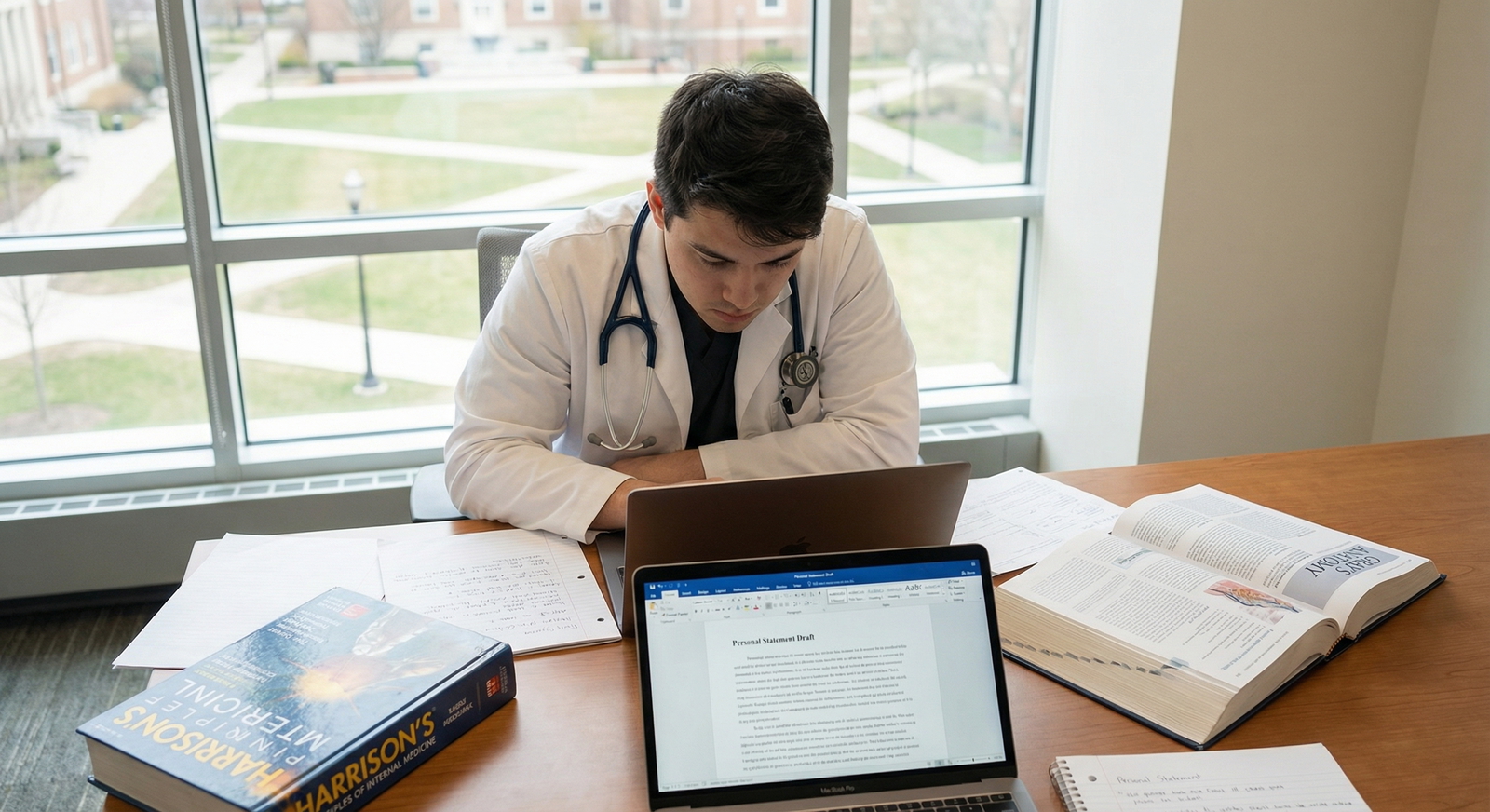
No strong Personal Statement is written in a single sitting. The drafting and revision process is where clarity, structure, and voice are refined.
Build in Time for Multiple Drafts
Plan to go through at least 3–5 rounds of revision:
- Brainstorming and free-writing
- No character limit, no polishing—just getting ideas out
- Structuring your narrative
- Decide on chronological vs. theme-based approach
- Content revision
- Sharpen main examples, remove weaker ones
- Style and clarity
- Improve transitions, tighten language, remove redundancy
- Final polish
- Check character/word limits, formatting, grammar, and tone
Starting early (ideally 3–4 months before deadlines) gives you space to step away, return with fresh eyes, and make more objective edits.
Whom to Ask for Feedback
Aim for 2–4 reviewers with different perspectives:
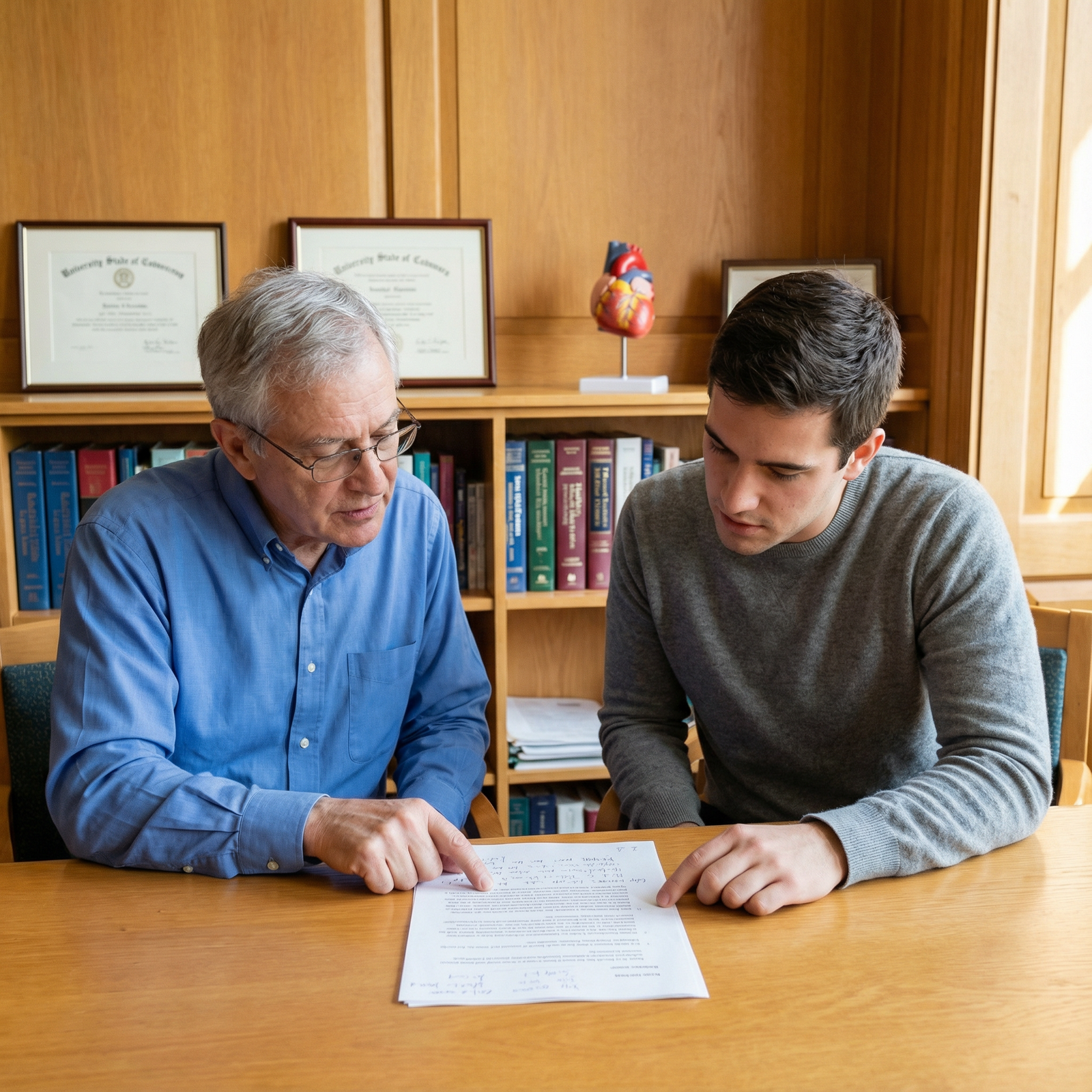
- A trusted mentor or attending who knows your clinical work
- A peer or senior student/resident who recently matched or was accepted
- A writing center advisor or professional editor familiar with medical admissions (if available)
- Someone who doesn’t know you well, to assess clarity (“Would you want to interview this person based on this alone?”)
Give them specific questions:
- What are the 2–3 main qualities you take away about me?
- Is there any section that feels confusing, generic, or unnecessary?
- Does the conclusion feel earned and consistent with the rest of the essay?
Incorporate feedback thoughtfully—protect your authentic voice and values. If multiple reviewers flag the same issue, pay attention.
Final Quality Check
Before submitting, confirm that:
- You have no typos or grammatical errors
- The tone is professional, confident, and humble—not arrogant or self-deprecating
- You do not include inappropriate humor, excessive jargon, or overly casual language
- You have respected character or word limits for AMCAS, AACOMAS, TMDSAS, ERAS, or other platforms
- Your statement is consistent with the rest of your application (no contradictions with your CV, activities, or letters)
Conclusion: Turning Your Story into a Strategic Advantage
A compelling Personal Statement is not about having the most dramatic story; it’s about making the most of your story. When done well, it:
- Communicates why you are genuinely drawn to medicine or your chosen specialty
- Demonstrates insight, maturity, and readiness for the next stage of training
- Highlights the experiences that define who you are as a future healthcare professional
- Leaves admissions committees with a clear picture of why you belong in their program
Investing the time to reflect, draft, seek feedback, and revise will pay dividends far beyond the application cycle. These are the same skills you’ll use when advocating for patients, writing consult notes, presenting at conferences, and shaping your long-term healthcare career.
FAQ: Personal Statement Admissions Tips and Writing Strategies
1. What is the ideal length for a medical school or residency Personal Statement?
For medical school (AMCAS):
- The limit is 5,300 characters (including spaces), which is roughly 1–1.5 single-spaced pages.
For residency (ERAS):
- There is no strict character limit displayed, but aim for about 650–850 words. Longer than that often feels unfocused.
Always verify the specific guidelines for your application system. Use the full space wisely—aim for concise, meaningful content rather than writing to hit a maximum.
2. Should I address weaknesses, low grades, or gaps in my Personal Statement?
You can address them, but do so strategically:
- Briefly provide context, not excuses
- Focus on what you learned and how you changed (study habits, time management, seeking help, dealing with stress)
- If an issue requires more detail (e.g., medical leave), consider using the designated “additional information” or “explanations” section instead of devoting major space in the main Personal Statement
Use the Personal Statement primarily to highlight strengths and growth, not to dwell on shortcomings.
3. Is it okay to use humor or dramatic stories in my Personal Statement?
A light touch of humor can be acceptable if:
- It is subtle, respectful, and fits your natural voice
- It does not trivialize patients, healthcare challenges, or serious topics
Avoid:
- Sarcasm, dark humor, or anything that could be misinterpreted
- Overly dramatic or sensationalized stories that feel like they belong in a movie script
Admissions committees are looking for professionalism and maturity. When in doubt, prioritize clarity, respect, and authenticity over attempts to be entertaining.
4. How personal is “too personal” for a Personal Statement?
It is appropriate—and often powerful—to write about:
- Family illness, your own health challenges, or personal hardship
- Experiences with discrimination, financial struggles, or immigration
- Mental health, if discussed thoughtfully and focused on treatment, recovery, and growth
However, avoid:
- Graphic medical details or trauma that may be distressing to the reader
- Unprocessed experiences you have not yet had time to reflect on
- Overemphasis on victimhood without showing resilience, insight, and current stability
Ask yourself: Does sharing this help the reader understand my path to medicine and my readiness for training? If not, consider summarizing briefly or focusing elsewhere.
5. When should I start working on my Personal Statement, and how many versions should I prepare?
Timeline recommendations:
- Medical school applicants: Start brainstorming and drafting 3–6 months before your primary application is due.
- Residency applicants: Begin outlining themes and experiences in the spring before ERAS opens, with serious drafting by early summer.
Plan on:
- Multiple drafts (3–5+) of your main statement
- Possible slight variations tailored for specific specialties (for residency)
- Keeping a separate document with cut content you may repurpose for secondary essays or program-specific questions
Starting early reduces stress, improves writing quality, and allows you to align your Personal Statement with the rest of your application strategy.
By following these evidence-based writing strategies and admissions tips, you can craft a Personal Statement that not only meets technical expectations but truly captures your voice, values, and vision for a career in healthcare.