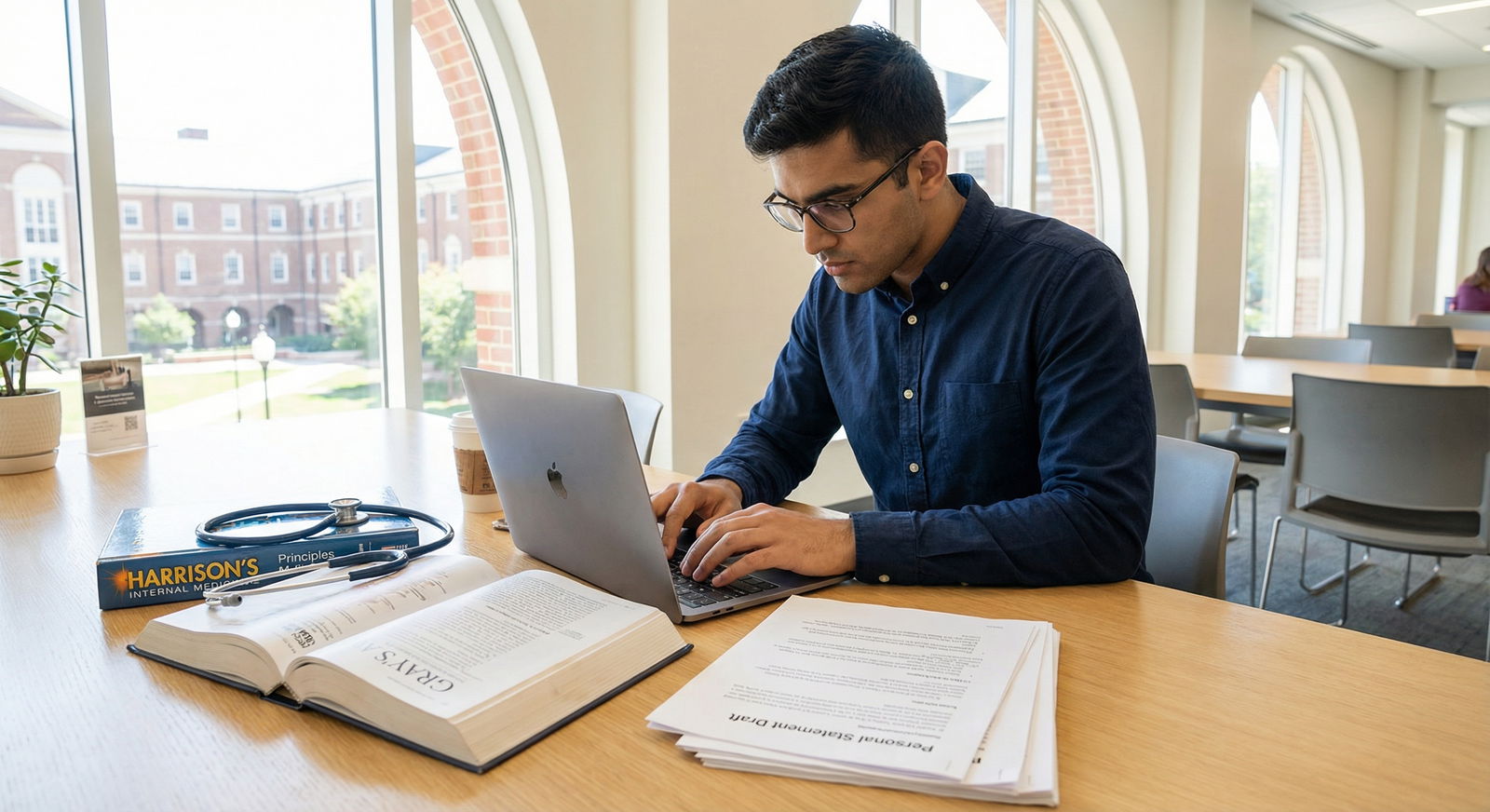
Crafting a standout Personal Statement is one of the most important—and most stressful—parts of your medical school or residency application. It’s your primary opportunity to speak directly to the admissions committee, beyond your GPA, MCAT/USMLE scores, and activity list. A strong essay can turn a borderline file into an interview. A weak one can sink an otherwise solid applicant.
Yet many applicants, even excellent students, fall into the same preventable traps. Below are the top 10 mistakes to avoid in your Personal Statement, along with detailed Application Tips, concrete examples, and Writing Guide–style strategies to help you present your best self to medical school or residency programs.
1. Neglecting the Prompt and Program Expectations
Every application platform and institution has its own expectations for the Personal Statement. For medical school, the AMCAS, TMDSAS, and AACOMAS prompts differ subtly but meaningfully. For residency, ERAS has length limits and specialty-specific norms. Ignoring these is one of the most damaging missteps.
Admissions readers can immediately tell when an essay doesn’t answer the question they asked—or when an applicant simply recycled a generic statement.
Why this hurts your application
- Signals poor attention to detail and weak professionalism
- Suggests you may not follow directions in clinical or academic settings
- Makes it harder for the reader to evaluate you on their criteria
- Can come across as laziness or lack of genuine interest in their program
How to stay aligned with the prompt
Start by dissecting the prompt
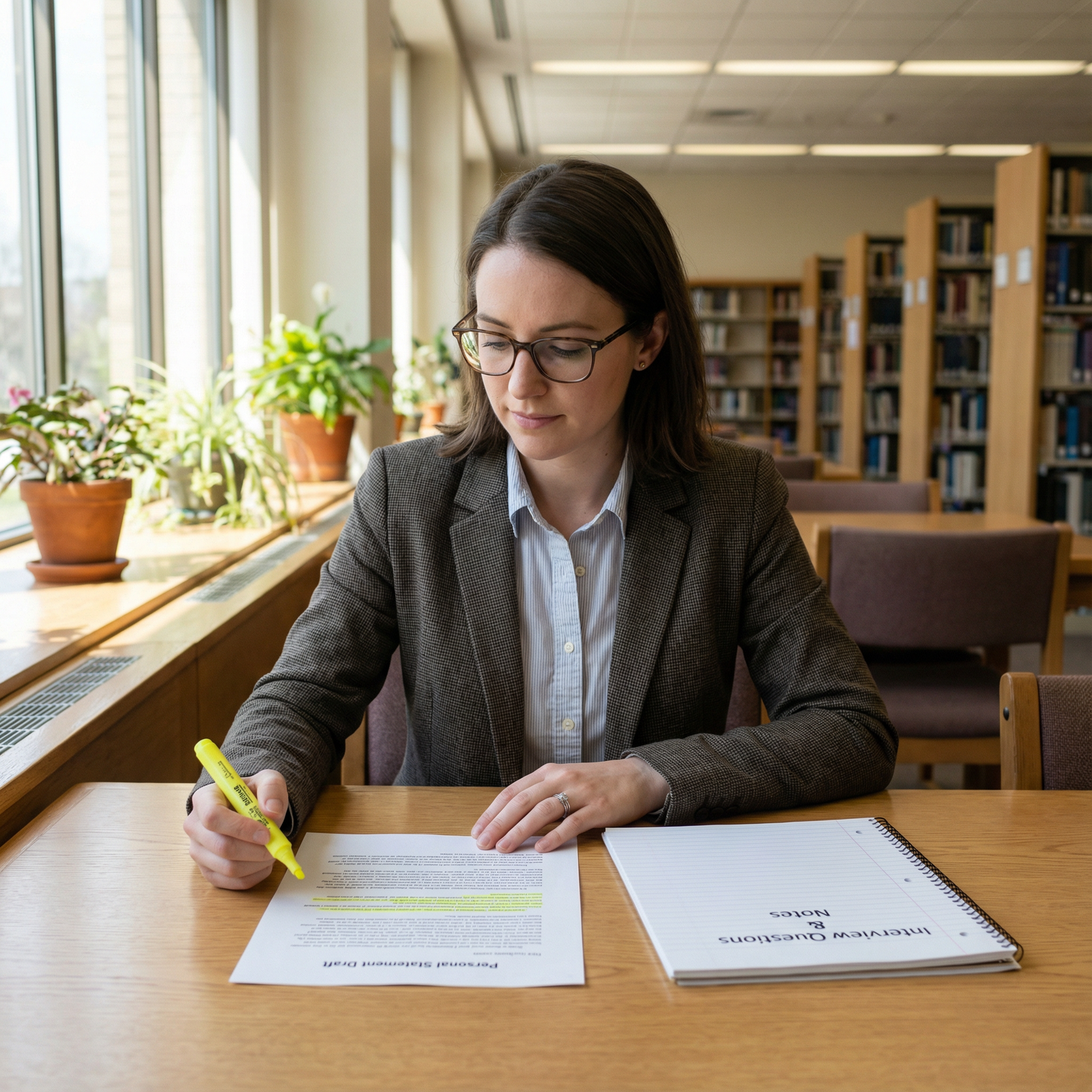
- Highlight key verbs: “describe,” “reflect,” “explain,” “discuss.”
- Identify the core ask: motivation for medicine, evidence of fit, significant experiences, future goals.
Create a brief outline tied to the prompt
- For each section of your outline, write in the margin which part of the prompt it answers.
- Remove any paragraph that doesn’t clearly connect back to the prompt or to your readiness for medicine.
Tailor for each context when needed
- AMCAS Personal Statement: broad focus on why medicine and readiness.
- Secondary essays: school-specific values, missions, and attributes.
- ERAS residency Personal Statement: why this specialty, your clinical development, and what kind of resident you’ll be.
Cross-check before submitting
- After drafting, re-read the prompt and ask, “Could a stranger identify every element they asked for in my essay?”
2. Being Too Generic and Forgettable
Admissions committees read hundreds or thousands of essays each year. Vague statements like:
- “I want to help people.”
- “I’ve always been fascinated by science.”
- “I’ve wanted to be a doctor for as long as I can remember.”
tell them nothing specific about you. A generic essay blends into the pile and is quickly forgotten.
Common signs of a generic Personal Statement
- Could be copied and used by hundreds of other applicants without changes
- Relies mostly on abstract values (compassion, service, curiosity) without concrete examples
- Contains broad generalizations instead of individual stories
How to make your story specific and memorable
Anchor your essay in 2–4 key experiences
- A particular patient you met as a volunteer
- A research project that changed the way you think about evidence
- A family health experience that shaped your understanding of illness
- A leadership role that tested your resilience or ethics
Use sensory and situational details
Rather than:“Volunteering in the clinic taught me the value of empathy.”
Try:
“On my third shift in the free clinic, I met Mrs. Hernandez, a 63-year-old woman who had avoided care for years because of cost. Sitting beside her as the interpreter explained her new diabetes diagnosis, I watched fear, relief, and cautious hope cross her face. That encounter transformed my abstract idea of ‘healthcare access’ into a deeply personal responsibility.”
Show, don’t just tell
Instead of “I am a hard worker,” demonstrate that through:- Balancing a full course load with night shifts as a CNA
- Retaking a challenging course and improving
- Seeing a complex project through over many months
Ask: Could someone else plausibly write this?
If yes, add more detail and introspection until it is clearly your story.

3. Leaning on Clichés Instead of Real Reflection
Clichés are tempting because they feel safe and familiar. Unfortunately, they also dilute your message and make you sound indistinguishable from thousands of other applicants.
Common medical school and residency clichés
- “Medicine is my calling.”
- “I’ve wanted to be a doctor since I was a child.”
- “I love science and helping people.”
- “This experience changed my life.” (without explaining how)
- Overused quotes from famous physicians or philosophers
Why clichés are problematic
- They replace insight with slogans
- They sound rehearsed and insincere
- They shift focus away from your unique perspective
How to avoid clichés and deepen your writing
Replace clichés with specific explanations
Instead of:“Medicine is my calling.”
Try:
“Repeatedly returning to the hospice as a volunteer—even on days that left me emotionally drained—helped me recognize that accompanying patients and families through uncertainty is not just meaningful to me; it feels like work I am meant to do.”
Interrogate your statements with “Why?” and “How?”
- “I want to help people.” → Why medicine instead of nursing, social work, public health, or another field?
- “I love science.” → How does that love translate into patient care, critical thinking, or lifelong learning?
Avoid overused opening scenes
Admissions readers frequently see:- Childhood injuries and ER visits
- A relative’s illness as the single defining reason for medicine
- “As I held my grandmother’s hand…” as the very first line
You can still write about these experiences, but do so with a fresh angle and deeper reflection than simply “This made me want to be a doctor.”
4. Writing Without Clear Structure or Narrative Flow
Even rich content can fall flat if it’s poorly organized. A Personal Statement that jumps around chronologically, piles unrelated anecdotes together, or ends abruptly will confuse readers and weaken your impact.
Signs your essay lacks structure
- The reader can’t easily summarize your main message in one or two sentences
- Paragraphs feel like isolated stories instead of a coherent journey
- You tack on a rushed conclusion that repeats previous points
A simple structure that works for most applicants
Think of your Personal Statement like a focused story arc:
Introduction: Set the stage
- A concise hook: a moment, question, or reflection that introduces your central theme (e.g., resilience, curiosity about the whole person, commitment to underserved communities).
- Briefly signal where the essay is headed: why medicine, who you are becoming.
Body Paragraphs: Develop your journey
- 2–4 paragraphs, each centered on a key experience or phase
- Show progression: observer → participant → responsible team member
- Connect each experience to qualities relevant to medicine (communication, empathy, teamwork, intellectual rigor, adaptability).
Conclusion: Look forward
- Synthesize your journey into a clear, forward-looking statement: what kind of student/resident you aim to be, what values will guide your practice.
- Avoid introducing brand-new major stories here; instead, tie back to earlier themes.
Practical Writing Guide tips
- Outline first, then draft. Even a simple bullet list of intro → 3 key experiences → conclusion will prevent wandering.
- Use transitions. Phrases like “Later, during my research work…” or “While this experience ignited my interest, clinical volunteering deepened it…” help create continuity.
- Print and read aloud. You’ll quickly hear where the narrative stalls or jumps.
5. Ignoring the Power of Careful Editing and Feedback
A Personal Statement with typos, awkward phrasing, or inconsistent tense suggests carelessness. In medicine—where precision and communication matter—this is not the impression you want to leave.
Why editing matters so much
- Demonstrates professionalism and respect for the reader
- Clarifies your thinking and message
- Ensures your strongest qualities—not errors—stand out
A stepwise editing strategy
Content edit (big picture)
- Does the essay answer the prompt?
- Are your motivations for medicine and your core strengths clear?
- Are there any stories that don’t support your main message?
Clarity and style edit
- Replace long, convoluted sentences with concise ones.
- Eliminate repetitive phrases and filler (“very,” “really,” “in order to”).
- Use active voice where possible: “I led the project” instead of “The project was led by me.”
Line edit and proofreading
- Check for grammar, spelling, punctuation.
- Ensure consistent tense (usually past tense for past experiences, present for current motivations).
- Read aloud to catch awkward phrases and missing words.
Seek external feedback wisely
- Ask 2–3 trusted readers: a mentor, advisor, or experienced peer.
- Provide them with the prompt and your CV so they have context.
- Ask specific questions: “What three qualities do you take away from this?”, “Where did you lose interest?”, “What was confusing?”
Protect your voice
- Incorporate feedback that strengthens clarity and content, but avoid letting others rewrite your essay in their style. Admissions committees want to hear you, not your editor.
6. Dwelling on Negative Experiences Without Growth
Many applicants have faced significant adversity: academic setbacks, illness, family crises, financial hardship, or mental health challenges. These can be powerful parts of your story—but only if handled thoughtfully.
When negative focus becomes a problem
- The essay reads more like a grievance or trauma narrative than a professional reflection
- The main impression is your suffering, not your response to it
- There’s little evidence of insight, coping, or change over time
How to frame challenges constructively
Decide whether the Personal Statement is the right place
- For isolated academic dips or specific difficulties, consider using the “Academic Explanation” or “Additional Information” sections if available.
- Reserve the Personal Statement for experiences that directly shaped your path to medicine or your professional identity.
Emphasize response over the event
- What actions did you take? (seeking support, developing new study strategies, finding therapy, taking on work)
- What did you learn about yourself, your limits, or your values?
- How has this prepared you for the emotional and intellectual demands of medicine?
Show current stability and readiness
Especially for mental or physical health issues, admissions committees want reassurance that you’ve developed sustainable strategies and are ready for the rigors of training.Avoid details that are overly graphic or distracting
Focus on what the experience meant to you and how it influenced your development, not on sensationalism.
7. Failing to Demonstrate Personal and Professional Growth
A list of experiences—even impressive ones—is insufficient without reflection. Admissions committees are looking for evidence of maturity, teachability, and progression over time.
What growth looks like in a Personal Statement
- Moving from passively observing clinicians to actively contributing to teams
- Evolving from discomfort with uncertainty to being able to sit with it thoughtfully
- Developing more nuanced views of patient care, ethics, and systems-level issues
Strategies to highlight growth
Use before-and-after contrast
- “At first, I felt paralyzed when a patient became tearful. Over time, with guidance from my preceptor, I learned to pause, sit down, and invite them to share more. That shift—from wanting to fix everything immediately to learning to listen—transformed my understanding of what patients need.”
Show increasing levels of responsibility
- Research assistant → project lead
- Volunteer → coordinator
- Shadowing student → medical assistant or scribe with defined clinical tasks
Name specific skills gained
Instead of just “I grew a lot,” identify:- Communication across language or cultural barriers
- Time management in busy clinical environments
- Resilience after repeated rejection or failure
Connect growth to future practice
“Learning to give and receive feedback during my research work is a skill I look forward to bringing into residency, where constant learning from colleagues will be essential.”
8. Not Explicitly Connecting Experiences to Medicine
One of the most common weaknesses in Personal Statements is storytelling without a clear link to medicine or your chosen specialty. Admissions readers are left asking: “So what? How does this relate to being a physician?”
Experiences that need explicit connection
- Non-clinical jobs (teaching, retail, coaching, business)
- Research with limited direct patient contact
- Leadership in clubs, sports, or arts
- Personal or family experiences of illness
How to draw a clear line to medicine
Identify the underlying competencies
For each experience, ask:- What did I actually do?
- What skill or perspective did I gain?
- How is that skill relevant to caring for patients, working on teams, or navigating the healthcare system?
Use bridging sentences
- “This experience taught me to…”
- “In medicine, I see this skill as essential because…”
- “As a future internist/psychiatrist/surgeon, I will draw on this when…”
Avoid making the reader infer the connection
Do not assume “admissions will get it.” Spell it out in one or two explicit sentences after each major example.For residency applicants: tie to specialty-specific themes
- Internal medicine: diagnostic reasoning, comfort with complexity, longitudinal relationships
- Pediatrics: family-centered care, communication at different developmental levels
- Psychiatry: listening, comfort with ambiguity, understanding of biopsychosocial models
- Surgery: decisiveness, manual dexterity, team-based acute care
9. Underestimating the Power of Specificity and Detail
Vague language and overgeneralization flatten your story. Specificity, on the other hand, makes your application vivid and credible.
Vague vs. specific: a direct comparison
- Vague: “I worked in a lab and learned a lot about research.”
- Specific: “As part of a cardiology lab, I spent months repeating an experiment that failed to show the expected change in protein expression. Learning to trouble-shoot our protocol, accept negative data, and present inconclusive results honestly taught me humility and the value of scientific rigor—lessons I will carry into evidence-based patient care.”
Ways to add impactful specificity
Include concrete details sparingly but purposefully
- Age of a patient (approximate), type of setting (rural clinic, tertiary hospital), role you held.
- One or two brief quotes or patient phrases (de-identified) that stuck with you.
Quantify when appropriate
- “Over two years, I volunteered more than 150 hours in the hospice.”
- “As a coordinator, I supervised a team of 12 volunteers.”
Be precise with your contributions
- “I created a bilingual appointment reminder handout that reduced no-show rates in our clinic’s pilot group.”
- “I organized weekly debrief sessions for new volunteers to reflect on difficult interactions.”
Balance detail with brevity
You don’t need to describe every step of a lab protocol or clinical encounter. Choose the details that highlight your role and insight, not technical minutiae.
10. Forgetting to Be Authentic and Human
In trying to impress, some applicants adopt a stiff, overly formal tone or write what they think the committee wants to hear. The result is an essay that feels polished but hollow.
Signs your essay may not be authentic
- You avoid discussing any struggle, uncertainty, or growth
- Your voice on the page doesn’t sound like you in conversation
- The essay reads like a list of achievements rather than a reflection on your journey
- You are writing primarily to “look perfect” rather than to be understood
Why authenticity matters
- Admissions committees are evaluating whether they want to train and work with you for years
- Authentic reflection demonstrates self-awareness—a key professional competency
- Genuine passion and humility are far more compelling than forced “perfection”
How to keep your Personal Statement authentic
Write an unfiltered first draft
Before editing for tone or structure, free-write your story as if you were explaining it to a trusted mentor. Then refine.Include honest moments of uncertainty or change
- Times when you questioned your path and what brought you back
- Early misconceptions about medicine that you corrected
- Strengths and weaknesses you’ve come to recognize in yourself
Let your natural voice come through
- Professional does not mean robotic. It’s okay to sound like a thoughtful human being.
- If a friend reads it and says, “This doesn’t sound like you,” revise.
Avoid manufacturing drama or exaggerating roles
Admissions teams can often sense embellishment. Integrity is far more important than impressiveness.
Frequently Asked Questions About Personal Statements for Medical School and Residency
1. How long should my Personal Statement be?
For medical school:
- AMCAS: Up to 5,300 characters (including spaces), roughly 1–1.5 single-spaced pages.
- AACOMAS and TMDSAS have similar but slightly different limits—always verify current guidelines.
For residency (ERAS):
- There is no strict word count, but aim for about 650–900 words (roughly 3/4 to 1 page single-spaced in the ERAS text box). Long, dense essays are harder to read and may lose the reader’s attention.
Always prioritize clarity and impact over hitting the maximum length.
2. Should I discuss failures or academic issues in my Personal Statement?
You can, but do so strategically:
- If the setback significantly shaped your growth, resilience, or understanding of yourself, it may belong in your Personal Statement.
- Focus on what you did in response, what you learned, and how you’ve changed—not just the difficulty itself.
- For isolated issues (a single bad semester, one failed exam), consider using any dedicated “Academic Difficulties” or “Additional Information” sections instead, so your main essay can focus more on your motivations and strengths.
3. Can I reuse the same Personal Statement for different schools or specialties?
Partially, but with caution:
- For medical school, your primary Personal Statement can be the same across programs, but secondaries should be tailored carefully to each school’s mission and values.
- For residency, each specialty you apply to should ideally have its own statement that explains why that specialty and how your experiences align with it. Using a generic statement for multiple specialties is a red flag.
Always make sure your essay makes sense for the specific program or specialty reading it.
4. Is it okay to use quotes or creative writing elements?
Moderately and purposefully:
- A very brief quote or vivid narrative opening can be effective—but your own voice and reflection must dominate.
- Avoid starting with famous quotations; they often come across as cliché or as trying too hard.
- Remember that your main goals are clarity, insight, and professionalism. Creative elements should enhance, not distract from, those goals.
5. What if I don’t have extensive clinical or volunteer experience?
Admissions committees understand that opportunities vary. Focus on:
- The quality, not just the quantity, of your experiences
- What you learned about patient care, the healthcare system, or yourself from the exposure you do have
- Other roles (teaching, caregiving, community work, leadership) that demonstrate transferable skills like communication, empathy, and responsibility
If your clinical exposure is limited, use your Application Tips strategy to clearly articulate how you’ve explored medicine and why you are confident it’s the right path for you.
By avoiding these ten common mistakes and approaching your Personal Statement as a thoughtful, honest narrative—rather than a checklist—you can create an essay that truly strengthens your medical school or residency application. Use this Writing Guide as a framework: answer the prompt, be specific, show growth, connect your experiences to medicine, and let your authentic voice come through.