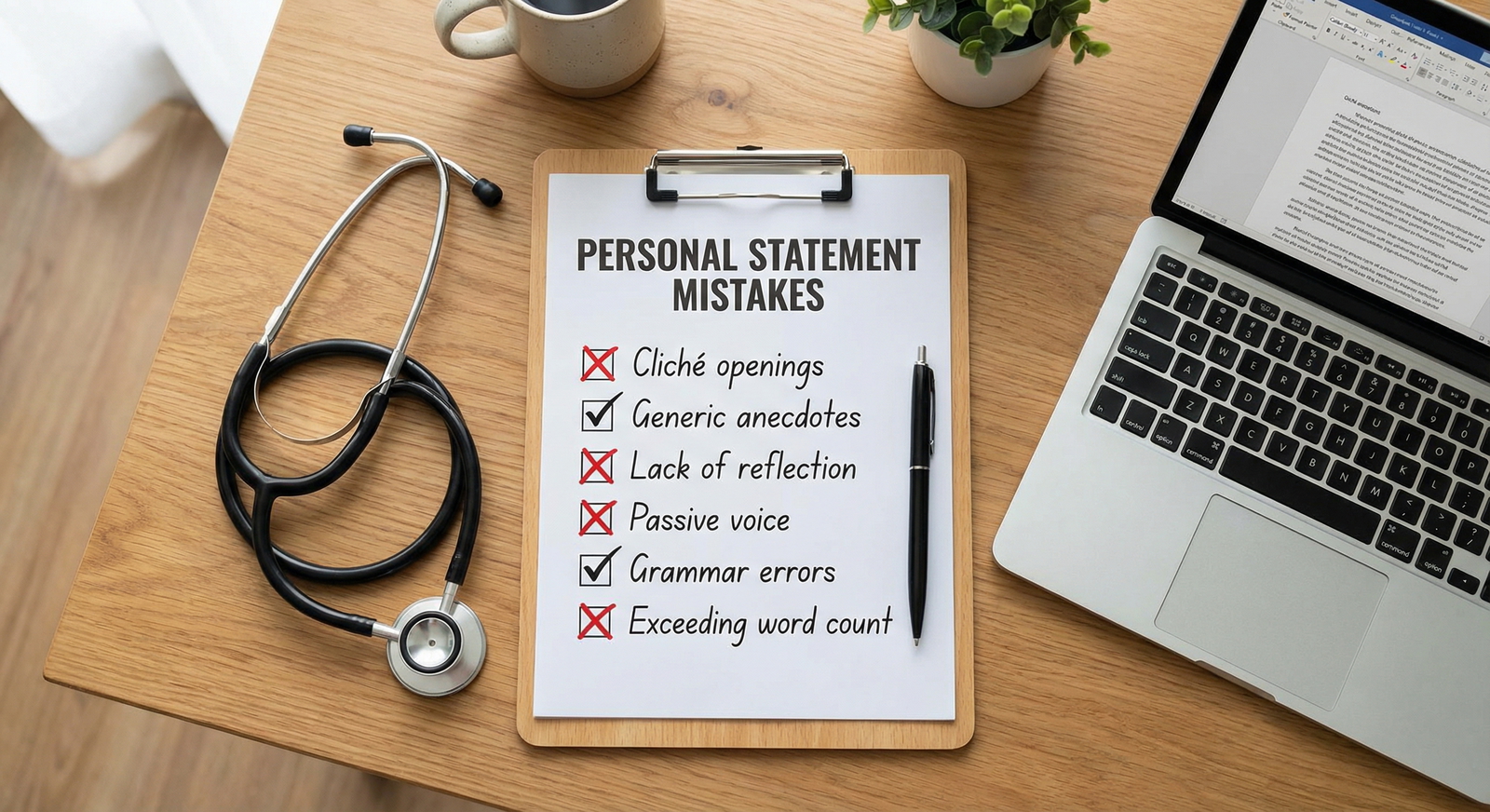
Transforming Your Personal Statement: Advanced Do’s and Don’ts for Medical School Admissions
Applying to medical school or preparing your residency application is both exciting and intimidating. Among MCAT scores, GPAs, letters of recommendation, and extracurriculars, one element consistently plays an outsized role in the admissions process: your personal statement.
Unlike numbers and bullet points, your personal statement is where you demonstrate who you are as a developing physician—your motivations, values, resilience, and maturity. Done well, it can move an application from “qualified” to “must-interview.”
This guide expands the classic do’s and don’ts of personal statement writing with deeper, practical application tips and writing advice tailored to medical school and residency applicants. You’ll learn how to transform your personal statement into a compelling, cohesive narrative that supports your entire application package.
Why Your Personal Statement Matters So Much in the Admissions Process
Your personal statement isn’t an extra essay tacked onto your application—it’s the narrative lens through which the admissions committee interprets everything else you’ve done.
Beyond Numbers: Humanizing Your Application
Grades, test scores, and research abstracts show what you can do. Your personal statement shows who you are while doing it.
A strong medical school personal statement helps the committee understand:
- How you think about patients, teams, and responsibility
- What drives you toward this profession, despite its challenges
- How you respond to setbacks, ambiguity, and high expectations
- Whether your values align with the mission of their institution
Demonstrating Readiness for Medical Training
For medical school applicants, reviewers are looking for evidence that you:
- Grasp the realities of medicine beyond TV portrayals
- Have durable, tested motivation—not a superficial interest
- Possess foundational qualities: empathy, integrity, curiosity, resilience
For residency applicants, the statement should further show:
- Fit with the specialty’s demands and culture
- Maturity in clinical reasoning and professional identity
- Insight into your strengths, limitations, and growth areas
Showcasing the Professional You’re Becoming
A thoughtful personal statement has three crucial functions in the admissions process:
Real-World Insight:
Specific, well-chosen experiences demonstrate your awareness of patient care, health systems, and the social responsibilities of medicine.Diversity and Perspective:
Your background, identity, and lived experiences shape how you’ll care for patients and collaborate with colleagues. Articulating this thoughtfully helps committees build diverse classes and residency cohorts.Personal Connection:
Admissions committee members often review hundreds of applications. A clear, reflective narrative creates a memorable impression that can influence both interview decisions and later ranking discussions.
Core “Do’s”: Strategies to Elevate Your Personal Statement
1. Do Start Early and Treat It as a Process
Strong personal statements rarely come from a single weekend of writing. They evolve.
Practical timeline (ideally):
- 2–4 months before submission:
- Brainstorm experiences, themes, and turning points
- Free-write without worrying about structure
- 4–6 weeks before submission:
- Draft 1: Get a full version on the page
- Draft 2–3: Refine structure, deepen reflection
- 2–3 weeks before submission:
- Edit for clarity, concision, and tone
- Seek targeted feedback from a few trusted readers
- Final 1–2 weeks:
- Polish language, check flow
- Do careful proofreads, confirm character/word limits
Actionable tip: Schedule specific “writing appointments” with yourself (e.g., three 60-minute blocks per week). Treat them like mandatory labs or clinical shifts.
2. Do Understand Your Audience and Their Constraints
Your readers are often faculty, clinicians, or trained staff:
- They may read 30–60 statements in a sitting.
- They skim at first, then re-read only the most promising.
- They are sensitive to tone, professionalism, and self-awareness.
What they are looking for:
- Evidence that you understand what you’re signing up for
- Maturity in how you describe patients, colleagues, and yourself
- A narrative that aligns with your CV and letters of recommendation
- Clear communication skills—they imagine you counseling patients or presenting on rounds
Writing advice:
Imagine your future program director or attending physician reading your essay aloud to a group. Would you feel comfortable? That’s the standard of professionalism and authenticity you want.

3. Do Tell a Focused, Cohesive Story—Not Your Entire Life
Many applicants try to cram everything into one essay. The result is often scattered and forgettable.
Instead, choose a cohesive central theme, such as:
- Growing from observer to advocate
- Learning to tolerate uncertainty and complexity
- Discovering the importance of listening over fixing
- Integrating a non-traditional background (engineering, art, military, caregiving) into your medical identity
Then, select 2–4 key experiences that:
- Support that theme
- Show your growth over time
- Connect logically from one paragraph to the next
Example of a cohesive arc:
- Early exposure as a medical interpreter for family → awakened to communication barriers.
- Hospital volunteering → saw systemic inequities and felt frustration.
- Community health project or research → learned to move from frustration to action.
- Conclusion → commitment to practicing medicine with a focus on language access and health equity.
4. Do “Show, Not Just Tell” with Specific, Reflective Detail
Saying “I am compassionate and hardworking” is far less effective than demonstrating those traits through a concrete moment.
Weak (telling):
“I am passionate about helping underserved communities.”
Stronger (showing + reflecting):
“In the free clinic, I watched a mother leave without insulin because the cost meant skipping groceries for the week. I remember entering her data mechanically, until her hands started to shake when she mentioned her children. Later, reviewing charts, I realized how often cost quietly redirected care plans. That day shifted my understanding of ‘non-compliance’ from a judgment to a signal to ask better questions.”
Notice how the second version:
- Anchors the point in a specific experience
- Shows emotional and cognitive processing
- Connects to a broader understanding of patient care
Actionable writing advice:
For each major paragraph, ask:
- What exact moment or interaction illustrates my point?
- What did I think, feel, and learn?
- How did it change my behavior or goals?
5. Do Be Genuinely Yourself—But the Most Professional Version
Authenticity doesn’t mean oversharing or being casual. It means:
- Avoiding a “persona” that feels generic or performative
- Writing in a voice that sounds like you at your best, not like a thesaurus
- Being honest about struggles while taking responsibility and showing growth
Balanced authenticity examples:
- Discussing a low GPA semester due to illness/family crisis—but emphasizing what you changed: study strategies, time management, help-seeking.
- Acknowledging burnout or self-doubt—but demonstrating insight and how you now care for your well-being.
Avoid:
- Self-pitying tones
- Blaming others or the system without acknowledging your own agency
- Dramatic language that feels manipulative rather than sincere
6. Do Ensure Structure, Clarity, and Logical Flow
Think of your personal statement as a clinical note: it needs to be organized, purposeful, and easy to follow.
Effective structure often includes:
- Opening paragraph:
- A hook that orients the reader
- Introduces the theme or question your essay will explore
- Middle paragraphs (2–4):
- Each centered on a key experience or period of development
- Clear transitions that show how one stage leads to the next
- Conclusion paragraph:
- Synthesizes—not repeats—your main points
- Articulates who you are now and how you envision yourself in medicine or your chosen specialty
Clarity checklist:
- Each paragraph has a clear main point.
- Sentences are mostly straightforward; complex ideas are broken down.
- There’s a visible progression from past → present → future.
7. Do Revise, Seek Targeted Feedback, and Protect Your Voice
Revision is where good statements become excellent.
Three-phase revision strategy:
- Content revision:
- Are your strongest experiences and themes included?
- Are you showing growth and reflection, not just activity?
- Structure revision:
- Does the essay flow logically?
- Are any sections repetitive or tangential?
- Line-level editing:
- Eliminate filler and clichés
- Smooth awkward transitions and tighten sentences
- Correct grammar, spelling, and punctuation
Who to ask for feedback:
- A mentor or physician who understands the admissions process
- A trusted peer with strong writing skills
- An advisor or pre-health/Student Affairs office
Ask each reader for specific feedback, such as:
- “What three traits do you think I’m trying to convey?”
- “Where did you lose interest or get confused?”
Incorporate feedback selectively—keep your core message and voice intact.
Core “Don’ts”: Common Pitfalls That Weaken Personal Statements
1. Don’t Lean on Clichés or Overused Openings
Admissions readers see the same openings repeatedly:
- “Ever since I was a child, I have wanted to be a doctor…”
- “Medicine is the perfect combination of science and helping people.”
- Starting with a dramatic patient death without real reflection
If your first paragraph could easily belong to hundreds of other applicants, it’s not serving you.
How to avoid this:
- Start with a specific moment, question, or realization that is genuinely yours.
- Use simple, direct language—originality comes more from insight than from trying to sound “fancy.”
Instead of:
“As long as I can remember, I have been fascinated by the human body.”
Try:
“The first time I held a Doppler probe, I expected a steady rhythm. Instead, I heard silence—and realized the patient’s ‘missed appointment’ was a heart attack two days earlier.”
2. Don’t Rehash Your Resume or Activity List
Your personal statement is not a chronological tour of everything you’ve done.
Avoid paragraphs like:
“I volunteered at Hospital X, conducted research at Lab Y, shadowed at Clinic Z, and served as president of Club A…”
All of that is already visible on your CV.
Instead:
- Choose a limited number of experiences to explore in depth.
- Focus on what you thought, felt, learned, and changed, not just what you did.
- Draw connections between experiences (e.g., how research informed your bedside manner).
3. Don’t Neglect Editing, Proofreading, or Professionalism
Typos or sloppy formatting send a strong negative signal: if you cut corners on your own personal statement, how attentive will you be with patient notes or professional communication?
Professionalism checklist:
- No spelling or grammar errors
- Consistent verb tenses (usually past for experiences, present/future for goals)
- No slang, texting shorthand, or overly casual phrases
- Respectful language about patients, colleagues, and other professions
Tools and strategies:
- Use spell-check and tools like Grammarly—but don’t rely on them alone.
- Read your statement aloud; this often reveals awkward phrasing.
- Print it out once—errors are easier to catch on paper.
4. Don’t Try to Imitate Someone Else’s Story or Style
You may see “successful” sample personal statements online or from peers and feel pressure to copy the structure, voice, or type of story.
This often backfires because:
- Program directors can recognize formulaic essays.
- Your letters of recommendation and interview persona might not match the essay’s tone.
- You risk diluting the unique experiences that truly set you apart.
Better approach:
- Use sample statements only to understand general structure and level of detail.
- Ask yourself, “What can I say that very few other applicants could truthfully say?”
- Center your essay on experiences where you played a meaningful role—not just “cool” experiences.
5. Don’t Obsess Over Length at the Expense of Quality
You must respect the word or character limits (e.g., AMCAS 5,300 characters; ERAS 28,000 characters, etc.), but “longer” is not always “better.”
Admissions readers prefer:
- A concise, well-developed 4,800-character AMCAS statement over a bloated 5,300 characters filled with repetition.
- A focused ERAS essay that uses most but not necessarily all of the space.
Pruning tips:
- Remove sentences that restate what the reader already knows or can infer.
- Cut generic phrases like “In conclusion,” “I truly believe,” “I learned a lot.” Show it instead.
- Prioritize experiences that move your narrative forward.
6. Don’t Include Irrelevant or Distracting Information
Every paragraph should contribute to the central question:
“Why medicine (or this specialty), and why you?”
Be cautious about:
- Long tangents on unrelated hobbies that don’t connect back to your development as a future physician
- Controversial topics (politics, religion, ethical debates) unless handled with great nuance and clear relevance
- Graphic medical details that may feel sensational rather than substantive
Filter to apply:
For each anecdote, ask:
- Does this show a quality important to being a physician or resident?
- Does it fit my central theme?
- Does it add something new, or is it repeating what I’ve already shown?
If not, cut or shorten it.
Putting It All Together: Turning Principles into a Powerful Narrative
To transform your personal statement from a checklist of experiences into a compelling, memorable narrative:
Clarify your core message.
If a reviewer had to describe you in three attributes after reading your essay, what should they be? (e.g., reflective, resilient, patient-centered; or curious, team-oriented, systems-focused.)Choose experiences that clearly support those attributes.
Prioritize depth over breadth.Use specific, vivid details sparingly but effectively.
Enough to bring scenes to life without turning the essay into a short story.Balance confidence with humility.
Show pride in your growth and insights, but acknowledge ongoing learning.End with forward momentum.
The conclusion should leave the reader with a sense of:- Who you are now, and
- How you’re ready for the next stage of training (medical school or residency).
FAQ: Common Questions About Medical School and Residency Personal Statements
1. How long should my personal statement be?
For medical school:
- AMCAS (MD): Up to 5,300 characters (including spaces).
- AACOMAS (DO): Similar limit (check current cycle guidelines).
- TMDSAS (Texas schools): Different limits; confirm on their site.
For residency (ERAS):
- The system allows up to 28,000 characters, but most strong statements are well under this. Typically, 600–900 words is appropriate.
Always check current application instructions. Aim to use the space thoughtfully without adding fluff just to reach the maximum.
2. Can I write about failure, personal hardship, or mental health?
Yes—if you do so thoughtfully and with a focus on growth and professionalism.
Effective approaches:
- Describe the context briefly and clearly.
- Emphasize what you learned and how you changed.
- Show evidence of sustained improvement or insight (e.g., better study strategies, healthier coping mechanisms, seeking support appropriately).
Avoid:
- Graphic or intensely personal detail that derails your main message.
- Presenting yourself as currently unstable or unable to meet the demands of training.
- Blaming others without reflecting on your own role.
When in doubt, get feedback from a mentor or advisor on how a sensitive topic is coming across.
3. Is it okay to get help with my personal statement?
Absolutely—and it’s wise to do so. Seeking feedback demonstrates maturity and commitment to growth.
Ethical and effective help includes:
- Brainstorming with mentors or advisors
- Having peers or faculty comment on clarity, tone, and overall impression
- Using writing centers or professional editing for coaching and suggestions, not for ghostwriting
However:
- The final ideas and wording must be your own.
- Be cautious with too many editors—too much feedback can dilute your voice.
- Avoid any service that promises to “write your statement for you.”
4. Should I tailor my personal statement to each specific medical school or residency program?
For medical school:
- Typically, you submit one central personal statement (AMCAS/AACOMAS) to all schools, plus school-specific secondary essays.
- Use secondaries—not the main statement—to highlight specific fit with individual schools.
For residency:
- You can upload multiple personal statements to ERAS and assign them to different programs.
- Many applicants write a main specialty-specific statement, then create minor variations emphasizing different interests (e.g., community vs. academic focus).
Always:
- Keep the core narrative consistent.
- Avoid copying program websites verbatim; instead, show genuine alignment with their values and strengths.
5. How early should I start working on my personal statement, and how do I know it’s “done”?
Ideally, start drafting 2–4 months before you plan to submit your application.
You’ll know your statement is close to finished when:
- The central message is clear and consistent.
- Multiple readers can describe your key qualities the way you intended.
- You’ve removed obvious repetition, clichés, and irrelevant details.
- Reading it aloud feels natural, not forced or overly embellished.
- You feel you’d be comfortable discussing any part of it in an interview.
At that point, focus on polishing rather than rewriting from scratch. Perfection isn’t possible—but clarity, authenticity, and professionalism are.
By applying these do’s and don’ts with intention, you’ll craft a personal statement that does more than simply “explain why you want to be a doctor” or “why this specialty.” You’ll present a coherent, compelling portrait of a developing physician the admissions committee can easily imagine in their classrooms, clinics, and residency programs.
For additional application tips and writing advice, you may also find these resources valuable: