
Introduction: Why Commercial Real Estate Matters for Physicians
Physicians spend years mastering clinical skills, yet receive relatively little formal training in personal finance or investing. As your career progresses, you may find that relying solely on W‑2 income from clinical work feels limiting—especially as burnout, lifestyle inflation, and changing reimbursement structures put pressure on your primary income stream.
Commercial Real Estate (CRE) investing offers physicians a powerful way to:
- Generate passive income that is not tied to seeing more patients
- Build long-term wealth and equity outside of the stock market
- Gain tax advantages specific to real estate ownership
- Create options for earlier financial independence or reduced clinical hours
This guide is designed specifically for physicians and high‑earning healthcare professionals who want to understand Commercial Real Estate as a deliberate wealth-building strategy, not a hobby. We will walk through the benefits, types of properties, core financial and legal considerations, step‑by‑step strategies, and common pitfalls—all framed around physician-specific realities like limited time, student debt, and high income.
Why Physicians Should Consider Commercial Real Estate Investing
Passive Income That Supports Lifestyle and Reduces Burnout
For physicians, time is often the scarcest resource. Clinical revenue usually scales with how many patients you see, procedures you do, or shifts you work. This can quickly become unsustainable.
Commercial Real Estate allows you to build passive income streams that continue whether or not you are on call:
- Longer lease terms: Commercial leases commonly run 3–10 years (or more), compared with 12‑month residential leases. That means fewer turnovers and more predictable cash flow.
- Triple‑net (NNN) leases: Many commercial tenants pay a portion or all of the property taxes, insurance, and maintenance, further reducing your active involvement.
- Professional management options: You can offload day‑to‑day operations to a property manager or an asset management team, aligning well with a busy medical practice schedule.
A physician who acquires even a single well‑chosen property (or share of a property via a syndication) can often cover a portion of their living expenses, student loans, or children’s education purely from rental income—without adding more clinic time.
Wealth Building and Portfolio Diversification
From a financial planning perspective, Commercial Real Estate can be a central pillar of long‑term wealth building:
- Equity growth: Over time, tenants’ rent payments help pay down the loan principal, increasing your equity in the property.
- Appreciation: Well-located commercial properties frequently appreciate with inflation and area development, increasing your net worth.
- Diversification: Most physicians are heavily concentrated in:
- Human capital (future clinical earnings)
- Retirement accounts in stock and bond markets
Adding Commercial Real Estate diversifies risk across different asset classes and income streams.
This diversification can be especially helpful as you move closer to retirement or consider partial clinical retirement. Rental income can serve as a buffer against stock market downturns or practice revenue fluctuations.
Tax Advantages Tailored to High Earners
One of the most powerful arguments for Commercial Real Estate as a physician investment strategy is its tax efficiency, especially if you have a high marginal tax rate.
Key tax benefits include:
Depreciation deductions
The IRS allows you to deduct a portion of your property’s value each year as a “non-cash” expense:- Offsets rental income
- Reduces current-year taxable income from the property
- In many cases, bonus depreciation and cost segregation studies can front‑load deductions into earlier years, which is especially helpful for high‑income physicians.
1031 exchanges
A 1031 exchange lets you sell one investment property and reinvest the proceeds into another “like‑kind” property without immediately paying capital gains tax. This allows your investment capital to keep compounding over time.Expense deductions
Legitimate business expenses—property management fees, repairs, insurance, travel related to property oversight, and professional services (CPAs, attorneys)—can be deductible against rental income.
Note: Tax laws are complex and change over time. Physicians should work with a CPA experienced in real estate and ideally familiar with physician income patterns.
Control and Influence Over Your Investment
Unlike mutual funds or index funds, Commercial Real Estate offers direct control:
- You choose:
- Market and submarket
- Tenant profile
- Lease structure
- Renovations and value‑add improvements
- You can actively improve the property’s performance:
- Enhance curb appeal
- Raise below‑market rents over time
- Improve tenant mix in a retail center
- Convert to higher-yield use where zoning allows
This level of control can be appealing for physicians who are used to making complex decisions and want an investment where their judgment, network, and strategy matter.
Types of Commercial Real Estate Properties for Physician Investors
Understanding the major CRE asset classes will help you align your investment strategy with your goals, risk tolerance, and available time.
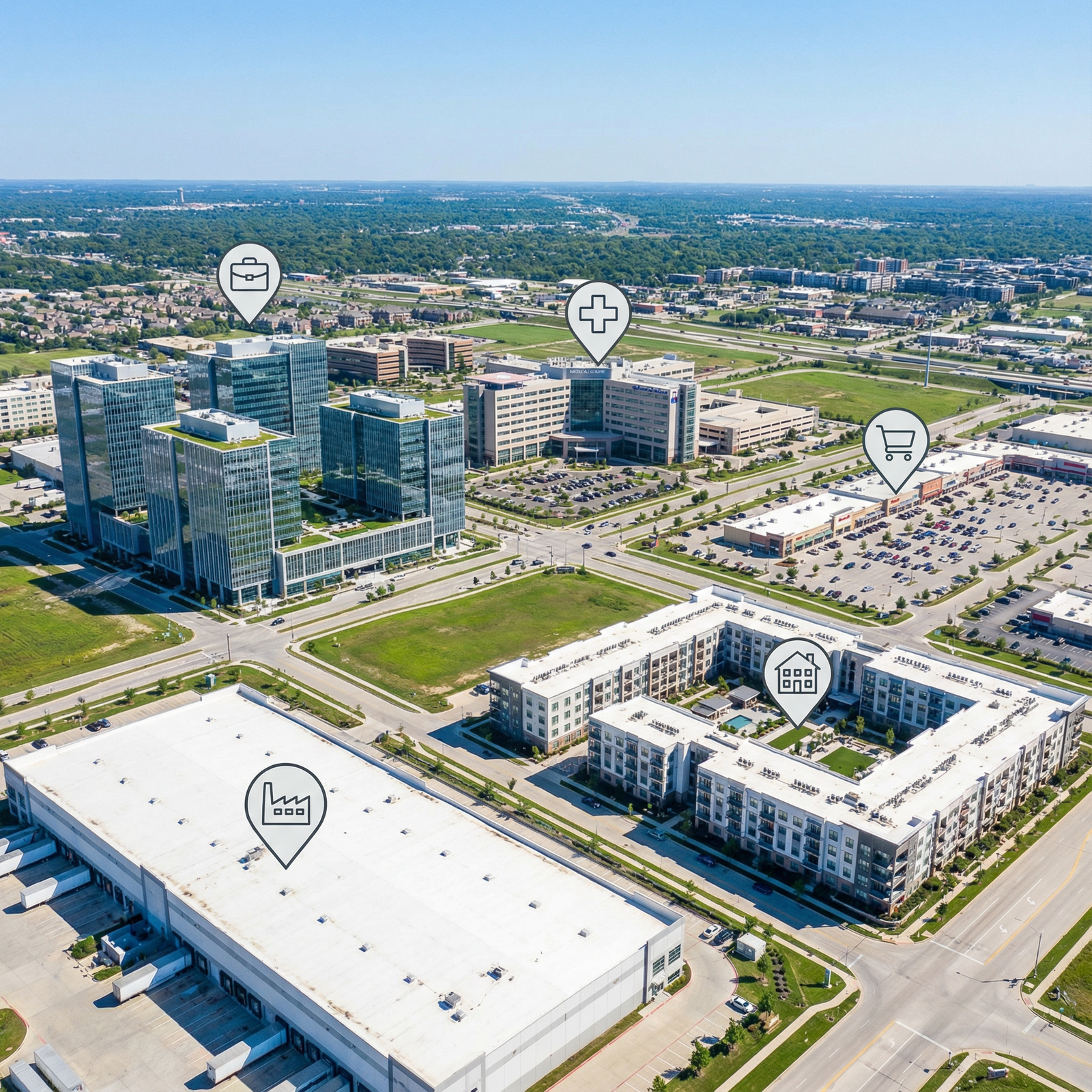
1. Office Buildings and Medical Office Buildings (MOBs)
Office buildings range from small, single-tenant properties to large multi‑tenant complexes. For physicians, medical office buildings are particularly familiar and attractive:
- Pros:
- Long-term leases, often 5–10 years
- Professional tenants (medical practices, law firms, tech companies)
- Potential synergies if you or your group practice occupy space
- Cons:
- Sensitive to local employment trends and remote‑work shifts
- Higher tenant improvement costs when signing new leases
Example physician strategy: Buy a small medical office building, have your practice lease a portion at market rent, and lease remaining suites to complementary specialties—creating stability and referral synergy.
2. Retail Spaces and Neighborhood Centers
Retail properties include strip centers, single‑tenant net‑lease properties (e.g., pharmacies, banks, fast food), and community shopping centers.
- Pros:
- NNN lease structures can push many expenses to tenants
- Essential service tenants (pharmacies, grocery stores) can be resilient
- Cons:
- Vulnerable to e‑commerce and economic cycles
- Success often highly dependent on location and tenant mix
For physicians, a retail center anchored by a pharmacy, urgent care, or diagnostic imaging center may feel more intuitive and directly related to your daily world.
3. Industrial Properties and Warehouses
Industrial properties include warehouses, logistics centers, and light manufacturing sites.
- Pros:
- Long leases with business‑to‑business tenants
- Often lower management intensity than office or retail
- Strong demand in many markets due to e‑commerce and supply chain needs
- Cons:
- Can be highly location‑ and transportation‑dependent
- May require specialized due diligence (zoning, environmental risk)
Industrial can be a good choice for physicians looking for very hands‑off, stable, passive income if paired with third‑party property and asset management.
4. Multifamily (5+ Units) as a Commercial Asset
While multifamily involves residential tenants, properties with five or more units are typically financed and valued as commercial assets based on net operating income (NOI).
- Pros:
- Housing demand is relatively steady
- Risk spread across many tenants (vacancy in one unit has limited impact)
- Opportunities for value‑add improvements (renovations, better management)
- Cons:
- More frequent tenant turnover than office/industrial
- Higher management and maintenance demands
For time‑constrained physicians, multifamily is commonly accessed via:
- Joint ventures with experienced partners
- Real estate syndications or private funds
- Professionally managed small apartment buildings
5. Mixed‑Use Developments
Mixed‑use properties blend retail, office, and residential in one development.
- Pros:
- Diversified income streams across different tenant types
- Can be located in vibrant, high‑growth urban areas
- Cons:
- Operational complexity
- Sensitive to both residential and commercial market cycles
These can be excellent long‑term wealth‑building investments, particularly for physicians who invest passively with seasoned developers or sponsors.
Getting Started: A Step‑by‑Step Commercial Real Estate Roadmap for Physicians
Step 1: Build Your Investment Education Foundation
Before committing substantial capital:
- Learn basic real estate terminology:
- NOI, cap rate, cash‑on‑cash return, IRR, DSCR, LTV
- Use physician-appropriate resources:
- Books on CRE for professionals
- Real estate podcasts featuring high‑income professionals
- Online courses or weekend intensives
- Focus on:
- Understanding how Commercial Real Estate generates returns
- How leverage (debt) magnifies gains and risks
- Common structures like syndications, REITs, and partnerships
Aim for a working knowledge—you don’t need to be an expert, but you should understand enough to evaluate opportunities and ask smart questions.
Step 2: Clarify Your Strategy and Role (Active vs Passive)
Ask yourself:
- Do you want to be active (finding properties, making offers, overseeing renovations)?
- Better if you enjoy business, have some flexibility, and want higher control.
- Or passive (investing capital with an experienced operator or in a fund)?
- Better if your clinical schedule is demanding and you prefer a more hands‑off approach.
Then, define your primary goals:
- Cash flow now (income replacement, early retirement)
- Long‑term appreciation (legacy wealth, generational assets)
- Hybrid (balanced focus on both)
Your answers will guide:
- Property type (e.g., industrial vs value‑add multifamily)
- Market choice (stable vs high‑growth, higher‑risk)
- Investment structure (direct ownership vs syndication/fund)
Step 3: Align Your Financial Strategy With Your Overall Plan
As a physician, you often have strong income but competing demands:
- Student loans
- Practice buy‑in or partnership track
- Family obligations
- Retirement savings targets
Key financial strategy considerations:
Investment budget:
Decide how much of your annual savings you want to allocate to Commercial Real Estate vs:- Tax‑advantaged retirement accounts
- Brokerage investments (stocks, bonds)
- Emergency reserves
Financing options:
Commercial lending differs from residential:- Shorter loan terms (often 5–10 years, amortized over 20–25+ years)
- Different underwriting metrics (NOI, DSCR)
- Typically higher down payments (20–35%+) For passive deals (syndications), expect:
- Minimum investments of $25k–$100k+
- No personal loan responsibility (non‑recourse to you as a limited partner)
Risk tolerance and liquidity:
Commercial Real Estate is less liquid than stocks. Be sure the capital you invest is money you can commit for years without needing quick access.
Step 4: Build Your Real Estate Advisory Team and Network
Physicians succeed faster and safer in CRE when they don’t go it alone. Consider assembling:
- Commercial real estate broker(s) in your target market
- Real estate attorney (leases, purchase agreements, entity setup)
- Real estate‑focused CPA (tax optimization, entity selection)
- Commercial lender or mortgage broker
- Property manager (if direct ownership)
- Insurance specialist
- For passive deals: experienced sponsors/operators with strong track records
Attend:
- Local real estate investor meetups
- Physician‑focused investing groups or masterminds
- Conferences on Commercial Real Estate or alternative investments
These relationships not only bring you deals, they also help you avoid expensive mistakes.
Step 5: Conduct Rigorous Due Diligence
Due diligence is your clinical equivalent of a thorough history, exam, and workup before surgery.
Key areas:
Financial due diligence:
- Review historical income and expense statements
- Validate rents vs market comparables
- Analyze vacancy, rent growth assumptions, and cap rates
- Stress test: What if rents stagnate or vacancy rises?
Physical due diligence:
- Professional inspections (roof, structure, mechanicals)
- Environmental assessments when indicated (Phase I ESA)
- Capital expenditure (CapEx) planning for upcoming large repairs
Legal and zoning:
- Confirm permitted uses
- Review existing leases and tenant estoppels
- Check for any code violations or pending litigation
Market due diligence:
- Population and job growth trends
- Competing properties and new construction pipeline
- Local economic drivers (health systems, universities, major employers)
For passive investments (syndications/funds), perform due diligence not only on the deal but especially on the sponsor: track record, transparency, communication, and fee structure.
Step 6: Execute, Then Manage and Monitor
Once you’ve identified a suitable investment:
- Make an offer or subscribe to the offering
- Negotiate key terms (purchase price, contingencies, closing timeline)
- Work closely with your attorney and lender through closing
After acquisition:
- If active:
- Implement your business plan (rent adjustments, renovations)
- Meet regularly with your property manager
- Track key metrics: occupancy, NOI, expenses vs budget
- If passive:
- Expect quarterly reports and distributions
- Review performance against original projections
- Use K‑1s for tax filing and track your basis in the investment
Consistent monitoring turns Commercial Real Estate into a deliberate, data‑driven financial strategy, not a speculative gamble.
Common Challenges and How Physicians Can Navigate Them
Market Cycles and Economic Uncertainty
Commercial Real Estate is cyclical:
- Recessions can raise vacancy rates and compress rents
- Overbuilding can lead to excess supply in certain submarkets
- Interest rate changes affect property values and financing terms
Mitigation strategies:
- Favor markets with diverse employment bases and stable or growing populations
- Avoid overleveraging; maintain healthy debt service coverage
- Underwrite conservatively with realistic rent and expense assumptions
- Maintain adequate reserves for downturns or unexpected events
Time Constraints and Cognitive Load
Physicians often lack the bandwidth to manage another full‑time business.
Solutions:
- Start with passive investments (syndications, funds, or professionally managed properties)
- Partner with trusted operators who handle day‑to‑day management
- Use systems: scheduled review times, dashboards, and recurring calls with your team
This allows you to reap the benefits of Commercial Real Estate without compromising patient care or personal well‑being.
Management and Tenant Issues
Even commercial tenants can:
- Pay late
- Request concessions
- Vacate unexpectedly
To limit headaches:
- Use experienced property managers
- Screen tenants carefully
- Negotiate strong leases with clear responsibilities and remedies
- Consider asset types and lease structures (e.g., NNN) that reduce your burden
Legal and Regulatory Complexity
CRE involves:
- Detailed leases and contracts
- Zoning and land‑use regulations
- Liability and insurance concerns
Physicians should not attempt to DIY legal matters. Protect yourself by:
- Forming appropriate legal entities (LLCs, partnerships) for liability protection and tax planning
- Retaining a real estate attorney familiar with commercial leases and transactions
- Ensuring proper insurance coverage (property, liability, umbrella policies)
Practical Success Tips for Physicians Entering Commercial Real Estate
Start small and strategic:
Consider your first deal as “tuition” in real estate. Aim for solid, understandable deals—not home runs.Leverage what you know:
Medical office buildings, clinics, and healthcare‑adjacent retail may be easier to understand initially than complex industrial or development projects.Prioritize quality over quantity:
A few well‑underwritten, conservatively financed properties can outperform a larger but riskier portfolio.Stay mentally flexible:
Market conditions change. Be prepared to adjust strategies—refinance, sell, or reposition when necessary.Invest in your education continuously:
Just as in medicine, guidelines and best practices evolve. Commit to ongoing learning in financial strategies, Wealth Building, and real estate market dynamics.

FAQs: Commercial Real Estate Investing for Physicians
1. Do I need to be a real estate expert to invest in Commercial Real Estate as a physician?
No. You do need a basic working knowledge of how Commercial Real Estate works—how properties produce income, what key metrics mean, and typical risks—but you do not need to be a full‑time expert.
Most physicians succeed by:
- Learning fundamentals through books, courses, and credible content
- Relying on a team of professionals (brokers, attorneys, CPAs, property managers)
- Starting with simpler or more passive structures (e.g., syndications, funds, or smaller properties)
Over time, your expertise will naturally grow with each deal.
2. How much capital do I need to start investing in Commercial Real Estate?
It depends on the path you choose:
- Passive syndications or funds:
Minimums often range from $25,000–$100,000 per investment. - Direct ownership of smaller properties:
For a smaller commercial property or small apartment building, you may need:- 20–35% down payment
- Plus closing costs and reserves
For example, a $1 million property could require $250,000–$350,000+ in total initial capital.
Many physicians begin with one or two passive investments, then move toward direct ownership as their knowledge and comfort grow.
3. What are the primary risks of Commercial Real Estate for physician investors?
Key risks include:
- Market downturns reducing rent and increasing vacancy
- Interest rate spikes affecting loan terms and property values
- Tenant defaults or unexpected vacancies
- Underestimating expenses or capital improvements
- Illiquidity—you can’t sell quickly like a stock
You can mitigate these by:
- Conservative underwriting
- Adequate reserves
- Careful market and sponsor selection
- Diversification across property types and locations
- Working with experienced professionals
4. Is Commercial Real Estate investing appropriate for every physician?
Not necessarily. It may be a good fit if you:
- Have stable income and an emergency fund
- Can commit capital for the medium to long term
- Are willing to invest time in understanding the basics
- Desire additional passive income and wealth building beyond your practice
It may not be ideal if you:
- Are uncomfortable with illiquid investments
- Are highly risk‑averse and prefer only ultra‑conservative assets
- Are still working toward basic financial stability (e.g., no emergency fund, high consumer debt)
Discuss your situation with a fee‑only financial planner and tax advisor before committing significant capital.
5. Should I self‑manage my Commercial Real Estate or hire a professional property manager?
Most physicians benefit from professional property management, especially for:
- Multi‑tenant properties
- Properties in different cities or states
- Situations where clinical time is already maxed out
Self‑management can save fees but increases your time investment and learning curve. Many physicians prefer to:
- Hire a manager for day‑to‑day operations
- Focus on high‑level decisions, strategy, and oversight
For passive investments like syndications, the sponsor’s management team handles operations entirely.
By approaching Commercial Real Estate investing with the same discipline and evidence‑based mindset you bring to medicine, you can create a powerful parallel track of Passive Income and Wealth Building. Well‑chosen properties and partnerships can support your financial independence, give you options in your clinical career, and provide long‑term security for your family.