
It’s 9:30 p.m. You just walked in from a late case and your clinic inbox is still a mess. But the browser tab that keeps calling you is the one labeled “Cabin in Asheville – projected 12% cash-on-cash.”
You want a short‑term rental. You do not have much time. And if you try to “figure it out as you go,” you will either:
- Overpay,
- Blow deadlines,
- Or end up with an asset that prints headaches instead of money.
So let’s not do that.
Here’s a straight, time‑anchored launch plan—from 6 months before purchase through your first guests—focused on what matters most in the financial and legal side, and especially tailored to a physician schedule.
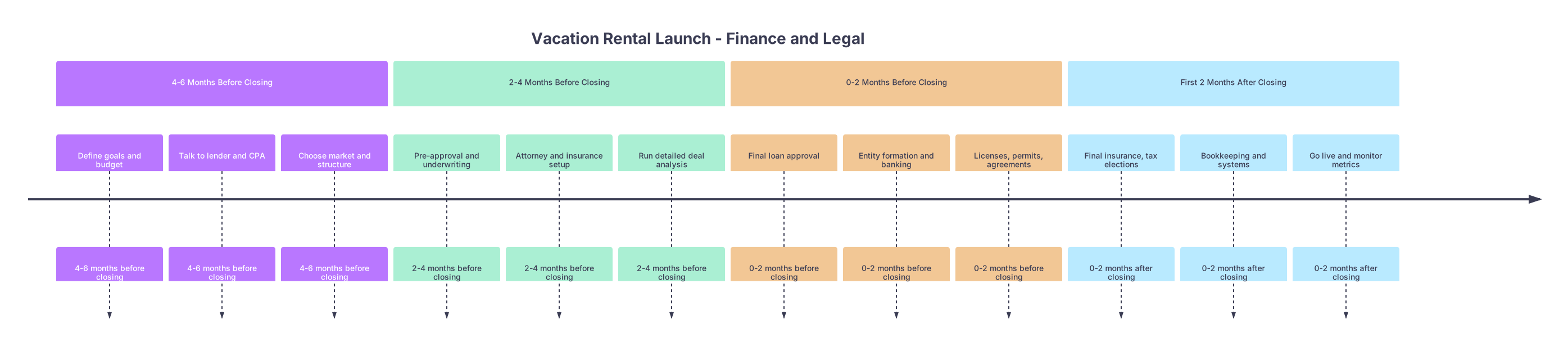
Big Picture Overview: 6‑Month Financial & Legal Timeline
| Period | Event |
|---|---|
| 4-6 Months Before Closing - Define goals and budget | 4-6 months before closing |
| 4-6 Months Before Closing - Talk to lender and CPA | 4-6 months before closing |
| 4-6 Months Before Closing - Choose market and structure | 4-6 months before closing |
| 2-4 Months Before Closing - Pre-approval and underwriting | 2-4 months before closing |
| 2-4 Months Before Closing - Attorney and insurance setup | 2-4 months before closing |
| 2-4 Months Before Closing - Run detailed deal analysis | 2-4 months before closing |
| 0-2 Months Before Closing - Final loan approval | 0-2 months before closing |
| 0-2 Months Before Closing - Entity formation and banking | 0-2 months before closing |
| 0-2 Months Before Closing - Licenses, permits, agreements | 0-2 months before closing |
| First 2 Months After Closing - Final insurance, tax elections | 0-2 months after closing |
| First 2 Months After Closing - Bookkeeping and systems | 0-2 months after closing |
| First 2 Months After Closing - Go live and monitor metrics | 0-2 months after closing |
You’re going to move through four phases:
- 4–6 months before closing – Strategy, financing reality check, and legal framework.
- 2–4 months before closing – Underwriting, detailed deal analysis, and risk planning.
- 0–2 months before closing – Entity, bank, permits, and service contracts.
- 0–2 months after closing – Insurance finalization, tax positioning, and financial systems.
You do not have to hit these exact dates, but you do need to hit them in this order.
4–6 Months Before Closing: Set the Financial and Legal Foundation
At this point you should stop browsing Zillow like it’s Instagram and do the boring—but crucial—front work.
Week 1–2: Get Clear on Money and Risk Tolerance
Block one evening. No distractions.
You’re going to answer three questions:
How much cash can you commit without losing sleep?
Include:- Down payment (usually 15–25% for vacation rentals)
- Closing costs (2–4%)
- Furnishing and setup (often 10–20% of purchase price for STRs)
- 6 months of PITI + utilities + management in reserves
What’s your minimum cash-on-cash return target?
For most physicians starting out, 8–12% cash-on-cash on conservative projections is reasonable. Below that, it’s often not worth your time.What risk profile are you actually okay with?
Are you willing to:- Buy in a more seasonal/tourism-dependent market for higher upside?
- Accept a more volatile income stream vs. a long‑term rental?
- Handle potential regulatory changes?
Write those answers down. Not in your head. On paper or in a note.
Week 2–3: Quick Market Shortlist Using Hard Numbers
You don’t have time to become a local expert in twelve cities. Narrow to 2–3 markets.
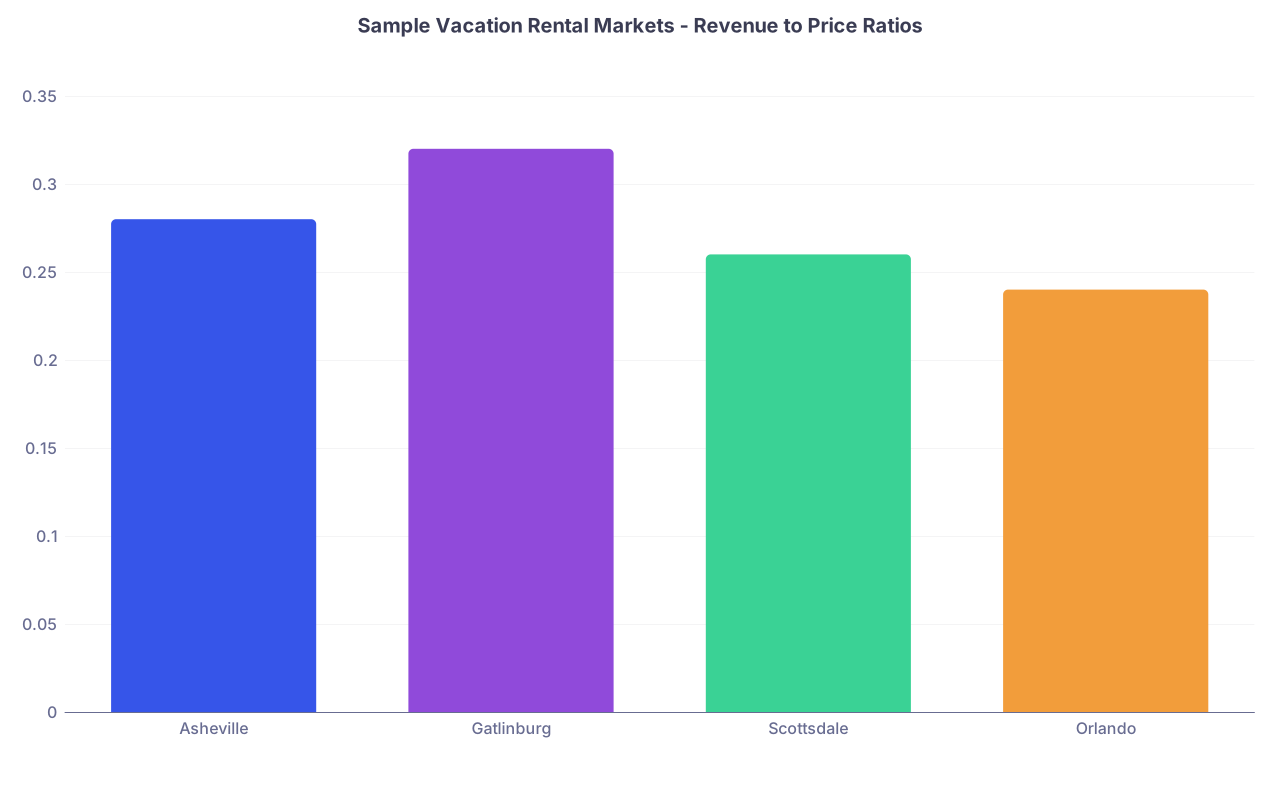
Use a simple metric: projected revenue vs. purchase price.
| Category | Value |
|---|---|
| Asheville | 0.28 |
| Gatlinburg | 0.32 |
| Scottsdale | 0.26 |
| Orlando | 0.24 |
Those values are “gross annual revenue ÷ purchase price.” For example, $80k revenue on a $300k property = 0.27.
Aim for 0.25 or higher on conservative projections. Below that, by the time you pay management, debt, and taxes, you’re working for scraps.
At this point you should:
- Pull rough revenue estimates from tools like AirDNA, Mashvisor, or PriceLabs Market Reports.
- Sanity check with:
- A local short‑term rental–savvy agent
- A local property manager (ask: “What does a 3BR in X neighborhood actually gross?”)
Drop any market that can’t clear that 0.25 bar on realistic numbers.
3–4 Months Before Closing: Financing Reality Check and Structure
Now we move from “this could work” to “this will or will not work under my actual name, income, and debt.”
Week 1: Talk to a Lender Who Actually Does Vacation Rentals
Not your random bank. An actual vacation rental lender (or at least a portfolio lender who sees physicians all day).
You want quick clarity on:
- Loan type:
- Conventional second home
- Conventional investment
- DSCR loan
- Down payment requirements
- Debt-to-income (DTI) handling of current student loans and mortgage
- Whether projected rental income can be used to qualify (DSCR often can; conventional usually more limited)
Ask them for rate and term scenarios for different structures:
| Loan Type | Down Payment | Rate (Example) | Uses Rental Income to Qualify | Typical Use Case |
|---|---|---|---|---|
| Second Home | 10-15% | Lower | Limited | Occasional personal use |
| Investment Property | 20-25% | Medium | Partial | Pure rental, W2 strength |
| DSCR Loan | 20-25% | Higher | Yes (ratio based) | High income, high DTI load |
If you’re deep in student loans with already high DTI, DSCR might be your only route. If your W‑2 is strong and your debt is under control, conventional is usually cheaper.
Week 2: CPA and Asset Protection Consult in One Shot
You should not cobble your structure from Reddit threads.
Schedule one 60‑minute joint call (even if virtual) with:
- A real estate–savvy CPA (ideally one who works with physicians)
- An asset protection / real estate attorney (licensed in the state where the property will be)
Your agenda:
Ownership structure
- LLC vs. personal name vs. corporation
- Single‑member vs. multi‑member if spouse is involved
- How that interacts with lender requirements (many lenders require closing in personal name, then allow post‑close transfer to LLC—confirm in writing)
Short-term rental tax strategy
Ask bluntly:- “Can I realistically qualify for Short-Term Rental tax treatment (material participation without RE professional status)?”
- “Given my call schedule, what level of participation should we target and how will you document it?”
Liability protection
- Whether a simple umbrella policy plus solid STR insurance is sufficient for property #1
- Whether to plan for a series LLC or multiple LLCs if you scale
Walk out of that call with:
- A decision on entity type
- A plan for where income and expenses will flow
- A clear picture of how, if at all, this can reduce your tax bill
This is where most physicians either set themselves up for excellent tax positioning—or permanently leave money on the table.
2–3 Months Before Closing: Refine Deal Criteria and Start Underwriting Real Properties
At this point you should stop thinking “I want a cute cabin” and start acting like an underwriter.
Week 1: Build a 30‑Minute Deal Analyzer (So You Don’t Burn Weekends)
You need a spreadsheet that lets you go from listing → “hard no” or “maybe” in under 30 minutes.
Bare minimum inputs:
- Purchase price
- Down payment
- Interest rate and term
- Taxes, insurance
- Utilities, internet
- Management fee (usually 20–30% of gross for full-service STR management)
- Cleaning fees (some pass‑through to guests, some not)
- Platform fees (Airbnb/VRBO)
- Estimated occupancy and ADR (average daily rate)
Output should tell you:
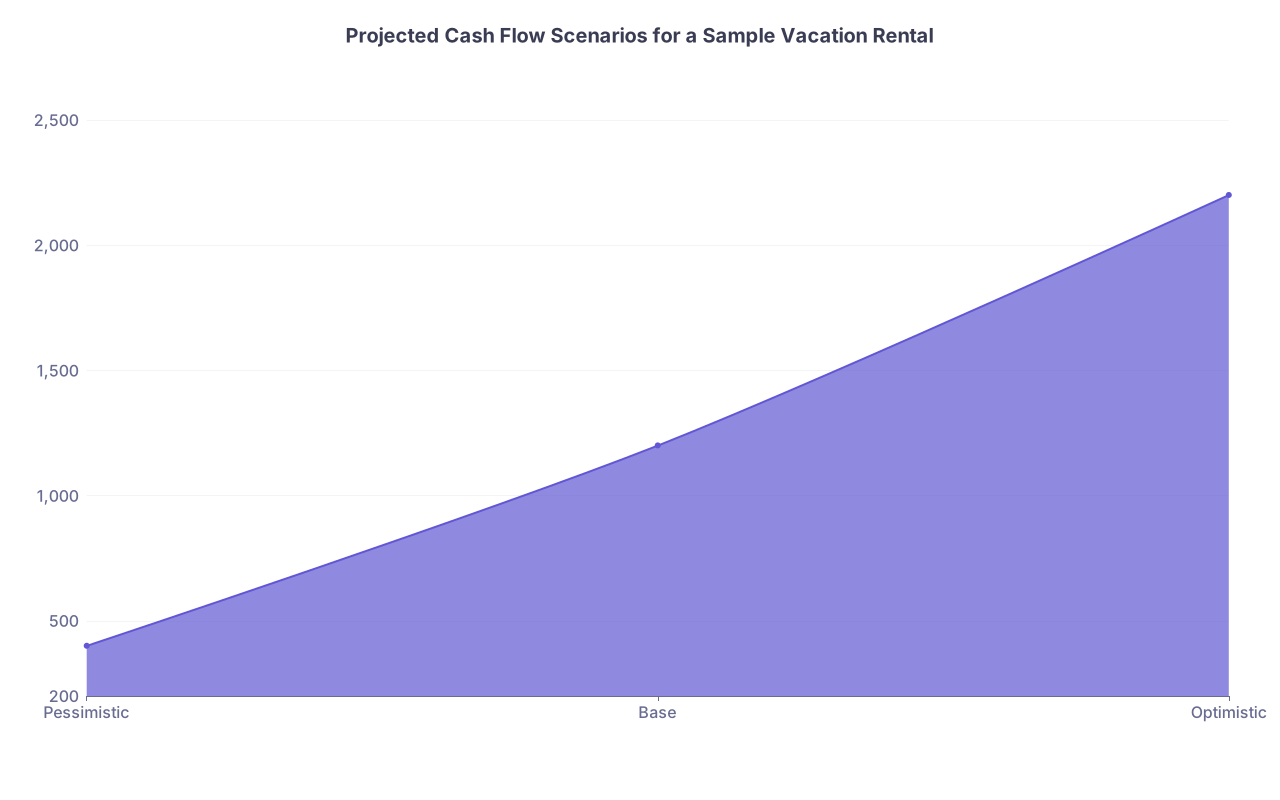
- Monthly cash flow (conservative, base, optimistic)
- Cash-on-cash return
- DSCR (if using DSCR loan, must usually be ≥ 1.1–1.25)
| Category | Value |
|---|---|
| Pessimistic | 400 |
| Base | 1200 |
| Optimistic | 2200 |
If a property can’t break even on a pessimistic scenario (e.g., 40–50% occupancy, slightly lower ADR), it probably doesn’t belong in your portfolio as property #1.
Week 2–3: Start Talking to Real People on the Ground
You’re still in “before closing” land, but this part is critical for financial and legal planning:
Property manager:
Ask:- “What are the actual city or county rules on STRs?”
- “Do you help with permitting?”
- “What typical gross on a 3BR in [this neighborhood] last year?”
Insurance broker with STR experience:
Ask:- “What does a true STR policy for this market look like per year?”
- “Any wildfire/hurricane/flood quirks driving costs?”
Local attorney (if not already engaged):
Ask:- “Any current or proposed STR regulations I should know about here?”
- “Is there any risk this area gets shut down or capped?”
Document this in a simple 1‑page Market Risk Snapshot so you’re not relying on memory at midnight post‑call.
1–2 Months Before Closing: Lock in Financing, Entity, and Banking
You’ve got some specific properties in play or are under contract. Time to get much more concrete.
Week 1: Loan Application and Underwriting
At this point you should:
Submit full loan application with:
- Recent pay stubs
- Last 2 years tax returns
- Current property statements / mortgage statements
- Student loan documentation (and any PSLF/IDR proof if relevant)
Clarify with lender:
- Whether you can title in LLC at closing or have to refi/quitclaim after
- Prepayment penalties
- Appraisal timeline (your main bottleneck)
You’re letting underwriting run in the background while you do the next steps.
Week 1–2: Form Entity and Open Dedicated Accounts
Based on your earlier CPA/attorney call:
- Form your LLC (or whatever structure you chose) in the correct state:
- Usually the property’s state, not your home state, unless advised otherwise
- Get an EIN (online, 10 minutes)
- Open:
- One business checking account for rental operations
- One business savings as your reserve bucket
- A business credit card (strictly for STR expenses)
Minimum acceptable standard: no co‑mingling with personal accounts. Your future self—and your CPA—will thank you.
4–6 Weeks Before Closing: Permits, Contracts, and Insurance
Don’t wait until after you own the place to discover the city just capped STR permits last month.
Week 1: Licensing and Permitting
You (or your property manager) should:
- Confirm:
- City/county short-term rental permits
- State sales and lodging tax registrations
- Any HOA restrictions (this kills more deals than anything else)
If licenses are limited or lottery-based, you want a contingency in your purchase contract:
“Subject to obtaining short-term rental permit / license.”
Worst‑case scenario: You buy a “great Airbnb” that legally has to be a 12-month rental. Not good.
Week 2: Property Management Agreement and Key Service Contracts
Assuming you’re not suicidal enough to self‑manage call weeks:
- Review and sign:
- Property management agreement (fee structure, maintenance caps, cancellation terms)
- Cleaning company contract (if not bundled with manager)
- Lawn/pool/snow services as needed
Pay close attention to:
- Management fee and what’s actually included
- Maintenance approval thresholds (e.g., they can approve up to $200 without asking you)
- Owner stays – any blackout dates or fees?
2–3 Weeks Before Closing: Insurance and Final Legal Clean-Up
Week 1: Finalize STR Insurance and Umbrella
By this point, you should:
Bind a true short-term rental policy (not a standard landlord policy)
Make sure it covers:- Building
- Contents
- Liability specific to guest use
- Loss of income (business interruption)
Confirm your personal umbrella policy coverage and whether it extends over this property, especially if held in your own name.
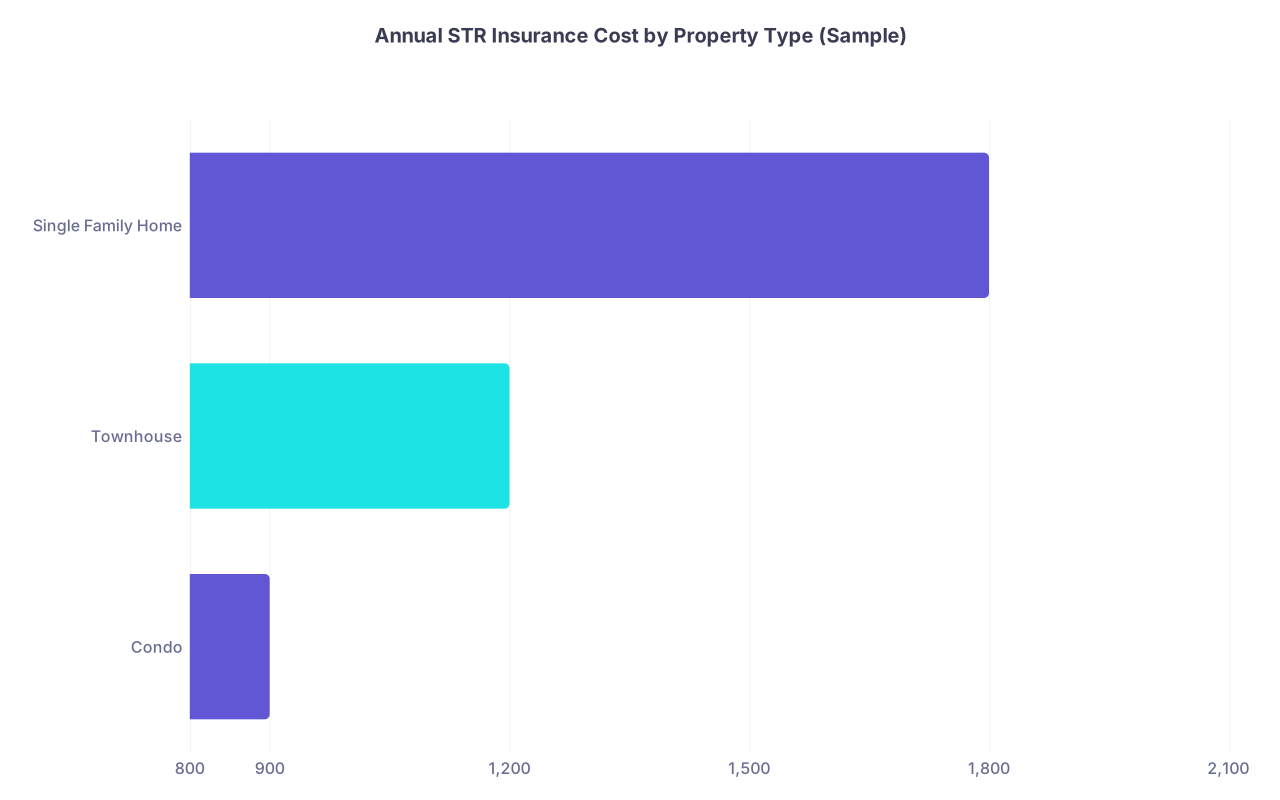
Cost ballpark for planning purposes:
| Category | Value |
|---|---|
| Condo | 900 |
| Townhouse | 1200 |
| Single Family Home | 1800 |
Numbers vary by state, but this gets you in the right mental range.
Week 2: Final Legal Docs and Title Review
Have your attorney:
- Review title commitment for:
- Easements
- Use restrictions
- Any recorded HOA/POA documents
- Confirm:
- Correct vesting (how your name/LLC appears on title)
- Any special indemnity or hold harmless language from seller
You’re not trying to become a real estate lawyer. You’re just making sure someone who is one has eyes on the biggest landmines.
Closing Week: Money Flows and First‑Day Setup
At this point you should have:
- Loan clear to close
- Entity formed, bank accounts open
- STR permit plan in motion
- Insurance binder ready
3–5 Days Before Closing
- Wire cash to close from your business account (or personal if required)
- Confirm:
- Final closing disclosure numbers
- That your insurance binder is sent to lender
- Any rent-back or access terms if you’re starting work day 1
Day of Closing
Sign, smile for 30 seconds, then do two things:
- Move utilities into your name/LLC effective immediately.
- Set up:
- Auto‑pay for mortgage, taxes, insurance
- Auto‑sweep to savings (reserves) monthly
Your brain will want to jump straight to décor. Resist that urge until the financial plumbing is solid.
First 0–2 Months After Closing: Financial Systems, Tax Positioning, and Metrics
Now you own it. This is where a lot of high‑income professionals quietly bleed money because they treat it like a hobby.
Week 1–2: Bookkeeping and Tracking
Set up real bookkeeping from day one:
- Use QuickBooks, Wave, or similar
- Connect:
- Business checking
- Business credit card
- Create categories for:
- Mortgage interest
- Property taxes
- Insurance
- Repairs/maintenance
- Utilities
- Cleaning
- Management fees
- Supplies
- Travel (to and from property, if deductible)
This allows your CPA to:
- Accurately calculate depreciation
- Justify material participation if you’re going for STR tax benefits
- Track performance month by month
Week 2–4: Coordinate With CPA on Tax Elections
Sit down (or Zoom) with your CPA and:
- Confirm:
- Depreciation schedule (27.5 years for structure, plus any cost segregation study plan)
- Treatment of startup costs vs. current year expenses
- Whether you’re taking the position that the property qualifies as a short-term rental activity (average stay < 7 days and material participation thresholds met)
If cost segregation is on the table and your W‑2 income is high, timing matters. You might want that big paper loss to hit a particular tax year.
Ongoing: Monthly and Quarterly Metrics
You’re busy. You don’t need a 12‑page report. You need three numbers, once a month:
- Occupancy rate
- Average daily rate (ADR)
- Net cash flow (after all expenses, including reserves)
| Metric | Target Range for Year 1 | Red Flag Level |
|---|---|---|
| Occupancy | 55-70% | Below 40% |
| ADR | Within 10% of forecast | 20% below projection |
| Net Cash Flow | Positive after reserves | Negative 3+ months |
If any of those hit the red flag zone for 3 consecutive months, you schedule a 30‑minute meeting with your property manager and adjust pricing, marketing, or expenses.
A Condensed “Week-by-Week” View for the Time‑Starved Physician
To make this brutally practical, here’s how this plays out if you’re aiming to close 4–5 months from today.

Weeks 1–2
- Define budget and risk tolerance
- Shortlist 2–3 markets using revenue/price ratios
- Initial calls with 1–2 STR agents and 1–2 property managers
Weeks 3–4
- Talk to a vacation‑rental‑savvy lender
- Joint CPA + attorney call to decide structure and tax plan
- Decide: LLC vs personal, second home vs investment vs DSCR
Weeks 5–8
- Build your deal analyzer spreadsheet
- Underwrite 10–20 properties on paper
- Start submitting offers with clear financial criteria
Weeks 9–10 (under contract)
- Full loan application and appraisal
- Form LLC; open banking and credit card
- Start licensing / permitting process with property manager help
Weeks 11–12
- Finalize STR insurance + umbrella
- Sign management and key service agreements
- Attorney review of title and documents
Closing Week
- Wire funds, close
- Switch utilities
- Set up automatic payments and bookkeeping
First 4–8 Weeks After Closing
- Sync with CPA on depreciation and STR tax position
- Monitor occupancy, ADR, and net cash flow monthly
- Adjust with your manager when numbers drift
Your Next Action Today
Do one thing, not five.
Open a blank note and write:
- Your realistic cash budget (down payment + closing + furnishing + 6 months reserves).
- Your minimum acceptable cash-on-cash target.
- The two markets you’re most serious about.
Then, before you go to bed, email a single sentence to a potential lender or CPA:
“Can we schedule a 30‑minute call this week to talk about financing/structuring a vacation rental in [Market] as a busy physician?”
That email starts your timeline.