
The worst housing decisions locums physicians make are driven by hope and haste instead of math and contracts.
You’re bouncing between assignments. You’re making more per hour than most of your residency classmates. But every time you open Zillow or Airbnb, you feel like you’re lighting money on fire.
Let’s fix that.
This is for you if you’re doing frequent locums—monthly, every few months, seasonal circuits—and you’re asking:
“Do I keep renting short‑term? Get a home base? Buy something near a repeat assignment? Or buy purely as an investment and stay flexible?”
I’m going to walk you through actual, realistic options and tell you what to do in specific situations—not vague “real estate is good for doctors” nonsense.
Step 1: Get Honest About Your Locums Pattern
Before you touch a mortgage calculator, map your life.
You can’t pick the right real estate move if you don’t actually know how you’re working.
Look at your last 12–24 months (or what’s already booked for the next 12):
- How many weeks per year are you on assignment?
- How long is each assignment (1 week, 13 weeks, 6 months)?
- How often do you return to the same city/hospital?
- How much notice do you usually get?
- Do you have a family or are you solo?
- Do you want a true “home base” emotionally, or are you fine being nomadic for a few years?
I’ve seen three common locums “profiles”:
- Pure Nomad – Constantly moving; different state every 1–3 months. No predictable repeats.
- Circuit Rider – Rotates between 2–3 known spots repeatedly (e.g., 3 months in Montana, 3 in Arizona, 3 at home).
- Home‑Base + Locums – Has one stable city (family, schools, partner’s job) and leaves for intermittent locums blocks.
Your real estate decision flows directly from which bucket you’re in.
Let’s lay out the core options, then I’ll match them to your situation.
The Real Estate Playbook for Locums Docs
At a high level, you have six realistic options:
- No property; fully flexible; rent short‑term everywhere.
- Maintain a cheap home base (rent or own) plus flexible assignments.
- Buy a primary home where you want to anchor long-term.
- Buy near a frequent locums site and use it as a hybrid personal/STR (short‑term rental).
- Buy purely investment properties (not where you work) and stay personally flexible.
- Go full “house hack” when you’re home (multifamily, ADU, or room‑by‑room).
Here’s how these compare when you look at them like a business decision, not a fantasy.
| Option Type | Flexibility | Upfront Cash | Complexity | Wealth-Building Potential |
|---|---|---|---|---|
| Short-term rent only | Very High | Low | Low | Low–Medium |
| Cheap home base (rent) | High | Low–Medium | Low | Low |
| Buy primary home | Medium | Medium–High | Medium | Medium–High |
| Buy near repeat locums | Medium | Medium–High | High | High (if well chosen) |
| Pure investment property | Very High | Medium–High | High | High |
| House hack at home base | Medium | Medium–High | High | High |
Now let’s talk about what you actually do in specific scenarios.
Scenario 1: You’re a True Nomad (Constantly Moving, No Predictable Circuit)
If you’re doing 3 months in Alaska, 2 in Maine, 1 in California, and nothing repeats reliably? Buying near a locums site is usually dumb. You’re guessing. The hospital might ghost you next year. The payor mix might change. Hospital leadership might implode.
Your biggest asset is flexibility.
What you should do:
Do NOT buy near an assignment yet.
I don’t care how “cute” the town is or how cheap the duplex looks. If you don’t have a repeat pattern there, it’s speculation disguised as strategy.Decide: do you even need a home base right now?
If you’re single or partnered with someone also mobile:- You can go fully nomadic for 1–3 years.
- Put stuff in storage. Use short‑term rentals (furnished finders, Airbnb, extended‑stay hotels).
- Use a “domicile” state with no income tax (Texas, Florida, Washington, etc.) for your legal address, license, and voter registration.
Channel the extra cash into investing, not lifestyle creep.
You’ll be tempted to buy a fancy condo in some beach city “because I can work from anywhere.”
Instead, buy:- Broad index funds, or
- A solid, boring rental in a landlord‑friendly market that you’ll never live in, managed by professionals.
This is where locums docs either get wealthy or get stuck. The ones who win treat their freedom years like an accumulation phase, not a victory lap.
Legal & financial angles you can’t ignore:
State income tax:
If your legal domicile is in a no‑tax state, that doesn’t automatically mean no taxes. States where you work still want their cut. But where you “live” on paper changes things like:- Where you file your primary return
- Asset protection laws
- Homestead protections (if/when you eventually buy a home base)
Malpractice and licenses:
Different states, different headaches. Owning property in a state does not make licensing easier. Don’t buy in random states thinking it helps your practice logistics. It doesn’t.Insurance/LLCs:
If you buy investment property while nomadic, you’ll almost always hold it in an LLC or similar entity for liability separation. More on that later.
For now: if you’re in pure‑nomad phase, your “real estate investing” is probably not about where you sleep. It’s about where your capital quietly compounds.
Scenario 2: You Have a Clear Circuit of Repeat Assignments
This is where things get interesting and where you can actually play offense.
Say you’re an anesthesiologist who does:
- 4 months a year in a Midwest town (same hospital every year)
- 3 months a year at a rural facility in the South
- 5 months wherever pays best that year
Now you can consider buying near a repeat site. But only if you do the math correctly.
When buying near a locums site can make sense
You want ALL of these:
- You’ve worked there at least 2–3 times.
- You have a strong relationship with the group or hospital (and ideally multiple people, not just one champion).
- You’d be comfortable not working there and still holding the property solely as a rental.
If losing the assignment blows up the property math, it’s a bad deal.
How to structure it:
You’re looking for a property that works as:
- Your personal housing during assignments, and
- A furnished mid‑term or short‑term rental the rest of the year
Example:
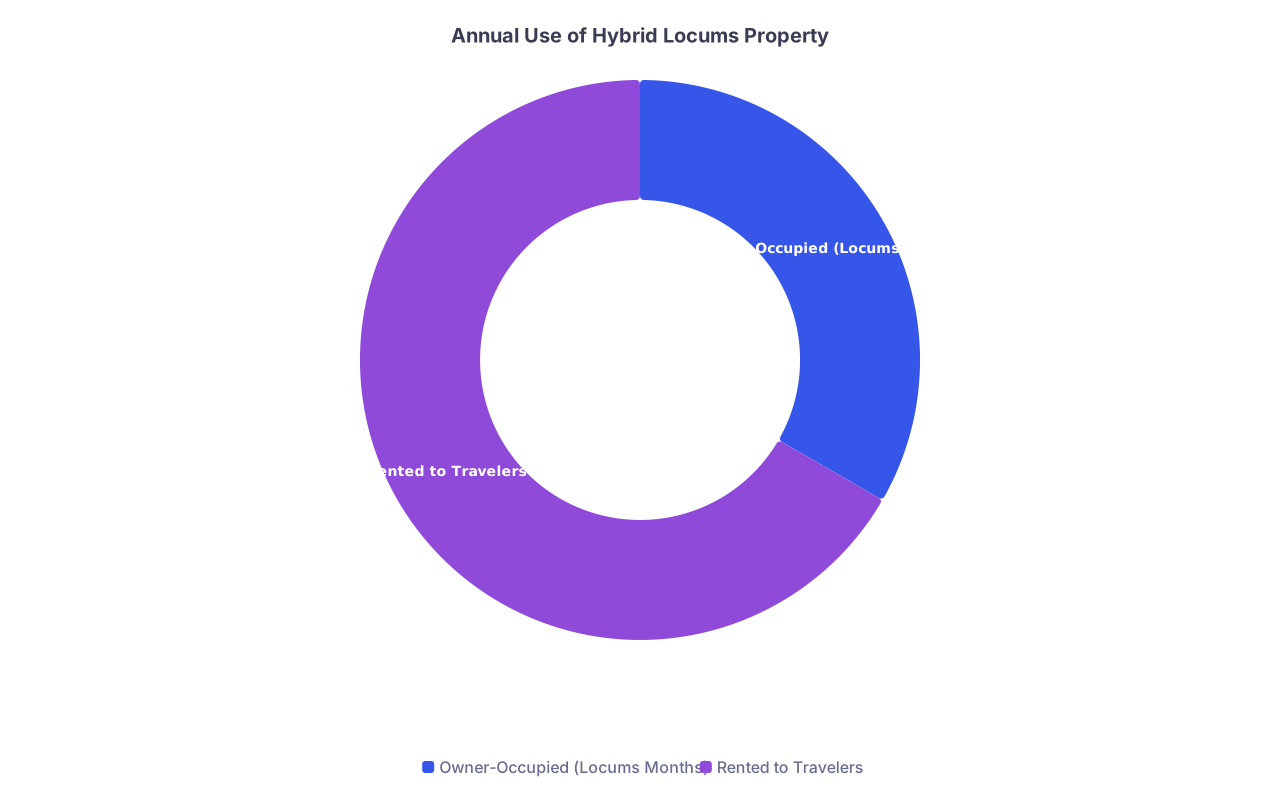
You buy a 2‑bed condo near the hospital for $260k.
You:
- Stay there 4 months a year.
- Rent it furnished to traveling nurses/CRNAs/other locums the other 8 months.
- Use a property manager or at least digital systems for turnover.
| Category | Value |
|---|---|
| Owner-Occupied (Locums Months) | 4 |
| Rented to Travelers | 8 |
Key financial checks (don’t skip these):
1% rule or close (for long‑term potential):
Monthly rent (unfurnished, long‑term) should be ~0.8–1% of purchase price at minimum in that market, or the appreciation story better be rock solid.Mid‑term furnished rent (travel nurses, 1–3 month contracts) should clearly beat your mortgage + HOA + taxes + insurance + utilities by a margin that justifies the headache.
Exit strategy: Could you:
- Convert to long‑term rental and break even or better?
- Sell without needing appreciation miracles to get your cash back?
If these don’t pencil out, you’re just buying a vacation house with a “business” excuse.
Legal & tax details:
Personal use vs rental:
The IRS cares how many days you personally use it versus rent it out:- Personal use >14 days/year or >10% of rented days → it’s a mixed‑use property.
- That affects what you can deduct (depreciation, expenses allocation, etc.).
Entity structure:
Many people:- Own the property in their personal name (for simpler lending),
- Then later transfer to an LLC or use extra liability coverage (umbrella insurance) instead of an LLC.
Talk to a CPA who actually understands physicians with locums and STRs, not a generic tax preparer who’s going to Google this while you’re on the phone.
Scenario 3: You Want a True Home Base (Family, Schools, Stability)
If you’ve got kids in school or a partner with a local job, the emotional calculus matters as much as the spreadsheet.
You basically have two questions:
- Should I buy the home base or keep renting?
- Should that home base also be an investment vehicle (house hack, ADU, basement apartment)?
Buying a home base while doing frequent locums
Here’s when buying a primary home usually makes sense:
- You know you’ll be in that metro for 5+ years.
- You have a credible story of income continuation (locums contracts, history of earnings).
- You’re not putting every last dollar into the down payment.
Your locums income can make underwriting weird:
- W‑2 locums is easy: underwriters treat it like any job.
- 1099 locums (most of you) → you’ll need 2 years of tax returns showing consistent or rising income in most cases. Underwriters will average them.
If you’re early in the locums journey and don’t have 2 years of fat 1099s yet, buying might not be pretty.
House hack version (if you’re willing)
This is where you live in:
- A small multifamily (duplex/triplex/fourplex)
- Or a single‑family with:
- Basement apartment
- Over‑garage ADU
- Separate entrance in‑law suite
You rent out the extra unit(s) long‑term. When you’re away for locums, you might:
- Rent your own unit mid‑term or short‑term, or
- Just enjoy the cash from the other unit subsidizing your mortgage.
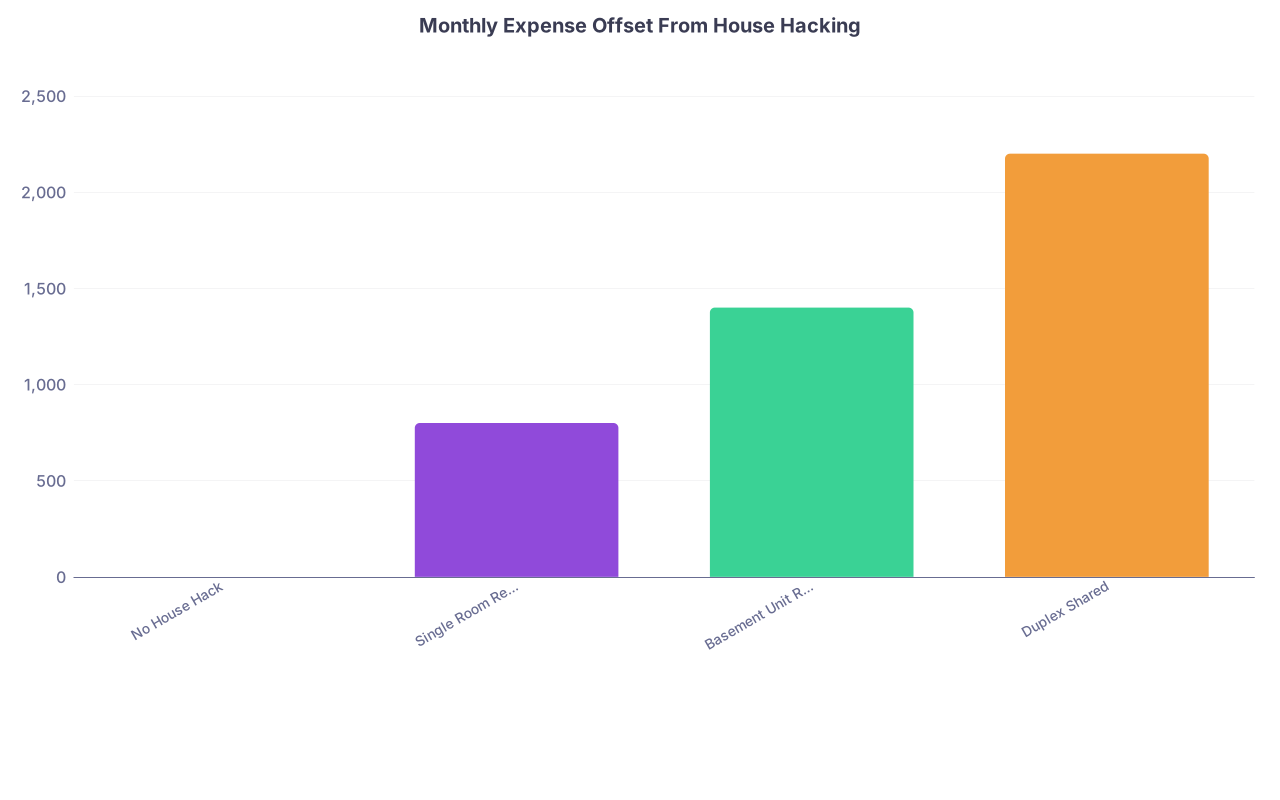
| Category | Value |
|---|---|
| No House Hack | 0 |
| Single Room Rented | 800 |
| Basement Unit Rented | 1400 |
| Duplex Shared | 2200 |
Yes, it’s more hassle. Yes, you’ll learn more about toilets than you wanted. But it’s one of the fastest paths to turning your locums premium into actual long‑term wealth instead of just a bigger SUV.
Legal/financial angles:
Homestead and asset protection:
Some states give strong protections to your primary residence against creditors. If you’re in a high‑risk specialty, this matters. Florida and Texas are famous for strong homestead protections.Short‑term rental rules:
If you’re thinking “I’ll Airbnb my home base when I’m gone,” check:- City ordinances (many have host‑occupancy rules or require permits)
- HOA rules (often kill STRs completely) You don’t get to plead ignorance later.
Spouse/partner reality:
If your partner hates strangers in the basement and you ignore that, don’t blame real estate when your home life implodes.
Scenario 4: You Buy Pure Investment Properties, Separate From Where You Sleep
This is the most adult version of physician real estate investing as a frequent locums doc.
You accept that your work locations and your sleeping locations don’t need to match your investments.
You:
- Live flexibly (short‑term rentals, modest rental home base, etc.)
- Take your locums cash flow
- And buy purely investment‑grade rentals in markets that make sense
Not “because I worked there once” markets. But:
- Landlord‑friendly states
- Good rent‑to‑price ratios
- Diverse employment bases (not one factory town)
- Reasonable property taxes and insurance
Think Indianapolis, Kansas City, Birmingham, certain suburbs of Dallas, etc. Not San Francisco because “it’s a cool city.”
How this plays with locums:
Your income might be irregular month to month, but your annual income is strong. Lenders like that if you’ve got two solid years of 1099 history.
You build a portfolio that throws off cash or at least is self‑sustaining, while you still have maximum freedom to accept or decline assignments.
You’re separated from the emotional pull:
“I really like this cute town I worked in once” is no longer driving six‑figure decisions.
Legal and tax structure:
Here’s where it gets more formal:
- LLCs or series LLCs to hold rentals (depending on state)
- Umbrella insurance on top of that
- Segregation of risk:
- Your personal malpractice exposure stays separate from your real estate exposure.
- Your properties are not titled in your physician name if you can help it.
You want:
- CPA who knows real estate investors (and ideally doctors).
- Attorney (in your home/domicile state and maybe in your main investment state) to help with entities and asset protection.
No, this isn’t overkill. I’ve sat in on calls where a physician landlord had a tenant injury claim and suddenly regretted mixing everything personally.
The Ugly Mistakes I See Locums Docs Make
Let me be blunt about the recurring disasters.
Buying a “cute” condo after one good assignment
The hospital changes leadership; they stop using locums. You’re stuck with a poorly cash‑flowing condo in a mediocre market you don’t even like that much.Buying in an insane STR market without checking regulations
“Everyone’s doing Airbnbs in Nashville/Phoenix/Austin.”
Then the city passes a law nuking non‑owner‑occupied STRs, or your building bans it. You just bought a very average long‑term rental at a terrible price.Tying up all liquid cash in a big down payment
Locums income dries up for a quarter. Or you get sick. Or your oldest starts college. You’re house rich, cash poor, and stressed.Assuming your CME accountant knows real estate
They file your 1099s and itemize your conferences. That’s not the same thing as optimizing cost segregation, passive loss rules, or short‑term rental tax treatment. Different game.Ignoring marital/partner agreements
You buy 3 properties while single, then get married, then don’t clarify whether future equity is separate or marital. Fast‑forward to divorce and you’re funding someone else’s early retirement.
Do not be that story.
Practical Guardrails: How to Decide, Property by Property
Use this as a simple sanity filter before you buy anything as a frequent locums doc:
Would I still buy this if I never worked in this town again?
If the answer is no, do not buy.Is my emergency fund intact after close (3–6 months of total living expenses + property expenses)?
If not, do not buy.Do I have at least one realistic exit other than pray‑for‑appreciation?
(Sell without massive loss, convert to stable long‑term rental, etc.)Does this move my net worth forward, or just my ego?
Big house in a vacation town you visit 2 weeks a year? That’s ego.Have I seen the actual written rules for STR/medium‑term rentals for the city/HOA?
Hearsay from other docs doesn’t count.
How It All Fits Together Over 5–10 Years
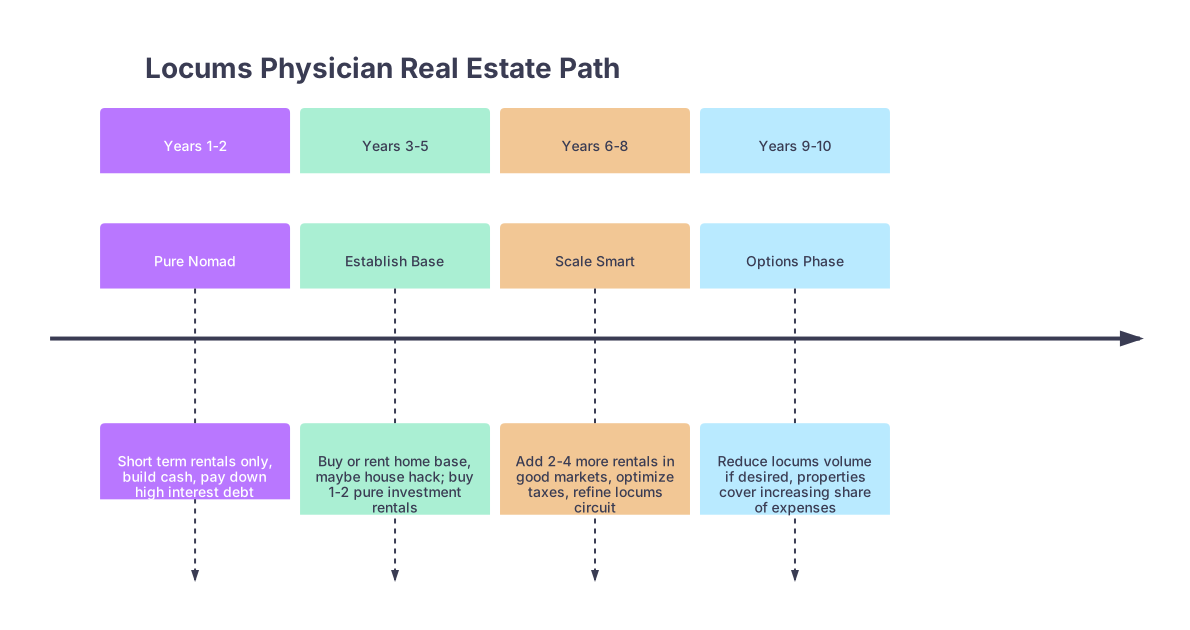
Let me lay out a reasonable arc for a locums physician who doesn’t want to wake up at 55 still “rich” on paper and tired in real life.
| Period | Event |
|---|---|
| Years 1-2 - Pure Nomad | Short term rentals only, build cash, pay down high interest debt |
| Years 3-5 - Establish Base | Buy or rent home base, maybe house hack; buy 1-2 pure investment rentals |
| Years 6-8 - Scale Smart | Add 2-4 more rentals in good markets, optimize taxes, refine locums circuit |
| Years 9-10 - Options Phase | Reduce locums volume if desired, properties cover increasing share of expenses |
This isn’t “get rich quick.” It’s get optionality steadily:
- Your locums work gives you high income now.
- Your real estate and investments give you choices later.
- You’re not anchored to any one hospital, market, or even specialty job if you don’t want to be.
What To Do Today
Do not buy anything yet.
Today, do this instead:
Write down your last 12 months of assignments (or your next 12 if they’re booked) with:
- City
- Duration
- Hospital/group
- Would you want to repeat there? (yes/no/maybe)
Underline any location that:
- You’ve already been to at least twice, and
- You’d be happy owning a property in even if you stopped working there.
Open a spreadsheet and build a “strike zone”:
- Column A: Potential home base markets
- Column B: Potential investment only markets (good fundamentals, not emotional favorites)
- Column C: Potential hybrid locums/housing markets (only if they passed step 2)
Then pick one city from Column B (investment only) and one from either Column A or C and run actual numbers on a few example properties this week—rents, mortgages, taxes, HOA, and realistic occupancy.
Get out of the “maybe one day” fog and into real numbers. That’s when your locums schedule and your real estate strategy finally start working for you instead of pulling you in opposite directions.