
The way most physicians “peek” at their real estate once a year is financial malpractice.
You need a quarterly, systematic portfolio review—or your investments will quietly drift off course while you are on call.
Below is a time‑structured, repeatable checklist designed for busy physicians with W‑2 income, K‑1s from syndications, maybe a couple of rentals, and very little spare bandwidth. I will walk you through:
- What to do once per year by quarter
- What to do each month inside the quarter
- What to check in a single 60–90 minute quarterly review session
Think of this as your attending-level “portfolio rounding list.” At this point in the year, you should know exactly what to touch, what to ignore, and what to delegate.
Annual Overview: How Each Quarter Should Be Used
First, zoom out. A good year has a rhythm. Each quarter has a dominant theme.
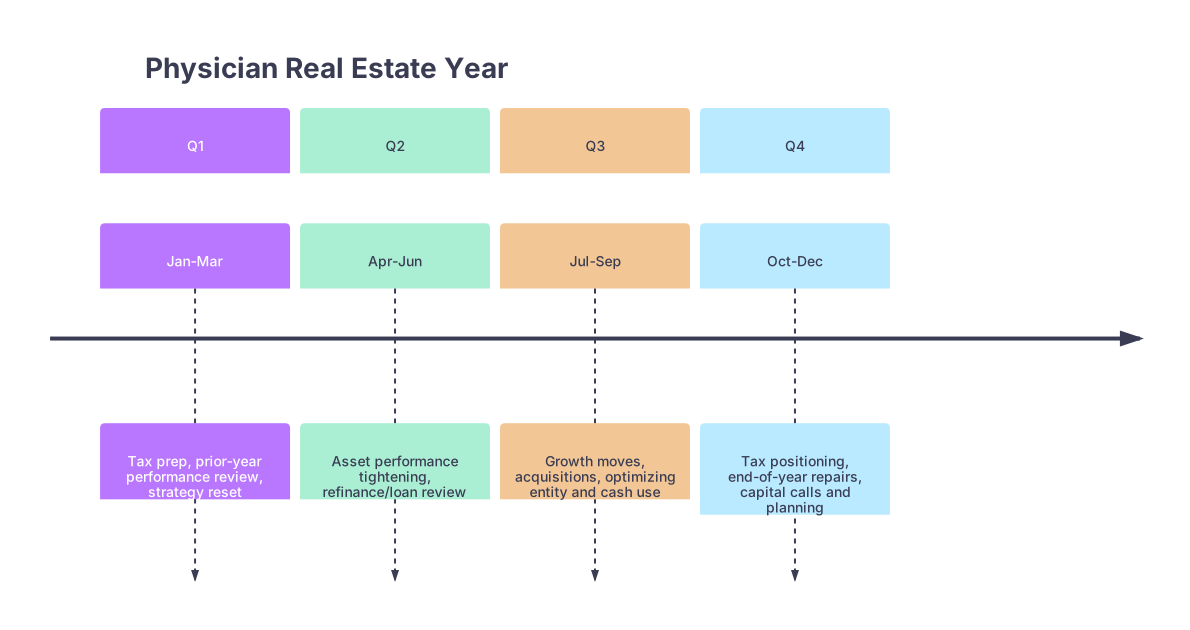
| Period | Event |
|---|---|
| Q1 - Jan-Mar | Tax prep, prior-year performance review, strategy reset |
| Q2 - Apr-Jun | Asset performance tightening, refinance/loan review |
| Q3 - Jul-Sep | Growth moves, acquisitions, optimizing entity and cash use |
| Q4 - Oct-Dec | Tax positioning, end-of-year repairs, capital calls and planning |
Q1 (Jan–Mar): “Diagnostics and Tax Reality”
By late March you should have:
- Final numbers for last year on every property
- K‑1s from syndications (or at least expectations)
- A clear view of cash flow, capital returns, and surprises
Primary focus:
Tax preparation, portfolio performance autopsy, and strategic reset.
Q2 (Apr–Jun): “Tightening the Machine”
By the end of June you should have:
- Confirmed that properties are operating close to pro forma
- Reviewed all loans, HELOCs, and rate risk
- Adjusted insurance and reserves
Primary focus:
Optimize operations and reduce risk.
Q3 (Jul–Sep): “Intentional Growth or Pause”
By the end of September you should have:
- Decided whether to buy, pause, or sell this year
- Evaluated pipeline deals and GP performance
- Aligned your real estate plan with your clinical schedule for the next 12 months
Primary focus:
Growth decisions and capital deployment.
Q4 (Oct–Dec): “Tax and Cleanup”
By year‑end you should have:
- Completed tax moves that actually require action before Dec 31
- Fixed “loose ends”: entity changes, banking, beneficiary designations
- Set targets for next year’s units, cash flow, and risk limits
Primary focus:
Proactive tax positioning and administrative cleanup.
Monthly Maintenance: 20–30 Minutes, Tops
You do not need a weekly ritual. You do need a once‑a‑month pulse check so the quarterly review is not a shock.
By the 10th of every month, you (or your virtual assistant / property manager) should:
Download or save:
- Bank statements for all property accounts
- Mortgage/HELOC statements
- Property management statements
- Any syndication distributions notices
Update a simple central tracker (spreadsheet or software) with:
- Rent collected or distribution received
- Major expenses
- Net cash flow for the month
Flag anomalies (this is the key):
- Vacancies > 1 month
- Repairs over your threshold (example: > $750)
- Missed distributions from syndications without explanation
You are not doing heavy analysis here. You are just stacking data so that your quarterly review is clean and fast.
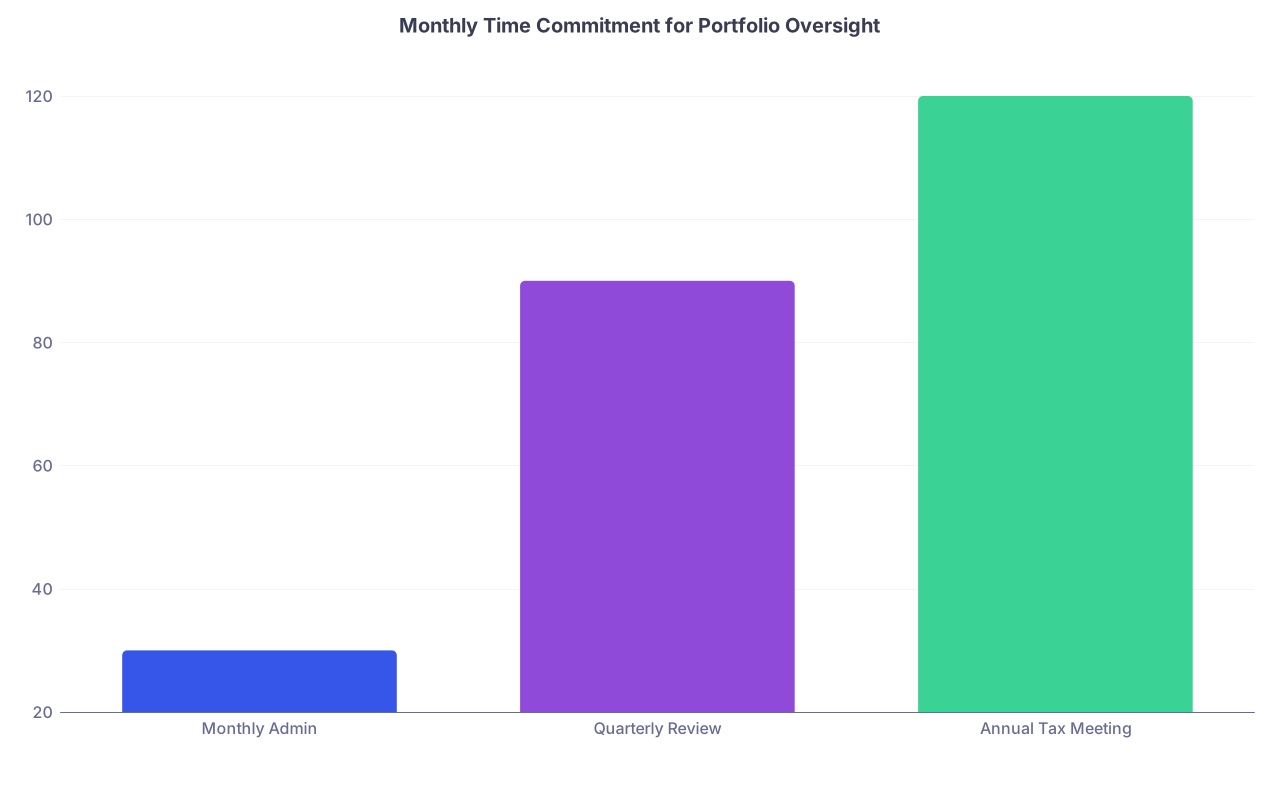
| Category | Value |
|---|---|
| Monthly Admin | 30 |
| Quarterly Review | 90 |
| Annual Tax Meeting | 120 |
The Core: 90‑Minute Quarterly Real Estate Portfolio Review
Block this like you would block an OR case: 90 minutes, no pager, once per quarter. I recommend:
- Q1: Late February or early March
- Q2: Early June
- Q3: Early September
- Q4: Early December
At this point each quarter, you should move through this ordered checklist:
Step 1: Snapshot Your Portfolio (10–15 minutes)
You start with where you stand today.
Create or update a simple one‑page portfolio dashboard:
- Properties you own directly
- Syndications/funds (LP interests)
- Any REITs or real‑estate heavy investments in brokerage accounts
For each, record:
- Current estimated value
- Current loan balance
- Equity
- YTD cash flow
| Asset Type | Property / Fund | Est. Value | Loan Balance | Equity | YTD Cash Flow |
|---|---|---|---|---|---|
| Direct Rental | 123 Oak St | 450,000 | 320,000 | 130,000 | 5,200 |
| Direct Rental | 9 Maple Ct | 620,000 | 410,000 | 210,000 | 7,800 |
| Syndication LP | Suncrest MF I | 100,000 | N/A | 100,000 | 4,500 |
| Fund LP | MedPro Storage | 150,000 | N/A | 150,000 | 6,000 |
Aim for one glance comprehension: net worth tied up in real estate, leverage level, and actual cash return.
Step 2: Cash Flow and Reserves Check (15 minutes)
This is where most physician investors lie to themselves. “It is fine, the property is appreciating.” No.
By this point in the quarter, you should:
Roll up actual cash flow:
- Quarterly net for each direct property
- Quarterly distributions for each LP interest
Compare to expectations:
- Were you expecting 7–8% cash‑on‑cash and got 2%?
- Were you expecting quarterly distributions that vanished?
Check reserves:
- Direct rentals:
- Operating account: at least 1–2 months of expenses per property
- Reserve account: 3–6 months of expenses (depending on risk tolerance)
- Personal: 3–6 months of total living plus debt minimum
- Direct rentals:
If reserves are low, you stop all new acquisitions that quarter. Non‑negotiable.
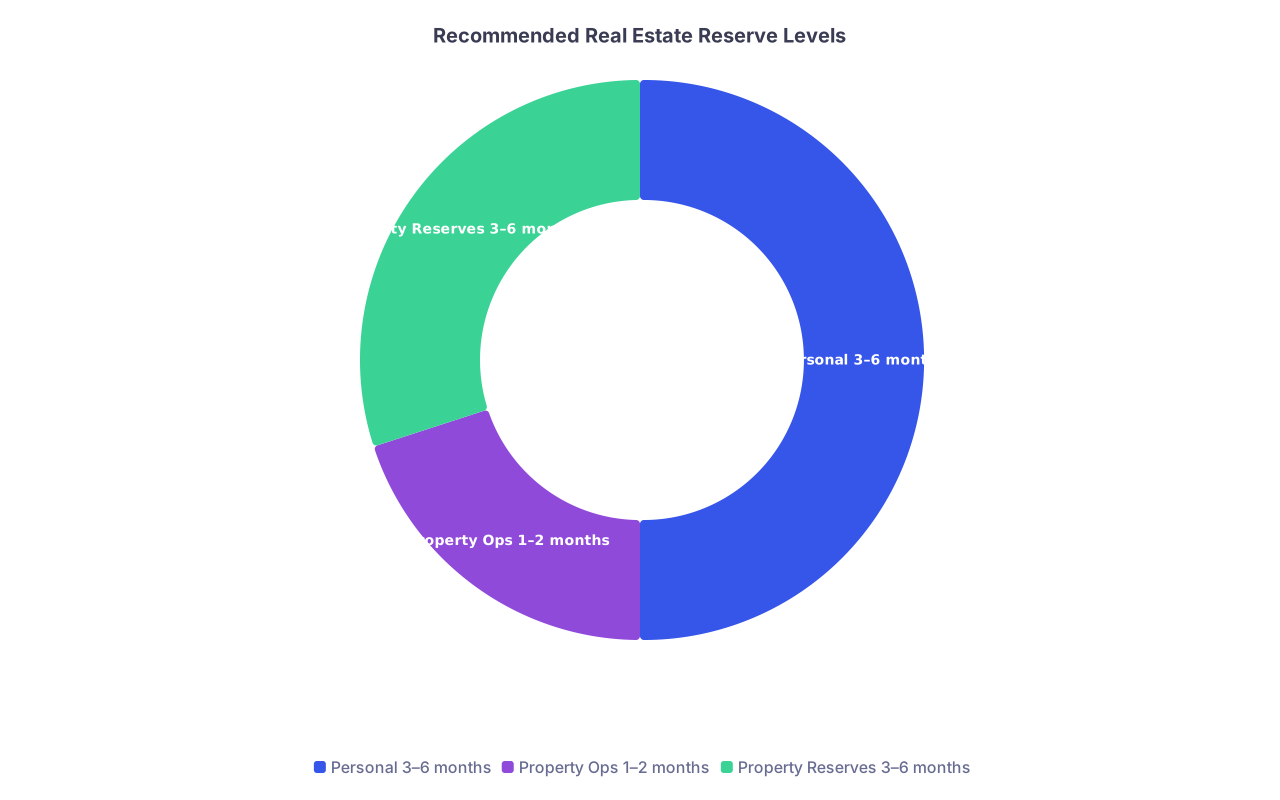
| Category | Value |
|---|---|
| Personal 3–6 months | 50 |
| Property Ops 1–2 months | 20 |
| Property Reserves 3–6 months | 30 |
Step 3: Debt and Interest Rate Exposure (15 minutes)
Physicians see a 5‑year ARM as “future me’s problem.” That is how future you gets wrecked.
Once per quarter, run through:
- Each mortgage and loan:
- Fixed vs ARM
- Current rate
- Reset date (for ARMs)
- Balloon dates
- HELOCs:
- Current balance
- Variable rate movement over the last 12 months
By this point in the year:
- Q1: Document every loan term in one place. If you do not have this, build it this quarter.
- Q2: Identify 12–24 month risk: any ARM resets or balloons approaching. Talk to a lender now, not when the letter arrives.
- Q3: Decide whether to refinance, pay down, or sell problem debt.
- Q4: Execute chosen moves or calendar them with clear triggers.
Rule of thumb I use: if a loan reset or balloon is <18 months away, it is an active problem, not future risk.
Step 4: Performance vs Benchmarks (20 minutes)
Now you look at whether these assets deserve to stay in your portfolio.
For each property or LP:
Measure:
- Direct rentals:
- Cash‑on‑cash return (YTD)
- Cap rate (using current realistic value)
- Syndications / funds:
- Actual cash yield vs pro forma
- Communication quality from the sponsor
- Progress toward business plan (lease‑up, renovations, refi, etc.)
- Direct rentals:
Compare to minimum standards:
- For most working physicians, I recommend:
- Direct rentals: target ≥ 6–8% cash‑on‑cash after stabilization
- LP investments: target ≥ 5–7% cash yield once fully operational
- For most working physicians, I recommend:
Classify each asset:
- Keep and forget (meeting or exceeding expectations)
- Watch closely (marginal performance, acceptable reasons)
- Consider exit (chronic underperformance or sponsor red flags)
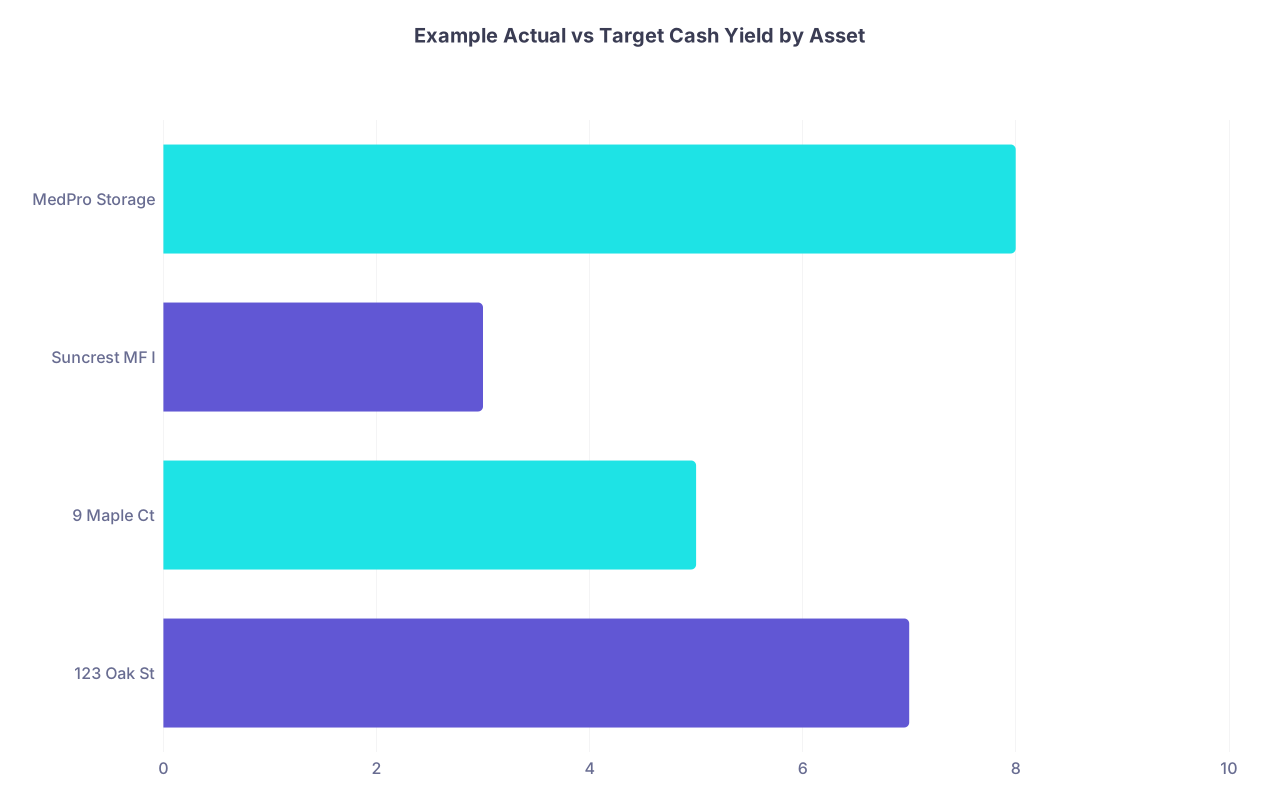
| Category | Value |
|---|---|
| 123 Oak St | 7 |
| 9 Maple Ct | 5 |
| Suncrest MF I | 3 |
| MedPro Storage | 8 |
If two or three consecutive quarters show weak performance without a compelling explanation, you start planning an exit. That planning happens in Q3 or Q4, not the week your hospital announces a surprise call schedule change.
Step 5: Tax and Entity Review (15–20 minutes)
This is where real money is made or lost for high‑income W‑2 physicians.
You do not become a tax expert. You become the one who asks the right questions, on time.
By quarter:
Q1 (pre‑tax filing)
- Confirm you have:
- All 1099s and K‑1s (or know what is missing)
- Depreciation schedules for direct properties
- With your CPA:
- Review use of cost segregation / bonus depreciation
- Confirm passive activity loss treatment and carryforwards
- Ask directly: “What should we change this year to reduce W‑2 tax drag?”
- Confirm you have:
Q2
- Clean up entities:
- Are rentals in the correct LLCs?
- Is your umbrella policy sized correctly?
- Are ownership percentages correctly documented (especially with spouse or partners)?
- Clean up entities:
Q3
- Identify tax moves that require time:
- Potential real estate professional status (for you or spouse)
- Grouping elections
- Shifting some investments to more depreciation‑heavy assets if needed
- Identify tax moves that require time:
Q4
- Execute:
- Planned cost seg studies
- Strategic repairs/improvements (that make sense clinically and fiscally)
- Charitable donation of appreciated assets, if on the table
- Execute:
You do not “wing” this in March. You shape the tax year at least by Q3.
Step 6: Risk Management and Legal Exposure (10–15 minutes)
Once per quarter, you run a quick “what can actually ruin me?” drill.
Check:
- Liability coverage:
- Landlord policies up to date, correct property type and occupancy
- Umbrella policy limits appropriate for your net worth (often $2–5M for physicians)
- Entity hygiene:
- Annual fees paid for LLCs
- Operating agreements and member percentages matched to reality
- Separate bank accounts for each entity; no commingling with personal funds
By:
- Q2: Confirm structure is correct. If you have “everything in your personal name” and a net worth over $1M, that is a red flag.
- Q4: Confirm all policies renew with updated limits and correct named insureds.

Step 7: Capital Allocation and Next‑Quarter Plan (10–15 minutes)
You end each quarterly review by deciding where next quarter’s dollars will go.
You answer three questions:
How much available capital do I realistically have for real estate over the next 3–6 months?
- Cash above personal and property reserves
- Expected bonuses, RSUs, or other inflows
What is the priority use of that capital?
- Pay down risky or high‑rate debt?
- Build reserves to target levels?
- Allocate to a new acquisition or LP stake?
What is my maximum effort level next quarter?
- 0–1 hours/week free → No new active properties. LP only, or nothing.
- 2–4 hours/week free → One new small property is realistic.
- More than that → You are probably underestimating your clinical fatigue.
By the end of this step, you write a one‑paragraph plan for next quarter. Example:
“Q3: No new acquisitions. Allocate $20k to reserves for Oak St and Maple Ct. Refinance HELOC if rates drop below 6.5%. Pass on new syndications unless a core sponsor (Suncrest) offers a deal with at least 7% projected cash yield.”
That paragraph goes at the top of your quarterly notes. When you review next quarter, you grade yourself against it.
Putting It All Together: A Single‑Page Quarterly Checklist
Here is how your 90‑minute session flows in real time, start to finish:
Update Dashboard (15 min)
- Values, loans, equity, YTD cash flow
Review Cash Flow and Reserves (15 min)
- Roll up quarter’s numbers
- Check reserve levels vs targets
Assess Debt & Rate Risk (15 min)
- ARM resets, balloons, HELOCs
Evaluate Performance vs Benchmarks (20 min)
- Classify: Keep / Watch / Exit
Tax & Entity Check (15–20 min)
- Quarter‑specific questions for CPA
- Entity and documentation review
Risk & Coverage (10–15 min)
- Insurance, umbrella, entity hygiene
Capital Allocation Plan (10–15 min)
- Decide on next quarter’s moves
- Write 1‑paragraph plan

| Step | Description |
|---|---|
| Step 1 | Start 90 min Block |
| Step 2 | Update Dashboard |
| Step 3 | Cash Flow and Reserves |
| Step 4 | Debt and Rate Exposure |
| Step 5 | Performance vs Benchmarks |
| Step 6 | Tax and Entity Review |
| Step 7 | Risk and Coverage |
| Step 8 | Capital Allocation Plan |
| Step 9 | End Session |
Real‑World Example: Busy Hospitalist with Mixed Portfolio
You are a full‑time hospitalist:
- Two SFH rentals in an LLC
- $250k spread across three syndications
- A HELOC on your primary
Quarterly review reveals:
- One rental is cash‑flowing at 3% after a property tax jump
- Another is fine at 8%
- One syndication has stopped distributions “pending refi” 3 quarters in a row
- HELOC rate climbed from 4% to 8%
Your Q3 plan, if you are thinking clearly:
- Freeze all new deals
- Use extra cash to:
- Boost reserves
- Pay down the HELOC aggressively
- Put the weak rental on a “consider sale” path if it underperforms again next quarter
- Email the syndication sponsor with 3 direct questions, and if answers are vague, you mentally mark that sponsor as “no future capital”
This is what a quarterly review is supposed to do for you. Clear actions. No drama.

FAQ (Exactly 4 Questions)
1. How long should a quarterly real estate portfolio review take for a physician with 3–6 assets?
Once your system is built, 60–90 minutes is realistic. Early on, the first or second quarter might take 2 hours because you are building your dashboard, consolidating loan details, and cleaning up entities. After that, most of the time is simply updating numbers, reviewing anomalies, and making decisions, not chasing documents.
2. Do I really need to review passive syndication investments every quarter? Aren’t they “set and forget”?
“Set and forget” is how people end up surprised by capital calls and disappearing sponsors. You do not micromanage, but you absolutely:
- Log distributions (or missed ones) each quarter
- Read quarterly updates and compare to the original business plan
- Decide annually whether that sponsor deserves more of your capital
If a sponsor cannot hit basic communication and reporting standards, you stop sending them money. It is that simple.
3. How involved should my CPA and attorney be in this quarterly process?
They do not need to be on the call every quarter, but:
- Once per year (often Q1 or Q4), schedule a joint meeting with both to align taxes, entities, and estate planning
- Each quarter, keep a running list of questions and send a concise email after your review: “Here are 3 things that changed; does anything concern you for tax or legal reasons?”
Your job is to feed them clean, timely information. Their job is to keep you out of avoidable trouble.
4. What software or tools do you recommend for a busy physician investor?
Keep it boring and robust. A simple combination works well:
- Excel or Google Sheets for your portfolio dashboard and quarterly tracker
- A cloud folder (Dropbox, Drive, etc.) with a clean structure:
/01 Properties,/02 Syndications,/03 Loans,/04 Taxes - Your bank’s online portal and property management portal for statements
If you get above ~10 assets, a dedicated portfolio management tool can help, but plenty of physicians run seven‑figure portfolios on a well‑organized spreadsheet plus disciplined quarterly reviews.
Key points:
At this point in your career you need a structured quarterly review, not occasional glances at rent checks. Build a simple dashboard, schedule a standing 90‑minute block each quarter, and follow the same checklist every time. The combination of regular cash flow checks, debt surveillance, and explicit next‑quarter plans will quietly protect your time, your balance sheet, and your future options.