
You are here
It is 2:17 a.m. You are six hours into a 28–hour call. One admit in the ED, two cross-cover pages waiting, and your phone buzzes again.
“Hi, this is your downstairs tenant. There’s water coming through my ceiling.”
Residency call schedule just collided with landlord duties. This is exactly the scenario you are trying to avoid – or at least contain. The question is not “Can I be a landlord in residency?” The question is “What does the time map actually look like if I try?”
Let me walk you through it chronologically. What you handle before you sign anything, what hits during orientation and early intern year, how to survive Q4 or Q3 call, and when you absolutely should outsource.
Stage 0: 3–6 Months Before You Buy – Reality Check and Time Mapping
At this point you should not be talking to realtors yet. You should be mapping time and risk.
Month -6 to -4: Brutal self-audit
You need three calendars in front of you:
- Your program’s sample rotation schedule
- A generic call schedule (or your actual preliminary one)
- A blank month-by-month landlord calendar
Now ask, where can landlord work actually fit?
Key tasks you will face as a small landlord:
- Pre-tenant:
- Property search and showings
- Financing and closing tasks
- Setup (repairs, cleaning, utilities, insurance)
- Ongoing:
- Rent collection and bookkeeping
- Maintenance coordination (routine + urgent)
- Tenant communication
- Turnover work between tenants
- Annual renewals, inspections, tax prep
Rough time expectation if you self-manage one modest unit:
| Task Category | Typical Hours/Month |
|---|---|
| Tenant communication | 1–2 |
| Maintenance issues | 1–3 (but spiky) |
| Bookkeeping/admin | 1 |
| Turnover month | 10–20 (rare event) |
| Legal / lease issues | 0–2 (variable) |
The real problem is not the average. It is the spike: the 3–5 hours you do not have on a call day when the furnace dies.
At this point you should:
- List your hardest rotations (ICU, trauma, night float, EM).
- Circle months where you consistently leave after 6 p.m. or have Q3–Q4 call.
- Assume that any landlord issue will happen during those months. Because it will feel that way.
If you cannot name three reliable backup humans (or a paid service) who can physically go to the property when you are trapped in the hospital, you should not be self-managing. That is non-negotiable.
Month -4 to -3: Decide your management model
Before you get attached to any property, decide:
- Self-management
- Hybrid (you + handyman + maybe leasing agent)
- Full property management company (PM)
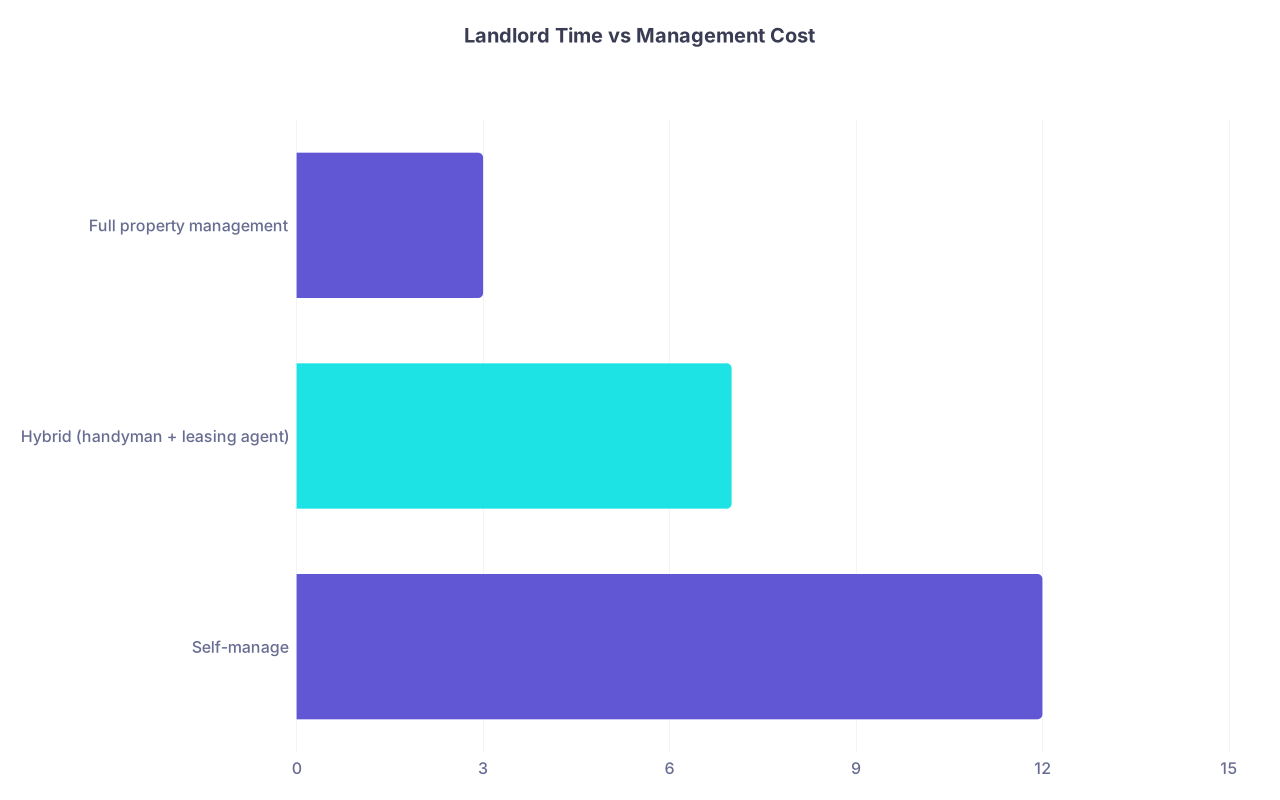
Time vs money:
| Category | Value |
|---|---|
| Self-manage | 12 |
| Hybrid (handyman + leasing agent) | 7 |
| Full property management | 3 |
Assume:
- Self-manage: 100% of tenant contact, coordination, bookkeeping
- Hybrid: You handle money and decisions; others handle physical tasks and leasing
- Full PM: You handle high-level decisions and occasional approvals
At this point you should:
- Call at least 2 local PM companies. Ask:
- Fee percentage
- Lease-up fee
- 24/7 emergency handling
- Do they handle legal notices and court?
- Identify at least 1–2 reliable handymen available evenings/weekends if you go hybrid.
- Decide your “panic rule”: what dollar threshold can PM/handyman spend without your approval when you are scrubbed in or on code duty?
Write that number down now. You will not think clearly at 3 a.m.
Stage 1: 2–3 Months Before Purchase – Pre-Call Prep and Legal Setup
At this point you should be assembling the boring but critical infrastructure that will prevent your call schedule from destroying your investment.
Month -3: Legal and financial structure
You want decisions front-loaded, not during ICU month.
-
- Talk to a CPA or attorney about:
- Owning in your own name vs LLC
- State-specific landlord-tenant quirks
- Whether your residency contract has any outside-employment or conflict clauses (rare, but check)
- If you do an LLC, form it now. Bank accounts take time.
- Talk to a CPA or attorney about:
Banking & accounting
- Open:
- One separate checking account for rent and expenses
- One savings account as a property reserve
- Automate:
- Rent received electronically (no checks, ever)
- Property-specific credit card or debit for expenses
- Open:
Insurance and risk
- Get landlord policy quotes and require:
- Loss of rent coverage if possible
- Liability coverage robust enough for worst-case tenant injury
- Decide whether you will require renters insurance (you should).
- Get landlord policy quotes and require:
Month -2: Systems for when you are on call
At this point you should build “landlord on autopilot” systems.
- Set up:
- Online rent payment platform
- Shared folder (Google Drive/Dropbox) with:
- Lease templates
- Move-in/move-out checklists
- Vendor contacts
- Draft:
- Standard text/email scripts for:
- Late rent reminders
- Maintenance response and scheduling
- “I am not reachable by phone right now; here is the emergency process”
- Standard text/email scripts for:
Create a simple flowchart for emergencies and share with your PM/handyman/backup person:

| Step | Description |
|---|---|
| Step 1 | Tenant reports issue |
| Step 2 | Respond within 24 hours |
| Step 3 | Call backup contact |
| Step 4 | Backup assesses on site |
| Step 5 | Backup authorizes repair |
| Step 6 | Text resident for approval |
| Step 7 | Approve or adjust plan |
| Step 8 | Emergency? |
| Step 9 | Cost under limit? |
You want this decided and documented before you are on a 30–hour call block.
Stage 2: Month 0 – Purchase and Pre-Intern Year Crunch
Let us say you close in May and start residency July 1. This is the usual window.
Month 0 (Closing month): Front-load everything
At this point you should behave like your free time will disappear July 1. Because it will.
- Immediately after closing:
- Do all known repairs and updates.
- Get a full inspection even if lender did not require it, and turn that into a punch list.
- Change locks, check smoke/CO detectors, confirm utilities and shut-off valves.
- Build your vendor bench:
- Plumber
- Electrician
- HVAC
- Handyman
- Cleaning crew
- Pest control
Put all their info in a shared doc and in your phone favorites.
If you will have tenants by July:
- Screen and sign tenants before orientation week if at all possible.
- Use:
- Written criteria (income, credit, references)
- Standard, attorney-reviewed lease
- Require:
- Online rent
- Maintenance requests via text/email, not calls, except emergencies
You want move-in done and stabilized before the first day you meet your program director.
Stage 3: Orientation to Month 3 – Intern Year Shock + Landlord Lite
Orientation month is deceptive. You will think, “This is manageable.” Ignore that.
Orientation month: Set expectations with tenants
At this point you should over-communicate your availability.
- Tell tenants (without oversharing):
- You work irregular hours in healthcare.
- You may not answer calls immediately.
- For non-urgent issues, they should:
- Text or email with photos.
- Expect responses within X hours (choose something realistic, like 24).
- For emergencies (defined in writing), they call:
- Your PM OR
- Your designated handyman/backup contact
Put this emergency process in:
- The lease
- The move-in packet
- A magnet or printed sheet on the fridge
Months 1–3 of residency: Identify “red alert” rotations
Typical schedule patterns:
- Wards block: 6 days/week, 10–14 hours/day, 1 golden weekend if you are lucky
- Night float: zero daytime availability for calls
- ICU: intense, unpredictable, emotionally draining
At this point you should:
- Mark your schedule with a red pen for:
- ICU
- Night float
- Q3–Q4 call blocks
- For those red months:
- Increase your maintenance reserve slightly (more cash solves small crises faster).
- Tell your PM/handyman: “For the next 4 weeks, assume I am unreachable during days. Text only for >$X decisions.”
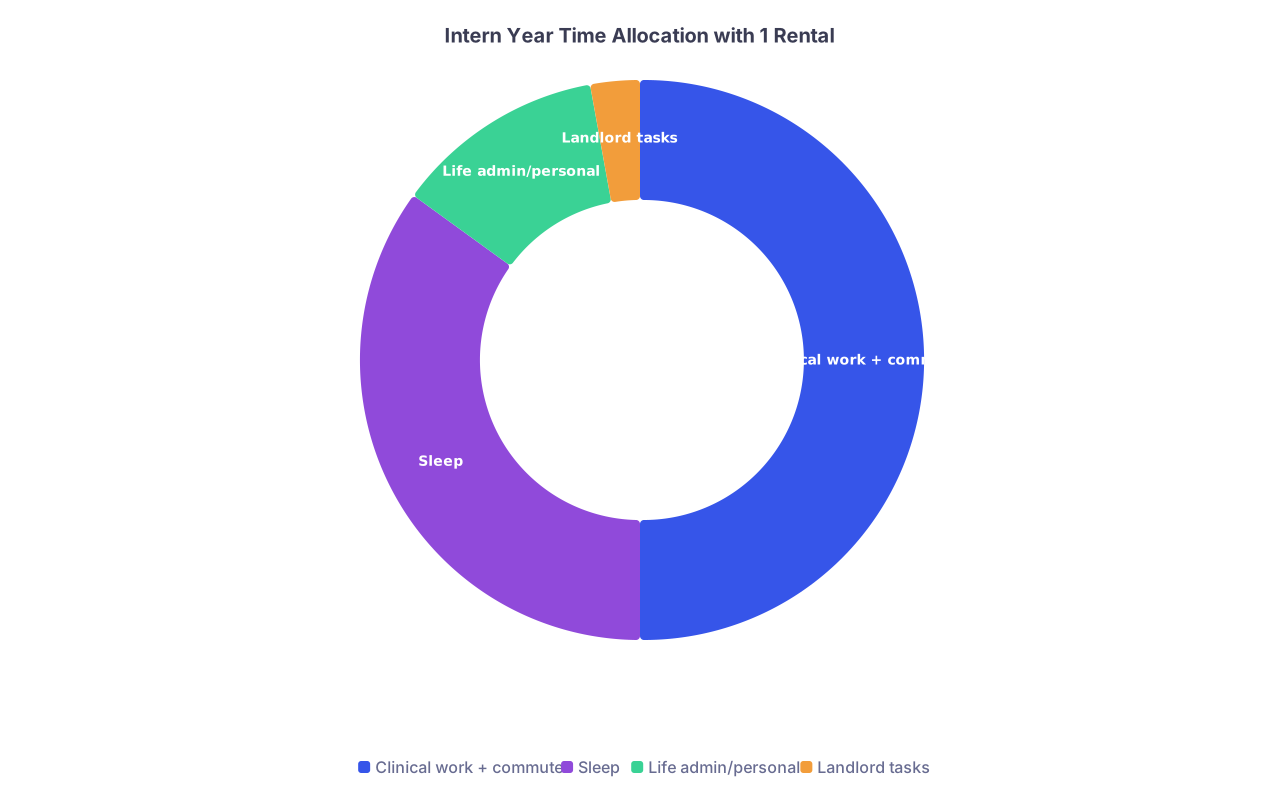
Here is roughly how your time is actually split intern year if you self-manage one stable unit:
| Category | Value |
|---|---|
| Clinical work + commute | 70 |
| Sleep | 49 |
| Life admin/personal | 17 |
| Landlord tasks | 4 |
That 4 hours per week on landlord work? It is fine on clinic months. Brutal on back-to-back ICU and nights.
Stage 4: Mid–Intern to PGY-2 – When Problems Actually Hit
The first big property problem often arrives 6–12 months in. Appliance death, plumbing leak, non-paying tenant.
Here is how to think chronologically when it happens.
Week 0: First major maintenance issue
Scenario: It is Wednesday night float. 1 a.m. You see a text from 8 p.m.: “There is water under the kitchen sink; I shut it off.”
At this point you should have:
- A written triage rule set:
- Running water or active leak? Emergency.
- No heat in winter? Emergency.
- No AC in extreme heat state? Emergency.
- Everything else: urgent (48–72 hours) or routine (within a week).
Your move, step-by-step:
Within 8–12 hours (post-call)
- Review tenant message and photos.
- Text handyman/plumber with:
- Tenant contact
- Access instructions
- Maximum budget without calling you
Within 24 hours
- Confirm visit time with tenant (ideally handyman does this).
- Log issue in your simple maintenance spreadsheet.
Within 72 hours
- Approve final repair plan and payment.
- Decide whether problem was:
- Normal wear-and-tear.
- Tenant-caused damage (document, but do not fight mid-rotation unless large).
Your goal is not perfection. It is keeping the issue from reaching your PD’s attention or the city inspector.
Month with late rent or non-payment
The other big landmine: tenant stops paying right when you start ICU or a tough rotation.
At this point you must treat landlording as a business, not a charity.
Chronology for a standard late-rent sequence (customize to your state law):
- Day 1 after due date
- Automatic late reminder via your system or template text.
- Day 3–5
- Personal reach-out: “I noticed rent has not posted. Is there a specific issue?”
- Day 5–10
- If no payment or plan, you serve the required notice to pay or quit (follow state law exactly).
- Day 10–30
- If still unpaid, you either:
- Hand it off to PM/attorney if you have them.
- File yourself on a lighter rotation (not recommended during ICU).
- If still unpaid, you either:
What I have seen go badly: residents “feel bad” and let this drag for 3–4 months. By then you are hemorrhaging cash and still on 60–80 hour weeks.
Set your rule now:
- “I will not allow rent to go unpaid beyond X days without formal notice started.”
Then stick to it.
Stage 5: Turnover Months – The Real Time Sink
Tenant turnover is where the time map blows up. Showings, screening, cleaning, repairs, painting, listing, lease-signing.
You never want this landing during:
- ICU or CCU months
- EM with many nights
- Heavy call blocks
- Board exam study windows (Step 3, in-training, etc.)
2–3 months before lease end
At this point you should:
- Decide whether you want to renew or not.
- Send:
- Renewal offer with rent change, or
- Non-renewal notice as required by law.
If you think there is any chance they will leave:
- Start lining up:
- Cleaner
- Painter/handyman
- Professional photographer (if listing yourself)
- Leasing agent or PM if you will not personally do showings
1 month before move-out
This is your planning window.
- Block 2–3 half-days on your calendar during a light rotation for:
- Walk-through
- Overseeing repairs or just evaluating photos/quotes
- Decide your listing method:
- Full PM handles everything (ideal for heavy months)
- Leasing agent fills unit for a one-time fee
- You list online, but use a showing service or lockbox
The worst combo: you on nights, doing 6 p.m. showings post-call, running credit reports at 1 a.m. on your “day off.” Do not do that.
Move-out week
At this point you should:
- Do the move-out inspection within 24–48 hours.
- Document condition with photos and a checklist.
- Get vendors in quickly:
- Cleaning, minor repairs, paint, any safety issues.
- Aim for:
- 3–5 days of downtime between tenants if only light work.
- Longer only if large repair or upgrade.
The more you delay, the more your call-inflicted exhaustion multiplies your vacancy loss.
Yearly Cycle: Financial and Legal Maintenance Around Your Schedule
Once you are past year one, the game is about rhythm. You have known heavy months. You plan landlord work around them.
Yearly calendar planning
At the start of each academic year, when you get your schedule:
- Mark:
- ICU/CCU
- Night float
- Heaviest ward months
- Vacation blocks
- Place:
- Lease renewals and potential turnovers in lighter months.
- Any planned renovations on:
- Vacation time, or
- Outpatient/clinic months, never ICU.
Taxes and bookkeeping
You are now juggling residency salary, maybe moonlighting, and rental income.
At this point you should:
- Do bookkeeping monthly, not at 11 p.m. April 14.
- Use:
- Simple spreadsheet, or
- Cheap accounting software, or
- Bookkeeper if you have multiple properties.
Aim for 30–60 minutes per month:
- Reconcile:
- Rent received vs bank statements
- Expenses categorized (repairs, maintenance, taxes, insurance)
- Save:
- Receipts (digital, in folders named by month)
Then in a lighter month (often late winter):
- Send everything to your CPA.
- Review your:
- Cash flow
- Reserve levels (usually 3–6 months of expenses minimum)
- Insurance coverage (still adequate?)
When to Pull the Ripcord and Hand It Off
There are clear signs that your residency call schedule and landlord duties are no longer compatible.
Red flags:
- You delay addressing real maintenance issues >72 hours repeatedly.
- You find yourself documenting or texting tenants during patient care.
- You feel dread every time your phone buzzes at work.
- Your notes, exams, or clinical performance are slipping because of property stress.
- Tenant relationship is deteriorating, and you are too busy to fix or exit.
At that point, you should:
- Get at least 2 quotes from PM companies.
- Run the numbers:
- Yes, 8–10% fee hurts your cash flow.
- But losing peace of mind, or worse, your residency position, is much more expensive.
Sometimes the rational move mid-residency is:
- Sell the property if it is truly a bad fit, or
- Convert to full PM and accept lower cash flow until you are an attending.
Both are better than pretending you can do everything on a Q3 trauma schedule.
Three things to keep in your head
- Your call schedule is not hypothetical. Treat it as the primary constraint and build landlord systems around it, not the other way around.
- Front-loading decisions, backups, and automation before the intern-year grind is what makes being a resident-landlord viable instead of miserable.
- The right time to hand off to property management is when your clinical performance, sanity, or patient care even start to bend. Not after they break.