
The worst real estate decision most new attendings make happens in month one: they buy a house. Fast. And wrong.
If you just graduated med school, finished residency, or are about to start attending life, you are standing at a fork in the road that will compound for decades. Your first 12 months after graduation are not about “dream home shopping.” They are about structuring your life so that real estate becomes a tool, not a trap.
Here is how your first year should unfold, month by month, as a new physician thinking about real estate moves.
Months 0–1: Stabilize, Do Not Buy
At this point you should be:
- Signing a short lease, not a mortgage.
- Locking down your numbers.
- Setting your asset‑protection and lending foundation.
You just graduated / finished training. You do not know your true net take‑home pay yet, you do not know your call pattern, and you definitely do not know if you like this job enough to stay 5+ years. A mortgage now is gambling, not planning.
Week 1–2: Housing Triage
Your job: secure flexible, boring housing.
Choose a 6–12 month rental.
- Aim for:
- Walking or easy commute to work.
- Reasonable but not luxury rent (≤20–25% of net pay).
- Ability to break or extend lease with minimal penalty if possible.
- Ignore:
- “Rent is throwing money away.” No, buying too early and moving in 18 months is throwing money away.
- Aim for:
Avoid early‑career buying traps:
- Variable schedule, unknown overtime and RVUs.
- Department culture unknown (I have seen attendings quit in month 7).
- City / hospital fit unclear.
- Loan products and your credit profile not yet optimized.
Week 2–4: Baseline Your Finances
Once the housing scramble is done, you sit down—yes, actually sit down—with a spreadsheet.
At this point you should:
Map your net pay.
- Get actual paystubs, not offer‑letter fantasies.
- Track:
- Base pay.
- Call / shift differentials.
- Withholdings, retirement contributions, benefits costs.
Quantify your debt.
- Federal loans: balances, rates, repayment plan, PSLF eligibility.
- Private loans: refinance options.
- Credit cards or car payments.
Check your credit and clean it.
- Pull from all three bureaus.
- Dispute nonsense.
- Set up autopay for everything.
Why this matters for real estate:
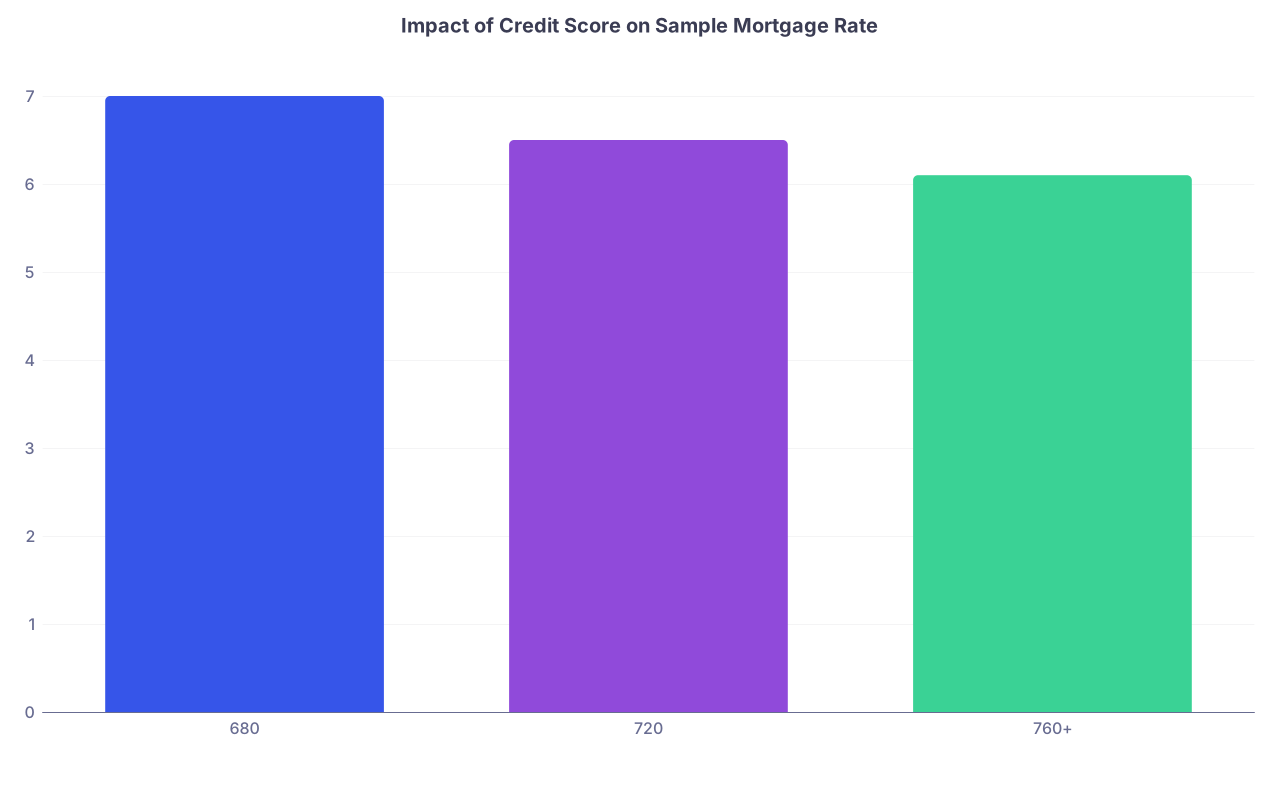
- Your debt‑to‑income (DTI) ratio and credit score determine:
- Whether you qualify for physician loan products.
- Whether you get 5% down at 6.75% or 20% down at 5.75% (and yes, that difference can be six figures over time).
| Category | Value |
|---|---|
| 680 | 7 |
| 720 | 6.5 |
| 760+ | 6.1 |
Legal / Asset‑Protection Baseline
At this point you should also:
- Confirm malpractice coverage type (claims‑made vs occurrence).
- Get basic personal liability coverage:
- Umbrella policy (usually $1–2M to start).
- Make sure all medical entities/employers are correctly listed on malpractice and tail coverage issues are understood.
This is the foundation. You do not buy assets before you know what can be taken from you in a lawsuit.
Months 2–3: Build a Real Estate Game Plan (Not a Zillow Habit)
You are a couple of paychecks in. The urge to “upgrade your life” is loud. Ignore Instagram. Instead, build a written plan.
Month 2: Clarify Your Next 5 Years
At this point you should be brutally honest about:
Job stability.
- Is your contract guaranteed past year 1?
- Any non‑compete radius that might force you to move if things go sideways?
Geographic plans.
- Are you locked into this city for:
- Family reasons?
- PSLF‑eligible hospital?
- Visa constraints?
- Or is this “try it and see” territory?
- Are you locked into this city for:
Lifestyle pressure points.
- Partner’s career?
- Kids now or soon?
- Desire for fellowship, academic move, or switch to private practice?
You only buy a primary home in year 1 if you can say—with a straight face—you are likely in this area for at least 5–7 years. Less than that, renting is almost always superior.
Month 2–3: Learn the Basic Real Estate Lanes
Decide which lane interests you first. Three main ones for new physicians:
Primary residence only.
- Goal: stability, lifestyle.
- Financially: moderate wealth builder if you hold long term and buy prudently.
House hack / small multifamily.
- Live in one unit, rent others (duplex, triplex, fourplex).
- Strong route for those willing to live slightly less “attending‑fancy” for 2–3 years.
Pure investment property (you still rent personally).
- Often in lower‑cost markets, professionally managed.
- Requires more upfront education and discipline.
At this point you should be reading one or two serious books, not watching TikTok “investing” clips. You are a physician; treat this like learning a new procedure, not a hobby.
Months 3–4: Legal Structures and Lender Relationships
Now we start building the scaffolding that will support real assets later in the year.
Entity / Legal Setup for Future Investments
For your primary residence, you generally buy in your own name. For investment property, you likely use an LLC or series LLC (depending on state).
At this point you should:
- Schedule a 60–90 minute session with:
- A real‑estate‑savvy asset‑protection attorney, or
- A CPA who regularly works with physicians and landlords (ideally both).
- Discuss:
- Whether your state is community property or not.
- How many properties before you use multiple LLCs.
- Best way to title property with a spouse.
- How to coordinate with umbrella insurance.
Do not form 5 LLCs because a forum told you to. Over‑structuring early wastes money and complicates lending.
Meet Lenders Before You Need Them
You want relationships, not random online pre‑approvals.
At this point you should:
- Talk to 2–3 lenders, including:
- A bank offering physician mortgage products.
- A local credit union or community bank.
- A conventional mortgage lender or broker.
- Compare:
- Physician loan: 0–5% down, no PMI, often higher rate.
- Conventional: 5–20% down, lower rate, PMI possibly.
| Feature | Physician Loan | Conventional Loan |
|---|---|---|
| Down Payment | 0–5% | 5–20% |
| Private Mortgage Ins. | Usually None | Often Required <20% |
| Interest Rate | Slightly Higher | Lower |
| Debt‑to‑Income Flex | More Lenient | Stricter |
| Ideal Use | Early‑career MD | Later with savings |
For investment property, ask explicitly about:
- Required down payment (often 20–25%).
- Debt‑service‑coverage‑ratio (DSCR) loans, if they lend on those.
- Portfolio loan options once you own multiple properties.
Months 4–6: Decide Your First Real Estate Move
Now you choose: year‑1 primary home, house hack, or first rental while you keep renting personally.
Month 4: Quantify What You Can (and Should) Spend
At this point you should:
- Calculate a safe housing budget:
- All‑in monthly housing (PITI + HOA + utilities) ≤ 25–30% of net income.
- That is after taxes, retirement contributions, and loan payments.
- Set a down‑payment target:
- Primary home:
- If using physician loan: 0–5% down, but still keep 3–6 months of expenses in cash.
- If conventional: realistically 10–20% down.
- Investment property:
- Expect 20–25% down + 3–6 months of reserves per property.
- Primary home:
This is where physicians screw up. They qualify for a huge loan and buy at the top of that range. Your underwriting limit is not your budget.
Month 5–6: If You Are Considering a Primary Home
Ask three ruthless questions:
- Am I very likely to stay in this job and city at least 5–7 years?
- Will I be okay if the house does not appreciate for 5 years?
- Will this payment allow me to still:
- Max retirement accounts.
- Aggressively pay high‑interest debt.
- Build a real estate investing war chest?
If “no” to any, you defer the primary home and focus on education + cash building.
If “yes” to all, you:
- Get official pre‑approval (not just pre‑qualification).
- Start a 60–90 day window of serious house hunting.
- Use a buyer’s agent who has actually closed physician / relocation deals, not your cousin who just got licensed.
Months 6–9: Execute Your First Real Estate Purchase (Correctly)
This 3‑month window is where most of the real action should happen. You have 6+ months of job history, some cash saved, and enough education to be dangerous in a good way.
Path A: Primary Residence Purchase (Non‑Speculative)
If you are buying a home to live in:
Month 6–7 – Offer and Contract Phase
- You should:
- Target boring, liquid neighborhoods:
- Strong school districts.
- Reasonable property taxes.
- Resale history, not “up and coming” hype.
- Avoid:
- Unique, hard‑to‑value homes.
- McMansion new builds in half‑empty subdivisions.
- Target boring, liquid neighborhoods:
Month 7–8 – Inspection / Appraisal / Closing
- Order thorough inspections: roof, foundation, sewer scope where appropriate.
- Renegotiate or walk away if there are major structural issues. Sunk‑cost fallacy kills new attendings here.
Month 8–9 – Move and Reserves
- Keep 3–6 months of expenses in cash after closing.
- Do not immediately renovate everything. Live there 6–12 months before big projects.
Path B: House Hack or Small Multifamily
Same months, different filter:
At this point you should:
- Target duplex/triplex/fourplex where:
- Your unit is livable but not flashy.
- Other units’ rent covers:
- Majority or all of PITI.
You run the numbers like a landlord, not like a homeowner. That means cap rate, cash‑on‑cash return, and vacancy assumptions, not “feels like a good deal.”
Path C: First Pure Investment Property
If you choose to keep renting and buy a rental instead, your 6–9 month window is:
- Identify 1–2 target markets:
- Could be local.
- Could be out‑of‑state in landlord‑friendly, lower‑cost markets.
- Build a local “triangle”:
- Investor‑friendly agent.
- Property manager.
- Lender.

| Step | Description |
|---|---|
| Step 1 | Define Target Market |
| Step 2 | Build Local Team |
| Step 3 | Analyze Deals |
| Step 4 | Submit Offers |
| Step 5 | Under Contract |
| Step 6 | Inspection and Appraisal |
| Step 7 | Close and Place Tenant |
| Step 8 | Numbers Meet Criteria |
| Step 9 | Proceed |
Months 9–12: Systematize, Protect, and Plan the Next Move
By month 9, one of two things should have happened:
- You bought a primary or first investment property in a controlled, non‑emotional way, or
- You intentionally chose to delay buying and instead built cash, credit, and knowledge.
Either is fine. What is not fine is 12 months of Zillow scrolling and zero structure.
Month 9–10: Get the Back‑End in Order
If you now own property (primary or rental):
At this point you should:
Confirm titling and insurance:
- Deed matches your legal plan (LLC vs personal).
- Proper homeowners / landlord policy in place.
- Umbrella policy limits adjusted if needed.
Set up bookkeeping:
- Separate bank account for each property or at least each LLC.
- Simple accounting software (even a spreadsheet is fine year 1 if you are disciplined).
- Document every expense:
- Maintenance.
- Insurance.
- Property management.
- Travel to and from the property for management (if applicable).
Meet your CPA before year end:
- Estimate your tax impact:
- Depreciation.
- Passive income / loss.
- Potential for real estate professional status (unlikely for full‑time physicians, but plan for passive loss utilization strategies).
- Estimate your tax impact:

Month 10–11: Evaluate Performance and Stress‑Test
For a rental:
- Review:
- Actual rent vs projected.
- Turnover or tenant issues.
- Maintenance surprises.
- Stress‑test:
- Could you withstand:
- 3 months vacancy?
- Major $8–10k repair?
- If not, your reserves are too thin.
- Could you withstand:
For a primary residence:
- Check:
- Has the payment affected your ability to:
- Contribute to retirement at target levels?
- Pay extra on high‑interest debt?
- Save at least some cash each month?
- Has the payment affected your ability to:
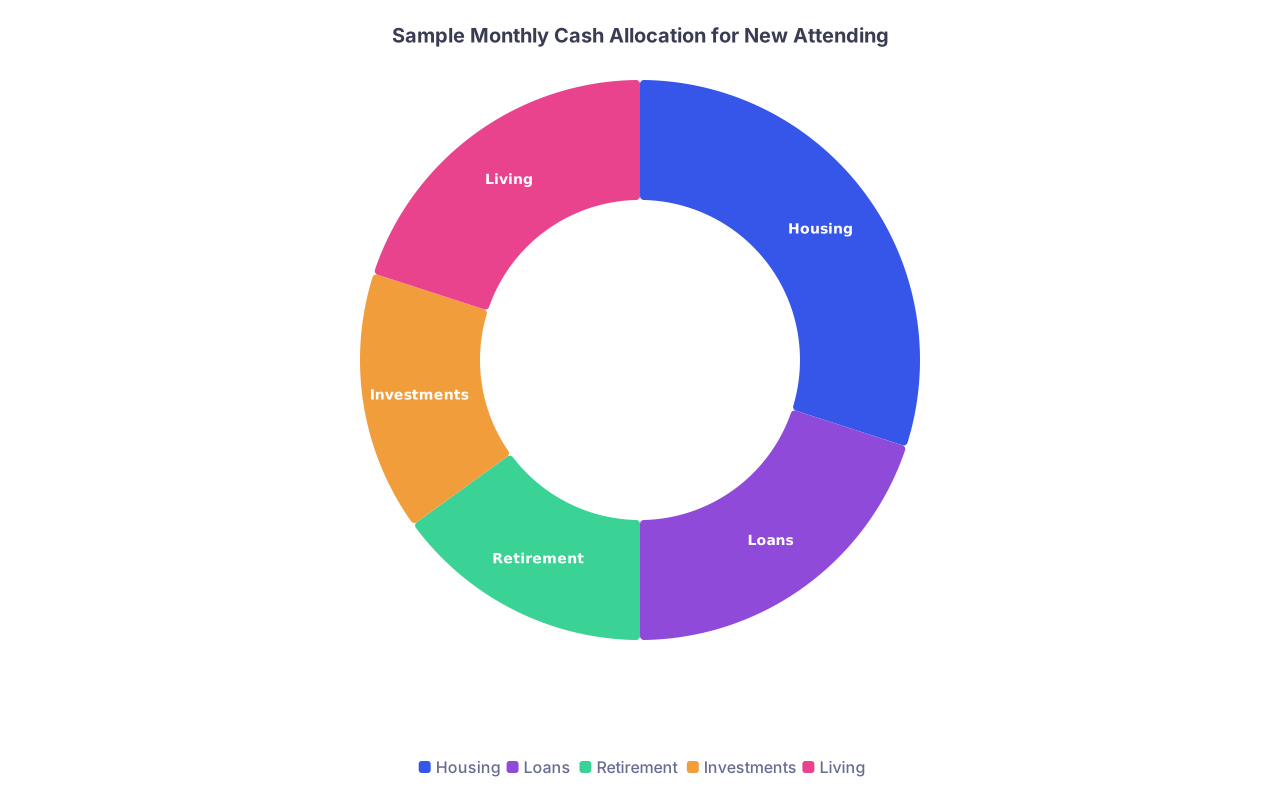
- If the house is choking you, you may need to plan an exit in year 2–3 rather than doubling down.
| Category | Value |
|---|---|
| Housing | 30 |
| Loans | 20 |
| Retirement | 15 |
| Investments | 15 |
| Living | 20 |
Month 11–12: Decide Your Year‑2 Real Estate Strategy
By the end of year 1, you should not be “dabbling.” You should be choosing a focused path for the next 2–3 years.
At this point you should decide between:
Consolidate and strengthen.
- Keep current home or rental.
- Build larger cash reserves.
- Refine your tax strategy and entity structure.
- No additional purchases until your financial foundation is rock solid.
Scale intentionally.
- Add 1 rental per year.
- Or plan a strategic move to a better primary home in year 3+.
- Explore partnerships or syndications only after you understand how a basic property works.
Course‑correct.
- If you regret a rushed home purchase:
- Consider selling or converting to a rental in year 3+.
- If your rental is a time‑and‑money sink with poor returns:
- Consider exiting and redeploying into a better market or asset class.
- If you regret a rushed home purchase:

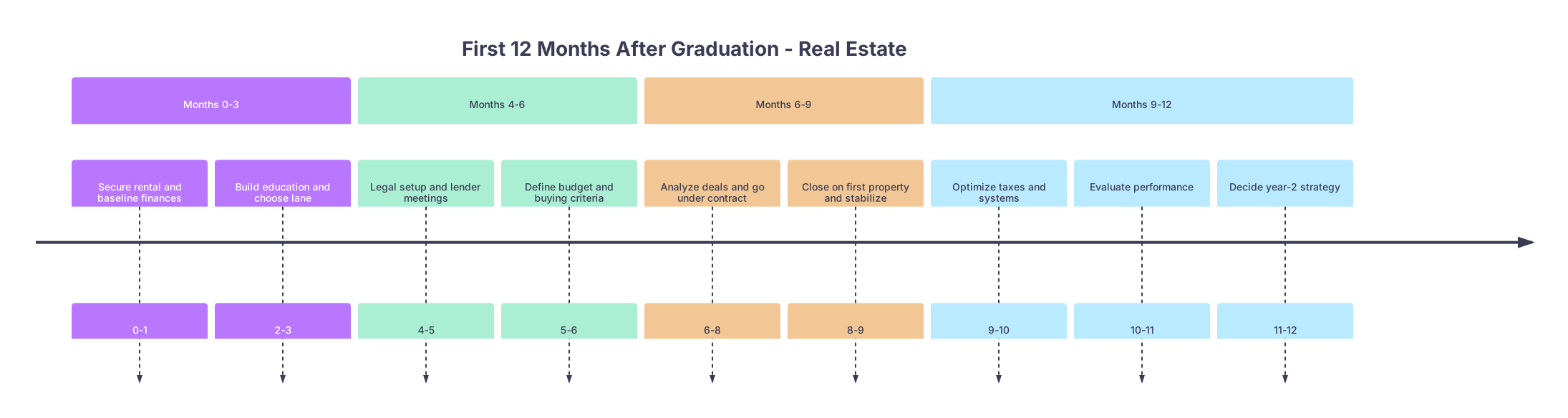
Sample 12‑Month Timeline at a Glance
| Period | Event |
|---|---|
| Months 0-3 - Secure rental and baseline finances | 0-1 |
| Months 0-3 - Build education and choose lane | 2-3 |
| Months 4-6 - Legal setup and lender meetings | 4-5 |
| Months 4-6 - Define budget and buying criteria | 5-6 |
| Months 6-9 - Analyze deals and go under contract | 6-8 |
| Months 6-9 - Close on first property and stabilize | 8-9 |
| Months 9-12 - Optimize taxes and systems | 9-10 |
| Months 9-12 - Evaluate performance | 10-11 |
| Months 9-12 - Decide year-2 strategy | 11-12 |

Final Word: What Actually Matters in Year One
Strip away the noise and your first 12 months after graduation boil down to three real estate priorities:
Buy time before you buy property.
Rent first, stabilize income, learn the basics. The rushed attending home purchase is the classic error.Build a foundation, not a fantasy.
Solid legal structure, sufficient reserves, clean credit, and a realistic budget beat any “deal” you rush into.Make one intentional move, then systematize.
One well‑chosen home, house hack, or rental in year one—backed by good bookkeeping and protection—sets you up to scale later without blowing up your life.
Follow that sequence, and real estate becomes a powerful ally in your physician career, not an expensive distraction.