
Matched Across the Country: Should You Rent or Buy During Residency?
It’s March. You just opened your Match email. You’re going across the country to a city you barely know.
You’ve got 3 months to move, find housing, sign a lease (or mortgage), and somehow not go broke before your first paycheck.
Everyone has an opinion:
- An attending says, “You should buy. Build equity. Don’t throw money away on rent.”
- A co-resident says, “Absolutely rent. You’ll move in 3 years anyway.”
- A realtor friend is already texting: “With your income you can totally afford a condo here.”
You don’t have time for vague theory. You need: Given my situation, do I rent or buy?
That’s what we’re going to do. I’ll walk through concrete scenarios and tell you what I’d actually do in each.
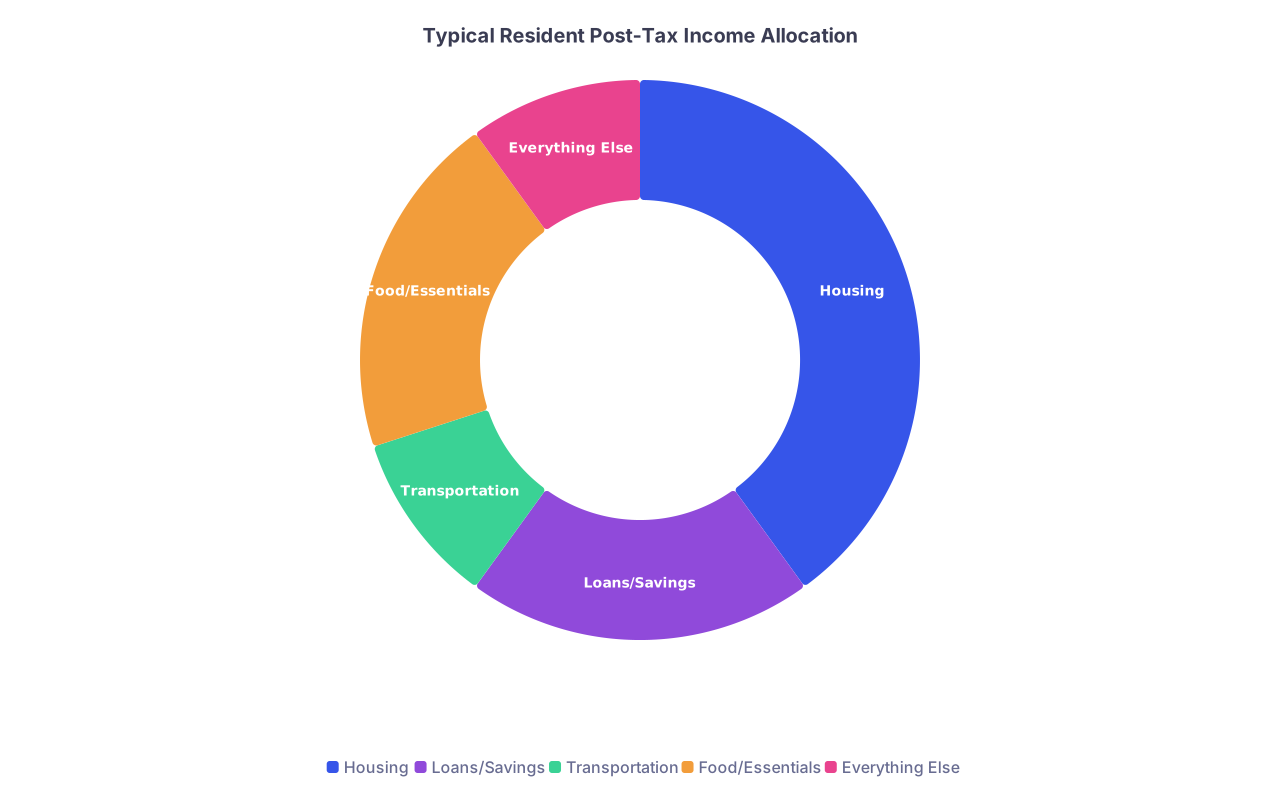
| Category | Value |
|---|---|
| Housing | 40 |
| Loans/Savings | 20 |
| Transportation | 10 |
| Food/Essentials | 20 |
| Everything Else | 10 |
Step 1: Get Real About Your Residency Situation
Before you even say the words “rent” or “buy,” answer these nine questions honestly. The answers decide 80% of this decision.
How long are you actually going to be there?
Not “the program is 3 years.” Are you:- IM resident planning fellowship elsewhere → 3 years, then gone.
- Ortho / neurosurg / ENT → 5–7 years in same place.
- IM + fellowship likely at same institution → very possibly 6–7 years total.
How confident are you you’ll stay in that city after training?
If you’re already saying “I hate the weather” or “My partner’s job is temporary,” assume you’re leaving. Don’t over-intellectualize this. Your gut is usually right.How stable is your personal life?
Partner? Kids? Planning kids? Possible divorce?
Buying a place and then needing to sell during a messy life change is how residents get wrecked financially.Do you have cash?
Not future-attending money. Actual dollars. Right now.- Down payment (3–5% minimum, 10–20% is stronger)
- Closing costs (usually 2–4% of purchase price)
- 3–6 months emergency fund
If your plan is “I’ll just stretch every dollar and hope nothing bad happens,” you should not be buying.
What’s that specific housing market doing?
Not national news. Your actual city. Heavy difference between:- San Francisco / Seattle / Boston (crazy high buy-in, rent often relatively cheaper vs purchase price)
- Midwest mid-size city (Columbus, Omaha, Kansas City – often much more buyable)
- Rural town with one hospital (may be cheap to buy but very illiquid when you need to sell)
How competitive are call rooms / short commute housing options?
If you’re on q4 call with brutal overnight shifts, living 40 minutes away in your “smart investment” condo will feel really dumb at 3:00 a.m.Do you actually have the bandwidth?
Inspections, appraisals, loan approvals, utilities, HOA fights, broken HVACs.
If you’re already drowning in boards, clinic, and new baby, buying is not “set it and forget it.” It’s another job.Visa issues?
If you’re on a visa, I generally tell people: do not buy unless you have a very clear, stable immigration path. Forced relocation + illiquid property is a disaster combo.Are you comfortable with risk?
Some people can watch a condo sit for 6 months without selling and just shrug. Others will lose sleep nightly. Know which one you are.
Step 2: Understand the True Cost of Buying vs Renting
Let’s cut through the “rent is throwing money away” nonsense. It’s lazy thinking.
What “Buying” Actually Costs You
When you buy, your monthly housing cost is not “just the mortgage.”
You’re paying:
- Principal
- Interest
- Property taxes
- Homeowners insurance
- HOA (if condo/townhome)
- Maintenance and repairs (yes, even during residency)
- Transaction costs (on both the buy and the eventual sell)
Here’s a quick comparison most people ignore:
| Item | Rent (Apartment) | Buy (Condo) |
|---|---|---|
| Monthly payment | $2,000 rent | $2,500 PITI+HOA |
| Up-front cash | 1st+deposit: $4k | Down+closing: $25k |
| Maintenance | $0 | ~$1,200/yr |
| Transaction costs (net) | $0 | ~$20k–$40k buy/sell |
| Flexibility to move | High | Low–Medium |
You don’t “lose” all your rent. You’re buying flexibility, zero maintenance responsibility, and no transaction drag.
On the buy side, yes, part of your payment goes to principal, but early in the mortgage most of your payment is interest and tax, not principal.
Quick Reality Check: Break-Even Time
Rule of thumb:
If you’re staying less than 3–5 years in a place, the transaction costs alone often kill the benefits of buying.
If I know for sure I’m out in 2–3 years? I nearly always recommend renting unless there’s a very special factor (e.g., absurdly cheap foreclosure, family support, extremely hot appreciating market).

| Step | Description |
|---|---|
| Step 1 | Matched in New City |
| Step 2 | Strongly Lean Rent |
| Step 3 | Consider Buying Carefully |
| Step 4 | Stay 5 years or more? |
| Step 5 | Have 6 months cash after down payment? |
| Step 6 | Market stable or growing? |
Step 3: Scenario-Based Advice — What You Should Actually Do
Let’s get specific. I’ll run through the most common real-world setups I see.
Scenario 1: 3-Year IM in a High-Cost Coastal City, No Plan to Stay
Example: Matched at UCSF, NYU, or BIDMC. You’re 3 years IM, almost sure you’ll fellowship elsewhere. You have $8–15k in savings. Loans are large.
My recommendation: Rent. Full stop.
Why?
- 3 years is borderline even in stable, mid-cost markets. In volatile, high-cost markets with high transaction fees, it is dumb risk.
- Your savings are not enough to put down a meaningful down payment, pay closing costs, and still have an emergency cushion.
- HOA fees in these cities are brutal and eat into any “equity-building” story a realtor will sell you.
- Your schedule will be insane. You do not have time to be on the phone about water leaks, HOA disputes, or tenant issues if you try to house-hack with roommates.
What to do instead:
- Rent something modest close to the hospital. Time > square footage.
- Keep fixed costs low and aggressively build cash during PGY1–2.
- If you fall in love with the city and end up matching there for fellowship and beyond, you can reevaluate as a senior resident or fellow with more stability and cash.
Scenario 2: 5-Year Surgical Program in a Reasonably Priced City, Might Stay Long-Term
Example: General surgery in places like Indianapolis, Raleigh, Kansas City, Columbus. You’re potentially open to a job there. You’ve got ~$40–60k saved from prior work or spouse income.
My recommendation: This is where buying starts to make sense — but only if numbers work.
What I’d look for:
- Total time horizon realistically ≥ 7–8 years
(5 years residency + plausible job or fellowship there) - Purchase price to annual rent ratio reasonable. A decent rule of thumb:
- If similar place rents for $2,000/month ($24k/yr) and costs $250k to buy, that’s a ~10–11x price-to-rent. Pretty reasonable.
- If it’s $600k to buy and still $2,000 to rent, that’s ~25x. You’re overpaying for the privilege of owning.
- You can put 5–10% down and still have 6 months of expenses sitting untouched.
How to structure it:
- Don’t buy your “dream attending house.” Buy a starter place close enough to the hospital that call doesn’t destroy you.
- Avoid super “luxury” condos with sky-high HOAs. They eat your cash flow and are harder to sell.
- Strongly consider something that can be rented easily to the next batch of residents if you decide to leave (near hospital, 2–3 beds, safe, simple).
Here’s the kind of thing that works:
- $260k townhouse
- 5% down ($13k) + ~$7k closing → $20k out of pocket
- PITI+HOA = ~$1,800/month
- Comparable rent = $2,000–2,200/month
That’s the kind of margin where, in 7–10 years, you’ll probably be fine or ahead, assuming no disaster.
If your numbers don’t look like that? You’re forcing it.
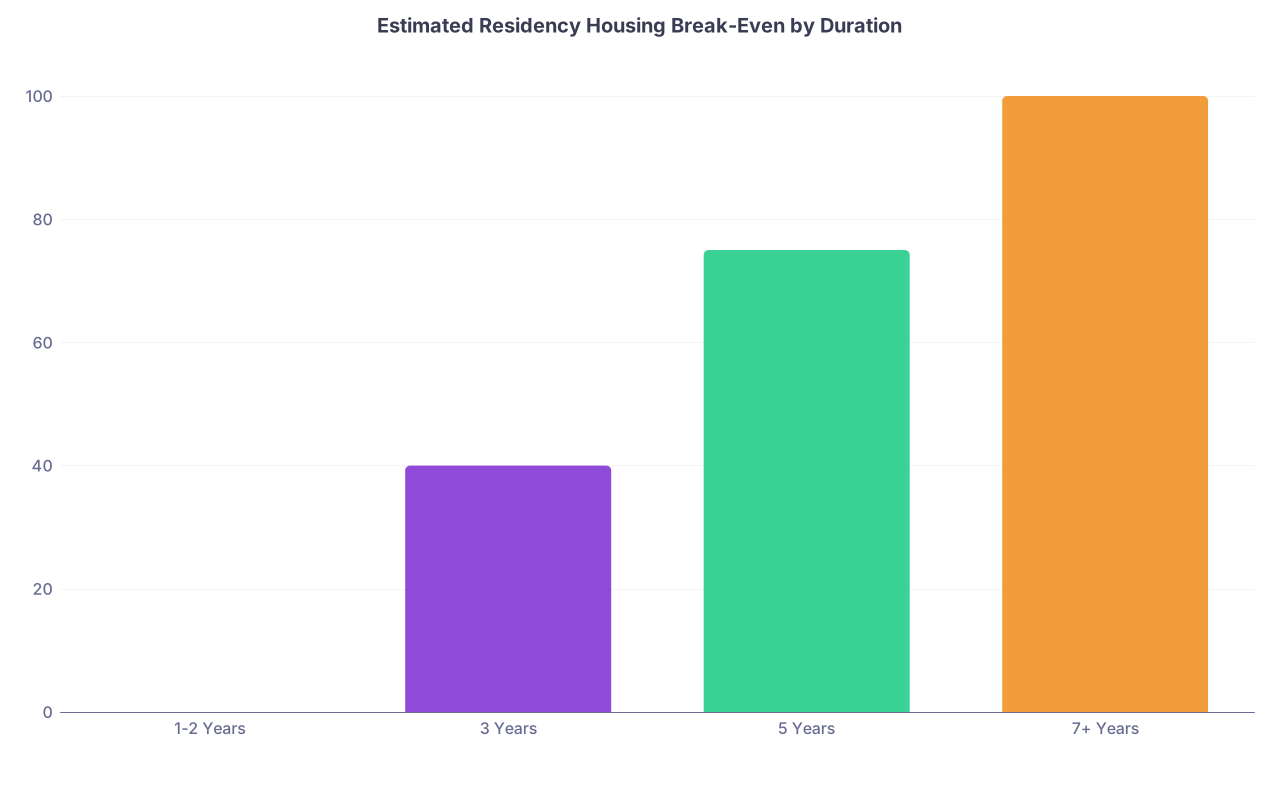
| Category | Value |
|---|---|
| 1-2 Years | 0 |
| 3 Years | 40 |
| 5 Years | 75 |
| 7+ Years | 100 |
(Values are a rough “% chance buying beats renting financially” in a normal, not-crazy market if you buy intelligently. Not gospel, but you get the idea.)
Scenario 3: 7-Year Neurosurgery in a Questionable Market, Partner’s Career is Mobile
Example: 7-year neurosurgery in a smaller city with uncertain economic future. Spouse can work anywhere. You might end up at a big academic center in a different state.
My recommendation: Default to renting unless the market screams opportunity.
What I’ve seen happen:
- Resident buys a house in PGY1–2.
- By PGY5, spouse hates town, they want out immediately after training.
- Market has softened. House just sits. They drop price. Then drop again.
- They finally sell near the end of residency, basically breaking even or losing money after closing costs.
Meanwhile they spent 6–7 years:
- Stressing about repairs.
- Covering both rent and mortgage for 2–3 months during the transition.
- Arguing about whether to rent vs sell the house at the end.
If you’re in this setup and still tempted to buy, your bar for “this is obviously a good idea” needs to be high:
- Purchase price is clearly below comparable rents on a price-to-rent basis.
- The property type is highly liquid: small SFH or 2–3 bed near hospital, in solid school zone, not luxury niche.
- You’ve modeled renting it out after residency and cash flow makes sense (even if you move away).
If none of that is true? Rent.
Scenario 4: Married, Kids or Planning Kids Soon, 4–6 Year Combined Training, Strong Local Ties
Example: Med-Peds, EM, OB/Gyn in a city where:
- You have family support nearby.
- You could easily see yourself staying.
- You’d like a stable home base for kids’ schools.
My recommendation: I lean more toward buying here, but with discipline.
Here’s why this is different:
- Stability matters more. Uprooting kids every 2–3 years is painful.
- The non-resident partner’s income or family help often improves your financial cushion.
- Your “utility” from a consistent home (space for kids, yard, neighbors) actually has real value.
But you still need:
- Cash buffer. No negotiating here.
- Not overbuying. This is where residents get crushed. They try to jump straight into a $700k house because “we’ll be attendings soon.” Don’t. Stay lean.
- A safe exit plan: If you do end up leaving in 4–6 years, could you rent the place without bleeding cash every month?
If the only way you can barely afford the place is with your future attending income, you’re about to create a nightmare.

Step 4: If You Do Buy, Don’t Be Stupid About It
If you’re one of the smaller percentage of residents for whom buying can make sense, here’s how not to sabotage it.
1. Keep Your Total Payment Under Control
I like this rule:
- Total monthly housing (PITI + HOA) ≤ 30–35% of your take-home pay, using resident salary only, not partner income.
Why?
- Residency is unstable. Partners lose jobs. People separate. Using only your income keeps you from being stuck.
If your PGY1 take-home is ~$4,500/month and your mortgage + taxes + insurance + HOA will be $2,400? You’re overdoing it.
2. Don’t Play Amateur Landlord Unless You Can Handle It
The “I’ll rent rooms to co-residents and house-hack” fantasy:
Sometimes works. Often a headache.
Consider:
- Are you okay chasing your co-resident for late rent?
- Are you willing to deal with roommate conflict while you’re on nights?
- Are you going to turn over tenants every year as classes graduate?
If you want low-stress: buy a place sized for your actual family and budget assuming no roommates. If you get a roommate, that’s a bonus, not the foundation.
3. Buy Boring
You are not a developer. You are not a flipper. You are a resident with too little time and too much cognitive load.
What “boring” looks like:
- Safe, middle-of-the-road neighborhood with stable demand.
- Solid school district if you might rent to families.
- 2–3 bed, 1.5–2 bath. No weird layouts. No hyper-lux finishes that only a narrow demographic wants.
What to avoid:
- “Up-and-coming” speculative areas that might gentrify or might just stay rough.
- Luxury amenity condos with $700/month HOAs and a fancy gym you’ll never use.
- Homes with obvious deferred maintenance unless you have deep pockets and free time. You have neither.
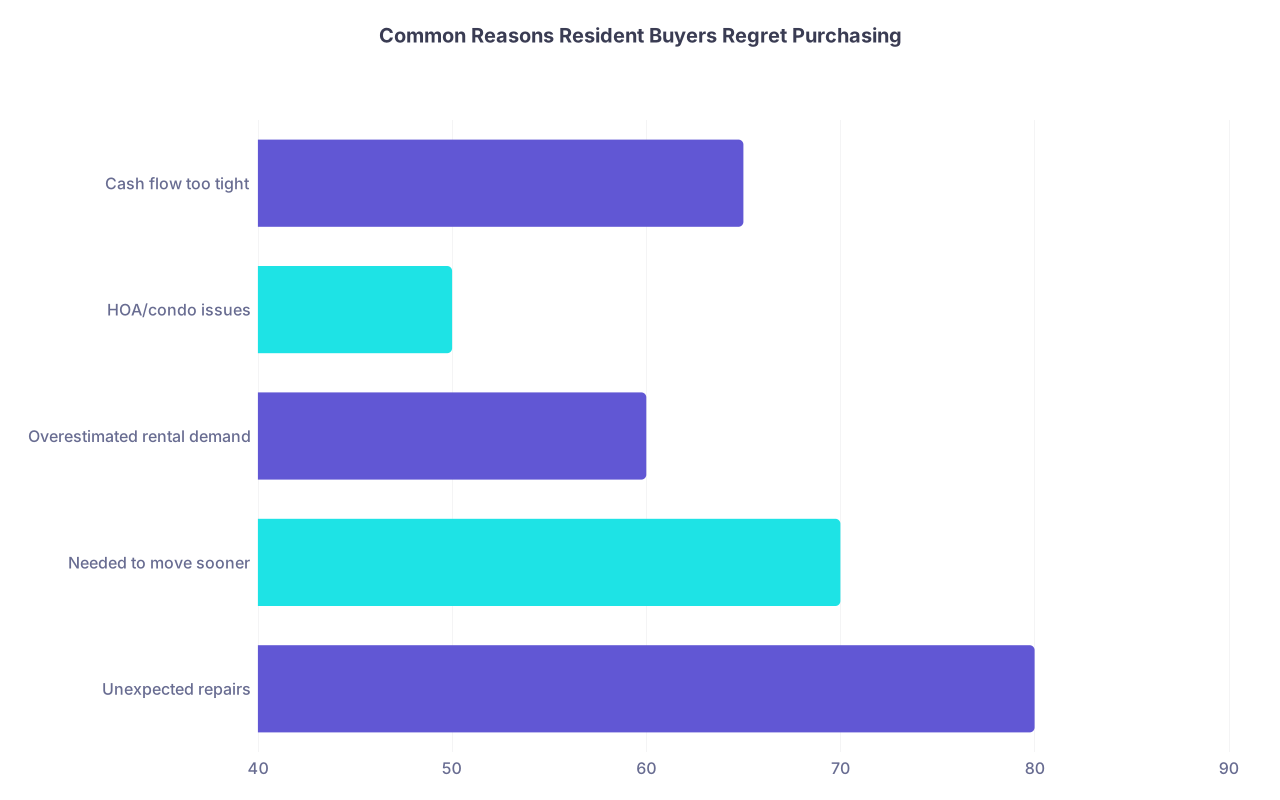
| Category | Value |
|---|---|
| Unexpected repairs | 80 |
| Needed to move sooner | 70 |
| Overestimated rental demand | 60 |
| HOA/condo issues | 50 |
| Cash flow too tight | 65 |
Step 5: Legal and Financing Angles Residents Forget
You’re not just choosing rent vs buy. You’re also stepping into legal/contract land.
Loan Type Choices
As a resident, here’s what you’ll run into:
- Conventional loans (3–5% down)
Often fine if you have decent credit and some down payment. - Physician mortgage / doctor loan
Usually:- Little to no down payment (0–5%)
- No PMI (private mortgage insurance)
- Slightly higher rate sometimes
- Looser debt-to-income treatment of student loans
Opinion: Physician loans can be useful, but people abuse them to overbuy. If you use one, cap your price as if you only had a traditional 5–10% down conventional approval. Prevents self-sabotage.
Title and Ownership
If you’re buying with a partner you’re not married to yet:
- Do not skip the conversation about:
- What happens if we break up?
- Who gets what equity?
- Who pays the mortgage while it sells?
You may want a simple co-ownership agreement. Yes, even “we’re definitely getting married.” I’ve seen enough “we were going to” blow up to be blunt about this.
If you’re married, understand whether your state is community property or not. It can affect liability and ownership assumptions.
Liability and Renting It Out
If you think you’ll rent the property:
- Check local landlord–tenant laws. Some cities (e.g., NYC, SF) are a minefield for newbies.
- Understand you’ll need landlord insurance, not just homeowners.
- Consider an LLC eventually, but do not overcomplicate this during PGY1. Title / loan in an LLC as a resident is often a mess anyway.

Step 6: A Quick Reality Filter — When Renting Is Clearly Better
If any of the following are true, I’d say renting is the default and you need a compelling reason to override it:
- Staying ≤ 3–4 years with low chance of staying for a job.
- You’d have less than 3 months of expenses left after down payment and closing costs.
- You’re already anxious about money, sleep, or burnout.
- Your partner is lukewarm or opposed to the idea.
- The only way the math works is if the property “goes up a lot” in value.
Renting gives you:
- No transaction costs going in or out.
- Flexibility if the program is toxic and you want to switch.
- Ability to live very close to the hospital your first year, then adjust later.
- Mental bandwidth for more important things: learning medicine, not water heaters.
Residency is temporary. You don’t have to “optimize for wealth” on every decision. You’re already making a giant human capital investment in your training.
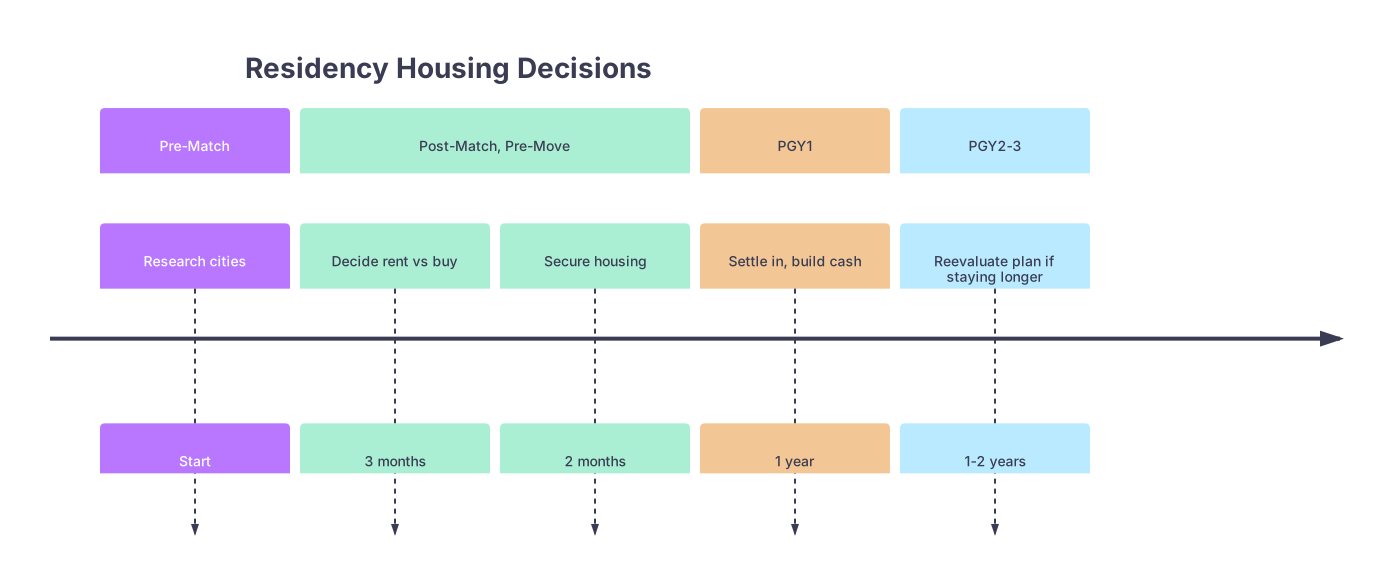
| Period | Event |
|---|---|
| Pre-Match - Research cities | Start |
| Post-Match, Pre-Move - Decide rent vs buy | 3 months |
| Post-Match, Pre-Move - Secure housing | 2 months |
| PGY1 - Settle in, build cash | 1 year |
| PGY2-3 - Reevaluate plan if staying longer | 1-2 years |
Step 7: A Simple Framework You Can Actually Use
If you want a blunt checklist, here it is.
You are a good candidate to consider buying during residency if:
- You’re highly likely to be in that city ≥ 5–7 years.
- Market is reasonably priced; buy vs rent numbers aren’t insane.
- You can keep all-in housing ≤ 30–35% of your take-home as a resident.
- You still have ≥ 3–6 months expenses after down payment and closing.
- You have the temperament to handle occasional property problems without losing your mind.
You should almost certainly rent if:
- Program is 3 years or less and you don’t want to stay.
- Your net worth is strongly negative and you’re barely scraping together first / last month’s rent now.
- You or your partner are ambivalent about the city.
- You’re doing a very intense specialty with high burnout risk.
- Your primary motivation is “I feel like I should buy because that’s what grown-ups do.”
Renting doesn’t mean you’re bad with money. It means you understand that flexibility and sleep have value too.

FAQ (Exactly 5 Questions)
1. Is it ever smart to buy a house in PGY1?
Sometimes, but rarely. PGY1 is chaos: new hospital, new schedule, new city, new coworkers. You don’t even know yet if you like the program. I usually tell people: rent PGY1, learn the city, understand your lifestyle, then decide. The only exception is if you already know the city well, have strong roots there, and your numbers are slam-dunk good.
2. Should I use a physician mortgage as a resident?
It can be useful, but it’s a double-edged sword. The danger is it lets you buy more house than you should. If you use one, pretend you don’t have that special product: pick a price as if you were using a normal conventional loan with a real down payment, and stick to that cap. The product itself isn’t evil; your behavior with it is the issue.
3. What if my attending mentors all tell me buying is a no-brainer?
Smile, nod, and remember they’re speaking from attending income and usually selective memory. Ask them: “How long did you stay in that house? What were your actual returns after closing costs? How many repairs did you pay for?” The stories get more honest when you push for specifics. Your situation as a resident in 2026 is not their situation in 1998.
4. Can buying a place and renting to co-residents be a good ‘first investment property’?
It can, but you’re stacking jobs: resident + landlord + roommate mediator. If you’re highly organized, have some savings, and genuinely like real estate, it’s fine to consider. But if your primary motive is “everyone says passive income,” skip it. Nothing about a 2 a.m. plumbing leak is passive.
5. How much should I worry about market crashes if I buy during residency?
If a 10–20% drop in home value would financially or emotionally crush you, you’re buying too close to the edge. Real estate can and does go down. If you buy, do it assuming: “I might need to hold this for 7–10 years or accept the possibility of selling at a small loss.” If that thought makes you sick, you’re better off renting and sleeping.
Key Takeaways:
- Time horizon and cash cushion decide most of this decision. Short stay + thin savings → rent.
- Buying during residency can work, but only when you buy boring, under your means, in a stable place you’re likely to stay.
- Renting is not “throwing money away.” It’s paying for flexibility, sanity, and the ability to survive residency without adding a second job as a stressed-out landlord.