
What happens when you’re an international medical graduate earning solid U.S. income… but every bank, lawyer, and broker treats you like a walking red flag because of your visa?
You are not crazy. The system really is more complicated for you than for your U.S. citizen co-residents. I’ve seen IMGs with stronger incomes and better savings get worse loan terms than citizens with half their profile. So if you’re going to invest in U.S. real estate as an IMG physician, you need a playbook—not vibes.
This is that playbook.
We’re going to stay very practical: what to do if you’re on H‑1B, J‑1, O‑1, EAD, or no U.S. status at all but want to buy property here. How to structure ownership, avoid nasty tax surprises, and not blow up your immigration plans by accident.
1. Start With Your Actual Situation, Not Some Generic “Investor” Fantasy
Before you think “duplex in Texas” or “short‑term rental in Florida,” you sort out four things:
- Your current immigration status
- Your timeline for staying in the U.S.
- Your debt and cash position
- Who you might invest with (spouse, family, partners)
If you skip this, the rest becomes messy and expensive.
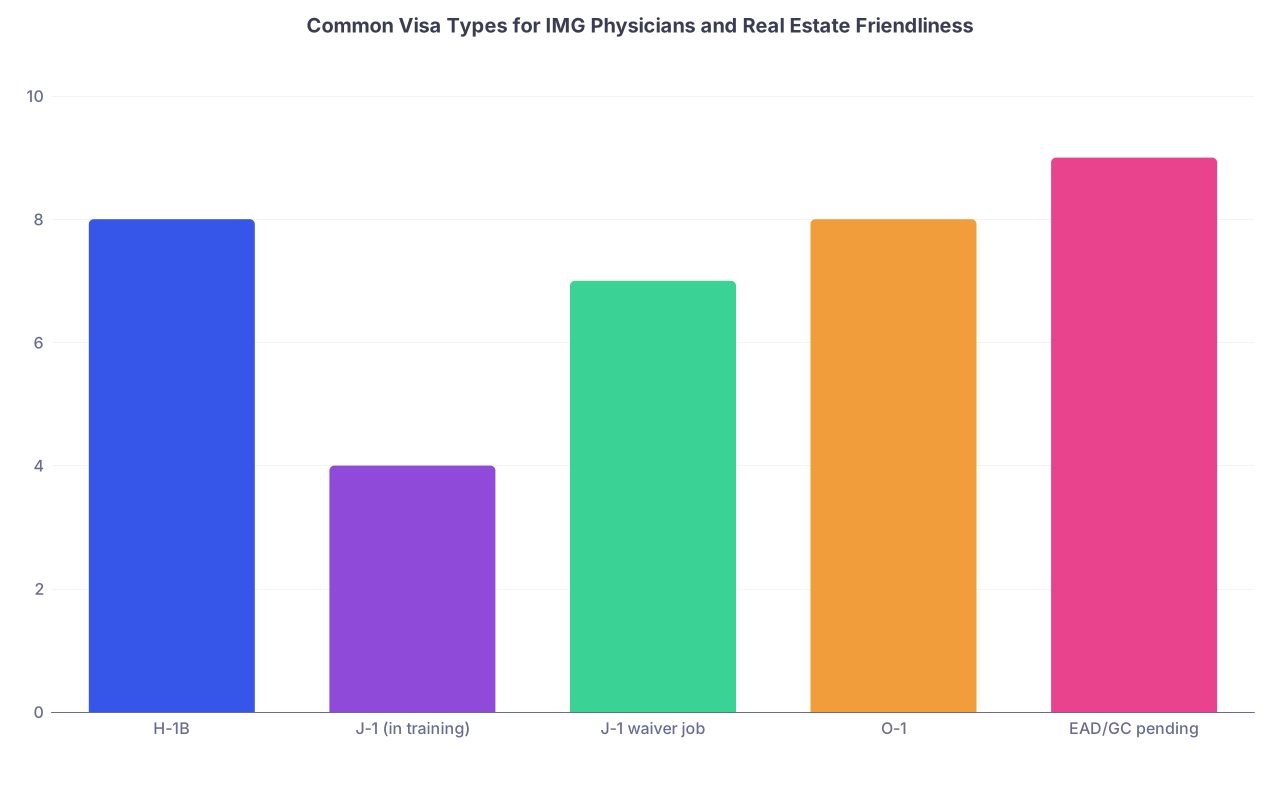
| Category | Value |
|---|---|
| H-1B | 8 |
| J-1 (in training) | 4 |
| J-1 waiver job | 7 |
| O-1 | 8 |
| EAD/GC pending | 9 |
Scale: 1 = very hard to invest / finance, 10 = relatively straightforward.
Visa reality check
Here’s how I treat each common scenario:
H‑1B attending or senior fellow
You’re in one of the best positions among IMGs. Banks understand H‑1B. You can usually get conventional physician mortgages, sometimes with low or zero down, if the job is stable and contract length is decent.J‑1 resident/fellow (non‑waiver yet)
This is the toughest. Short training contracts, future location unknown, two‑year home residency requirement lurking in the background. You can absolutely still buy—but you should be extremely picky and conservative.J‑1 waiver job (Conrad 30, academic, etc.)
Better than pure J‑1. The three‑year waiver contract gives you stability. Lenders still may get spooked, but you’ve got a real story: “I’m committed to this area for at least 3 years.”O‑1 or EAD (employment authorization)
Lenders treat you fairly well if your income’s good and the documentation is clean. Long‑term intent to stay is easier to argue.No U.S. status / living abroad
Then you’re a foreign investor. Whole different game: larger down payments, different loan programs, more tax friction. Sometimes it still makes sense—but you need to accept that you’re not playing the “physician home loan” game; you’re playing the “foreign investor” game.
Two questions you must answer honestly
Where are you likely to be for the next 3–5 years?
If you can’t name a city or region with 70% confidence, buying a primary residence is usually dumb. Renting plus building cash might be smarter while you figure out waivers, job offers, or fellowship plans.How many big financial fires are already burning?
Massive unsecured debt, no emergency fund, living on credit cards? Then you’re not a real estate investor yet. You’re a high‑income person in a fragile position. Different problem to solve first.
2. Can You Even Get a Mortgage? (And What They Won’t Tell You)
Let me cut through the nonsense: yes, as an IMG physician on a visa, you usually can get a mortgage. But you’re not going to be treated the same as your citizen co‑resident unless you push for it.
What lenders really care about
Forget the marketing fluff. Lenders care about:
- Can you pay? (income, debt‑to‑income ratio)
- Will you stay? (visa status, contract length, specialty)
- Can they find and sue you if you default? (residency, assets in the U.S.)
| Loan Type | Typical Down Payment | Visa Friendly | Notes |
|---|---|---|---|
| Physician Mortgage | 0–10% | H-1B/O-1/EAD | Best for primary residence |
| Conventional 30-Year | 3–20% | Most visas | Standard Fannie/Freddie rules |
| Portfolio Loan | 20–30% | Most visas | Bank holds loan, flexible |
| Foreign National Loan | 25–40% | Non-US status | Higher rates, more scrutiny |
What to do, step by step
Collect your evidence
- Last 2–3 years of tax returns (if you have them)
- Current contract and any offer letters
- Visa documents (I‑797, DS‑2019, EAD card, etc.)
- Recent paystubs and bank statements
Target the right kind of lender
Do not start with random online mortgage aggregators. You want:- Banks that actively do physician mortgages (regions differ)
- Credit unions in hospital systems’ areas
- Portfolio lenders (smaller/regional banks that keep loans on their books)
Ask blunt questions before you waste time
- “Do you close loans for H‑1B / J‑1 / O‑1 physicians regularly?”
- “What extra documents do you need from visa holders?”
- “Will you require a green card or citizenship in the next 3–5 years for this loan?”
If their answer sounds confused or hesitant, move on. Don’t let an inexperienced loan officer learn immigration law on your file.

| Step | Description |
|---|---|
| Step 1 | Decide to Buy |
| Step 2 | Check Visa and Contract |
| Step 3 | Delay Purchase |
| Step 4 | Collect Docs |
| Step 5 | Contact 3 Lenders |
| Step 6 | Discard Lender |
| Step 7 | Compare Terms |
| Step 8 | Choose Lender and Lock Rate |
| Step 9 | Stable 3 year outlook? |
| Step 10 | Visa Experience? |
3. How to Hold Property: In Your Name, LLC, or Something Fancier?
Everyone loves to say “just put it in an LLC.” That can be a bad answer for an IMG physician if you do it blindly.
Primary residence
For your own home:
- Almost always: hold it in your personal name.
- Why: you’ll usually get better mortgage terms and can still get substantial liability protection with proper insurance (homeowners, umbrella policy).
If you later want asset protection, you can explore trusts or transferring title—but do not play games that might trigger the mortgage’s due‑on‑sale clause without legal advice.
Rental properties
This is where entity structure matters more.
Common options:
In your personal name
Simple. Easy taxes. But liability from tenants can reach your personal assets. Many physicians don’t love that.Single‑member LLC (disregarded entity)
This is the sweet spot for many IMGs. Ownership is you (or you and spouse), but the property is legally separate for liability purposes. Tax wise, the income usually just flows to your personal return.Partnership LLC (you + spouse or partner)
Shows up as a partnership tax return. Slightly more complex, but common if multiple owners.
For foreign physicians with no U.S. residence, you end up in heavier tax structure territory (LLC with foreign owner, potentially a U.S. corporation on top). That’s not kitchen‑table planning—you need a cross‑border tax advisor.

4. Tax Reality: The Stuff That Blindsides IMGs
Big mistake I see: IMGs assume the hospital HR session on taxes covered everything. It did not. Real estate adds entirely new layers.
If you’re a U.S. tax resident (most physicians on H‑1B, J‑1 after substantial presence)
For tax purposes, you’re basically treated like a U.S. citizen. You report worldwide income on your U.S. return.
That means:
- Rental income is reported on Schedule E
- You get deductions: mortgage interest, property taxes, repairs, management fees, depreciation
- Losses can be limited if you’re not a “real estate professional” (you’re not; you’re a doctor), but some can offset other income within limits
If you’re a non‑resident for tax purposes (early J‑1, living abroad)
Whole different treatment:
- U.S. real estate income is U.S.‑source income. Taxable here.
- Might face 30% withholding on certain income unless a treaty or elections change that.
- Needs special forms (1040‑NR, election to treat rental as effectively connected income, etc.).
This is where people screw it up:
- No U.S. return filed, thinking “my cousin handles it in my home country.”
- Then later, when selling the property, they get nailed by FIRPTA withholding (a default 15% withholding of gross sale price for foreign sellers) and a giant admin headache.
, Wrong classification of rental income, No depreciation taken, Mismatched foreign and US reporting](https://cdn.residencyadvisor.com/images/articles_svg/chart-common-tax-pain-points-for-img-real-estate-investo-9094.svg "Common Tax Pain Points for IMG Real Estate Investors")
| Category | Value |
|---|---|
| Not filing US return as non-resident | 80 |
| [Ignoring FIRPTA on sale](https://residencyadvisor.com/resources/physician-real-estate-investing/the-costly-tax-mistakes-physicians-make-with-rental-properties) | 70 |
| Wrong classification of rental income | 65 |
| No depreciation taken | 60 |
| Mismatched foreign and US reporting | 55 |
Percent = relative frequency of problems I see reported.
What you should actually do
- Hire a CPA who works with both:
- Physicians, AND
- Foreign nationals / visa holders / treaty issues
If they don’t understand both sides, you either get overpaying or non‑compliance.
Decide before purchase:
- Will this be long‑term hold or short‑term flip?
- Will you live in it first then rent it, or purely rental?
- Could you leave the U.S. while still owning it?
Keep clean records from day 1
Separate bank account for each rental or at least for your rental “business.”
Track:- Rent received
- All expenses (with receipts)
- Time you spend materially managing, in case you ever push for more favorable tax treatment
5. Immigration Traps: How Real Estate Can Mess With Your Status (Or Not)
Here’s what I see people fear: “If I buy property, USCIS will think I’m not going home / violating my visa.” That’s mostly nonsense—owning property alone doesn’t violate status.
But there are a few real traps:
Trap 1: Unauthorized work (for certain visas)
Running an active Airbnb where you’re constantly managing guests yourself can, in theory, look like work outside your authorized employer. Passive investment (long‑term leases, property managers) is much safer.
Simple rule:
You can own assets. You can receive passive income.
You cannot run a separate active business that relies on your labor without proper authorization.
Trap 2: J‑1 home residency confusion
Owning property does not exempt you from the two‑year home residency requirement after J‑1, and it does not “prove ties” to the U.S. in any helpful way for that rule. Do not confuse immigration strategy with investment strategy.
Trap 3: Green card financial review
In some green card categories, they’ll look at your finances: assets, liabilities, bankruptcies. Overleveraged property, short sales, or foreclosure will not impress anyone. If you’re barely floating three rentals on thin cash flow, you’re building risk, not strength.

| Step | Description |
|---|---|
| Step 1 | Own Property |
| Step 2 | Generally Safe |
| Step 3 | May Be Unauthorized Work |
| Step 4 | Report Income on Taxes |
| Step 5 | Consult Immigration Lawyer |
| Step 6 | Review Liabilities and Credit |
| Step 7 | Maintain Status Rules |
| Step 8 | Type of Activity |
| Step 9 | Visa Change or GC? |
When in doubt, pay for one hour with an immigration attorney who knows what “real estate syndication” or “short term rental” even means.
6. Practical Buying Strategies for IMGs in Specific Positions
Let’s get concrete. Different situations require different plays.
Scenario A: H‑1B hospitalist, 2 years into job, planning to stay
You:
- Stable W‑2 income, strong savings
- No immediate plan to leave the country
- Possibly green card in process
Playbook:
- Primary residence first if you’re settled in that city for 5+ years. A physician mortgage often works if you want low down.
- If you want rentals, start with something close to home: small multifamily (2–4 units) you can understand and manage or with professional management.
- Hold rentals in an LLC, home in your name.
- Get an umbrella liability policy (1–3M) over your home and rentals.
Scenario B: J‑1 final year, not sure where your waiver job will be
You:
- Uncertain geography next 3+ years
- Limited time, maybe some savings
- Tempted to “not throw away rent”
Playbook:
- Do not buy a residence in your current training city unless you absolutely know you’ll stay there for waiver or you get a screaming deal and are ready to be a long‑distance landlord.
- Build cash. Use this year to learn: read, talk to other physician investors, interview CPAs.
- When you sign a waiver job in a reasonably stable location, then consider purchasing—ideally something that would work both as your home now and a future rental later.
Scenario C: Living abroad, high income, wants U.S. rental for diversification
You:
- No U.S. status or only tourist visits
- Curious about dollar‑denominated assets
Playbook:
- Accept that you are treated as a foreign investor, not “doctor with great income.”
- You’ll likely need 30–40% down, maybe higher interest.
- Work with:
- U.S. attorney who handles foreign buyers
- CPA familiar with your home country tax treaty
- Decide jurisdiction carefully. States like Texas and Florida are popular, but choose based on local management, landlord laws, and tax treatment— not just Instagram hype.

7. Risk Management: Your Shield When Things Go Sideways
You’re already taking on medical malpractice risk. Don’t casually stack real estate risk on top of that.
Bare minimum protection setup:
- Adequate property insurance (not the cheapest quote; the right coverage).
- Personal umbrella liability policy, typically $1–3M, especially once you have rentals.
- For rentals: LLC ownership where appropriate, with operating agreement drafted by someone who has done this before— not a random template copied from Reddit.
And then the boring but critical part: cash.
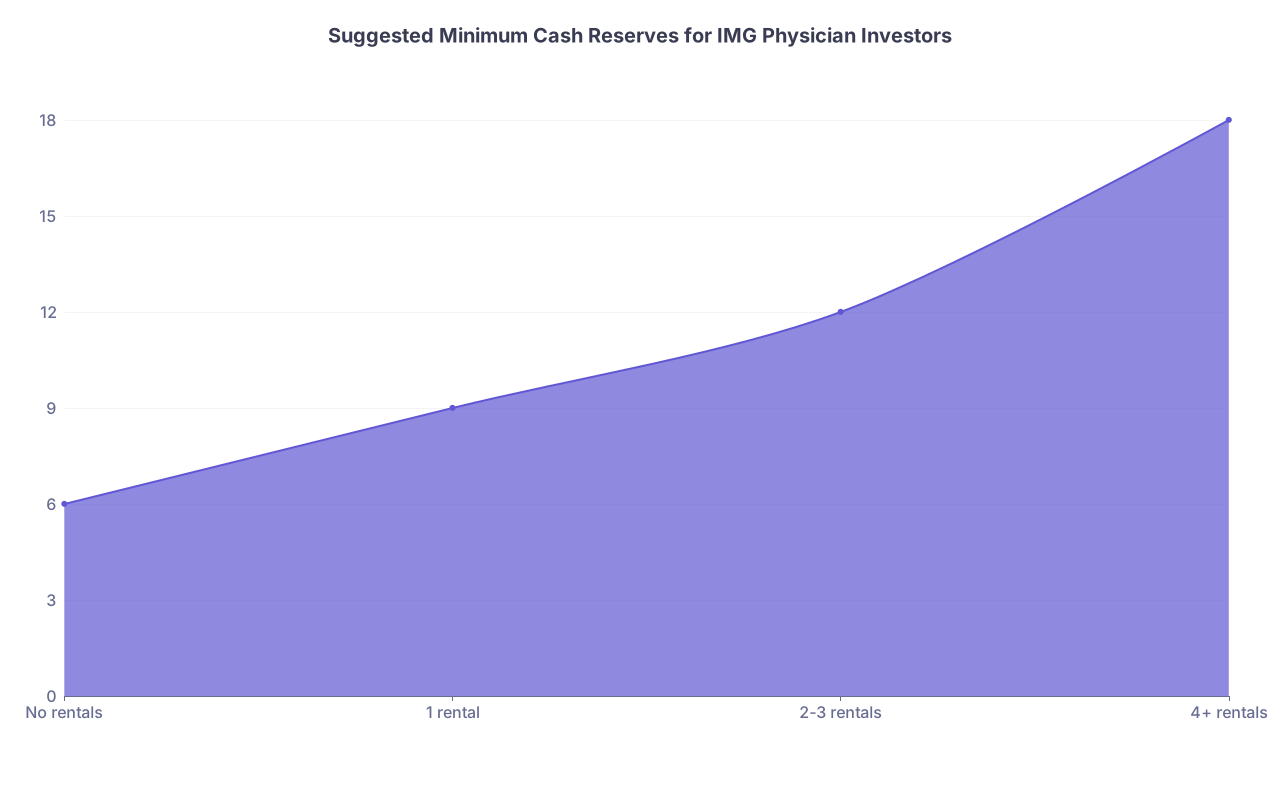
Realistic reserves:
- 6 months of personal expenses, separate from real estate
- 3–6 months of expenses per rental property (mortgage, taxes, insurance, utilities as applicable)
Most IMGs under‑reserve because they’re used to surviving scarcity. That mindset is great for residency; it’s terrible for leveraged investing.
| Category | Value |
|---|---|
| No rentals | 6 |
| 1 rental | 9 |
| 2-3 rentals | 12 |
| 4+ rentals | 18 |
Values = months of total expenses (personal + property) recommended.
8. Who Needs to Be on Your Team (And Who You Can Ignore)
You do not need a 10‑person advisory board. But you do need a few competent people.
Non‑negotiables:
- A CPA who understands both foreign nationals and real estate
- A real estate agent who has actually closed deals for non‑citizen physicians (ask explicitly)
- A lender who has personally funded multiple H‑1B / J‑1 / O‑1 loans
Strongly recommended:
- Real estate attorney (not just your hospital’s immigration lawyer) to review your first contract and your first LLC setup.
- Insurance broker used to covering landlords and physicians, not just auto/home.

You can skip:
- Random “mentors” selling overpriced physician real estate courses
- Online guru pushing you into syndications you don’t understand
- Friends insisting “you’re dumb if you’re not buying Airbnbs right now”
You’re an IMG physician with unique constraints. Generic guru advice usually ignores visa, tax residency, and cross‑border issues.
FAQ (Exactly 5 Questions)
1. Will buying U.S. real estate help my chances of getting a green card or visa approval?
No. Owning property doesn’t meaningfully improve your immigration case. USCIS cares about your qualifying employment, credentials, and compliance with status—not whether you own a condo. Do not buy property as an “immigration strategy.” Buy it as a financial decision only.
2. Can I get a physician mortgage as an IMG on a visa?
Often yes, especially on H‑1B, O‑1, or EAD, sometimes with 0–10% down. But not all lenders offer these to visa holders. You have to specifically ask each bank whether their doctor loan program includes non‑citizens/non‑green card holders and what documentation they want. Some will quietly exclude you; others are very comfortable with it.
3. Is it safer to buy my first investment property in my home city or in a cheaper state?
For most IMG physicians, especially early in their career, buying near where you actually live and work is safer. You know the area, can visit the property, and have local contacts. Long‑distance, out‑of‑state investing can work, but it adds complexity: you now depend entirely on others (agents, managers, contractors) in a market you barely understand.
4. As a J‑1 resident, should I buy a home during training?
Usually no, unless one of these is true: you’re almost certain you’ll stay in that city for waiver or further training, or the price is so good that it works as a long‑term rental even if you leave. Most J‑1s end up having to move for waiver jobs. Being forced to sell quickly or become a long‑distance landlord from a new city (or country) is not fun.
5. Do I need an LLC for every rental property I buy?
Not automatically. One LLC can hold multiple properties, especially early on, combined with strong insurance and an umbrella policy. The “one LLC per house” approach can get expensive and messy fast. Decide based on your property count, equity levels, and your risk tolerance—with input from a real estate attorney and CPA, not just internet folklore.
Key takeaways:
- Your visa and tax residency status change the rules of the game; build your real estate plan around those, not around generic U.S. investor advice.
- Get the right people in your corner early—lender, CPA, attorney—who specifically understand both IMGs and real estate.
- Grow slowly, protect aggressively (insurance, entities, reserves), and never let real estate put your immigration stability at risk.