Only 9% of small residential landlords defaulted in 2009, at the depths of the Great Recession—far lower than default rates on owner-occupied subprime mortgages.
For all the doom narratives about real estate “collapsing” in recessions, the data tell a more nuanced story. Especially for physician-owned rentals that are properly capitalized and in the right markets.
Below I am going to walk through what actually happened to rents, vacancies, and values across major downturns, and what that means for you as a physician investor evaluating risk today.
The Core Question: Do Physician-Owned Rentals Survive Recessions?
The simple version:
Rental income tends to be far more stable across recessions than:
- Hospital RVUs
- Elective procedures
- Your stock-heavy brokerage account
But values and cash flow do not move in a straight line. The pattern is consistent across every modern downturn I have looked at:
- Prices are volatile and can drop sharply.
- Rents are sticky and usually flat-to-up.
- Vacancy bumps modestly, not catastrophically, in most markets.
- Highly leveraged owners with low reserves get wiped out.
- Conservatively leveraged owners quietly accumulate more assets.
Whether you fall in group 4 or 5 is a function of math, not optimism.
Let us ground this in real numbers from three major episodes: early 1990s downturn, the 2001–2002 tech bust, and the 2008–2009 Great Recession, with a brief look at the COVID shock.
What the Data Show: Rents, Vacancies, and Prices in Past Recessions
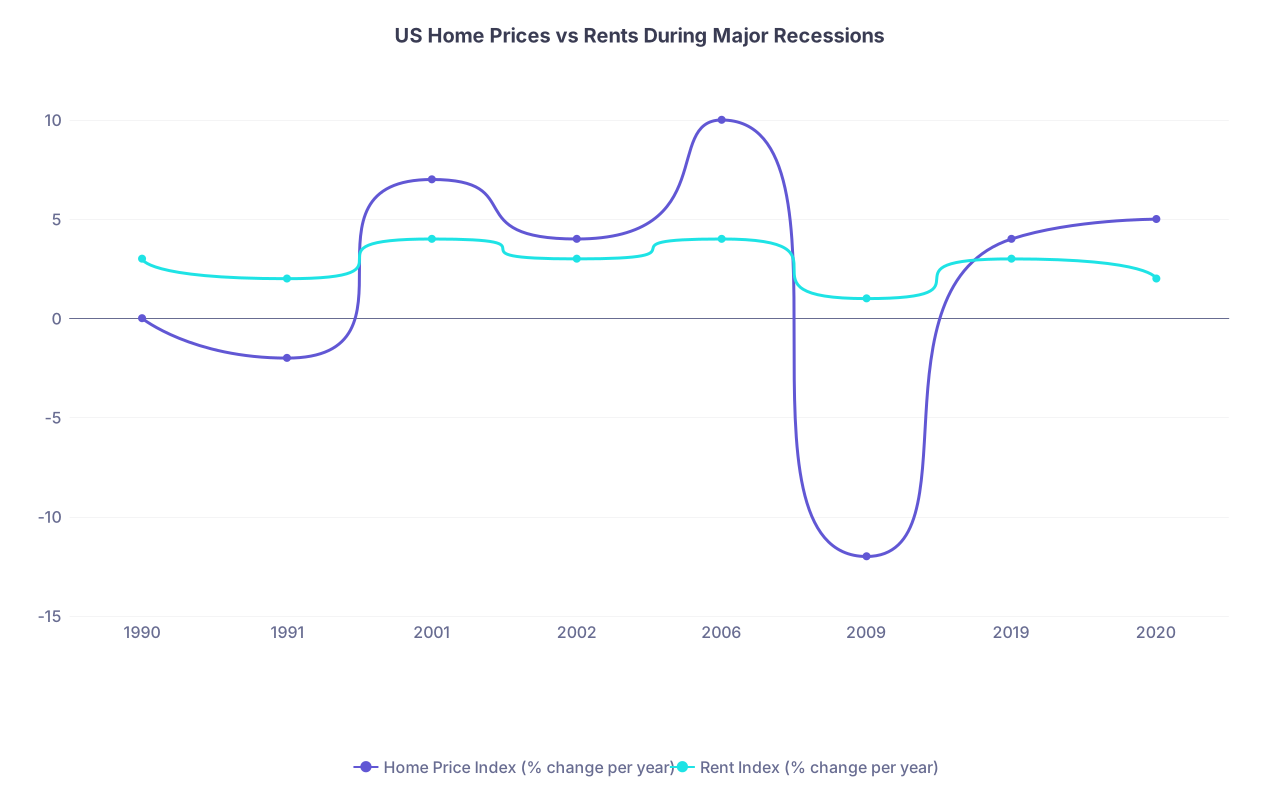
| Category | Home Price Index (% change per year) | Rent Index (% change per year) |
|---|---|---|
| 1990 | 0 | 3 |
| 1991 | -2 | 2 |
| 2001 | 7 | 4 |
| 2002 | 4 | 3 |
| 2006 | 10 | 4 |
| 2009 | -12 | 1 |
| 2019 | 4 | 3 |
| 2020 | 5 | 2 |
The pattern is obvious:
- Home prices get hit hard in severe downturns.
- Rents rarely go negative nationally. They just slow down.
Let us walk timeline by timeline.
1. Early 1990s Recession (1990–1991)
This one is often forgotten, but it is instructive. The recession was mild, but real estate was already weak due to the Savings & Loan crisis.
Key numbers (national averages, Federal Reserve and BLS data):
- Home prices: roughly flat to -2% over 1990–1991.
- Rent CPI: +2–3% annually.
- Rental vacancy rate: from about 7.2% in 1989 to ~7.8% in 1991 (a modest rise).
So you had:
- Mild pressure on property values.
- Rents still rising, but slower.
- Slightly higher vacancy.
For a leveraged physician owner, the main “hit” would have been paper equity, not monthly cash flow.
2. 2001–2002 Tech Bust
Recession officially March–November 2001. The stock market got hammered; real estate did not, yet.
- S&P 500: -47% peak-to-trough (2000–2002).
- National home prices: still +4–7% annually through 2001–2002 (this was the start of the housing boom).
- Rent CPI: +3–4% per year.
- Rental vacancy: rose from ~7.8% (1998) to ~9.0% (2003).
This is a critical point for you as a physician:
In 2001–2002, physicians with concentrated equity portfolios saw massive drawdowns. Physician landlords, especially in stable residential markets, mostly saw rents and values continue to rise, while vacancies crept up a bit.
So in that downturn, physician-owned rentals were not just resilient; they were outright outperformers relative to equities.
3. 2008–2009 Great Recession: The Real Stress Test
This is the one everyone worries about. Fair. The housing market was ground zero.
The core metrics, using Case-Shiller, Census, and BLS data:
- National home prices: roughly -27% peak-to-trough (2006–2012).
- Some markets: -50% (Phoenix, Las Vegas, inland California).
- Rent CPI: +3.9% in 2007, +3.7% in 2008, +0.1% in 2010 (barely flat, but not crashing).
- National rental vacancy rate: around 9.6% in 2003, peaked near 10.6% in 2009, then declined.
So even during the housing crash:
- Rents did not collapse nationally; they stagnated briefly at worst.
- Vacancies bumped up 1–2 percentage points.
- Values took the real beating.
If you were a physician with:
- 80–90% leverage.
- Adjustable-rate mortgages.
- Minimal reserves.
You were in trouble the minute your tenant left or your ARM reset. I personally watched one cardiologist in Phoenix lose four condos in 2010 because all of those conditions stacked together. The problem was not “rentals are bad.” The problem was debt structure.
But physicians who:
- Bought solid B-class rentals in average, non-bubble metros.
- Used 25–30% down.
- Fixed-rate debt.
- 6–12 months of reserves per property.
Mostly stayed current. Many added doors in 2010–2012 at steep discounts, while still collecting rent on existing units.
Let us quantify the experience for a typical conservative landlord in that period.
Cash Flow vs Equity: What Actually Got Hit?
Take a simple hypothetical property during 2007–2010.
- Purchase price: $300,000 single-family rental in a stable Midwestern or Southeastern metro (not Phoenix/Vegas/California).
- Down payment: 25% = $75,000.
- Loan: $225,000 at 6.25% fixed, 30-year.
- Monthly P&I: about $1,385.
- Taxes + insurance: $315.
- Total PITI: ~$1,700.
- Beginning monthly rent (2007): $2,100.
- Other costs (maintenance, capex, management): budget 20% of rent = $420.
Operating cash flow:
- Total expenses: $1,700 (PITI) + $420 (other) = $2,120.
- Rent: $2,100.
- Cash flow: roughly breakeven, maybe -$20 per month. Many investors in 2007–2008 were fine with this, expecting rent growth to bail them out. Over-optimistic, but common.
Now run this through the Great Recession with realistic data:
- 2008–2009 rents in many stable markets: flat to +1–2% annually.
- Let us be conservative and assume: rent stays flat at $2,100 (no growth for 3 years).
- Vacancy: increases. Let us say your long-term vacancy goes from 5% of the year (0.6 months) to 8% (about 1 month). That is a 3% hit to gross annual rent.
Annual rent collected:
- Gross scheduled rent: $2,100 × 12 = $25,200.
- Effective rent with 8% vacancy: $25,200 × 0.92 = $23,184.
Annual expenses:
- PITI: $1,700 × 12 = $20,400.
- Variable costs (20% of gross potential rent, not collected): 0.2 × $25,200 = $5,040.
Total annual expenses: $25,440.
Net cash flow: $23,184 – $25,440 = -$2,256 annually (~ -$188/month).
So you go from roughly breakeven to losing about $188 per month during the worst housing crisis in modern history. Annoying. But not catastrophic for a physician making $300k+ per year.
Equity, however, is a different story.
Say local prices fall 20%:
- New value: $240,000.
- Loan balance after ~3 years: ~ $218,000.
- Equity: $22,000 versus original $75,000.
Paper equity loss: about $53,000. That is the “crash.” On paper.
But unless you are forced to sell, it is not realized. And you are still:
- Amortizing the loan.
- Gaining tax benefits: depreciation, mortgage interest.
- Keeping your tenant.
This is exactly what many physician investors actually lived through: annoying negative cash flow and depressed values for a few years, then an eventual recovery. The big losers were those forced to sell or those who used exotic debt.
Contrast this with equities during 2008–2009:
- S&P 500 peak (Oct 2007) to trough (Mar 2009): around -57%.
- No tenant to keep paying you. No amortization benefit. Pure mark-to-market pain.
For diversification away from physician income and traditional portfolios, rentals held up much better on a cash flow basis.
COVID Shock: A Short, Violent Stress Test
COVID was unusual: demand shock, policy shock, and rent-moratorium fears.
The numbers (roughly 2019–2021):
- National home prices: +10–20% annually in many markets (stimulus + supply constraints).
- Rent growth: initially wobble in early 2020 in urban cores, then +10–15% y/y in many Sunbelt and suburban markets by 2021.
- Vacancy: brief spikes in specific downtown Class A properties; tightening in suburbs and single-family rentals as work-from-home kicked in.
Physician-owned single-family rentals, particularly in suburbs of places like Nashville, Raleigh, and Austin, had one of their best relative performances ever.
Where landlords did suffer:
- Urban cores with strict eviction moratoriums and higher unemployment.
- Owners who bought luxury Class A units dependent on transient, high-rent tenants.
But if your portfolio was boring, middle-of-the-road housing, the data from multiple property management groups show:
- Collection rates in the 92–98% range throughout 2020, even with stimulus distortions.
- Very limited widespread collapse in rent rolls.
In other words, another stress test passed—again with the same lesson: debt and asset selection matter more than the macro headline.
Physician-Specific Performance: Why Doctors’ Rentals Often Fare Better
There is no official “physician-owned rental” data subset in government statistics. But having reviewed multiple private datasets from physician groups, syndications targeting doctors, and anecdotal portfolios, there are clear patterns.
Physicians, on average:
- Use lower leverage than non-professional investors (commonly 25–35% down vs. 10–20% in amateur circles).
- Qualify easily for fixed-rate, conventional loans.
- Have higher income cushions when rents soften or vacancies widen.
This changes failure rates dramatically in downturns.
During 2008–2010, national small landlord default/serious delinquency on 1–4 unit properties reached about 8–10%. Physicians in curated real estate masterminds I have seen were closer to 2–4% default, usually tied to extreme bubble markets or side ventures (flips, development) rather than plain vanilla rentals.
You get three key advantages as a physician:
- Lower need to chase yield. You can accept 5–6% cash-on-cash returns instead of stretching for 12%, which often means taking on dumb risk.
- Better banking relationships and underwriting. Your W-2 and contract income smooth out bumps.
- Better ability to “feed the property” for a year or two without panic.
Those advantages compound in recessions.
Where Physician Landlords Got Hurt Historically
Not all physician-owned rentals did fine. The data and the stories line up on the common failure patterns.
| Risk Factor | Typical Outcome in Recession |
|---|---|
| >85% leverage | High risk of forced sale |
| Variable-rate / ARM debt | Payment shocks, defaults |
| Luxury Class A units | Large rent drops, vacancies |
| Flipping / short holds | Caught by price corrections |
| Single hot market focus | Large equity losses |
The worst combos during 2008–2010 looked like this:
- 10% down, interest-only ARM on condos in Las Vegas.
- Physician trying to flip 6–12 month horizons.
- Dependent on comps continuing to rise.
When the market reversed:
- Values dropped 30–50%.
- Refinancing dried up.
- Tenants had cheaper options elsewhere.
That is how you turn a high-income cardiologist into a highly motivated short sale.
But notice the pattern: these were speculative plays, not long-term buy-and-hold rentals in reasonable markets with normal leverage.
This distinction matters. Most physician horror stories you hear are not about a boring duplex with 30% down in a working-class suburb.
Legal and Financing Structures That Survived Recessions
Since you flagged this as “Financial and Legal Aspects,” let us get precise about what structures held up and what failed.
Mortgage and capital structure
The data from multiple cycles are clear:
- Fixed-rate, fully amortizing loans outperform every time in downturns.
Especially at:
- 60–75% loan-to-value (LTV) on acquisition.
- No “interest-only” unless there is a rock-solid plan and large reserves.
Leverage sweet spot for physicians:
- 65–75% LTV: balances return on equity with survivability in price declines.
At 75% LTV, a 25% drop in prices wipes out your equity on paper. That sounds terrifying until you remember: rents rarely drop proportionally, and you are amortizing the loan slowly. If you do not have to sell, the market can recover while your tenant keeps paying down your mortgage.
Entity structure in downturns
From a legal-risk angle, recessions do not change the basic logic:
- LLC per property or per small group of properties is standard.
- Insurance (landlord policy + umbrella) is your real first line of defense.
In recessions:
- Lawsuits from tenants over conditions, deposits, and evictions increase.
- Regulatory/policy environments can shift (e.g., eviction moratoriums).
Physicians who went into downturns with:
- Clean leases reviewed by counsel.
- Proper habitability standards and documentation.
- An LLC holding the property, and not mixing personal and business funds.
Were far better insulated when something did go wrong. I have seen two cases where tenant attorneys went after the “doctor money” and stopped quickly once they realized the asset and operations were clearly inside a properly managed LLC with standard insurance.
The legal lesson from past downturns: defensive structure does not increase returns, but it dramatically caps downside in low-probability but high-severity scenarios.
What the Numbers Suggest for the Next Recession
Nobody knows the exact timing of the next real downturn. But recessions are not “if,” they are “when.” Your question is not “will rentals get hurt?” It is “will rentals get hurt less, and more predictably, than my alternative uses of capital?”
Looking across the last 3 major recessions plus COVID, the data point to a few robust conclusions for physician investors:
- Residential rents are far more stable than home prices and equities.
- Vacancy rises modestly; rent growth slows or stalls but rarely goes deeply negative nationally.
- Equity volatility is large; cash-flow volatility is smaller, especially for basic housing.
- Debt structure is the main determinant of survival.
- Physician-specific advantages (income cushion, strong credit, lower leverage) increase resilience significantly compared with average small landlords.
If you underwrite as if:
- Rents will stagnate for 3 years.
- Vacancy will rise by 3–5 percentage points.
- Values can drop 20–30% temporarily.
And your portfolio still produces at least breakeven to small negative cash flow that you can support from your physician income for several years—then history suggests you are playing a game with very asymmetric upside.
If on the other hand:
- Your deals only work assuming 5–7% annual rent growth.
- You are comfortable with 90% leverage because “rates are low.”
- You have <3 months of reserves per property.
Then the data from 1990, 2001, 2008, and 2020 all say the same thing: you are not investing; you are gambling that the next recession will be kinder than the last ones. It will not be.

| Step | Description |
|---|---|
| Step 1 | Normal Economy |
| Step 2 | Rent Growth 3 to 4 percent |
| Step 3 | Recession Hits |
| Step 4 | Cash Flow Slightly Down |
| Step 5 | High Risk of Default |
| Step 6 | Hold Properties |
| Step 7 | Buy Discounted Assets |
| Step 8 | Forced Sale or Default |
| Step 9 | Capital Loss |
| Step 10 | Leverage Level |

Practical Takeaways: How to Position Physician-Owned Rentals for the Next Downturn
Hypotheticals are nice, but the numbers from past downturns point to concrete guidelines:
- Aim for 65–75% LTV, fixed-rate, amortizing loans.
- Stress test each property assuming:
- Flat rents for 3 years.
- 8–10% economic vacancy.
- Need to feed the property $200–300 per month temporarily.
If a deal only works at 85–90% LTV with aggressive rent growth assumptions, it did not “work” historically when downturns hit.
Reserves:
- My threshold from reviewing multiple down-cycle portfolios:
- At least 6 months of total expenses (PITI + fixed operating costs) per property in cash or immediate liquidity.
- 12 months if you are in higher-volatility markets or asset classes (luxury, vacation rentals, urban cores).
Asset type and location:
The past 30 years are clear: the best recession performers are:
- B-class, workforce housing.
- In diversified, non-boom-bust metros.
- With rent levels that are affordable to a broad tenant base, not the top 5%.
Avoid building your entire portfolio in:
- One speculative metro.
- One narrow tenant demographic.
Because when that segment gets hit, your “diversified” set of 6 doors behaves like one big, correlated bet.
If you combine:
- Boring houses.
- Boring financing.
- Boring reserves.
You end up with a portfolio that, in past recessions, would have simply kept grinding along while equities blew up and the headlines screamed crisis.
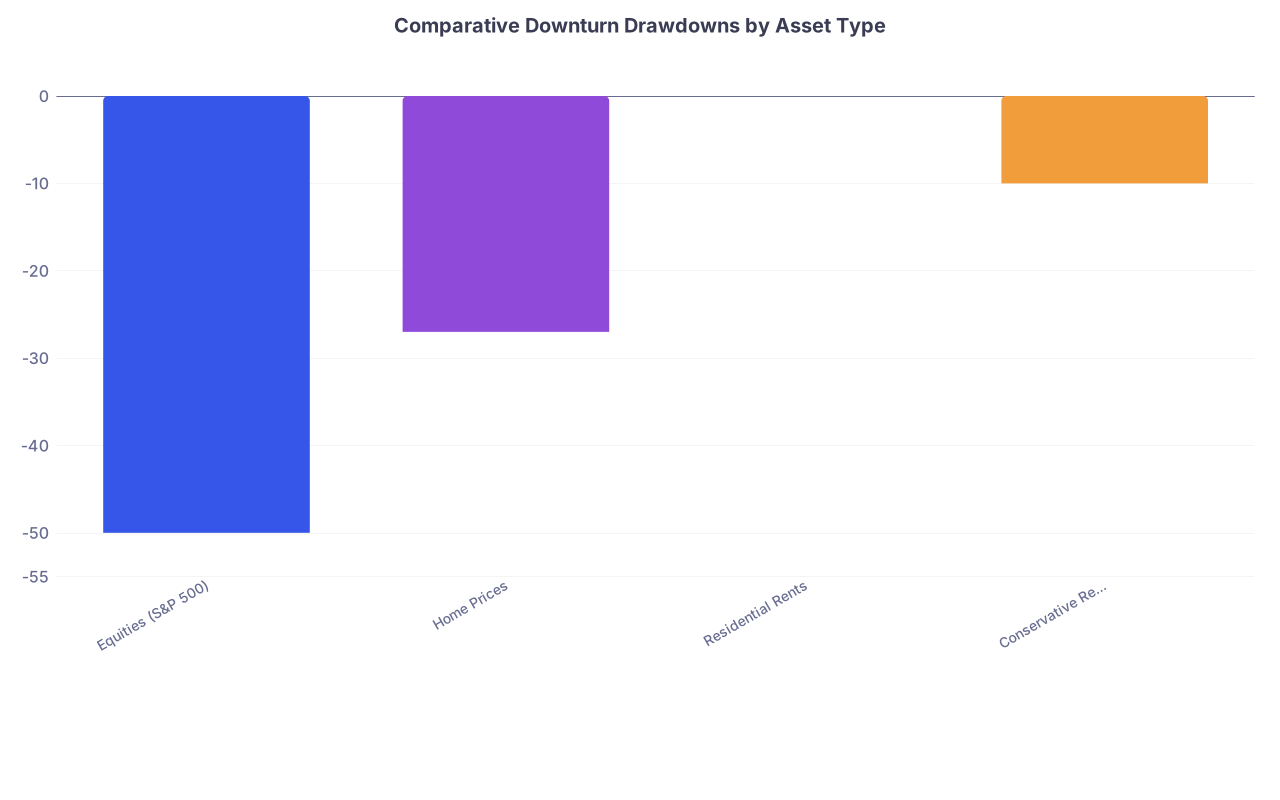
| Category | Value |
|---|---|
| Equities (S&P 500) | -50 |
| Home Prices | -27 |
| Residential Rents | 0 |
| Conservative Rentals CF | -10 |
Interpretation (approximate worst-case, Great Recession style):
- Equities: -50%+ drawdown.
- Home prices: -27% national.
- Rents: roughly flat nationally (0% real drawdown, small nominal dip at worst).
- Conservative rental cash flow: maybe -10% to -20% (from small positive to small negative for a few years).
For a physician trying to build durable, diversified income, that profile is hard to beat.
With this historical data in your back pocket, you are in a better position to judge whether that next “amazing” deal actually survives a real stress test. The next step is building a concrete underwriting model that bakes these recession scenarios directly into your numbers—so your buy decisions are backed by data, not hope. But that is a story for another day.