
Why Many Doctors Get Burned on Their First Short-Term Rental Investment
What exactly do you think is going to happen when you buy an Airbnb based on a realtor’s pro forma instead of hard numbers and tax law?
Let me be blunt: short-term rentals (STRs) are where a lot of high-income physicians get hurt. Not because the asset class is terrible. Because the way many doctors approach it is reckless for their time, tax situation, and risk profile.
You are not a full-time real estate operator. But the IRS, your lender, your city, and your HOA do not care that you are post-call, behind on notes, and trying to build “passive income.” They will enforce the rules the same way on you as on a 25‑year‑old full-time investor who lives on BiggerPockets.
So let’s walk through the big traps that burn physicians on their first short-term rental investment—especially on the financial and legal side—and how to avoid becoming another “my first Airbnb was a disaster” story.
Mistake #1: Believing the Realtor’s “Projected Numbers”
The fastest path to getting burned? Trusting a glossy pro forma that says:
- 85% occupancy
- $450/night average
- “Conservative” expenses at 25% of gross
- “Cash flows $2,000/month easily”
I have seen physicians buy based on that sheet alone. No independent underwriting. No stress test. Just vibes and a few Airbnb comps the agent cherry-picked from peak season.
The common financial mistakes baked into those “projections”:
- Using peak-season-only data to estimate year-round income
- Assuming high occupancy + high nightly rate simultaneously
- Ignoring platform fees, cleaning, supplies, and local taxes
- Forgetting furniture, setup, and replacement costs
- No allowance for slow seasons, pandemics, or regulatory crackdowns
If you do not independently underwrite the deal, you are not “investing.” You are gambling with a white coat on.
How to avoid this
Underwrite the property like you would evaluate a risky treatment plan:
Pull real data, not brochure numbers
- Use AirDNA, Mashvisor, or similar tools, but do not stop there.
- Look up actual comps on Airbnb and VRBO for:
- Similar size
- Similar location (same side of town matters)
- Similar quality of finishes
Build a full expense stack (most physicians undercount by 30–50%):
- Mortgage (P&I)
- Property taxes
- Insurance (STR policy, not standard landlord/homeowner)
- Utilities (all of them)
- Internet
- HOA / condo fees
- Licensing / permit fees
- Furnishing + startup costs (and a realistic depreciation/replacement schedule)
- Cleaning (guest-paid vs owner-paid—model both)
- Maintenance and repairs
- Supplies (linens, kitchen items, consumables)
- Platform fees (Airbnb/VRBO 3–15% depending on structure)
- Local lodging / occupancy taxes
Stress-test the numbers
- What if occupancy is 15–20% lower than you expect?
- What if your average nightly rate is 15–20% lower?
- Can you carry the property at break-even or a modest loss if regulations change or tourism slows?
If your projected returns collapse with a tiny change in assumptions, that is not an “investment opportunity.” That is a landmine.
Mistake #2: Misunderstanding (or Abusing) the Tax Rules
Short-term rentals can be a tax weapon for high-income physicians. That is exactly why they also create tax disasters when misunderstood.
The dangerous assumption:
“I will just buy an Airbnb, ‘materially participate,’ and then I can write off the losses against my W‑2 income.”
That sentence has funded a lot of IRS penalties.
The painful reality
Short-term rentals sit in a weird corner of tax law:
- STRs can avoid the “passive loss” limitations even if you are not a real estate professional.
- But you must:
- Meet the average stay requirement (under 7 days for most strategies), and
- Materially participate in the activity by IRS standards.
Most physicians do not. They think they do. They do not.
| Test # | Requirement (simplified) |
|---|---|
| 1 | 500+ hours and you do most of the work |
| 2 | 100+ hours and no one else does more |
| 3 | Substantially all participation is yours |
Now add your actual life:
- 50–60 hours/week clinical work
- Call
- Family
- Charting that never ends
Then tell the IRS, “I personally did 500 hours of STR work this year and no manager did more than me.”
If audited, you will be expected to show:
- Detailed, contemporaneous time logs (not made up later)
- Evidence you actually did the tasks (emails, platform logs, invoices)
- Clear proof no property manager exceeded your hours
Hand-waving and “but my CPA said it was fine” does not survive audit.
The depreciation trap
You buy a $900,000 beach STR. Land is $300,000. Building is $600,000. You do cost segregation and get, say, $180,000 bonus depreciation.
The pitch you heard:
- “You make $600k as an attending. This will create a $180k loss and wipe out most of your tax bill.”
If you do not actually qualify for non-passive treatment, those losses become passive:
- They cannot offset your W‑2 clinical income
- They get suspended, carried forward into the future
- You paid a cost seg firm and higher tax prep fees for no current benefit
- And if the IRS later challenges your participation, you can owe:
- Back taxes
- Interest
- Penalties
I have seen physicians completely redo their life plans after an audit like that.
How to avoid the tax burn
Hire a CPA who truly understands STR + high-income W‑2 physicians.
Not just “knows real estate.” Interview them. Ask them:- How many STR physician clients do you have?
- Do you have any current STR audits in your practice? Outcomes?
- How do you recommend tracking and documenting material participation?
Decide upfront: passive play or active tax play?
- If you want a mostly hands-off STR with a manager:
- Assume losses will be passive.
- Do not count on offsetting W‑2 income.
- If you want to use STR for active loss against W‑2:
- Understand this will not be passive.
- Expect a real, documented time commitment.
- Possibly structure your work life around making this credible.
- If you want a mostly hands-off STR with a manager:
Track hours from day one.
- Use a time-tracking app or spreadsheet.
- Log tasks with date, duration, and description:
- Pricing adjustments
- Messaging guests
- Vendor coordination
- Design decisions
- Cleaning coordination (if you truly manage it)
If your plan relies on “I’ll just say I hit 500 hours,” do not be surprised when the IRS disagrees.
Mistake #3: Ignoring Local Laws, Zoning, and HOA Rules
Physicians often buy their first STR like they buy their primary home: find a good neighborhood, trust the agent, close fast.
That works for a house you live in. It will crush you on a short-term rental.
The brutal surprise many doctors face:
- They close on the property
- Spend $40–80k on furniture and design
- List on Airbnb
- Then get:
- A cease-and-desist letter from the city, or
- An HOA violation notice, or
- A neighbor complaint leading to code enforcement
And just like that, your “Airbnb” is now an expensive long-term rental with terrible numbers.
Where people get nailed
Cities with caps or bans on STRs
- Some cities completely ban non-owner-occupied STRs in residential zones.
- Others require expensive permits with caps, lotteries, or distance restrictions between STRs.
HOA and condo rules
- Many associations quietly prohibit rentals under 30 days, 90 days, or even 6 months.
- Others require owners to live in the unit a certain number of days per year.
“Informal tolerance” that disappears
- Local governments tolerate STRs…until housing shortages, an election, or a loud neighbor campaign shifts the politics.
- Then they crack down hard, often with:
- Fines per day
- Forced delisting
- Requirement to move to long-term tenants
How to protect yourself
Do not rely on the agent’s “Oh, people Airbnb here all the time.”
Instead:
Read the municipal code yourself.
- Search the city/county website for:
- “Short-term rental”
- “Vacation rental”
- “Transient occupancy”
- Look for:
- Licensing/permit requirements
- Owner-occupancy rules
- Caps per neighborhood
- Minimum night stay requirements
- Search the city/county website for:
Call the city or county zoning office.
- Ask very specific questions:
- “Can a non-owner-occupied property at [address or zoning type] be rented for stays under 7 days?”
- “What permit is required? Are there caps?”
- Ask very specific questions:
Get the full HOA/condo documents. Read them.
- Do not rely on “summary sheets.”
- Focus on:
- Leasing sections
- Use restrictions
- Guest policies
- Minimum lease term
Look for current enforcement behavior.
- Talk to several existing STR operators in the area (not just one).
- Ask:
- “Anyone been shut down recently?”
- “Any new ordinances or caps you are worried about?”
If the legality of your business model depends on “they have not enforced that rule in years,” you are holding a legal time bomb.
Mistake #4: Underestimating Operating Costs and Time
The joke that “short-term rentals are not real estate, they are hospitality businesses” is painfully accurate.
Physicians often model STRs like upgraded long-term rentals:
- “More income, a few more cleaners, done.”
Then discover:
- Constant guest communication
- Dynamic pricing
- 11pm lock issues
- Broken furniture
- Missing linens
- Angry neighbors
The financial mistake here is simple: dramatically underestimating the all-in cost of operating the business.
The hidden cost categories that crush returns
Turnover intensity
- More guests = more:
- Cleaning fees (and often you are subsidizing between seasons)
- Laundry costs
- Wear and tear
- More guests = more:
Restocking and replacements
- Linens and towels destroyed or stolen
- Kitchen items broken or “walked away”
- Electronics and small appliances failing faster due to constant use
Platform dynamics
- Guest refunds and partial refunds after complaints
- Platform service fees
- Promotions and discounts to keep occupancy up
Time = real cost
- Unless you run this yourself and document hours for tax benefits, your time has an opportunity cost:
- Every hour you spend fighting with a guest is an hour you are not:
- Reading, resting, doing CME, or building a more scalable asset base.
- Every hour you spend fighting with a guest is an hour you are not:
- Unless you run this yourself and document hours for tax benefits, your time has an opportunity cost:
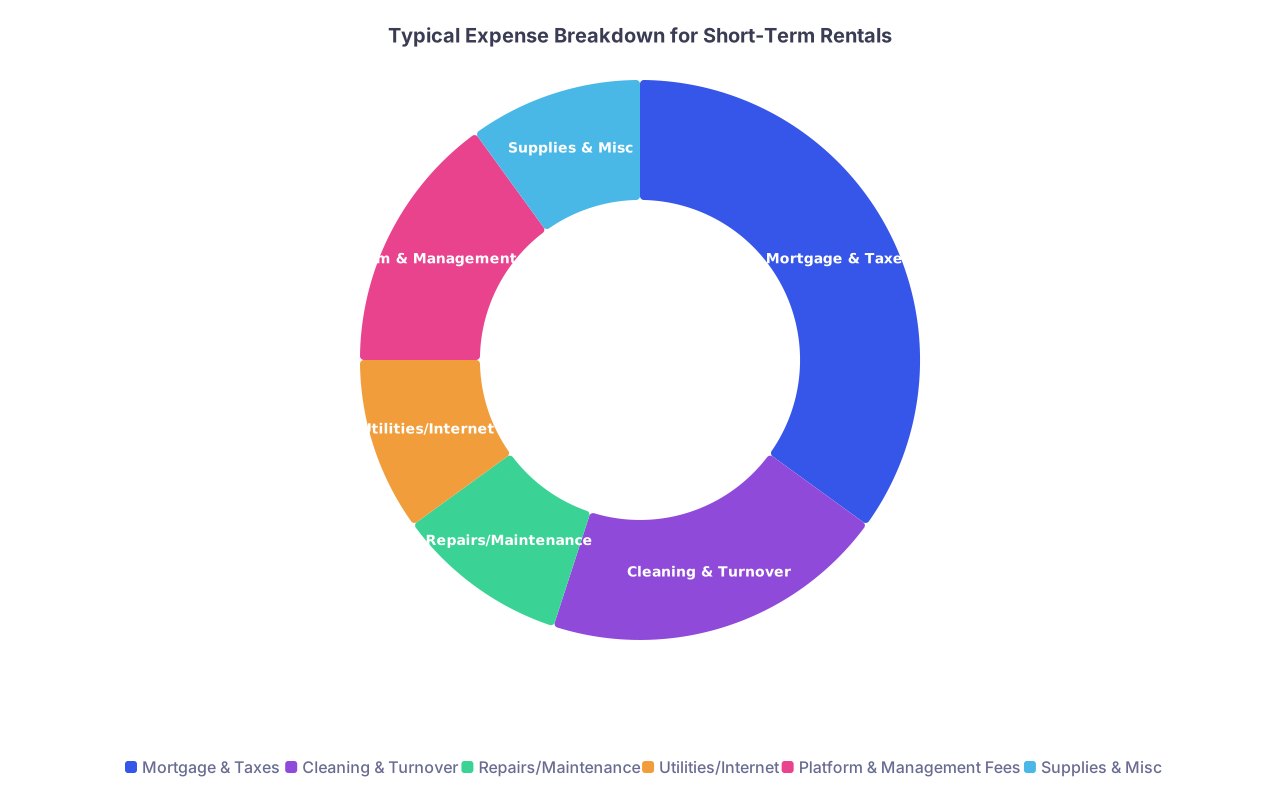
| Category | Value |
|---|---|
| Mortgage & Taxes | 35 |
| Cleaning & Turnover | 20 |
| Repairs/Maintenance | 10 |
| Utilities/Internet | 10 |
| Platform & Management Fees | 15 |
| Supplies & Misc | 10 |
The “manager will handle everything” fantasy
Huge mistake: assuming hiring a property manager makes this passive.
Reality:
-
- Charge 20–30% of gross revenue
- Still require owner decisions on:
- Repairs
- Upgrades
- Price strategy
- Reviews/complaints escalation
Bad STR managers:
- Destroy your reviews
- Ignore neighbor relations
- Miss opportunities for pricing optimization
- Blame “the market” while your property bleeds cash
If your numbers only work with low fees and perfect execution, they do not work.
Mistake #5: Structuring Ownership and Liability Wrong
Many physicians jump into an STR purchase in their personal name because:
- The lender says it is easier
- Their agent shrugs and “lots of people do it this way”
- They believe insurance will cover everything
Then something happens:
- Guest injury
- Neighbor property damage
- Fire
- Party gone wrong
You, with your MD and sizable income, are now a very attractive target.
Common legal/structural missteps
Owning directly in personal name with no separation
- Easier loan, yes.
- Zero asset protection, also yes.
No umbrella or inadequate coverage
- Standard homeowner policy (often invalid for STR use)
- Umbrella that does not properly sit above the right base policies
No STR-specific insurance
- Many policies exclude business use or “transient occupancy.”
- You only discover this when a claim is denied.
Sloppy guest contracts / house rules
- Relying entirely on Airbnb’s generic terms
- No clear liability language for:
- Pools
- Hot tubs
- Stairs
- Bunk beds
- Amenities
How to reduce your exposure
Talk to an attorney who works with real estate investors and physicians.
- Discuss:
- Holding property in an LLC
- Whether to use a land trust + LLC (state dependent)
- How to structure multiple properties if you scale
- Discuss:
Use STR-appropriate insurance.
- Explicitly tell your agent:
- “This is a non-owner-occupied short-term rental property.”
- Get:
- Commercial or STR-specific coverage
- Sufficient liability limits
- Explicitly tell your agent:
Add an umbrella policy that sits correctly.
- Confirm it covers:
- Rental activity
- The entity that owns the property
- Confirm it covers:
Have clear house rules and risk mitigation.
- Written rules for:
- Maximum occupancy
- Parties and events
- Pool/hot tub use
- Physical safety improvements:
- Railings
- Smoke/CO detectors
- Adequate lighting
- Written rules for:
If your protection strategy is “I have an MD and they would not dare,” you are exactly the person a plaintiff attorney would love to meet.
Mistake #6: Chasing “Sexy” Markets Instead of Risk-Adjusted Returns
This one is psychological, not technical.
Doctors love the idea of:
- Mountain cabins in trendy ski towns
- Beach houses in Florida
- Hip downtown lofts in big cities
You know what many of those markets also have?
- Tourist seasonality
- Regulatory hostility
- Intense competition with highly professional operators
- Very high buy-in prices
I have watched physicians stretch for a $1.2M vacation STR that they secretly want to vacation in themselves, justify it with “tax savings” and “cash flow,” then discover:
- It cash flows only in fantasy scenarios
- After realistic expenses, they are feeding the property every month
- The “tax strategy” does not work because they failed the material participation test
Sometimes the safer, less glamorous drive-to lake town with modest numbers beats the Instagrammable hotspot.
Putting It Together: A Safer Path for Your First STR
Short-term rentals are not inherently bad for physicians. They just punish laziness and wishful thinking.
If you want to avoid getting burned on your first one, here is a more disciplined sequence:

| Step | Description |
|---|---|
| Step 1 | Clarify Goals |
| Step 2 | Decide Tax Strategy |
| Step 3 | Research Legal Environment |
| Step 4 | Underwrite Conservative Numbers |
| Step 5 | Plan Ownership and Insurance |
| Step 6 | Decide Management Model |
| Step 7 | Only Then Make Offers |
Clarify your real goal.
- Cash flow?
- Occasional personal use?
- Aggressive tax shelter?
These have different risk profiles and time demands.
Get tax advice before you shop.
- Decide whether you will truly pursue material participation.
- If not, do not let “bonus depreciation” justify overpaying.
Screen markets brutally.
- Eliminate cities/counties with:
- Active bans
- Tight caps
- Hostile political climate
- Eliminate cities/counties with:
Underwrite like a pessimist.
- Conservative revenue
- Full, realistic expenses
- Stress tests for rate/occupancy/expense shocks
Set up proper legal and insurance structure.
- Entity, insurance, umbrella
- Documentation system for participation hours if needed
Assume your first STR is school, not retirement.
- Take a smaller, safer first deal over a massive “dream cabin” play.
- Learn the systems, the accounting, the tax documentation, and the legal landscape.
FAQ (Exactly 3 Questions)
1. Can I still benefit from STR tax advantages if I use a property manager?
Yes, but it is much harder to justify material participation. If a manager handles most day-to-day operations, it is difficult to prove you meet the 500-hour or “no one else did more than me” tests. In that case, plan for the losses to be passive and treat any active benefit as a bonus, not your core strategy.
2. Is it safer for my first real estate investment to be a long-term rental instead of an STR?
For many physicians, yes. Long-term rentals are simpler: fewer regulations, lower turnover, more predictable expenses, and easier tax handling. STRs introduce legal, tax, and operational complexity that can be unforgiving to busy clinicians. If you are new to real estate, consider starting with a straightforward long-term rental or a small multifamily before jumping into hospitality.
3. How much personal time should I realistically expect to spend on a self-managed STR?
If you aim for credible material participation and active tax benefits, you are typically looking at 7–12 hours per week in the first year between setup, guest communication, pricing, and vendor coordination. If that number seems absurd given your schedule, you either need a manager (and accept passive treatment) or you should delay STR investing until your clinical load changes.
Open a blank spreadsheet today and build a full pro forma for the STR market you are eyeing—line by line, with conservative revenue and every ugly expense included. If you cannot make yourself do that level of work, you are not ready to buy your first short-term rental.