
The belief that “real estate will run itself” is the lie that burns out more physicians than the call schedule ever did.
You’re not just risking money when you jump into real estate without respect for time—you’re risking your clinical career.
Let me be very clear:
Real estate can be a powerful wealth-building tool for physicians. It can also quietly eat your nights, your weekends, your bandwidth, and your reputation on the wards if you let it.
This isn’t about scaring you away from investing. It’s about protecting you from the most common, avoidable time-management mistakes I see physicians make once they fall in love with cap rates and cash-on-cash returns and forget the one asset they can’t get back: time.
1. The First and Biggest Lie: “It’s Passive Income”
The most dangerous phrase in physician real estate circles is “passive income.”
Unqualified. Unquestioned. Unexamined.
There is a spectrum of “passivity” in real estate. If you ignore that, time will punish you.

Here’s the part people gloss over:
- Single-family rentals you manage yourself? That’s not passive. That’s a second job.
- Small multifamily you self-manage? That’s a part-time business.
- Flips? That’s a full-on second career.
- Even “passive” syndications and funds demand due diligence, ongoing monitoring, and tax tracking.
The financial blogs and physician forums love to show you:
- “$1,200/month cash flow from this duplex”
- “10 doors by PGY-3”
- “Replacing my W-2 income with real estate”
What they almost never show you:
- The 6 hours on the phone with a plumber while you’re on a 24-hour call
- The 11 p.m. lease dispute you’re reading instead of your patient’s chart
- The wife/husband/partner saying, “You’re home, but you’re not here”
The mistake:
You buy an asset class that fundamentally requires your time, then act surprised when it does.
If you’re still full-time clinical, the correct default assumption is this:
Any real estate strategy that depends on you being available during business hours is a bad fit.
You work when other people don’t. Tenants, contractors, city inspectors, closing attorneys—they all operate during the hours you’re supposed to be seeing patients, in the OR, or recovering from nights.
Ignore that mismatch, and you’ll pay for it in:
- Charting delays
- Clinical errors (yes, I’ve seen this)
- Burnout and resentment
- A bitter conclusion that “real estate doesn’t work” when the real problem was your time design
2. Hidden Time Costs: What No Pro Forma Ever Shows You
Pro formas lie by omission. They show:
- Purchase price
- Rent
- Taxes
- Insurance
- Maintenance %
- Property management %
They do not show how many cumulative hours you will bleed out over a year running that thing.
Let’s quantify what people pretend is “nothing.”
| Task Category | Hours/Year (Conservative) |
|---|---|
| Tenant communication | 10–20 |
| Leasing/turnover | 10–15 |
| Bookkeeping/taxes | 6–10 |
| Repairs/coordination | 10–25 |
| Admin (insurance, renewals, etc.) | 5–8 |
You’re staring at 40–70 hours per year. Per property.
That’s one full extra work week, often chopped into tiny, disruptive pieces—voicemails, emails, texts, “quick” calls—that always seem to show up:
- Just when you sit down to pre-chart
- Right before you scrub in
- As you finally lie down post-call
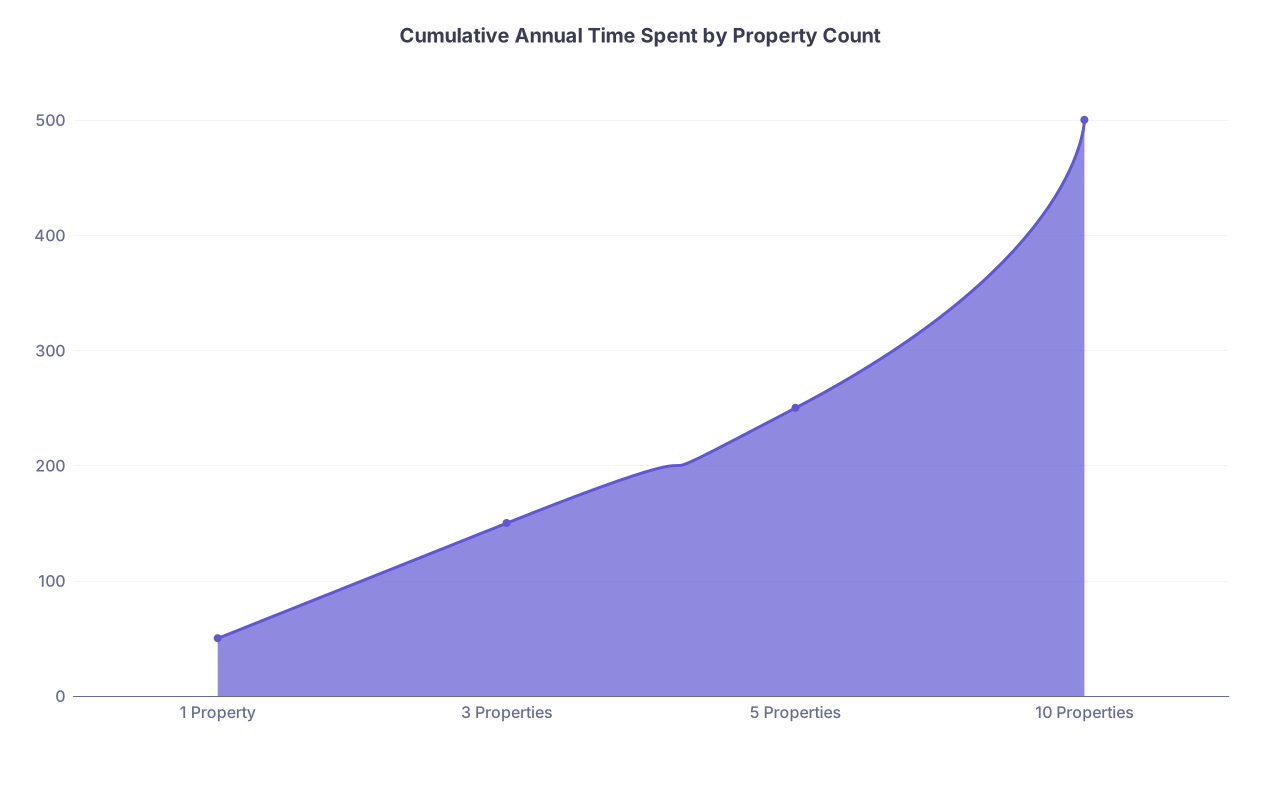
| Category | Value |
|---|---|
| 1 Property | 50 |
| 3 Properties | 150 |
| 5 Properties | 250 |
| 10 Properties | 500 |
Here’s the trap pattern I see constantly:
- Physician buys Property #1
- Time burden is annoying but “manageable”
- Encouraged by modest cash flow, they buy #2, #3, #4
- Time cost scales non-linearly—more vendors, more leases, more personalities
- Suddenly, the system collapses during a bad clinical month (sick kids, difficult attending, new admin policy), and they realize they’ve built a second job they can’t pause
The mistake isn’t buying real estate.
The mistake is never asking:
“What is my hourly rate of hassle here?”
You’d never sign up for a locums gig that pays $25/hour. But you’ll happily take on a rental that, after time costs, pays you exactly that.
3. Management Myths: “I’ll Just Hire a Property Manager”
“I’ll just get a property manager” is the physician equivalent of “the EMR will save us time.”
It can help. It doesn’t erase your responsibility.
Here’s what actually happens:
Good property managers require you to be a good asset manager. You must:
- Review statements
- Approve major expenses
- Decide on tenant disputes
- Monitor performance and hold them accountable
Bad property managers create more work:
- You’re fielding tenant complaints about them
- You’re chasing them for reports
- You’re double-checking every bill
A 10% management fee does not buy back 100% of your time. It buys you out of:
- Showing units
- 2 a.m. “the sink drips” calls
- Some vendor coordination
You still own:
- Legal risk
- Financial decisions
- Strategic decisions
- Exit decisions
If you go in thinking “property manager = passive,” you’ll underbuild your time buffer. That’s how you end up doing tenant screening between patient notes.

The Red Flags You’re Headed for a Management Disaster
You’re walking into trouble if:
- You sign with the first property manager you talk to
- You don’t ask who will actually be your day-to-day contact
- You have no clear policy for:
- When they can approve expenses automatically
- When they must contact you
- What your communication expectations are (email vs phone, response times)
The time-management mistake is assuming that:
“Outsourcing” = “I never have to think about this again.”
No. You’ve just repositioned your time from “doing” to “deciding and reviewing.” If you don’t schedule time for that, it will invade everything else.
4. How Real Estate Bleeds Into Clinical Performance
Here’s where people get hurt, both professionally and legally.
I’ve watched:
- Residents underwriting deals on their phones during noon conference
- Attendings taking tenant calls in the physician workroom while nurses are trying to round
- Surgeons scrolling lender emails between cases instead of reviewing imaging
You may think you’re “multitasking.” You’re not. You’re fragmenting your attention in one of the few jobs where that can actually kill someone.

| Step | Description |
|---|---|
| Step 1 | Take On Real Estate |
| Step 2 | Underestimate Time Needs |
| Step 3 | Tasks Spill Into Work Hours |
| Step 4 | Interrupted Focus at Hospital |
| Step 5 | Delayed Charting and Decisions |
| Step 6 | Patient Care Risk and Burnout |
| Step 7 | Career Regret or Forced Exit |
The legal and professional risks:
- Charting delays because you spent your “admin time” handling contractor bids
- Communication breakdowns with patients or staff because you were cognitively elsewhere
- Professionalism hits when you’re “the doctor who’s always on their phone”
- Malpractice exposure when a missed detail can’t be explained away by “I was distracted by a plumbing issue”
Malpractice lawyers love documented distraction patterns. You do not want an EMR log that shows:
- Multiple non-clinical browser tabs
- Long breaks mid-note
- Messages going unanswered while you were hunting for a handyman on Thumbtack
The mistake here:
Treating your clinical time as infinitely flexible. It isn’t. The more complicated your life gets outside the hospital, the more ruthless you must be about protecting your brain while you’re in it.
5. Tax and Legal Complexity: The Slow Time Drain No One Warns You About
Phase: financial and legal aspects. This is where the hidden time bomb really sits.
Real estate brings:
- Entity structures (LLCs, sometimes multiple)
- K-1s from syndications
- Depreciation schedules
- Cost segregation studies
- 1031 exchanges
- Lender covenants
- Insurance renewals
- Local licensing and registration
Each item sounds small. Taken together, they create an annual paperwork storm that hits exactly when you’re already busy—January to April.
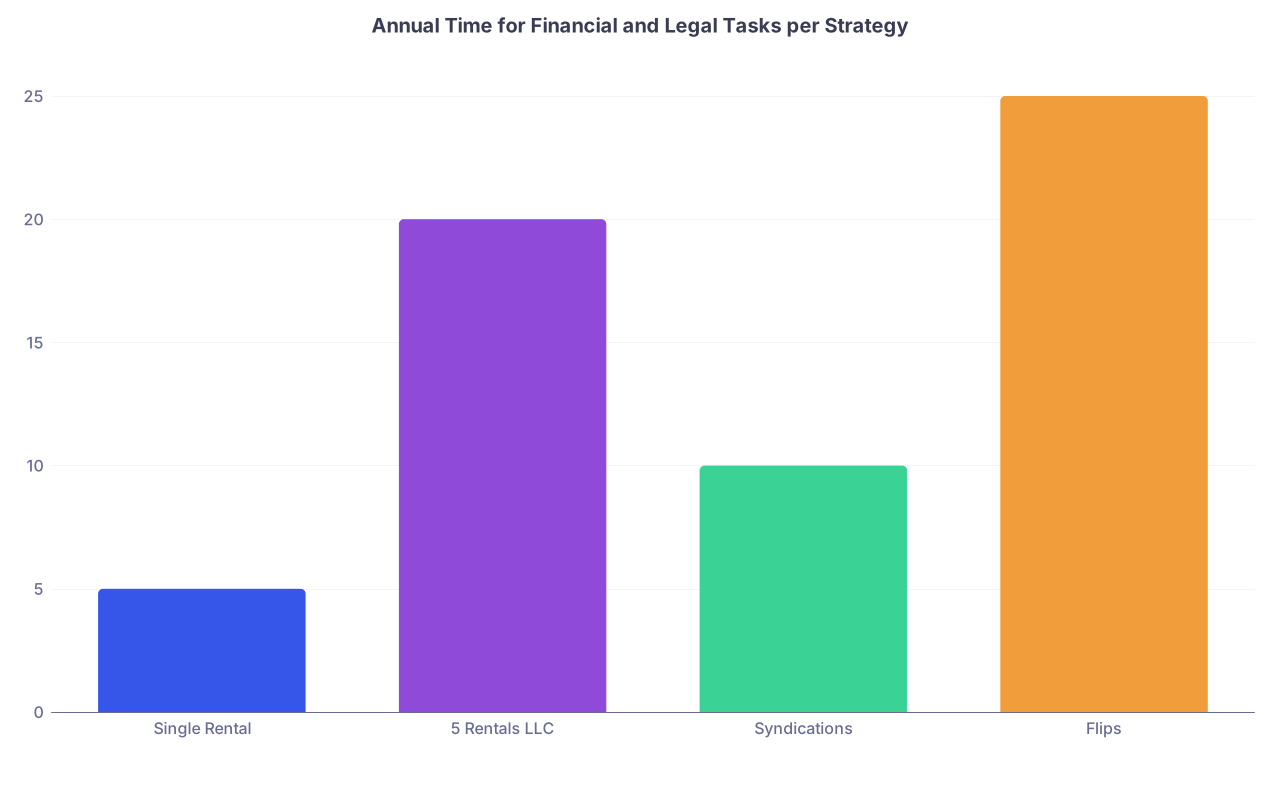
| Category | Value |
|---|---|
| Single Rental | 5 |
| 5 Rentals LLC | 20 |
| Syndications | 10 |
| Flips | 25 |
Here’s where physicians screw this up:
They form multiple LLCs without understanding maintenance:
- Annual filings
- Separate bank accounts
- Legislative changes
- Registered agent issues
They stack syndications:
- Suddenly they’re getting 10–15 K-1s
- Some arrive late, forcing tax extensions
- They’re tracking capital accounts and suspended losses
They try to chase “Real Estate Professional Status” for tax purposes while still clinical:
- This almost always becomes a documentation disaster
- Hours logs get fabricated last-minute
- IRS challenges turn into multi-year time and stress drains
Yes, you should use a CPA. No, that doesn’t solve your time problem if:
- You don’t maintain clean records
- You commingle funds
- You “figure you’ll sort it out at tax time”
That “sorting out at tax time”? That’s a 10–30 hour project that always seems to land during:
- Interview season
- A QI initiative dump
- When your department changes EMR templates
The time-management mistake here is simple:
Underestimating how much ongoing attention complex structures demand.
If your goal is to stay primarily clinical, your legal/tax structure should be boring by design.
6. Protecting Your Clinical Career: Time Rules for Physician Investors
Enough doom. Let’s talk protection. Not “optimize everything” — just avoid the stupid, predictable traps.
Rule 1: Time-First, Deal-Second
Before you look at returns, ask:
- How many hours per month will this realistically require?
- When do those hours occur? Business hours? Nights? Weekends?
- What hard boundaries will I set so this never touches:
- Patient care time
- Pre-rounding
- Post-call recovery
If you can’t answer those, you don’t understand the investment yet.
Rule 2: Choose Strategy That Matches Your Life Phase
Early attending, heavy clinical load, maybe young kids? You have no business:
- Flipping
- Self-managing multiple units
- Taking on heavy value-add rehabs
Safer options from a time standpoint:
- Professionally managed single-family or small multifamily (in one market)
- Well-vetted syndications/funds with clear reporting
- REITs if you want zero operational complexity
| Strategy | Time Intensity | Best Fit Phase |
|---|---|---|
| Self-managed rentals | High | Reduced clinical load |
| Professionally managed SFH | Low–Moderate | Busy residents/early attendings |
| Flips/BRRRR | Very High | When clinical work is part-time |
| Syndications/Funds | Low | Any, if vetted properly |
| REITs | Minimal | Anyone wanting simplicity |
Rule 3: Formal “No Real Estate While Clinical” Policy
Create personal rules like:
- No tenant/contractor calls while on shift unless:
- Physical safety is at risk (fire, gas leak, etc.)
- No real estate email during:
- Charting blocks
- Signout windows
- Pre-op review times
Communicate this to:
- Your property manager
- Your spouse/partner
- Your business partners
If people expect instant response, you’ve already lost.
Rule 4: Buy Time Intentionally
For a physician, paying to save time is not a luxury. It’s strategy.
You should strongly consider:
- Property management (even for 1–2 units)
- Bookkeeping help for your entities
- A competent real estate CPA
- Using a virtual assistant for:
- Document organization
- Calendar reminders
- Basic communication templates
Yes, it costs money. So does lost promotion, missed partnership, or being the “weak link” clinically because you’re exhausted from your side business.

Rule 5: Set a Hard Ceiling on Complexity
Do not let deal flow outrun your life capacity.
For example:
- Max 1 new personally owned property per year while full-time clinical
- Max 2–3 syndications per year unless/until your tracking systems are solid
- No new entity structures without a written time-and-complexity justification
If you can’t explain on one page:
- Entities
- Properties
- Who manages what
- Where records live
…it’s already too complex for a full-time physician.
7. Early Warning Signs You’re Letting Real Estate Derail Your Career
Pay attention to these. They’re yellow lights turning red.
- You’re behind on charts more often since your portfolio grew
- You feel a spike of anxiety when your phone buzzes at work
- Your staff rolls their eyes because you’re “always dealing with your houses”
- You catch yourself thinking more about tenants than patients during an encounter
- You’ve postponed CME, QI projects, or leadership roles “because of real estate stuff”
- Your partner/family says: “You’re never mentally off-duty anymore”
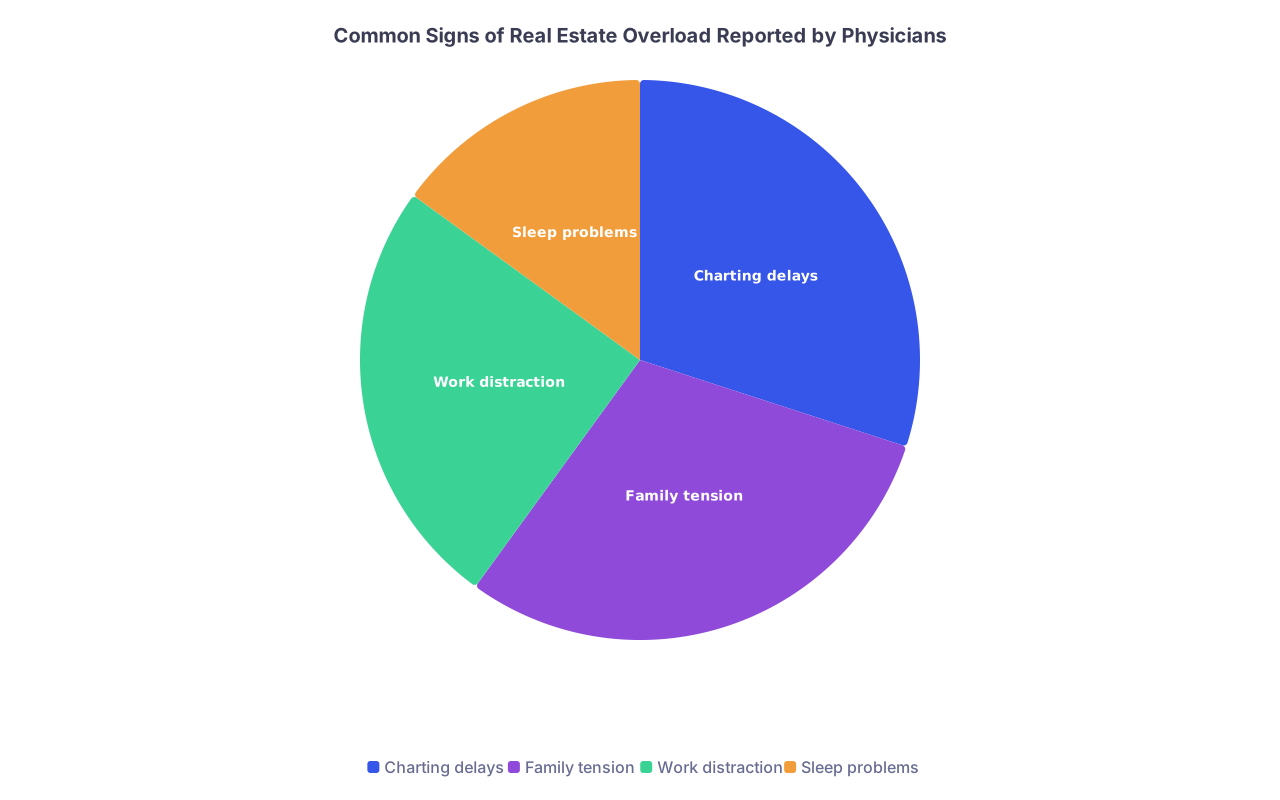
| Category | Value |
|---|---|
| Charting delays | 30 |
| Family tension | 30 |
| Work distraction | 25 |
| Sleep problems | 15 |
Those are not business problems. Those are life problems. If you ignore them because “the deals are too good,” you’re trading long-term career satisfaction for short-term ego.
FAQ (Exactly 3 Questions)
1. Is it ever realistic for a full-time physician to self-manage rental properties?
Yes, but far fewer can do it well than think they can. If you’re full-time clinical and want to self-manage, limit yourself to:
- 1–2 local units
- Very clear boundaries about when you take calls
- Systems (templates, checklists, vendor list) already in place
The moment you notice clinical work or family life slipping, that’s your signal to hand management off or stop buying.
2. Are syndications actually “passive” enough for a busy attending?
They can be relatively low-maintenance if you’re disciplined about how many you join and how you track them. The time cost is front-loaded into due diligence and then spikes at tax time. If you join too many deals with too many operators, the admin overhead (K-1s, tracking, communication) can still become a mess. Fewer, better-chosen deals are safer than a scattered portfolio.
3. What’s the single biggest time-management mistake new physician investors make?
They scale too fast. They have one decent experience with a property or a syndication and immediately chase more, forgetting that each new asset adds admin, mental load, and coordination. If you forced every physician investor to “hold steady” for one full year after each new investment and truly measure the time burden, you’d prevent at least half of the burnout and regret I see.
Key points to remember:
- Real estate can build wealth, but it will happily consume every spare hour you don’t explicitly protect.
- Your clinical attention is non-negotiable; treat real estate strategy as a function of your time, not just your money.
- Complexity is the enemy—start boring, grow slowly, and only add what your life can actually support.