
It’s 10:30 p.m. You just finished a brutal call shift. You’re scrolling Zillow on your couch, half-exhausted, half-excited, looking at that duplex you just bought as your “first real estate investment.” The agent had you sign everything in your personal name because “it’s simpler,” and the mortgage broker said putting it in an LLC would “complicate underwriting.”
Now the property is rented, cash is coming in, and you’re feeling pretty good. Then a colleague casually says in the physician lounge: “You bought that in your own name? Man… one bad fall on those stairs and they’re coming after everything.”
You laugh it off.
You should not.
This is exactly how high-earning physicians back themselves into massive, avoidable legal risk—by holding rentals in their own name and assuming “I have insurance, I’m fine.”
Let me walk through the traps so you do not end up being the cautionary story told on rounds.
Mistake #1: Assuming “I Have Insurance” Means “I’m Protected”
| Category | Value |
|---|---|
| Landlord Policy | 500000 |
| Umbrella | 2000000 |
| Judgment | 3500000 |
Here’s the fantasy:
“If something happens at the rental, my landlord policy + umbrella will handle it. Worst case, the insurance pays. That’s why I pay premiums.”
Reality is less friendly.
When you own property in your own name, you are the defendant. Not “123 Main Street LLC.” You. Personally. With your licenses, your W-2 income, your brokerage accounts, your home equity.
Where this goes wrong:
Policy limits are not a cap on your liability
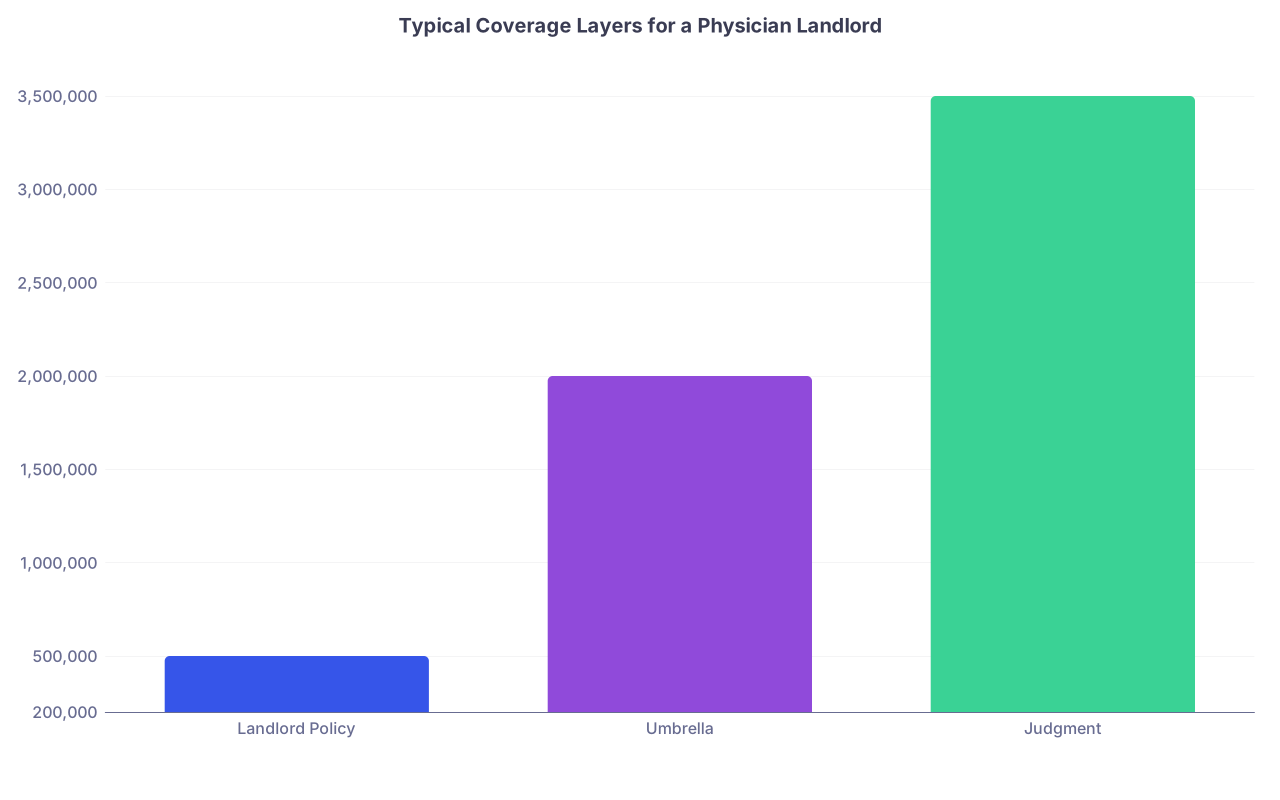
A $500k landlord policy and $2M umbrella is not a magic forcefield. It’s just how much the insurance company might pay. If a jury returns a $3.5M verdict and your total coverage is $2.5M?That remaining $1M is a personal problem.
- Wage garnishment possible
- Liens on properties
- Forced settlements that drag on for years
Coverage gaps and exclusions are landmines
I’ve seen physicians shocked that:- Their short‑term rental activity was excluded because it was treated as a “business use” beyond what the policy allowed.
- Certain dog breeds were excluded (yes, including tenants’ dogs).
- Lead, mold, or certain environmental issues were excluded or heavily limited.
- Negligent security claims (e.g., assault in a poorly lit parking lot) fell outside normal expectations.
If the insurer denies coverage or reserves rights, you’re suddenly very naked.
Multiple claims = higher premiums or dropped coverage
File a couple of sizable claims and your insurer can:- Non‑renew you
- Jack your premiums
- Restrict coverage terms for renewals
When you’re in your own name, re‑insuring becomes a personal headache, not just a “business risk.”
Core mistake: Treating insurance as a complete solution instead of just one layer in a real asset protection structure.
Mistake #2: Forgetting You’re A High‑Value Target

If you’re a physician, you are not a “regular” landlord in the eyes of a plaintiff attorney. You’re a billboard.
- You earn multiple six figures or more.
- Your name and profession are often discoverable with about 30 seconds of Googling.
- In some states, your professional status comes out easily in discovery or in records.
Everyone loves to say, “Well, they can sue anyone.” True. But plaintiff attorneys pursue cases they think will pay.
Owning rentals in your own name creates a direct line from:
- Tenant injury
- Slip‑and‑fall
- Guest accident
- Criminal incident on the property
…straight to you, the high‑income physician. With no buffer entity to absorb the hit or at least muddy the water.
Common ways I’ve seen this play out:
Tenant fall on icy steps
Maintenance wasn’t documented. Plow company contract unclear. Attorney finds out the owner is “Dr. So‑and‑So, MD.” Now this is not just “a fall.” It’s a seven‑figure demand because “they should have known better.”Aggressive dog belonging to a tenant
You didn’t screen the dog breed, tenant’s guest gets mauled in the shared yard. Jury sees you as the wealthy, absent owner who “prioritized profit over safety.”Parking lot assault
Poor lighting, no camera, prior small incidents not taken seriously. Suddenly, it’s a negligent security case. Again: high earner + insurance + personal assets = attractive target.
What owning in your own name broadcasts:
“I’m a doctor, I have money, and these assets are directly reachable if you get a judgment.”
You do not need to be paranoid. But you cannot afford to be naïve.
Mistake #3: Mixing Medical Malpractice Risk With Real Estate Risk

| Step | Description |
|---|---|
| Step 1 | Medical Malpractice Claim |
| Step 2 | You Personally |
| Step 3 | Personal Assets |
| Step 4 | Rental Properties Owned Personally |
| Step 5 | LLC Held Rentals |
| Step 6 | Assets Inside LLC Only |
You already live with one massive risk vector: malpractice.
Now you’re voluntarily adding a second one: landlord liability.
If all your rentals are in your own name, these risks can start to intersect in ugly ways:
Creditor sees a big, reachable target
Let’s say there’s a malpractice claim that pierces policy limits or isn’t fully covered (yes, it happens). Plaintiff’s counsel does an asset search and finds:- 3 paid‑off rentals
- 2 heavily leveraged but appreciating properties
- All under your personal name
Those become fair game as collectible assets.
Landlord incident + malpractice history = narrative
When your name is on everything, it’s easier to paint a story of:- “Careless doctor”
- “Pattern of negligence”
It’s not always logical. But narratives sway juries and settlement talks.
Cross‑contamination in discovery
If all your finances are tangled up personally—W‑2 income, clinic LLC, side consulting, rentals—opposing counsel gets a nice, fat target to pick through.
The entire point of basic asset protection is to segregate categories of risk:
- Clinical risk
- Real estate risk
- Personal lifestyle risk
Owning real estate personally throws them all in one bucket and hands it to any future plaintiff.
Mistake #4: Ignoring Entity Structures Because “It’s Just One Property”
| Issue | Personal Name | Properly Structured LLC |
|---|---|---|
| Who gets sued | You personally | The LLC |
| What assets are exposed | All personal assets | Only LLC-held assets |
| Privacy from tenants | Low | Moderate |
| Perceived target size | High (doctor) | Lower (business entity) |
| Setup effort | Low | Moderate |
The most common excuse I hear from physicians:
“I’ll put future properties in an LLC, but this first one is just in my name. It’s small. I’ll fix it later.”
Here’s why that’s dangerous:
You rarely “fix it later” cleanly
- Transferring to an LLC later may trigger:
- Due‑on‑sale clauses
- Transfer taxes in some jurisdictions
- Re‑underwriting for insurance
- Many people never get around to cleaning things up. Life, residency, fellowship, kids, call, research… the “temporary” structure becomes permanent.
- Transferring to an LLC later may trigger:
Liability doesn’t care that it’s “just one”
A single incident on a single cheap duplex can:- Bankrupt a reckless landlord
- Seriously damage even a physician’s balance sheet
Plaintiff attorneys don’t sue “based on how many properties you own.” They sue based on injuries, negligence, and ability to pay.
Entities are not that complex
Yes, you need:- A properly drafted operating agreement
- Correct titling of the property
- Separate bank accounts
- Ideally, some capitalization
But this is not neurosurgery. You’ve done harder things. Skipping it is mostly about convenience and a little laziness.
Do not let “it’s just one property” be the reason your personal balance sheet is exposed for the next decade.
Mistake #5: Underestimating How Tenants Can Reach You Personally

When you own a rental in your personal name, your tenants don’t just know:
- The address
- The “company”
They know you. Your full name. Often your cell number. Sometimes they even look up your hospital.
That opens doors you do not want opened:
Direct complaints to your employer or hospital
Tenants can:- Call clinic leadership
- File complaints claiming “unprofessional conduct”
- Try to mess with your reputation when they’re angry about an eviction, rent increase, or repair delay
Even if it’s complete nonsense, you’re now answering questions in a meeting you never wanted to attend.
Pressure tactics during disputes
I’ve seen tenants say things like:- “I know you’re a doctor. You can afford to fix this for us.”
- “If you don’t handle this, I’ll blast your name all over social media as a slumlord doctor.”
When your professional name is tied directly to the property, emotional leverage goes up.
Difficulty enforcing lease terms
Being the “nice doctor landlord” to someone who knows exactly who you are, where you work, and what you do professionally can make:- Evictions harder emotionally
- Rent increases awkward
- Strict enforcement of terms feel like a PR risk
Separate entity ownership plus property management adds a layer of space between:
- Your identity as a physician
- The day‑to‑day friction that always exists in landlord‑tenant relationships
You want that space.
Mistake #6: Forgetting How Easily People Can Find Your Other Assets
| Category | Value |
|---|---|
| Owned Personally | 90 |
| Single LLC, Your Name As Member | 60 |
| Multi-LLC With Privacy Structuring | 25 |
Nobody talks about this, but they should.
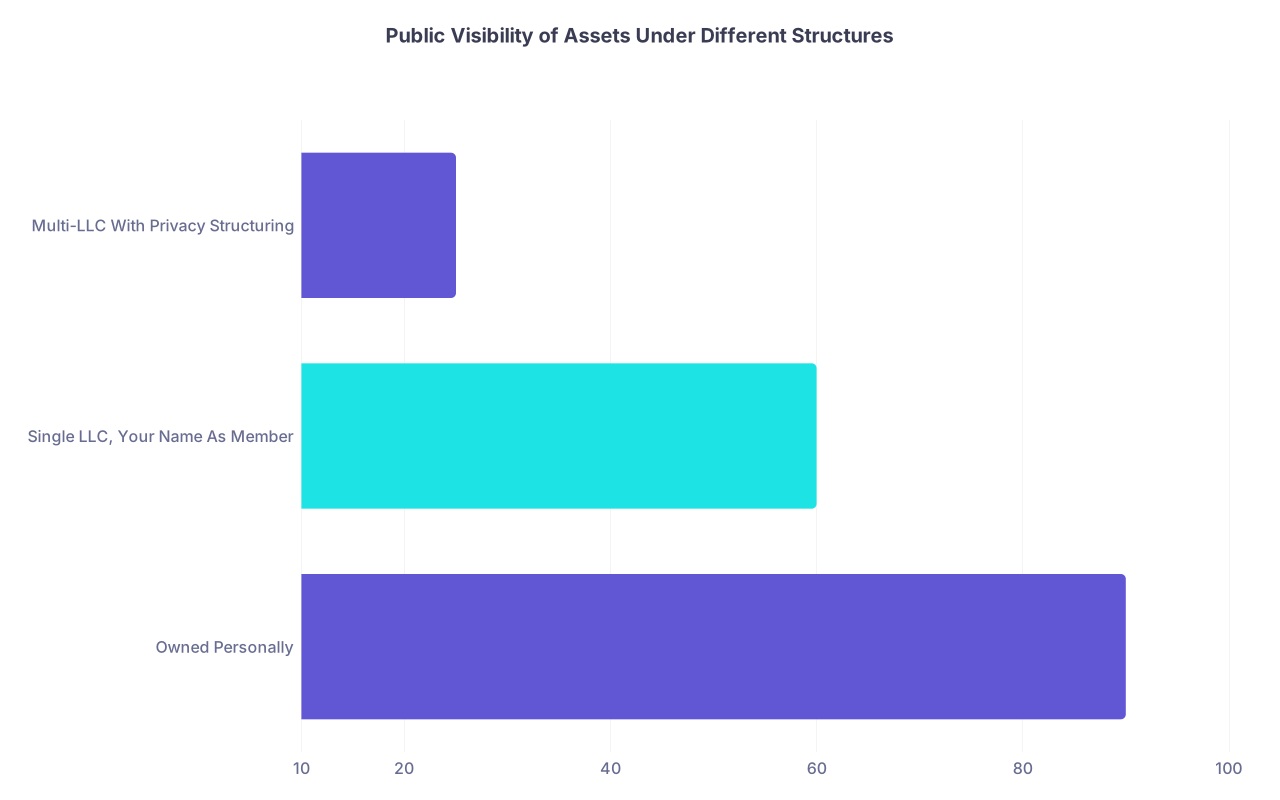
When you hold rentals in your own name, a simple search of:
- County property records
- State tax assessor databases
…can show:
- Every property you personally own in that jurisdiction
- Often, the purchase price and sometimes mortgage details
Now imagine two scenarios after a tenant injury:
Scenario A – Rental titled in your personal name
Plaintiff attorney finds:
- Your rental
- Your primary home
- Maybe your vacation place
You look like a walking checkbook.
Scenario B – Rental titled in “Oak Street Holdings LLC” with a registered agent
Plaintiff attorney sees:
- A property owned by an LLC
- Maybe several properties in that LLC
Yes, they can still sue. Yes, they can still win. But:
- The psychological target is “a business” not “the rich doctor”
- Finding other personal assets takes more effort
Again, LLCs are not magic cloaks of invisibility. But why make it easy for someone to map your entire real estate footprint in 3 clicks?
Mistake #7: Letting Your Lender Dictate Your Asset Protection

| Step | Description |
|---|---|
| Step 1 | Apply for Loan |
| Step 2 | Lender says - Buy in Your Name |
| Step 3 | You Sign Deed Personally |
| Step 4 | Property Owned Personally |
| Step 5 | Exposure of All Personal Assets |
Another trap:
“The bank said I had to put it in my personal name to get the mortgage.”
There’s truth here, but it’s not the whole story.
What actually happens:
Conventional lenders often want the loan in your name
True. For 1–4 unit residential properties, many lenders:- Underwrite based on your personal income
- Want a personal guarantee
- Require the note to be in your personal name
But title and liability planning are a separate question
Even when the loan is in your personal name, you can often:- Close in your name, then transfer to an LLC later (yes, due‑on‑sale risk exists, but it’s often manageable in practice with proper planning)
- Use lenders who are comfortable closing directly in an LLC if DSCR/business loans are used
- Accept slightly worse terms in exchange for better liability segregation
Physicians over‑optimize for interest rate, under‑optimize for risk
I’ve watched high‑earning doctors:- Fight over 0.25% on a mortgage rate
- Completely ignore the upside of protecting millions in personal assets with a better structure
You’re not a first‑time homebuyer scraping together a down payment. You’re a high earner with a long professional runway. Your priority should be survivability, not squeezing every last basis point.
Don’t let the lender’s paperwork preference become your long‑term liability structure by default.
Mistake #8: Treating Real Estate Like a “Side Hobby,” Not a Real Business

You’d never:
- Run your private practice books through your personal checking account
- Sign all clinic contracts personally when they should go through a practice entity
Yet many physicians do exactly that with rentals.
Red flags I see constantly:
- Rents going into your personal checking account
- Repairs paid from your personal credit card, no separation
- No operating agreement, no minutes, no formal documents of anything
Beyond the legal optics, this creates two big problems:
Piercing the corporate veil risk (when you finally do create an LLC)
If you later form an entity but:- Commingle funds
- Don’t treat it like a real business
- Have no records, no documentation
A good plaintiff attorney can argue the entity is a sham and ask the court to let them reach you personally. If that happens, congratulations—you went through the motions of protection and still ended up exposed.
Sloppy decision‑making
When you think of your rentals as “just a side thing,” you:- Underestimate risk
- Under‑document maintenance
- Fail to install and record safety improvements (handrails, lighting, smoke detectors)
- Do sloppy tenant screening
All of which help a plaintiff build a negligence case.
Real estate investing is a business. The moment you collect rent, that’s not just “passive income.” That’s you operating a small business with real legal exposure.
Treat it that way or pay the price later.
FAQ: 3 Questions Physicians Always Ask
1. If I have a big umbrella policy, do I really need an LLC?
Yes. Insurance and entities are two different tools. Insurance pays claims (when it works). An LLC limits which assets are reachable if something goes catastrophically wrong or coverage fails. Relying only on insurance is like relying only on a seatbelt while driving 120 mph—better than nothing, still reckless.
2. Can I just move my existing rental from my name into an LLC now?
Maybe, but don’t wing it. You need to check:
- Your mortgage (due‑on‑sale clause risk)
- State/municipal transfer taxes
- Your insurer’s willingness to endorse the LLC as named insured
Work with a real estate–savvy attorney in your state and a competent insurance broker. “Just quitclaim it” without guidance is how you create new problems.
3. Is it worth structuring all this if I only plan to own one or two rentals?
If you’re a physician, yes. Your income and professional risk profile justify a bit of upfront legal structuring. One “small” property can still generate a seven‑figure claim if the injury is severe enough. You don’t buy disability insurance only if you plan to be “heavily disabled.” You buy it because your income is worth protecting. Same logic here.
Key takeaways:
- Holding rentals in your own name as a physician is not “simple”—it’s exposing your entire personal balance sheet to every tenant injury and property incident.
- Insurance is necessary but not sufficient; entity structure, separation of assets, and treating real estate like a real business are your responsibility, not your agent’s.
- Fix the structure early, before the portfolio and the problems grow. You can recover from a bad cap rate. It’s much harder to recover from a bad judgment with your own name on the deed.