
The biggest financial mistake physicians make is waiting until they are “attendings” to act like they have a future. Real estate investing starts well before your first big paycheck.
You are on a clock. Training years are not a pause; they are your runway. Here is how your real estate investing milestones should look, step by step, from PGY‑1 to attending.
PGY‑1: Survival Year With One Financial Job
At this point you should not be buying anything with a roof.
Your only real estate goal in PGY‑1 is groundwork: building a clean financial profile and learning enough not to get scammed by podcasts and “doctor only” real estate masterminds.
Months 1–3 of PGY‑1: Stabilize and Protect
Focus almost entirely on three things:
Know your numbers
- List every loan: balance, rate, repayment type.
- Pull your credit report and score.
- Add up your true monthly burn rate (rent, food, insurance, car, etc.).
Stop the disasters
- Get disability insurance in place.
- Confirm malpractice coverage; understand if moonlighting is covered or not.
- Do not pick up any new car loans or silly “lifestyle” subscriptions.
Define a bare‑bones real estate plan
- Decide your primary interest for now:
- Direct ownership (rentals / small multifamily)
- Passive (REITs, real estate funds, syndications)
- You are not choosing properties, only a lane to learn first.
- Decide your primary interest for now:
By the end of month 3, you should:
- Know your net worth (even if it is deeply negative).
- Have an emergency fund target (even if it is $0 today).
- Have sworn off buying a “doctor house” during residency.
Months 4–6 of PGY‑1: Education and Credit Building
Now you build the foundation lenders actually care about.
Credit profile
- Pay every bill on time. Auto‑pay everything.
- Keep credit utilization under 30% on each card.
- Do not open 4 new cards at once for points.
Structured real estate learning Give yourself a simple schedule:
- 1 book per month on real estate fundamentals.
- 1–2 podcasts per week.
- 1 local meetup or online group per month (actual investors, not “crypto plus Airbnb arbitrage bros”).
Start a basic investing structure
- Open a separate high‑yield savings account labeled “Future Real Estate.”
- Automate $50–100/month into it. The amount is less important than the habit.
- Start a spreadsheet tracking:
- Income
- Fixed expenses
- Potential savings rate
By month 6, you should:
- Have a FICO score you know and are watching.
- Have a small but real “future real estate” fund line item.
- Understand basic terms: cap rate, cash‑on‑cash, NOI, DSCR.
Months 7–12 of PGY‑1: Decide Your First Likely Move
You still probably will not buy in PGY‑1. That is fine. This is your “decide what kind of investor you will be first” window.
At this point you should:
Pick your first realistic path
- Path A – Direct ownership during training
- You expect to be in the same city 3–7 years.
- You have or can build a down payment.
- You want to self‑manage or closely oversee a manager.
- Path B – Passive allocations first
- Training moves or fellowships make you geographically unstable.
- Time and bandwidth are minimal.
- You want exposure via:
- Public REITs in a brokerage account.
- Later: vetted private deals/syndications.
- Path A – Direct ownership during training
Run sample numbers monthly
- Take 1–2 real listings per month.
- Underwrite them:
- Rents, expenses, mortgage, reserves, cash flow.
- Compare:
- “What if I bought this now vs what if I put the same money into REITs / index funds?”
Legal basics
- Learn what an LLC actually does and what it does not do.
- Understand:
- Landlord‑tenant laws are state specific.
- Fair housing rules are federal and non‑negotiable.
- Start a “questions for future real estate attorney and CPA” document.
By the end of PGY‑1 your milestone is clarity, not ownership:
- You know if your first deal is likely to be a house hack / small rental OR passive.
- You know your approximate borrowing power if you had a down payment.
- You have not signed onto any $30,000 physician real estate “mentorship” course. Good.
PGY‑2 to PGY‑3: From Observer to Participant
Now you shift from theory to controlled action. You are still not an attending, but banks start to see you as less of a risk, and you have a year of pay stubs.
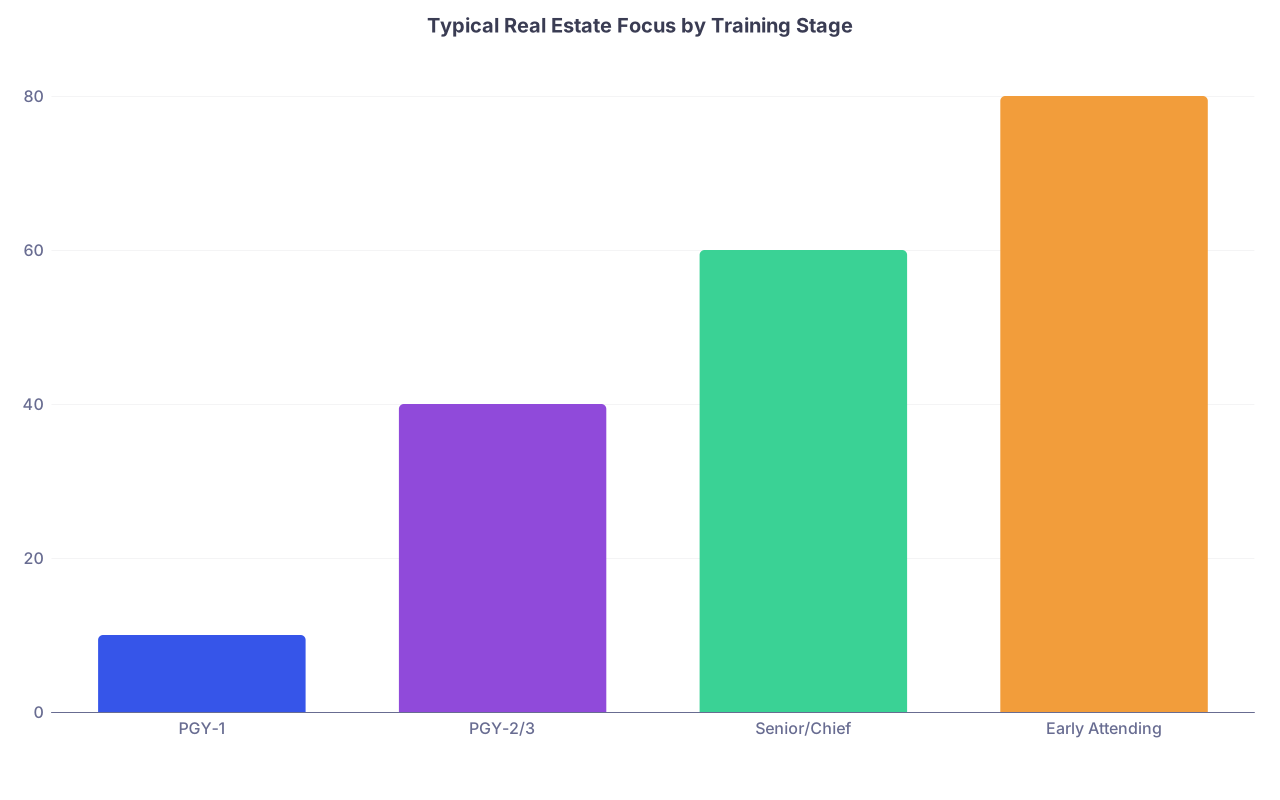
| Category | Value |
|---|---|
| PGY-1 | 10 |
| PGY-2/3 | 40 |
| Senior/Chief | 60 |
| Early Attending | 80 |
Year 2: Prepare for Either First Purchase or First Passive Allocation
Quarter 1 (PGY‑2 months 1–3): Get Lending Reality
At this point you should:
- Pull pay stubs and tax returns.
- Book a 30‑minute call with at least:
- One conventional lender
- One portfolio lender or credit union
Ask each:
- “What could I qualify for today as an owner‑occupant?”
- “What if I wanted a non‑owner‑occupied rental?”
- “How do you treat student loans for debt‑to‑income?”
Document all of it. You will see how wildly different answers can be.
Quarter 2 (PGY‑2 months 4–6): Build Capital and Decide Tax Structure
Down payment and reserves targets
- Set specific numbers:
- Example: “$25,000 down payment, $10,000 reserves” for a small duplex.
- Automate savings:
- Ideally 15–25% of net pay if possible, but even 5–10% is a start.
- Set specific numbers:
Initial tax planning conversation
- Find a CPA who actually works with real estate investors.
- Discuss:
- Whether you should form an LLC before buying anything (often no, not yet).
- How depreciation works.
- Record‑keeping expectations.
If passive path: choose your first vehicle
- Basic, low‑drama option: REIT index fund in a taxable account.
- Milestone: You fund your first “real estate investment” outside retirement accounts, even if it is $500.
Quarter 3–4 (PGY‑2 months 7–12): Serious Deal Criteria
By now, you should:
- Have clear buy box criteria, for example:
- City A only
- Duplex or 3‑plex
- Built after 1980
- Purchase price under $450,000
- Minimum projected cash‑on‑cash 7–8%
- Have a simple spreadsheet template for underwriting that you can run in 10–15 minutes per deal.
This is when I see residents waste hours scrolling Zillow emotionally instead of following numbers. Do not do that. You are too tired already.
PGY‑3 (or Last Year of Residency): Make the First Real Estate Move
You now have to decide whether the first acquisition happens:
- During late residency, or
- In the 6–12 months after graduation.
Months 1–3 of PGY‑3: Clarify Post‑Training Geography
At this point you should:
- Narrow your likely attending job location to 1–2 cities.
- If fellowship is next, factor that in. Buying a rental in City A while you are moving to City B in 12 months is usually dumb.
Three options emerge:
You will likely stay in the same city 5+ years
- Strong case for:
- Owner‑occupant purchase that can convert to rental later.
- House hack (roommates, basement unit, duplex).
- Strong case for:
You will move but know the target city
- Prepare to buy there after you secure a job offer.
- Keep cash liquid; do not rush to buy near your current residency program.
You genuinely do not know
- Lean into passive options now.
- Delay direct ownership until stable.
Months 4–9 of PGY‑3: Execute or Hold
If you are buying during residency, this is when it happens:
Concrete steps and legal guardrails
- Hire:
- Investor‑friendly real estate agent.
- Real estate attorney (mandatory in some states, wise in most).
- Get:
- Pre‑approval letter.
- Written explanation from the lender about down payment source rules, gift funds, etc.
- Hire:
Offer to closing checklist
- Offer includes:
- Financing contingency
- Inspection contingency
- Clear timeline for due diligence
- During due diligence you:
- Review leases and rent rolls (if existing tenants).
- Verify actual expenses: property taxes, insurance, utilities, HOA.
- Offer includes:
Entity or no entity?
- For 1–2 small rentals, title in your personal name plus strong insurance and umbrella policy is usually enough.
- LLCs help more with separation and operations as your portfolio grows, less with magical lawsuit protection on day one.
If you choose to wait:
- The milestone is that your down payment fund grows, your credit stays clean, and you keep underwriting practice going monthly.
Senior Resident / Fellow: Structuring Like a Real Investor
You are now within 12–24 months of attending income. This is the most important planning window. What you do here determines whether your first 3 attending years build a portfolio or just buy you a Tesla and a big mortgage.
Year Before Graduation: Legal and Financing Infrastructure
Months 1–3: Build Your “Investing Stack”
At this point you should have a small team:
- CPA who:
- Files your taxes.
- Knows you plan to own rentals or LP interests.
- Insurance broker who:
- Understands rental property policies.
- Sets up an umbrella liability policy (typically $1–3M).
- Real estate attorney (not just your friend who “does some contracts”):
- Reviews purchase agreements.
- Can explain operating agreements and syndication docs.
Key legal/financial decisions this year:
- Will you use a holding LLC for multiple rentals or property‑specific LLCs?
- How will you keep books?
- Simple option: dedicated bank account + bookkeeping software.
- What level of liquidity will you require before each deal?
- Example: 6 months of property expenses + your personal 3‑month emergency fund.
Months 4–12: Pre‑Attending Positioning
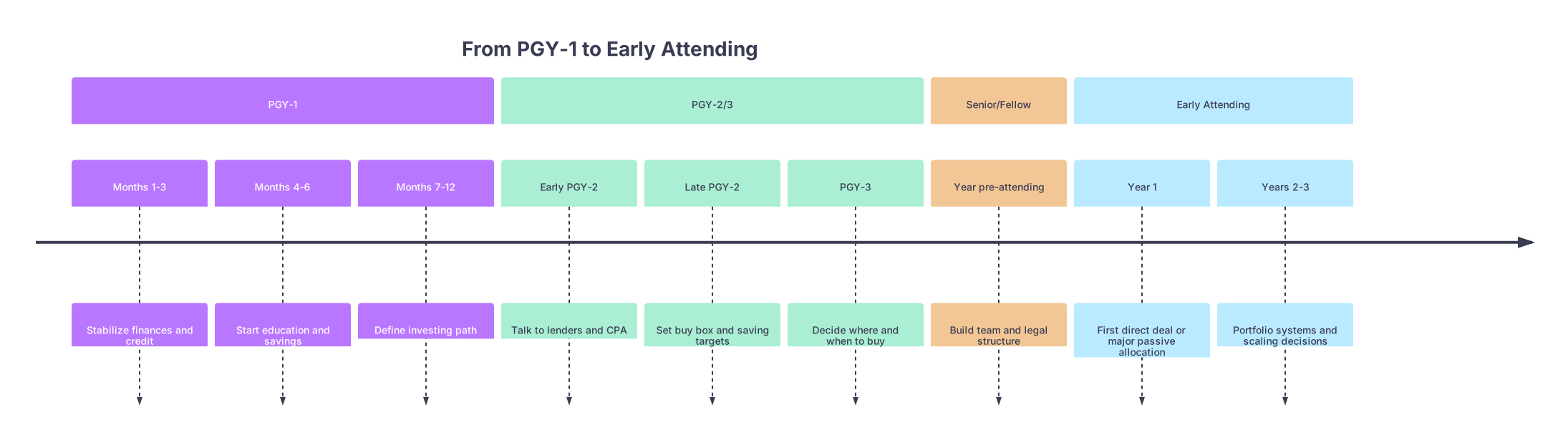
| Period | Event |
|---|---|
| PGY-1 - Months 1-3 | Stabilize finances and credit |
| PGY-1 - Months 4-6 | Start education and savings |
| PGY-1 - Months 7-12 | Define investing path |
| PGY-2/3 - Early PGY-2 | Talk to lenders and CPA |
| PGY-2/3 - Late PGY-2 | Set buy box and saving targets |
| PGY-2/3 - PGY-3 | Decide where and when to buy |
| Senior/Fellow - Year pre-attending | Build team and legal structure |
| Early Attending - Year 1 | First direct deal or major passive allocation |
| Early Attending - Years 2-3 | Portfolio systems and scaling decisions |
Here you should:
Clean your balance sheet before attending offers hit
- Avoid new car loans.
- Do not sign a huge lease that will compete with future mortgage DTI.
Model your attending pay
- Take a conservative base salary.
- Build a pro‑forma budget:
- Taxes
- Retirement contributions
- Student loan payments
- Lifestyle upgrade cap (decide in advance)
- Real estate capital allocation
The worst pattern I see: a PGY‑4 saying, “Once I start making attending money, I will start investing.” Then 18 months later they have a $1.3M house, 2 luxury cars, and no investable cash.
Early Attending Years 1–3: Actual Portfolio Building
Now the real money shows up. At this point you should treat real estate like a small business, not a hobby. That means systems, policies, and very explicit milestones.

Attending Year 1: First Major Move
Months 1–3: Lifestyle Guardrails
Before you close on anything:
- Cap your fixed lifestyle spending at a percentage of your net income (for many, 40–50% is reasonable).
- Decide on a real estate allocation target:
- Example: 20–30% of post‑tax, post‑retirement‑contribution income.
Months 3–12: Execute First Real Estate Milestone
Depending on your path:
Direct Ownership First Deal
- Likely an owner‑occupant home that can later be a rental, or
- Your first small rental property.
Milestones:
- Signed purchase and sale agreement reviewed by attorney.
- Proper financing locked (fixed rate, reasonable term).
- Insurance bound with appropriate landlord coverage.
- Property management plan:
- Self‑manage with documented systems, or
- Professional manager with written contract.
Passive First Major Allocation
- Decide between:
- REIT funds (public market, daily liquidity).
- Vetted private syndication/fund (illiquid, higher barrier; do not rush).
- For private deals:
- Read the PPM and operating agreement.
- Confirm:
- Sponsor track record.
- Fee structure.
- Preferred return and waterfall.
- Tax reporting (K‑1 timing).
- Decide between:
By the end of attending year 1, your goal is to have at least one real, non‑theoretical real estate investment in place, with clear documentation and cash flow tracking.
Attending Year 2: Systematize and Evaluate
At this point you should shift from “can I buy something?” to “what is actually working?”
Quarter 1–2 of Year 2: Portfolio Autopsy
For each property or deal:
- Review:
- Actual vs projected rent.
- Actual vs projected expenses (maintenance, CapEx, property management).
- Time cost: hours per month.
Create a simple annual statement for each property:
- Gross income
- Operating expenses
- Net operating income (NOI)
- Debt service
- Cash flow
- Cash‑on‑cash return
If something is underperforming:
- Decide if it is:
- A learning tax and you hold.
- A chronic headache and you sell or restructure.
Quarter 3–4 of Year 2: Legal and Tax Optimization
Now that you have real numbers:
- Revisit entity structure:
- If you have multiple properties, consider:
- Series LLC (in states where it is cleanly supported).
- Individual LLCs under a holding company.
- If you have multiple properties, consider:
- Work with your CPA on:
- Cost segregation studies for larger properties.
- Real estate professional status (most full‑time clinicians will not qualify, but some part‑time may).
This is where you stop treating taxes as an afterthought. A sloppy structure can easily waste five figures a year once your portfolio grows.
Attending Year 3: Strategic Scaling or Hold
By year 3, your income is established, your spending pattern is obvious, and your first properties have track records. This is where you decide whether you:
- Scale hard into real estate.
- Maintain a moderate portfolio.
- Pivot away if you hate it.
Milestones in Year 3:
Define your 5‑year real estate vision
- Number of doors or capital placed in passive deals.
- Target annual cash flow.
- Target equity growth.
Financing capacity check
- Meet lenders again:
- Where do your DTI and portfolio stand?
- Do you need commercial loans for further growth?
- Meet lenders again:
Risk tightening
- Increase cash reserves to match portfolio size.
- Ensure:
- Umbrella coverage aligns with new net worth.
- Estate planning (will, possibly trust) includes your properties and entity interests.
If you decide real estate is not worth your time:
- You can still maintain a passive “real estate sleeve” via REITs and perhaps one or two well‑chosen private funds.
- That is a valid choice. The mistake is drifting without deciding.
| Stage | Primary Milestone |
|---|---|
| PGY-1 | Education and financial stabilization |
| PGY-2/3 | Define buy box and lender relationships |
| Senior/Fellow | Build CPA/attorney/insurance team |
| Attending Year 1 | First real, documented investment |
| Attending Years 2-3 | Systematize, optimize, then scale or hold |
If you remember nothing else:
- Real estate investing for physicians starts in PGY‑1 with habits and knowledge, not with a mortgage.
- Each stage—resident, fellow, early attending—has specific financial and legal milestones; hit those on time and you avoid 90% of the disasters I see.
- By year 3 as an attending, you should either have a small, well‑structured portfolio you understand, or a clear, intentional decision to keep real estate passive and simple.