
Most physicians waste their first attending paycheck on lifestyle creep instead of using their new city as an investment engine. That is a mistake.
You are about to move anyway. You will sign a lease or a mortgage anyway. You will learn a new city anyway. The only real question is whether you turn that chaos into an investment plan or into random, expensive trial and error.
I am going to walk you from pre-Match all the way to three months after you move. Week by week. What to decide, what to sign, what to avoid. Financial and legal steps only. No fluff about “finding the best coffee shops.”
Phase 1: Pre‑Match (3–6 Months Before You Move)
At this point you should not be browsing Zillow for “cute condos.” You should be building a financial and legal framework so any property decision fits inside a clear plan.
1. Define a hard financial box (3–6 months pre‑move)
Treat this like prepping for Step 1. Front‑load the thinking.
At this point you should:
Pull your current numbers:
- Student loans (rates, refinances, repayment plan)
- Credit score
- Current savings and liquid reserves
- Any existing real estate or leases
Sketch your first‑year attending cash flow:
- Net take‑home per month (after estimated taxes, retirement, benefits)
- Expected moving stipend or sign‑on bonus
- Any moonlighting income
Now set hard rules:
- Maximum total housing cost (rent or PITI + HOA) = 20–25% of take‑home, not 40–50%.
- Emergency fund:
- Minimum 3 months expenses if renting
- 6 months if buying + investing in the first 2 years
- Investment capital allocation:
- Decide how much of your sign‑on bonus or savings you are willing to deploy into:
- Down payment
- Reserves for rental property
- Closing costs and rehab
- Decide how much of your sign‑on bonus or savings you are willing to deploy into:
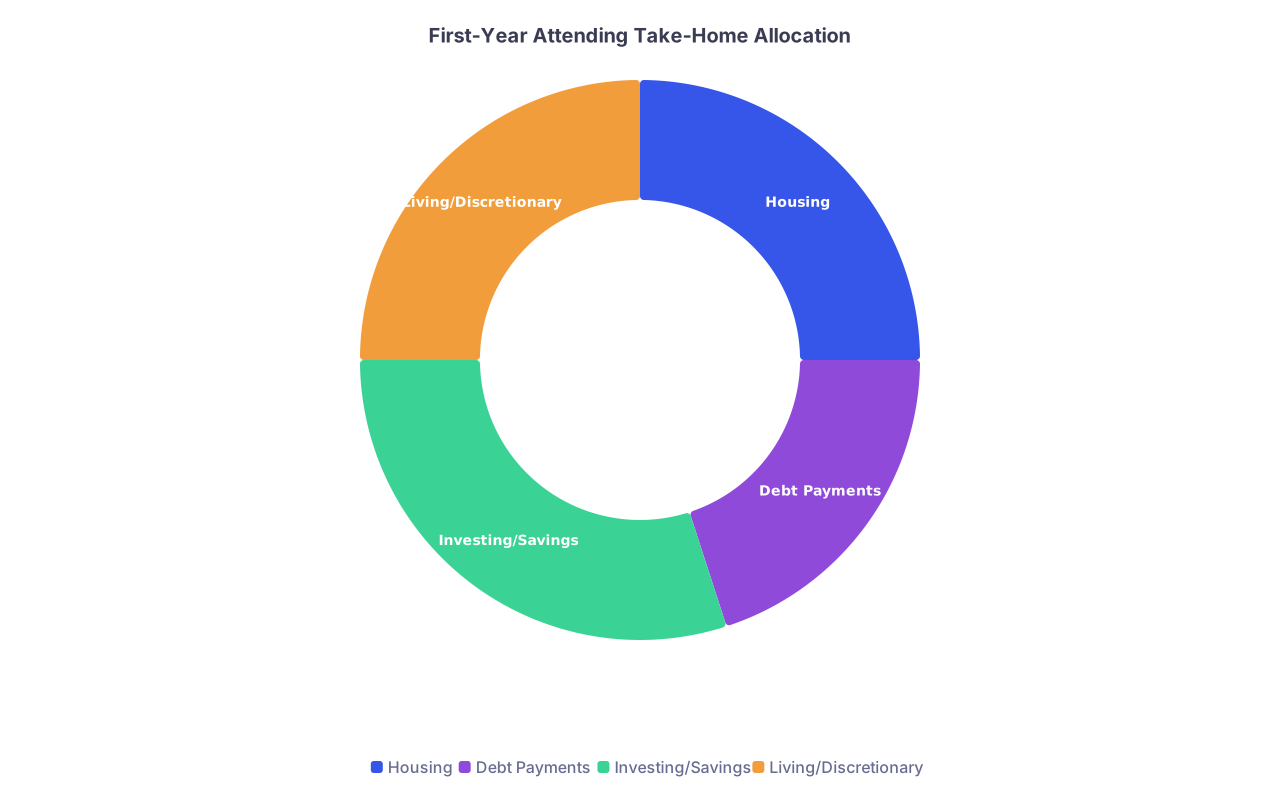
| Category | Value |
|---|---|
| Housing | 25 |
| Debt Payments | 20 |
| Investing/Savings | 30 |
| Living/Discretionary | 25 |
If your financial box forces you to rent for 1–2 years while you learn the market, that is not failure. That is discipline.
2. Decide your role in this new city (3–4 months pre‑move)
Before Match (or as soon as you have a contract), you should decide what this city is to you:
- A 3‑year residency stop
- A 1‑year fellowship detour
- A 10‑year attending base
- A forever‑home city
Your holding period changes the math.
At this point you should choose one of these primary strategies:
Renter + scouting investor (short stay: 1–3 years)
- You rent near work.
- You direct your investing into:
- “Practice” small properties (e.g., a turnkey single‑family home) in landlord‑friendly markets, maybe even not in your new city.
- Or a house hack you are comfortable exiting in 3 years.
Owner‑occupant with exit plan (medium stay: 3–7 years)
- You buy a property you can later:
- Rent to residents/fellows/other staff
- Sell easily due to location and type
- Layout, rentability, and HOA rules matter more than “dream kitchen.”
- You buy a property you can later:
Long‑term base builder (7+ years)
- You are planning:
- Primary home + 1–3 local rentals.
- You care about:
- School districts
- Future development
- Local landlord ordinances
- You are planning:
Be honest. If you are going to chase a dream job in another state in four years, do not buy a custom build in a cul‑de‑sac you cannot rent.
3. Build your professional team on paper (2–4 months pre‑move)
You can do this before you ever know your exact neighborhood.
At this point you should create a short list (not hire yet):
- Real estate investor‑savvy agent
- Real estate attorney (not the one who did your cousin’s divorce)
- CPA with physician + real estate experience
- Insurance broker (who understands landlord and umbrella policies)
- Local lender and at least one physician‑loan lender
| Role | When to Engage | Critical For |
|---|---|---|
| Agent (investor-savvy) | 1–2 months pre-move | Property selection, offers |
| Real estate attorney | Before signing purchase | Contract review, entity setup |
| CPA | 1–2 months pre-move | Tax strategy, entity choice |
| Lender(s) | 1–2 months pre-move | Pre‑approval, product choice |
| Insurance broker | 2–4 weeks pre‑closing | Home, landlord, umbrella cover |
You are not trying to be best friends yet. You just want names, websites, and emails in a document. When Match happens, you will move fast.
Phase 2: Match to 1 Month Before Move – Converting City Data Into a Strategy
Once you know your city (or at least your metro area), the clock starts. At this point you should stop thinking in abstractions and start working your plan against a map.
4. Week 1–2 After Match: Legal and tax structure first
Most physicians reverse this. They find a pretty house. Then they call an attorney to clean it up. Backwards.
At this point you should:
- Have a 30–60 minute consult with:
- CPA
- Real estate attorney
Core questions to settle:
Entity vs personal name
- For your primary residence: almost always buy in your personal name.
- For rental properties:
- Decide whether to use:
- Single‑member LLC per property
- Series LLC (where legal)
- Personal ownership with high umbrella coverage (simpler; often fine for first rental)
- Decide whether to use:
State‑specific issues
- Is your new state:
- Community property?
- Landlord‑friendly or tenant‑friendly?
- Requiring specific rental licenses?
- Any weird transfer taxes or homestead exemptions?
- Is your new state:
Tax strategy basics
- Your likely use of:
- Depreciation
- Cost segregation (for larger properties, once you are stable)
- Real estate professional status (probably not for a full‑time attending, but worth understanding)
- Your likely use of:
Do not rush to file LLC paperwork without this conversation. I have watched physicians create five single‑member LLCs, then discover their state charges $800+ per year per entity.
5. Week 2–4 After Match: Serious market recon
Now you get granular. Not Reddit threads. Actual numbers.
At this point you should:
- Map your life radius:
- Work site(s)
- Partner’s job
- Childcare/school (if relevant)
- Typical traffic patterns
Then pull:
- Rent vs buy numbers for:
- Simple 2–3 bedroom apartments or townhomes within 20–30 minutes of work.
- Investor metrics in those same areas:
- Typical rents for:
- 1–2 bedroom apartments near the hospital
- 3–4 bedroom houses within 20–30 minutes
- Purchase prices
- Taxes and insurance quotes (rough)
- Typical rents for:
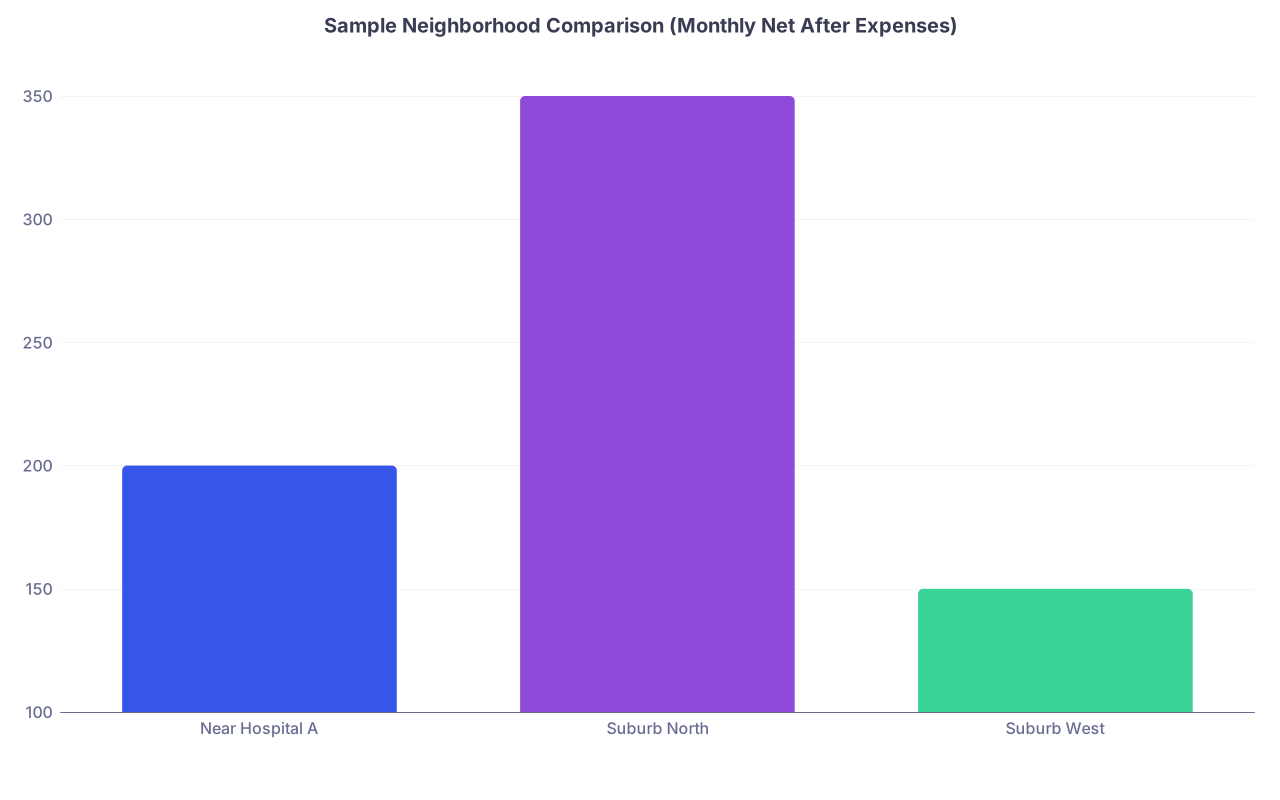
| Category | Value |
|---|---|
| Near Hospital A | 200 |
| Suburb North | 350 |
| Suburb West | 150 |
(Values = approximate monthly cash flow for a 3‑bed rental after principal, interest, taxes, insurance, and 10% vacancy and maintenance.)
You are not pursuing perfection. You are trying to answer:
- Where do residents and nurses actually live?
- Where is the line between:
- “Cheap but high tenant risk”
- “So expensive that rents will never support investment”?
At this point you should choose:
- Either:
- “I will rent close to work and not invest locally this first year.”
- Or:
- “I will live in something I could later rent out to staff.”
- Or:
- “I will live wherever we want and invest in a separate nearby submarket.”
All three are valid. The mistake is pretending you are “just renting” with no thought to how that affects your investment runway.
Phase 3: 4–8 Weeks Before Move – Commitments and Contracts
This is where you start signing things. Now financial and legal mistakes get expensive.
6. 6–8 Weeks Before Move: Lock in your first‑year housing decision
You need clarity here before you move. Not after.
At this point you should:
If renting (Year 1)
- Aim for:
- 12‑month lease
- Flexibility to sublease if possible (read the lease; do not assume)
- Watch for:
- Automatic renewal clauses
- Early termination fees
- “No business activity” clauses that might restrict home office usage
Your new city is now a scouting mission. You will collect data for a year, walk neighborhoods, talk to colleagues, and then decide how to invest.
If buying to live in (with eye on future rental)
You should:
- Work with your agent and lender to:
- Get precise:
- Closing cost estimates
- Rate and product choices (15 vs 30 year, fixed vs ARM)
- Run your numbers as if you were renting it later:
- Projected rent
- PITI
- HOA fees
- Maintenance reserves (5–10% of rent)
- Get precise:
If the future rent cannot, in a sane scenario, cover expenses, then this is a personal consumption purchase, not an investment. Fine. Just do not lie to yourself.
Phase 4: 0–4 Weeks Before Move – Paperwork, Protection, and Setup
Now you are in the blast zone. Movers, orientation packets, bad email instructions from HR. Most people zone out. You cannot.
7. 4 Weeks Before Move: Formalize legal and insurance protections
At this point you should:
- Finalize any entity you actually need now:
- If you are:
- Buying a pure rental (not owner‑occupied), and
- Your attorney + CPA agreed an LLC is suitable,
- Then file it now so it exists before closing.
- If you are:
- Increase your protection:
- Personal:
- Property:
- Verify appropriate policy types:
- Homeowners for primary
- Landlord (DP-3 or equivalent) for rentals
- Verify appropriate policy types:
Do not rely only on the agent selling you a policy. Ask:
- Coverage limits
- Exclusions (short‑term rental? water backup?)
- Loss of rent provisions for rentals
8. 2–3 Weeks Before Move: Bank, bookkeeping, and accounts
You are about to start blending attending income, moving expenses, and maybe property costs. Chaos if you do this in one personal checking account.
At this point you should:
Open:
- One high‑yield savings account:
- Emergency fund
- Property reserves
- If using an LLC:
- Dedicated business checking account for that entity
- If owning rentals personally:
- A separate checking account earmarked for property income and expenses
- One high‑yield savings account:
Set up basic bookkeeping:
- Choose simple software or at least a Google Sheet
- Pre‑define expense categories:
- Mortgage interest
- Taxes
- Insurance
- Repairs
- Utilities (if any)
- Management (even if self‑managed)
You do this now, before you are seeing patients, charting at 11 p.m., and trying to remember what that $312 Home Depot charge was.
Phase 5: First 30 Days After Move – On‑the‑Ground Recon and Guardrails
Once you land in your new city, you are exhausted and disoriented. This is where many physicians make the classic “I hate my call schedule, so I am buying a Peloton and a house” decision. Slow down.
9. Week 1–2 After Arrival: Reality check and neighborhood vetting
At this point you should:
- Commute at different times:
- Early morning
- Late evening after call
- Weekend days
- Walk or drive:
- Around nearby hospitals or major employers
- Through neighborhoods your colleagues recommend
- Ask colleagues pointed questions:
- “If you were going to buy a rental tomorrow for residents, where would you put it?”
- “Which neighborhoods are getting better, and which are quietly getting worse?”
Log what you actually see:
- Parking stress near hospital
- Safety feel after dark
- Proximity of:
- Grocery stores
- Universities
- Major transit lines
Your goal: refine or confirm the submarkets you shortlisted pre‑move.

10. Week 2–4 After Arrival: Decide your first local investment move
You do not have to buy anything yet. But you should decide, clearly, what the next 12 months in this city look like from an investment standpoint.
At this point you should choose one:
Observation year (renter + distant investing)
- You:
- Stabilize your clinical life
- Invest, if at all, in:
- National REITs
- Passive syndications (if you truly understand them)
- Turnkey or small properties in markets you can underwrite from a distance
- Your new city:
- Becomes a 12‑month data source. You learn without deploying heavy capital locally yet.
- You:
Targeted local first property
- You:
- Shortlist one or two neighborhoods
- Decide on:
- House hack
- Simple long‑term rental
- Set:
- Maximum purchase price
- Minimum acceptable rent‑to‑price ratio
- You engage your agent with a written buy box:
- Example:
- 3 bed / 2 bath
- Within 20 minutes of Hospital X
- Built after 1980
- Purchase ≤ $400k
- Projected rent ≥ $2,600
- Example:
- You:
Primary home only, no investment for 12 months
- You explicitly choose to:
- Clean up loans
- Build cash
- Learn this job
- You schedule:
- A 12‑month review with your CPA and possibly your agent.
- You explicitly choose to:
All three are acceptable. What is not acceptable is “I will just see what pops up on Zillow after call.”
Phase 6: 1–3 Months After Move – Executing or Waiting On Purpose
Now you either press “go” on a clearly defined plan or consciously hold. Not drift.
11. Months 2–3: If you are actively buying
At this point you should:
- Reconfirm with your lender:
- Pre‑approval is current
- Documentation is updated with your new paystubs
- Clarify your closing logistics:
- Your call schedule vs. closing date
- Virtual vs. in‑person signings
- Tighten your due diligence checklist for any property:
Financial
- Verify actual rents (not listing guesses)
- Get insurance quotes in writing
- Stress test:
- Vacancy at 10%
- Maintenance at least 8–10% of rent
Legal
- Attorney review of:
- Purchase contract
- Any HOA covenants (rental restrictions? caps?)
- City/county rental requirements (licenses, inspections)
Protection
- Confirm how the property will be titled:
- Personal
- Trust
- LLC (per your earlier plan)
- Ensure:
- Umbrella policy limit aligns with new total exposure
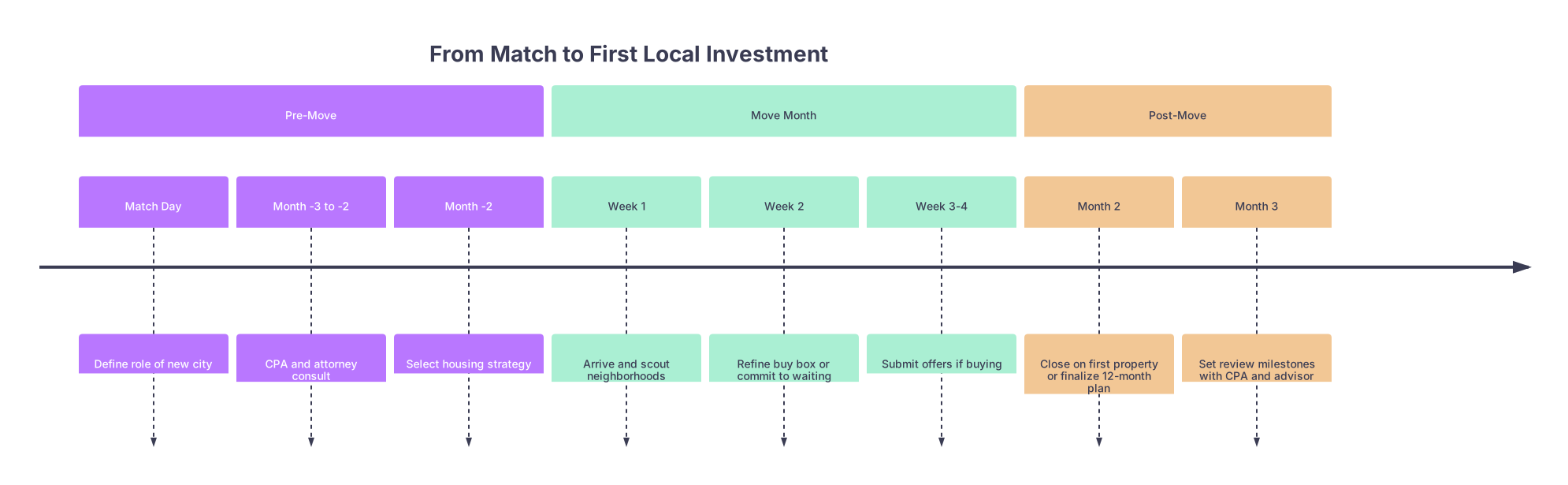
| Period | Event |
|---|---|
| Pre-Move - Match Day | Define role of new city |
| Pre-Move - Month -3 to -2 | CPA and attorney consult |
| Pre-Move - Month -2 | Select housing strategy |
| Move Month - Week 1 | Arrive and scout neighborhoods |
| Move Month - Week 2 | Refine buy box or commit to waiting |
| Move Month - Week 3-4 | Submit offers if buying |
| Post-Move - Month 2 | Close on first property or finalize 12-month plan |
| Post-Move - Month 3 | Set review milestones with CPA and advisor |
If you feel pressure to rush an offer because a colleague “just found an amazing deal,” stop. Your first deal in a new city should be boring. Turnkey, predictable, inside your financial box.
12. Months 2–3: If you are deliberately waiting
Waiting is still work.
At this point you should:
- Track:
- 5–10 representative listings in your target neighborhoods
- What they actually close for, not just asking prices
- Keep:
- A simple log of rents among residents, students, or staff (what people are truly paying)
- Schedule:
- A 6–12 month checkpoint:
- With your CPA to reassess taxes and capacity
- With your agent to review how the market has moved
- A 6–12 month checkpoint:
You are building pattern recognition so that when you see a true opportunity, it feels obvious instead of terrifying.

Quick Reference: Month‑by‑Month Checklist
| Timeframe | Primary Focus |
|---|---|
| 6–3 months pre‑move | Financial box, high-level strategy |
| 3–1 months pre‑move | CPA/attorney consult, market recon |
| 6–4 weeks pre‑move | Decide rent vs buy, align with plan |
| 4–0 weeks pre‑move | Entities (if any), insurance, accounts |
| 0–1 month post‑move | On‑the‑ground recon, decide 12‑month plan |
| 1–3 months post‑move | Execute or consciously wait |
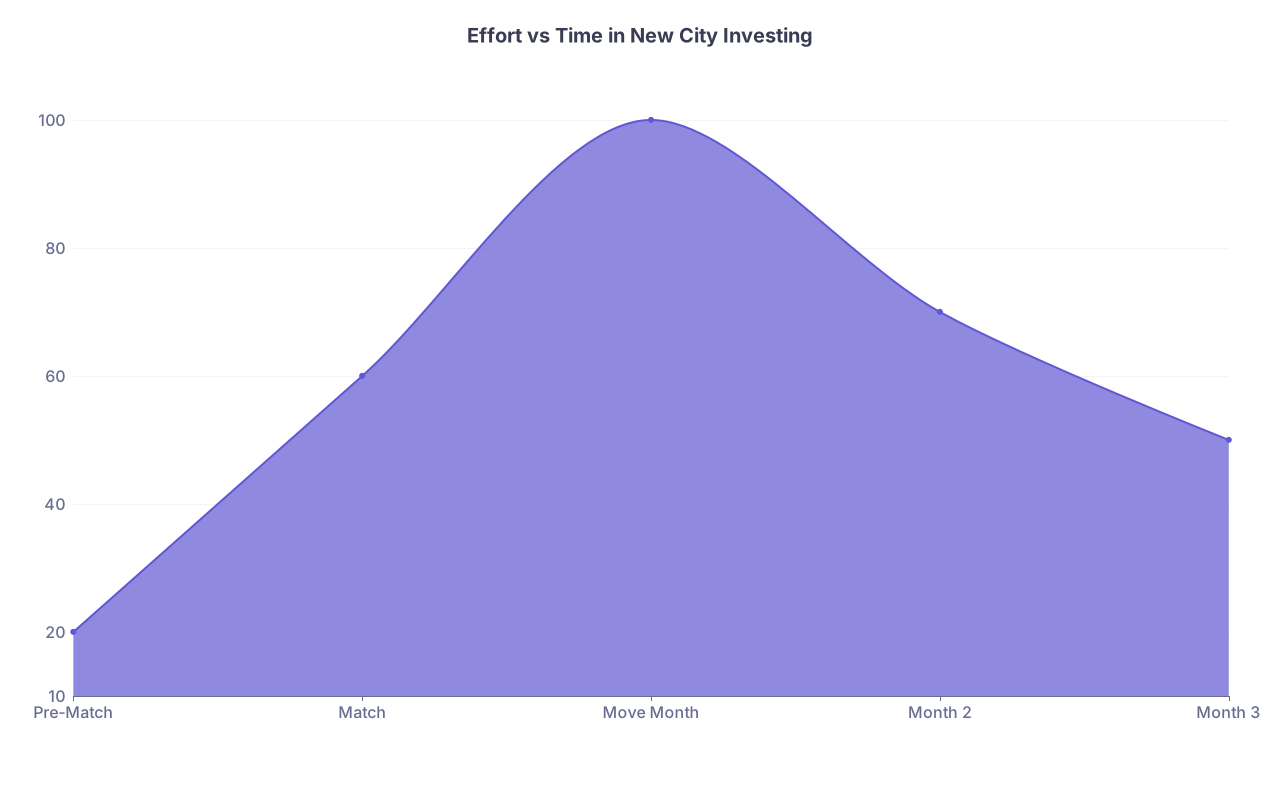
| Category | Value |
|---|---|
| Pre-Match | 20 |
| Match | 60 |
| Move Month | 100 |
| Month 2 | 70 |
| Month 3 | 50 |
Effort peaks around the move. You front‑load the hard thinking so the actual transactions feel nearly mechanical.
FAQ (Exactly 3 Questions)
1. Should I always wait a year before buying in a new city?
No. You should buy when your financial box, legal structure, and on‑the‑ground information line up. For some, that is month 2. For others, year 3. A forced “always wait” rule is as dumb as “always buy immediately with a physician loan.” Use the timeline above and your own stability as the filter.
2. Are physician mortgage loans good tools for investing?
They are tools, not gifts. Physician loans are useful if you have strong income but limited down payment and want to preserve cash for reserves or future investments. They are bad when they justify overbuying a primary home that will never make sense as a rental and handcuffs you to a job you end up hating.
3. Do I need an LLC for my very first rental in the new city?
Often, no. Many physicians start with personal ownership + a solid umbrella policy. An LLC can add liability protection and cleaner bookkeeping, but in some states the annual fees and complexity outweigh the benefit for a single property. Decide this with a local attorney and CPA before you file anything.
Key points:
- Treat your move and new city as a structured, time‑bound investment project, not a vibe‑based life event.
- Decide your role in the city and build your financial/legal box before you chase properties.
- In the first 3 months after moving, either execute a boring, well‑underwritten deal or deliberately wait while building local pattern recognition—not drift in between.