
The worst real estate mistakes physicians make happen in the first five years of practice—and they’re almost all about timing, not intelligence.
You’re not dumb. You’re busy, rushed, and tired. The industry knows it. Agents, lenders, “doctor loan” reps, syndicators—they love a new attending with a big contract and no plan.
So let’s fix that with a year-by-year, decision-by-decision real estate strategy. Not vague “invest in real estate” nonsense. Concrete: what you sign, what you avoid, who you hire, and when.
Big Picture: The 5‑Year Real Estate Game Plan
Before we go year-by-year, zoom out. Here’s the arc you’re aiming for:
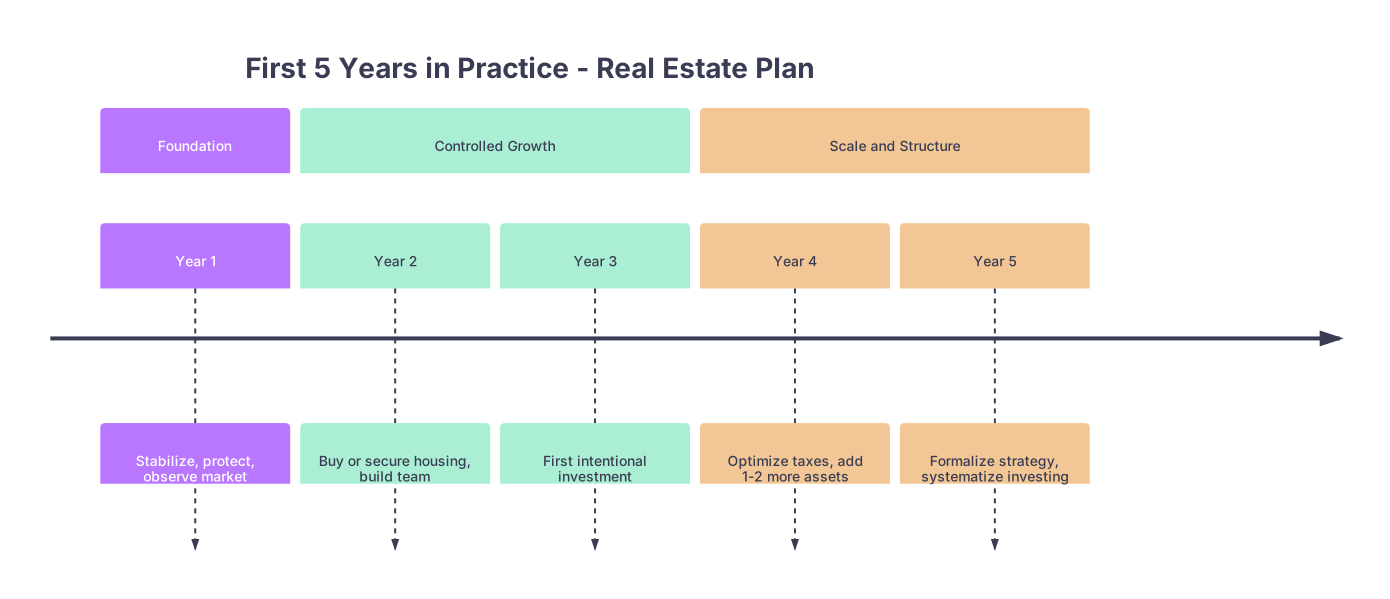
| Period | Event |
|---|---|
| Foundation - Year 1 | Stabilize, protect, observe market |
| Controlled Growth - Year 2 | Buy or secure housing, build team |
| Controlled Growth - Year 3 | First intentional investment |
| Scale and Structure - Year 4 | Optimize taxes, add 1-2 more assets |
| Scale and Structure - Year 5 | Formalize strategy, systematize investing |
Core rules that apply across all five years:
- Real estate should support your career, not compete with it.
- Your first goal is survival and flexibility, not maximum return.
- You don’t chase every “deal.” You build a process and let the right deals fit into it.
Now we move chronologically.
Year 1: New Attending – Stabilize Before You Buy Anything
At this point you should assume you know less than you think about your real housing needs and schedule.
This is your “Do Not Commit Deeply” year.
Months 1–3: Do Not Buy a House Yet
You’ve just started:
- You don’t fully know call burden.
- You don’t know whether you’ll hate your group.
- You don’t know if the hospital is about to restructure.
So for the first 3–6 months:
- Rent close enough to work to keep call reasonable.
- Use a 6–12 month lease, not month-to-month (you want predictability), but don’t go 2–3 years.
- Ignore every “You’re throwing money away on rent” comment. That person will not help you move after you buy in the wrong neighborhood.
Financial and legal moves in these first months:
- Set up:
- High-yield savings account for an opportunity fund (down payment, future investment).
- Basic umbrella policy (at least $1–2M) once you have assets.
- Understand your employment contract:
- Are you a W‑2 employee or 1099 independent contractor?
- Any relocation claws that require repayment if you leave early?
- Noncompete radius and duration (this affects where you should and shouldn’t buy).
Months 4–6: Build Your Real Estate “Advisory Bench”
No LLCs yet. No syndications. Just build your team and your brain.
At this point you should:
Identify:
- A CPA who understands physicians and real estate.
- A real estate-focused attorney (not just your cousin who does divorces).
- A fee-only financial planner who isn’t being paid to push products.
Start tracking the local market like a hawk:
- Set up MLS alerts for:
- Single family homes in your preferred areas
- Small multifamily (duplex/quad) if that’s interesting later
- Watch:
- List price vs actual sale price
- Days on market
- Property tax levels and school district differences
- Set up MLS alerts for:
This is also when every podcast and blog will try to convince you to “house hack,” buy a duplex, or jump into a short-term rental.
For Year 1, default stance is: observe, don’t execute.
Months 7–12: Decide on Location Stability, Not Just Income
By now you have:
- A much clearer sense of whether:
- You like your group.
- The location works for your life.
- The call and commute are sustainable.
Ask yourself bluntly: “Do I expect to be here 5+ years?”
- If no or unsure → delay buying your primary residence. Keep stacking cash.
- If yes, you can start plotting a home purchase in Year 2.
Legal/financial box to check before Year 1 ends:
- Make sure:
- Malpractice coverage type and tail coverage plans are clear (especially if 1099).
- You’ve maxed or at least solidly funded retirement accounts (401k/403b, maybe a backdoor Roth) before dedicating huge capital to real estate.
- Your student loan plan is defined (PSLF vs refinance vs aggressive payoff). Do not mix a giant mortgage decision with loan chaos.
Year 2: Primary Residence Decision – Own, Rent, or “Pause”
Year 2 is usually where physicians make their first big mistake: overbuying a personal house and killing their flexibility.
At this point you should make one big decision:
Will you buy a primary residence in this city in the next 12 months, or intentionally stay a renter for 3–5 years?
Month 13–15: Run the Numbers Like an Investor, Not a Dreamer
You’re evaluating buy vs rent with actual math, not feelings.
Use something like this structure:
| Factor | Buy Primary Home | Continue Renting |
|---|---|---|
| Flexibility | Low | High |
| Upfront Costs | High (5–20% down + closing) | Low (deposit + moving) |
| Monthly Payment | Higher but fixed-ish | Lower but may increase |
| Risk if Job Changes | Significant | Minimal |
| Future Rental Use | Possible but not always ideal | Not applicable |
Key rules I recommend to physicians:
- Do not let your all-in housing cost exceed 20–25% of gross income in early attending years (mortgage + taxes + insurance + HOA).
- Avoid the temptation of doctor loans that let you stretch too far:
- 0% down sounds great.
- It’s a leash if the job goes sideways.
Legal & contract review before buying:
- Have your attorney review purchase and closing docs if the deal is complex (HOA, shared walls, odd easements).
- Understand title insurance, especially if buying older property with sketchy prior ownership records.
- Look at:
- Property tax history and potential reassessment.
- Local landlord/tenant laws if you may rent it out later.
Month 16–24: Execute a Conservative Housing Move
If you decide to buy a primary residence:
At this point you should:
- Keep timeline in mind:
- Expect to own it at least 5–7 years to offset transaction costs.
- Use a conservative structure:
- Fixed-rate loan.
- Payment you can afford on one physician income if you’re in a dual-physician household.
- Don’t over-improve:
- Cosmetic upgrades are fine.
- Avoid major non-value-add renovations in the first attending years unless you truly know what you’re doing.
If you decide to keep renting on purpose:
- Commit to that strategy, don’t feel guilty.
- Free up capital for intentional investment property in Year 3, rather than a bloated primary home.
Throughout Year 2, keep building:
- Relationship with your CPA:
- Ask explicitly: “If I buy an investment property next year, how will we structure depreciation? Do I need an LLC yet?”
- Your legal framework:
- Start discussing LLCs and asset protection, but hold off on forming until there’s a specific asset to put in them. No “empty LLC zoo.”
Year 3: First Intentional Investment – Small and Boring Wins
This is the earliest point I’m comfortable with most physicians buying an investment property. Before that, the learning curve plus clinical transition is too steep for most people.
At this point you should only buy something you can manage with minimal brain cycles.
Months 25–30: Decide Your First Investment Type
You’re choosing from a small menu:
- Local long-term rental (single family or small multi).
- Passive real estate syndication/real estate fund (if you’ve done your homework).
- “Live-in” duplex/house hack only if lifestyle-compatible.
What I almost never recommend as a first deal:
- Airbnb / short-term rentals in heavy regulation markets.
- Out-of-state high-maintenance properties with no trusted boots-on-the-ground.
- Flips while you’re full-time clinical. That’s not investing, that’s a second job.
Here’s a simple comparison of realistic first-deal options:
| Option | Control Level | Time Demand | Legal Complexity |
|---|---|---|---|
| Local single family rental | High | Moderate | Low–Moderate |
| Small multifamily (2–4 units) | High | Higher | Moderate |
| Passive syndication/fund | Low | Low | High (docs) |
| House hack duplex | High | Moderate | Moderate |
Legal/financial checkpoints before you commit:
- Meet with your CPA:
- Clarify how rental income, depreciation, and passive losses work for you as a physician.
- Confirm whether your spouse might qualify for real estate professional status (if non-physician, sometimes possible).
- Meet with your attorney:
- Decide: buy in your personal name with umbrella coverage, or in an LLC.
- Understand state-specific landlord-tenant law (notice to enter, eviction process, security deposits, etc.).
Months 31–36: Purchase and Structure It Right
Once you’ve picked your lane, the sequence matters.
For a direct-owned rental:
At this point you should:
Run conservative underwriting:
- Use realistic:
- Vacancy (5–8%).
- Maintenance (8–10% of rents).
- Capex reserves.
- If the property only “works” when everything is perfect, you walk.
- Use realistic:
Decide ownership structure:
- Many physicians start:
- Buying in their own name.
- Immediately increasing umbrella insurance.
- Then later transferring to an LLC if/when appropriate and allowed by lender.
- Or:
- Buy directly in an LLC if lender and state rules are friendly.
- Many physicians start:
Lock in professional property management unless:
- Property is near you.
- You genuinely want to handle tenant communication.
- You have predictable hours (rare in early practice).
For passive syndications/funds:
- Read the PPM (private placement memorandum) with your CPA or attorney.
- Confirm:
- Whether you’re an accredited investor and what that actually means.
- How and when you get paid (distributions, capital events).
- What happens if the deal underperforms or sponsor dies/quits.
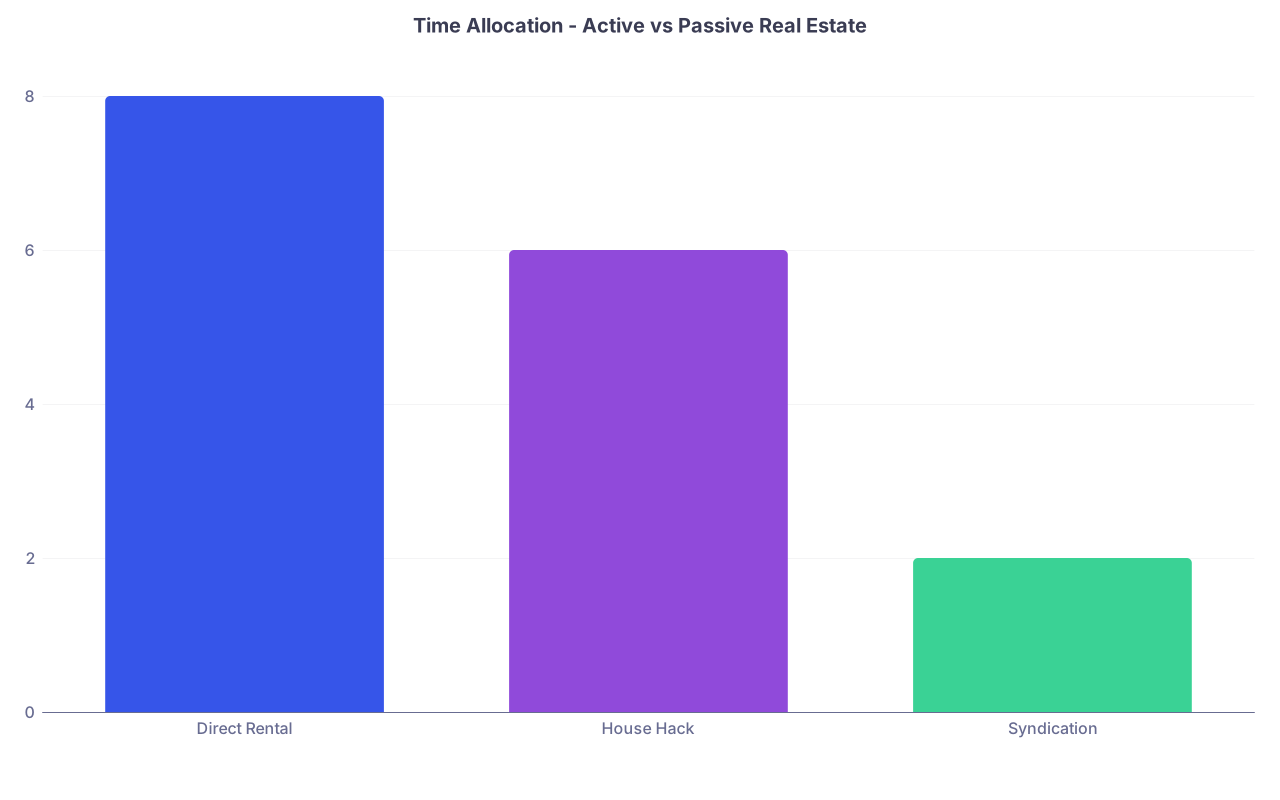
| Category | Value |
|---|---|
| Direct Rental | 8 |
| House Hack | 6 |
| Syndication | 2 |
(The values here are rough monthly hours after setup. Your time is expensive. Act like it.)
Year 4: Optimize, Protect, and Add One More Layer
By Year 4, you should have:
- Stable attending income.
- Either:
- A primary residence you can comfortably afford, or
- A deliberate renter lifestyle.
- At least one real estate asset (direct or passive).
Now the focus shifts to legal structure and tax efficiency. Not buying for the thrill.
Months 37–42: Formalize Your Entity and Protection Structure
At this point you should revisit asset protection with your attorney and CPA together.
Key questions:
- Should your rentals now sit inside:
- A single LLC?
- Multiple LLCs (per property or per group)?
- A parent LLC with subsidiaries?
- Does your state actually provide strong LLC protection, or is it weak and easily pierced?
- Do you need to:
- Update your umbrella coverage.
- Adjust titling for your primary residence.
- Plan for estate implications (e.g., community property states, separate vs joint ownership).
You’re aiming for a simple, scalable setup—not a legal Rube Goldberg machine.
Months 43–48: Intentional Scaling – One Additional Asset Max
If your first investment property or syndication is going well, this is when you’re tempted to sprint.
Resist “I’ve got to catch up” thinking.
At this point you should:
- Allow yourself one additional real estate move in Year 4:
- Another local rental, carefully underwritten.
- A second syndication with a different sponsor for diversification.
- Converting your primary to a rental and buying a new personal residence—only if the old one pencils out as a real rental.
You also tighten operations:
For direct-owned rentals:
- Solid lease templates reviewed by your attorney.
- Clear late fee, communication, and maintenance policies.
- Proper documentation for security deposits and move-in condition.
For syndications:
- Track:
- K‑1s.
- Target vs actual distributions.
- Sponsor reporting quality.
- Track:

This is when a lot of people realize their “passive” deals are actually a tax and document mess. Fix it now, not in Year 10.
Year 5: Turn Random Deals into a Coherent Strategy
By Year 5, if you’ve followed a measured pace, you’ll typically have:
- 1–3 direct-owned properties or
- 2–4 passive investments or
- Some combination of both.
The question now shifts from “What can I buy next?” to “What exactly am I building?”
Months 49–54: Define Your Real Estate Role and Destination
At this point you should answer, in writing:
Is real estate:
- A side allocation (10–20% of net worth)?
- A major pillar (30–50%)?
- A future primary income source?
Do you want to be:
- Mostly passive capital.
- An operator with hands-on control.
- Something in between (small local portfolio with management).
Talk with your spouse or partner as well. I’ve seen real estate blow up marriages because one person quietly turned it into a second business.
You’ll also work with your CPA to:
- Map out:
- Depreciation timelines.
- Expected capital gains.
- Opportunities for 1031 exchanges down the road (not necessarily now).
- Decide:
- Whether to refinance any properties.
- Whether to pay down mortgages faster vs redirect cash into new deals.
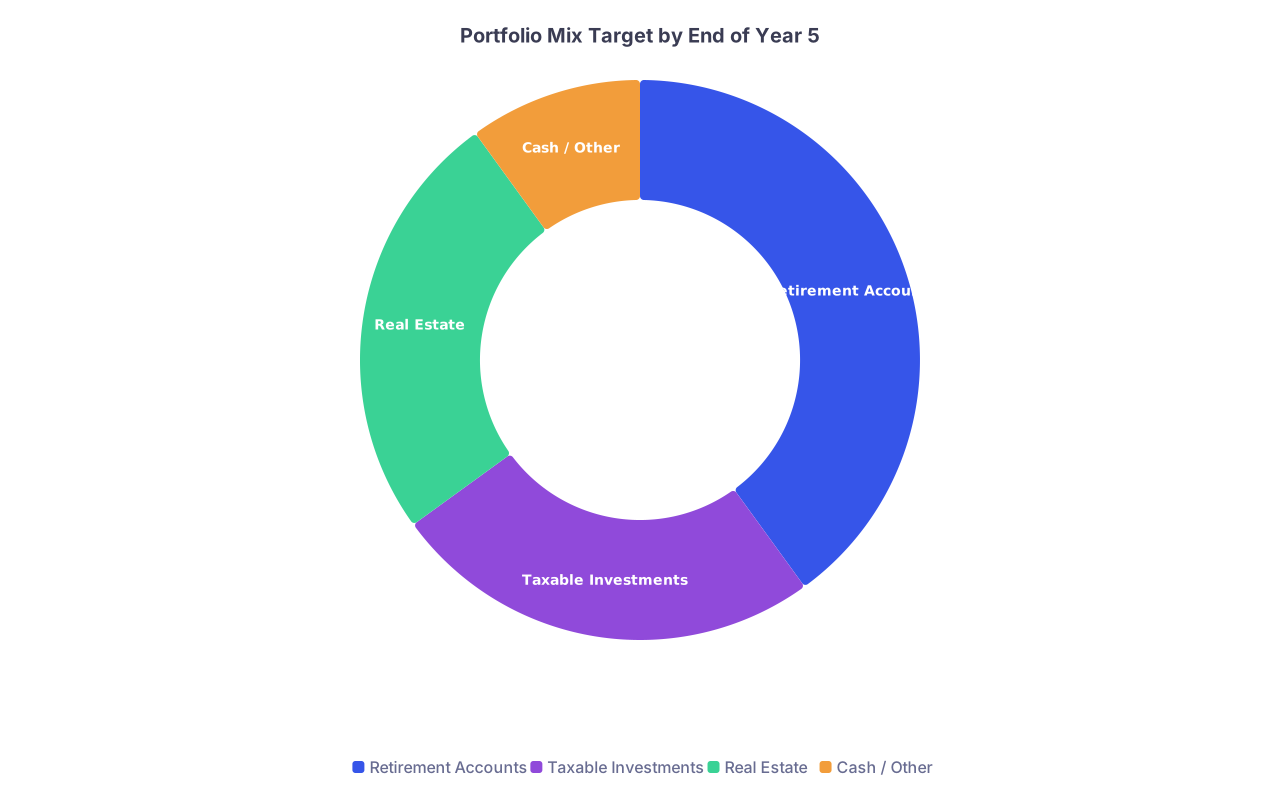
| Category | Value |
|---|---|
| Retirement Accounts | 40 |
| Taxable Investments | 25 |
| Real Estate | 25 |
| Cash / Other | 10 |
Numbers vary, but most physicians are healthiest with real estate as a meaningful minority, not the only asset.
Months 55–60: Systematize – No More One-Off Decisions
By the end of Year 5, the random approach needs to die.
At this point you should build simple investment rules for yourself. For example:
- “I only buy direct rentals within 30 minutes of my home, 1980+ construction, that cash flow at least $200–300/month after conservative reserves.”
- “I limit any single syndication/fund to no more than 5% of my net worth.”
- “Total real estate exposure capped at 30% of net worth unless we’re intentionally transitioning out of clinical work.”
You’ll also standardize:
Recordkeeping:
- Use bookkeeping software (even simple spreadsheets) with:
- Rent received.
- Expenses.
- Capital improvements vs repairs.
- Keep all closing docs and loan statements organized for your CPA.
- Use bookkeeping software (even simple spreadsheets) with:
Legal maintenance:
- Annual review of LLC compliance (registered agent, fees, minutes if needed).
- Update estate documents to reflect property ownership.

By now, your real estate activity shouldn’t feel like chaos. It should feel like a repeatable system you can run with 1–3 hours a month.
Quick Year-by-Year Snapshot
| Year | Primary Goal | Real Estate Action Bias |
|---|---|---|
| 1 | Stabilize career and cash | Observe, learn, no big buys |
| 2 | Decide housing strategy | Conservative home decision |
| 3 | First intentional investment | One simple, well-structured deal |
| 4 | Optimize and protect | Add 1 asset, formalize entities |
| 5 | Systematize and define role | Turn isolated deals into strategy |

Final Takeaways
- Your first 5 years in practice are for stability, not heroics. Delay big real estate moves until your job, location, and cash flow are predictable.
- Legal and tax structure matter more than property count early on. A couple of well-protected, well-documented assets beat a dozen rushed ones.
- By Year 5, you need a written real estate strategy. Clear rules about what you buy, how you own it, and how big you’ll let it get—so real estate stays a tool, not a trap.