
The worst thing you can do with a failed exam attempt in residency interviews is pretend it is a minor footnote. It is not. Programs see it, they care, and they’re waiting to see whether you handle it like a professional or like a kid who got caught.
You’re in the right place if:
- You failed Step 1, Step 2, COMLEX, or an in-training exam
- You have a low first attempt and a much better retake
- You’re dreading the question: “Can you explain what happened with this exam?”
Let’s walk through exactly how to handle this. Not in theory. In the actual chair, in front of the actual interviewer, with your heart rate at 120.
Step 1: Accept That This Will Come Up
Stop hoping they will not notice. They noticed.
Here is the reality:
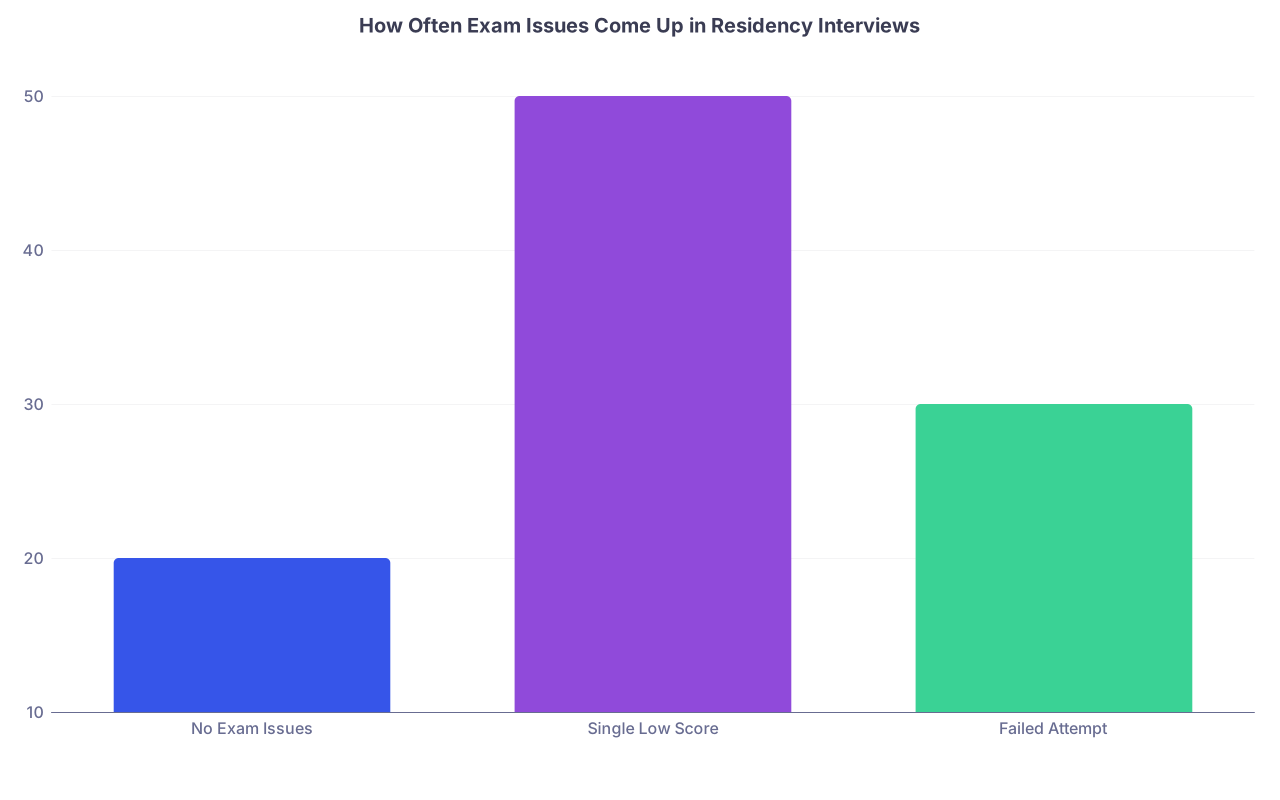
| Category | Value |
|---|---|
| No Exam Issues | 20 |
| Single Low Score | 50 |
| Failed Attempt | 30 |
For a failed attempt, 90%+ of serious programs will ask, directly or indirectly. Sometimes it’s blunt:
- “Tell me about your Step 1 failure.”
- “Walk me through what happened with that first attempt.”
Other times it’s coded:
- “What challenges have you faced academically?”
- “Describe a time you underperformed and what you did about it.”
Do not be surprised. Do not get defensive. Do not give a vague, 45-second ramble. Your posture and your first three sentences matter more than the excuse you think you’re going to give.
Your goal: make them walk away thinking, “They owned it, they learned from it, and it actually reassures me about how they’ll handle residency.”
Step 2: Build a 3–Part Core Story (Before You Ever Walk In)
If you try to improvise this on the spot, you will overshare, under-own, or start sounding like a victim. You need a pre-built, repeatable structure:
- Brief, clear context
- Direct ownership of what went wrong
- Concrete evidence of growth and current readiness
Here is the basic template:
Context (1–2 sentences)
“During [time period], I struggled with [specific, non-dramatic factor]. That showed up on my [exam name], which I failed on the first attempt.”Ownership + adjustment (2–4 sentences)
“That was on me. I relied too much on [X approach] and did not do enough [practice/assessment]. After that, I [specific changes: schedule, resources, support, step-by-step].”Proof of improvement (3–4 sentences)
“On my second attempt, I scored [Y], and since then I’ve [performed X on subsequent exams / honors in core clerkships / strong ITE scores]. Now I use that system for everything high stakes, and it’s made me more disciplined and resilient.”
You’ll tailor it, but don’t reinvent the wheel for each interviewer. One tight narrative, slightly adjusted depending on how they ask.
Step 3: Avoid the 4 Explanations That Sink You
I’ve seen these blow up otherwise solid candidates.
The “everything went wrong in my life” monologue
You list: sick relative, breakup, roommate drama, new job, pandemic, anxiety, car accident. You sound chaotic, not unlucky.Better: pick one relevant factor if it truly mattered, then bring it back to what you controlled. If your list has more than two items, you’re complaining, not explaining.
Blaming the exam, the curve, the NBME, or the system
Interviewers have all heard:
“Step doesn’t reflect clinical skill.”
“The questions were ridiculous.”
“Everyone I know thought that exam was unfair.”Whether or not that’s partially true does not matter. It sounds like deflection. Hard stop.
Over-medicalizing your explanation without showing stability
Using “I had anxiety” or “I was depressed” as the entire explanation is risky. Not because programs hate mental health care—they do not—but because they worry about reliability under stress.If you mention mental health, you must also show:
- You sought treatment
- It’s now stable/managed
- Your performance after that clearly improved
Pretending it was “no big deal”
Brushing it off makes you look clueless about competitiveness. A failure is a red flag by definition. Your job is not to minimize it; your job is to show how you addressed it.
Step 4: Craft Your Exact Sentence-Level Answer
Let’s get specific. I’ll give you actual phrasing you can adapt.
Scenario A: Step 1 Fail, Strong Step 2 and Clerkships
“During the dedicated study period for my first Step 1 attempt, I underestimated how much structure I needed. I was doing lots of passive review and not enough timed questions or self-assessment. That was my mistake, and I failed that attempt.
After that, I treated it like a system failure on my part. I built a daily schedule, switched to question-first studying, did weekly NBMEs, and met regularly with our academic support team. On my second attempt, I passed with a [score or ‘comfortable margin’], and that same approach carried into Step 2, where I scored [X]. My clerkship performance since then—especially in [key rotations]—reflects the more disciplined, data-driven way I now prepare for anything high stakes.”
Notice what’s happening: no drama, clear ownership, and strong evidence you’re not the same student who failed.
Scenario B: COMLEX Fail, Retake Pass, Applying ACGME
“I struggled with COMLEX Level 1 initially. I treated it too much like a content memorization exam and not enough like a clinical reasoning test. That approach was on me, and it showed—I failed the first attempt.
I restructured completely: I shifted to heavy question-based learning, scheduled full-length practice exams, and met with a faculty advisor to monitor my progress. I passed on my second attempt and then applied that same strategy to Level 2 and Step 2, where I performed much more in line with my clinical abilities. That experience forced me to tighten my habits, which has actually been useful on rotations where I need to learn efficiently and perform under pressure.”
Scenario C: Personal Circumstances (Used Carefully)
“During the period leading up to my first Step 2 attempt, a close family member had a serious medical issue. I didn’t adjust my timeline or ask for support; I tried to manage everything at once and my studying took the hit. I failed that attempt.
I own that decision. Afterward, I delayed my retake, set clear boundaries with my responsibilities at home, and worked closely with our learning specialist to rebuild a realistic schedule. I passed comfortably on the second attempt, then went on to [strong clerkship performance / solid ITE scores]. The bigger lesson for me was being honest about my limits and planning proactively, which is something I’ve already applied on busy clinical services.”
The key: the personal issue explains context, but your decisions are still yours.
Step 5: Back Your Story With Data, Not Vibes
Programs are pattern-recognition machines. They want to know: does this failure predict future problems?
You counter that with a visible trend.
| Metric | Before Failure | After Failure |
|---|---|---|
| Step/COMLEX Score | Failed | Passed + Higher |
| Shelf Exams | Pass | Mostly High Pass/Honors |
| ITE (if resident) | Below Avg | At or Above Avg |
| Clinical Evaluations | Inconsistent | Consistently Strong |
You should be ready to point to specific things like:
- “My Step 2 went from a fail to a [240/250/260/etc.].”
- “After that, I honored 4 of my 6 core clerkships.”
- “My most recent ITE percentile was [X].”
- “Faculty have commented on my preparation and reliability, especially after that turning point.”
If your numbers are still not amazing, you lean harder into the behavioral change:
- New systems
- New habits
- Stable, consistent performance (no further dips)
Do not just say, “I learned how I study best.” That sentence is empty on its own. Show what changed and how it shows up day-to-day.
Step 6: Prepare for the Follow-Up Questions That Sting
Interviewers who are actually thinking will not just nod and move on. They’ll push.
Common follow-ups and how to handle them:
“How do I know this will not happen in residency?”
Do not get defensive. They’re asking the right question.Example answer:
“Fair question. What’s different now is that I no longer rely on last-minute pushes or vague plans. I use a structured system—weekly planning, question-based learning, and regular self-checks. Since that failure, I’ve had [no further exam failures / consistently solid performance], and I’ve handled high-volume rotations without missing deadlines or dropping tasks. The same systems I built for these exams are how I’ll approach in-service exams and day-to-day work in residency.”
“Was this a knowledge issue or a test-taking issue?”
Be honest, but do not hide behind “test anxiety” alone.
“It was a mix, but mostly process. I knew a lot of content, but I wasn’t practicing under timed, exam-like conditions, and I was weak in applying concepts. I fixed that by doing timed blocks, reviewing missed questions in detail, and closing specific knowledge gaps. My improvement on the retake and later exams reflects that shift.”
“If you could go back, what would you do differently?”
They’re testing insight, not regret.
“I would have treated the first attempt like a high-stakes project from day one—with clear milestones, practice exams, and feedback from others—rather than trusting that ‘studying every day’ was enough. I also would have been more honest with myself about what wasn’t working. That’s exactly what I do differently now.”
Step 7: Match Your Body Language to Your Words
You can have the perfect script and still blow it with your face, tone, and posture.
A few non-negotiables:
- Do not fidget or laugh nervously when they mention the fail. Straight face, calm tone.
- Do not sigh or roll your eyes when talking about the exam itself.
- Maintain eye contact when you say “That was on me” or “I failed that attempt.” That moment sells your maturity.
- Keep your answer 60–90 seconds. Past 2 minutes, it starts to feel like a therapy session or a legal defense.
Practice this out loud to another human. Not just in your head.
Step 8: Integrate the Failure Into Your Broader Story
Your failed exam is not a separate universe; it should connect to your larger “who I am as a resident” narrative.
Example of integration:
- You emphasize being systematic and reflective throughout the interview.
- Your exam story shows how you built those traits under pressure.
- Your clinical examples show you applying that same mindset with patients and teams.
So if you say:
“I’m someone who takes feedback seriously and iterates quickly.”
That should echo:
- In how you describe your failure story (feedback from academic support, changed method)
- In how you describe growth on rotations (responding to attending feedback, improving performance)
The failure becomes the turning point, not the anchor around your neck.
Step 9: Handle Multiple Interviewers Asking the Same Thing
On a long interview day, three people may ask a version of “What happened with your exam?” You don’t need three different stories. You need one consistent spine with slight variations:
- First time: full 60–90 second structured answer.
- Second time: shorter version, focusing more on what you changed.
- Third time: brief and anchored in how you’re performing now.
Example progression:
1st interviewer: Full story.
2nd interviewer: “You may have seen on my application that I failed Step 1 on my first attempt due to poor study structure. I overhauled my approach—question-first, scheduled assessments—and passed on the next try, then did much better on Step 2. That system is what I use now for any high-stakes task.”
3rd interviewer: “I had one failed exam early on, which I learned a lot from. Since then my performance has been consistent—solid Step 2, strong clerkship evaluations—and I’ve built reliable systems I’d bring into residency.”
Consistency builds trust. Wildly different explanations do not.
Step 10: Practice With a Realistic Prep Flow
Do not just read this and assume you’re done. Build a quick practice loop.
Here is a simple, ruthless prep plan:
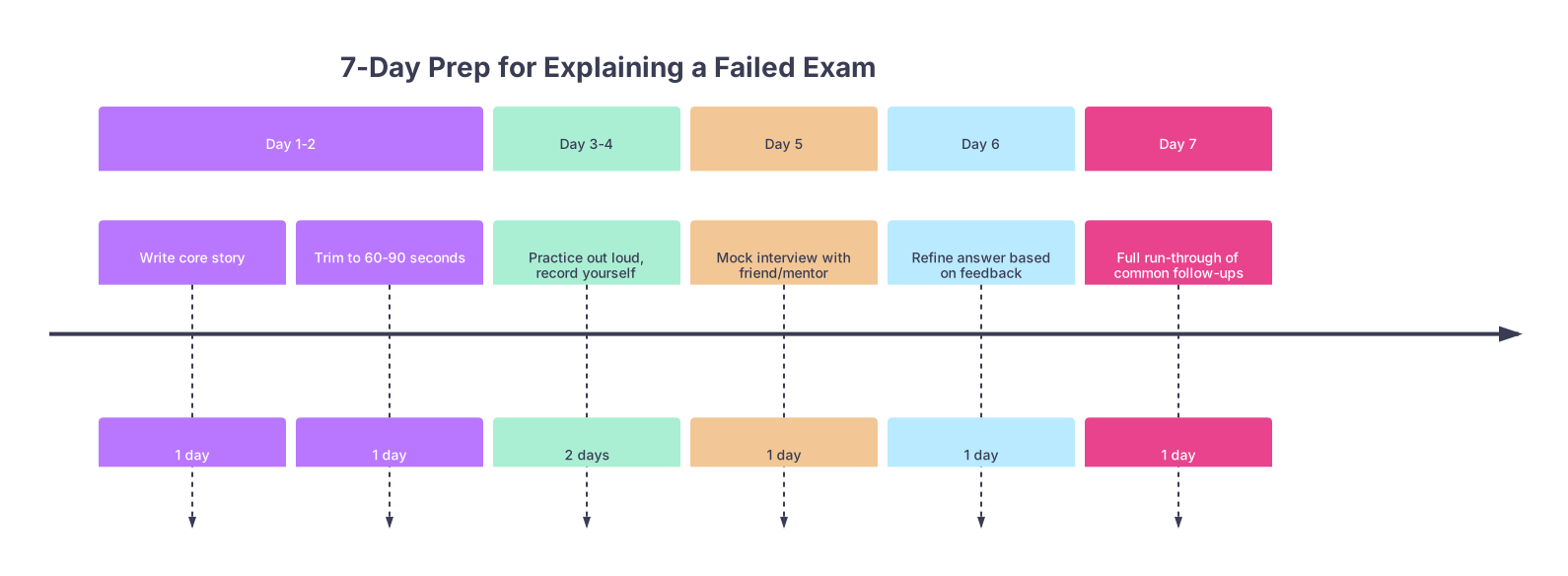
| Period | Event |
|---|---|
| Day 1-2 - Write core story | 1 day |
| Day 1-2 - Trim to 60-90 seconds | 1 day |
| Day 3-4 - Practice out loud, record yourself | 2 days |
| Day 5 - Mock interview with friend/mentor | 1 day |
| Day 6 - Refine answer based on feedback | 1 day |
| Day 7 - Full run-through of common follow-ups | 1 day |
And track your comfort level:
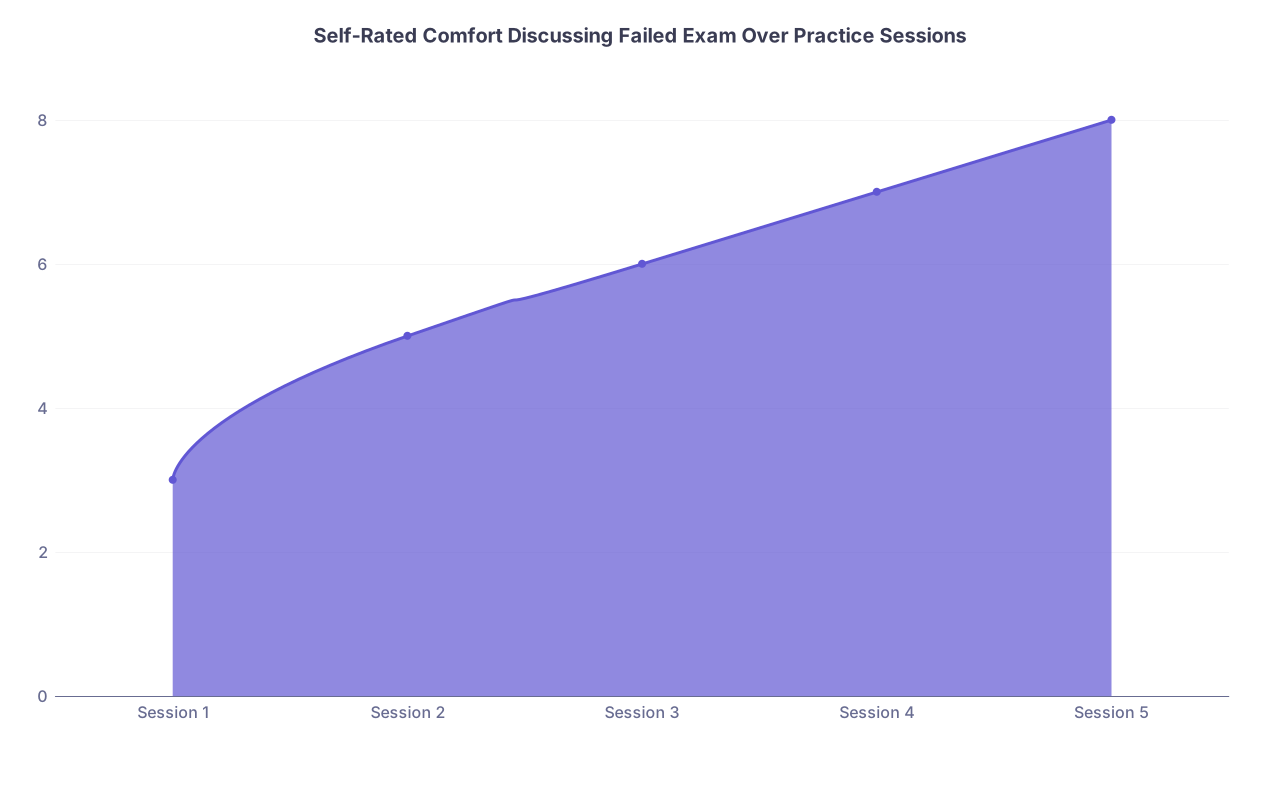
| Category | Value |
|---|---|
| Session 1 | 3 |
| Session 2 | 5 |
| Session 3 | 6 |
| Session 4 | 7 |
| Session 5 | 8 |
If you feel “a little sick” every time you start the story, that is fine. If you sound defensive, confused, or embarrassed after 3–4 reps, you need feedback—from someone who will actually tell you the truth.
Step 11: Special Case – Multiple Exam Issues
If you have more than one exam problem (e.g., Step 1 fail + Step 2 low pass, or COMLEX + an in-training mess), you cannot explain each one separately. That sounds like multiple disasters.
You frame it as a single arc:
“I had a rocky start with high-stakes exams. My Step 1 was a fail, my initial COMLEX score was not where I wanted it. The underlying issue was the same: I relied too much on passive review and didn’t use objective feedback to guide my studying.
Once I recognized that pattern, I rebuilt my approach: structured schedules, heavy question-based practice, frequent self-assessment, and accountability check-ins. Since making those changes, I’ve had [no further failures / clear upward trend] and much more consistent clinical performance. I’m not proud of where I started, but I am proud of how I responded and the systems I’ve built from it.”
You own the pattern, not just isolated events. Then you show it’s been corrected.
Step 12: Know When To Stop Talking About It
Once you’ve answered clearly and confidently, let it go. Do not:
- Circle back again and apologize at the end of the interview.
- Mention it in your “anything else you want us to know?” answer.
- Bring it up again in your closing statement “just to reassure you.”
Over-explaining screams insecurity.
Your job is to answer the question professionally, show growth, then spend the rest of the interview proving who you are now—a reliable, trainable future colleague.
Bottom Line
- Own it fast, explain it briefly, prove you fixed it.
- Back your story with a clear upward trend—scores, clerkships, evaluations, behavior.
- Practice until your explanation is calm, consistent, and boringly professional—then move on and let the rest of your strengths carry you.