
It’s late September. Your first residency interview invite just hit your inbox while you’re half‑asleep scrolling your email. You’re excited for about 20 seconds… then your stomach drops.
“I have no idea how many mock interviews I’m supposed to do. One? Ten? With who? Faculty? Friends? Reddit strangers?”
Here’s the answer you’re actually looking for, not the vague “it depends” nonsense.
The Short Answer: Your Target Number
You should aim for:
- 3–5 high‑quality mock residency interviews before your first real interview
- With at least 2 full‑length, realistic mocks (full hour, behavioral + “tell me about yourself” + “why this specialty” + ethical/clinical scenarios)
If you want numbers by applicant type:
| Applicant Type | Target Range | Absolute Minimum |
|---|---|---|
| Strong, confident interviewer | 2–3 | 2 |
| Average applicant | 3–5 | 3 |
| Anxious, weak interviewer or red flags | 5–8 | 4 |
| IMG / non‑traditional / big gap to explain | 5–8 | 4 |
More than 8 full mocks? Diminishing returns for most people. At that point the problem isn’t “not enough practice,” it’s “not fixing what’s going wrong.”
Let’s break down what actually makes sense.
Why 3–5 Mocks Is The Sweet Spot
One mock is better than nothing. But one mock doesn’t show you patterns.
Here’s what each of those 3–5 is doing for you:
Mock #1 – Baseline reality check
You figure out:- Do you ramble?
- Are your “tell me about yourself” and “why this specialty” answers a mess?
- Do you say “um” every third word?
- Do you sound like a human or like you memorized Reddit answers?
Mock #2 – Fixing the obvious problems
After you clean up your worst issues, this one lets you see:- Did your new structure for common answers land better?
- Do your stories actually answer the question?
- Are you clearer, more concise, less robotic?
Mock #3 – Stress-test + consistency
Now it’s about:- Can you be good on a “bad” day (tired, distracted)?
- Do you handle curveball questions without spiraling?
- Are your key stories consistent, natural, and not over‑rehearsed?
Mocks #4 and #5 (if you do them) are usually helpful when:
- You’re very anxious and need more reps to feel calm
- You’re changing specialties, have a leave of absence, low scores, or professionalism concerns
- English isn’t your first language and you want fluency and rhythm, not just content
After ~5, the ROI drops fast unless those interviews are with different types of interviewers giving high‑quality, specific feedback.
The Bigger Question: What KIND of Mock Interviews?
The number only matters if the mocks are actually decent.
Here’s the honest ranking.
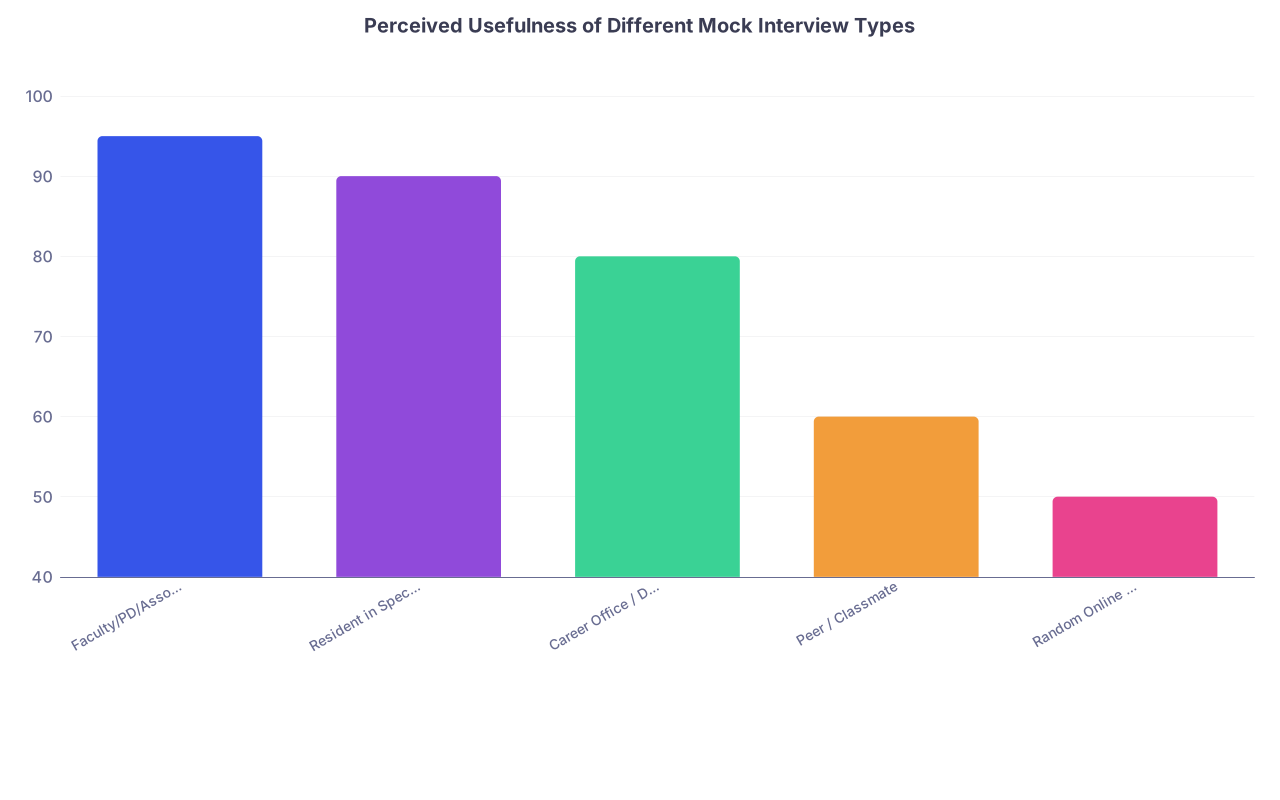
| Category | Value |
|---|---|
| Faculty/PD/Associate PD | 95 |
| Resident in Specialty | 90 |
| Career Office / Dean | 80 |
| Peer / Classmate | 60 |
| Random Online Service | 50 |
Rough hierarchy of value:
Faculty or PD/Associate PD level in your specialty
Best for:- How your answers sound to people who actually decide ranks
- Red flag detection (“Don’t say that. Ever.”)
- Specialty‑specific questions (case questions, ethical dilemmas, “fit” issues)
Residents (especially at target programs or in your specialty)
Great for:- Realistic program culture questions
- “Things people really care about but don’t say out loud”
- Feedback on sounding genuine vs try‑hard
Career office / Dean / professional mock interview service
Useful when:- You don’t have easy access to residents/faculty
- You need basic structure, polish, and behavioral question frameworks
- You want someone experienced at giving feedback
Peers / classmates
Worth doing, but understand the limits. Good for:- Getting reps saying answers out loud
- Timing, basic flow, obvious awkward phrases Not great for:
- Nuanced content or specialty‑specific nuance
Random online services with no real credentials
Mixed bag. Some are decent. Some are a waste of money. If they can’t tell you their background clearly (PD, APD, faculty, recent chief resident, etc.), skip.
How to Structure Those 3–5 Mocks So They Actually Help
Here’s the part most people screw up: they do a bunch of half‑baked, casual “mocks” and then wonder why they don’t feel more prepared.
Your mocks should look like the real day
At least 2 of your mocks should be:
- 25–40 minutes of straight questions
- No stopping for mid‑interview feedback
- Followed by 10–20 minutes of detailed feedback
Simulate:
- You in full interview clothes
- Sitting at a desk, not lying on your bed
- Camera angle like the real Zoom interviews
- No notes visible
Then, ask your mock interviewer to explicitly comment on:
- First impression: “How did I come across in the first 2 minutes?”
- Clarity: “Where did I confuse you or talk too long?”
- Energy: “Did I sound engaged, or flat/tired/over‑rehearsed?”
- Any red flags or weird phrases
When to Schedule Mock Interviews in Your Timeline
You don’t want your first mock the night before your first real interview. You also don’t need to start in June.
This is a simple structure that works for most people:
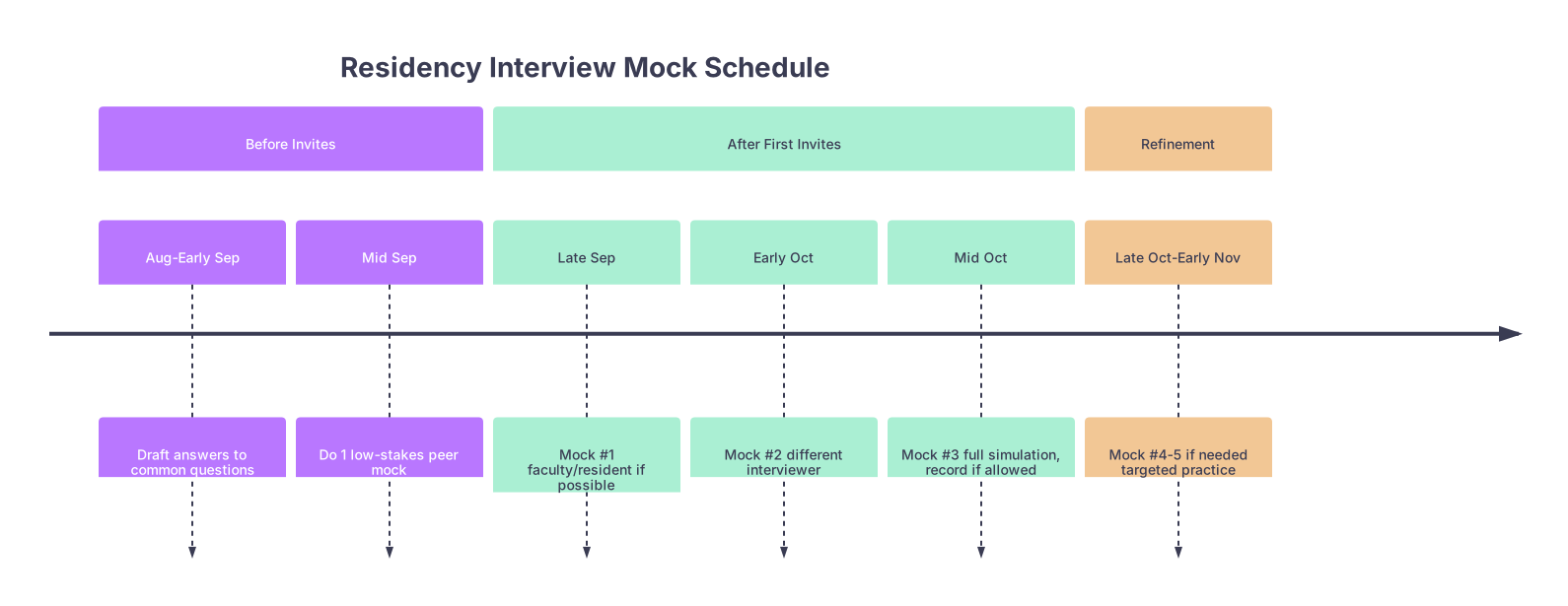
| Period | Event |
|---|---|
| Before Invites - Aug-Early Sep | Draft answers to common questions |
| Before Invites - Mid Sep | Do 1 low-stakes peer mock |
| After First Invites - Late Sep | Mock #1 faculty/resident if possible |
| After First Invites - Early Oct | Mock #2 different interviewer |
| After First Invites - Mid Oct | Mock #3 full simulation, record if allowed |
| Refinement - Late Oct-Early Nov | Mock #4-5 if needed targeted practice |
The key points:
- Do at least one mock before your first real interview invite turns into an actual date.
- Stack most mocks in the 2–3 weeks before your first real interview.
You want to be warming up as you head into the season, not burning out on practice in August and peaking in September.
How to Tell If You Need More Than 5 Mocks
You don’t decide this on vibes. Decide based on data.
You probably need 5–8 mocks if:
Multiple interviewers say:
- You talk in circles or don’t answer the question
- Your stories don’t have a clear point
- You seem stiff, robotic, or like you memorized answers
You:
- Are changing specialties and need to explain your story well
- Have a leave of absence, remediation, or professionalism issue
- Are an IMG or non‑traditional with a complex path
Your recordings (yes, record your mocks if allowed) show:
- Poor eye contact (staring off-screen constantly)
- Flat affect or low energy
- You can’t explain “Why this specialty?” in a crisp, confident way in under 2 minutes
If you’re still getting the same exact feedback after 3 mocks, the fix is not “do 10 mocks.”
The fix is:
- Rewrite key answers
- Practice them out loud on your own
- Get specific coaching (faculty, mentor, someone who has seen a lot of interviews)
What To Actually Practice In Those Mocks
Don’t treat every mock like random question roulette. Be systematic.
You want reps on these buckets:
Core narrative questions
- Tell me about yourself.
- Why this specialty?
- Why our program / city / setting?
- Walk me through your CV.
Behavioral / story questions
- Tell me about a time you had a conflict on the team.
- A time you failed or made a mistake.
- A time you received critical feedback.
- A time you advocated for a patient.
Risk / concern questions
- Can you explain your Step score trend?
- Tell me about your leave of absence / gap.
- I see you switched from [specialty] — what changed?
Ethics / judgment / clinical reasoning (for some fields)
- A time you saw unprofessional behavior.
- What would you do if you strongly disagreed with your attending?
Your questions for them
This is underrated. Practice ASKING:- 3–5 thoughtful, specific questions for faculty
- 3–5 different ones for residents
Your mock interviewer should pressure‑test all of those areas over 3–5 sessions.
Common Mistakes With Mock Interviews (And How Many They Waste)
Here’s where people burn effort:
Repeating the same bad habits because no one’s giving real feedback
→ 10 mocks later, they’re just better at being mediocre.Using only friends who are too nice
→ You come out thinking “That was great!” and it absolutely was not.Doing 8 mocks in 6 days → That’s not deliberate practice, that’s panic.
Turning answers into scripts
→ After mock #7, you sound like an actor doing a monologue. PDs hate that.
If you’re going to invest time, keep it tight:
- 3–5 mocks
- With at least 2 being with people who have actually sat on interview committees or at least recently interviewed in your specialty
- With hard, specific feedback you actually implement
Quick Visual: When More Interviews Help vs. Waste Time
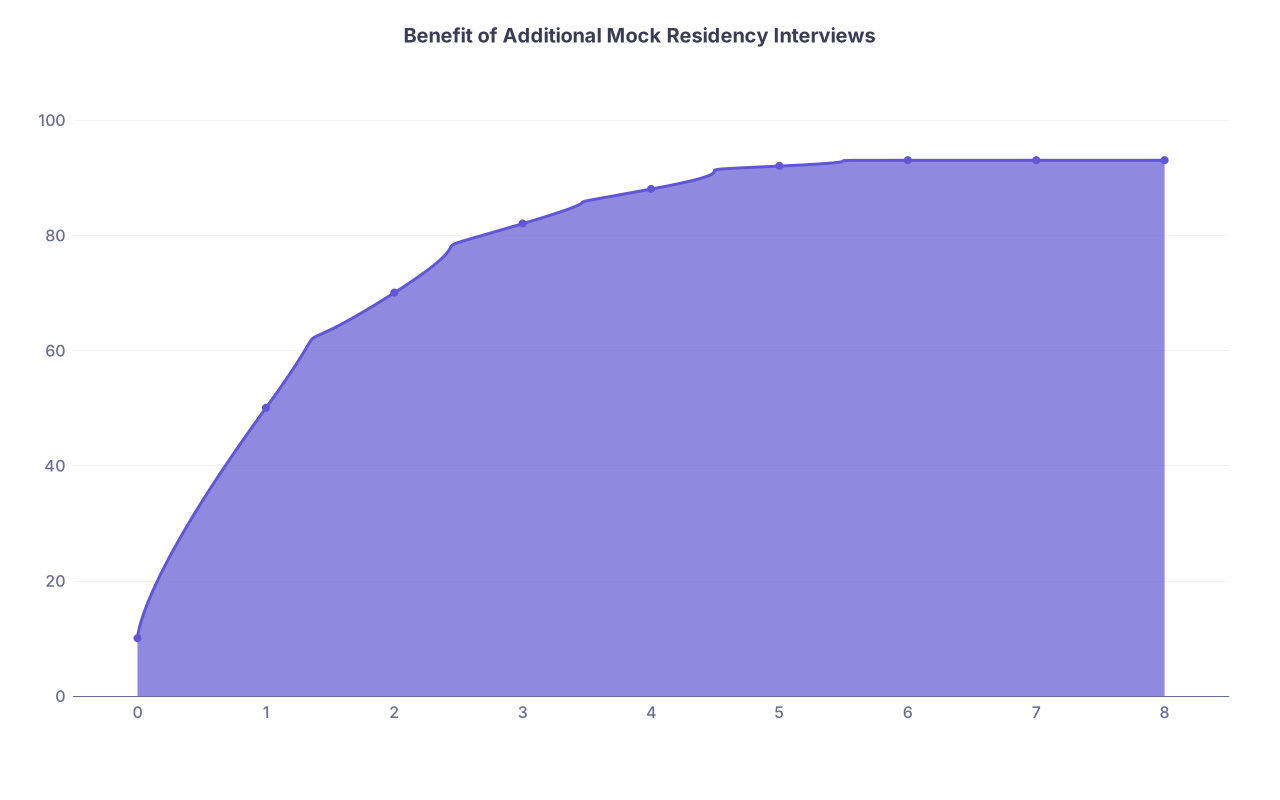
| Category | Value |
|---|---|
| 0 | 10 |
| 1 | 50 |
| 2 | 70 |
| 3 | 82 |
| 4 | 88 |
| 5 | 92 |
| 6 | 93 |
| 7 | 93 |
| 8 | 93 |
You can see the pattern:
- Huge jump from 0 → 2
- Solid gains until ~5
- Past that, you’re mostly polishing edges
How To Get High‑Yield Mock Interviews If Your School Isn’t Great About It
Not everyone has a powerhouse advising office or eager faculty.
Here are realistic options:
Email recent grads in your specialty
Subject line: “Quick mock interview before my [specialty] season?”
Keep it short. Ask for 30 minutes. Many will say yes because they remember the pain.Ask your sub‑I attendings or chiefs
“Would you be willing to do a brief mock interview with me before my interviews start? Even 20 minutes would help.”
They’ve seen what lands well in real interviews.Zoom peer group with structure
Three students, rotate:- 1 interviewer
- 1 interviewee
- 1 observer giving feedback
Use actual question lists, time answers, and be brutally honest.
Professional services / your school’s career office
They can at least give you:- Baseline structure
- Repetitions with behavioral questions
- General feedback on presence and polish
Final Check: Are You Ready To Stop Mocking and Start Doing?
You’re probably ready after 3–5 mocks if:
- You can answer “tell me about yourself” and “why this specialty?” clearly, under 2 minutes, without sounding scripted
- Different interviewers are giving smaller, more nuanced feedback, not “you’re confusing” level problems
- You feel a little nervous but not panicked going into practice
- Your stories have a clear structure: context → what you did → outcome → what you learned
If all that’s true, stop collecting mock interviews like Pokémon. Start trusting your reps and focus on sleep, logistics, and reading about programs.

FAQ: Mock Residency Interviews
1. Is one mock residency interview enough?
Usually no. One mock is better than nothing, but it only tells you what went wrong once. Patterns (like rambling, unclear stories, low energy) show up across multiple attempts. That’s why 3–5 mocks is the realistic target for most people.
2. Should I do a mock interview before every single real interview?
No. That’s how you burn out and start sounding scripted. You don’t need a fresh mock before each program. Do your 3–5 solid mocks early in the season, then occasionally add one more if:
- You had a truly bad real interview and want to reset, or
- You’re changing how you answer certain questions and want to test the new version.
3. How long should a mock residency interview be?
Aim for 30–40 minutes of questions plus 10–20 minutes of feedback. Anything under 20 minutes of questioning usually doesn’t expose enough of your patterns; anything longer than an hour is overkill for both of you and starts to feel artificial.
4. Is it okay to use notes during mock interviews?
For early practice, sure—have bullet points nearby while you’re learning your own stories. But at least the last 2 mocks should be done exactly like the real thing: no visible notes, no reading from a document. If you can’t do it without notes in a mock, you won’t magically do it live.
5. How do I know if my mock interview feedback is good or bad?
Good feedback is:
- Specific (“You never actually answered why you chose EM, you just listed what you like about it.”)
- Behavior‑based (“You talk for 4–5 minutes per answer; aim for 90 seconds–2 minutes.”)
- Actionable (“For that story, start with the conflict, then explain your role, then the outcome.”)
Bad feedback is:
- Vague (“You were fine!” or “Just be confident.”)
- Personality‑based (“You should try to be more funny.”)
- Contradictory with no explanation
If all you’re getting is “You seem great, keep doing that,” it doesn’t justify doing more mocks with that person.
Today’s next step:
Write down your interview timeline and plug in three mock interview slots over the next 2–3 weeks. One with a peer, one with a resident or faculty if you can swing it, and one full simulation. Put them in your calendar now, before you get buried in real interview dates.