
The way most people prep for residency interviews does not work if you’re couples matching.
If you try to prepare like you’re each solo applicants, you will miss key questions, give conflicting stories, and accidentally tank your joint chances at programs that might have ranked you high—individually.
Let’s fix that.
You’re not just interviewing as two applicants. You’re interviewing as a package deal with constraints, tradeoffs, and a story that programs are quietly dissecting. I’m going to walk you through how to prep so:
- You sound coordinated without sounding rehearsed
- Programs believe you’ll actually honor the couples match (and not blow up their rank list)
- You keep options open without sabotaging your partner
This is the playbook I wish more couples had before interview season.
1. Get Your Joint Story Straight Before You Touch Any Prep
If you start rehearsing answers before you agree on your story, you’ll trip over each other later.
You need three things locked in early:
- Your couples “headline”
- Your geographic priorities
- Your realistic backup scenarios
A. Build a clear couples “headline”
This is the 1–2 sentence summary you both can say, separately, to any interviewer:
- Who you are as a couple
- What you’re trying to accomplish together
- How couples match affects your preferences
Example of a weak, vague answer I hear all the time:
“We’re couples matching because we’d like to be in the same city, but we’re flexible.”
That tells programs nothing. They’ve heard that sentence 400 times.
Better versions:
For a high-priority city:
“We’re couples matching with the goal of training in the Northeast, ideally within commuting distance of Boston. We’ve constructed our lists so that if one of us matches at a strong program here, the other is prepared to rank a range of options nearby to stay together.”For specialty-driven priorities:
“We’re couples matching Internal Medicine and OB/Gyn. We’ve prioritized programs that are strong in both fields and in cities where there are multiple good options in our specialties, so we can stay together without compromising our training quality.”
You both need to be able to say this in your own words, but the content must match.
B. Have the awkward geography talk early
Sit down with a calendar and a map. No phones. No pretending you’re “open to anything” when you’re not.
You should each answer, then compare:
- Top 3 cities or regions
- Cities that are “no way” (family, cost, safety, whatever your reasons are)
- How far apart you’d realistically be willing to live (same city only? same metro? 1–2 hour drive?)
Then translate that into something coherent you can say out loud to a PD:
Wrong way to say it:
“I mean, we’d prefer the West Coast, but we’re really open.”
Better:
“We’ve prioritized the West Coast because of family and support systems, but we’ve both applied broadly in [these other regions] and structured our couples list to keep us together rather than chasing a single ‘dream’ program.”
If what you’re really going to do is choose geography > program prestige, then say it in a professional way. Programs want to know you aren’t going to surprise them on rank day.
C. Decide your hard “no” scenarios together
You need private clarity (not for the interview room) on questions like:
- Would either of you ever rank a place where the other has almost no options?
- Would you ever rank a scenario where you match and your partner doesn’t?
- Who is more flexible on program reputation vs location?
You don’t tell interviewers all that detail, but your answers about priorities will sound much more grounded and believable if you two actually agree.
2. Coordinate Your Core Answers: Same Spine, Different Flesh
You don’t want to sound scripted. But you absolutely cannot give:
- Conflicting geography stories
- Conflicting priorities
- Conflicting timelines of how you planned this
So you build a “same spine, different flesh” model.
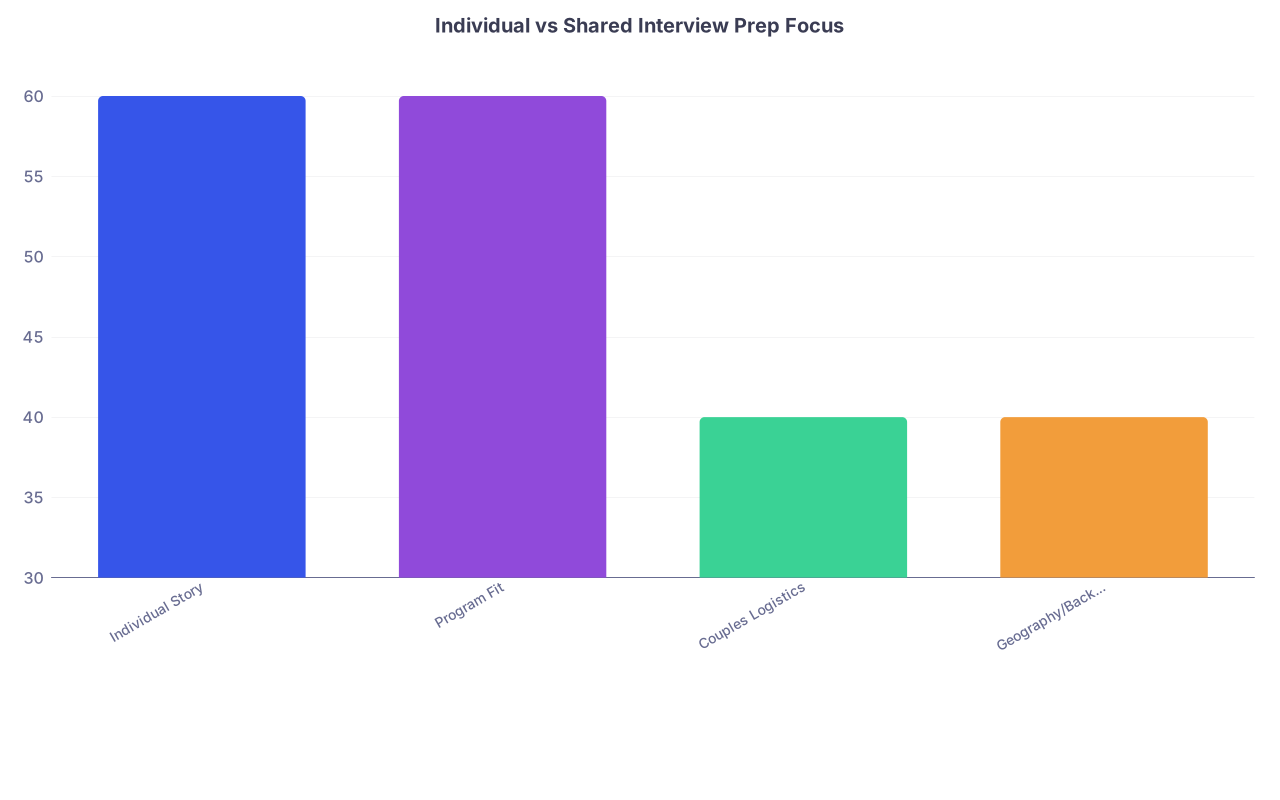
| Category | Value |
|---|---|
| Individual Story | 60 |
| Program Fit | 60 |
| Couples Logistics | 40 |
| Geography/Backup Plans | 40 |
A. Questions you must align on
You should sit together and literally answer these out loud, then tweak until they line up:
- “Why did you decide to couples match?”
- “How are you thinking about geography?”
- “How will you build your rank list together?”
- “What happens if one of you gets more competitive options than the other?”
- “What matters more to you—being at a specific program, or being together?”
If one of you says, “Being together is the priority,” and the other says, “We each want the best possible training even if that means distance,” you’re done. Programs will smell that contradiction immediately.
You want same message, different voice.
Example alignment:
Partner A (IM):
“We decided to couples match because we’ve been together throughout medical school, and we know we do our best when we have that support. At the same time, we’re both serious about our training, so we targeted cities and programs where we’d both be happy independently and together.”
Partner B (Peds):
“Couples matching for us is about balancing support and training. We didn’t chase just one ‘dream’ program. Instead, we applied to cities where there are strong options in both Internal Medicine and Pediatrics, so that wherever we match, we’re both in good programs and in the same area.”
Same spine. Different phrasing. Consistent priorities.
B. Decide who’s “flexible” and how you talk about it
Almost every couples pair has one person whose specialty is more competitive or more geographically flexible.
You need to control the story, or programs will make up an unflattering one.
Rather than:
“Well, honestly, my partner is more competitive, so we’re kind of following them.”
Use something like:
“We’ve talked very openly about flexibility. In our specialty pair, there are more high-quality options in [my partner’s] field in most cities, so I’ve been more flexible in where I apply and what I’m willing to rank to keep us together. We’re approaching this as a joint decision, not one person dragging the other.”
That shows maturity and planning instead of desperation.
3. How to Talk About the Couples Match Without Sounding Like a Walking Red Flag
Programs worry about couples. They worry you’ll rank in bizarre ways and leave them with an unfillable hole. Your job in the interview is to lower that anxiety.
Here’s the mental model:
Your answers should signal: “We are stable, realistic, and we understand how this process works.”
A. When they ask directly: “How are you handling the couples match?”
Your answer needs three components:
- You understand how the algorithm works
- You’ve already talked through your strategy
- You’re not using the couples match to pressure programs
Example:
“We understand that couples match doesn’t give us an advantage—it just links our lists. So we approached it with a lot of realism. We applied broadly in overlapping regions, we’ve discussed how to rank different combinations, and our priority is to stay together in programs that are a good fit for each of us individually. We’re not expecting special treatment—we just want to use the system thoughtfully.”
That single answer tells them: we’re not naïve, we’re not entitled, and we’re not chaos.
B. When they don’t ask directly (but you need to bring it up)
You should almost always mention it at least once in each interview day—briefly, naturally.
Good spots:
- When they ask about geography or “other factors” in your decision
- When they ask, “Anything else you want us to know?”
- When they ask, “Where else are you looking?”
Sample insertion:
“One factor that matters for us is that we’re couples matching. My partner is applying in Emergency Medicine, also in this region. We’ve tried to focus on cities that offer strong options for both of us, and this program is high on that list.”
Short. Clear. Not begging.
Do not turn every answer into “I’m couples matching! Please interview my partner!” That gets old fast.
C. If your partner doesn’t have an interview at that program (yet or at all)
This comes up a lot. Handle it calmly.
If asked directly:
“Is your partner interviewing here too?”
Options:
If they have an invitation:
“Yes, they’re scheduled to interview here on [date]. We’re both really excited about the possibility of training in the same institution or at least the same city.”If they applied but haven’t heard:
“They applied here but haven’t heard back yet. We both knew that with couples matching, our interview patterns might not fully align. We still felt it was important to each apply to strong individual programs, then see how the options line up when we rank.”If they didn’t apply:
“Our specialty combinations didn’t overlap well here, so my partner didn’t apply. We still saw strong individual fit for me, so I was encouraged to apply independently and keep this as a possible option on our list.”
Stable. Non-needy. You’re not pressuring them to “also interview my partner.”
4. Logistics: Calendars, Schedules, and Avoiding Self-Sabotage
Coordinated interview prep is not just talking points. It’s logistics.
The couples who implode tend to:
- Double-book key dates
- Cancel interviews impulsively
- Forget to communicate changes to each other
Get ahead of that.
A. Build a shared interview tracker
One Google Sheet or Notion board. Color-coded by:
- Program
- City
- Specialty
- Interview date
- Status (Invite, Waitlist, Completed, Declined)
| Column | Description |
|---|---|
| Program Name | Hospital/Institution |
| City/Region | Location |
| Specialty | IM / EM / Peds, etc. |
| Date | Interview date |
| Status | Invited/Booked/Done |
You should both know, at a glance:
- Where your overlaps are
- Where one person is “carrying” the city options
- Which backups exist in each region
That informs how you talk in interviews about geography and fit.
B. Coordinate how you talk about specific cities
Let’s say you both have multiple interviews in Chicago and only one random one in Phoenix.
In Chicago interviews, you can say with confidence:
“We’re couples matching, and Chicago is one of our top regions because we both have several strong options here.”
In Phoenix, be more measured:
“Phoenix is on our list because [reason—family, climate, training strengths]. We’re couples matching, and I’m still waiting to see how our full set of interviews lines up, but this is certainly a city we’re seriously considering.”
You don’t need to pretend every city is #1. You do need not to lie.
5. Practice the Hard, Awkward Questions Out Loud
Alone, you can sometimes wing it. As a couple? You really cannot.
Here are the questions you should rehearse like you’re preparing for OSCEs. Individually, then together (listening to each other’s answers).

| Step | Description |
|---|---|
| Step 1 | Agree on priorities |
| Step 2 | Align core answers |
| Step 3 | Build shared tracker |
| Step 4 | Mock interviews solo |
| Step 5 | Mock interviews together |
| Step 6 | Refine answers and strategy |
Question set:
- “What will you do if you don’t match to the same city?”
- “What if one of you matches your dream program and the other would need to be at a less competitive place nearby?”
- “Are you ranking this program higher because of your partner’s options, or on its own merits?”
- “If we only had a spot for one of you, how would that affect your ranking?”
- “What matters more: your ideal specialty match, or staying together?”
You do not have to fully spill your private ranking logic. But you need answers that sound like you’ve actually thought through reality.
Example for the dreaded “only one spot” question:
“I’d rank based on overall fit and the strength of training, but in the context of the couples match. We’re not trying to game the system. We’re building a list that keeps us together in places where we’re both getting solid training. If this program ended up on our list, it would be because we both see it as a strong option in that city ecosystem.”
You neither promise eternal loyalty nor sound totally self-centered.
6. Doing Mock Interviews As a Couple (Without Being Weird)
You won’t be interviewed together by programs (almost never), but you should still prep together.
Here’s how:
A. Alternate roles: candidate, interviewer, observer
Do this at home:
- Partner A = candidate
- Partner B = interviewer
- Then you switch
- Occasionally, record and watch
What Partner B listens for:
- Is our geography story consistent?
- Did they accidentally oversell or undersell our flexibility?
- Did they say something that contradicts what I’m planning to say?
Then give specific feedback.
Not: “That sounded weird.”
Instead:
“When you said, ‘We’ll go wherever I get in,’ it made it sound like you’re dragging me along. Can we rephrase that as, ‘We targeted programs and regions where we’d both be happy’?”
B. Practice the “Tell me about yourself” with couples context
You’re still an individual. But your partner exists in your life, and it’s okay to mention them naturally.
Example:
“I’m a fourth-year at [School], originally from [place]. I’m applying in Psychiatry, and over the last few years I’ve been especially drawn to [specific interest]. Outside of medicine, my life is pretty anchored by my partner—we’ve gone through med school together and we’re couples matching this year—plus [hobby].”
Normal. Human. Not “Hi, I am one half of a medical dyad.”
7. Post-Interview Communication When You’re Couples Matching
This part gets messy if you aren’t careful. You must not sound like you’re trying to extort a program into ranking both of you first.
A. Thank-you emails: mention couples matching once, if relevant
If the program asked about it or it came up naturally, you can reference:
“Thank you again for the opportunity to interview at [Program]. I especially appreciated our conversation about training in [region]. As I mentioned, my partner and I are couples matching, and we’re both very enthusiastic about the possibility of being in [city]. This interview reinforced for me that [Program] would be a particularly strong fit.”
That’s it. Don’t ask them to “also interview my partner” unless they explicitly invited that discussion.
B. If a program asks where you’ll rank them
They sometimes do, directly or indirectly.
As a couples pair, you really need to avoid lying here. The couples algorithm can bite you hard if you make promises you don’t keep.
Acceptable version:
“This program will be ranked very competitively on our list. Where it falls exactly depends on how our full couples options line up—for both of us—but it’s absolutely among the programs we’re most seriously considering.”
You’re signaling interest without writing a verbal contract you can’t honor.
8. Data Reality Check: How Much Does Being a Couple Change Things?
You’re not imagining it. Being a couple changes your odds profile.
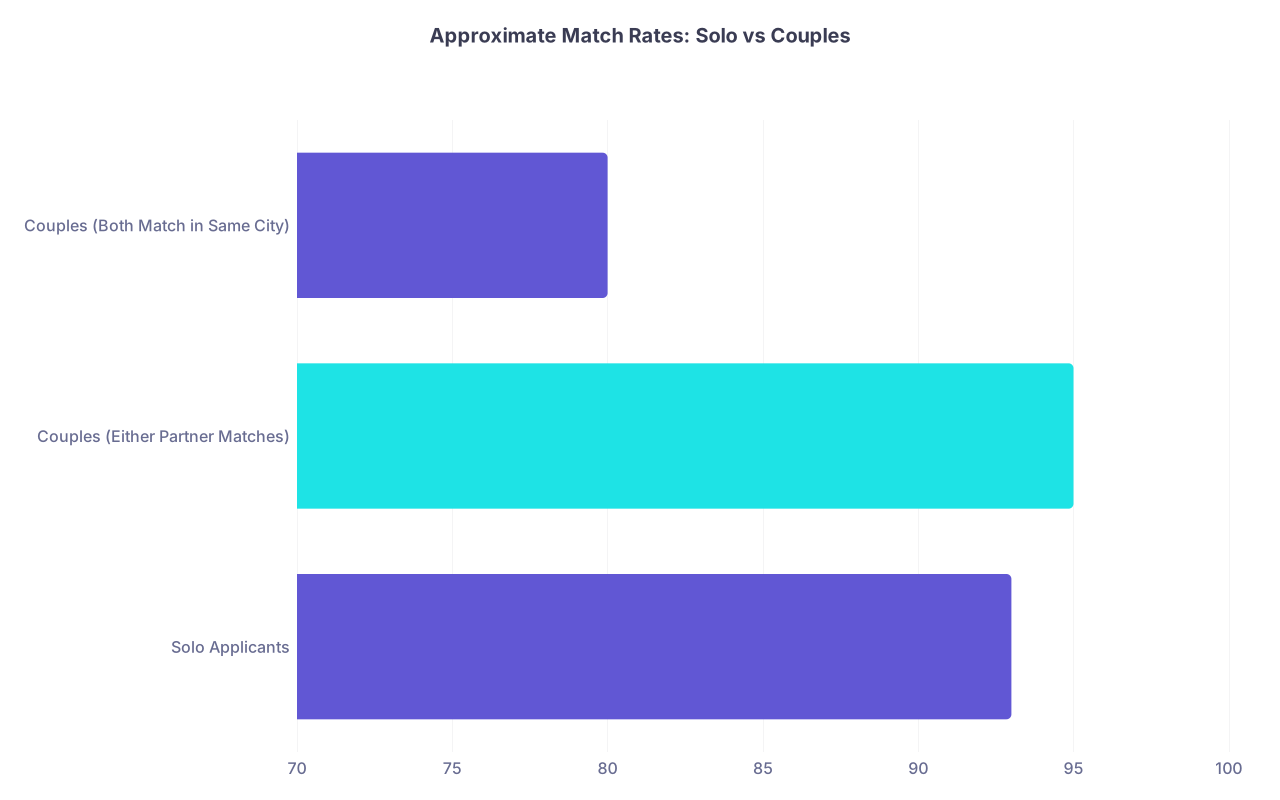
| Category | Value |
|---|---|
| Solo Applicants | 93 |
| Couples (Either Partner Matches) | 95 |
| Couples (Both Match in Same City) | 80 |
These aren’t exact NRMP official bins, but they capture the reality:
- As a pair, odds that at least someone matches are slightly higher
- Odds that you both match in the same place/region are meaningfully lower than solo matching
That’s why interview prep matters more for couples. You’re constantly trying to convince programs of two things at once:
- “I’m a strong individual candidate.”
- “We, as a couple, are not a ranking-risk headache for you.”
You have to carry both messages every time you open your mouth.

9. Red Flags to Avoid in Your Answers (That I’ve Heard Verbally Sink Couples)
These will poison your interviews fast:
“We’ll just figure it out after Match Day.”
Translation to programs: they have no idea what they’re doing.“Honestly, I’d probably choose this program even if it meant long-distance.”
Translation: this person will rank us high even if the couples list makes their partner miserable.“My partner is kind of following my lead.”
Translation: one-sided, unstable situation.
Better phrasing for the last one:
“We’re both approaching this collaboratively. My field tends to have more options in most cities, so we’ve planned for me to be a bit more flexible with location so we can stay together while both getting strong training.”
Short, grown-up, and respectful to your partner.
10. A Simple, One-Week Joint Prep Plan
If you’re a “just tell me exactly what to do” person, here is your bare-minimum one-week plan.
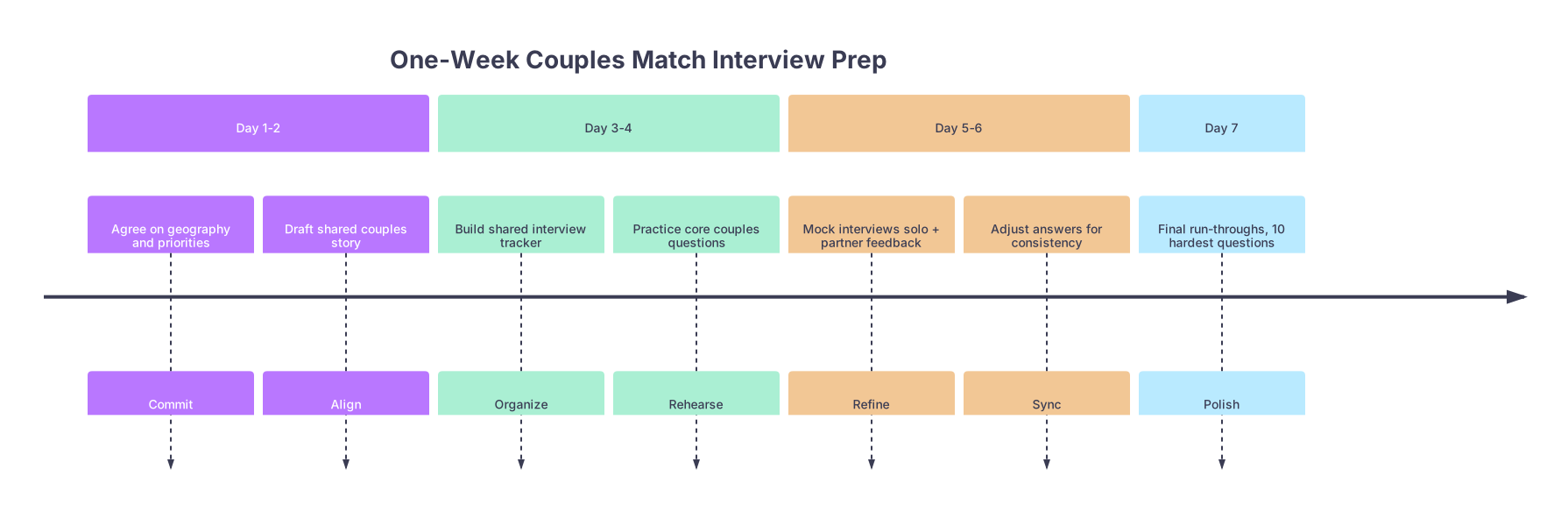
| Period | Event |
|---|---|
| Day 1-2 - Agree on geography and priorities | Commit |
| Day 1-2 - Draft shared couples story | Align |
| Day 3-4 - Build shared interview tracker | Organize |
| Day 3-4 - Practice core couples questions | Rehearse |
| Day 5-6 - Mock interviews solo + partner feedback | Refine |
| Day 5-6 - Adjust answers for consistency | Sync |
| Day 7 - Final run-throughs, 10 hardest questions | Polish |
Day 1–2
Sit down, no distractions. Agree on geographic tiers, flexibility, and a one-sentence couples headline. Write it out. Both of you.
Day 3–4
Build your tracker. Start practicing the couples-specific questions out loud. Record one practice each.
Day 5–6
Mock interviews with each other. Two sessions each:
- One focused on your individual story
- One focused on couples + logistics questions
Day 7
Pick the 10 hardest, most uncomfortable questions (from earlier sections). Answer them rapid-fire, timing yourself. Your answers should be confident and under 90 seconds.
Do this, and you will be significantly more coordinated than the average couples pair walking into interviews.

FAQ (Exactly 3 Questions)
1. Should we tell every single interviewer that we’re couples matching?
Yes, but briefly and naturally. You do not need to open with it, and you definitely should not center every answer around it. Mention it once when it fits—the geography question, “other factors” question, or the closing “anything else we should know?” Programs hate surprises on rank list day. A calm, matter-of-fact mention signals maturity, not neediness.
2. What if my partner’s application is clearly weaker—will talking about couples matching hurt me?
It can, if you frame it badly. Don’t apologize for your partner or overshare their weaknesses. Focus on: “We applied strategically to cities where there are good options for both of us. We’ve talked openly about flexibility, and our goal is for both of us to get solid training while staying together.” Programs understand that one person is often more competitive; what matters is that you sound realistic and not delusional about your joint prospects.
3. Is it ever okay to say a program is my ‘top choice’ when we’re couples matching?
Only if it’s true with the couples context. If, given all combinations, you plan to rank them first on the actual couples list, you can say they’re your top choice. If not, use language like: “This program will be ranked very highly on our list,” or “This is one of the programs we’re most excited about.” Don’t make promises you can’t keep; couples match amplifies the consequences of overcommitting.
Key things to remember:
You’re selling two ideas in every interview: “I’m strong alone” and “We are stable together.”
Agree on your story first, practice the hard questions out loud, and never let the couples match sound like an afterthought or a threat.