
Last October, a PGY-1 applicant sat across from me on Zoom, tie a little crooked, eyes darting off screen. First question I asked: “So tell me about what you’ve been doing since graduation.” He froze. This was his third interview, and every time that question came up, he rambled, apologized, and walked away feeling like he’d just defended himself in court instead of sounding like a strong candidate.
If you’ve been in an extended research year, a non-clinical job, or a gap year that turned into two (or three), you’re facing a very specific problem: your story is harder to tell cleanly. Not impossible. But you cannot wing this. You’ll get exposed instantly.
Let’s get specific about what to do.
1. Know Exactly What Programs Worry About
Programs are not morally judging your gap or research years. They’re doing risk assessment. Here’s what they’re quietly asking when they see a long non-clinical stretch or a big time gap:
- Are your clinical skills rusty?
- Are you actually committed to this specialty, or are you hedging?
- Are you using this time to cover up academic or professionalism problems?
- Are you going to have trouble transitioning back to the pace of residency?
If you walk into interviews pretending your time away is irrelevant, you lose. You need to answer these concerns before they’re even asked.
Here’s how the red flags usually look on your application:
- More than 1 year since last full-time clinical work or rotations.
- Multiple sequential research years.
- A failed Step/COMLEX then a “study year.”
- Visa issues or personal leave that created a big gap.
- Switching specialties after a research year in another field.
Your job is to show three things, clearly and repeatedly:
- You stayed engaged with medicine.
- You grew skills that help residency.
- You’re 100% ready to hit the ground running now.
Everything we do below points back to those three.
2. Build a Clean, Confident Narrative About Your Gap/Research Time
You will be asked: “Tell me about your research year / time off / what you’ve been doing since graduation.”
You need a tight, 60–90 second answer. Not a confession. Not a ramble. A clear narrative.
Structure it like this:
- Decision: Why you took the gap/research year.
- Work: What you actually did (concrete, not vague).
- Growth: Skills and insights you gained.
- Bridge: How that makes you a better intern in this specialty.
- Close: A reassuring note that you’re ready for residency now.
Example for a research year in IM:
“After third year I realized I was drawn to Internal Medicine, especially complex chronic disease management, but I hadn’t had much exposure to outcomes research. I decided to spend a dedicated year working with Dr. X in the hospital medicine group.
I led a retrospective project on readmission predictors in heart failure—handled IRB submission, data cleaning, and presented our results as a poster at SGIM. I also helped coordinate a quality improvement project to reduce discharge medication errors.
That year really sharpened my analytical skills, my ability to work in a team, and my comfort presenting to faculty. More importantly, it reinforced that I want to be at the bedside, using evidence to take better care of patients, not just generating data.
I’ve kept my clinical skills active by doing weekly precepted clinic sessions and volunteering at our student-run free clinic. Now I’m excited to bring that systems-level perspective into residency and get back to full-time clinical work.”
No apology. No defensiveness. Just a clear, adult explanation.
If your gap year wasn’t pretty—burnout, family, visa, mental health—you still use the same structure but you’re more selective with details.
Example for a “messier” year:
“After graduation I had a year where several things came together—family illness and needing to relocate—and I wasn’t able to start residency as planned. I took a step back, found stable part-time work as a clinical assistant, and used the time to prepare for and pass Step 2 on the second attempt.
It was not an easy year, but it made me a lot more intentional about why I want to be in [specialty]. I’ve put support systems in place, I’m in a more stable situation now, and I’m ready and eager to commit fully to residency.”
You don’t overshare, but you also don’t sound evasive. Programs are surprisingly forgiving when the story is honest, concise, and paired with clear evidence you’re stable now.
3. Translate Research or Non-Clinical Work Into “Residency Language”
Raw research talk bores most interviewers. They don’t want the details of your regression model. They want to know if you can function on a team at 2 a.m. and not melt down.
Your task: reframe your research / gap work into skills they care about.
Use this mental translation table:
| Your Activity | Translate To Residency Skill |
|---|---|
| Data analysis, stats | Comfort with evidence-based decisions |
| IRB, protocol design | Attention to detail, follow-through |
| Coordinating a project team | Communication, leadership |
| Presenting at conferences | Teaching, clarity, professionalism |
| Managing your own schedule | Self-discipline, reliability |
Concrete example:
Bad answer:
“I did a project on cytokine profiles in sepsis and used multivariate regression to…”
Better:
“I led a project on sepsis outcomes. The most relevant part for residency was learning how to manage a long-term project with multiple stakeholders—attendings, statisticians, and coordinators—and still deliver on time. It made me very comfortable asking for help early and communicating clearly, which I know is critical as an intern.”
If your year was non-academic (industry, scribe, teaching, family):
- Scribe → clinical exposure, note-writing, understanding workflow.
- Teaching → patient education, explaining complex ideas simply.
- Industry → project management, systems thinking.
- Family responsibilities → resilience, prioritization, empathy.
Never present your year as “just a job” or “just helping at home.” Show what you carried, managed, and learned.
4. Fix the “Rust” Problem Before Interviewers Even Raise It
If you’ve been out of full-time clinical environments for 6+ months, you are rusty. Even if you feel fine. And programs know it.
You need two things:
- Real recent clinical involvement (not just saying you read UpToDate).
- A prepared answer that shows you anticipated this concern and addressed it.
What to do now if you still have time before interviews
- Arrange observerships or shadowing in your specialty, even part-time.
- Volunteer at a free clinic or student clinic if you have a license or can work under supervision.
- Attend morning report, grand rounds, tumor board—then mention this in interviews.
- Do structured question banks in your specialty (UWorld/AMBOSS/etc.) and be ready to mention it specifically.
Then you can say:
“Since my research year was primarily non-clinical, I made a point to stay engaged clinically. I’ve been attending our department’s weekly case conferences, shadowing in the clinic one day a week, and working through [specific Qbank] in internal medicine. It’s helped keep my clinical reasoning sharp, and I’m looking forward to applying that in a full-time clinical environment again.”
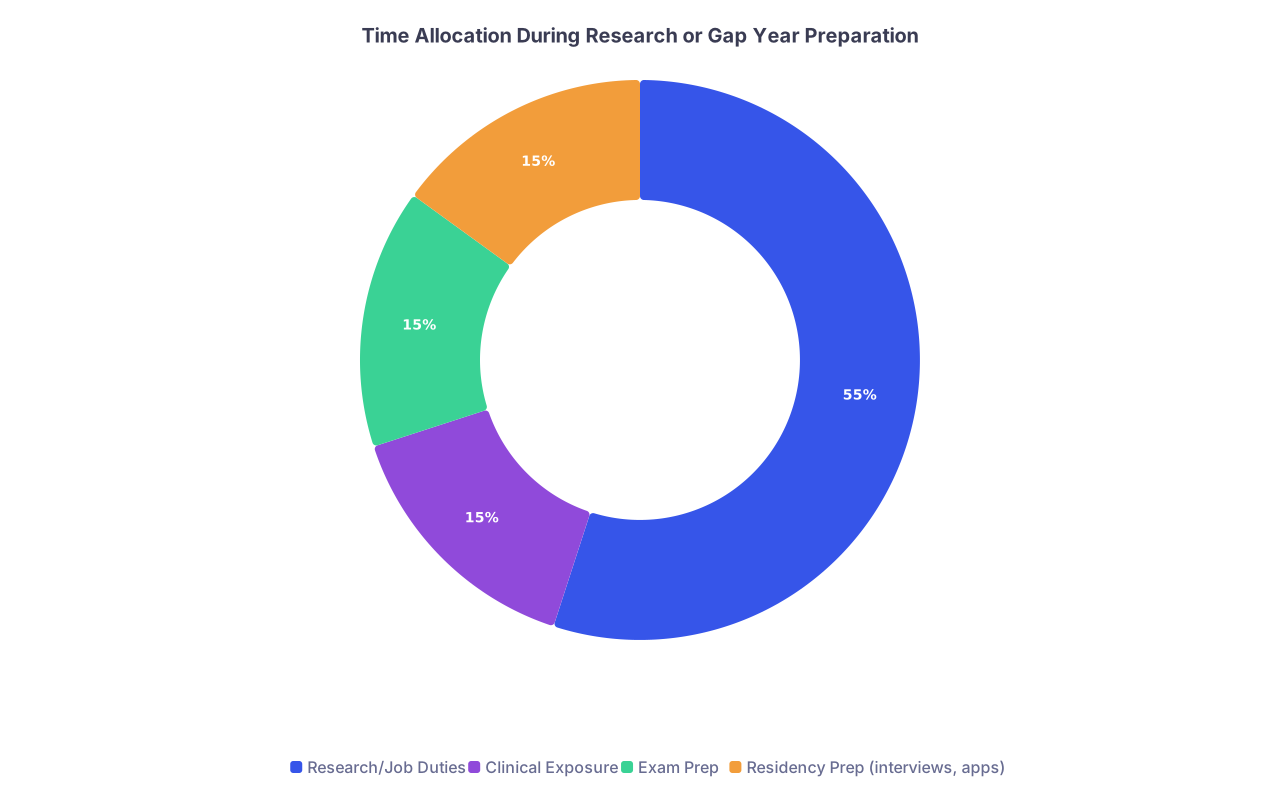
| Category | Value |
|---|---|
| Research/Job Duties | 55 |
| Clinical Exposure | 15 |
| Exam Prep | 15 |
| Residency Prep (interviews, apps) | 15 |
If you did nothing clinical and interviews are in a few weeks, you tell the truth but show a plan:
“My research was full-time, and I didn’t have consistent patient-facing work during that period. Recognizing that, I’ve started [shadowing / clinic / Qbank / conferences] over the past couple of months to refresh my clinical thinking, and I’m committed to ramping that up before residency starts.”
Better to acknowledge it straight than pretend you’re magically up to speed.
5. Prepare for the Specific Questions You Will Get
Stop hoping they won’t ask about the gap, the failed exam, or why you took three research years. They will. Here are the big ones and how to handle them.
“Why did you decide to take a research/gap year?”
Wrong answer:
“I couldn’t match, so I just did research.”
Right answer format:
- One clear primary reason.
- No whining. No blame.
- Tie to your long-term goals.
Example:
“I knew I wanted to match into a strong academic IM program and my application needed more depth in research. I took a dedicated year to work with Dr. X, improve my academic profile, and confirm that I enjoy the scholarly side of medicine enough to pursue it in residency.”
“How did you stay clinically engaged during this time?”
If you didn’t stay engaged, you own that and pivot to what you’re doing now.
Example (good engagement):
“I did weekly precepted clinic with the cardiology group, and I was on the inpatient service for one week each month as part of our research group’s protocol enrollment.”
Example (poor engagement, honest recovery):
“I realized about halfway through the year that I was losing some of my clinical edge, so I started a structured review using [resource] and asked to sit in on morning report and a clinic half-day each week. I’ve continued that, and plan to keep a similar pattern—all while knowing residency will be a big jump, which I’m ready for.”
“Why are you applying now, and why this specialty?”
Especially if you’ve been out for a while or switched fields, they’re testing your commitment.
Use a 3-part structure:
- Anchor: When and how the specialty first clicked.
- Reinforcement: What your gap/research time taught you about it.
- Fit: What kind of resident you’ll be in that field.
Example for a switch (research in surgery, applying to anesthesia):
“I originally thought I would go into surgery, which is why my research is in that field. During my OR time, though, I found myself drawn to the physiology and moment-to-moment management—the part the anesthesiologist was doing. Over my research year, I spent more time talking with the anesthesia team, shadowed them, and realized that’s the environment where I’m most engaged.
The problem-solving, the acute physiology, the teamwork in the OR—all of that aligns better with how I think and what I enjoy. That’s why I’m applying to anesthesia now.”
6. Rehearse the Awkward Parts Until They’re Boring
The worst interview answers are the ones you’re emotionally attached to: the gap, the failure, the personal stuff. You’ll either over-explain or get defensive.
You need repetition until these answers sound like you’re describing the weather.
Steps:
- Write out your answers to:
- “Tell me about yourself.”
- “What did you do during your gap/research year?”
- “Why the gap?”
- Any academic/professional red flag explanation.
- Say them out loud. Record yourself on your phone. It’s painful. Do it anyway.
- Trim the fat. If it takes more than 90 seconds, it’s too long.
- Practice with:
- A mentor who doesn’t sugarcoat.
- A co-applicant who will stop you when you sound defensive.
- If needed, a career office mock interview—but you steer them to focus on the gap narrative, not generic “strengths/weaknesses.”
You want your tone to be:
- Calm.
- Direct.
- Slightly detached. Like it’s something you’ve processed and moved past.
If you feel yourself starting to justify, apologize, or go into detail that belongs in therapy, stop. Reset to:
“That period was challenging, but I learned [X] and made changes [Y]. I’m now in a stable position and focused on starting residency in [specialty].”
7. Update Your Application Story: CV, ERAS, and Letters
Your interview performance is limited by what’s already on paper. If your ERAS looks like a black box labeled “Research Fellow 2020–2023” with no detail, you’re making this harder than it needs to be.
Tighten your ERAS entries
Under each research/gap experience, include:
- Specific responsibilities (not just “helped with research”).
- Concrete outputs: poster, manuscript submission, presentation, QI outcomes.
- Any clinical contact: rounding, enrollment, clinic work.
Do not undersell. Do not just list paper titles.
Example:
“Full-time research fellow with the cardiology outcomes group. Responsibilities included IRB submission and management, data extraction from EMR, statistical analysis with R, coordinating weekly investigative team meetings, and presenting updates at divisional conference. Assisted with enrollment and follow-up of outpatients with heart failure.”
That’s the stuff you can point to in interviews.
Letters that address the gap indirectly
If you can, get at least one letter from your gap/research period that:
- Confirms you showed up consistently.
- Mentions your professionalism and reliability.
- Hints at your clinical potential, even if the letter writer is in research.
A line like “I would welcome them as a resident in our program” in a letter from your research PI does a lot of heavy lifting to counteract fears about your time away.
8. Practice Real Interview Questions Again — You’re Out of Practice
If your last real interview was med school admissions, you’re out of shape. Residency interviews are faster, more clinical-leaning, and a bit more blunt.
You don’t need to prep like Step 1. But you do need reps.
Here’s a straightforward prep rotation for yourself:
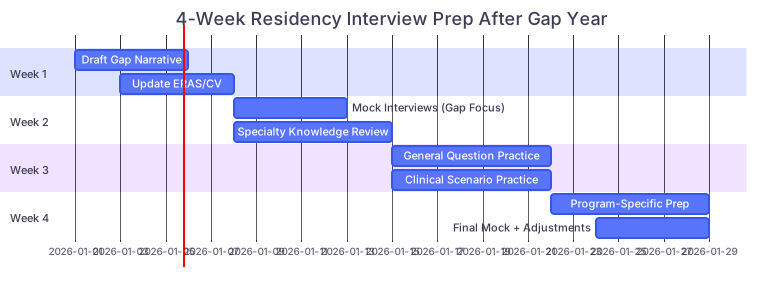
| Task | Details |
|---|---|
| Week 1: Draft Gap Narrative | a1, 2026-01-01, 5d |
| Week 1: Update ERAS/CV | a2, 2026-01-03, 5d |
| Week 2: Mock Interviews (Gap Focus) | a3, 2026-01-08, 5d |
| Week 2: Specialty Knowledge Review | a4, 2026-01-08, 7d |
| Week 3: General Question Practice | a5, 2026-01-15, 7d |
| Week 3: Clinical Scenario Practice | a6, 2026-01-15, 7d |
| Week 4: Program-Specific Prep | a7, 2026-01-22, 7d |
| Week 4: Final Mock + Adjustments | a8, 2026-01-24, 5d |
Focus on:
- “Walk me through your CV.”
- “What are you looking for in a program?”
- “Tell me about a time you had a conflict on a team.”
- “Tell me about a time something didn’t go as planned.”
- “How have you handled stress / burnout in the past?”
- “Any concerns about returning to clinical work after some time away?”
Have 1–2 stories from your gap/research year for:
- Leadership.
- Dealing with setbacks.
- Ethical or professional challenge.
- Working with a difficult person.
Yes, using research stories for behavioral questions is fine, as long as you highlight interpersonal and professional behaviors, not lab minutiae.
9. Anticipate Program Types and Tune Your Pitch
Not every program cares about your research in the same way. Or your gap.
Broadly:
- Academic-heavy programs: like research, but hate unreliability.
- Community programs: care much more about your readiness for clinical work.
- Competitive specialties: will scrutinize every inconsistency.
- Less competitive or IMG-heavy programs: are used to gaps but are sensitive to “rust” and exam issues.
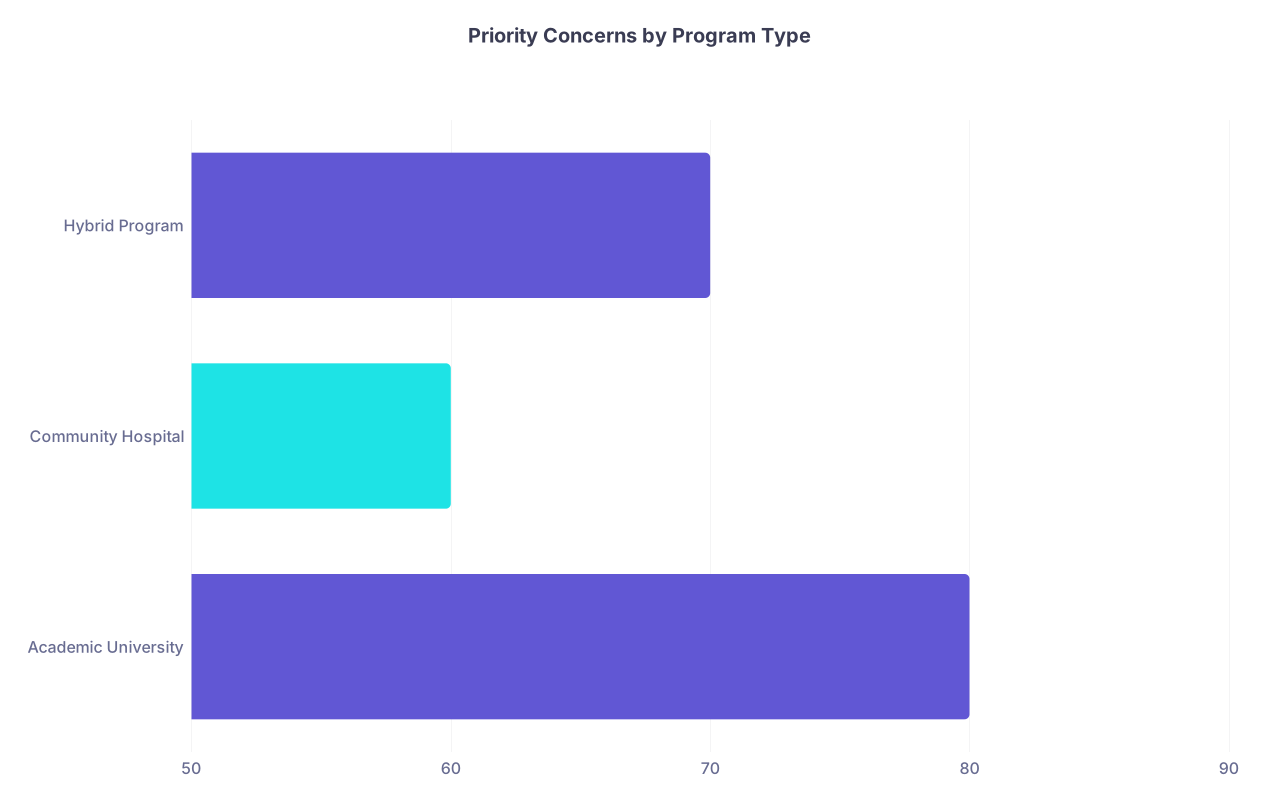
| Category | Value |
|---|---|
| Academic University | 80 |
| Community Hospital | 60 |
| Hybrid Program | 70 |
(Think of that bar as “how much they care about clear explanation of gap + readiness.” It’s high everywhere.)
So adjust what you emphasize.
For an academic IM program:
Emphasize: research productivity, QI, potential for fellowship, your ability to balance research and clinical duties.
For a community program:
Emphasize: clinic/shadowing, Qbank/work you’ve done to stay fresh, your desire for strong bread-and-butter clinical training, your reliability.
For any program:
Make it clear you understand PGY-1 is not a continuation of your research year. You’re ready to be on the floors, not in the office all day.
10. Deal With Your Own Anxiety So It Doesn’t Leak on Camera
People who’ve been out of the regular med school/residency grind tend to show up to interviews with one of two vibes:
- Over-apologetic: “I’m sorry I exist, I know I’m a risk.”
- Overcompensating: frantic listing of every little thing they did to justify themselves.
Both are exhausting to watch.
You need to get to a middle place: “Yes, my path is non-linear. Here’s what happened, here’s what I did with it, and here’s why I’m a strong candidate now.”
A couple of practical tricks:
- Write your “one-sentence truth” about your gap and stick it above your desk. Example: “I took two research years in cardiology to build my academic skills and confirm my interest in IM, and now I’m ready for full-time clinical training.”
- Before each interview, read that instead of doom-scrolling your ERAS.
- If your brain starts spiraling mid-interview (“they hate my gap year, they’re judging me”), mentally go back to: “Answer the actual question in front of you.” Not the imaginary one.
11. Online/Virtual Interview Logistics — Especially Important After a Gap
If you’ve been in a lab or non-clinical job for a while, you might not have worn professional clothes or done formal Zoom calls in a long time. That shows.
Get the basics right:
- Try on your suit at least a week before interviews. If it doesn’t fit, fix that now.
- Do a full video test: camera, lighting, background. No lab clutter, no messy bedroom.
- Practice with the same setup you’ll use on interview day.

You’ve already got one “difference” in your application (the gap). Don’t add avoidable sloppiness on top of it.
12. What Success Looks Like After an Extended Gap or Research Year
Let me be very clear: applicants with 1–3 years of research or non-clinical gaps match every single year. Into strong programs. The difference is:
- They have a clean, consistent story.
- They’ve taken visible steps to stay or get clinically ready.
- They talk about their path like a grown colleague, not a guilty defendant.
Your goal is not to erase your gap or research time. It’s to make it look intentional and useful.
By the time you’re halfway through your interview season, your answers about your gap should feel almost boring to you because you’ve said them so often. That’s when you know you’ve done it right—your energy can go into connecting with people, asking good questions, and showing who you are now, not defending who you were two years ago.
You’ve spent this time building something—skills, clarity, resilience. Your next step is to show programs that all of that makes you more ready for residency, not less. Do the work now to shape that story, and when the interviewer leans back and asks, “So, walk me through what you’ve been doing since graduation,” you won’t flinch. You’ll smile, and you’ll know exactly where you’re going.
The interviews are just one piece. Once you’ve mastered explaining your path, the next challenge is choosing where to go next and how to line up the program with the doctor you’re becoming. That decision comes after the invites—and you’re on your way there now.


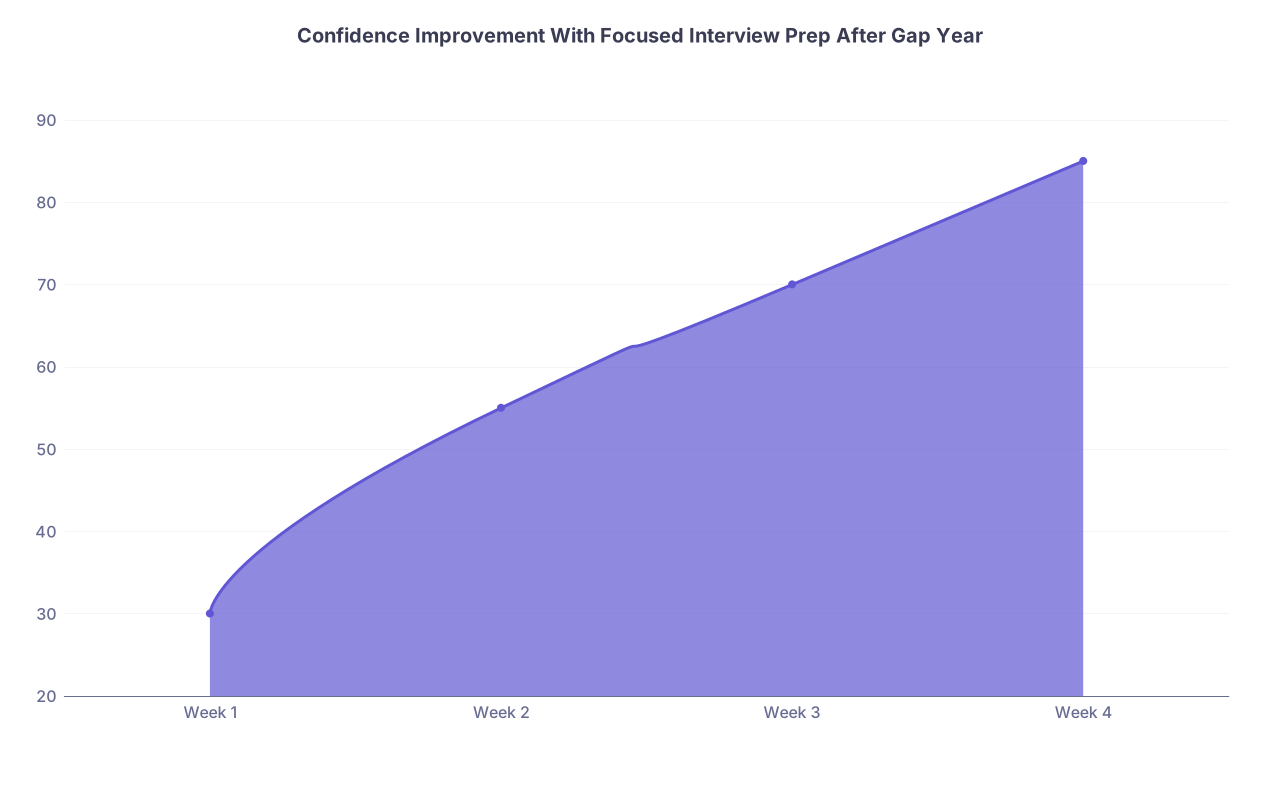
| Category | Value |
|---|---|
| Week 1 | 30 |
| Week 2 | 55 |
| Week 3 | 70 |
| Week 4 | 85 |