
The applicants with the best interviews are not always the best talkers. They’re the ones with the best micro-behaviors.
Let me tell you what really happens behind those closed doors where PDs, faculty, and chief residents rank you. They are not sitting there parsing the nuance of your answer about “why this program.” They are talking about how you felt to be around for 25 minutes. Your subtle behaviors—most of which you’re not consciously controlling—are what quietly move you into one of three mental buckets:
- “Auto-rank-high.”
- “Rank if space.”
- “No way.”
You want bucket #1. Here’s how people actually get there.
What PDs Really Judge In Those 20 Minutes
Most applicants think the interview is a knowledge test: Do I say the right things? Am I enthusiastic enough? Do I hit all my talking points?
That’s not how PDs are using the interview.
They already have your scores, grades, letters, and MSPE. By interview day, you’ve cleared the “can they do the work” bar. The interview is about only three questions:
- Would I want this person on my team at 3am?
- Do they make my life easier or harder?
- Can I trust them with patients and colleagues?
Those sound big and abstract. PDs answer them using tiny signals.
Here’s the part nobody tells you: on the ranking spreadsheet, the comments that get people pushed high or dropped low almost never say, “Gave very sophisticated answer about health policy.” They say things like:
- “Felt mature, calm.”
- “Easy to talk to, low-ego.”
- “Would be great with nurses.”
- “Very intense, a bit off.”
- “Something didn’t feel right.”
Translation: behaviors, not content.
Before You Even Sit Down: The “Pre-Interview” Signals
The interview starts way before you’re in the chair with the PD.
How you treat non-physicians
Program coordinators, front desk staff, residents on the shuttle—these people absolutely report back on you. They don’t fill out formal evaluations, but their comments land in the room.
I’ve heard variations of this more times than I can count:
- “The coordinator loved her—super polite and grateful.” → candidate gets discussed more seriously.
- “Security said he was rude about parking.” → candidate mysteriously drops 15 spots on the rank list.
Subtle behavior that triggers “auto-rank-high” thoughts:
- You greet the coordinator by name and thank them specifically for something (scheduling, directions, the detailed email).
- You don’t look annoyed when logistics go wrong (late Zoom, rescheduled session, last-minute room change).
- You’re as engaged with the PGY-1 on the informal meet-and-greet as with the PD.
Your “waiting room” presence
If there’s a virtual waiting room or a physical lounge, faculty sometimes wander through or residents keep an eye on the group. They are not grading you formally, but they absolutely notice the vibe.
Behaviors that read as “this person is easy to integrate”:
- You’re conversing with other applicants without dominating, complaining, or humble-bragging.
- When a resident pops in to say hi, you turn toward them, smile, and re-orient the group. You don’t keep talking over them.
- You don’t have your face buried in your phone the entire time, only looking up when someone says your name.
These are small, but you’re already branding yourself as: warm, stiff, anxious, arrogant, or grounded—before a single question is asked.
The First 30 Seconds: Micro-Signals PDs Actually Notice
The first 30–60 seconds often set your default rank trajectory. Faculty will deny this. They’re wrong. I’ve sat in those meetings.
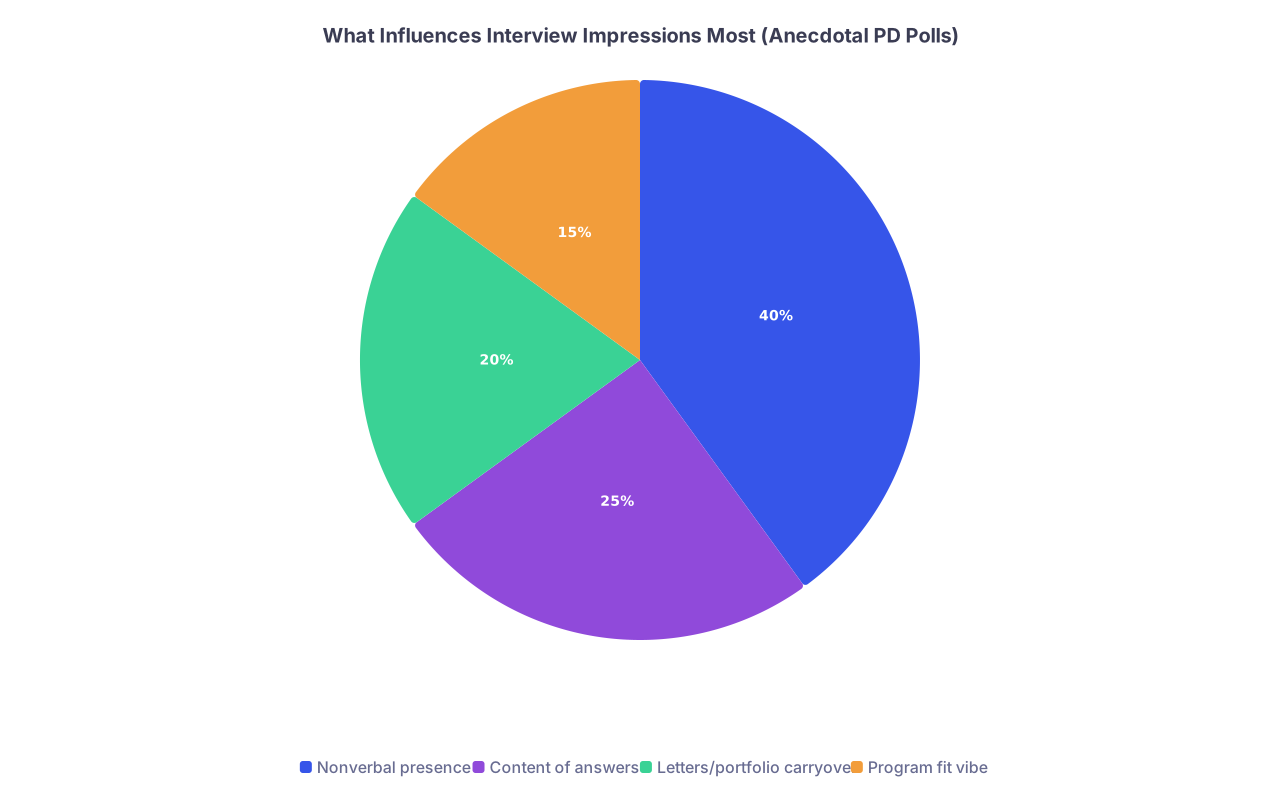
| Category | Value |
|---|---|
| Nonverbal presence | 40 |
| Content of answers | 25 |
| Letters/portfolio carryover | 20 |
| Program fit vibe | 15 |
Your entrance and greeting (yes, even on Zoom)
In-person: you walk in, you’re called, you stand up, you move.
Auto-rank-high behaviors:
- You stand and move with purpose—not rushing, not dragging. That calm, athletic pace signals you are not flustered.
- You make eye contact immediately, but not with a stare-down. A brief smile, a “Good morning, Dr. X, thank you for taking the time.” Simple. Controlled.
- Your handshake (if it happens) is neither limp nor bone-crushing. One or two pumps, release.
On Zoom, it’s slightly different:
- Your camera is on, you’re framed from mid-chest up, your lighting shows your face clearly. This signals: “I prepared. I respect this.”
- As soon as the PD appears, you’re already looking near the camera, not obviously staring at yourself in the corner.
- You unmute before they finish introducing themselves, not fumbling for buttons.
What PDs quietly register: “This person shows up like a professional adult.” That alone moves you above a scary number of people.
The way you sit
No one is taking notes on posture. But they’re absorbing it.
The posture that screams “rank this person high” is simple:
- Back against the chair or slightly forward, shoulders relaxed, both feet on the ground if visible.
- Hands either loosely on your lap or lightly on the table, not hidden, not fidgeting with objects.
- Slight forward lean when listening, back to neutral when talking.
What sets off quiet alarms:
- You sit way back, arms crossed, ankle on knee in a casual sprawled pose. That screams low insight or ego, even if you mean “I’m relaxed.”
- You’re visibly bouncing your leg, tapping a pen, or clutching your water bottle like a life raft.
- On Zoom, you’re too close (just your face filling the screen) or too far (tiny dot, weird angle from below, ceiling fan in view). That looks unprepared, not “quirky.”
No one will reject you for one of these alone. But they start stacking.
How You Listen: The Most Underrated “Auto-Rank-High” Behavior
Everyone obsesses over how to answer questions. Very few think about how to receive them. PDs and attendings care a lot about your listening behaviors because that’s how you’ll behave with patients and seniors.
Here’s what impresses them at a subconscious level:
The micro-pause
When they ask, “Tell me about yourself,” or “Why our program,” you don’t machine-gun your memorized answer 0.2 seconds after they finish the last word.
Auto-rank-high behavior:
- You take a micro-pause—literally one second. Slight nod, brief “Sure,” then you start.
- It looks like you’re actually considering the question, not spitting out a script.
This reads as: thoughtful, not anxious; mature, not rehearsed robot.
Active listening without being a parody
Bad advice has made a lot of applicants over-do nodding, “mm-hmm,” and leaning in. It starts to look fake. Faculty can smell that.
Good listening behaviors:
- You maintain natural eye contact 60–70% of the time when they’re speaking.
- You occasionally mirror their facial expression when they share something meaningful (smile when they talk about what they love about the program; serious when they describe a challenge).
- You allow short silences without scrambling to fill them. That’s huge.
Then there’s the power move almost no one uses: picking up something they mentioned later.
For example, if earlier they said, “Our residents get a lot of autonomy on nights,” and 10 minutes later you say:
“Going back to what you said about autonomy on nights—that aligns a lot with what I enjoyed at my sub-I…”
That single callback instantly tells them: this person listens, tracks, and integrates information. Faculty love that. It feels like you’re already part of the team, not just “performing answers.”
The Way You Answer Questions: What Signals “Safe, High-Yield Resident”
Your specific phrasing matters less than your pattern of answering. PDs are listening for three things under the surface:
- Do you own your story?
- Do you show insight without self-flagellation?
- Do you take interpersonal responsibility?
Owning your story without oversharing
Let me translate how faculty actually talk about you after:
- “Very clear about who they are and what they want.” → High.
- “Rambling, unclear, lots of tangents.” → Middle or low.
- “Too rehearsed, felt plastic.” → Middle, sometimes low.
Auto-rank-high behavior: your answers have a clear start, middle, and end, but they’re not memorized monologues. The “tell” that you’re doing it right is this: you occasionally stop yourself.
Example:
“So I’m interested in X because of [brief story]. And I think it fits with the way I like to work—being hands-on with [one or two things]. I’ll stop there though, I don’t want to ramble.”
That little self-edit signal is powerful. It tells them: this person is naturally reflective and not addicted to hearing themselves talk. Residents like that. PDs listen to residents.
Handling weaknesses like a grown adult
The “tell me about a weakness” or “tell me about a time you failed” question is not a trap. It’s a sorting mechanism.
The bad, rank-killing behaviors:
- You give a fake weakness (“I just care too much”).
- You blame systems or people every time.
- You get long-winded and defensive.
Auto-rank-high response pattern:
- Name the weakness in plain language, no euphemism.
- Give a concrete example once, briefly.
- Show what you changed in a way that’s sustainable.
Something like:
“I used to be slow with documentation on busy services. On my surgery rotation, I’d end up staying late finishing notes. My senior finally told me, ‘You have to chart as you go or you’ll drown.’ Since then I’ve made a habit of doing the bare-bones note in real time and filling in details only if needed later. It’s not perfect, but now I leave with my team instead of an hour later.”
That answer contains the real secret PDs look for: you were coachable. You were corrected and didn’t crumble or argue. You changed behavior. That’s pure gold to them.
Humility vs. Insecurity: The Line You Absolutely Must Walk
Programs are allergic to fragility. They do not want people who melt at feedback, but they also don’t want arrogance. The candidates who hit “auto-rank-high” feel like they have both backbone and humility.
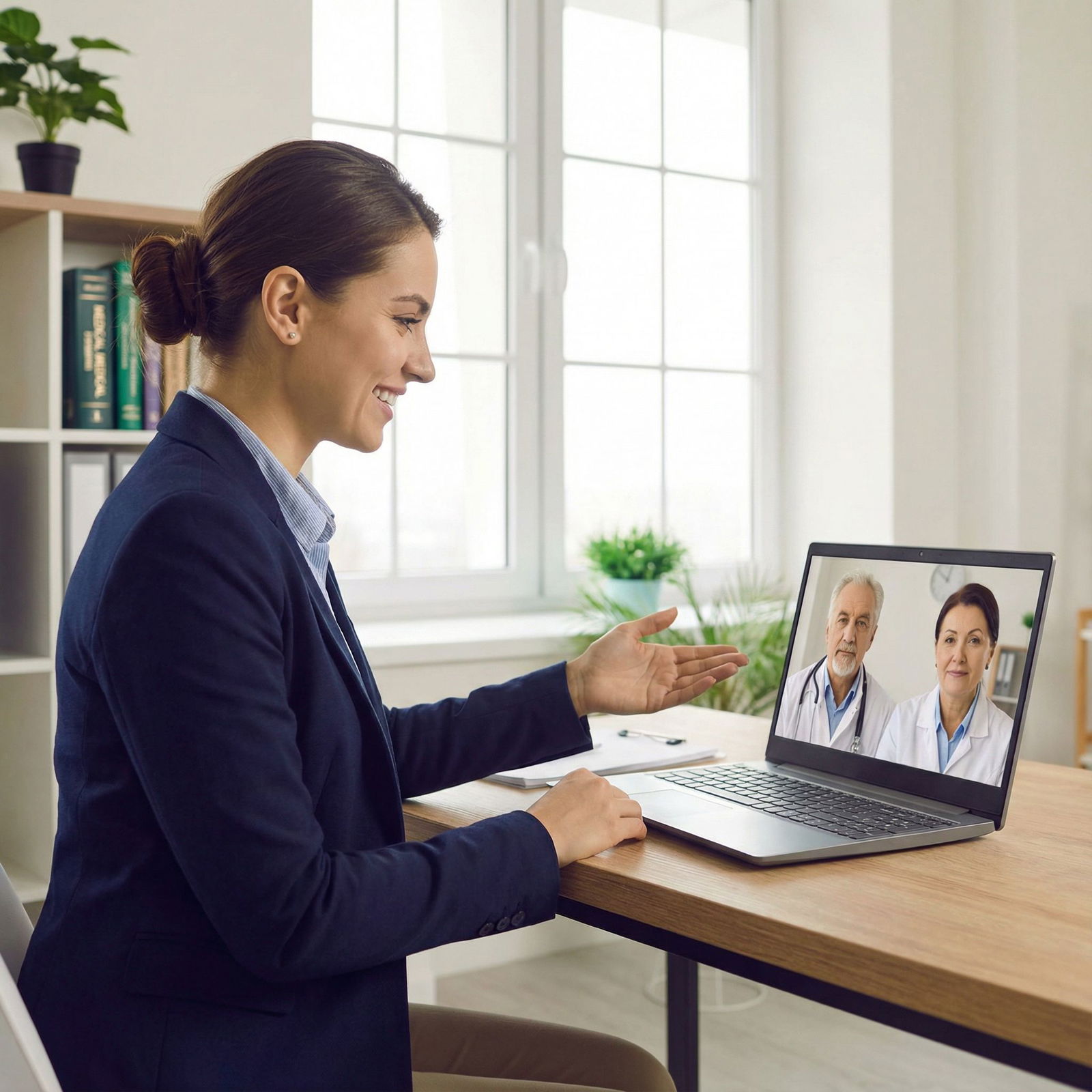
Here’s how that shows up in subtle ways.
How you talk about past conflicts
They will sometimes ask about a disagreement with a colleague, resident, or attending. What you think they want: proof you were right.
What they actually want: proof you didn’t make the situation worse.
Auto-rank-high behavior:
- You don’t insult or diminish anyone, even if you disagreed.
- You show that you considered the other person’s perspective, even briefly.
- You end with, “Next time I’d do X differently.”
Example pattern:
“There was a time on medicine when my resident and I disagreed about whether a patient was stable for the floor. I felt strongly about a few abnormal labs and maybe came on too strong when advocating. Looking back, I should’ve started with clarifying questions instead of jumping to my conclusion. We talked about it afterward, and I appreciated that she explained her reasoning and what she was watching for.”
PDs hear: not perfect, but safe, teachable, not a drama magnet.
How you use “we” and “I”
This one’s subtle, but faculty notice.
- When talking about patient care or team achievements, high-ranked candidates lean on “we.”
- When talking about mistakes or things to improve, they default to “I.”
Low-insight candidates do the opposite. Everything good is “I,” everything bad is vaguely “they,” “the team,” or “the system.”
Listen to yourself during practice. If you never say “we,” you’re sending a quiet message that you view residency as your solo movie, with others as background actors. Programs hate that.
Zoom-Specific Behaviors That Quietly Boost Your Rank
Virtual interviews didn’t make things easier; they just changed which subtleties matter.

| Step | Description |
|---|---|
| Step 1 | Open applicant file |
| Step 2 | Join Zoom room |
| Step 3 | First 10-second visual impression |
| Step 4 | Assess presence & listening |
| Step 5 | Ask behavioral questions |
| Step 6 | Note professionalism & fit |
| Step 7 | End interview & jot quick score |
Tech preparation that reads as “reliable resident”
No one cares if your background is a white wall or tasteful bookshelf. They care about friction.
Auto-rank-high tech behaviors:
- You log in early to test audio/video, so the interview starts on time without, “Can you hear me? Is my mic on?”
- Your display name is your real name, capitalized, not “iphone12” or email handle.
- Your internet is stable. If you know your connection is weak, you’ve gone somewhere with better Wi-Fi—a friend’s place, a library room, whatever.
Behind the scenes, what PDs say in the meeting:
“Yeah, she had some glitches but handled it calmly.” → no penalty.
“He was late to join two rooms and kept blaming his Wi-Fi.” → “If that’s how he is as an applicant, imagine him as a resident…”
On-screen attention and “small square” presence
Your entire professional impression is compressed into a 2-inch square. You have to amplify certain cues slightly.
You do not need performative enthusiasm. You do need visible engagement:
- Nod occasionally as they speak, but not constantly.
- Your gaze is mostly near the camera, not at your own thumbnail.
- You keep your posture fairly stable; lots of rocking, swiveling, or constant shifting looks more obvious on camera.
One more subtle thing: minimize background movement. Parents walking by, roommates making coffee, traffic through a glass door—it all bleeds professionalism points.
The End Of The Interview: Where Many People Accidentally Lose Points
The last 2–3 minutes matter more than you think. Faculty write notes right after you leave. Whatever you do at the end is fresh and sticky.
How you handle “Do you have any questions for us?”
No questions = you’re not that interested.
Laundry list of generic questions = you prepared from Reddit, not from this program.
Auto-rank-high behaviors:
- You ask 1–2 specific questions that refer to something they said, or something clearly unique about the program.
- You ask about things that show you are thinking like a future resident, not a tourist.
Examples:
“You mentioned earlier that your interns get a lot of responsibility on nights. How do you balance that autonomy with backup so people feel safe asking for help?”
or
“I saw in the schedule that you have an X rotation at Y hospital. How have residents felt about that experience recently? Anything they’d like to change?”
These questions tell PDs: this person is already mentally inhabiting our system, and they’re thinking about safety, learning, and logistics. Very resident-brain.
The way you say goodbye
Too many people rush this part, especially on Zoom.
What PDs and faculty like to hear and see:
- Brief eye contact, slight smile.
- Simple, direct thanks that references their time, not yours.
“Thank you again, Dr. X, I really appreciated you sharing your perspective on the program. I can see why residents speak so highly of the culture here.”
Then you wait for them to end or say goodbye. You don’t awkwardly scramble, wave frantically, or visibly sag in relief.
Small thing PDs notice: if your face drops the second you think the camera is off. You’d be surprised how many times the recording or screen is still visible for a second. Maintain composure until you’re fully out.
What Happens In The Rank Meeting: How These Behaviors Actually Pay Off
You need to understand the mechanics of how you get turned into a number.
| Factor | Typical Weight |
|---|---|
| Application/Portfolio | 30–40% |
| Interview Scores | 40–50% |
| Resident Feedback | 10–20% |
| PD/Chair Gut Override | 5–10% |
Then they sit in a room (or Zoom) and do the real work.
What gets said about “auto-rank-high” candidates sounds like this:
- “Everyone liked her.”
- “Residents loved working with him during the pre-interview social.”
- “Very mature for their age.”
- “Felt like he could be a chief someday.”
Notice: not a word about the exact phrases they used to answer “Why our program.” It’s all behavior and vibe.
For borderline candidates, they dissect red flags. For “auto-rank-high” candidates, they barely discuss it. You’re easy to rank. You felt safe, competent, and low-drama. So they do what’s natural when everyone is tired of debating: they move you up and spend their energy on the problem cases.
That’s the real game.
How To Practice These Behaviors (Without Becoming a Robot)
You cannot wing this. But you also cannot script your soul away. There’s a middle path.
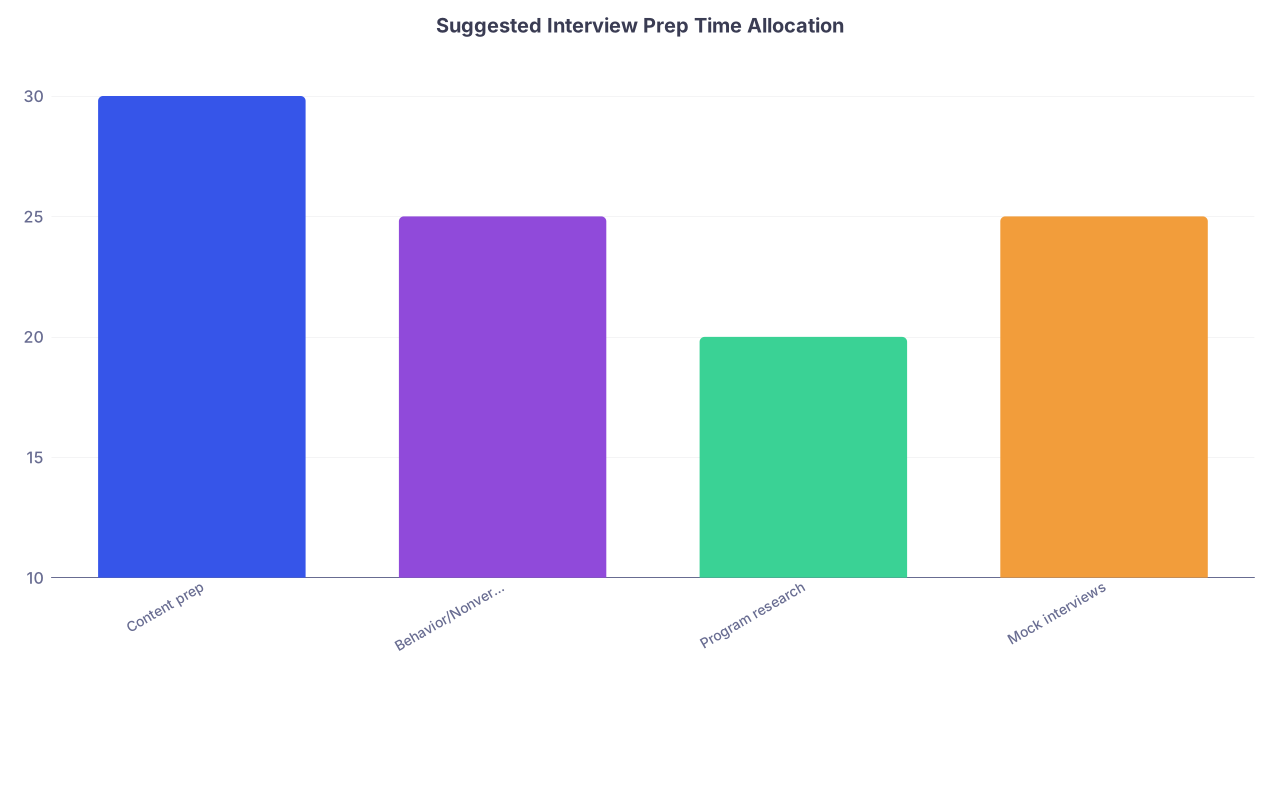
| Category | Value |
|---|---|
| Content prep | 30 |
| Behavior/Nonverbal practice | 25 |
| Program research | 20 |
| Mock interviews | 25 |
If you want the honest blueprint I’ve seen work:
- Do a few mock interviews on video with someone who will be brutally honest about your tics—speech speed, fidgeting, over-smiling, monotone.
- Record yourself answering three basic questions: “Tell me about yourself,” “Why this specialty,” “Why our program (generic).” Watch them back once. Fix only one or two behaviors at a time.
- Practice the micro-pause. Have your partner ask you rapid-fire questions and force yourself to wait one beat before answering.
- Work specifically on endings: your response to “Any questions for us?” and your goodbye line. Those are easy wins.
Most people over-focus on polishing clever wording. The high-ranked applicants polish how they show up.
FAQ (Exactly 3 Questions)
1. Can subtle behaviors really outweigh a mediocre Step score or class rank?
Not magically. If your numbers are far below a program’s usual range, no amount of perfect eye contact will push you into “auto-rank-high.” But among interviewees—who already passed the initial filter—subtle behaviors absolutely reorder the list. I’ve seen mid-pack applicants (academically) land in the top 10 on a rank list because every faculty comment was, “Fantastic to talk to, felt very solid,” while higher-score applicants got, “A bit odd,” or “Something felt off.”
2. I’m naturally anxious and introverted. Am I doomed if I can’t fake being super outgoing?
No. Programs are not looking for stand-up comedians. The “auto-rank-high” introverts are calm, prepared, and authentic. They listen well, answer thoughtfully, and don’t pretend to be extroverts. You can be quiet and still signal maturity, insight, and low drama. If you’re anxious, the single best thing you can do is rehearse enough that your body knows what to do (posture, pauses, eye contact) even when your brain is screaming.
3. How do I know if I’m over-rehearsed and coming across as fake?
If your answers sound identical every time you say them, you’re over-rehearsed. A good test: have a friend interrupt you mid-answer and ask, “Wait, what do you mean by that?” If you freeze because that wasn’t in your script, you’re too rigid. Instead, rehearse bullet points and stories, not full sentences. You should be able to cover the same key ideas with slightly different wording each time—that’s when you look polished but real.
Key points: The candidates who get “auto-rank-high” are not always the flashiest; they’re the ones whose micro-behaviors scream “safe, coachable, low-drama teammate.” You don’t need perfect lines; you need controlled presence, real listening, and grown-up ownership of your story. Get those right, and the ranking conversation about you becomes very short—and that’s exactly what you want.