
It’s March. You’re a PGY-3 (or a new attending) and your inbox dings with an email from the hospital’s “Physician Recruitment” office.
They love your training. They “believe in community-based care.” They’d like to “support you in establishing your new practice.” They mention an income guarantee, possibly a signing bonus, EMR access, clinic space “at reduced cost,” and promises of “strong referral support.”
The PDF is slick. The numbers look big compared to your resident salary. Your co-residents say, “This is how everyone starts.” The recruiter wants to schedule a call this week.
You feel flattered. And a little out of your depth.
Here’s the reality: hospital “support” can be a lifeline, or it can be a golden handcuff that quietly controls your practice for years. I’ve watched both happen. The difference is whether you treat this as a business negotiation or as a generous favor.
You’re in the gray zone between “I need help to get started” and “I don’t want to get screwed.” Let’s walk through exactly what to do.
Step 1: Decode What “Support” Usually Means
First thing: stop thinking of this as “support.” Think of it as an investment the hospital is making in you. Investors expect returns.
Hospital “support” packages usually combine some of the following:
- An income guarantee (aka hospital income guarantee / net income support)
- A loan that gets forgiven if you stay X years
- Help with clinic space (subsidized lease, build-out, furniture)
- Staff support (MA, front desk, billers, sometimes an NP/PA)
- Marketing and referral pipeline promises
- EMR / IT access, call coverage arrangements
- Stipends for relocation, sign-on, or tail insurance
Each of those sounds nice. Each has hooks.
To anchor this, here’s a simple breakdown of what these deals often look like financially:
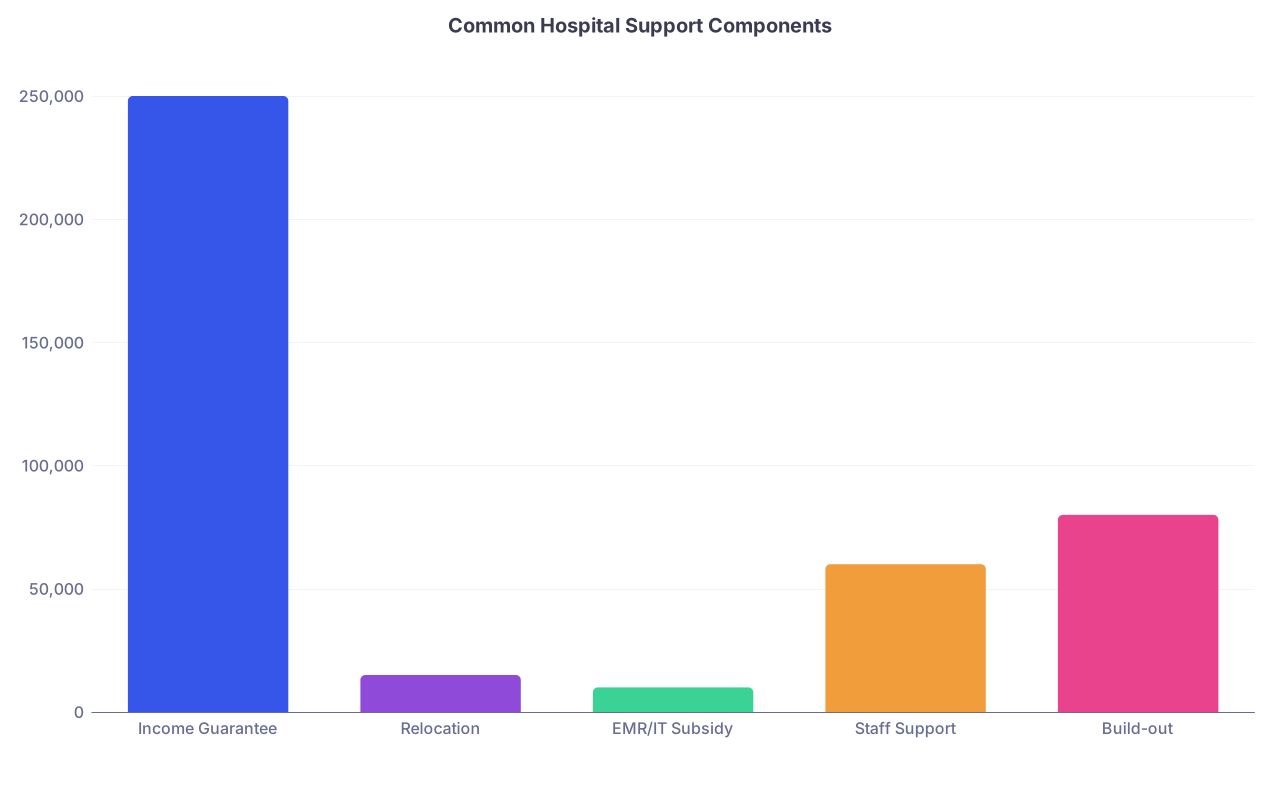
| Category | Value |
|---|---|
| Income Guarantee | 250000 |
| Relocation | 15000 |
| EMR/IT Subsidy | 10000 |
| Staff Support | 60000 |
| Build-out | 80000 |
Those numbers are realistic for a community hospital in many markets. For three years, this looks like magic money. On year four, you may find out what you really agreed to.
So, before you get starry-eyed, do this:
- Ask them to send everything in writing. Not just the glossy recruitment brochure. The actual term sheet or draft contract.
- Tell them you’ll review with your advisor/legal counsel. Do not apologize for this.
- Make a list of every item they’re calling “support” and write next to it: Is this a loan? A subsidy? A guarantee? A service? Who controls it?
You’re not agreeing to anything until you understand the structure.
Step 2: Understand Income Guarantees and “Recapture” Clauses
This is the part that bites people.
A typical setup: The hospital guarantees you $250–$300k per year for 1–2 years while your practice ramps up. They’ll “forgive” the support over a period of 3–5 years if you stay affiliated and hit certain conditions.
Here’s how the math and control often work:
- Year 1: You generate $180k in collections. The hospital tops you up to $250k. They call that $70k “support.”
- Year 2: You generate $230k. They top to $250k. Another $20k of “support.”
- Total “support” = $90k (not counting other perks).
- They then say: we’ll forgive this over, say, 4 years, at 25% per year, assuming you maintain privileges, call coverage, hospital-based procedures, etc.
- Leave early, or materially change your practice (e.g., move across town away from their system), and the forgiven portion becomes due.
That’s the recapture clause. You might as well call it the leash.
If you remember one thing, remember this: Income guarantees are almost always structured as loans. Loans you pay back with time and behavior, not just cash.
So what do you do?
- Ask what they expect you to personally produce in collections by:
- End of Year 1
- End of Year 2
- End of the guarantee period
- Ask for their pro forma assumptions in writing (volume, payer mix, RVUs, no-show rates).
- Ask explicitly: “Which parts of this support are loans, which are subsidies, and which are straight compensation?”
If they get cagey, that’s not a good sign.
You also want to see how much you’d owe if things go sideways. This is where a simple table helps.
| Year in Practice | Outstanding Balance | % Forgiven if You Stay | Remaining If You Leave |
|---|---|---|---|
| End of Year 1 | $90,000 | 0% | $90,000 |
| End of Year 2 | $67,500 | 25% | $67,500 |
| End of Year 3 | $45,000 | 50% | $45,000 |
| End of Year 4 | $22,500 | 75% | $22,500 |
| End of Year 5 | $0 | 100% | $0 |
I’ve seen doctors discover this schedule one week before they wanted to move closer to family. It’s not fun.
Your tasks:
- Make them spell out: The starting loan number and the forgiveness schedule.
- Ask: Under what exact conditions can they demand the full or partial repayment?
- Clarify: If the hospital merges/closes/sells, what happens to the debt and your obligations?
If any answer is “we don’t usually put that in writing,” you push until it is in writing.
Step 3: Figure Out How They Quietly Control Your Practice
The support deal is rarely just about money. It’s about control. If the hospital is helping you “start your private practice,” there are at least three pressure points they’ll try to own:
Where you practice
- They might insist your office is in a building they own, or within some radius of their campus.
- They might bake in a non-compete that effectively locks you into their geography.
How you practice
- Mandatory use of their EMR.
- Required participation in hospital call and coverage schedules.
- Clinical integration agreements that push you to align with their protocols/subsidiaries, even if it’s not best for your patients or your practice.
Who you send patients to
- Formal or informal expectations to keep imaging, procedures, and admissions inside their system.
- “Referral expectations” that aren’t explicitly quotas but feel a lot like them.
You need to look for these control mechanisms in the draft documents:
- Space lease or use agreements
- EMR/IT agreements
- Medical staff bylaws
- Professional services agreements
- Call coverage agreements
Ask yourself:
- If I decline an extra call schedule, can they retaliate financially?
- If I want to open a second office across town (or 30 miles away), does this contract block me?
- If I want to refer to a different hospital for a specific service (because it’s better for the patient), does that breach anything?
This is where a good healthcare attorney earns their entire fee in one afternoon.
Step 4: Bring in a Healthcare Attorney Early (and Use Them Correctly)
You do not need a lawyer to read a PDF out loud to you. You need one who’s seen 100 of these agreements and knows what’s standard and what’s predatory.
Here’s how to use them well:
- Find someone who does this all the time: physician employment contracts, hospital support deals, Stark/Anti-Kickback compliance.
- Send them:
- The recruiter's email
- The term sheet
- Any draft contracts
- Your notes about what you actually want your practice to look like
Tell them plainly:
“My priority is to build a practice that I control long term. I’ll accept some short-term dependence, but I don’t want to be stuck in a bad deal. Point out every clause that will box me in later.”
Then let them mark up:
- Loan/forgiveness terms
- Term and termination language
- Non-compete and non-solicit clauses
- “Exclusive” arrangements
- “Best efforts” and referral expectation language
- Any language tying support to referral volume or specific services (this is also where Stark/AKS issues show up)
Pro tip: you can absolutely push back and negotiate. Recruiters act like the first draft is holy scripture. It’s not.
Step 5: Build Your Own Business Plan Before You Sign Anything
This is where most new doctors make a mistake: they let the hospital tell them what their practice will look like, instead of designing it themselves and using the hospital only where it fits.
You need your own, simple, working business plan. Not a 50-page MBA document. A 3–5 page, numbers-based plan that answers:
- What services am I actually offering?
- How many patients per day/week is realistic in Year 1 vs Year 3?
- What’s my projected payer mix (commercial, Medicare, Medicaid, self-pay)?
- What are my fixed costs (rent, staff, malpractice, EMR, billing, equipment)?
- How long until I reasonably break even without a guarantee?
Make a lean version (you rent your own small space, basic staff, low overhead, independent billing) and a hospital-supported version.
Compare:
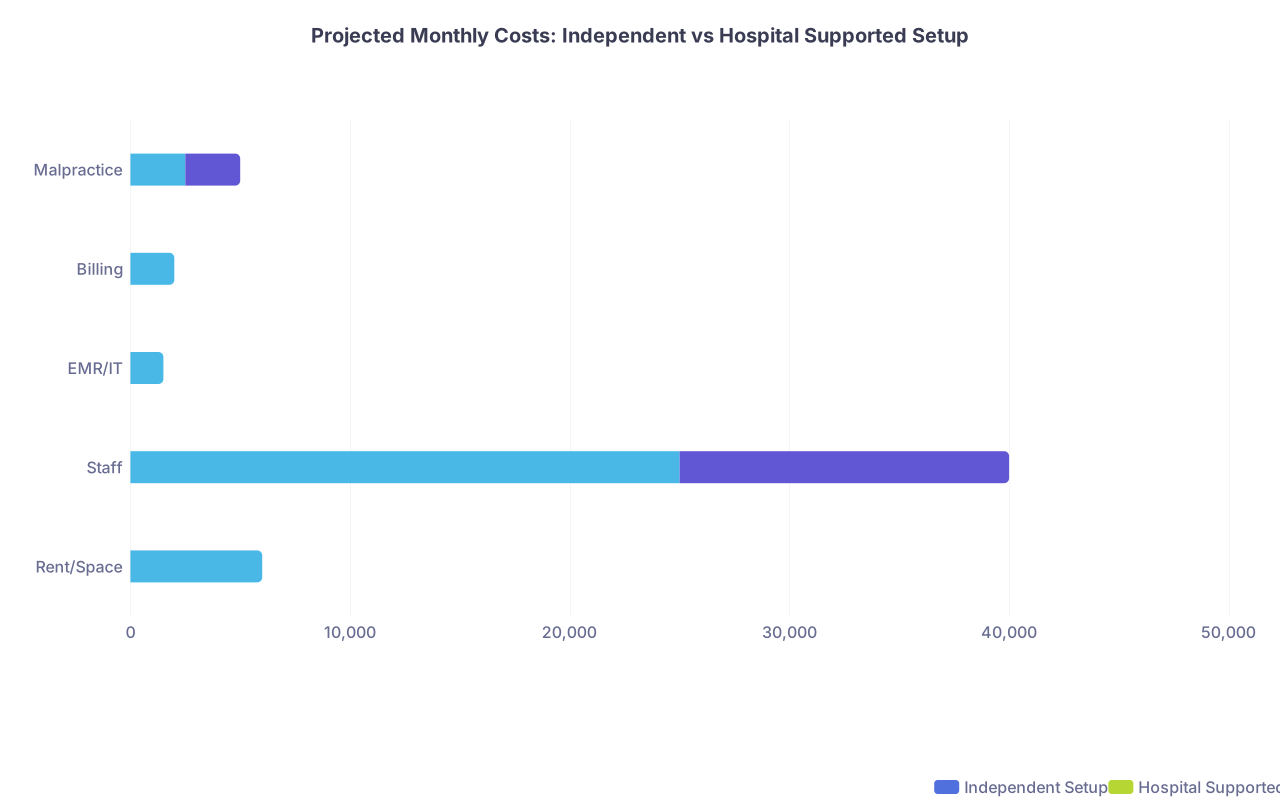
| Category | Independent Setup | Hospital Supported |
|---|---|---|
| Rent/Space | 6000 | 0 |
| Staff | 25000 | 15000 |
| EMR/IT | 1500 | 0 |
| Billing | 2000 | 0 |
| Malpractice | 2500 | 2500 |
This won’t be perfect, but it will show you something critical:
- Are you signing away long-term autonomy for problems you could solve more cheaply yourself?
- Is the “support” actually covering costs you’d be better off owning (like your EMR or your lease), because those are levers of independence later?
I’ve seen internists realize they could start lean with a modest SBA loan, maybe take home a bit less the first year, but keep full control and skip the golden handcuffs entirely. For others (e.g., interventional specialties with high startup costs), hospital support made sense—but only with tight guardrails.
Step 6: Watch for Compliance Landmines (Stark and Anti-Kickback)
One uncomfortable truth: if the hospital is “supporting” your practice based on the volume or value of referrals you send them, they’re in dangerous legal territory. So are you.
You don’t need to become a Stark law expert. But you should know when to ask pointed questions.
High-alert phrases or setups:
- “We expect you’ll admit at least X patients per month.”
- “Your loan forgiveness can accelerate if your procedures volume grows.”
- “Support is contingent on maintaining admissions at our facilities.”
- “We’ll cover your MA and front desk salaries if you keep imaging inside our system.”
Those inputs (volume and value of referrals) trigger Stark / Anti-Kickback concerns fast. The hospital will usually have compliance people trying to structure around this, but mistakes happen all the time.
You want:
- A fixed formula for support, not one that rises and falls directly with hospital referrals.
- Clear fair-market-value language for any professional services you provide to the hospital.
- Your lawyer confirming: “This arrangement as written passes a Stark/AKS smell test.”
The test in plain language: If you never again admitted a patient to that hospital, would your comp/support arrangement still technically make sense on paper, or would it look absurd? If it would look absurd, there’s probably a problem.
Step 7: Negotiate the Parts That Actually Matter to Your Freedom
You won’t get everything. Hospitals have templates, and there are things they won’t budge on. That’s fine. You focus on the high-impact points.
Here’s where I’d spend my negotiating capital:
Term and exit flexibility
- Shorter initial term (e.g., 2–3 years, not 5–7).
- Clear without-cause termination clause with reasonable notice (90–180 days).
- Reasonable repayment/forgiveness schedule that doesn’t nuke you if you leave one year early.
Non-compete restrictions
- Narrow the geography and duration. “10 miles and 2 years” is very different from “50 miles and 3 years.”
- Ideally tie non-compete only to the specific hospital-affiliated site, not an entire health system region.
Control over staff and operations
- Even if the hospital subsidizes staff, you want input on hiring/firing and day-to-day operations.
- Same for hours, scheduling, and templates—don’t let a non-clinical committee run your clinic like a factory if that’s not your style.
Space / EMR arrangements
- Make sure you have a realistic path to move to your own space and/or your own EMR down the line without triggering financial disaster.
- Clarify data ownership and access (what happens to your charts if you part ways).
I’d happily trade a slightly smaller signing bonus or shorter guarantee term for more control over those four areas. Free money is temporary. Structural control is permanent.
Step 8: Ask the Hard Questions Nobody Puts in the Brochure
By now, the recruiter has told you how wonderful this will be. Time for you to flip the script and interrogate them a bit. You can do this politely and still be firm.
Questions to ask out loud:
- “How many physicians have started practices under this support model in the past 5 years, and where are they now?”
- “Can I talk to two of them? One who is happy and one who left?”
- “What happens if my volumes do not match your projections? Who eats the shortfall?”
- “If I decide I want to add a second location, or bring on a partner, how does this agreement change?”
- “What is your long-term strategy for this region? Are there any merger discussions or service line changes on the horizon?”
Pay attention not just to the content of their answers, but the tone. Are they defensive? Vague? Overly smooth?
You’re not just joining a system. You’re wiring your future to their strategy.
Step 9: Decide Whether You Actually Want to Be Independent
Here’s the part most people skip. Some residents say “I want private practice” when what they really mean is “I don’t want to feel owned.” Those aren’t the same thing.
A hospital-supported “private practice” that uses their EMR, their building, their staff, their call pool, and their brand—functionally, that’s a quasi-employed model. You may be 1099 for tax purposes, but in day-to-day life, you’ll feel like clinical faculty with extra admin headaches.
So you need to be brutally honest:
- Do I actually want to own the headaches of staffing, billing, rent, and compliance?
- Or do I want a job with some autonomy, but not full responsibility?
If you want a true business that you control:
- You’ll probably want the hospital less involved, or involved in narrower, clearly bounded ways (e.g., a time-limited, clearly forgiving startup loan, not an integrated operations package).
- You’ll be more willing to accept some lean years to avoid structural dependence.
If you actually want stability and less risk:
- You might be better off with a straightforward employment contract with the hospital or a large group, rather than a half-private, half-embedded Frankenstein arrangement.
Independence is not a moral virtue. It’s a business model. Pick it consciously.
Step 10: Build a Timeline and Don’t Get Rushed
Recruiters love false urgency. “We have three candidates looking at this opportunity.” “Administration wants to finalize this by end of quarter.”
You need your own timeline. Something like:

If they insist they need an answer in 5 days on a multi-year, six-figure binding arrangement, my advice is simple: walk away. Any system that disrespects your due diligence process will disrespect your boundaries later.
Quick Reality Check: Who This Kind of Deal Helps, and Who It Hurts
Blunt truth:
These support deals often work reasonably well for:
- High-demand specialists in underserved areas (cards, GI, ortho, heme/onc).
- Physicians who genuinely want to be aligned with a system long term.
- People who understand they’re trading some independence for startup risk reduction.
They often backfire for:
- Young docs who want true independence but sign the first shiny “support” deal they see.
- PCPs in saturated, high-churn markets where projected volumes never materialize.
- Anyone with significant family or geographic uncertainty in the next 3–5 years.
You’re not powerless here. You just need to treat this like what it is: a major business decision, not a graduation gift.

If You’re Sitting on an Offer Right Now: Do This This Week
If you’ve already got something in your inbox and you’re half-tempted to just sign to make it all go away, here’s your minimal action list for the next 7 days:
- Get the actual draft contract and all attachments.
- Identify:
- Total dollar amount of “support”
- How much is a loan vs subsidy
- Forgiveness/repayment schedule
- Book a consult with a healthcare attorney who does physician contracts.
- Sketch your own basic business model on paper—even ugly back-of-the-envelope math is better than nothing.
- Email the recruiter a calm, professional note:
“Thank you for the opportunity. I’m reviewing the materials with counsel and will get back to you in the coming weeks. If there are any hard deadlines on your end, let me know.”
Then stop letting their urgency control you. This is your career. They’ll be recruiting again next year. You get one shot at your first practice launch.

Key Takeaways
- Hospital “support” is rarely free; it’s usually a structured loan and a control mechanism. You need to understand exactly how repayment and forgiveness work before you say yes.
- If your long-term goal is real independence, design your own practice model first, then see where hospital support fits—if at all—rather than letting the hospital’s template define your future.
- A good healthcare attorney plus a simple, honest business plan will protect you from most of the common traps in these deals. Do not let anyone rush you into signing before you have both.