
Applying for residency is one of the most consequential transitions in your medical education. You’re not just submitting forms—you’re presenting evidence that you are ready to function as a physician-in-training, shoulder responsibility, and grow within a specific specialty and program culture. In a competitive environment where many applicants have similar grades and board scores, the strength of your overall Residency Application—how coherent, polished, and compelling it is—often becomes the differentiating factor.
This guide breaks down what makes a strong residency application, offers nuanced strategies to elevate each section, and provides practical tips to help you match into programs that align with your goals.
Understanding What Programs Look For in a Residency Application
Before you optimize individual components, it helps to understand the bigger picture: program directors are not looking for perfection; they are looking for fit and future colleagues.
Most programs weigh several core domains:
- Academic performance (clerkship evaluations, class rank, transcripts)
- Standardized exams (USMLE/COMLEX)
- Clinical Experience and professionalism
- Letters of Recommendation
- Personal Statement and overall narrative
- Research and scholarly activity (variable importance by specialty)
- Interview performance
- Evidence of reliability, teamwork, and growth
A strong residency application does not mean being flawless in all areas. It means presenting:
- A clear, consistent story about who you are and why you belong in that specialty.
- Documented evidence of your clinical skills, work ethic, and professionalism.
- Signals of commitment to the specialty and to lifelong learning.
- Self-awareness and maturity, including how you have handled challenges.
With that frame in mind, let’s walk through how to make each component of your application work together as a cohesive, compelling whole.
Crafting a High-Impact Personal Statement
Your Personal Statement is often the first narrative program directors see about you. It should do more than explain why you like a specialty; it should clarify who you are as a physician-in-training and how your experiences have prepared you for residency.
Core Goals of an Effective Personal Statement
A strong Personal Statement should:
- Communicate your motivation for the specialty
- Highlight your most meaningful experiences and what you learned
- Reflect your values, personality, and professionalism
- Demonstrate insight and reflection, not just a list of accomplishments
- Align with the rest of your application (CV, Letters of Recommendation, clinical experiences)
Structuring Your Personal Statement
You don’t need a fancy format, but you do need clarity and flow. A common and effective structure:
Opening Hook (1–2 paragraphs)
- Use a specific, concise clinical vignette or personal experience that illustrates a defining aspect of your journey.
- Avoid overly dramatic or clichéd openings (e.g., “Ever since I was a child…”).
- Make sure the story reflects your role, actions, and growth—not just a patient’s tragedy.
Body: Evidence and Reflection (2–4 paragraphs)
- Discuss 2–3 key experiences: a pivotal rotation, research project, leadership role, or longitudinal Clinical Experience.
- For each, explain:
- What you did
- What you learned
- How it shaped your interest in the specialty or your approach to patient care
- Integrate soft skills: communication, teamwork, resilience, adaptability.
Conclusion: Future Direction and Fit (1–2 paragraphs)
- Articulate what kind of resident you hope to be.
- Briefly mention your career goals (e.g., community practice, academic medicine, global health, advocacy).
- Emphasize how residency training in this specialty will help you contribute meaningfully to patients and the healthcare system.
Practical Writing Tips
- Length: Aim for ~650–900 words (1 page in ERAS is typical). Avoid dense, text-heavy paragraphs.
- Voice: Write in the first person, but keep tone professional. Avoid jargon and excessive self-praise.
- Specificity: Replace vague statements (“I am passionate about helping people”) with concrete examples (“During my internal medicine rotation, I took ownership of…which taught me…”).
- Consistency: Ensure that what you emphasize in your Personal Statement is supported by your CV and Letters of Recommendation.
- Specialty-specific tailoring:
- If applying to multiple specialties, write separate Personal Statements and ensure each aligns with that field’s values and workflows.
- Avoid generic statements that could apply to any specialty.
Common Pitfalls to Avoid
- Rewriting your CV in paragraph form
- Overly graphic or sensational patient stories
- Excuses for low scores without insight or growth
- Humor or sarcasm that could be misinterpreted
- Excessive name-dropping of institutions or faculty
Finally, revise extensively. Share drafts with mentors, recent residents in your specialty, and at least one person who doesn’t know you well (to check clarity). Expect multiple iterations before it’s truly strong.
Building a Strategic, Polished CV for Residency
Your CV (or ERAS “My Experiences” section) is more than a list of activities—it is the backbone of your Residency Application. It shows the depth and pattern of your engagement with medicine.

Organizing Your Residency CV
Use clearly labeled sections, typically:
- Education
- Clinical Experience (Clerkships, Sub-Internships, Away Rotations)
- Research and Scholarly Activity
- Teaching and Mentorship
- Leadership and Extracurriculars
- Volunteer and Community Service
- Honors and Awards
- Skills and Certifications (e.g., ACLS, BLS, language proficiency)
Making Each Entry Count
For each experience, include:
- Role/title
- Institution and location
- Dates
- 2–4 concise bullet points focusing on your contributions and impact
Use action verbs (led, developed, implemented, coordinated, analyzed) and, where possible, quantify:
- “Coordinated a student-run free clinic that served 40–60 patients per month.”
- “Collected and analyzed data on 200 patients with heart failure for a multicenter study.”
- “Led a quality-improvement project that increased vaccination rates from 62% to 84% on the inpatient unit.”
Tailoring for Specialty and Program Type
While you generally submit one CV through ERAS, you can:
- Emphasize experiences relevant to your chosen specialty in descriptions.
- Move particularly important experiences higher in the list when editable.
- Highlight leadership or research more prominently for academic programs; community outreach and continuity of care for community programs.
Addressing Gaps and Nontraditional Paths
If you took time off, did another degree, or switched careers:
- List these periods honestly and clearly.
- Use your Personal Statement or an ERAS “Additional Comments” section (if available) to briefly provide context and highlight maturity, skills gained, and how the experience benefits you as a resident.
A well-curated CV helps programs quickly recognize that you have the Clinical Experience, initiative, and follow-through to thrive in residency.
Maximizing the Impact of Letters of Recommendation
Letters of Recommendation (LoRs) provide an external, credible voice validating your readiness for residency. Many program directors rank Letters of Recommendation among the top factors in interview and ranking decisions.
Choosing the Right Recommenders
Aim for 3–4 strong, specialty-relevant letters:
- At least two letters from attendings in your chosen specialty, ideally from:
- Home institution rotations
- Sub-internships or acting internships
- Away rotations (especially for competitive fields)
- One additional letter from:
- A different specialty that can speak to your professionalism and clinical ability
- A research mentor (especially for academic programs)
- A longitudinal preceptor or program director
Prioritize recommenders who:
- Know you well
- Have observed you directly in clinical settings
- Can describe you with specific examples (not generic praise)
- Are familiar with the residency selection process, if possible
How to Ask for Strong Letters
Ask explicitly:
“Would you feel comfortable writing a strong, supportive Letter of Recommendation for my residency application in [specialty]?”
Provide:
- Your updated CV
- Draft Personal Statement (even if not final)
- A brief summary of your goals and what you hope they might highlight
- Relevant achievements or cases you managed with them (to jog memory)
- A list of programs or types of programs you’re targeting (academic vs community, geographic preferences)
Ask early (at least 4–6 weeks before deadlines), especially if your recommender is in high demand.
Supporting Your Recommenders
- Provide the exact ERAS instructions, due dates, and any ID numbers.
- Send polite, timely reminders as the deadline approaches.
- After submission, thank them sincerely and let them know the outcome of your Match.
Carefully chosen and well-supported recommenders often produce letters that vividly bring your strengths to life.
Understanding and Strategically Framing Board Scores
USMLE and COMLEX exams are important, but increasingly viewed in context rather than as sole determinants. Many specialties are adjusting as Step 1 shifts to Pass/Fail and as holistic review gains traction.
Preparing and Positioning Your Scores
- Plan ahead: Treat Step/Level 2 CK as a major component in your application, especially where Step 1 is pass/fail.
- Know your specialty’s norms: Use NRMP and specialty-specific data (e.g., Charting Outcomes) to understand typical score ranges for matched applicants.
If your scores are strong:
- You don’t need to overemphasize them; they naturally support your readiness.
- Focus your narrative on clinical performance, fit, and future goals.
If your scores are below average:
- Highlight upward trends (e.g., stronger Step 2 than Step 1).
- Use your Personal Statement or an advisor’s note (where appropriate) to briefly, non-defensively address:
- What contributed to the lower performance
- What you changed in your study approach or time management
- How your subsequent performance (Step 2, clerkships, sub-I) demonstrates growth
- Strengthen other pillars: Clinical Experience, Letters of Recommendation, and research or quality improvement work.
Remember, board scores open doors at some programs, but your overall Residency Application determines who gets ranked to match.
Making Clinical Experiences Work for You
Clinical Experience is where you demonstrate that you can function on a team, care for patients, and grow into the resident role. For many program directors, clerkship evaluations and narratives are among the most important parts of your Medical Education record.
Types of Clinical Experiences That Matter
- Core clerkships: Internal medicine, surgery, pediatrics, OB/GYN, psychiatry, family medicine, etc.
- Sub-internships/Acting Internships: These most closely mirror intern responsibilities and are highly valued.
- Away rotations (auditions): Particularly important in some fields (e.g., orthopedic surgery, dermatology, neurosurgery, EM), especially if your home program is limited.
- Longitudinal clinics or continuity experiences: Demonstrate commitment to patient relationships and follow-up.
- Volunteer and global health experiences: Showcase dedication to service, cultural humility, and adaptability.
Behaviors That Lead to Strong Evaluations
To turn Clinical Experience into a clear asset in your Residency Application:
- Be reliable: Arrive early, complete tasks promptly, follow up on labs, imaging, and consults without being asked twice.
- Own your patients: Know their stories, labs, imaging, and plans in detail.
- Communicate clearly: Present concisely, write legible and organized notes, and close the loop on tasks.
- Seek feedback and show improvement: Ask, “Is there one thing I can do to be more helpful to the team?” Then actively incorporate that guidance.
- Be a team player: Help co-students, residents, and nursing staff. Programs want residents who make the entire team better.
Reflecting on Clinical Experiences in Your Application
Use your Clinical Experiences to:
- Highlight complex cases where you played a meaningful role.
- Discuss ethical dilemmas, communication challenges, or moments that reshaped your understanding of patient care.
- Demonstrate resilience (difficult rotations, emotionally taxing cases) and how you coped constructively.
These reflections can powerfully enrich your Personal Statement, interviews, and even how your Letters of Recommendation portray you.
Leveraging Research and Scholarly Activity
Research is more critical in some specialties (e.g., dermatology, radiation oncology, neurosurgery, radiology) and academic programs, but it can strengthen almost any Residency Application.
Types of Valuable Scholarly Work
You don’t need a first-author NEJM paper to benefit from research. Include:
- Original research projects
- Quality-improvement (QI) initiatives
- Case reports and case series
- Systematic reviews or narrative reviews
- Educational projects (curriculum design, workshops, teaching tools)
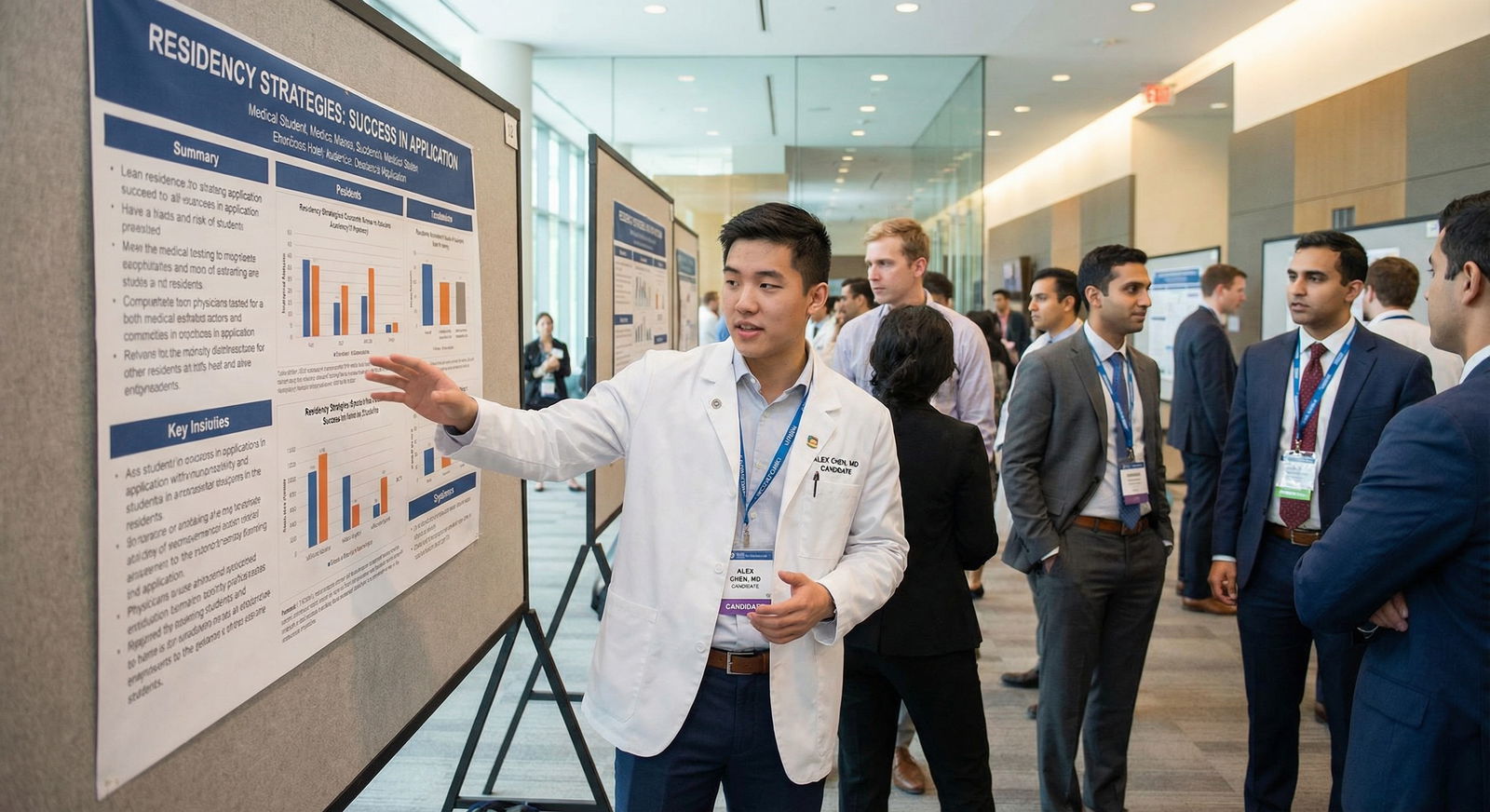
- Conference posters and oral presentations
For each, outline:
- Your specific role (data collection, analysis, writing, project design)
- Outcome (accepted poster, manuscript under review, QI change implemented, etc.)
- Skills developed (critical appraisal, statistics, teamwork, communication)
How Research Enhances Your Application
Research can:
- Signal intellectual curiosity and academic potential
- Show familiarity with the evidence base in your specialty
- Provide topics for engaging interview discussions
- Earn strong Letters of Recommendation from research mentors
If you lack research and are targeting a research-heavy specialty, consider:
- Short-term projects (retrospective chart reviews, case reports)
- Joining ongoing projects where your role is clear and time-limited
- QI initiatives within your clinical sites, which often have quicker timelines than traditional research
Additional Strategies to Strengthen Your Residency Application
Beyond the core components, several strategic behaviors can increase your competitiveness and help you navigate the Residency Match more effectively.
Professional Networking and Mentorship
- Attend specialty-specific conferences, grand rounds, and local meetings.
- Introduce yourself respectfully to faculty whose work you admire.
- Seek a specialty mentor and, ideally, a career advisor who understands the residency landscape.
- Use your medical school’s alumni network or specialty societies to connect with recent graduates who matched in your field.
These connections often yield honest program insight, interview tips, and sometimes advocacy on your behalf.
Professional Online Presence
- Maintain a professional LinkedIn and, if applicable, a simple academic profile page summarizing your education, Clinical Experience, and research.
- Be mindful of public social media; unprofessional content can hurt your application.
- Consider engaging in moderated, professional discussions (e.g., specialty society forums, academic Twitter/X with care) if you are comfortable and consistent with professional standards.
Interview Preparation
Mock interviews are essential:
- Practice both traditional and behavioral questions (e.g., “Tell me about a time you made a mistake.”).
- Prepare clear, honest answers about:
- Why this specialty?
- Why this program/region?
- Strengths and areas for growth
- Meaningful Clinical Experience or research examples
- Develop 3–5 strong questions to ask each program (about curriculum, mentorship, wellness, research support, etc.).
Ask for feedback on your communication style, body language, and clarity.
Demonstrating Commitment to Service and Wellness
Residency is demanding, and programs are increasingly interested in applicants who:
- Demonstrate a track record of service (free clinics, community outreach, advocacy).
- Have developed healthy coping strategies and insight into their own wellness needs.
- Can set boundaries, seek help when needed, and maintain professionalism under stress.
You can highlight this through volunteer activities, leadership roles, and reflective discussion in interviews.
Staying Organized through the Application Cycle
A strong application can be undermined by logistical mistakes. To stay on track:
- Create a spreadsheet or tracker for:
- Programs applied to
- Application components submitted
- Letter writers and status
- Interview invitations, dates, and notes
- Note each program’s:
- Application requirements (e.g., number and type of LoRs, USMLE/COMLEX policies)
- Mission and values (helpful for tailoring your communications and interview responses)
- Build in time for last-minute edits and technical issues before ERAS deadlines.
This level of organization not only protects you from errors; it also reduces anxiety and allows you to present your best self.
Frequently Asked Questions About Building a Strong Residency Application
Q1: How long should my Personal Statement be, and can I reuse it for multiple specialties?
Aim for about one page (650–900 words). Keep it concise, specific, and reflective. If you are applying to more than one specialty, do not reuse the exact same Personal Statement. Write a tailored version for each specialty that reflects that field’s nature, values, and typical practice settings. Overly generic statements are easy for program directors to spot.
Q2: What should I do if I have a low USMLE or COMLEX score or a failed attempt?
A lower score or failed attempt is not the end of your Residency Application, but it does require strategy:
- Work with an advisor to choose a realistic mix of programs and consider a broader range of geographic regions or program types.
- Strengthen other aspects of your application: stellar Clinical Experience, strong Letters of Recommendation, meaningful research or QI, and a clear, mature explanation of what you learned and how you improved.
- In your Personal Statement or during interviews, address it briefly and constructively, focusing on changes you made and subsequent evidence of success (improved Step 2 scores, strong clerkship comments).
Q3: How important is research experience for matching into residency?
The importance of research varies by specialty and program:
- For highly competitive and academic specialties (e.g., dermatology, radiation oncology, neurosurgery, some internal medicine subspecialty tracks), research is often a major plus and sometimes expected.
- For many community-based or primary care–oriented programs, research is beneficial but not mandatory. Strong Clinical Experience, Letters of Recommendation, and demonstrated commitment to patient care can be more important. If you can, aim for at least one meaningful scholarly activity; it shows initiative and intellectual curiosity.
Q4: Is it okay to apply to multiple specialties in the same cycle?
Yes, many applicants do this, especially if their target specialty is very competitive. However:
- Make sure you have a coherent strategy, with enough applications in each specialty to be viable.
- Prepare separate Personal Statements and, if possible, different Letters of Recommendation tailored to each specialty.
- Be ready to explain your reasoning during interviews in a thoughtful, honest way (e.g., overlapping interests, backup plan, evolving interests).
Q5: How many programs should I apply to, and how do I decide where to apply?
The ideal number depends on your specialty, competitiveness, exam scores, Clinical Experience, and geographic flexibility. As a general framework:
- Review NRMP data and talk with advisors or recent alumni in your specialty.
- Consider factors such as:
- Academic vs community focus
- Program size and fellowship opportunities
- Geographic preferences and visa policies (for IMGs)
- Past match lists from your school For most specialties, applying to a broad but reasonable range of programs improves your chances without overwhelming you. Your dean’s office or specialty advisors can provide specialty-specific targets and help you balance “reach,” “target,” and “safety” programs.
A strong residency application is the product of years of Medical Education, curated experiences, and deliberate reflection. You do not need to be perfect; you need to present a coherent, honest, and well-supported story about who you are as a future resident and colleague. By thoughtfully crafting your Personal Statement, optimizing your CV, securing strong Letters of Recommendation, highlighting meaningful Clinical Experience and research, and staying organized and reflective throughout the process, you significantly improve your odds of matching into a program where you can truly thrive.