Understanding Case Volume in Otolaryngology Residency
For an MD graduate interested in ENT residency, case volume is far more than a number on a program website. It directly shapes your operative skills, clinical confidence, and ultimate readiness for independent practice or fellowship. Evaluating residency case volume intelligently is one of the most high‑yield steps you can take as you decide where to train.
This article will walk you through:
- How case volume works in otolaryngology (ENT) residency
- What “good” case volume looks like—and what’s too low or too high
- How residency case volume and procedure numbers are tracked and reported
- How to compare ENT residency programs using more than just raw numbers
- Practical strategies and questions to ask on interview day
The focus is specifically for the MD graduate residency applicant coming from an allopathic medical school, aiming to navigate the otolaryngology match with a clear, data‑driven framework.
Why Case Volume Matters in ENT: Beyond Just Numbers
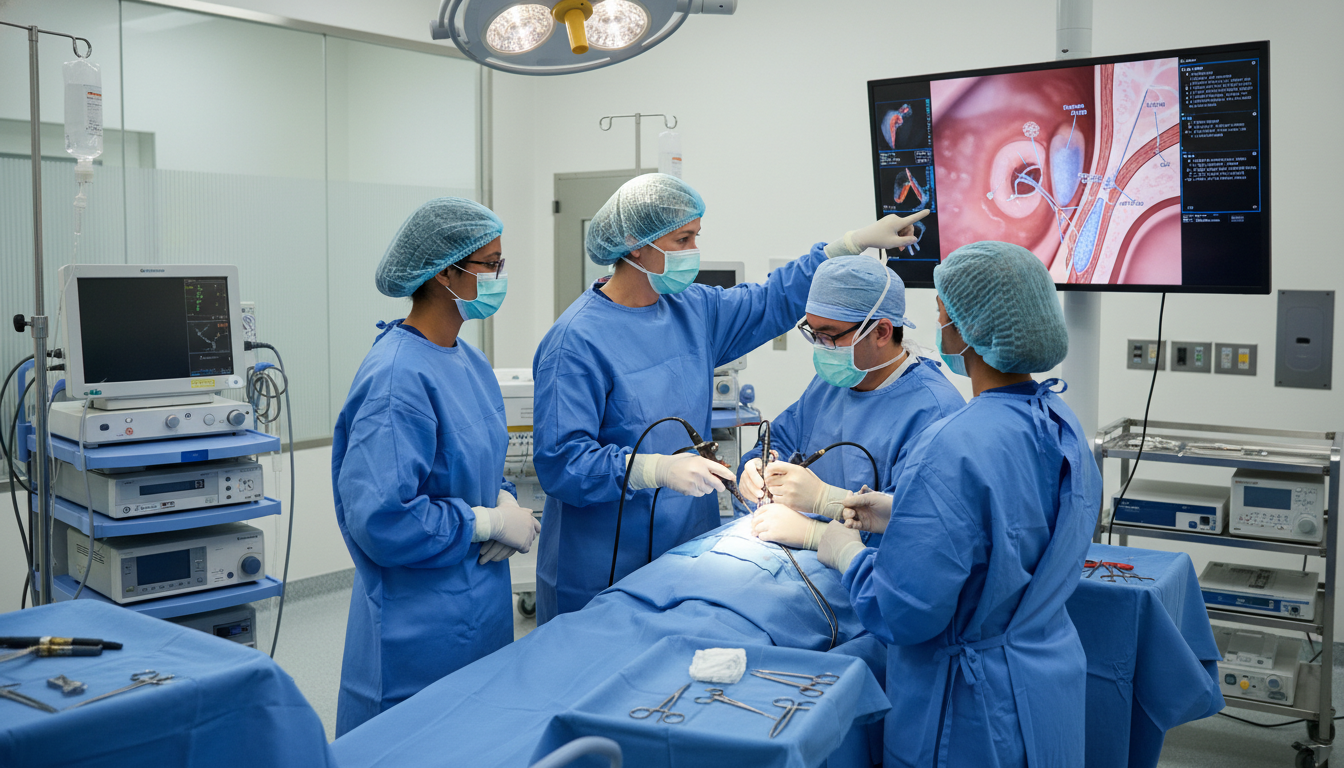
In a technically demanding specialty like otolaryngology, surgical volume and procedure numbers are central to your development.
1. Skill Acquisition and Operative Confidence
ENT procedures range from very delicate micro‑surgery to high‑stakes airway emergencies. You need repetition:
- Temporal bone work: Mastoidectomy, ossiculoplasty, cochlear implantation
- Airway and laryngeal surgery: Tracheostomy, laryngoscopy, microlaryngoscopy with laser
- Sinonasal procedures: Endoscopic sinus surgery, skull base approaches
- Head and neck oncology: Composite resections, neck dissections, free flap reconstruction
Each procedure has a steep learning curve. Doing something 10 times is very different from doing it 50–100 times under varied clinical scenarios, attendings, and levels of complexity.
2. Breadth vs. Depth of Experience
Solid ENT training demands both:
- Breadth: Exposure across otology, rhinology, laryngology, pediatric ENT, head & neck surgery, facial plastics, sleep, and general ENT.
- Depth: Sufficient case volume in key index operations to perform them independently by graduation.
A program might tout impressive total numbers, but if half your experience is tonsillectomies and ear tubes, you may finish residency underpowered in complex oncologic or endoscopic work.
3. Fellowship and Career Competitiveness
For MD graduates considering:
- Head & neck / microvascular fellowship
- Rhinology / skull base fellowship
- Otology / neurotology
- Pediatrics, laryngology, facial plastics, or sleep medicine
Fellowship directors often look at your case log patterns and letters that describe your hands‑on role. Robust otolaryngology match programs know this and will actively structure rotations to build strong case portfolios.
For those going directly into practice, particularly in community or regional settings, your operative independence depends heavily on:
- Your personal case numbers
- Complexity of cases you handled as the primary surgeon
- Comfort with call and emergencies (e.g., airway, epistaxis, neck infections)
How Case Volume Is Defined and Tracked in ENT
To evaluate ENT residency case volume intelligently, you need to understand what the numbers really represent.
Key Concepts and Definitions
Total Case Volume
The sum of all surgical procedures you participate in during the residency. Programs may share an “average total case volume per graduate” to applicants.Category‑Specific Volume
Cases are categorized, typically by ACGME criteria (may change with time), for example:- Otology/Neurotology
- Rhinology/Endoscopic Skull Base
- Laryngology/Airway
- Pediatric Otolaryngology
- Head & Neck Oncology / Microvascular Reconstruction
- Facial Plastics and Reconstructive Surgery
- Sleep Surgery
- General ENT procedures
Role in the Case
Case logs generally differentiate between:- Surgeon/Primary: You are the main operating resident, often performing critical steps under supervision
- Assistant: You play a secondary role, assisting the primary surgeon
- Observer: You’re present but not meaningfully operating (often not logged or minimally counted)
Only when you are consistently moving into the primary surgeon role do high case volumes translate into real surgical ability.
- ACGME Case Log System
Most allopathic ENT residencies use the ACGME case log system:- Residents enter procedures, CPT codes, and roles
- Programs and the ACGME track cumulative experience
- Minimums are set for certain key procedures and categories
These metrics matter at both individual and programmatic levels.
Typical ENT Residency Case Volume Ranges
While exact numbers evolve over time and vary by program, a rough conceptual framework:
Total surgical cases by graduation (broad conceptual range):
- Low: ~1,000–1,200
- Moderate: ~1,300–1,600
- High: ~1,700–2,000+
Case numbers in major categories (over 5 years, conceptual examples):
- Tympanoplasties/mastoidectomies: dozens to >100 in stronger otology programs
- Endoscopic sinus surgeries (FESS): 75–150+
- Neck dissections: 30–70+
- Microlaryngoscopy: 50–120+
- Pediatric ENT index cases: high volume in children’s hospitals
These numbers aren’t rigid benchmarks; they help you compare relative strength across programs.
Evaluating ENT Residency Case Volume: A Structured Framework
As an MD graduate from an allopathic medical school preparing for the otolaryngology match, use a deliberate, multi‑step approach when comparing ENT residency programs.
1. Look Beyond “Total Cases” on the Website
Programs may highlight:
- “Average graduate completes 1,800+ cases”
- “High‑volume tertiary referral center”
Ask deeper questions:
- How are those cases distributed across subspecialties?
- How many are outpatient minor procedures vs. complex reconstruction?
- What proportion are logged as primary surgeon vs. assistant?
Actionable Tip:
When programs list only a single global number (e.g., “average 1,500 cases per resident”), make a note to ask for category‑specific breakdowns during interviews or second looks.
2. Evaluate Distribution Across Subspecialties
Ideally, your residency should provide balanced exposure across the ENT spectrum, with opportunities to deepen skill in your areas of interest.
Ask (or research):
- Otology: Are there dedicated otology / neurotology faculty? Cochlear implants? Stapes surgery? Skull base collaboration with neurosurgery?
- Rhinology: Volume of FESS, revision sinus surgery, frontal sinusotomy, CSF leak repairs, skull base cases.
- Head & Neck: Frequency of neck dissections, laryngectomies, composite resections, microvascular free flaps.
- Pediatrics: Dedicated children’s hospital? Volume of airway reconstructions, complex pediatric cases vs routine tonsillectomies and ear tubes.
- Laryngology: Exposure to voice surgeries, office‑based laryngeal procedures, airway stenosis cases.
- Facial Plastics: Rhinoplasty, facial trauma, Mohs reconstruction, cosmetic exposure (if any).
A red flag is when a program’s case volume is heavily skewed—for example, very high general ENT but minimal exposure to oncology or rhinology.
3. Understand Graduated Responsibility
Raw volume is meaningless without progressive autonomy.
Key questions for residents and faculty:
- When do residents typically begin as primary surgeon on common cases (e.g., tonsillectomy, tracheostomy, myringotomy)?
- By PGY‑4/PGY‑5, are seniors routinely the lead surgeon on complex cases (neck dissections, total laryngectomies, major sinus cases)?
- Are cases ever “attending‑heavy,” where residents mainly retract or assist even on core procedures?
Example Scenario:
Two programs both advertise ~1,600 total cases. In Program A, seniors are primary surgeons on almost all major head and neck cases, and juniors handle bread‑and‑butter ENT with escalating autonomy. In Program B, complex cancer resections are almost always attending‑driven, and residents do fewer critical steps. The numbers may look similar, but the training impact is not.
4. Balance Volume With Education and Wellness
More is not always better. Very high volume (e.g., >2,000 cases per graduate) can sometimes indicate:
- Overloaded call schedules with limited teaching
- Service demands that may crowd out didactics, research, or reflective learning
Indicators of a healthy volume‑education balance:
- Structured didactic curriculum (weekly conferences, grand rounds, tumor boards) maintained even on busy services
- Access to temporal bone lab, dissection courses, and simulation labs
- Reasonable duty hours compliance
- Faculty invested in teaching, not just throughput
A strong ENT residency optimizes both surgical volume and thoughtful education.
5. Case Volume Across the Training Years
ENT residency is typically 5 years (1 intern year + 4 years ENT), with progressive ENT exposure.
When asking about case volume by PGY year:
- PGY‑1: Mostly off‑service (general surgery, ICU, anesthesia) + some ENT exposure. Limited OR time but foundational skills.
- PGY‑2: Significant introduction to OR; high volume of routine ENT (tonsillectomy, myringotomy, simple nasal procedures, tracheostomy).
- PGY‑3: Increasing subspecialty time (peds, rhinology, head & neck); more complex primary surgeon experience.
- PGY‑4/5: Senior roles, complex cases, leadership on teams. Majority of your higher‑complexity case volume should accumulate here.
Ask current residents:
- “By the end of PGY‑3, about how many FESS or neck dissections have you done as primary?”
- “Do you feel your operative growth clearly escalates from year to year?”
Consistent, progressive surgical volume is as important as the final total.

Using Case Volume to Compare ENT Programs During the Match
As an MD graduate preparing for the allopathic medical school match in otolaryngology, you’ll want a practical strategy to gather and interpret data.
1. Pre‑Interview Research: What You Can Find Publicly
Before interviews:
Review program websites for:
- Statements like “high surgical volume,” “tertiary referral,” “Level I trauma center,” or “regional head and neck cancer center” (may signal robust case numbers)
- Mention of case minimums and whether residents “exceed ACGME requirements”
- Presence of multiple hospitals (VA, children’s hospital, county hospital, cancer center) which often diversifies residency case volume
Look for:
- Annual reports or presentations mentioning procedure numbers
- Published alumni destinations: do many grads go to highly competitive fellowships (often correlated with strong operative experience)?
Create a comparison sheet with programs and columns for:
- Approximate total case volume (if available)
- Strengths (e.g., “heavy head & neck,” “strong peds,” “high rhinology volume”)
- Potential gaps (“limited facial plastics,” “no in‑house microvascular service”)
2. High‑Yield Questions to Ask on Interview Day
Use your interviews to clarify surgical volume and procedure numbers without sounding purely numbers‑driven. Sample questions:
To faculty or program leadership:
- “How would you describe your program’s overall case volume compared with national averages?”
- “In which subspecialty areas do residents get the most operative experience? Are there any areas where they tend to need to supplement with electives or away rotations?”
- “How do you ensure residents move from assisting to being primary surgeons on key index cases?”
To current residents (especially PGY‑4/5):
- “Roughly how many FESS, mastoidectomies, and neck dissections have you done so far as primary?”
- “Do you feel like you’re ever competing with fellows or other residents for cases?”
- “Are there procedures you wish you had more exposure to?”
- “Do graduates feel comfortable going straight into practice, or do they typically feel a need to fellowship because of case gaps?”
The content and tone of resident responses often tell you as much as the numbers themselves.
3. Interpreting Mixed Signals
You may encounter situations like:
- Faculty: “We are a very high‑volume surgical program.”
- Residents: “We’re busy, but we wish we saw more complex oncology or advanced rhinology.”
Or:
- Faculty: “We exceed ACGME case minimums.”
- Residents: “Technically yes, but seniors often watch fellows do the biggest cases.”
Use these cues to understand:
- Whether volume is matched by resident opportunity
- Whether fellow presence enhances or restricts your operative experience
A well‑run program with fellows often provides excellent exposure and teaching, but if fellows routinely take the most complex parts of cases, your personal procedure numbers may not fully reflect the program’s overall volume.
4. MD Graduate Perspective: Translating Numbers to Readiness
Coming from an allopathic MD program, you’ve likely:
- Logged limited independent procedural numbers in medical school
- Seen wide variability in attending teaching styles
- Observed differences in how residents participate in surgery
Use your medical school experiences as a reference point:
- Programs where residents are clearly empowered to operate—and can articulate their case volume with confidence—are often strong training environments.
- If senior residents are vague or hesitant when describing their operative portfolio (“I’m not sure exactly how many mastoids I’ve done”), that may indicate less emphasis on tracking and ownership of surgical growth.
Ultimately, your goal is to match where you can say at graduation:
“My case volume and case mix have fully prepared me for the next step.”
Putting It All Together: What “Ideal” Case Volume Looks Like
There is no single perfect number, but you can sketch a profile of a strong ENT residency from a case volume standpoint.
Features of a Strong Volume Profile
Total number of cases:
- Consistently exceeds ACGME minimums
- Falls into a moderate‑to‑high range (conceptually >1,400–1,500 cases) without being so extreme that residents are overwhelmed
Balanced subspecialty experience:
- Solid representation in otology, rhinology, laryngology, pediatric ENT, head & neck, and facial plastics
- Access to advanced procedures: cochlear implants, complex sinus/skull base, free flaps, airway reconstruction, etc.
Clear graduated autonomy:
- Juniors handle bread‑and‑butter ENT as primary
- Seniors clearly lead complex oncologic and advanced endoscopic cases with faculty guidance
Residents’ subjective confidence:
- Seniors express readiness for either fellowship or independent practice
- Alumni outcomes show success in both private practice and competitive fellowships
Educational infrastructure that supports high volume:
- Robust didactics, simulation, and anatomy labs
- Reasonable duty hours
- Faculty invested in teaching, not just OR throughput
Red Flags in Case Volume Evaluation
Be cautious if you observe:
Residents reporting:
- “We spend a lot of time on simple cases but don’t get to do the advanced parts.”
- “Fellows usually take over for the critical parts of head & neck or skull base surgery.”
- “I’m not sure I’d feel comfortable doing X procedure alone next year.”
Program data suggesting:
- Minimal exposure in one or more major ENT subspecialties
- Very low numbers in key index cases (e.g., handful of mastoidectomies or neck dissections per graduate)
- Overreliance on outside electives to fill core surgical gaps
You deserve a training environment where your residency case volume naturally builds a strong and comprehensive foundation.
FAQs: Case Volume and ENT Residency for MD Graduates
1. What is a “good” case volume for an ENT residency graduate?
There is no universal cutoff, but many strong programs fall in the 1,400–1,800+ total case range by graduation, with substantial numbers in key categories such as sinus surgery, neck dissections, and ear surgery. More important than a single number is the distribution of cases, your role as primary surgeon, and how confident graduates feel in their skills.
2. How can I compare surgical volume across ENT programs as an applicant?
Use a combination of:
- Program website information
- Questions during interviews about case breakdown by subspecialty
- Conversations with senior residents about their personal procedure numbers and autonomy
- Alumni outcomes (fellowship placement, practice patterns)
Focus on category‑specific case volume, not just one global number.
3. Does having fellows in an ENT program reduce resident case volume?
Not necessarily. In some high‑volume tertiary centers, fellows help manage complex referrals and actually expand the total number and complexity of cases, which can benefit residents. Problems arise if fellows consistently take the key operative steps away from residents. Ask residents directly how fellow presence affects their own procedure numbers and operative independence.
4. Should case volume be the deciding factor in my ENT rank list?
It should be a major factor, but not the only one. Also weigh:
- Program culture and resident camaraderie
- Faculty mentorship and support
- Geographic/location preferences
- Research opportunities and academic reputation (if relevant to your goals)
- Work‑life balance and wellness
The best choice is a program where case volume, quality of teaching, and personal fit align with your career goals in otolaryngology.
By approaching case volume evaluation thoughtfully, you’ll be better equipped to choose an ENT residency that provides not only impressive numbers, but the hands‑on surgical experience, autonomy, and confidence you need to thrive—whether you move on to fellowship or step directly into independent practice after the otolaryngology match.