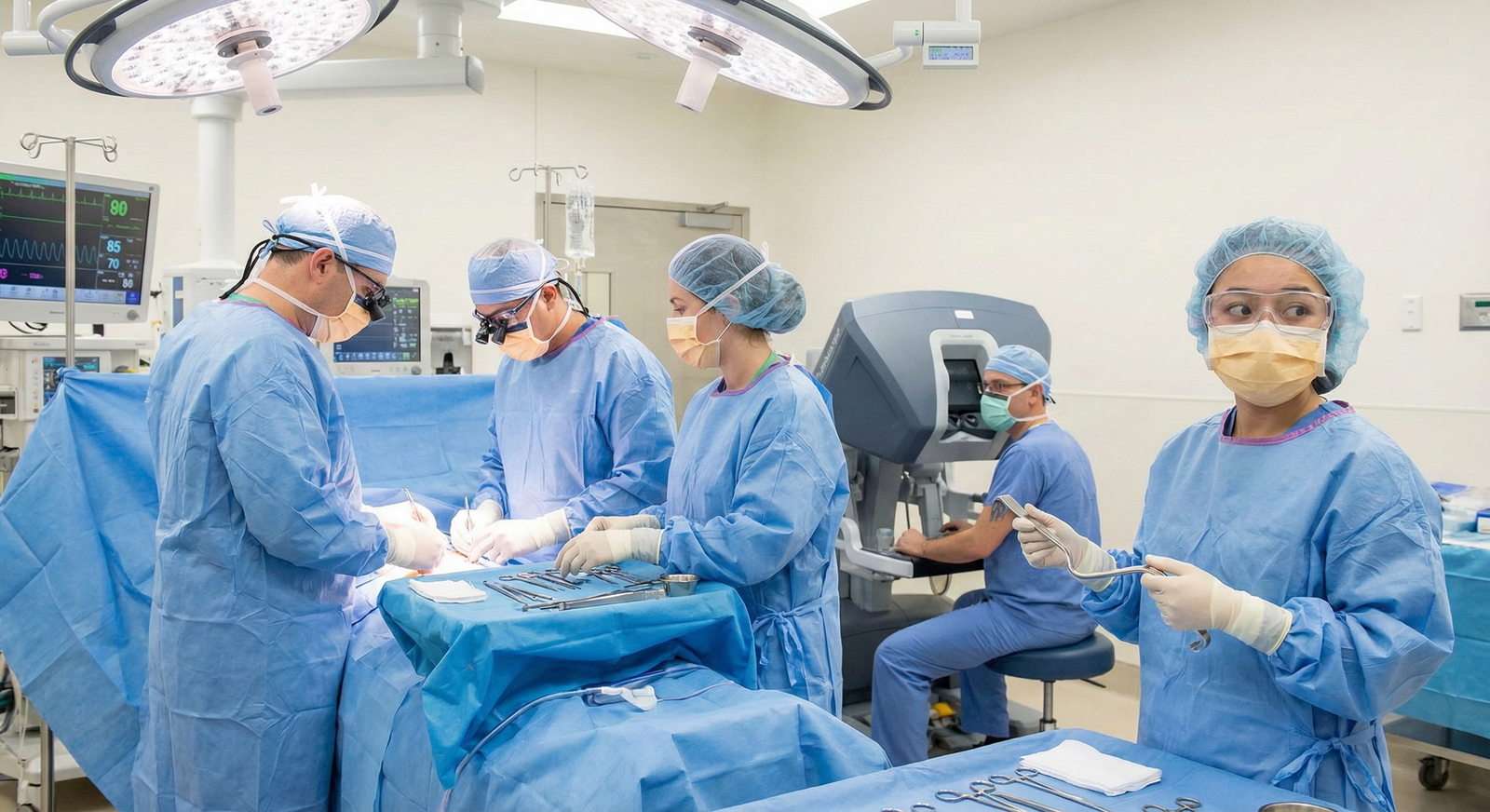
Understanding Case Volume: Why It Matters for Caribbean IMGs in OB‑GYN
If you are a Caribbean IMG targeting an OB GYN residency in the United States, understanding residency case volume is not optional—it’s strategic. Programs know that case numbers directly affect your readiness for independent practice, your comfort in the OR and on L&D, and your ultimate success on boards and in fellowship applications.
For Caribbean medical school residency applicants—whether from SGU (with the strong SGU residency match outcomes) or other Caribbean schools—case volume is one of the few objective quality markers you can evaluate from the outside. It helps you distinguish:
- A program where you will be primary surgeon and decision-maker
vs. - One where you are mostly observing or competing heavily for cases.
In Obstetrics & Gynecology, you are being trained to manage life‑threatening emergencies and high‑stakes decisions. That means you need:
- Sufficient obstetrics case volume (vaginal deliveries, C‑sections, obstetric emergencies)
- Solid gynecologic surgical volume (laparoscopic, abdominal, vaginal, hysteroscopies, minor procedures)
This article breaks down how to evaluate both surgical volume and obstetric case volume specifically as a Caribbean IMG. You will learn:
- The minimums you must meet to graduate and sit for the boards
- The case volume profile of a strong OB GYN residency
- How to interpret logs, ask targeted questions, and avoid red flags
- How Caribbean IMG status subtly changes what you should prioritize
Core OB‑GYN Case Minimums and What “Good Volume” Really Looks Like
Before comparing programs, you need a baseline. The American Board of Obstetrics and Gynecology (ABOG) and ACGME set standards for OB GYN residency training. While numbers evolve, the general framework stays stable: sufficient breadth and depth across obstetrics, gynecology, and subspecialties.
1. Minimums vs. Competence: Two Different Bars
Most programs will tell you: “We meet or exceed all ACGME/ABOG minimums.” That’s the floor, not the goal.
Think of case volume benchmarks in three categories:
Accreditation minimums
- Baseline requirements to graduate and be board-eligible
- If a program is only barely meeting these, you may graduate underprepared
Solid training range
- Where most well‑regarded community and university programs land
- Enough volume that you feel competent and confident
High‑volume training
- Often large community, county, or hybrid programs
- Regularly exceed minimums by a wide margin
- Excellent preparation for independent practice and fellowship competitiveness
2. Typical Case Volume Targets in OB‑GYN
Exact numbers vary, and you should always confirm up‑to‑date standards. But as a Caribbean IMG applicant, you can use approximate ranges to interpret what programs tell you.
Below is a practical target framework (not official standards, but realistic training goals many strong programs hit or exceed):
Obstetrics Case Volume
- Total deliveries as primary
- Minimum acceptable: ~150–200
- Solid: 200–250
- High volume: 250+
- Cesarean sections as primary surgeon
- Minimum: ~70–80
- Solid: 80–100
- High volume: 100+
You also want exposure (not always “minimum counted,” but crucial):
- High‑risk obstetrics
- Shoulder dystocia management
- Postpartum hemorrhage protocols and massive transfusion
- Operative vaginal deliveries (forceps/vacuum)
- Multiple gestations and preterm deliveries
Gynecologic Surgical Volume
- Total major gynecologic operations (e.g., hysterectomy, myomectomy, adnexal surgery)
- Minimum: ~100
- Solid: 150–200
- High volume: 200+
- Laparoscopic hysterectomies
- Minimum: 25–30
- Solid: 40–60
- High volume: 60+
- Vaginal hysterectomies
- Minimum: ~15–20
- Solid: 25–40
- High volume: 40+
Other procedure numbers that matter:
- Hysteroscopies and dilation & curettage (D&C)
- Laparoscopic adnexal surgery (cysts, ectopic pregnancies, torsion)
- Office procedures: colposcopy, LEEP, endometrial biopsy, IUD insertion/removal
Subspecialty Exposure
You need enough residency case volume to feel at least comfortable diagnosing and initially managing problems across:
- Maternal‑Fetal Medicine (complex obstetrics)
- Gynecologic Oncology (staging surgeries, debulking operations, chemo planning exposure)
- Reproductive Endocrinology & Infertility (basic exposure to infertility workup and ART concepts)
- Urogynecology (prolapse repairs, incontinence surgery, mesh/sling work)
A strong program will not only meet numbers but also ensure progressive autonomy: more responsibility each year.

How Caribbean IMGs Should Evaluate OB‑GYN Case Volume
As a Caribbean IMG, you’re often more scrutinized for clinical readiness. Programs want to know you can function autonomously and safely. That means your choice of program and its case volume profile directly affects:
- How comfortable you’ll be as a junior attending
- Your ability to handle emergencies alone at 3 a.m.
- How competitive you’ll be for fellowships (MFM, Gyn Onc, REI, MIGS, UroGyn)
Here’s a structured way to evaluate programs for case volume.
1. Start With the Basics: Program Type and Setting
Different program environments tend to have predictable volume profiles:
- County / safety‑net hospitals
- Often high obstetrics volume
- More medically complex patients
- Good for high‑risk OB and emergency gynecology
- Large community programs
- Strong surgical volume
- Heavy bread‑and‑butter OB and GYN
- Excellent for hands‑on experience and autonomy
- University / academic centers
- Strong subspecialty exposure, complex pathology
- Sometimes more competition with subspecialty fellows for surgical cases
- Case volume highly variable program to program
As a Caribbean IMG, high‑volume county or community‑based programs often give the richest hands‑on surgical volume and decision‑making responsibility. Academic centers can be excellent, but investigate carefully how much you’ll operate vs. observe.
2. What to Look for on Program Websites
Most programs mention:
- Annual number of deliveries (e.g., “We deliver 4,000 babies per year”)
- Number of major surgeries per year
- Distribution of sites (main hospital, VA, community hospitals)
Red flags or incomplete information:
- Only vague statements like “broad exposure” with no numbers
- Heavy emphasis on simulation but little detail on surgical volume
- Very low annual delivery numbers (<1,000 per main hospital) without clear explanation of how residents get enough experience
Look for:
- Annual delivery volume per site and how many sites residents cover
- Surgical volume in gynecology (especially minimally invasive and vaginal surgery)
- Presence of fellowships and whether residents still get primary surgeon roles
3. How to Ask Smart Volume‑Focused Questions on Interview Day
Do not ask: “Do you get enough cases?” Everyone will say yes.
Instead, ask targeted, concrete questions:
For residents:
- “About how many C‑sections were you primary on by the end of PGY‑2?”
- “How many hysterectomies did you log last year as primary surgeon?”
- “How often do you operate with fellows vs. alone with an attending?”
- “On L&D, who runs the floor and who scrubs the C‑sections—junior or senior resident?”
- “Have recent graduates felt prepared for independent practice, especially surgically?”
For program leadership:
- “Where do your graduating residents typically fall in terms of total deliveries and C‑sections?”
- “How do you ensure junior residents get sufficient procedural experience early on?”
- “If there’s a conflict between resident and fellow for a case, how is that resolved?”
As a Caribbean IMG, you can also (tactfully) ask:
- “Do Caribbean IMG residents here meet or exceed board case minimums without difficulty?”
- “Can you share how your Caribbean IMG graduates have felt about their case volume and readiness?”
You’re not just checking that they have volume—you’re checking whether it is accessible to you as a trainee.
4. Evaluating OB vs. GYN Balance
Programs can be unbalanced:
- Some are OB‑heavy with great delivery numbers but thin on major gynecologic surgery
- Others are GYN‑heavy with strong operative experience but less obstetrics volume
As a Caribbean IMG, you often benefit from strong volume in both because:
- OB competence is essential for community jobs and hospital privileges
- GYN surgical volume improves your autonomy and employability (and fellowship applications)
Ask:
- “Is there any concern about graduating with fewer major GYN cases or fewer deliveries?”
- “Which area do graduates feel strongest in—OB, GYN, or both?”
- “Have any graduates had trouble meeting case minimums in a particular category?”
Deep Dive: Obstetrics Case Volume and Clinical Readiness
For the obstetrics match, programs want residents who can handle the chaos of L&D. Your future attending job might involve being the only OB in-house overnight. The number and type of deliveries you see shapes your confidence.
1. Volume Benchmarks That Matter in Obstetrics
Beyond total deliveries and C‑sections, you want specific experiences:
- High‑risk OB exposure
- Severe preeclampsia, HELLP
- Diabetes in pregnancy
- Multiple gestations
- Severe fetal growth restriction
- Obstetric emergencies
- Shoulder dystocia
- Umbilical cord prolapse
- Uterine rupture
- Postpartum hemorrhage (PPH) and massive transfusion
- Operative vaginal deliveries
- Vacuum extraction
- Forceps use (depending on institutional culture)
Caribbean IMGs often come with varied clinical exposure from their home institutions and U.S. rotations. A high‑volume OB GYN residency helps cement these skills under U.S. standards and protocols.
2. How to Interpret L&D Volume Data
If a program tells you:
- “Our main hospital has 1,800 deliveries per year” with 24 residents
- That may be tight in terms of total volume per resident unless there are additional sites
- “We have 4,000+ deliveries per year and residents are in‑house 24/7 on L&D”
- Likely strong obstetrics case volume
Ask:
- “How many deliveries did the average PGY‑4 log last year?”
- “Do junior residents place epidurals, manage inductions, run triage?”
- “Who responds to obstetric emergencies first—residents or attendings?”
For a Caribbean IMG, meaningful hands‑on decision‑making, not just being present, is critical. You want to run codes, lead hemorrhage responses (with supervision), and coordinate with anesthesia and NICU.
3. Autonomy and Progressive Responsibility
Indicators of good obstetrics training:
- PGY‑1: Strong exposure to normal labor management, triage, routine vaginal delivery
- PGY‑2: Primary C‑section surgeon, managing complicated labors, basic consults
- PGY‑3/4: Running L&D, supervising juniors, managing high‑risk and complex scenarios
Ask residents directly:
- “By PGY‑3, do you feel comfortable independently managing a category II fetal heart tracing and deciding about augmentation vs. C‑section?”
- “Were there any cases where you felt unprepared or unsupported?”
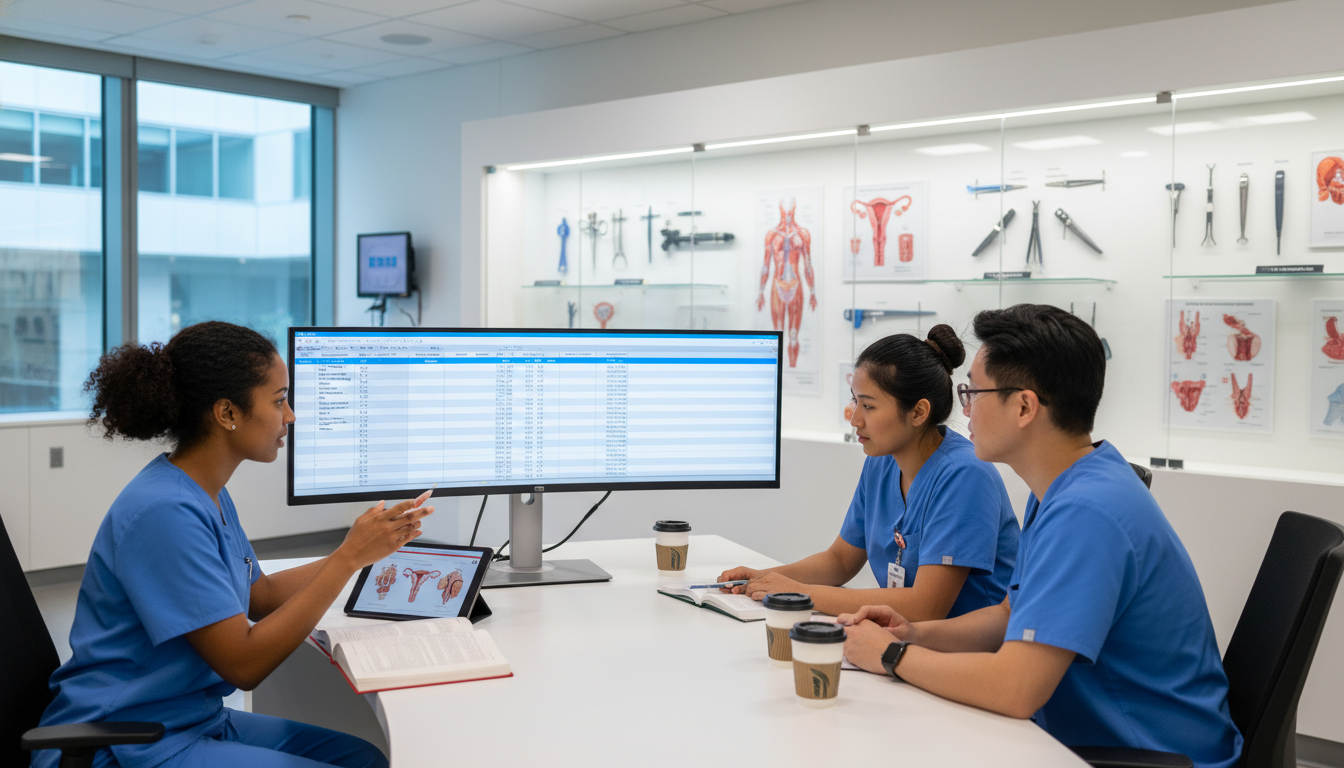
Surgical Volume, Procedure Numbers, and Fellowship Competitiveness
While obstetrics is half of your identity as an OB GYN, gynecologic surgical volume heavily influences how confident and marketable you are. For Caribbean IMGs, strong surgical volume can offset bias and show fellowship directors and employers that you are robustly trained.
1. Understanding GYN Surgical Volume Profiles
Look at the mix of procedures:
- Major abdominal surgeries (e.g., open hysterectomy, oncologic procedures)
- Minimally invasive surgeries (laparoscopic, robotic)
- Vaginal surgeries (vaginal hysterectomy, prolapse repairs)
- Office procedures and diagnostic procedures (hysteroscopy, D&C, colpo, LEEP)
High‑quality OB GYN residency training should produce a graduate who can:
- Perform standard hysterectomy confidently (at least via one or more approaches)
- Handle adnexal masses, ectopic pregnancies, and torsion surgically
- Perform basic urogynecologic repairs in collaboration with subspecialists
- Comfortably perform office procedures independently
2. Fellows vs. Residents: Who Gets the Cases?
In some academic programs, fellows dominate complex surgeries, leaving residents with fewer chief‑level cases. This is not always a problem—but you must evaluate the balance.
Questions to clarify this:
- “In Gyn Onc cases, what role do residents play? Are you primary on parts of the case?”
- “How often do MIGS or UroGyn fellows operate instead of senior residents on big cases?”
- “What is the average number of hysterectomies logged by graduating residents, and what proportion is minimally invasive vs. open vs. vaginal?”
As a Caribbean IMG, aim for programs where residents:
- Scrub into complex surgeries with real responsibility
- Have designated “resident cases” even when fellows are present
- Have opportunities to be primary surgeon on significant numbers of cases, not just first assistant
3. Impact on Fellowship Opportunities
If you might pursue:
- Minimally Invasive Gynecologic Surgery (MIGS)
- Gynecologic Oncology
- Urogynecology
- Maternal‑Fetal Medicine
Your surgical volume and procedure numbers become critical. Fellowship directors often examine:
- Total case log numbers
- Complexity of your surgical experience
- Diversity of surgical approaches (lap, vaginal, open)
Even if you are not firmly decided on fellowship, high surgical volume protects your future options.
For Caribbean medical school residency graduates, demonstrating strong surgical exposure can soften concerns some academic programs may have about non‑US school backgrounds, especially when combined with solid letters and research.
Strategic Advice for Caribbean IMGs: Using Case Volume to Guide Your Match Strategy
Your Caribbean IMG status should shape how you interpret residency case volume and how you present yourself as an applicant.
1. Aligning Your Background With Program Needs
Programs that value:
- Residents who are hard‑working, clinically focused, and hands‑on
- Service‑heavy, high‑volume workloads
- Residents who can triage and manage busy labor floors
…often appreciate Caribbean IMGs who have already worked hard during clinical rotations and are ready to step into high‑volume roles.
Emphasize in your application:
- Strong performance in core OB GYN rotations
- Any U.S. sub‑internships in high‑volume OB GYN services
- Comfort with procedures (documented via LORs and evaluations)
2. Leveraging SGU and Other Caribbean School Outcomes
If you are from SGU, the SGU residency match track record in OB GYN and other specialties demonstrates that Caribbean graduates do succeed—especially when they choose programs that train them rigorously. If you’re from another Caribbean medical school, focus on:
- Rotations at busy U.S. hospitals
- Mentors who can vouch for your clinical readiness
- Clear explanations of your surgical and obstetric experiences to date
When evaluating a Caribbean medical school residency pathway into OB GYN, think about case volume as your long‑term investment: will this program prepare you for any setting, from a rural hospital to a competitive fellowship?
3. Red Flags in Case Volume for Caribbean IMGs
Be cautious about:
- Programs that barely meet minimums, especially in gynecologic surgery
- Very low delivery volume per resident without clear explanation
- Heavy fellow presence with vague descriptions of resident operative roles
- Residents quietly admitting they “don’t feel comfortable” with certain procedures by graduation
As a Caribbean IMG, you might face extra scrutiny as a new attending. Graduating “just meeting minimums” is not enough. Aim to be well above that line where possible.
4. Making Your Rank List With Volume in Mind
When ranking programs, consider:
- Does this program’s obstetric case volume prepare me for real‑world emergencies?
- Does the surgical volume and procedure numbers make me a confident surgeon by PGY‑4?
- Can I see myself handling an unsupervised C‑section or urgent ectopic at 3 a.m. on my first job comfortably?
Balance this with other factors (culture, geography, support systems), but do not sacrifice essential operative and obstetric experience for minor lifestyle preferences—especially as a Caribbean IMG trying to maximize training quality.
FAQs: Case Volume Evaluation for Caribbean IMGs in OB‑GYN
1. What is the minimum case volume I should look for as a Caribbean IMG entering OB GYN residency?
You should ensure any program clearly meets ACGME/ABOG minimums, but as a practical target aim for:
- At least ~200 deliveries and ~80–100 C‑sections as primary surgeon
- At least ~150 major gynecologic operations, with a substantial portion being minimally invasive or vaginal hysterectomies
Programs hitting these “solid” ranges or higher generally prepare graduates well for community practice and early fellowships.
2. Are academic programs with fellows bad choices for Caribbean IMGs because of lower surgical volume?
Not necessarily. Some academic programs structure cases so residents still have excellent operative volume and operate alongside fellows with clear role division. The key is not whether fellows exist, but:
- Do residents consistently act as primary surgeons?
- Do graduating chiefs have strong numbers in hysterectomy and complex cases?
Ask current residents for honest feedback; do not rely solely on program brochures.
3. How can I verify case volume claims from a program?
You can’t directly see confidential logs, but you can:
- Ask residents for typical numbers they logged last year
- Ask leadership for average case numbers for recent graduates
- Compare statements from multiple residents (formal and informal interactions)
Consistency across responses is a good sign. If answers are vague or conflicting, be cautious.
4. I’m a Caribbean IMG with limited prior OR experience. Should I still prioritize high surgical volume programs?
Yes. Lack of prior experience is exactly why you need strong surgical volume and structured teaching. A supportive, high‑volume environment will:
- Give you repetition to build muscle memory and judgment
- Allow progressive autonomy under supervision
- Make you more comfortable by graduation than a low‑volume setting would
Focus on programs that combine high volume with strong teaching and a reputation for nurturing residents of varied backgrounds, including IMGs.
By systematically evaluating obstetrics case volume, surgical volume, and actual resident experience, you can choose an OB GYN residency that transforms your Caribbean IMG background into a strength—graduating as a confident, capable, and competitive obstetrician‑gynecologist.