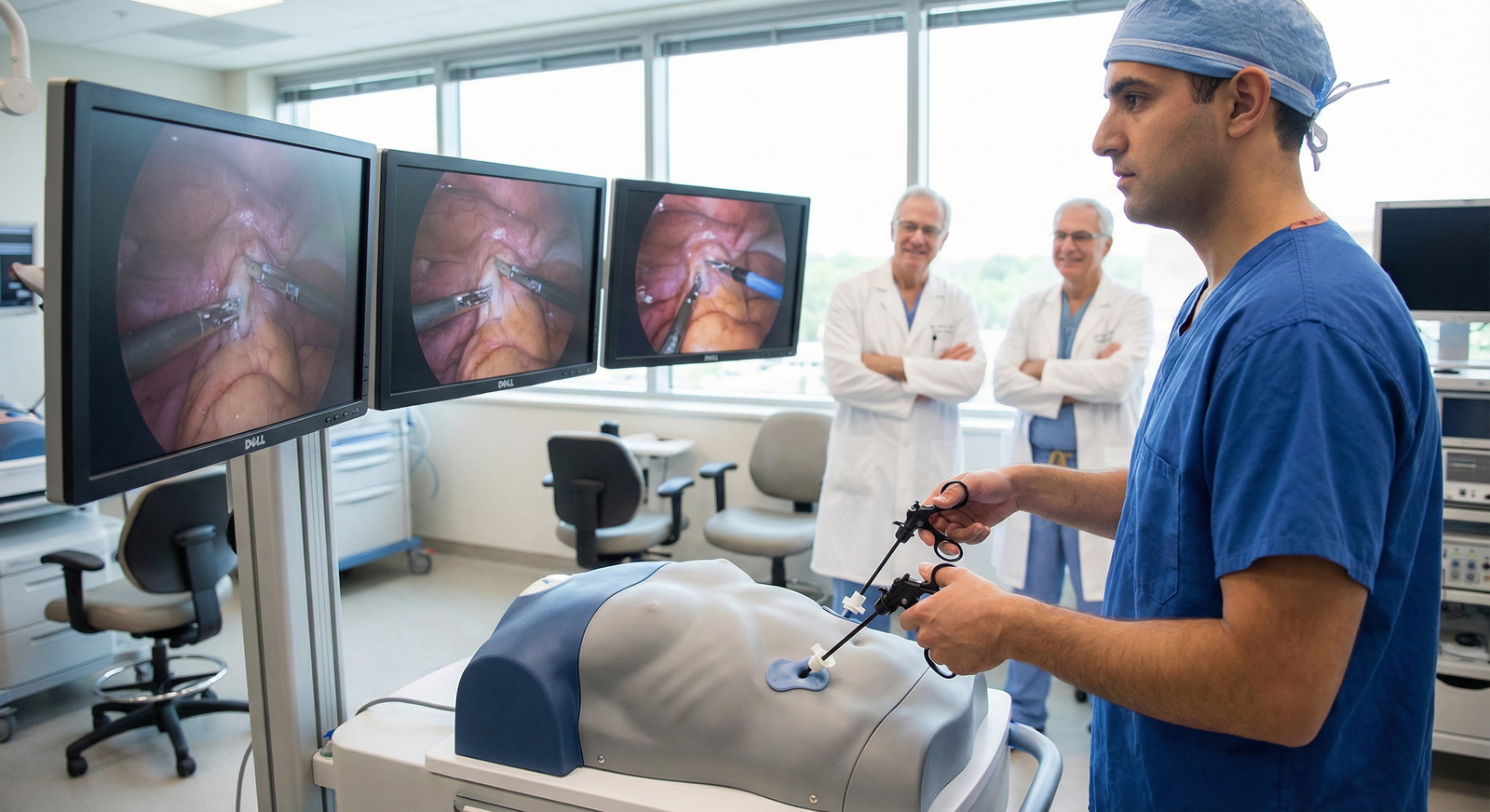
Case volume is one of the most critical—and least clearly explained—factors for anyone pursuing general surgery residency. For a US citizen IMG, understanding surgical volume, procedure numbers, and how to evaluate residency case exposure is essential for both the surgery residency match and your long‑term career.
This article breaks down how to evaluate case volume in general surgery programs, what numbers actually mean, how to ask smart questions during interviews, and how an American studying abroad can position themselves competitively.
Why Case Volume Matters So Much in General Surgery
For general surgery, you’re not just learning facts—you’re learning a technical craft. That craft requires:
- Repetition
- Graded responsibility
- Progressive autonomy
- Exposure to complexity and variety
All of those are driven by case volume and case mix.
Case Volume vs. Case Mix vs. Case Complexity
When you evaluate a general surgery residency, you need to distinguish:
Total case volume:
How many operations residents participate in during training (e.g., total logged cases per resident by graduation).Case mix:
What types of procedures and subspecialties residents are exposed to:- Bread‑and‑butter general surgery (hernia, cholecystectomy, appendectomy, bowel resection)
- Trauma/emergency surgery
- Hepatobiliary, colorectal, thoracic, vascular, endocrine, breast, minimally invasive, etc.
Case complexity:
How many advanced, high‑acuity, or technically demanding procedures residents perform—e.g., pancreatic resections, complex oncologic resections, emergent laparotomies, reoperative surgery.
A program with a huge volume but mostly low‑complexity cases is very different from a moderate‑volume program with many complex oncologic and acute care surgery cases.
Why This Is Especially Important for US Citizen IMGs
As a US citizen IMG or American studying abroad, you’re often evaluated with extra scrutiny. Strong technical training helps you:
- Build confidence and competence by PGY‑3/4
- Demonstrate readiness for fellowship (if desired)
- Counteract bias that IMGs may be “less prepared” clinically or technically
- Build a robust portfolio of logged cases and experiences to support letters of recommendation and future job/fellowship applications
In short, solid case volume and procedural exposure can meaningfully level the playing field.
Understanding ACGME Requirements and Typical Case Numbers
Before evaluating any specific program, you need a baseline understanding of what’s required and what’s typical.
ACGME Minimums: The Floor, Not the Goal
The ACGME (Accreditation Council for Graduate Medical Education) sets minimum case numbers for graduating general surgery residents. These minimums vary by category and change periodically, but the principle is:
- They represent a safety floor, not a mark of excellence.
- A strong program will have residents comfortably above those thresholds.
Key categories include (representative examples; numbers may change over time):
- Total Major Cases
- Chief Year Cases
- Upper & Lower GI
- Hepatopancreatobiliary
- Breast, Endocrine
- Vascular (non‑cardiac)
- Trauma / Critical Care / Emergency Surgery
- Laparoscopy / Minimally Invasive Surgery
When you’re evaluating programs, you’re not just asking, “Do they meet the minimum?”
You’re asking, “By how much do they exceed it and in which areas?”
Typical Case Volumes at Graduation
While the exact numbers vary by program type (community vs. academic, trauma levels, etc.), you’ll frequently see:
Total major cases:
Many robust programs: 1,000–1,500+ by graduation
Bare‑minimum programs: numbers dangerously close to required minimumsChief year cases:
Often 150–250+ as primary surgeon, depending on program structureLaparoscopic cases:
A strong program ensures high exposure to:- Lap chole
- Lap appendectomy
- Lap hernia repair
- Lap colectomy and foregut
You will not always find precise numbers easily published, but you can get a strong sense from what programs share and how residents describe their experience.
How to Evaluate Case Volume Before You Apply
For a US citizen IMG, your application strategy should be data‑driven. You often have fewer home program advantages and need to actively target training environments with strong operative exposure.
1. Use FREIDA and Program Websites Strategically
Start with FREIDA and program websites to gather clues about surgery residency case volume and structure:
Look for:
- Statements like “High surgical volume,” “Heavy operative experience,” “Trauma‑heavy program”
- Number of OR suites, annual surgical cases, or annual trauma activations
- Presence of:
- Level I trauma center
- High‑volume cancer center
- Busy emergency general surgery/acute care surgery service
- Case logs or summary charts for recent graduates (some programs publish anonymized data)
If a program emphasizes research, conferences, and fellowships but says almost nothing specific about operative experience or procedure numbers, that’s a red flag to investigate more deeply.
2. Understand Program Type and Its Implications
Different program types tend to have different case patterns:
Large academic centers
- Pros: More complex cases, subspecialty exposure, diverse case mix, strong trauma at many sites
- Cons: Fellows may compete for cases in certain subspecialties; junior residents may see more floor and ICU work initially
Community programs (single or multiple hospitals)
- Pros: Often very high operative autonomy, lots of bread‑and‑butter general surgery, residents frequently first assist or primary on routine cases
- Cons: Less complex subspecialty exposure at some sites; may require away rotations for transplant, pediatric surgery, etc.
Hybrid programs (academic‑community partnerships)
- Often a strong balance of volume and complexity, with academic resources and community autonomy
As a US citizen IMG, you should not automatically default to one type. Instead, prioritize:
- Sufficient total volume
- Good exposure to core general surgery
- Clear pathways to autonomy by PGY‑3+
- A culture of resident‑first case allocation
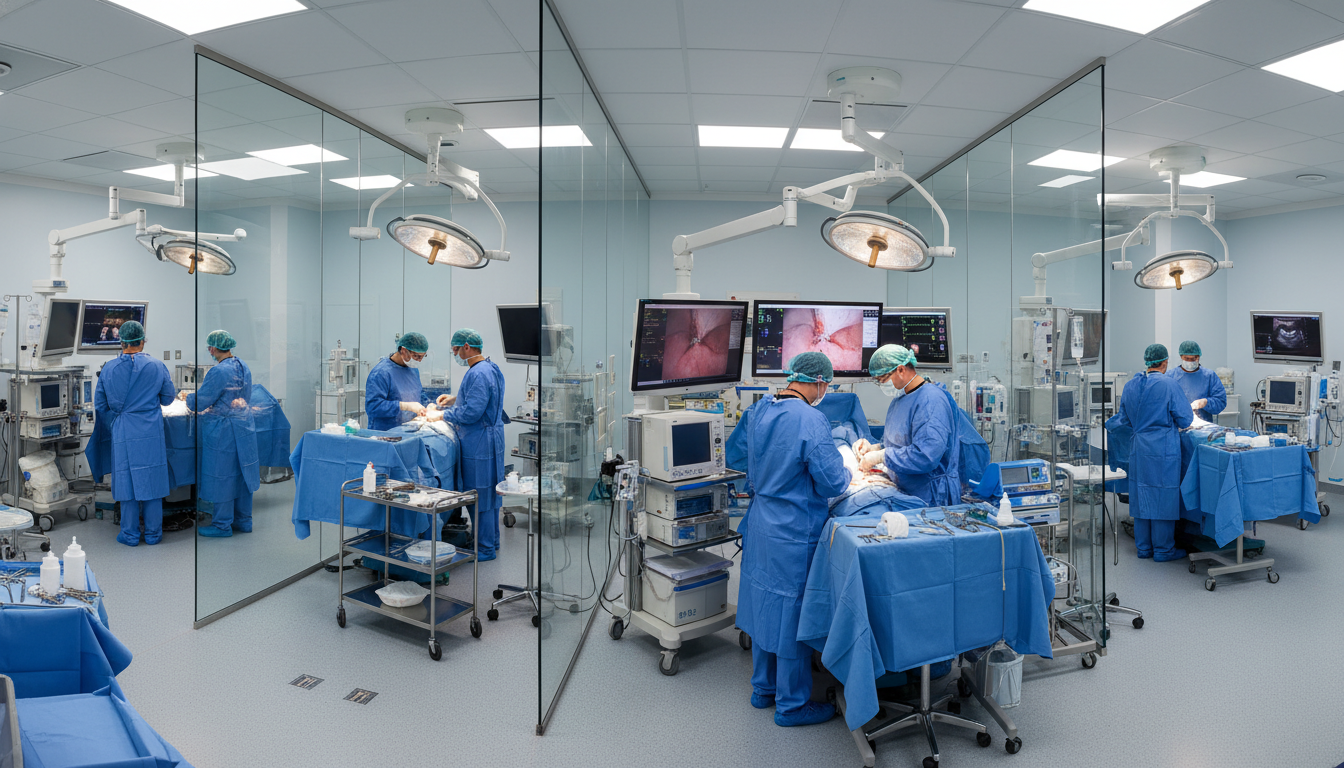
Evaluating Case Volume During Interviews and Virtual Interactions
The interview season is your best opportunity to gather granular data about surgical volume, procedure numbers, and resident experience. As a US citizen IMG, you should go in with prepared, specific questions.
What to Ask Residents (and How to Interpret the Answers)
Here are targeted questions you can ask current residents:
“Roughly how many cases have you logged so far by PGY level?”
- Listen for specific approximate numbers, e.g.:
- PGY‑2: “I’m at about 250 cases.”
- PGY‑4: “Around 850 cases; likely 1,200+ by graduation.”
- Vague answers like “We get a lot of cases” without numbers can be a sign they don’t track or don’t exceed minimums by much.
- Listen for specific approximate numbers, e.g.:
“How early do you start operating regularly as the primary surgeon?”
- Strong responses:
- “By the end of PGY‑1, I was doing lap appendectomies and cholecystectomies with close attending supervision.”
- “As a PGY‑2, I regularly do bread‑and‑butter cases.”
- Strong responses:
“Are there any services where you feel overworked clinically but underexposed operatively?”
- Every program has some imbalance, but if multiple residents mention long floor/ICU months with very little OR time, that’s a concern.
“Do you ever feel you’re competing with fellows for cases?”
- Many academic programs have fellows. A healthy culture:
- Residents still get primary roles in core cases
- Fellows focus on the most advanced or technically demanding cases
- Problematic programs:
- Residents say, “We rarely do the big cases; those always go to fellows.”
- Many academic programs have fellows. A healthy culture:
“By graduation, do you feel fully prepared for independent general surgery practice?”
- Pay attention to body language and consistency of residents’ answers across PGY levels.
What to Ask Program Leadership
Program directors and faculty can give you a structured overview:
“Where do your residents stand relative to ACGME minimums?”
Ideal answer: “Our graduates surpass minimums comfortably across all categories, especially in [e.g., laparoscopy, emergency general surgery]….”“How do you ensure residents achieve adequate procedural numbers across subspecialties?”
Look for:- Rotations designed around high‑volume services
- Regular review of individual resident case logs
- Re‑assignment or extra rotations if a resident is low in a category
“How has your case volume trend changed over the past 3–5 years?”
Programs expanding hospital coverage or trauma level often have increasing case volume, which benefits residents.
Evaluating Culture: Who Actually Gets the Cases?
Numbers alone don’t tell the full story. You also need to evaluate distribution and autonomy:
- Does the chief resident run many cases independently (with attending supervision)?
- Do junior residents scrub in and perform portions of the case instead of just retracting?
- Are attendings committed to teaching and gradually handing off the case rather than doing everything themselves?
US citizen IMGs should pay special attention to inclusivity:
- Ask residents: “Do IMGs here get any less operative exposure or opportunity than US MDs/DOs?”
- Speak directly (if possible) with current or recent IMGs in the program.
A good program will respond with genuine surprise at the question and reassure you, with examples, that opportunity is based on performance, not background.
Matching Strategy: Aligning Case Volume With Your Career Goals
Understanding case volume is only half the battle; you must align program options with your own professional plans as an American studying abroad.
If You Want Community General Surgery Practice
Your priorities should include:
- High total volume: 1,200–1,500+ cases by graduation
- Plenty of core general surgery (hernia, chole, appendectomy, colon, small bowel, emergency laparotomy)
- Graduated autonomy with robust chief year: running rooms, managing call independently (appropriately supervised)
- Exposure to endoscopy (EGD and colonoscopy), which is essential for many community jobs
Such programs are often high‑volume community or hybrid programs with a strong focus on generalist training.
If You Want Fellowship (e.g., Surgical Oncology, MIS, Trauma/CC, Colorectal)
You still need strong general surgery volume, but you should also seek:
- A broad case mix: complex GI, hepatobiliary, upper GI, colorectal, advanced laparoscopy
- High exposure to specific subspecialty cases relevant to your intended fellowship
- Mentorship and faculty in that subspecialty
- Opportunities for research and presentations, in addition to high surgical volume
Remember: fellowship directors care about technical foundation and judgment. A well‑trained resident from a high‑volume community program can be very competitive if they have the right mentorship and scholarly activity.
Balancing Operative Volume vs. Lifestyle and Support
Programs with intense case volume sometimes come with:
- Heavier call schedules
- Less time for research
- Higher physical and emotional demands
Ask yourself realistically:
- Can you thrive in a busy, high‑volume OR environment?
- Do you have the resilience and systems (family, coping strategies) to handle a steep learning curve and long hours?
- Is there enough support for wellness and professional development?
For US citizen IMGs, who may be further from family support networks, it’s especially important to find programs that balance volume with a culture of mentorship and resident support.

Practical Steps for US Citizen IMGs to Maximize Case Exposure
Beyond choosing the right program, there are concrete actions you can take once you match to enhance your operative experience.
1. Be Proactive About Case Logs From Day One
- Learn the case logging system (ACGME or equivalent) early.
- Log cases daily or weekly, not months later.
- Monitor your numbers by category—recognize early if you’re weak in an area.
By tracking your own procedure numbers, you’ll be better positioned to request specific rotations or cases if you’re low in a particular domain (e.g., vascular, complex laparoscopy).
2. Show Up Early, Be Prepared, and Ask to Do More
In surgery, reputation matters:
- Review patient charts and imaging the night before.
- Read the operative steps for cases you’re scrubbing.
- Volunteer: “I’m happy to close,” “May I try this portion under supervision?”
- When attendings see that you’re prepared, they are more likely to increase your operative responsibility.
This is especially important as a US citizen IMG: you may feel you have to “prove” yourself early, and being over‑prepared in the OR is a strong way to do so.
3. Targeted Electives and Rotations
If your program has variability in surgical volume across affiliated sites:
- Identify the busiest services and hospitals—e.g., trauma‑heavy campus, high‑volume community affiliate.
- Request elective time on those rotations in your senior years.
- If you’re low on certain categories (e.g., endocrine, pediatric surgery), speak with your PD or program coordinator about targeted elective time.
4. Build Relationships With High‑Volume Surgeons
Some attendings naturally have busy, high‑volume practices. If they see that you are:
- Reliable
- Prepared
- Teachable
they will often “pull you into” more cases and entrust you with greater autonomy over time. This can dramatically boost both your surgical volume and your confidence.
FAQs: Case Volume Evaluation for US Citizen IMGs in General Surgery
1. As a US citizen IMG, should I prioritize case volume over program prestige?
Not universally. You need a baseline of case volume to become a safe, competent surgeon—this is non‑negotiable. Among programs that meet that standard, consider:
- Program culture and support
- Fellowship or job placement in your areas of interest
- Geographic and personal fit
A moderately famous academic program with weak operative exposure may leave you underprepared; a slightly less “name‑brand” program with excellent case volume and mentorship can make you a very strong surgeon.
2. How can I tell if a program’s reported case volume is realistic?
Look for multiple converging signals:
- Are the residents’ statements about numbers consistent across PGY levels?
- Does the program have the infrastructure to support high volume (busy ED, multiple ORs, large catchment area)?
- Does the case mix on their website align with what residents describe?
- Do they publish any data on case logs or procedure numbers for recent graduates?
If everything sounds vague or inconsistent, consider that a reason to probe further—or to rank the program cautiously.
3. Does being an American studying abroad limit my ability to match into programs with strong operative volume?
It can be more challenging, but not limiting if you strategize:
- Target a broad range of programs, including high‑volume community and hybrid programs that are historically more IMG‑friendly.
- Strengthen your application with strong scores (if applicable), US clinical experience, research, and strong letters—especially from US surgeons.
- Use interviews to communicate clearly that you understand the demands of general surgery and are eager for a busy operative experience.
Many US citizen IMGs successfully match into excellent general surgery programs with robust surgical volume each year.
4. How should I talk about case volume in my personal statement or interviews without sounding demanding?
Frame it in terms of professional growth and patient care:
- Emphasize that you value repetition and graded responsibility to become a safe, effective surgeon.
- Mention that you are seeking a program where you can “develop strong operative skills through hands‑on experience, strong teaching, and appropriate autonomy.”
- Avoid language that sounds like you want high volume purely for your own log numbers; instead, tie it to being able to serve patients confidently and build a sustainable career.
By approaching case volume evaluation thoughtfully—looking beyond raw numbers to case mix, autonomy, and culture—you can identify the general surgery programs that will truly train you to operate. As a US citizen IMG, this clarity will not only strengthen your surgery residency match strategy but also shape the kind of surgeon you become.