Understanding Case Volume in Otolaryngology for the DO Graduate
For a DO graduate interested in otolaryngology (ENT), case volume is one of the most critical—and most misunderstood—factors in choosing and evaluating residency programs. In a surgical specialty where graduated responsibility and procedural competence are everything, the number and diversity of cases you complete directly influence your readiness for independent practice and fellowship competitiveness.
This article walks you through how to evaluate case volume specifically as a DO graduate entering the osteopathic residency match or ACGME otolaryngology match, what numbers actually matter, and how to interpret them in the context of your career goals.
1. Why Case Volume Matters So Much in ENT Training
Otolaryngology is a technically demanding field. From delicate ear microsurgery and endoscopic sinus procedures to airway reconstruction and complex head & neck oncologic resections, your hands-on experience will shape your skills more than any lecture or textbook.
1.1 Competence is Built on Repetition and Progression
In ENT, you don’t become competent by “doing a few of everything.” You need:
High repetition of core procedures
- Tonsillectomy/adenoidectomy
- Myringotomy with tubes
- Septoplasty, turbinate reduction
- Endoscopic sinus surgery
- Tracheostomy
- Simple skin and soft-tissue procedures
Graduated exposure to complex cases
- Thyroid/parathyroid surgery
- Parotidectomy and other salivary gland surgery
- Complex head and neck resections and neck dissections
- Laryngectomy and airway reconstruction
- Otologic and neurotologic cases
- Pediatric airway and complex pediatric ENT
Without adequate total surgical volume and appropriate distribution, you risk completing residency technically underprepared, no matter how strong the program’s reputation or didactics may be.
1.2 Case Volume and the Otolaryngology Match (MD & DO Pathways)
For a DO graduate, the osteopathic residency match landscape has changed substantially with single accreditation. Many former osteopathic ENT programs are now fully ACGME-accredited and participate in the NRMP otolaryngology match.
Program leadership and fellowship directors know:
- Residents from high-volume programs tend to feel more confident operating early in their attending careers.
- Case volume and procedure numbers often correlate with:
- Faster OR efficiency
- Better intraoperative decision-making
- Greater comfort with complications
- Stronger fellowship applications in competitive niches (e.g., rhinology, otology, head & neck, facial plastics)
For a DO graduate, this is especially important because you may feel you need to demonstrate equivalence (or superiority) in training compared to MD peers—particularly if you are targeting competitive fellowships or a major academic appointment.
2. Key Case Volume Metrics Every DO Applicant Should Understand
To critically evaluate residency case volume, you must be able to interpret the data programs cite on websites, during interviews, and in accreditation documents.
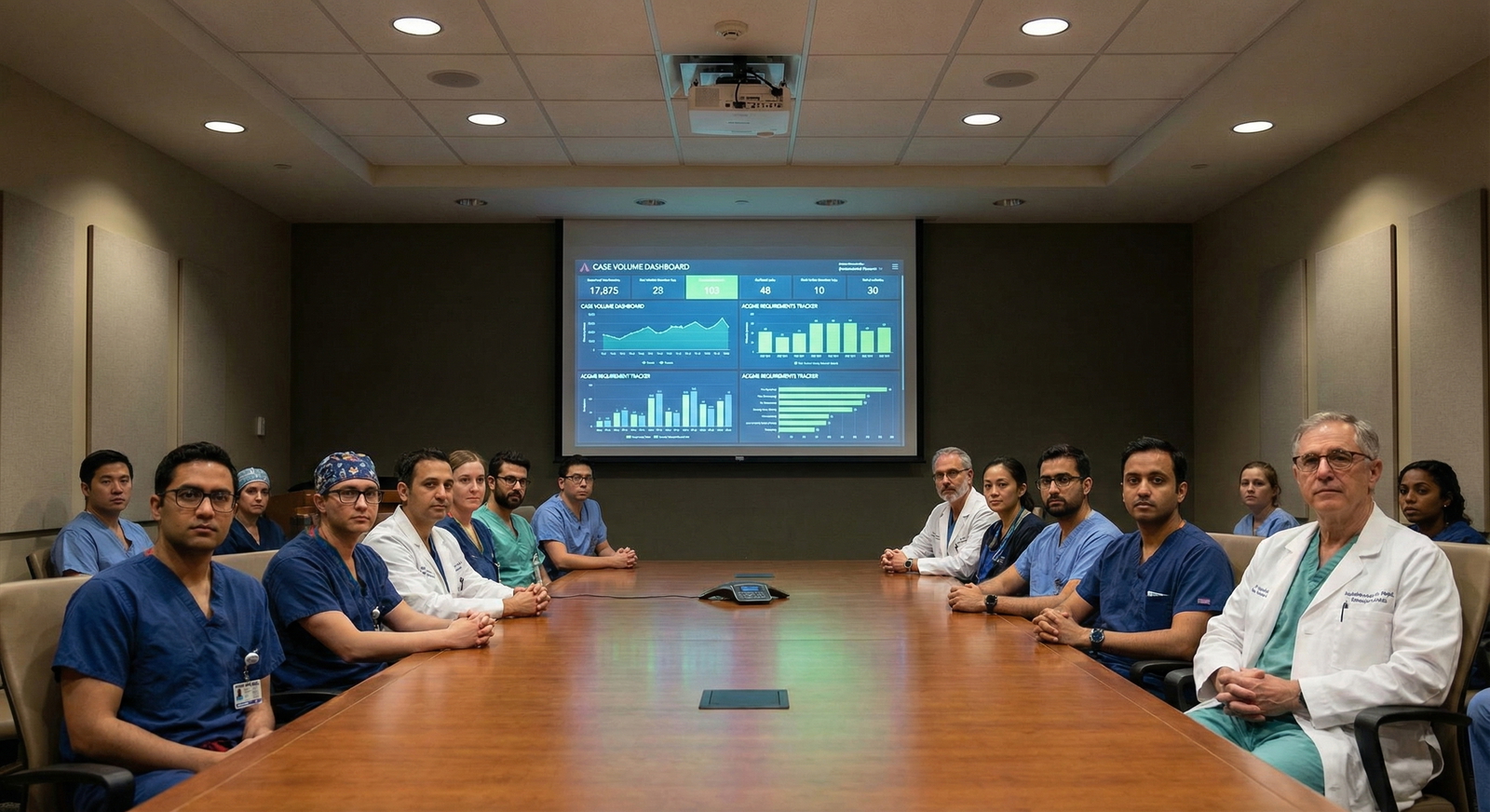
2.1 Total Case Numbers vs. Chief Year Volume
Most otolaryngology residencies will quote:
- Average total cases per resident by graduation
- Chief year case volume (a good proxy for autonomy and complexity)
- Sometimes PGY-specific volume, which is helpful for understanding early exposure
When comparing programs, consider:
A strong ENT residency often produces graduates with:
- Well above minimum ACGME or board-eligibility requirements
- Meaningful chief year numbers across subspecialties (not just tonsils and tubes)
Beware of programs where:
- Chief year volume is skewed heavily to minor procedures
- Complex oncologic or skull base cases are resident-observed rather than resident-performed
2.2 Distribution by Subspecialty: Balance Matters
High overall volume is not enough. You need a balanced portfolio to graduate as a well-rounded otolaryngologist.
Key domains to examine:
General ENT & Pediatric ENT
- Tonsillectomy/adenoidectomy
- PE tubes
- Pediatric airway (tracheostomy, bronchoscopy)
- Foreign body retrieval
Rhinology & Skull Base
- Functional endoscopic sinus surgery (FESS)
- Septoplasty, turbinate surgery
- Complex frontal/sphenoid sinus cases
- CSF leak repairs and skull base cases (even if limited)
Otology & Neurotology
- Tympanoplasty, mastoidectomy
- Stapedectomy (even if mostly observed)
- Cochlear implants (primary or assisting)
- Chronic ear surgery and cholesteatoma
Head & Neck Surgical Oncology
- Thyroid and parathyroid
- Parotid and other salivary glands
- Oral cavity resections
- Neck dissections
- Laryngectomy and pharyngolaryngectomy
- Free flap exposure (performance vs. observation)
Laryngology & Airway
- Direct laryngoscopy
- Airway dilations, laser procedures
- Tracheostomy, airway reconstruction exposure
- Injection laryngoplasty, medialization procedures
Facial Plastics & Reconstruction
- Skin cancer excisions and local flaps
- Rhinoplasty exposure
- Facial trauma: nasal fractures, simple fractures
- Cosmetic exposure (often limited, but useful)
If a program’s residents are strong in one area but weak in others (especially head & neck or otology), your career flexibility will be restricted.
2.3 Procedural Numbers vs. True Operative Responsibility
Raw numbers can mislead. Ask yourself:
- Were you the primary surgeon or just assisting?
- Was there graduated independence?
- Did faculty allow chiefs to “run rooms” with junior residents?
- Were you making critical intraoperative decisions, or mostly “holding the endoscope”?
During interviews or resident conversations, try to clarify the quality of your expected operative experience, not just the quantity.
3. How to Evaluate ENT Case Volume as a DO Applicant
As a DO graduate, you may be navigating both historically osteopathic and traditionally allopathic academic programs. The evaluation process is similar, but there are nuances to consider.
3.1 Start with Publicly Available Data
Before you interview, systematically review:
Program websites
- Look for:
- Case logs or sample resident experience
- Annual report of “average case numbers”
- Lists of primary hospitals and surgery centers
- Favor programs that publish objective numbers rather than vague statements.
- Look for:
ACGME program data (where available)
- ACGME case log minimums and national averages (even if not easy to access directly) give context for:
- Whether a program is barely meeting the minimums
- Whether they are significantly above national norms
- ACGME case log minimums and national averages (even if not easy to access directly) give context for:
Institution profiles
- Tertiary referral centers, cancer centers, children’s hospitals, and trauma centers typically generate higher case volume and complexity.
3.2 Interview Questions to Ask About Surgical Volume
During pre-interview socials and formal interviews with residents and faculty, ask specific, concrete questions:
Core Volume and Distribution
- “What are your average total case numbers by graduation?”
- “How many sinus surgeries, thyroids, neck dissections, and tympanomastoid cases did last year’s graduates perform as primary surgeon?”
- “Do residents log significant skull base or free flap cases as surgeon, or mostly as assistant?”
Early OR Exposure
- “How soon do residents get operative experience? Are PGY-2s operating regularly?”
- “Is there dedicated ENT time in the first year, or is it mostly off-service?”
Chief Year Autonomy
- “As a chief, do you typically run your own rooms?”
- “In your chief year, are most tonsillectomies and thyroids done by the chief as primary surgeon, or still attending-driven?”
Case Competition and Fellow Influence
- “Do fellows take a large share of complex cases, or is resident experience protected?”
- “How does the program balance case assignments between fellows and senior residents?”
Off-Site Rotations
- “Do you rotate at community hospitals or VA centers with high surgical volume?”
- “How is the case mix different at each site?”
Record these answers in a structured way after each interview—you’ll forget the details by the time rank lists are due.
3.3 Red Flags in ENT Surgical Volume
When you examine ENT residency case volume, watch for warning signs:
Low or unreported numbers
- Programs that will not share even approximate case data
- Residents hesitating or giving vague answers when asked about volumes
Overreliance on a single attending or hospital
- If most complex head and neck or otology cases depend on one faculty member
- Vulnerable to faculty turnover, which can dramatically reduce your exposure during your training years
Fellow-dominated ORs without resident protection
- If fellows consistently act as primary surgeon on the best cases while residents retract and suction
Underdeveloped pediatric or head & neck exposure
- Programs with limited or no children’s hospital affiliation
- Minimal oncologic case load or heavy referral to outside centers
For a DO graduate, these red flags are especially important if you are aiming for competitive fellowships where case portfolios and surgical letters matter significantly.
4. Using Case Volume Data to Align With Your Career Goals
Not every DO graduate in ENT needs the same case mix or numbers. Your career vision should shape how you interpret residency case volume.
4.1 Planning for General ENT Practice
If you anticipate practicing community-based general otolaryngology, prioritize programs where you will:
Graduate with very strong numbers in:
- Tonsillectomy/adenoidectomy
- PE tubes and basic pediatric ENT
- Septoplasty, turbinate surgery
- FESS for chronic rhinosinusitis
- Tracheostomy, basic airway procedures
- Thyroid/parathyroid and parotid surgery
- Skin cancer excision and local flaps
Receive broad exposure in all subspecialties, even if some complex cases are seen more than performed.
Gain experience managing complications and post-op issues (bleeding, infection, readmissions).
In community practice, you will be judged by your ability to handle bread-and-butter ENT confidently and efficiently, not by the rare skull base procedure you assisted once during residency.
4.2 Targeting Subspecialty Fellowships
If your goal is a competitive ENT fellowship (rhinology, otology, pediatric ENT, head and neck, facial plastics), higher and more focused surgical volume becomes crucial.
Examples of what to look for:
Rhinology-focused
- High numbers of FESS, including revision cases
- Strong frontal sinus and skull base exposure
- Programs with fellowship-trained rhinologists actively operating and teaching
Otology/Neurotology-focused
- Significant tympanoplasty and mastoidectomy volume
- Some cochlear implant and stapes exposure
- Dedicated otologist/neurotologist with active operative practice
Head & Neck Oncology-focused
- Robust thyroid, parotid, laryngectomy, oral cavity, and neck dissection numbers
- Exposure to microvascular reconstruction (even if you are not the primary surgeon on the anastomosis)
Facial Plastics-focused
- A strong reconstructive experience: local flaps, complex closures
- Some cosmetic and rhinoplasty exposure
- Ability to build a portfolio for fellowship applications
In fellowship applications, letters from high-volume mentors and clear demonstration of meaningful procedure numbers can strongly support your candidacy—especially important for DO graduates entering competitive spaces.
4.3 Academic vs Community Track: Volume Considerations
Academic and community-focused ENT residencies can both produce excellent surgeons, but the pattern of case volume differs:
Academic-heavy programs
- Often excel in complex head and neck, skull base, pediatric tertiary-level cases.
- May have more fellows, leading to potential competition for some of the most complex surgeries.
- Typically offer a wealth of research opportunities, which can offset marginally lower hands-on role in rare cases.
Community-affiliated or hybrid programs
- Often provide superb high-volume general ENT experience with more autonomy in the OR.
- May have fewer ultra-complex cases, but higher repetition of core procedures.
- For a DO graduate planning community practice, this can be ideal.
Match your preferences: if you want intense academic exposure but still solid surgical volume, look for hybrid programs with both tertiary and community sites.

5. Specific Considerations for DO Graduates in the ENT Residency Landscape
Osteopathic graduates bring unique strengths to otolaryngology—holistic patient care, procedural comfort, and often a strong commitment to community practice. But you also face some additional strategic issues when evaluating residency case volume.
5.1 Navigating Historically Osteopathic vs Historically Allopathic Programs
With single accreditation:
Many formerly osteopathic ENT programs:
- Have robust surgical volume, often community-focused.
- May offer excellent early autonomy and high procedure numbers.
- Sometimes have fewer fellows, which can enhance resident case ownership.
Historically allopathic academic programs:
- Often have deeper subspecialty divisions and complex surgical volume.
- May have more fellows and research expectations.
- Can be highly competitive for DO applicants, but strong DO candidates are increasingly matching into them.
When evaluating both types:
- Don’t assume osteopathic = weaker or allopathic = superior in volume. Many osteopathic-origin programs are extremely high-volume, especially in general ENT and head & neck.
- Ask specifically how DO graduates from the program have performed:
- Fellowship placement
- Board pass rates
- Feedback from recent alumni on surgical preparedness
5.2 Overcoming Perception Gaps With Strong Case Volume
If you encounter implicit or explicit bias as a DO graduate, high-quality surgical training and documented case logs can help you:
- Demonstrate training equivalence or advantage in procedural numbers.
- Present a compelling case to fellowship directors or employers by:
- Sharing a polished, de-identified case portfolio (e.g., “Performed >XX FESS, >YY thyroidectomies, >ZZ tympanomastoid surgeries as primary surgeon”).
- Obtaining letters explicitly commenting on your operative competence and autonomy.
5.3 Balancing Osteopathic Principles and High-Volume Surgery
As an osteopathic physician in a high-volume ENT residency:
- You can integrate OMM/OMT principles where appropriate (e.g., postoperative pain management, muscle tension headaches related to sinus disease, TMJ-related symptoms).
- Use your osteopathic background to:
- Improve patient rapport and holistic pre-op counseling.
- Offer non-surgical or adjunctive options appropriately.
- This combination—strong surgical volume plus osteopathic perspective—can distinguish you in both community and academic settings.
6. Practical Steps: Building a Case-Volume-Centered Rank List Strategy
When it’s time to build your rank list, use a structured, volume-focused approach.
6.1 Create a Surgical Volume Scorecard
For each program, rate (e.g., 1–5) the following:
- Total surgical volume per graduate
- Bread-and-butter ENT exposure (tonsils, tubes, FESS, thyroid, parotid)
- Head & neck oncology case numbers
- Otology and neurotology exposure
- Pediatric ENT volume
- Facial plastics and reconstruction
- Early operative experience (PGY-1/2)
- Chief year autonomy
- Impact of fellows on resident case access
Combine this with:
- Geographic preference
- Program culture and support
- Research opportunities (if academic or fellowship-leaning)
- DO-friendliness and historical DO match patterns
6.2 Weigh Case Volume Against Lifestyle and Culture
High surgical volume often correlates with:
- Longer hours
- More call responsibilities
- Heavier patient loads
You need to honestly assess:
- Can you maintain wellness under a high-volume workload?
- Do residents seem supported and not chronically burnt out?
- Is the environment malignant or genuinely demanding but educational?
Residency is finite, but burnout can have long-lasting effects. A moderate-volume program with excellent teaching and support may be better than a hyper-volume environment with poor culture.
6.3 Plan to Maximize Your Personal Surgical Volume Once Matched
No matter where you match, you can proactively increase your individual residency case volume:
- Volunteer for additional OR time and difficult cases.
- Develop a reputation for reliability—attendings will seek you out.
- Be present: show up early, stay late when appropriate.
- Learn to read imaging, write concise notes, and manage the floor efficiently so attendings trust you more in the OR.
- If your program has weaker exposure in a niche area, explore:
- Away rotations as a senior resident
- Short-term observerships in high-volume centers (for targeted skills)
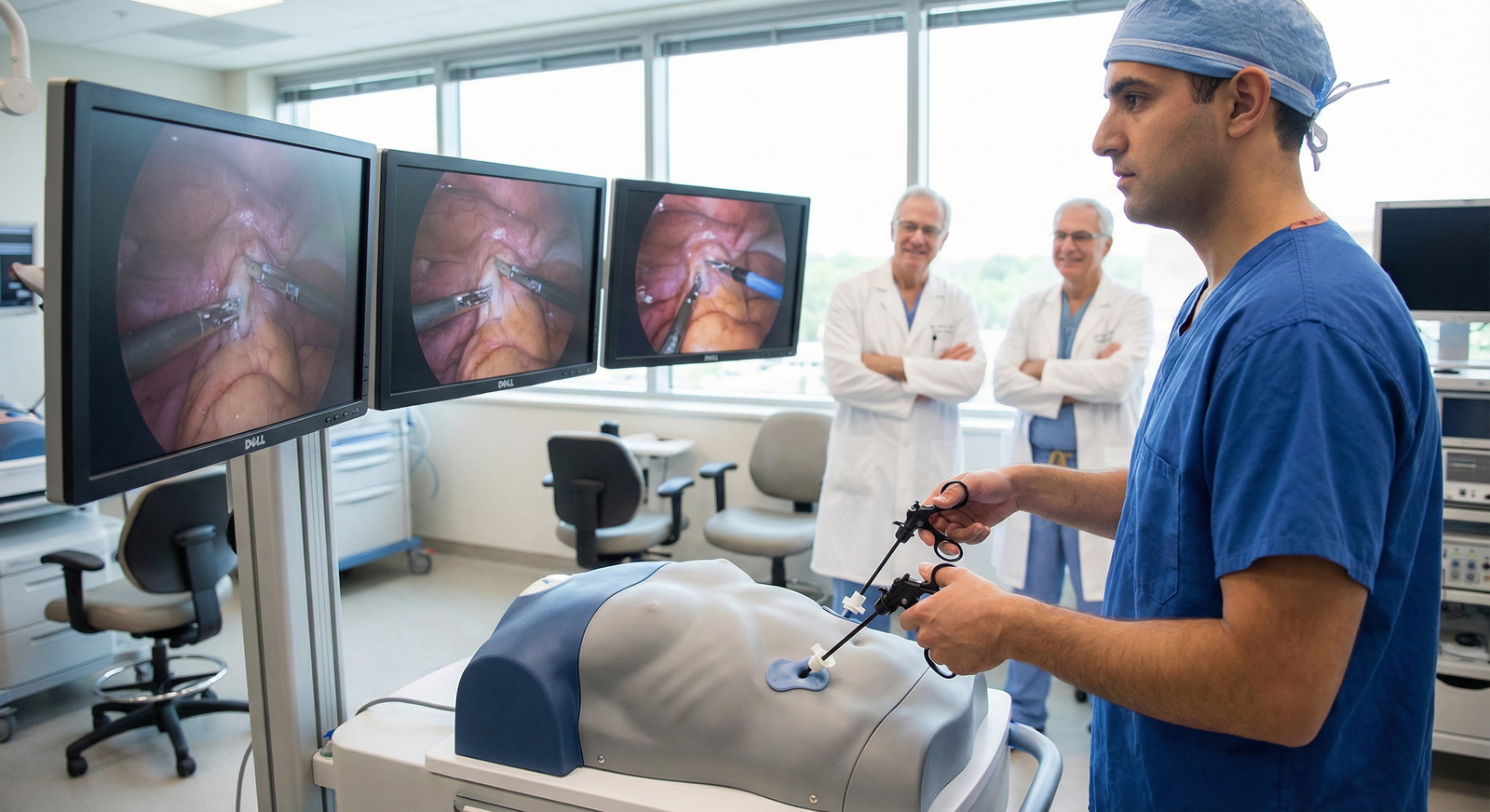
- Simulation labs for endoscopic and micro-surgical techniques
Your initiative can narrow the gap between average and outstanding surgical experience, even in a mid-volume residency.
FAQs: Case Volume Evaluation for DO Graduates in Otolaryngology
1. What is considered a “good” surgical volume for an ENT resident by graduation?
Exact numbers vary by program and evolving ACGME standards, but strong otolaryngology residencies typically graduate residents who are well above the minimums. You should expect robust numbers in core areas such as tonsillectomy/adenoidectomy, PE tubes, FESS, septoplasty, thyroid/parathyroid, parotid, and basic otologic surgery. The key is not a single magic number, but a broad, well-distributed case mix with meaningful primary surgeon experience in each domain.
2. As a DO graduate, should I prioritize case volume over program prestige?
If forced to choose, case volume and quality of hands-on training generally matter more than name recognition—especially for your safety and competence as an independent surgeon. However, if you are aiming for top-tier academic positions or ultra-competitive fellowships, combining solid surgical volume with academic credibility and research is ideal. A medium-prestige program with outstanding volume and supportive faculty may serve you better than a famous name with limited resident autonomy.
3. How can I find accurate information about a program’s ENT surgical volume?
Use a multi-step approach:
- Review the program’s website for published average case numbers.
- Ask for general volume ranges during interview day presentations.
- In resident socials and one-on-one talks, ask specifically:
- “About how many FESS/thyroids/neck dissections does a typical graduate complete?”
- “How early did you feel you were really operating, not just assisting?”
- If possible, speak with recent graduates who can honestly describe their case logs and autonomy. Look for consistency across multiple sources.
4. What if a program has strong clinic and research but only moderate case volume?
This can still be a reasonable choice if:
- You are targeting a research-heavy academic career, and
- The program still meets or exceeds minimum operative requirements with acceptable distribution across subspecialties.
In that scenario, plan to actively seek extra operative opportunities, maximize your time in the OR, and consider targeted senior-year electives to bolster any weaker areas. For most DO graduates planning primarily clinical practice, however, it is usually safer to prioritize programs with clearly solid surgical volume and procedure numbers.
By approaching your residency search through the lens of case volume evaluation, you place your future surgical competence at the center of your decision-making. As a DO graduate entering the otolaryngology match, that clarity will help you choose a program where you can grow into a confident, capable, and well-trained ENT surgeon—ready for whatever path you choose next.