Why Case Volume Matters in Orthopedic Surgery Residency
Case volume evaluation is one of the most critical factors when comparing orthopedic surgery residency programs and planning your career as an orthopedic surgeon. Orthopedic training is inherently procedural: your competency, confidence, and independence are built in the operating room and reinforced in clinic. For this reason, understanding how to evaluate surgical volume, procedure numbers, and overall residency case volume is essential for anyone pursuing an orthopedic surgery residency.
This guide breaks down how to interpret case volume data, what “good” numbers look like, how to avoid common misconceptions about the ortho match and case logs, and how to strategically use this information to choose the right orthopedic surgery residency program for your goals.
Core Concepts: What “Case Volume” Really Means
Before you can compare programs, you need a precise understanding of what is (and is not) meant by case volume in orthopedic surgery residency.
1. Case Volume vs. Surgical Volume vs. Procedure Numbers
These terms overlap but are not identical:
Case volume
The total number of cases you participate in as a resident. This usually refers to logged surgical cases but may also include some procedural or interventional experiences in clinic or minor procedure areas.Surgical volume
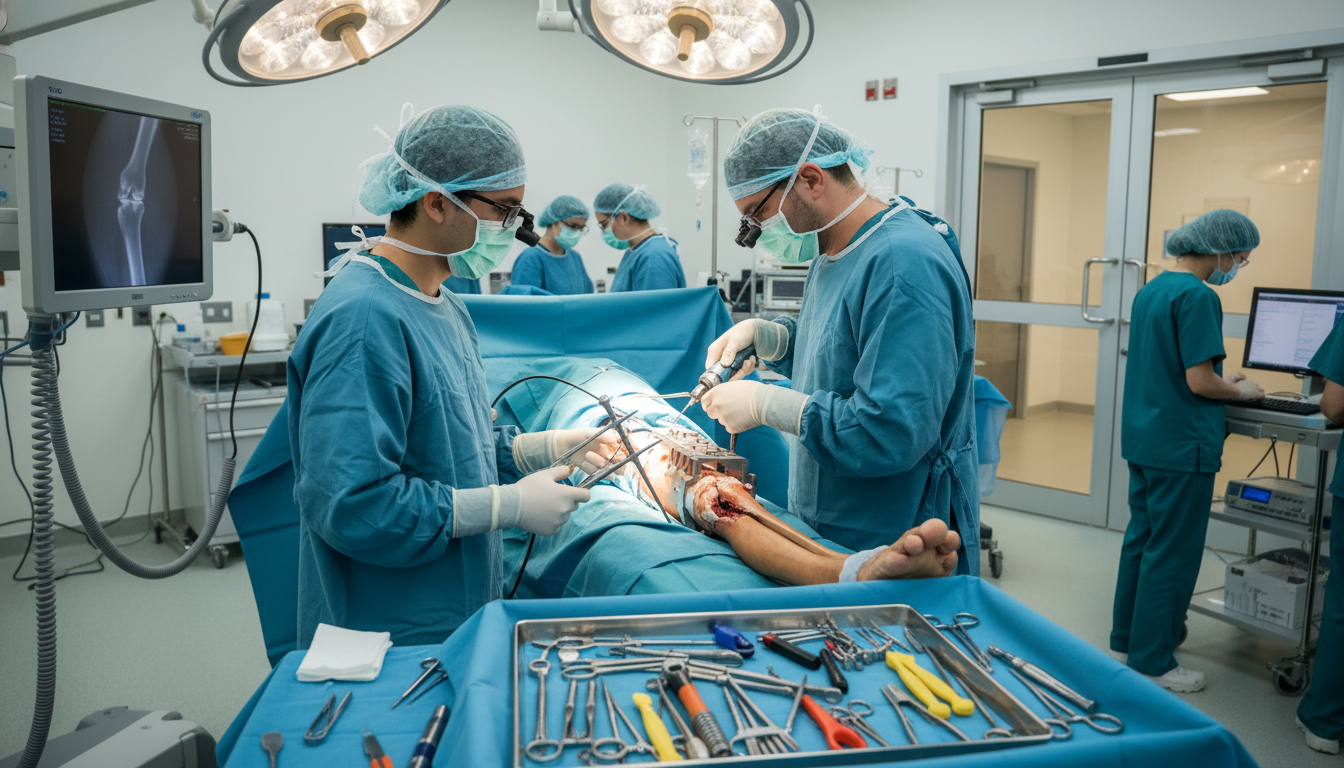
More specifically refers to cases performed in the operating room. In orthopedics, this often includes:- Trauma (e.g., ORIFs, IM nails, external fixation)
- Arthroplasty (e.g., primary and revision hips and knees)
- Sports (e.g., ACL reconstructions, shoulder arthroscopies)
- Spine (e.g., decompressions, fusions)
- Hand/upper extremity (e.g., tendon repairs, nerve decompressions)
- Pediatric orthopedics (e.g., DDH, SCFE, clubfoot)
- Foot and ankle (e.g., fusions, deformity corrections)
- Oncology (e.g., tumor resections, reconstructions)
Procedure numbers
The breakdown of specific operation types you have performed or assisted with. For example:- 120+ hip and knee arthroplasties
- 80+ intramedullary nailings
- 50+ ACL reconstructions
These more granular procedure numbers help you evaluate not just quantity, but how balanced and comprehensive your training will be.
2. Levels of Involvement: Observer vs. Surgeon
When reviewing residency case volume, you must understand what counts as a case:
- Observer: You are in the OR but not scrubbed, mainly watching.
- Assistant: You are scrubbed but not primary; you help retract, place hardware, close, etc.
- Surgeon / Primary surgeon: You are leading key steps or the majority of the operation, under supervision.
Some programs and databases distinguish between these roles; others do not. Simply listing a large case volume without clarifying your level of responsibility can be misleading.
Practical implication:
- A resident with 1,800 cases as a passive assistant may be less prepared than one with 1,200 cases where they functioned as primary surgeon on most key steps by PGY-4/5.
- When you see case volume numbers, always ask: “What is the typical resident role in those cases?”
3. Breadth vs. Depth
A strong orthopedic surgery residency should provide both:
- Breadth: Exposure across the full spectrum of orthopedics:
- Trauma, sports, arthroplasty, spine, hand, pediatrics, foot & ankle, oncology, shoulder & elbow, and sometimes microvascular or limb reconstruction.
- Depth: Adequate repetition within key categories so you can operate efficiently and independently.
You want to avoid:
- Programs where one type of case completely dominates (e.g., almost all trauma, very little arthroplasty).
- Programs with very low numbers in foundational areas like fractures, arthroscopy, and joint replacement.
Benchmarks and Standards: What Numbers Should You Look For?
Residency case volume isn’t arbitrary. In the United States, orthopedic residents log cases through the ACGME system, and minimum procedure numbers are monitored against national norms.
1. Understanding ACGME Case Log Data
The ACGME publishes national orthopedic surgery resident case log statistics, including:
- Mean case volume by graduating resident
- Ranges and percentiles
- Breakdown by subspecialty categories
Key takeaways (note: exact numbers evolve over time, so always check the latest ACGME data):
- Graduating orthopedic residents in the US typically log 1,500–2,000+ total cases over the five-year residency.
- Many programs exceed these averages; a significantly lower number may be a red flag unless clearly explained (e.g., unique case logging structure).
When researching orthopedic surgery residency programs, ask:
- “How do your graduating residents’ case logs compare to national ACGME averages?”
- “Can you share the last few years of aggregate case volume data by subspecialty?”
2. Core Subspecialty Categories and Target Ranges
While exact thresholds vary, you can roughly think in terms of comfortable ranges for a well-rounded residency case volume:
Trauma
- Common expectation: several hundred trauma cases (e.g., 400–700+)
- Includes ORIFs, IM nails, external fixators, periprosthetic fractures
- Trauma volume is often a major driver of surgical volume in many programs
Arthroplasty (Joint Replacement)
- Primary hips and knees as foundational
- A solid program will usually provide at least 100–150+ primary arthroplasties
- Revision experience (even in smaller numbers) is valuable for fellowship and practice
Sports Medicine / Arthroscopy
- Knee and shoulder arthroscopies are bread-and-butter
- Good exposure might mean dozens of ACLs, rotator cuff repairs, labral repairs, meniscal procedures
Spine
- Decompressions, discectomies, fusions
- Numbers vary widely; expect fewer than trauma or arthroplasty, but enough to be comfortable with common pathologies and OR workflows
Hand & Upper Extremity
- Distal radius fractures, tendon repairs, nerve decompressions, small joint procedures
- Sufficient volume should prepare you for common call cases and clinic issues
Pediatrics
- Fractures, SCFE, DDH management, clubfeet, deformity correction
- Volume depends on whether the hospital is a regional pediatric referral center
Foot & Ankle / Oncology / Shoulder & Elbow
- Often fewer cases numerically but still important for comprehensiveness
These ranges are rough guides, not strict cutoffs, but they help you ask the right questions about residency case volume and training adequacy.
3. Minimums vs. Competitive Numbers
Think about case volume at two levels:
- Safety/Competency Floor: You need enough cases to safely handle common scenarios, pass boards, and function as a junior attending.
- Competitive Edge: If you aim for a high-demand fellowship (e.g., sports at a major academic center), you may want:
- Above-average case volume in that subspecialty
- Evidence of autonomy and complexity (e.g., revision ACLs, complex multiligament reconstructions)
A program with strong overall case volume and robust subspecialty rotations will support both goals.
Evaluating Case Volume Across Different Program Types
Not all orthopedic surgery residency programs generate case volume in the same way. Understanding the training environment helps you interpret the numbers.
1. High-Volume Level 1 Trauma Centers
Characteristics:
- Busy emergency departments, multiple ORs running nearly 24/7
- High volume of complex trauma, polytrauma, and open fractures
- Residents often gain large trauma surgical volume early (PGY-2/3)
Strengths:
- Excellent exposure to:
- Fixation strategies across body regions
- Damage control orthopedics
- Complex periarticular fractures
- Residents often feel very confident managing fracture care and emergent situations.
Potential limitations:
- Trauma can dominate the schedule:
- Less elective arthroplasty or sports during certain blocks
- Risk of fatigue and limited elective clinic time
- Ask specifically:
- “How is elective case exposure (sports, arthroplasty, hand) protected amid trauma demands?”
2. Academic Quaternary Centers with Subspecialty Depth
Characteristics:
- Many fellowship-trained attendings
- Complex referrals (revisions, deformity, oncology)
- Rich research environment
Strengths:
- High complexity cases:
- Revision arthroplasty
- Complex spine
- Limb salvage and tumor reconstruction
- Great for academic and research-focused residents
Potential limitations:
- Fellows may share case volume with residents:
- In some services, fellows may be primary assistant, with residents less involved in key steps
- You should ask:
- “How is case volume distributed between residents and fellows?”
- “At what PGY level do residents typically become primary surgeon on major cases?”
3. Community-Based and Hybrid Programs
Characteristics:
- Often based at large community hospitals with attached or affiliated academic centers
- Fewer or no fellows in some subspecialties
Strengths:
- High resident autonomy, especially in later years
- You often function as the “fellow-level” trainee:
- More opportunities to run cases under indirect supervision
- Great preparation for independent practice in community settings
Potential limitations:
- May lack super-high-complexity tumor, pediatric, or revision work
- Important to ask:
- “How is subspecialty exposure ensured? Are there away rotations to pediatric or oncology centers?”
- “What do your graduates typically pursue—fellowship vs. immediate practice?”
4. Pediatric, VA, and Specialty Rotations
Consider how these affect total residency case volume and diversity:
- Children’s hospitals:
- Essential for pediatric orthopedic competency
- Ask for pediatric case numbers specifically (fractures, SCFE, DDH, clubfoot, deformity)
- VA hospitals:
- Often high elective arthroplasty and general orthopedics
- Fewer trauma and pediatrics
- Subspecialty centers:
- Spine centers, sports institutes, limb lengthening units
- Strong depth in specific areas; ensure they complement rather than overshadow core training
How to Critically Analyze Case Volume When Comparing Programs
Knowing the raw numbers is not enough. You need a structured approach to evaluate residency case volume meaningfully as part of your ortho match strategy.
1. Questions to Ask During Interviews and Visits
When you’re on the interview trail or at a second look, consider targeted questions:
Overall case volume
- “What is the average total case volume for your graduating residents?”
- “How do your numbers compare to national ACGME averages?”
Subspecialty breakdown
- “Can you share approximate procedure numbers by subspecialty (trauma, arthroplasty, sports, spine, hand, pediatrics, foot & ankle)?”
Resident autonomy
- “At what PGY year do residents typically start performing key portions of cases?”
- “How often do PGY-4 and PGY-5 residents act as primary surgeon on routine trauma and arthroplasty cases?”
Effect of fellows
- “How do you ensure residents still get adequate OR exposure in services that also have fellows?”
Variability
- “Is there wide variation in case volume between residents? If so, why, and how is this managed?”
Take notes immediately after each interview day so you can compare programs later with fresh impressions.
2. How to Interpret Program-Provided Data
Programs may share:
- PowerPoint slides with aggregate numbers
- Case log summaries for the last few graduating classes
- Informal estimates (e.g., “most residents graduate with 2,000–2,200 cases”)
When reviewing:
- Look for trends: Are numbers stable, increasing, or decreasing?
- Check for balance: Does a program list 700 trauma cases but only 20 arthroplasties? Ask why.
- Ask residents to validate: “Do these numbers reflect your day-to-day experience?”
If you see very high surgical volume:
- Confirm that residents are not overwhelmed or overworked in a way that compromises learning or wellness.
- High volume should come with:
- Structured teaching
- Thoughtful scheduling
- Protected educational time
3. The Hidden Dimension: Clinic and Non-OR Experiences
The OR isn’t the entire story. A well-rounded orthopedic surgeon also needs strong:
- Clinic skills:
- Pre-op assessment
- Post-op management
- Non-operative management of musculoskeletal conditions
- Imaging skills:
- X-ray interpretation
- CT/MRI basics
- Procedure skills outside the OR:
- Joint injections
- Splinting/casting
- Closed reductions
Ask:
- “What is the balance of OR days vs. clinic days on a typical rotation?”
- “Are there dedicated sports or fracture clinics with robust procedural experience?”
Programs that focus exclusively on surgical volume but neglect clinic can leave you less prepared for real-world practice.

Using Case Volume Strategically in Your Ortho Match Decisions
Once you understand residency case volume and how to analyze it, the next step is using that knowledge strategically in the ortho match process.
1. Align Case Volume with Your Career Goals
Your ideal program depends on what you want after residency:
Community general orthopedics:
- Look for:
- High overall case volume
- Broad exposure across all core subspecialties
- Strong autonomy by PGY-4/5
- You need confidence managing fractures, basic sports, and arthroplasty independently.
- Look for:
Subspecialty fellowship (sports, arthroplasty, spine, hand, etc.):
- Look for:
- Solid foundational case volume in that area
- Evidence of complex cases (e.g., revision cases, multiligament knees)
- Strong mentorship and research opportunities
- Don’t rely only on subspecialty volume; fellowship will add large numbers, but residency should give you a strong base.
- Look for:
Academic career:
- Volume should be adequate, but also:
- Protected research time
- Access to high-acuity, complex cases
- Faculty with strong academic productivity
- Case volume and scholarly activity need to coexist without burning you out.
- Volume should be adequate, but also:
2. Case Volume vs. Program Culture: Avoiding a Common Trap
A dangerous misconception is: “Higher case volume automatically means a better program.” In reality:
Extremely high surgical volume can:
- Lead to resident fatigue and burnout
- Limit your time for reading, reflection, and research
- Create rushed OR experiences that prioritize speed over teaching
Moderately high, well-structured volume can:
- Provide repetition and skill development
- Leave space for didactics and self-study
- Support a healthier work-life balance
When ranking programs, weigh:
- Case volume
- Culture and resident happiness
- Quality of teaching and mentorship
- Support for wellness and professional development
A slightly lower case volume program with excellent teaching may produce better, more thoughtful surgeons than a maximalist “numbers only” training environment.
3. How to Present and Use Your Own Case Volume as a Senior Resident
If you’re already in training (e.g., doing an away rotation or preliminary residency) and thinking ahead:
Track your early procedure numbers:
- Be familiar with your personal case log
- Notice areas where you’re underexposed and seek additional opportunities
Use case volume data in fellowship applications:
- Highlight specific procedure numbers relevant to your chosen field:
- “By the end of PGY-4, I completed 90+ primary hip and knee arthroplasties as surgeon or first assistant.”
- Pair this with brief outcome or autonomy comments:
- “On my senior trauma rotation, I routinely performed femoral nails and periarticular plate fixations under indirect attending supervision.”
- Highlight specific procedure numbers relevant to your chosen field:
Prepare for job interviews:
- Be able to summarize:
- Your total surgical volume
- Key categories of expertise
- Comfort level with common procedures you’ll be expected to perform as an attending
- Be able to summarize:
Practical Examples: Applying Case Volume Evaluation to Program Comparison
To put all of this into action, consider three hypothetical orthopedic surgery programs and how you might analyze them.
Program A: Urban Level 1 Trauma Powerhouse
- Total case volume: 2,200–2,400 per resident at graduation
- Profile:
- Extremely high trauma numbers (800+ trauma cases)
- Reasonable arthroplasty (120+ primaries)
- Limited sports exposure; many sports patients referred elsewhere
- Resident role:
- Early trauma autonomy by PGY-3
- Fellows present only on spine and oncology services
Pros:
- Superb fracture experience
- Strong autonomy, especially in trauma and general call
- Great for residents aiming for trauma or general practice in high-acuity settings
Cons:
- Sports case volume relatively low
- Long, intense trauma calls; potential for fatigue
- Candidates wanting sports or arthroplasty fellowships must ensure additional exposure through electives
Program B: Academic Subspecialty Center with Multiple Fellowships
- Total case volume: 1,700–1,900 per resident
- Profile:
- Balanced trauma, arthroplasty, and sports volume
- Complex revision arthroplasty and spine
- Fellows on trauma, sports, spine, and hand services
Pros:
- Excellent exposure to complex, referral-level cases
- Strong academic and research environment
- Highly respected subspecialty fellowships for graduates
Cons:
- Case volume competition with fellows may limit resident primary surgeon opportunities
- Autonomy may be more limited early in training
- You must confirm residents steadily progress to lead complex cases by senior years
Program C: Large Community Hospital with Academic Affiliation
- Total case volume: 2,000–2,200 per resident
- Profile:
- High arthroplasty and sports volume
- Steady trauma but fewer high-complexity cases
- No fellows except occasional visiting fellows in a niche area
Pros:
- Senior residents often act as de facto fellows with high autonomy
- Strong preparation for community arthroplasty and sports practice
- Good balance of OR and clinic
Cons:
- Limited pediatric and oncologic exposure
- Fewer complex revision cases; may require fellowship for higher-end specialization
By applying the frameworks in this guide, you can decide which program’s case volume profile aligns best with your goals, instead of being swayed by single impressive-sounding numbers.
FAQ: Case Volume in Orthopedic Surgery Residency
1. What is a “good” total case volume for an orthopedic surgery residency?
Most graduating orthopedic residents in the US log around 1,500–2,000+ cases during residency. A “good” residency case volume is one that:
- Meets or exceeds ACGME national averages
- Is reasonably balanced across core subspecialties
- Progressively transitions you from observer to assistant to primary surgeon
- Is paired with strong teaching and a supportive learning environment
Bigger is not automatically better—quality, autonomy, and breadth are equally important.
2. Should I prioritize the highest surgical volume program on my rank list?
Not necessarily. While adequate surgical volume is essential, you should also weigh:
- Resident autonomy and role in cases
- Program culture and resident wellness
- Quality of teaching and mentorship
- Fit with your career goals (community practice vs. subspecialty vs. academia)
A program with slightly lower raw numbers but excellent teaching and balanced subspecialty exposure may be more beneficial than a maximum-volume environment with limited mentorship.
3. How can I find accurate case volume information for programs?
Use multiple sources:
- ACGME website for national averages and accreditation status
- Program websites and informational materials (some list case log summaries)
- Interview day presentations and Q&A sessions
- Direct conversations with residents:
- Ask them to describe a typical OR week
- Confirm how many cases they logged in the last year
- Program leadership:
- Ask politely for aggregate procedure numbers by subspecialty
Comparing these sources helps you triangulate a realistic sense of residency case volume.
4. If I want a competitive fellowship (e.g., sports or spine), how important are my residency procedure numbers?
Residency procedure numbers are one important piece, but not the only factor. For competitive fellowships, selection typically considers:
- Strength of your overall training environment
- Letters of recommendation from respected subspecialists
- Research and academic productivity
- Interviews and perceived fit
- Clear evidence of interest and exposure in the subspecialty
Having solid, not necessarily record-breaking, procedure numbers in your chosen area—paired with strong mentorship and research—will usually be more impactful than sheer case volume alone.
By understanding how to critically evaluate case volume, surgical volume, and procedure numbers, you can enter the ortho match process with a clear strategy. Rather than chasing the biggest numbers, focus on balanced, high-quality operative experience that aligns with your professional goals and supports your development into a safe, confident, and adaptable orthopedic surgeon.