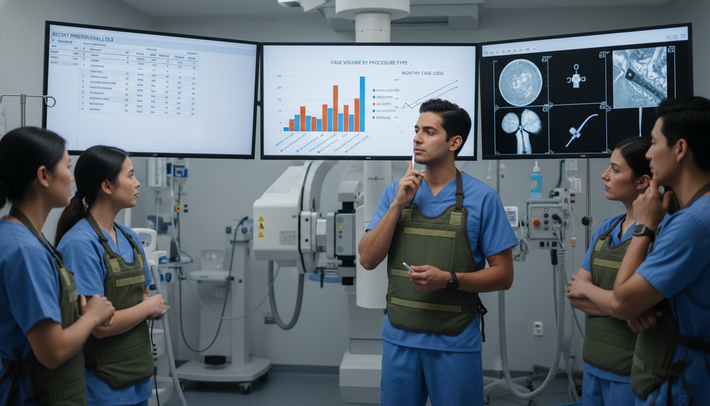
Why Case Volume Matters So Much in Neurosurgery
Neurosurgery is one of the most technically demanding specialties in medicine. For anyone, but especially for a US citizen IMG or American studying abroad who is aiming for a neurosurgery residency, understanding and evaluating case volume is critical.
Unlike many other specialties, neurosurgery training is built around hands-on operative experience over a seven-year residency. Your future competence and confidence in brain surgery residency will depend heavily on:
- How many cases you see and perform
- The diversity of those cases (cranial, spine, functional, vascular, trauma, etc.)
- The level of responsibility you are allowed to assume over time
For US citizen IMGs, case volume is also a strategic tool: it helps you compare programs objectively and signal your seriousness during interviews. Since some programs may have hesitation about IMGs, you can stand out by asking sophisticated, data-driven questions about surgical volume and procedure numbers that show you understand what it takes to become a safe, independent neurosurgeon.
In this article, we’ll walk through everything you need to know to evaluate neurosurgery residency case volume as a US citizen IMG:
- How neurosurgery training is structured and where case volume fits in
- What data to look for (and how to interpret it)
- The red flags and green flags in surgical volume
- How to ask smart questions as an American studying abroad
- How to document your own exposure and use it as an application strength
Understanding Case Volume in Neurosurgery Training
The Framework: A Case-Driven Specialty
Neurosurgery is not mastered by reading alone. It relies on repetitive, supervised practice across hundreds and then thousands of operations. Core elements include:
- Length of training: Usually 7 years, including at least one year of dedicated research in many programs.
- ACGME requirements: Minimum procedure numbers across multiple categories (cranial, spine, functional, vascular, pediatrics, etc.).
- Progressive autonomy: You move from assisting and observing to performing major parts or entire cases under supervision.
Residency case volume thus answers a key question:
“Will this training program give me sufficient surgical exposure, with increasing responsibility, to safely operate as an attending neurosurgeon?”
Types of Case Volume to Consider
You should think about surgical volume on several levels:
Total Program Volume
- How many surgeries does the residency perform per year across all residents?
- Is it a high-volume referral center, community-based, or mixed?
Per-Resident Volume
- How many cases does a typical resident log over seven years?
- Does each resident meet and exceed ACGME minimums?
Case Mix (Diversity of Procedures)
- Cranial tumor and trauma
- Spine (degenerative, deformity, trauma)
- Vascular (aneurysms, AVMs, bypass)
- Functional (DBS, epilepsy surgery)
- Pediatrics
- Endovascular (if applicable)
Level of Resident Involvement
- Are residents primary surgeons or just assistants?
- How early in training do they get hands-on experience?
A program with high numbers but low resident autonomy is less valuable than a moderately high volume program where residents actually operate.
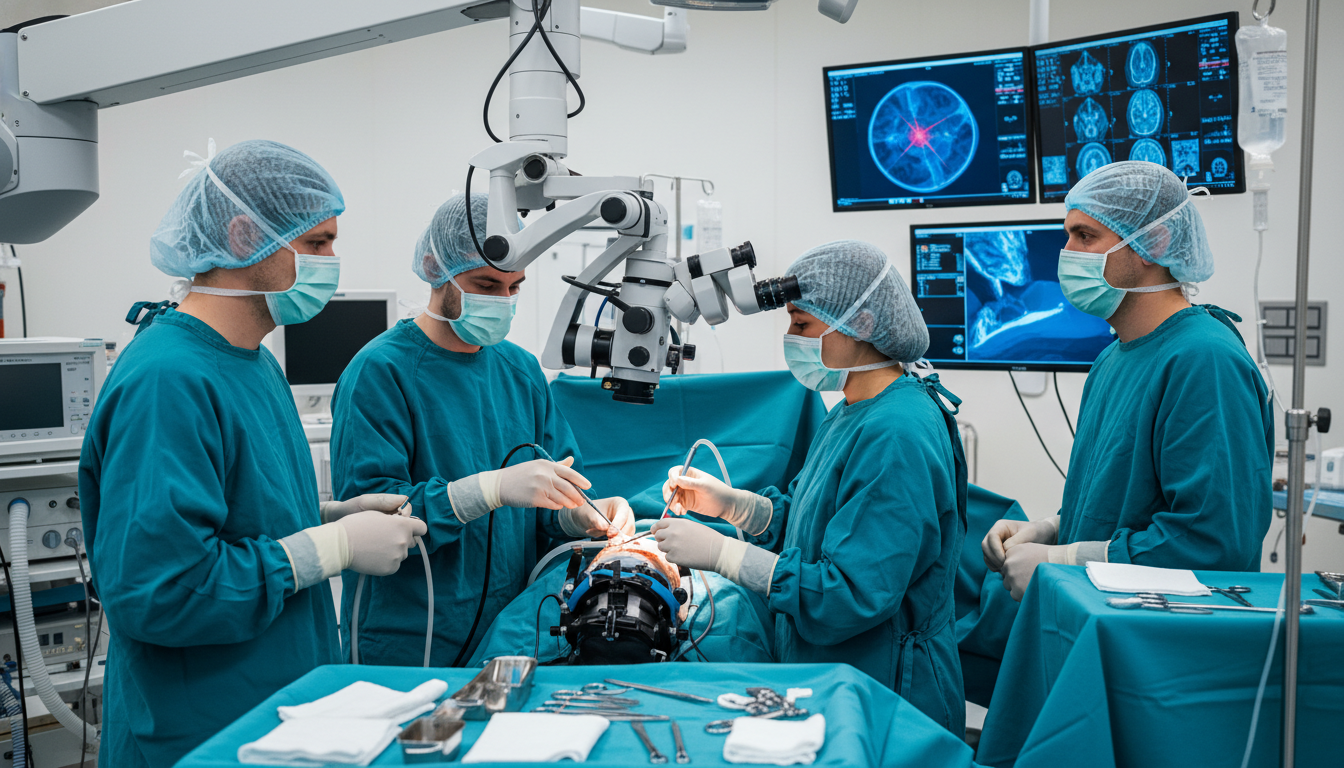
Key Metrics and Benchmarks: What Numbers Actually Mean
ACGME Minimums vs. Competitive Training
Every brain surgery residency must meet ACGME case minimums. These are baselines, not targets. The real question is how far beyond those minimums graduates typically go.
While exact requirements and averages change periodically, you should understand:
- ACGME minimums: The absolute floor; any accredited program must meet them.
- Program averages: Where graduates from that specific residency actually end up.
- National benchmarks: Data sometimes published by organizations or learned informally through mentors and senior residents.
As a US citizen IMG, you want a program where residents comfortably exceed minimums in most major categories.
Important Dimensions of Case Numbers
When evaluating neurosurgery residency case volume, dissect the numbers in these ways:
Total Case Count by Graduation
Examples of questions to ask:- “What is the average total case log of graduating residents over seven years?”
- “Roughly how many cranial and spine cases do your chief residents complete?”
Case Volume by PGY Level
Key questions:- “When do residents begin acting as primary surgeon on standard spine or cranial cases?”
- “What does a typical PGY-2 or PGY-3 operative week look like?”
Subspecialty Case Distribution
For example:- Cranial: tumors, trauma, functional, epilepsy
- Spine: cervical, thoracic, lumbar, deformity, minimally invasive
- Vascular: open versus endovascular
- Pediatrics: congenital malformations, pediatric tumors, hydrocephalus
A well-rounded volume allows you to keep fellowship options open.
Call-Related Case Exposure
Neurosurgery call generates many urgent/emergent cases:- Acute subdural hematomas
- Intraventricular and intracerebral hemorrhage
- Spine trauma decompressions/fixations
Ask: “How busy is neurosurgery call for residents, and how often are they primary surgeon on emergent cases?”
Operative Autonomy and Supervision
Numbers alone don’t reflect your true experience if attendings do all the critical steps. Ask:- “On a typical lumbar laminectomy, what parts does a senior resident perform?”
- “By PGY-6 or PGY-7, are chiefs essentially running their own room under supervision?”
Interpreting “High” vs. “Low” Volume
There is no single perfect number, but a few general patterns hold:
- Very low volume (e.g., chronic underperformance on case numbers, residents scrambling to meet minimums): major red flag.
- Moderate volume with good autonomy can be preferable to extremely high volume where residents are mostly second assistants.
- High volume with structured teaching is optimal, especially if balanced with wellness and research opportunities.
As an American studying abroad, showing that you appreciate these nuances can impress faculty during interviews and signal maturity about surgical training.
How US Citizen IMGs Should Evaluate Neurosurgery Programs
Step 1: Research Publicly Available Data
Before applying or away rotating, build a data-driven short list:
Program Websites
- Many neurosurgery programs publish resident outcomes and case exposure highlights.
- Look for statements about “high-volume tertiary referral center” or detailed case breakdowns.
Program Presentations and Virtual Open Houses
- Many programs now host information sessions where they share:
- Annual surgical numbers
- Example weekly OR schedules
- Rotation structures and call responsibilities
- Many programs now host information sessions where they share:
Resident/Graduate Profiles
- Check where graduates match for fellowships (neuro-oncology, functional, endovascular, spine). Strong fellowships often correlate with meaningful operative experience.
Clinical Setting
Programs with:- Level I trauma centers
- High-volume cancer centers
- Dedicated pediatric hospitals
often have stronger surgical volume in key neurosurgical domains.
Step 2: Use Away Rotations Strategically
As a US citizen IMG, away rotations (sub-internships) are particularly important. They are your chance to:
- Directly observe real OR schedules and daily case load
- See how much hands-on experience juniors actually get
- Learn how the program handles case assignment and autonomy
During your rotation, evaluate:
Daily OR Board:
- How many neurosurgery rooms are running on a typical day?
- How many cases per room?
- Are there resident-run add-on rooms for simpler spine or trauma cases?
Presence of Residents in the OR:
- Are residents scrubbing into most cases or do fellows dominate?
- Are juniors involved or excluded during more complex operations?
Case Allocation:
- Are cases equitably distributed among residents?
- Do chiefs “take everything,” or is there a culture of teaching and sharing?
Reality vs. Marketing:
- Does what you see match what the website or program leadership claims?
Step 3: Ask Smart, Specific Questions
Programs will expect you to ask about training quality. Thoughtful questions about residency case volume help counter any perceived disadvantage as a US citizen IMG.
Examples of high-yield questions:
- “How do you ensure residents meet and exceed procedure numbers across all ACGME categories?”
- “Could you describe how operative responsibilities progress from PGY-1 to PGY-7?”
- “Do residents have protected time in the OR, or are they frequently pulled for non-operative tasks?”
- “How are emergent cases (like trauma craniotomies or spinal decompressions) assigned among residents?”
- “What does a typical operative week look like for a PGY-3 vs a PGY-6?”
Avoid superficial questions like “Do you have good volume?” Instead, probe structure, distribution, and autonomy.

Red Flags and Green Flags in Neurosurgery Case Volume
Green Flags: Signs of Strong Operative Training
When evaluating a neurosurgery residency as a US citizen IMG, look for:
Consistent Overperformance on Case Minimums
- Faculty or residents can say: “Our residents graduate with significantly more than the minimum in both cranial and spine,” and provide approximate numbers.
Early Hands-On Exposure
- PGY-1s and PGY-2s get meaningful OR time (not just scut work).
- Juniors start doing portions of lumbar decompressions, ventriculostomies, ICP monitors, wound closures, and trauma cases under supervision.
Structured Progression of Responsibility
- Clear expectations by level:
- Juniors assist and perform parts of standard cases
- Mid-levels run simpler cases (e.g., basic spine, burr holes)
- Chiefs perform complex cases with staff guidance
- Clear expectations by level:
Equitable Case Distribution
- Residents affirm that case load is shared fairly.
- There is a system (chief-of-service role, case assignment structure) that prevents hoarding of “good cases.”
Exposure Across Subspecialties
- Sufficient:
- Vascular (open or endovascular)
- Pediatric neurosurgery
- Functional / epilepsy / DBS
- Complex spine and deformity
This breadth is essential if you’re considering fellowship.
- Sufficient:
Positive Resident Satisfaction with Training
- Senior residents express confidence: “I feel ready to operate as an attending,” or “Our operative experience is one of our biggest strengths.”
Red Flags: Signals to Proceed with Caution
Red flags are particularly important for US citizen IMGs, who may have fewer backup options:
Residents Struggling to Meet ACGME Minimums
- If a resident hints they must “scramble to get numbers up” in certain categories, that’s concerning.
- Especially worrisome in core areas like cranial trauma, tumors, or standard spine procedures.
Fellows Dominating the OR
- In some major academic centers, multiple fellows (e.g., spine, vascular, functional) may be present, potentially limiting resident autonomy.
- Ask directly: “How is case allocation balanced between fellows and residents?”
Random or Unstructured Case Assignment
- If residents say “it just depends on who shows up” or “we fight over cases,” the system may be chaotic.
- Long-term, this can undermine your experience.
Extremely Unbalanced Case Mix
- For example, nearly all spine with minimal cranial exposure, or vice versa, unless that clearly matches your long-term career plan and fellowship goals.
- Programs that rely heavily on one service line may produce graduates with gaps.
Persistent Service Overload at the Expense of OR Time
- Residents constantly pulled from the OR to handle floor tasks, imaging logistics, or clinic work.
- Ask: “When you’re on service X, do you still get consistent OR time?”
Strategic Advice for US Citizen IMGs and Americans Studying Abroad
Positioning Yourself as a Savvy Applicant
As a US citizen IMG aiming for neurosurgery, you face two parallel tasks:
- Prove that you can succeed in a high-intensity, high-volume neurosurgery training environment.
- Demonstrate that you understand what excellent training looks like—using case volume and procedure numbers as part of your evaluation.
Practical steps:
- Learn the language of case volume. Understand “PGY-level expectations,” “ACGME categories,” and “autonomy progression.”
- Use your personal statement and interviews to emphasize:
- Your desire for a high-volume, high-responsibility brain surgery residency
- Your appreciation for both quality and quantity of surgical experience
- Link your prior experiences:
- If your international school had strong neurosurgery or surgical exposure, describe how that informed your expectations of residency case volume.
- If your exposure was limited, explain how you sought out observerships, research, or simulation experiences to compensate.
Using Research and Projects to Highlight Your Interest in Case Volume
Because neurosurgery is so competitive, research is often a differentiator. For a US citizen IMG, consider projects that explicitly relate to surgical volume and outcomes, such as:
- Retrospective review: “Impact of resident operative volume on complication rates in spine surgery.”
- Quality improvement: “Standardizing case assignment to optimize resident exposure to key neurosurgical procedures.”
- Educational research: “Simulation-based augmentation of low-volume neurosurgical procedures in residency.”
These projects show that you are thinking about training structure and skill development, not just the prestige of the specialty.
Evaluating Fit Alongside Volume
High volume alone is not enough. You must also consider:
- Teaching culture: Are attendings committed to involving residents in real surgery?
- Support for IMGs: Does the program have a history of training US citizen IMGs or American studying abroad applicants?
- Wellness and sustainability: Very high volume without support can lead to burnout, which threatens both learning and patient safety.
Aim for a program where:
- Volume is strong
- Autonomy is progressive and protected
- Residents are supported and still enthusiastic about their work
As a US citizen IMG, this balance is crucial so that you can thrive rather than just survive.
Frequently Asked Questions (FAQ)
1. As a US citizen IMG, should I prioritize higher case volume over program “name brand”?
You should not choose purely based on reputation. For neurosurgery, resident-level surgical volume and autonomy are more important for your future technical competence than branding alone. A moderately well-known program with strong, well-distributed volume and excellent teaching is often better than a very prestigious name where residents have limited operative experience due to fellows, low case numbers, or restricted autonomy.
Ideally, aim for a program that offers:
- Solid or high case volume
- Clear progression of responsibility
- Good fellowship matches and faculty mentorship
2. How can I objectively compare neurosurgery residency case volume between programs?
Use a combination of:
- Published or presented data on total annual cases and per-resident averages
- Questions during interviews and open houses about procedure numbers and ACGME category fulfillment
- Feedback from current residents on how they feel about their operative exposure
- Your direct observations during sub-internships or away rotations (OR boards, resident roles in the room, workload distribution)
You will rarely get exact spreadsheets, but you can form a reliable impression by triangulating these sources.
3. I trained abroad with limited neurosurgery exposure. How can I prove I’m ready for a high-volume brain surgery residency?
Focus on showing that you:
- Understand the intensity and duration of neurosurgery training
- Have strong foundational clinical and surgical skills (from general surgery, ICU, or trauma rotations)
- Have deliberately sought neurosurgery exposure through:
- Electives or observerships in US neurosurgery departments
- Neurosurgery research projects and publications
- Attendance at neurosurgical conferences or courses
During interviews, emphasize how you’ve adapted to new systems and actively sought out challenging environments. This reassures programs that you can handle the demands of a high-volume residency.
4. Does case volume matter if I’m planning to do a fellowship after residency?
Yes—arguably even more so. Fellowship directors in complex subspecialties (vascular, functional, pediatric, complex spine) expect incoming fellows to have:
- Strong baseline microsurgical skills
- Comfort with common cranial and spine procedures
- Experience handling complications and emergent cases
Without robust case volume in residency, you may struggle to capitalize on fellowship training. A good neurosurgery residency should provide a broad and deep operative foundation, enabling you to refine and specialize your skills further during fellowship.
By understanding and critically evaluating residency case volume, you—especially as a US citizen IMG or American studying abroad—can choose a neurosurgery program that will truly prepare you for a safe, capable, and rewarding career in brain and spine surgery.