Why Case Volume Matters So Much for IMGs in General Surgery
For any applicant, case volume is central to the quality of a general surgery residency. For an international medical graduate (IMG), it can be absolutely decisive.
Case volume—how many operations you participate in and at what level of responsibility—directly shapes:
- Your technical skills and confidence in the OR
- Your ability to meet ACGME and board eligibility requirements
- Your competitiveness for fellowships (e.g., MIS, surgical oncology, vascular, trauma/critical care)
- Your readiness for independent practice in different health systems
As an IMG, you may already feel you have to “prove more” in the surgery residency match. A strong, well-documented operative experience during residency is one of your best objective assets. This IMG residency guide focuses on how to evaluate, compare, and optimize surgical volume, procedure numbers, and operative exposure in general surgery programs.
This article will help you:
- Understand what “good” case numbers actually look like in general surgery
- Interpret residency case logs and reported numbers with a critical eye
- Ask high-yield questions during interviews and open houses
- Identify red flags and green flags in operative exposure
- Strategically use your IMG background to your advantage when discussing case volume
Key Concepts: What Exactly Is “Case Volume” in General Surgery?
Before you can compare programs, you need a clear framework. “High volume” or “busy program” are vague. You want measurable, verifiable data.
1. Total Residency Case Volume
This is the number most applicants think of first: How many total cases will I log during residency?
Benchmarks (approximate, per graduating resident):
- Historically, many categorical general surgery residents graduate with 850–1200+ cases.
- The minimum ACGME requirement is lower, but competitive programs usually exceed it significantly.
- Programs that advertise 1000–1200+ average cases per graduating chief are typically “high volume”—but the distribution matters (more on that below).
Important: Raw total numbers are only one piece. A resident with 1000 cases, mostly as an assistant, may be less prepared than someone with 800 cases, mostly as primary surgeon or surgeon junior.
2. Resident Role: Assistant vs Surgeon Junior vs Surgeon Chief
When evaluating the residency case volume, focus on your level of responsibility:
- Assistant – You primarily help; limited independent decision-making or critical steps.
- Surgeon Junior – You perform large portions of the operation under close supervision.
- Surgeon Chief – You lead the case, making intraoperative decisions with attending oversight.
For an IMG, this is crucial. Some programs rely heavily on fellows or senior residents, leaving junior residents mostly assisting. Others prioritize graduating residents who can independently perform a broad range of operations.
Key question:
“Of the average total cases per graduating resident, what percentage are logged as surgeon junior or surgeon chief?”
A program where most cases are assistant-level may not adequately prepare you for practice or fellowships, even if the total number sounds high.
3. Breadth vs Depth: Case Mix
General surgery is not one specialty—it’s a collection of operative domains. A well-rounded surgery residency match experience should include:
- Alimentary (GI): appendectomy, cholecystectomy, hernia, bowel resection, foregut, colorectal
- Breast and Endocrine: mastectomy, lumpectomy, thyroidectomy, parathyroid
- Trauma and Acute Care Surgery
- Hepatobiliary and Pancreas (depending on program scope)
- Vascular (depending on whether there is an independent vascular residency)
- Thoracic (if not a separate pathway)
- Pediatric surgery (through dedicated rotations or children’s hospitals)
- Laparoscopic and robotic surgery
You don’t only want high total numbers; you want a balanced portfolio. Subspecialty fellowships and employers will look beyond the total:
- Are you comfortable and experienced in bread-and-butter general surgery?
- Did you see enough complex and emergency pathology?
- Can you perform essential index procedures independently?
4. Index Cases and ACGME Categories
In the U.S., the ACGME defines index cases—key procedures that all general surgery residents should perform in sufficient numbers. These fall into categories such as:
- Complex gastrointestinal
- Breast and soft tissue
- Vascular exposure
- Trauma/critical care
- Laparoscopic procedures
You don’t need to memorize exact minimums, but during program research you should:
- Ask if graduates consistently exceed ACGME minimums across categories.
- Clarify whether any category is chronically “weak” (e.g., vascular, pediatrics).
For IMGs who may later return to practice in their home country, balanced case distribution is especially important because you might be expected to be a “true generalist.”

How to Interpret Program-Reported Case Numbers as an IMG
Residency websites, brochures, and interview presentations often present attractive statistics. You need a method to interpret them critically.
1. Look for Verified, Program-Level Data
Many programs will cite:
- “Average 1000–1200 major cases per resident”
- “Graduating chiefs with 250–350 chief cases”
- “Case logs consistently above ACGME minimums”
When you see these claims:
- Ask whether numbers reflect recent cohorts (last 2–3 years, not a single exceptional class).
- Clarify whether they refer to major cases only or include minor procedures.
- Ask how these numbers changed during and after COVID-19 or other system disruptions.
Practical interview question:
“Can you share the average total case numbers and chief case numbers for your last two graduating classes, and how they compare with ACGME minimums?”
2. Distinguish Service Volume From resident Volume
A hospital may advertise high overall surgical volume, but that doesn’t always translate into resident opportunity.
Key things to clarify:
Fellow presence:
- Are there fellowships in surgical oncology, MIS, vascular, thoracic, colorectal, trauma?
- How is case allocation managed between fellows and residents?
- Do junior residents lose basic laparoscopic cases to fellows?
Advanced practice providers (PAs/NPs):
- Do they operate, or mainly provide floor/clinic coverage so residents can be in the OR more often?
- A PA-driven model can be good if it protects resident OR time, or bad if PAs take cases.
Private vs academic cases:
- Do private surgeons operate separately with minimal resident involvement?
- Or are private attendings engaged in teaching and allowing residents to operate?
High-yield question for an IMG:
“How do you ensure residents get appropriate primary surgeon experience in the presence of fellows and advanced practice providers?”
3. Evaluate Early vs Late Operative Exposure
Some programs are “back-loaded” (heavy operative exposure in the last two years), while others emphasize early operative experience.
For IMGs, early exposure is especially helpful:
- You can demonstrate rapid adaptation to a new health system.
- You build confidence earlier, improving performance on later, more complex rotations.
- It shows program trust and strong teaching culture.
Ask:
- “What level of operative participation do PGY-1s and PGY-2s typically have?”
- “Do interns perform laparoscopic appendectomies, cholecystectomies, and hernias?”
- “Is there a night-float or acute care surgery system that allows junior residents to operate on emergencies?”
If a program says interns mainly retract or hold the camera with little primary surgeon experience, that may limit your development in the first years, especially as an IMG adjusting to a new system.
4. Case Volume per Resident vs per Class
Even if total institutional surgical volume is high, what matters is how it’s divided:
- How many categorical residents per year?
- Are there preliminary residents competing for cases?
- Are there off-service rotators (orthopedic, urology, OB/GYN residents) sharing general surgery cases?
Red flags:
- Large categorical class size (10–12+) with only moderate case volume
- Many preliminary residents on the same rotations as categorical residents
- Heavy use of rotators who compete directly for bread-and-butter cases
Ask directly:
“How many major cases does a typical PGY-3 or PGY-4 log in a year on the general surgery service?”
“How many residents are usually scrubbed in each case?”
Practical Strategies for Evaluating Case Volume Before and During Interviews
You can and should begin evaluating programs long before interview season.
1. Use Publicly Available Data and Indirect Indicators
While detailed case logs are not always public, you can infer certain things:
Program type:
- Large academic centers often have complex case mix and fellowships; you must evaluate how fellows affect resident opportunity.
- Community or hybrid programs may offer very strong primary surgeon exposure and autonomy.
Affiliated hospitals:
- Presence of trauma centers, VA hospitals, county hospitals, and children’s hospitals often improves case diversity.
Clinical services and call structure:
- Strong acute care surgery or trauma services usually correlate with substantial operative emergencies and higher surgical volume per resident.
Search terms like:
- “[Program name] general surgery residency case log”
- “[Program name] surgery residency resident experience”
- Recent alumni presentations, research posters, or program updates.
2. Use IMG-Specific Channels
As an international medical graduate, leverage your networks:
- Engage with alumni from your medical school who matched into general surgery residency in the U.S.
- Join IMG surgery-specific forums, social media groups, and mentorship programs.
- Ask targeted questions, not just general impressions.
Example questions to send to current or recent residents:
- “Would you say your graduating case numbers were comfortably above ACGME minimums?”
- “Did you feel you operated enough as a chief to feel ready for independent practice?”
- “Which rotations provided the highest case volume and which felt light?”
- “As an IMG, did you feel you got OR opportunities comparable to other residents?”
3. Know What to Ask on Interview Day
During pre-interview dinners and formal interviews, you will have chances to ask about residency case volume and operative exposure. Prepare 3–5 polished questions to avoid sounding repetitive.
Examples:
To a senior resident
- “What are your approximate total case numbers so far, and what do you expect to graduate with?”
- “Which rotations or hospital sites have been most valuable for building your operative skills?”
To the program director or assistant PD
- “How do you monitor and intervene if a resident’s case volume in a particular category is lagging?”
- “Have there been any recent changes in case allocation or service structure to improve resident operative experience?”
To faculty
- “How do you balance teaching junior residents versus fellows in the OR?”
- “At what stage of training do you typically let residents perform critical portions of operations?”
Take notes immediately after each conversation. When comparing programs after interview season, this detail will matter more than vague feelings of “I liked the vibe.”
4. Pay Attention to Culture Indicators Around Case Allocation
Beyond numbers, the culture of OR education determines how much you actually operate:
Signs of a healthy OR teaching culture:
- Residents describe attending surgeons as “great teachers” who let them operate.
- Fellows are viewed as educators, not competitors.
- Residents say, “We are pushed but supported,” not “We are just assistants.”
Warning signs:
- Residents repeatedly say, “It depends which attending you’re with,” in a negative way.
- People avoid direct answers about how much residents actually operate.
- You hear comments like, “We have plenty of volume, but we can’t always get residents into rooms.”

Maximizing Your Own Operative Experience as an IMG Resident
Evaluating programs is only half the equation. Once you match, there are concrete steps you can take to maximize your surgical volume and procedure numbers.
1. Master the Basics Early to Earn Trust
Attendings let residents operate more when they trust:
- Your knowledge of anatomy and steps
- Your ability to work safely and follow instructions
- Your professionalism and preparation
As an IMG, you may be adapting to:
- A new language or communication style
- Different OR etiquette and hierarchy
- Different documentation and technology systems
To accelerate trust-building:
- Pre-read for every case: indications, anatomy, stepwise approach, potential complications.
- Review videos (e.g., SAGES, ACS, reputable YouTube channels) before common procedures.
- Arrive early to check instruments, imaging, and consents. Be the person who is clearly prepared.
This directly increases the likelihood that attendings will let you perform larger parts of the operation, thereby increasing the quality of your surgical volume.
2. Be Strategic About Case Selection and Participation
During busy services, not every case offers equal educational value.
Tactics:
- Prioritize index cases you are lacking in your log.
- If two residents are available, let the more senior take the simple case while you seek a more educational one, or vice versa depending on your needs.
- Communicate with your chiefs:
- “I’m a bit low on basic laparoscopic cholecystectomies; could I take the next few if possible?”
- “I’d like more exposure to breast/thyroid cases—are there elective days where I can cover those?”
Being proactive and transparent about your needs signals maturity and helps your chiefs advocate for you.
3. Monitor Your Case Log Regularly
Do not wait until PGY-4 or PGY-5 to discover deficits in your procedure numbers.
- Log cases promptly in the ACGME or institutional system.
- Review your cumulative numbers every 3–6 months.
- Compare with class averages if your program shares that data.
If you see gaps:
- Discuss them with your program director or mentor.
- Ask for targeted rotations or intentional allocation to certain services.
- Offer to cover elective lists when possible.
As an IMG, you may hesitate to “ask for more,” but this is both acceptable and expected when done respectfully and professionally.
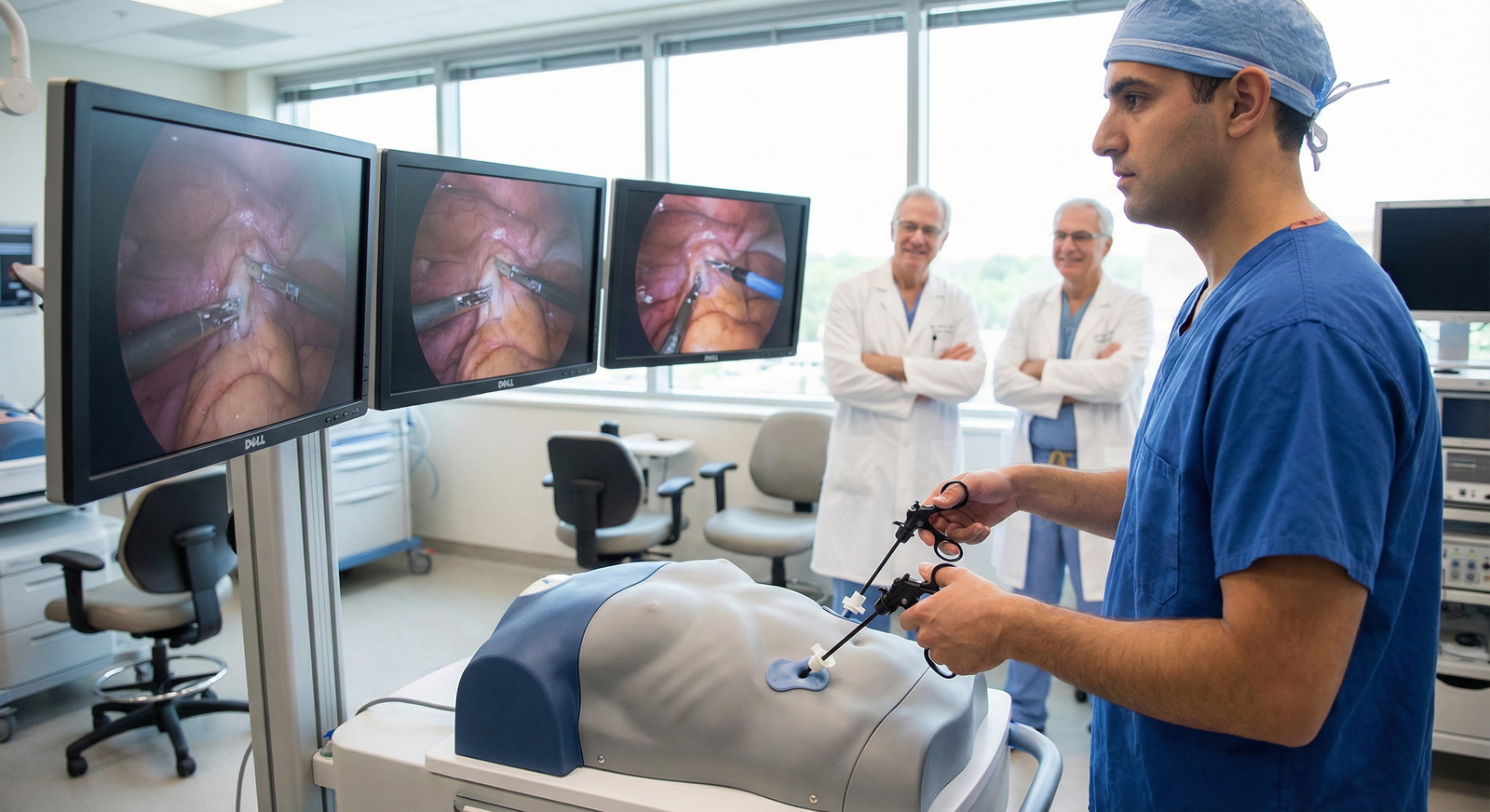
4. Use Simulation and Skills Labs to Amplify Training
Case volume is not only about the number of times you scrub in; it’s also about how efficiently you learn from each case.
- Make regular use of laparoscopic and robotic simulators if available.
- Attend skills labs and bootcamps; practice suturing, knot tying, stapler use, and energy devices.
- Ask attendings for feedback on your technical skills and implement it immediately.
When you show rapid improvement between cases, attendings are more willing to let you drive the case, boosting your meaningful residency case volume even if total numbers are similar to your peers.
5. Document and Communicate Your Operative Growth
For future fellowships or jobs, you will likely provide:
- Official case logs
- Letters of recommendation that reference your operative ability and independence
- Personal statements or CV sections summarizing your OR experience
As an IMG, well-documented, high-quality case volume helps counter any bias about international training backgrounds.
Consider:
- Keeping a personal log (in addition to official logs) with key reflections: what you learned, cases where you were primary surgeon, complications you managed.
- Discussing your operative progress during semiannual evaluations; ask, “Do my case numbers and performance put me on track for my career goals (e.g., MIS fellowship, community general surgery)?”
Red Flags and Green Flags in Case Volume for IMGs
When you compare programs, look for patterns—not isolated comments.
Green Flags
- Clear, recent data showing graduating residents at or above 900–1000 total cases, with strong chief numbers.
- Residents confidently say, “I feel ready to practice as a general surgeon.”
- Early operative exposure: PGY-1s and PGY-2s performing bread-and-butter cases as primary surgeons.
- Transparent system for monitoring and correcting low volumes in certain categories.
- Positive comments from IMGs in the program about fair OR opportunities relative to AMGs and fellows.
Yellow / Red Flags
- Vague or evasive answers when you ask for numbers.
- Heavy fellowship presence with no clear explanation of how resident case volume is protected.
- Multiple residents expressing concern about not meeting ACGME minimums in certain categories.
- Reports that “private attendings don’t like working with residents” or that PAs “do most of the cases.”
- An institutional focus on service and floor work with limited protected time for the OR.
If you are forced to choose between slightly lower volume but strong autonomy vs slightly higher volume but restricted primary surgeon experience, many surgeons would recommend prioritizing autonomy and responsibility. Quality of case experience often outweighs raw quantity.
Frequently Asked Questions (FAQ)
1. What is a good total case volume for a general surgery resident?
While exact numbers vary, many strong programs graduate residents with 900–1200+ total cases, with a substantial portion as surgeon junior or chief. More important than the exact total is:
- Meeting and exceeding ACGME minimums in all key categories
- Having enough chief-level cases to feel autonomous
- Having a balanced mix of bread-and-butter and complex cases
Ask each program for recent averages for their last 2–3 graduating classes.
2. As an IMG, should I prioritize case volume over program name or prestige?
Not always. Ideally, you balance both. But if forced to choose:
- For a career in community general surgery, robust operative autonomy and case volume may be more important than a highly prestigious name with limited primary surgeon experience.
- For highly competitive fellowships, strong mentorship, research, and institutional reputation can also matter. In that case, ensure your chosen academic program still provides adequate operative numbers and chief experience.
In all cases, avoid programs where residents struggle to meet ACGME minimums or feel unprepared for independent practice.
3. How can I verify that a program’s reported case numbers are accurate?
You cannot usually see official logs directly, but you can:
- Ask multiple residents at different levels (PGY-2 vs PGY-5) for their approximate case numbers and perceptions.
- Compare what the program leadership says with what residents independently report.
- Look for consistency over time—ask about the last few graduating classes, not just one “star” resident.
- Use alumni feedback if possible: ask recent graduates if their documented numbers matched what was advertised.
Consistency and transparency are more important than perfection.
4. I had significant operative experience before residency in my home country. Will that help my case volume situation?
Prior experience can help you:
- Learn faster and gain trust sooner in the OR.
- Be more efficient with each case, leading to higher quality learning from the same number of procedures.
However:
- Your pre-residency cases do not count toward ACGME or board eligibility requirements in a U.S. general surgery residency.
- You must still achieve required U.S. residency case volume and documented procedure numbers.
Use your prior experience as a strength, but not as a reason to accept a program with chronically low operative exposure.
By approaching case volume evaluation systematically—and advocating for your own operative experience once matched—you can transform your time in a general surgery residency into a powerful platform, whether your future is in the U.S., another country, academia, or community practice. As an international medical graduate, understanding and optimizing surgical volume and procedure numbers is one of the most effective ways to secure both competence and credibility in your surgical career.