Understanding Case Volume in OB/GYN Residency as a Non-US Citizen IMG
For a non-US citizen IMG (international medical graduate), evaluating case volume in Obstetrics & Gynecology (OB GYN) residency programs is not optional—it is strategic. Your future competence, confidence, and even employability depend heavily on the residency case volume, surgical volume, and procedure numbers you are exposed to during training.
This article explains how to evaluate case volume in OB/GYN programs, what benchmarks to look for, where to find reliable data, and how to interpret it as a foreign national medical graduate navigating the obstetrics match.
1. Why Case Volume Matters So Much in OB/GYN
OB/GYN is a procedure-heavy specialty. Your readiness at graduation will be measured less by exam scores and more by whether you can safely:
- Manage complicated labors
- Perform C-sections independently
- Handle gynecologic surgeries
- Respond to emergencies (e.g., postpartum hemorrhage, shoulder dystocia)
1.1. Competence Is Built on Repetition
Skills like:
- Performing a primary cesarean section
- Placing vacuum/forceps
- Managing operative vaginal deliveries
- Completing laparoscopic procedures
…cannot be mastered by reading or watching alone. They require hands-on repetition under supervision.
Residency case volume is directly linked to:
- Technical proficiency – suturing, dissecting, handling instruments
- Decision-making – when to operate, when to wait, when to escalate care
- Speed and efficiency – critical in emergencies
- Comfort with complexity – high-risk OB, oncologic surgery, pelvic floor repair
Programs with higher surgical volume and well-organized patient flow give you more opportunities to practice these skills.
1.2. Accreditation Requirements: A Baseline, Not a Goal
In the US, OB/GYN residency programs must meet ACGME minimum case requirements. These case logs typically include:
- Spontaneous vaginal deliveries
- Operative vaginal deliveries
- Primary and repeat cesarean sections
- Abdominal and vaginal hysterectomies
- Laparoscopic and hysteroscopic procedures
- Urogynecologic and minimally invasive surgeries
However:
- The ACGME minimums are the floor, not the ceiling.
- Strong programs substantially exceed these minimums.
- As an IMG, you should seek programs where graduating residents consistently report robust case numbers above minimum thresholds.
1.3. Why It Is Even More Critical for Non-US Citizen IMGs
As a non-US citizen IMG, you may face:
- Visa limitations affecting job location options after residency
- Extra scrutiny from employers unfamiliar with your medical school
- Competition with US grads, especially for hospital-employed or academic jobs
High procedure numbers and surgical volume can compensate for these disadvantages:
- You can demonstrate objective training quality (“I logged 250 C-sections, 90 hysterectomies, 180 laparoscopies…”).
- It reassures employers that you are fully capable clinically, regardless of where you graduated.
- It supports fellowship applications if you plan subspecialty training.
Your goal is not just to match into OB GYN residency; it is to graduate ready to compete in the US job market or fellowship landscape.
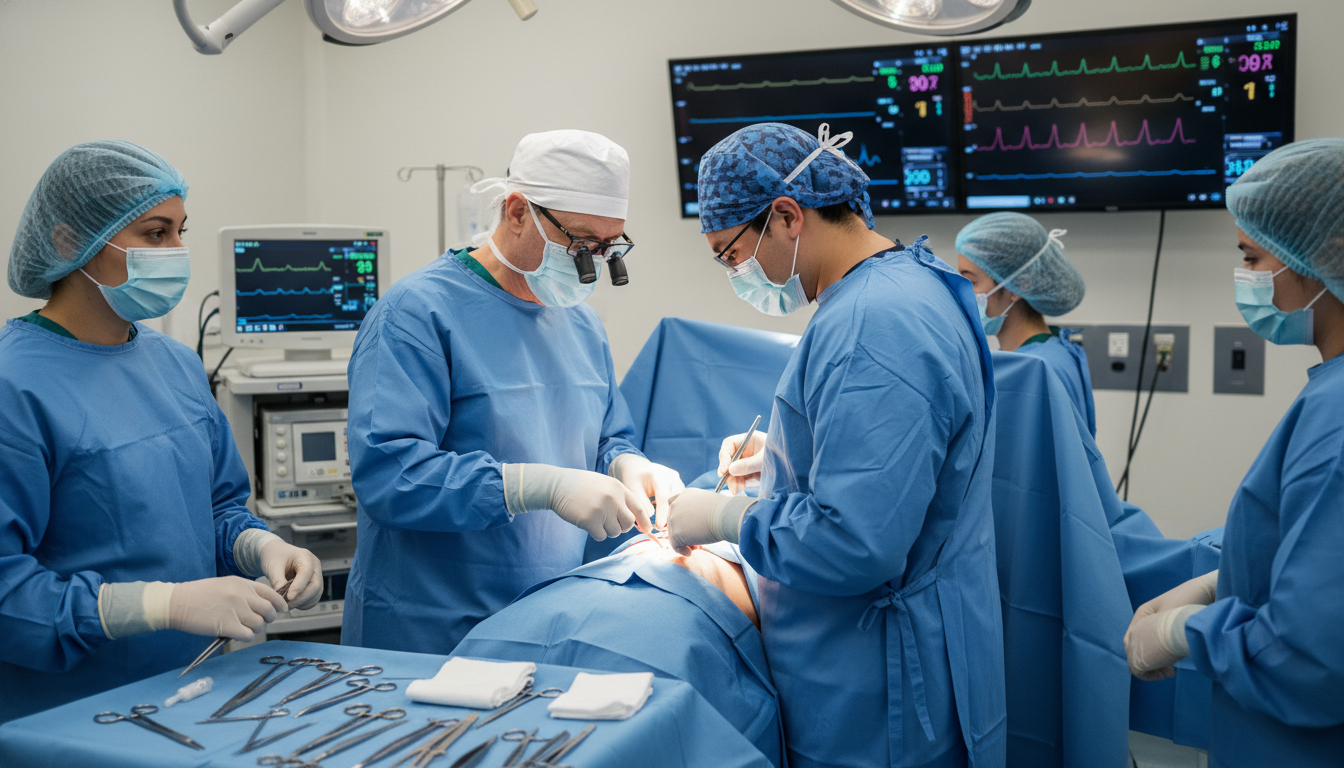
2. Key Case Volume Metrics to Evaluate in OB/GYN Programs
When evaluating programs, don’t stop at “busy vs. not busy.” Break it down into specific, trackable metrics. For a non-US citizen IMG in OB GYN, focus on the following categories.
2.1. Obstetrics Case Volume
Core obstetrics experiences:
- Total deliveries per resident
- Spontaneous vaginal deliveries
- Primary cesarean sections
- Repeat cesarean sections
- Operative vaginal deliveries (vacuum/forceps)
- High-risk OB exposure (e.g., preeclampsia, twins, VBAC, placenta previa)
Questions to research or ask:
- How many total deliveries does each resident typically log by graduation?
- What is the average number of C-sections per resident?
- Will I get primary operator experience, or mostly assistant roles?
- How is call structured? Does each resident get a fair share of L&D exposure?
Programs anchored at busy county hospitals or large regional centers often provide higher obstetric procedure numbers, but structure and supervision also matter.
2.2. Gynecologic Surgery Volume
Key gynecologic surgeries:
- Hysterectomies (abdominal, vaginal, laparoscopic, robotic)
- Laparoscopic procedures (diagnostic, salpingectomy, oophorectomy, LAVH, myomectomy)
- Hysteroscopic procedures (polyps, fibroids, D&C)
- Benign gynecologic surgery (ovarian cystectomy, ectopic pregnancy)
- Surgical management of ectopic pregnancy
- Emergency GYN surgery (torsion, hemorrhage, ruptured ectopic)
Questions to explore:
- What are the average hysterectomy numbers per graduate (across all routes)?
- How many laparoscopic cases do seniors typically log?
- Is there exposure to robotic surgery?
- Are junior residents allowed to perform key steps early, or do attendings and fellows dominate the cases?
As a foreign national medical graduate, being able to say, “I independently perform laparoscopic salpingectomy, cystectomy, and simple hysterectomies” is powerful in job interviews.
2.3. Subspecialty Exposure and Procedure Diversity
Beyond total OB GYN case volume, diversity matters:
- Maternal-fetal medicine (MFM) – management of high-risk pregnancies, ultrasound-guided procedures
- Gynecologic oncology – staging laparotomies, radical hysterectomies, lymphadenectomy
- Reproductive endocrinology and infertility (REI) – egg retrieval procedures, IVF exposure
- Female pelvic medicine and reconstructive surgery (urogynecology) – prolapse repairs, sling procedures
Even if you don’t plan fellowship now, exposure to these areas:
- Broadens your skill set
- Makes you more marketable
- Helps you discover long-term career interests
2.4. Graduates’ Case Logs as Evidence
The most reliable way to understand true residency case volume is to review de-identified aggregate case logs for recent graduates. Ask:
- Do you track and share average procedure numbers for graduating residents?
- Are the last 3–5 years of data available?
- How do these numbers compare to ACGME minimums?
If programs are proud of their surgical volume, they usually have this data readily available and are willing to discuss it transparently.
3. Where and How to Find Case Volume Information
As a non-US citizen IMG, you will likely not have as many in-person opportunities to visit programs before applying. You must use every available online and virtual tool to evaluate OB GYN residency case volume effectively.
3.1. Official Program Websites
Check the OB GYN residency pages for:
- “By the numbers” sections with annual deliveries, surgeries, clinic visits
- Hospital statistics:
- Number of annual births
- Number of major OR cases
- Tertiary care designation (e.g., Level III/IV NICU, regional referral center)
- Rotation schedules, including:
- Dedicated labor & delivery blocks
- GYN oncology, urogynecology, and MFM rotations
- Night float systems (which often concentrate obstetric exposure)
Green flags:
- Specific numbers:
“Our residents graduate with an average of 230 C-sections, 250 vaginal deliveries, and 90 hysterectomies.” - Clearly outlined progression of responsibility from PGY-1 to PGY-4.
Red flags:
- Only vague statements like “high-volume” or “busy service” with no data.
- Focus almost exclusively on didactics and research with little mention of operative experience.
3.2. Doximity, FREIDA, and Other Databases
Use tools like:
- AMA FREIDA – Can show program size, affiliated hospitals, and sometimes patient volume statistics.
- Doximity Residency Navigator – Offers:
- Reputation rankings
- Some insight into hospital size and case mix
- Alumni outcomes (which indirectly correlate with clinical training strength)
While they rarely list exact procedure numbers, bigger and busier hospitals often correspond to higher case volume—but always confirm.
3.3. Virtual Open Houses and Information Sessions
Most OB/GYN programs now host virtual events, especially important if you are a foreign national medical graduate who cannot easily travel.
During these sessions, ask specific, data-driven questions:
- “What is the average number of C-sections and total deliveries per graduate?”
- “How many hysterectomies and laparoscopic cases do residents typically complete?”
- “Can you share recent aggregate case logs for graduating seniors?”
- “How do you ensure junior residents gain adequate operative experience and aren’t overshadowed by fellows?”
Listen carefully to how confidently and specifically program leaders respond.
3.4. Residents’ Perspectives and Informal Channels
Reach out to current residents via:
- Program email addresses
- Social media (Twitter/X, Instagram, LinkedIn)
- Alumni networks
- IMGs from your home country who are now in US training
Questions to ask privately:
- “Do you feel you are getting enough OR time?”
- “Do seniors graduate feeling fully prepared for independent practice?”
- “Are there any bottlenecks—for example, fellows or private attendings taking most cases?”
- “Do you have any concerns about residents meeting surgical volume targets?”
These unfiltered insights can reveal discrepancies between official messaging and actual experience.

4. How to Interpret Case Volume Data Strategically as a Non-US Citizen IMG
Knowing the numbers is one thing; understanding what they mean for your career is another. Use these principles to interpret the residency case volume, surgical volume, and procedure numbers you encounter.
4.1. Aim Above the Minimums, But Avoid Extreme Overload
You want a high-volume environment that still allows safe, supervised learning.
Indicators of a good balance:
- Residents consistently exceed ACGME minimums by a comfortable margin.
- Graduates report feeling confident to practice independently right away.
- There is structured teaching in the OR and on L&D, not just “service work.”
Potential concern zones:
- Very low numbers (barely meeting minimums): risk of graduating underprepared.
- Extremely high volume with poor structure:
- Residents may be overworked.
- Little time for feedback or deliberate practice.
- Burnout risk, particularly challenging if you have visa-related stress.
As an IMG, you may be especially motivated to choose the “busiest” programs. Ensure that education, supervision, and wellness are not sacrificed for sheer numbers.
4.2. Balance OB and GYN Exposure
Some programs are heavy on obstetrics (e.g., high delivery volume, underserved populations) but lighter on gynecologic surgery, or vice versa. Look for balanced training:
- Strong L&D experience with solid C-section and vaginal delivery numbers
- Adequate exposure to hysterectomies (all approaches) and laparoscopic procedures
- Regular time in the OR throughout all training years
Ask:
- “Do any residents struggle to meet case minimums in particular areas?”
- “Are there dedicated GYN OR days for each resident?”
- “How is continuity maintained between obstetrics and gynecology rotations?”
4.3. Understand the Impact of Fellows on Resident Surgical Volume
Fellowship programs (MFM, Gyn Onc, MIGS, FPMRS) can either enhance or limit resident experience.
Potential advantages:
- Complex surgical cases that enhance resident learning
- Stronger academic and teaching culture
- Exposure to cutting-edge techniques and subspecialty care
Potential drawbacks:
- Top-end complex cases may go primarily to fellows.
- Residents may be first assistants instead of primary operators.
As a foreign national medical graduate, neither setup is inherently worse, but you need clarity:
- “In services with fellows, how are cases divided between residents and fellows?”
- “Do residents still achieve high independent operating experience in senior years?”
Some of the best programs intentionally reserve key cases for residents, while fellows handle highly specialized parts.
4.4. Consider Your Long-Term Goals
Your ideal surgical volume and procedure numbers may differ depending on your plans:
Goal: General OB/GYN in community practice
- Strong emphasis on C-sections, vaginal deliveries, benign GYN surgery
- Enough laparoscopic training for commonly needed procedures
- Efficient emergency OB management skills
Goal: Academic medicine or fellowship (MFM, Gyn Onc, MIGS, REI, FPMRS)
- High exposure to complex surgeries and high-risk patients
- Evidence of research productivity in subspecialty divisions
- Mentors and letters from faculty in your desired field
In both cases, robust case volume is essential, but case mix and complexity matter more for fellowship ambitions.
5. Practical Strategies for IMGs to Assess and Leverage Case Volume
Beyond researching and selecting high-volume OB GYN residency programs, you should also maximize your own case numbers once you match.
5.1. During Application and Interview Season
Actionable steps:
Create a comparison spreadsheet
- Columns: Program name, annual births, annual GYN surgeries, C-sections per grad, hysterectomies per grad, laparoscopy numbers, presence of fellows, call system.
- Fill in from websites, virtual sessions, and resident conversations.
Prepare standardized questions for every interview Ask the same 3–5 case-volume questions at each program so you can compare.
Use your IMG background as a strength
- Emphasize any prior procedural exposure from your home country (within ethical and legal bounds).
- Express clearly that you are seeking robust training:
“As a non-US citizen IMG, it’s important for me to graduate with strong independent surgical skills. Could you share the typical procedure numbers for your graduating residents?”
5.2. Once You Match: Proactively Build Your Case Log
Once in residency:
- Log every case accurately and promptly in the official case log system.
- Volunteer for additional cases when safe:
- Ask chiefs, “If someone can’t make it to the OR, I’m happy to scrub in.”
- Show up early on OR days to review cases and be available.
- Seek graded responsibility:
- Start by mastering smaller steps (incision, closure, uterine repair).
- Progress to full procedures when faculty feel you are ready.
As an IMG, cultural humility and clear communication are important, but do not be shy about seeking experience. Frame it as dedication to patient care and learning.
5.3. Use Data to Guide Feedback and Growth
Regularly review your own procedure numbers:
- Compare your progress to your senior residents’ case logs.
- If you are lagging in certain areas (e.g., laparoscopic cases), discuss with your program director or mentor:
- “I’ve noticed my laparoscopy numbers are lower than expected at this stage. Are there upcoming rotations or electives where I can focus more on minimally invasive surgery?”
Programs usually welcome residents who are self-aware and data-driven about their training.
6. Common Pitfalls and Misconceptions About Case Volume for Non-US Citizen IMGs
6.1. “Busiest is Best” Without Context
Extreme service-heavy environments can leave you:
- Exhausted and burned out
- With less structured teaching
- More focused on surviving nights and weekends than deliberate practice
High surgical volume is valuable only if coupled with:
- Explicit teaching
- Constructive feedback
- Appropriate supervision
- Reasonable duty hours
6.2. Ignoring Outpatient and Continuity Experiences
While this article emphasizes procedure numbers, don’t overlook clinic:
- Prenatal care and postpartum management
- Contraception counseling and IUD/implant insertions
- Management of abnormal bleeding, fibroids, endometriosis
- Cancer screening and early diagnosis
Employers expect a well-rounded OB/GYN who can both operate and manage longitudinal care.
6.3. Underestimating Documentation and Communication Skills
As a non-US citizen IMG, communication can significantly affect how much responsibility and OR time you are given.
- Clear, concise presentations help attendings trust you faster.
- Well-written notes and pre-op planning demonstrate readiness.
- Strong teamwork with nurses and anesthesiologists improves your access to cases.
Ironically, strong procedural training often starts outside the OR—with how you discuss the case, obtain consent, and present to staff.
FAQs: Case Volume Evaluation for Non-US Citizen IMGs in OB/GYN
1. What is a “good” case volume for OB/GYN residency?
There is no universal magic number, but strong programs substantially exceed ACGME minimums. As a rough guide, many well-regarded OB GYN residencies see graduates with:
- Several hundred vaginal deliveries and C-sections combined
- Dozens of hysterectomies (across all routes)
- A significant number of laparoscopic procedures, including independent basic cases
When comparing programs, focus on how far above the minimums they are and how confident their graduates feel entering practice.
2. How can I assess surgical volume if programs don’t publish exact numbers?
Use a combination of:
- Hospital statistics: total births per year, OR volume
- Resident and faculty comments during open houses and interviews
- Private conversations with current residents
- The structure of rotations (how much dedicated OR/L&D time exists)
Ask directly for aggregate, de-identified graduating resident case logs. Programs serious about education often track and share this internally, even if not on websites.
3. As a non-US citizen IMG, should I prioritize visa sponsorship or case volume?
You must have both. If a program cannot reliably sponsor your visa, the case volume is irrelevant. Among visa-friendly programs, use case volume and training quality as major differentiators. Ideally, choose a program that:
- Has a history of successfully sponsoring IMGs
- Provides robust surgical and obstetric experience
- Has graduates who easily find jobs or fellowships
Combining visa security with strong procedure numbers is key to long-term stability and success.
4. Do programs with fellows always have lower resident case volume?
Not necessarily. Many fellowship programs balance cases so residents still achieve excellent residency case volume and surgical volume. The effect depends on:
- Local culture and policies about case allocation
- Attending commitment to resident education
- The extent to which residents are primary surgeons on core cases
Ask explicitly how cases are divided and check if residents still meet and surpass case requirements comfortably.
For a non-US citizen IMG aiming for a successful obstetrics match and a strong career in OB GYN, evaluating case volume, surgical volume, and procedure numbers is one of the most important steps you can take. Use data, ask precise questions, and choose a training environment where you will graduate not only as a board-eligible physician, but as a truly confident and capable surgeon and obstetrician.