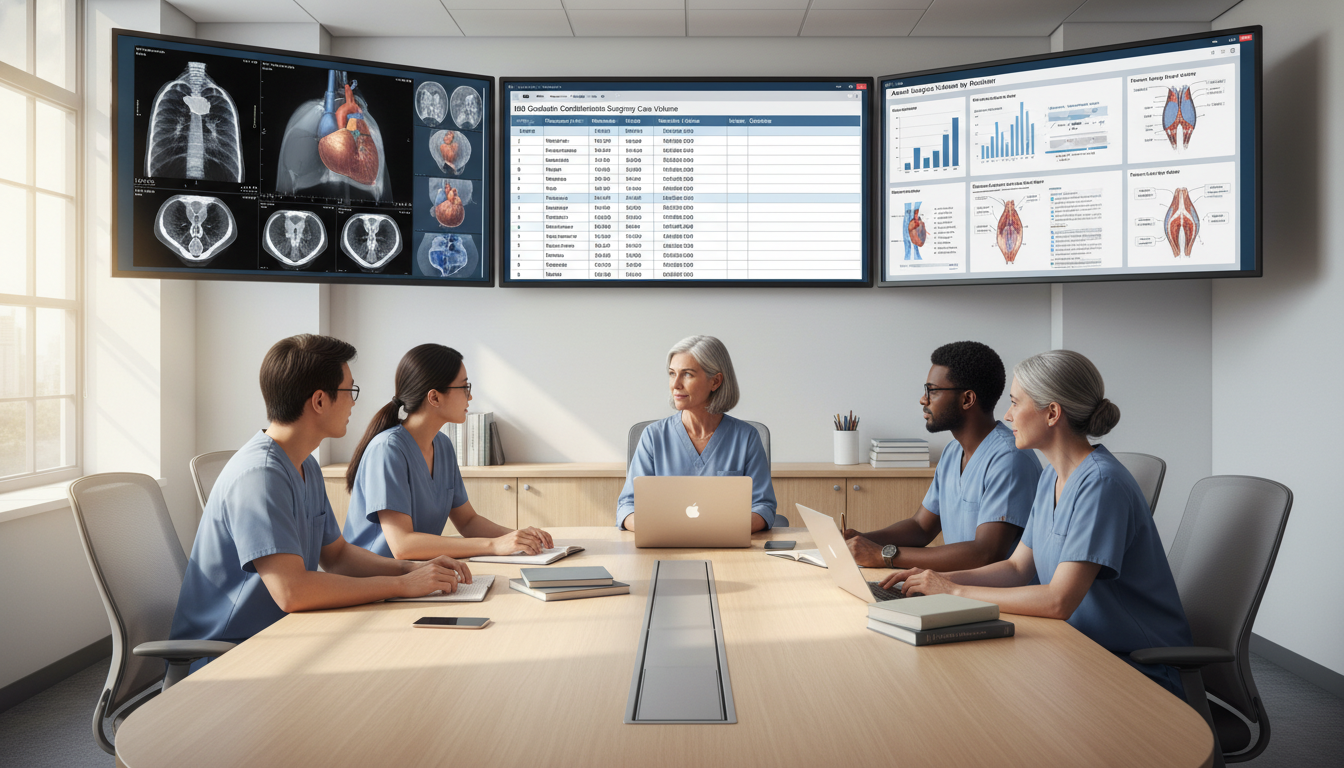
Understanding Why Case Volume Matters So Much
For a non-US citizen IMG or foreign national medical graduate, evaluating residency case volume is not just a data exercise; it can shape:
- How competent you feel at graduation
- How competitive you are for fellowships or jobs
- Whether you can meet home-country licensing expectations
- Your comfort level handling complex patients independently
In procedural and surgical specialties—General Surgery, Orthopedics, OB/Gyn, Anesthesia, EM, certain Internal Medicine subspecialties—residency case volume, surgical volume, and procedure numbers are core markers of training quality.
What “case volume” actually means
You will see slightly different terms in program materials:
- Case volume / surgical volume – Total number of operations, procedures, or significant clinical encounters residents participate in during training.
- Procedure numbers – Often broken down by specific categories (e.g., laparoscopic cholecystectomy, C-section, central line, intubation).
- Case mix – Types and complexity of cases (bread-and-butter vs rare/complex).
- Graduating resident logs – ACGME-mandated or board-required logs each resident must complete by the end of training.
For you as a non-US citizen IMG, all of these matter for two reasons:
- Competence and confidence – You need enough repetitions to perform procedures safely and independently.
- Documentation and credibility – When applying for fellowship, jobs, or licenses (in the US, home country, or a third country), you may be asked for proof of your operative and procedural experience.
Why non-US citizen IMGs need to be extra systematic
Compared with US graduates, non-US citizen IMGs:
- May have less informal information about programs (no classmates ahead of them to ask).
- Often have additional constraints (visa sponsorship, geographic clustering) that limit how many programs they can rank.
- May be considering returning to their home country or working in different health systems in the future, where clear procedural documentation is often required.
Because of this, you need a structured, repeatable strategy to evaluate residency case volume and case mix before you rank programs.
Step 1: Clarify Your Own Case Volume Needs and Goals
Before you start evaluating programs, define what you need from a residency in terms of volume and exposure.
A. Match your goals with the specialty’s expectations
Ask yourself:
- Do I want a high-volume, intensive surgical experience (e.g., general surgery, OB/Gyn, orthopedics), or a more cognitive specialty (e.g., psychiatry, pathology)?
- Do I want a fellowship that is very procedure-heavy (e.g., GI, cardiology, interventional radiology, critical care)?
- Am I aiming to practice in:
- The US only?
- My home country only?
- Multiple countries (US + home + perhaps others like Canada, UK, Gulf region)?
Different paths imply different minimum procedure numbers for comfort and credibility.
Example: Two IMGs, two very different needs
IMG A wants general surgery and plans to work in a rural area in their home country with limited subspecialty support. They need:
- High overall surgical volume
- Wide variety: trauma, emergent cases, basic orthopedics, endoscopies, C-sections (if scope of practice allows)
- Strong hands-on responsibility in the OR
IMG B wants Internal Medicine with a goal of cardiology fellowship in the US. They need:
- Strong experience with core inpatient medicine
- Solid procedure numbers in central lines, paracentesis, thoracentesis, lumbar puncture during residency
- Evidence of robust cardiac exposure (CCU, cardiac consults), even if not yet interventional
B. Identify minimums and “nice to have” procedure numbers
Look up board or log requirements for your target specialty:
- ACGME & ABMS specialty board websites
- Program websites (often list sample logs for graduating residents)
- Specialty societies (e.g., ABS for surgery, ACOG for OB/Gyn)
Then, for your goals, write down:
- Absolute minimum you’d feel safe with
- Ideal target that would make you highly confident at graduation
This simple table can help:
| Category | Minimum I need | Ideal target |
|---|---|---|
| Total major cases | ||
| Key procedure 1 (e.g. C-section) | ||
| Key procedure 2 | ||
| Key emergency procedure |
You will use this framework when comparing programs later.
Step 2: Where to Find Case Volume and Procedural Data
Residency programs vary dramatically in how transparently they share their residency case volume and surgical volume. As a non-US citizen IMG, you must combine multiple information sources.

1. Official ACGME and specialty board requirements
Start with what’s required for board eligibility:
- Visit the ACGME site for your specialty’s case log minimums (for surgery, OB/Gyn, orthopedics, anesthesia, etc.).
- Visit your specialty’s board (e.g., ABS, ABOG, ABEM) for further detail:
- Categories of procedures
- Minimum thresholds
- Reporting requirements
Use this as a baseline: any program where graduating residents are just barely meeting the minimums should be scrutinized carefully.
2. Program websites and educational materials
Many US programs now highlight case volume and procedure numbers in recruitment materials:
Look for:
- “Operative Experience” or “Clinical Training” pages
- Charts or tables showing:
- Average number of total cases per resident
- Average number of key procedures by PGY year
- Examples of graduating resident case logs
Also examine:
- Rotation structure – how many months in the OR vs clinic vs ICU?
- Subspecialty rotations – trauma, transplant, vascular, minimally invasive, OB, etc.
- Call schedule – more nights/weekends often correlate with higher exposure, but watch for burnout and service imbalance.
3. Virtual open houses and Q&A sessions
As a foreign national medical graduate, you may not be able to attend in-person second looks. However, you can:
- Join virtual open houses, information sessions, or Q&A panels.
- Ask specific case volume questions (examples later in this article).
- Observe:
- How residents talk about autonomy and hands-on experience
- Whether they seem comfortable and confident discussing their surgical volume
4. Current and former residents (especially other IMGs)
First-hand accounts are extremely valuable, particularly from:
- Current IMGs in the program
- Recent graduates, especially non-US citizen IMG alumni
Use:
- Alumni directories
- Your own medical school networks
- Social media groups for IMGs in your specialty
Questions to ask:
- Do graduating residents feel comfortably above required case minimums?
- Do IMGs get the same OR or procedure opportunities as US grads?
- Are there any hidden limitations (e.g., certain rotations where IMGs have less hands-on time)?
5. Case logs and research/quality data
Some programs publish:
- De-identified resident case logs or graphic summaries
- Departmental surgical volume statistics (e.g., “We perform 1,200 joint replacements annually”)
Even if they don’t give resident-level numbers, you can infer whether the institution has enough volume overall to support strong training.
Step 3: How to Interpret and Compare Case Volume Numbers
Raw numbers can be misleading if you don’t know how to interpret them. You should analyze:
- Total volume
- Distribution over years
- Case mix and complexity
- Autonomy and role in each case
A. Total surgical volume and procedure numbers
For surgical and procedural fields, focus on:
- Average total major cases per graduating resident
- Case volume per year (PGY-1 through final year)
- Key category breakdown:
- Basic vs complex cases
- Open vs minimally invasive
- Elective vs emergent
Compare these to:
- ACGME minimums
- National averages, if available in specialty literature
- Your own target minimums and ideals
Example (General Surgery):
- ACGME minimums: suppose ~850 major cases (number just for illustration; always check current standards).
- Program A: Average graduating resident performs 950–1,100 cases.
- Program B: Average 820–900 cases.
If you are a foreign national medical graduate planning rural general surgery in your home country, Program A is likely a better fit, assuming case mix and autonomy are adequate.
B. Case mix and breadth of exposure
High numbers are not enough. Ask:
- Do residents see bread-and-butter cases consistently (e.g., appendectomy, hernia, C-section, lap chole)?
- Is there exposure to common emergencies in your future practice setting?
- Are there any major gaps (e.g., minimal trauma experience, almost no open surgery, limited OB in a combined program)?
Map this against your projected future practice:
- Returning to a resource-limited environment? You may need strong open surgery, trauma, and critical care exposure.
- Planning subspecialty fellowship in the US? You may need robust exposure in that subspecialty and solid general training.
C. Level of autonomy and hands-on experience
Two residents may log the same case as “primary surgeon” and “assistant,” but their real participation can be very different. To assess autonomy:
Ask current residents:
- “When you log a case as surgeon junior or surgeon chief, what does that usually mean you actually do?”
- “At what PGY year do you start performing key procedures yourself (e.g., C-sections, laparoscopic appendectomies, central lines)?”
- “Do attendings consistently allow graded responsibility?”
Look for patterns:
- Do senior residents get plenty of chief-level cases?
- Are there fellows in the same specialty, and does that limit resident autonomy?
- Are residents satisfied with their operative independence by graduation?
D. Distribution across training years
Some programs have:
- Heavy OR exposure in senior years and very little early on, or
- Robust early-senior autonomy but very heavy service work for juniors.
As an IMG, early exposure can be especially helpful to:
- Build skills
- Demonstrate competence
- Compensate for any perceived disadvantage vs US grads
Check:
- PGY-1: Do interns get meaningful procedures (lines, tubes, basic cases)?
- PGY-2–3: Are you moving into more complex cases?
- Final year: Are you effectively acting as a junior attending in some settings?
Step 4: Strategic Questions to Ask During Interviews and Open Houses
During interviews, you must ask targeted case volume questions without sounding confrontational or obsessed with numbers alone.

A. Questions for residents
Overall exposure and confidence
- “By graduation, do you feel more than prepared for independent practice in terms of your case volume and autonomy?”
- “How do your case logs compare to ACGME minimums? Are you usually well above, or just meeting them?”
Procedural breakdown
- “For [your specialty], about how many of [key procedure] do you typically perform by the end of training?”
- “Is there any procedure where residents feel they’re at the lower end of desired numbers?”
IMG-specific experience
- “As a non-US citizen IMG, do you feel you had equal opportunity to get into the OR or perform procedures compared to other residents?”
- “Have any recent IMGs gone directly into practice or fellowships requiring high procedural skills, and did they feel well prepared?”
Case mix and complexity
- “How would you describe the balance between bread-and-butter vs complex cases?”
- “Do you get sufficient exposure to emergencies and night/weekend cases?”
B. Questions for program leadership
Program philosophy
- “How does your program ensure residents exceed ACGME minimum case numbers, not just meet them?”
- “What systems are in place to monitor each resident’s case logs and address low numbers early?”
Fellows and competition for cases
- “In services with fellows, how do you guarantee residents still get adequate hands-on experience and surgical volume?”
- “Are there examples where a resident’s lower case volume triggered proactive changes in rotation assignments?”
Data transparency
- “Would you be willing to share de-identified average case logs for your recent graduating residents, especially in key categories important for independent practice?”
Future practice patterns
- “For graduates entering [my target practice—rural surgery, general OB/Gyn, community EM], have there been any concerns from employers about their practical skills or procedure numbers?”
Step 5: Special Considerations for Non-US Citizen IMGs
Beyond general case volume evaluation, there are IMG-specific issues you must integrate into your strategy.
A. Visa, geography, and case volume trade-offs
Some programs with excellent surgical volume may:
- Not sponsor H-1B visas
- Be in locations with few IMG residents historically
- Have less structured support for foreign national medical graduates
You may be forced to consider slightly lower volume programs that are IMG-friendly and offer J-1/H-1B support. In that case:
- Ensure that even “lower volume” options still get you safely above ACGME minimums.
- Prioritize programs with:
- Strong oversight of case logs
- Willingness to give extra rotations or outside electives if you are short on procedures
- Clear commitment to equal training for IMGs
B. Documentation needs for home-country or third-country practice
Many countries and health systems require:
- Official procedure logs
- Confirmation letters from program directors stating:
- Total number of major cases
- Procedure numbers in specific categories
- Level of responsibility (primary operator vs assistant)
Before ranking programs, verify:
- Does the program maintain detailed electronic case logs (e.g., ACGME web-based logs)?
- Are they willing to support extra documentation if you return to your home country?
- Do they have alumni who successfully got licensed or credentialed in your intended practice environment?
C. Perception of IMG competence and the role of case volume
As a non-US citizen IMG, you may feel more pressure to prove your technical competence. High-quality, well-documented surgical volume and procedure numbers can help counter biases.
You can later use your case log data to:
- Support fellowship applications (demonstrating high-level procedural exposure).
- Reassure employers about your readiness, especially if they are less familiar with your medical school background.
- Navigate credentialing committees that may scrutinize IMGs more closely.
D. Balancing service vs education
Some programs with high case volume rely heavily on residents for service work: floor calls, paperwork, logistics. High volume is not beneficial if:
- You are mostly holding retractors without learning
- You spend most of your nights on the computer instead of at the bedside or in the OR
- There is minimal feedback or teaching
Ask residents:
- “Do you feel the clinical load sometimes compromises your educational experience or your time in the OR/procedure room?”
- “Has the program made changes to protect learning time for residents?”
Step 6: Creating a Practical Case Volume Comparison Tool
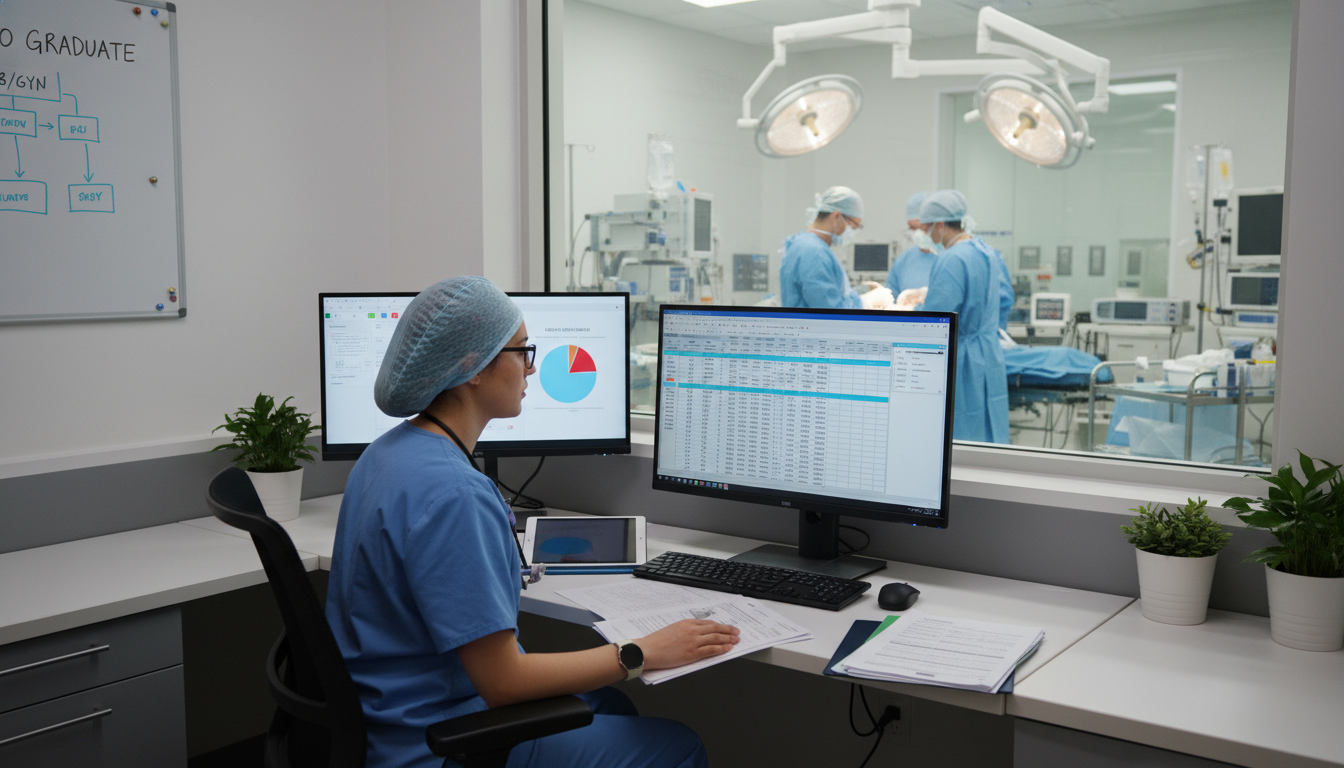
To make decisions rationally, create a simple but structured spreadsheet for your target programs. This will help you compare residency case volume, surgical volume, and procedure numbers systematically.
A. Suggested columns
For each program, include:
- Program name
- Visa types supported (J-1, H-1B)
- Total major cases (average graduate)
- Key procedures (numbers you care about most)
- Presence of fellows in your specialty (Y/N)
- Case mix notes (trauma presence, elective vs emergency, etc.)
- Autonomy level (subjective rating: 1–5 based on conversations)
- Documentation support for international licensing (Y/N)
- IMG friendliness (subjective 1–5 from interactions)
- Overall fit (your ranking 1–10)
B. Example (simplified) comparison
| Program | Total cases | Key procedure 1 | Key procedure 2 | Fellows present? | Autonomy (1–5) | Visa | IMG-friendly (1–5) |
|---|---|---|---|---|---|---|---|
| A | 1050 | 180 | 90 | Yes | 4 | J-1/H-1B | 4 |
| B | 900 | 150 | 70 | No | 3 | J-1 | 5 |
| C | 1150 | 190 | 110 | Yes | 5 | None | 1 |
You may find, for instance, that:
- Program C has the highest case volume and autonomy but offers no visa—and is not realistically available to you.
- Program A provides a strong compromise between good surgical volume, autonomy, and visa/IMG support.
This structured approach keeps you from overvaluing one aspect (e.g., location) and underestimating long-term professional consequences of inadequate volume.
Putting It All Together: A Sample Evaluation Path
Imagine you are a non-US citizen IMG applying to OB/Gyn, planning to return to your home country where generalist OB/Gyns perform a wide range of procedures.
Your path might look like this:
Define needs
- Minimum: Meet ABOG/ACGME minimums with some margin in C-sections, vaginal deliveries, hysterectomies.
- Ideal: Strong exposure to emergency OB, complicated deliveries, and gynecologic surgery.
Gather baseline data
- Review board requirements and typical US graduating case logs.
- Note procedure numbers that seem desirable in your future context (e.g., 200+ C-sections, 100+ hysterectomies, etc.).
Screen programs online
- Eliminate any that do not support your visa status or appear marginal on case volume.
- Prioritize websites that clearly show resident case volume or explicit commitment to surgical training.
Engage with programs
- Attend open houses, ask focused questions on OB volume, gynecologic surgical case mix, and autonomy.
- Talk to at least one non-US citizen IMG resident or graduate from each seriously considered program.
Populate your spreadsheet
- Rate each on total surgical volume, case mix, autonomy, IMG support, and documentation support.
- Compare them to your predefined minimums and ideal targets.
Final ranking
- Rank higher the programs that:
- Consistently exceed ACGME minimums
- Provide broad, balanced case mix relevant to your future practice
- Support your visa status and IMG-specific documentation needs
- Rank higher the programs that:
This method reduces uncertainty and helps you defend your ranking strategy logically.
FAQs: Case Volume Evaluation for Non-US Citizen IMGs
1. If a program doesn’t publish case volume data, should I automatically avoid it?
Not necessarily. Some excellent programs are simply less marketing-focused. However, you should be more proactive:
- Ask directly for average graduating resident case logs or at least ranges.
- Speak with multiple residents and ideally one IMG graduate.
- If leadership avoids answering or cannot provide any data, consider it a warning sign.
2. How can I know whether procedure numbers at a community program are “enough” compared to big academic centers?
Community programs may have fewer subspecialty fellows and more direct resident participation, leading to:
- Fewer total cases than very large academic centers, but
- Higher resident autonomy and primary operator experience
Judge adequacy by:
- Meeting or exceeding ACGME minimums comfortably
- Resident descriptions of their confidence at graduation
- Outcomes such as graduates successfully entering fellowships or independent practice without issues.
3. As a non-US citizen IMG, should I prioritize case volume over reputation or location?
You must balance all three:
- Very low surgical volume or procedure numbers can compromise your long-term skills and confidence, regardless of location.
- A program with high case volume but poor educational structure and no IMG support can be equally problematic.
Given typical IMG constraints, aim for a middle ground: solid case volume and autonomy in a program that demonstrably supports non-US citizen IMGs, even if it is not in the most famous city.
4. Can I make up for lower residency case volume later through fellowships or short courses?
Additional training can help but has limitations:
- Fellowships expect solid baseline skills; they are not designed to correct major deficits in core procedures.
- Short workshops or brief observerships rarely provide enough repetitions to build deep procedural competence.
- Some licensing authorities will still ask for residency case logs, not later experiences.
Whenever possible, choose a residency that provides sufficient case volume and procedure numbers from the start, so you do not depend on uncertain opportunities later.
By approaching residency case volume evaluation systematically, you transform a vague concern into a concrete, data-driven part of your decision-making. As a non-US citizen IMG or foreign national medical graduate, this discipline is one of the strongest tools you have to ensure that your training truly prepares you for the career—and the countries—you are aiming for.