Why Case Volume Matters So Much in Urology for Caribbean IMGs
For Caribbean IMGs targeting urology, case volume is not just another line on your CV—it is a core proxy for technical readiness, surgical maturity, and how comfortably you will transition into residency and, later, independent practice. Programs know that training environments differ widely, and they pay especially close attention to how much real procedural exposure you have had.
Whether you are coming from SGU, Ross, AUC, or another Caribbean medical school, residency directors will ask some variation of:
- How many urology cases have you actually seen or assisted with?
- What is your overall surgical volume and hands-on exposure?
- Do your rotations demonstrate progressive responsibility?
If you can clearly answer those questions with numbers, context, and reflection, you will stand out—even in a competitive urology match.
This article will walk you through how to understand, evaluate, and present your case volume as a Caribbean IMG interested in urology residency, including:
- What “good” case volume looks like and how it’s evaluated
- How to track and verify your procedure numbers
- How to use away rotations and electives to boost urology exposure
- How to frame your SGU residency match or other Caribbean medical school residency story around case volume
- What to do if your case numbers are lower than ideal
Understanding Case Volume in Urology: Definitions and Benchmarks
Residency programs use case volume as a surrogate marker for surgical readiness and consistency of exposure. To use it strategically, you need to understand the different dimensions behind those numbers.
1. Types of Volume Urology PDs Care About
Program directors in urology residency look at several overlapping but distinct metrics:
Urology-specific exposure
- Number of urology clinical weeks or months (inpatient + outpatient)
- Number of urologic procedures you have:
- Observed
- Scrubbed on / assisted
- Performed portions of (with supervision)
General surgical volume
- Broader surgical rotations (general surgery, surgical subspecialties)
- Number of OR days, types of operations, number of cases scrubbed
Continuity and progression
- Did your responsibilities increase over time?
- Early on: observation and retracting
- Later: suturing, cystoscopy assistance, basic endoscopy maneuvers, Foley placement in complex cases, catheter exchanges, bedside procedures
Programs know you are not expected to be an operating surgeon as a student. What they want to see is: Have you had sufficient exposure to understand the OR, learn basic skills, and demonstrate comfort in procedural environments?
2. Benchmarks: What Is “Typical” Exposure?
There are no universal minimal numbers for medical students, but you can use general ranges to evaluate yourself:
For Caribbean IMGs aiming urology, a strong application often includes:
Total surgical cases (all specialties) as a student
- Solid: 50–100 cases scrubbed
- Strong: 100–200+ cases scrubbed or observed with some hands-on tasks
Urology-specific exposure
- Solid: 20–40 urology cases observed and 10–20 scrubbed
- Strong: 40–80+ urology cases observed and 20–40+ scrubbed, with documented hands-on involvement
Clinical time in urology
- At least one core or elective block (4 weeks) in urology
- Stronger: 2–3 urology rotations (home + away/audition rotations) totaling 8–12 weeks
These are not hard cutoffs, but PDs will be reassured if your numbers are in or above these ranges, especially if your narrative shows deliberate pursuit of urology and reflection on what you learned.
Tracking and Verifying Your Urology Case Volume
You cannot evaluate or present your case volume if you are not meticulously tracking it. Caribbean IMGs sometimes assume that hospital or school systems will automatically generate a report—but these are often incomplete or not easily exported. Take control of your own log.

1. What to Log for Each Case
Keep a simple but detailed log for every meaningful case you touch. A spreadsheet or note app is sufficient if used consistently. For each case, record:
- Date
- Hospital / site (especially important for Caribbean clinical campus vs. US/Canada sites)
- Service (urology, general surgery, etc.)
- Procedure name (e.g., TURP, ureteroscopy with laser lithotripsy, radical prostatectomy, partial nephrectomy)
- Role:
- Observer
- Scrubbed – retraction, camera holder, basic assistance
- Performed component (e.g., suturing, cystoscope insertion under supervision, Foley placement in difficult setting)
- Attending name (and, if key, resident name)
- Case complexity (simple, routine, complex, emergent—optional but useful)
- Key skills or lessons (1–2 brief bullets)
This level of detail allows you to:
- Summarize your procedure numbers by type and role
- Recall specific cases for interview stories
- Show progression from passive observer to active participant
2. Sample Log Entry (Urology)
Example row in your spreadsheet:
- Date: 06/15/2025
- Site: Brooklyn Community Hospital, NY
- Service: Urology
- Procedure: Ureteroscopy with laser lithotripsy + stent placement
- Role: Scrubbed – held scope, irrigated, operated basket under supervision
- Attending: Dr. Smith
- Complexity: Moderately complex (impacted proximal ureteral stone)
- Key lessons:
- Learned wire-handling etiquette and communication with attending
- Understood fluoroscopy safety and stone fragmentation techniques
Over several weeks, you can then easily calculate:
- 15 ureteroscopies (5 with hands-on scope work)
- 10 TURBTs (scrubbed, assisted with specimen retrieval)
- 8 TURPs (primarily observation, minor suction/retraction duties), etc.
3. Verifying Your Volume for Credibility
Program directors in a competitive urology match are sensitive to inflated case claims. For Caribbean IMGs, verification is especially important.
Ways to strengthen credibility:
Align your personal log with hospital systems:
- Save anonymized OR schedules or daily case lists (no PHI) to cross-check dates and procedure types.
- Take screenshots with patient identifiers removed showing you assigned to cases.
Ask attendings for confirmation in letters
- A strong letter might say:
“During her 4-week elective, she scrubbed on over 25 urology cases, including TURPs, ureteroscopies, and a partial nephrectomy, and demonstrated growing comfort with basic endoscopic maneuvers.”
- A strong letter might say:
Use rotation evaluations
- Where available, attach or cite standardized evaluations that reference your OR participation.
You do not need to submit your entire log with ERAS, but you should have it available if asked and use it to populate your experiences and personal statement accurately.
Evaluating Your Own Case Volume as a Caribbean IMG
Once you have your numbers, you can evaluate how they will look to urology programs and where to focus improvement.
1. Categorize Your Urology Exposure
Divide your experiences into three buckets:
- Clinical Urology Exposure
- Weeks or months on:
- Inpatient urology service
- Outpatient urology clinic
- Urologic emergencies (consults, ED exposure)
- Weeks or months on:
- OR Case Volume – Urology
- Number of urologic procedures:
- Observed
- Scrubbed
- Hands-on components
- Number of urologic procedures:
- OR Case Volume – General Surgery & Other Procedural Fields
- General surgery
- Surgical subspecialties
- Procedural-heavy fields (e.g., interventional radiology exposure, if any)
Then ask:
- Do I have enough urology-specific cases to justify my interest and readiness?
- Do I have enough overall OR experience to demonstrate comfort with sterile technique, OR culture, and surgical workflow?
2. Compare Against Informal Benchmarks
Use the earlier ranges as a rough framework:
If you have:
100 total surgical cases scrubbed/observed
30–40 urology cases, with at least 10–20 scrubbed
You likely have a competitive foundation, especially if paired with strong exam scores and letters.
If you have:
- <50 total surgical cases
- <15–20 urology cases
Your procedural exposure may appear thin for urology. This does not end your chances but signals that you must be strategic in the year before applying.
3. Assess Depth vs Breadth
Beyond raw numbers, think:
- Variety of procedures:
Have you seen endoscopic, open, and minimally invasive (laparoscopic/robotic) cases? - Progression of responsibility:
Are you still mostly retracting, or have you moved toward camera operation, basic suturing, or controlled parts of cystoscopy?
You can use this in your interviews and personal statement to show growth:
“Early in my general surgery rotation I mainly retracted and observed. By the time I returned for my urology sub-internship, I was comfortable managing the camera during laparoscopic cases and performing supervised steps of cystoscopy.”
Boosting Your Urology Case Volume: Strategies for Caribbean IMGs
If your current numbers feel underwhelming—or if you simply want to be as strong as possible—there are concrete, realistic ways to increase your residency case volume before you apply.
1. Maximize Urology Electives and Away Rotations
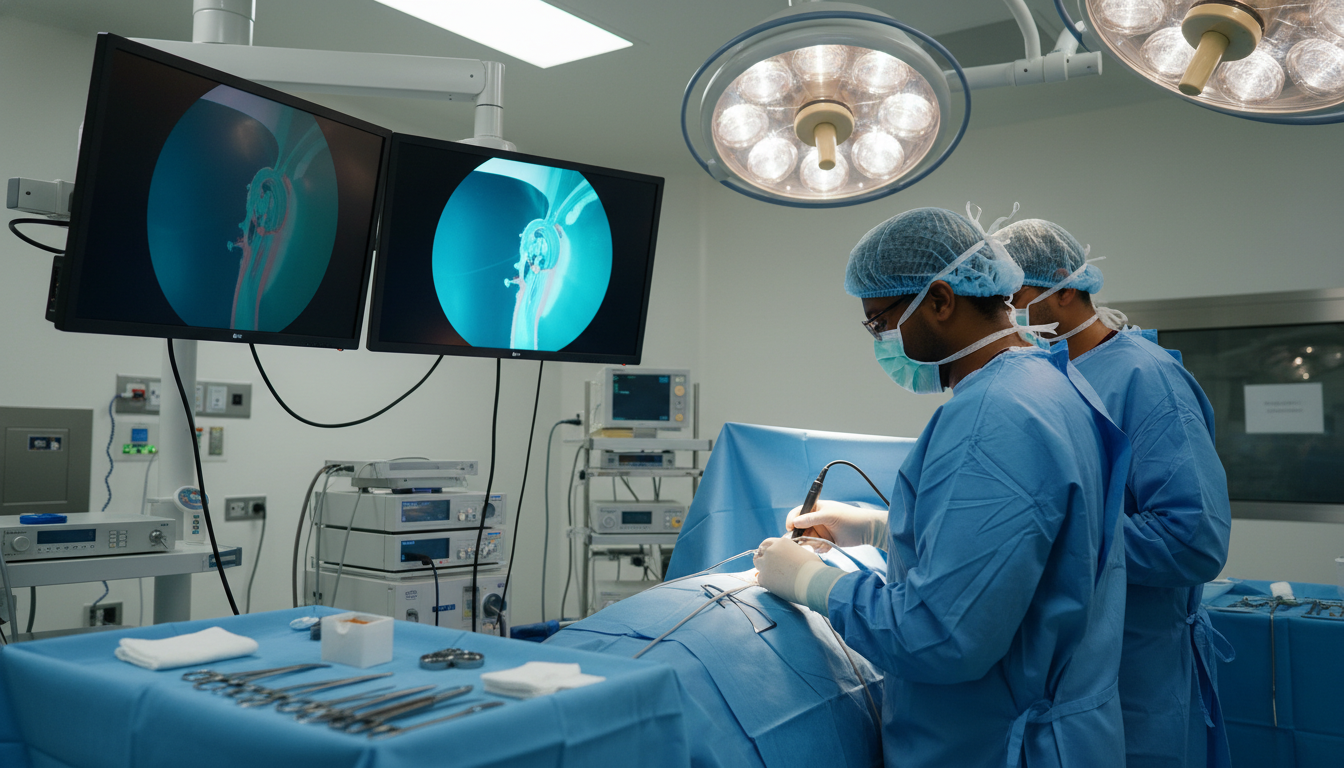
For urology, sub-internships / audition rotations carry enormous weight. As a Caribbean IMG, you should aim to:
- Secure at least one, ideally two urology electives at US teaching hospitals affiliated with ACGME-accredited programs.
- Time them strategically: usually June–October of application year (varies slightly by season and institution).
- Treat them like month-long interviews:
- Show early, consistent presence in the OR
- Ask to see a variety of cases (stone, oncology, reconstruction, endourology)
- Volunteer for early cases and late cases when reasonable
Specific tactics:
Communicate your goals at the start of the rotation:
“My goal this month is to gain broad exposure to urologic surgery and improve my procedural skills. I’ve been tracking my cases and would appreciate any opportunities to assist or participate more actively in the OR.”
Ask to scrub, not just observe:
- “Would it be okay if I scrub in on this case?” should be a frequent, polite question.
Follow a specific attending or subspecialty:
- If an attending is high-volume in stones or oncology, try to consistently join their cases to build depth.
These rotations will significantly strengthen your urology match prospects by combining case volume with letters and direct performance.
2. Use General Surgery to Build Foundational Surgical Volume
Even if you cannot secure multiple urology-specific blocks, you can still make your Caribbean medical school residency profile stronger by:
- Maximizing OR time on general surgery:
- Arrive early, review cases, and explicitly ask to scrub.
- Stay for full cases, especially longer or more complex operations.
- Focusing on transferable skills:
- Gowning/gloving independently
- Maintaining a sterile field
- Basic knot tying and suturing on skin or superficial layers
- Camera control in laparoscopic cases
When asked in interviews, emphasize how your broad surgical volume prepared you for the technical and ergonomic aspects of a urology residency, even when the cases themselves were not urologic.
3. Seek Focused Urology Exposure in Resource-Limited Settings
Some Caribbean clinical sites or partner hospitals may have low urologic surgical volume. You can still build relevant exposure by:
Joining urology clinic days:
- Shadow catheter changes, stent removals, cystoscopies if performed in-office.
- Learn to interpret PSA trends, CT urograms, renal ultrasounds, and KUBs.
Volunteering for on-call urology consults when allowed:
- Acute urinary retention
- Gross hematuria
- Renal colic/stone disease
- Testicular torsion evaluation
Use these to build conceptual case volume, even if they do not always lead to the OR.
Participating in simulation or skills labs:
- Suture practice
- Cystoscopy simulation (if available)
- Ultrasound basics (bladder scan, hydronephrosis recognition)
While simulation does not replace actual procedure numbers, it signals initiative and can be discussed in interviews as part of your technical development.
4. Case Volume as Narrative: SGU and Other Caribbean Paths
If you are from SGU or another prominent Caribbean school, you may be part of a well-known SGU residency match or similar institutional story. Use your school’s track record, but anchor your own narrative in case volume:
- “At SGU, I benefited from a diverse set of clinical sites. I deliberately chose rotations where I could maximize surgical volume, ultimately logging over 120 OR cases, including more than 40 in urology across two sub-internships.”
This approach reassures programs that:
- You recognize variability in training sites and proactively sought out high-volume environments.
- You understand that case volume is a key readiness metric for a surgical discipline like urology.
Presenting Your Case Volume in Your Application and Interviews
Once you have built and evaluated your residency case volume, the final step is articulating it clearly to urology programs.
1. In ERAS Experiences
Use specific, honest numbers where appropriate:
- “Scrubbed in on approximately 35 urologic procedures (TURP, TURBT, ureteroscopy, percutaneous nephrolithotomy) and 80+ total surgical cases.”
- “Participated in over 10 laparoscopic cases as camera operator, including nephrectomy and adrenalectomy procedures.”
Do not exaggerate; approximate, rounded numbers backed by your log are sufficient.
2. In Your Personal Statement
Frame case volume as evidence of your commitment and readiness:
- Briefly mention your quantitative exposure:
- “Through two urology sub-internships and a high-volume general surgery rotation, I participated in over 40 urology cases and more than 120 total surgical procedures.”
- Then transition to qualitative insights:
- How repeated exposure to stone disease cases deepened your understanding of patient quality of life
- What you learned ethically and emotionally from oncologic urology
Direct numbers + reflection is more compelling than either alone.
3. In Interview Answers
Expect questions like:
- “What kind of surgical experience have you had so far?”
- “Tell me about your exposure to urology procedures.”
- “How comfortable do you feel in the OR?”
Answer with a concise structure:
- Lead with numbers:
- “I have participated in approximately 90–100 surgical cases, including around 35 in urology.”
- Describe variety and progression:
- “These included TURPs, TURBTs, ureteroscopies, and several laparoscopic nephrectomies. Initially, my role was mostly retracting and observing, but by my last sub-internship I was operating the camera and performing small components of cystoscopy under close supervision.”
- Highlight takeaways:
- “This experience has made me comfortable with OR workflow, sterile technique, and the demands of long operative days.”
If your numbers are weaker, compensate by emphasizing:
- Depth of involvement in fewer cases
- Simulation, anatomy lab, or research that supports your surgical development
- Clear plans to continue skill-building between now and residency
What If Your Case Volume Is Lower Than Ideal?
Many Caribbean IMGs face structural barriers to building high residency case volume: limited OR capacity, scheduling challenges, or visa constraints. Lower numbers do not automatically disqualify you, but they require strategic planning.
1. Be Honest, But Contextualize
If you only had 10–15 urology cases and 40–50 total surgeries:
- Be transparent about your numbers if asked.
- Explain structural limitations without sounding like you are making excuses:
- “My primary clinical site had limited urologic OR availability, so most of my exposure was in the clinic setting, where I followed patients longitudinally through diagnosis and post-operative care.”
- Emphasize what you did do:
- Attending every available case
- Seeking electives elsewhere
- Focusing heavily on pre-operative planning and post-operative follow-up
2. Strengthen Other Pillars of Your Application
When case volume is modest, the following become even more crucial:
- Outstanding Step scores (if applicable for your graduation year) or equivalent standardized metrics
- Strong letters of recommendation from urologists who can speak to your potential
- Urology-specific research or scholarly work
- Evidence of maturity and work ethic through leadership, teaching, or longitudinal projects
Programs may accept lower initial case volume if they believe you will rapidly grow into a high-volume environment.
3. Consider Application Strategy
If your numbers and overall profile are significantly below the typical urology match applicant:
- Discuss with mentors whether:
- You should apply in urology now and keep options open (e.g., a backup specialty).
- You might benefit from a transitional year, preliminary surgery year, or research year to build more experience and reapply.
In these bridge years, you can dramatically increase your:
- Surgical and urology-specific case volume
- Publications, presentations, and professional network
- US-based clinical experience (critical for Caribbean IMGs)
This can convert a borderline first attempt into a successful second application.
FAQs: Case Volume and Urology Residency for Caribbean IMGs
1. As a Caribbean IMG, how many urology cases do I really need for a competitive application?
There is no fixed threshold, but aiming for:
- 30–40+ urology cases total, with at least 10–20 scrubs, and
- 100+ total surgical cases (urology plus other surgical fields)
will generally place you in a reassuring range for most programs. Stronger candidates may exceed these numbers, but thoughtful reflection and strong performance on rotations can partially compensate if your numbers are lower.
2. Do programs actually verify my case volume claims?
Programs rarely ask for your entire log, but they cross-check your story against:
- Letters of recommendation (which often mention your surgical exposure)
- What you describe in your personal statement and interviews
- Their general experience with the clinical sites you rotated at
Grossly inflated or inconsistent claims raise red flags. Keep your procedure numbers accurate, approximate rather than overly precise, and clearly rooted in documented experiences.
3. I am from SGU and my classmates have strong matches—does that automatically help my urology application?
Being part of a school with a strong SGU residency match record or similar Caribbean medical school residency outcomes helps in the sense that programs are familiar with your institution and its curriculum. However, urology is highly competitive. Your individual:
- Case volume
- Letters from urologists
- Academic metrics
- Research and professionalism
will still drive your outcome. Use your school’s track record as a foundation, but build your own narrative of procedural readiness and commitment.
4. How can I talk about low case volume without hurting my chances?
If your volume is low:
- Be honest and avoid specific inflated numbers.
- Explain contextual limitations briefly.
- Emphasize how you maximized every available opportunity.
- Highlight related strengths: strong clinic exposure, excellent evaluations, research, and a clear plan to continue surgical skill-building.
Programs understand that not all sites are high-volume; they are looking for trajectory, self-awareness, and work ethic, not just raw numbers.
By systematically tracking, evaluating, and strategically boosting your case volume, you can transform a potential liability into a major strength of your urology application—even as a Caribbean IMG in a competitive field. Use your rotations, especially urology electives and sub-internships, to build both the quantitative (procedure numbers) and qualitative (skills, insight, professionalism) pillars that define a successful urology resident.