
It's August 10th. Your original plan said “Step 2 CK – July 25th” in big confident letters. That day came and went. UWorld isn’t done, your practice scores are wobbly, and now you’re asking the real question:
If I move Step 2 to September or later… what actually changes for ERAS and the Match?
Let me walk you through it like we’re rebuilding a project plan. Month by month. Week by week. What you lose, what you gain, and exactly what you should be doing at each point.
Big Picture: What Actually Changes When Step 2 Moves Past August
Here’s the blunt version:
- Pushing Step 2 CK past August can:
- Delay when programs see your score
- Change how programs screen your application
- Force you to reorder priorities in August–October
- Matter a lot more if you’re:
- Coming off a low/failed Step 1 (or COMLEX Level 1)
- Applying to competitive specialties
- Switching specialties or needing a big “comeback” narrative
If Step 1 was solid and you’re going into a less competitive field, a September Step 2 is usually fine. For red-flag or borderline applicants, that same delay can cost interview invites from programs that wanted to see your score up front.
So the timeline rebuild depends on three variables:
| Factor | Low Risk | Moderate Risk | High Risk |
|---|---|---|---|
| Step 1 performance | Strong | Average | Low/Fail |
| Specialty | Less competitive | Mid-tier | Highly competitive |
| Step 2 target date | Before Aug 15 | Aug 15–Sep 30 | Oct 1+ |
You’re here because you’ve slid into that middle or right column. So let’s rebuild your calendar from August through Match Week, assuming Step 2 moves later.
August: Decision Point and Damage Control
Think of August as triage month. At this point you should:
- Decide your new Step 2 target window
- Align that with ERAS deadlines
- Tell the right people the right story
Step 2 Score Release Reality Check
USMLE typically releases scores about 2–3 weeks after your test date. Rough rule:
- Test by early August → score likely available by ERAS opening in September
- Test late August / early September → score appears after ERAS opens but early in the season
- Test late September / October → programs won’t see it until after many invites are already out
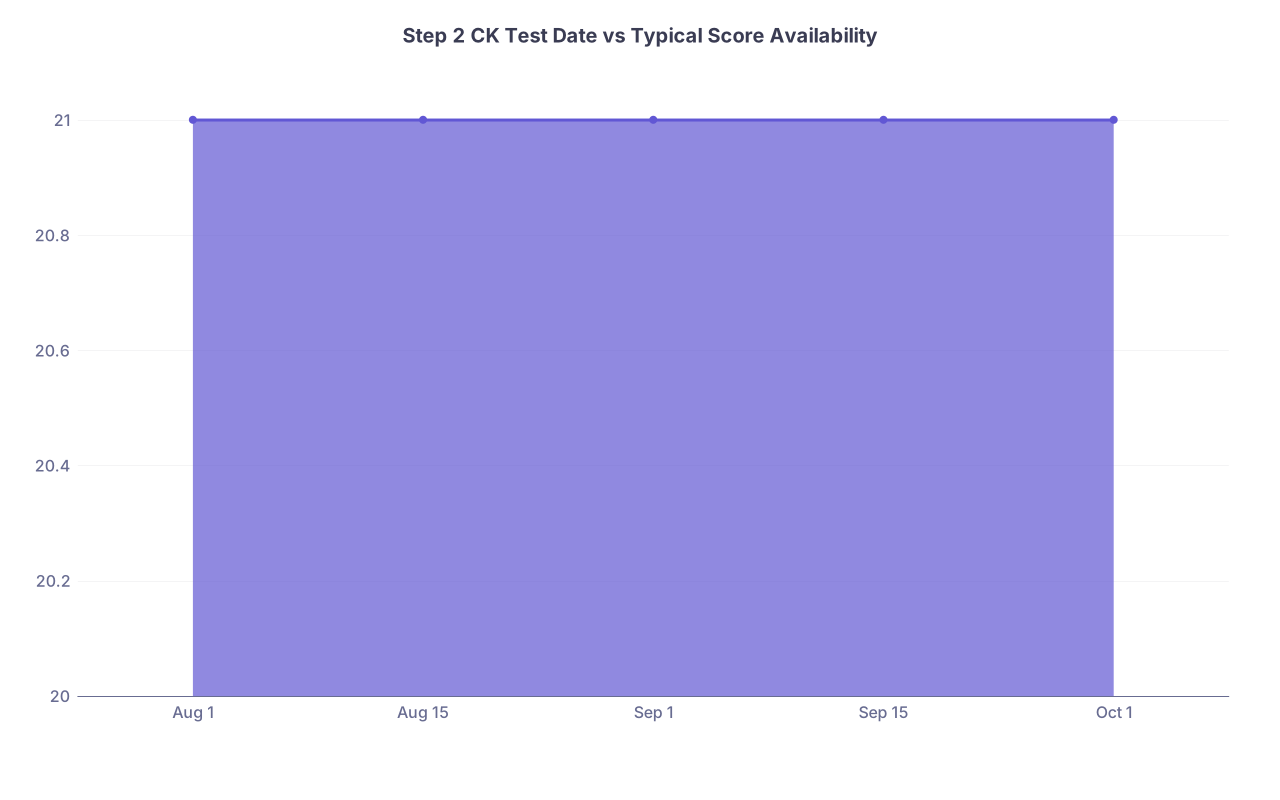
| Category | Value |
|---|---|
| Aug 1 | 21 |
| Aug 15 | 21 |
| Sep 1 | 21 |
| Sep 15 | 21 |
| Oct 1 | 21 |
(The line is flat because the lag is about 3 weeks – the important part is the calendar relationship to ERAS, not the lag itself.)
At This Point (Early–Mid August), You Should…
1. Calculate your realistic Step 2 readiness. Not fantasy readiness.
- Look at:
- NBME forms
- UWSA 1/2
- If your last 2 practice tests are:
- > 240 and consistent → you can afford to keep an early/ mid-August date
- All over the place / below your goal → pushing to September may actually help you, especially if Step 1 was weak
If your score trend is climbing and you just need another 2–3 weeks, don’t cling to an arbitrary August date. Programs care more about the final number than the extra week.
2. Partition your August into two tracks: ERAS and Step 2
By mid-August, your time budget should look roughly like this:
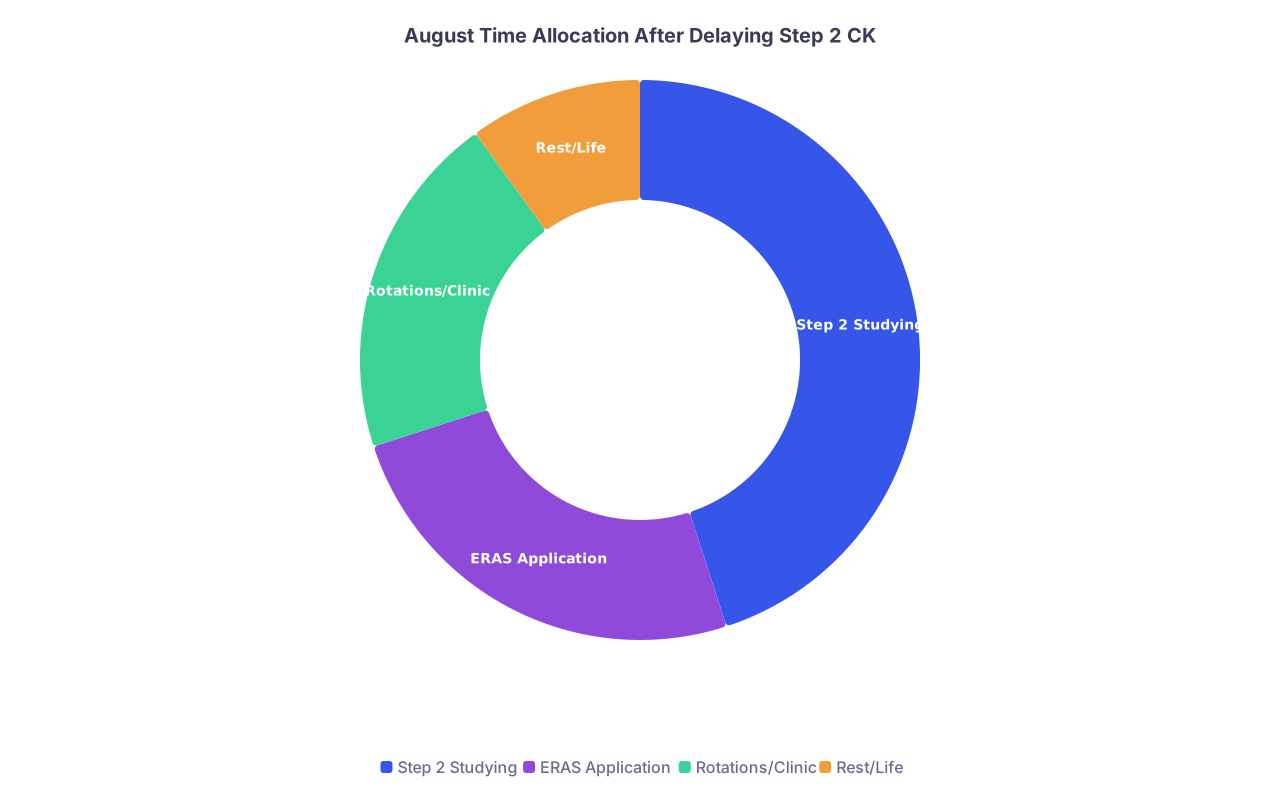
| Category | Value |
|---|---|
| Step 2 Studying | 45 |
| ERAS Application | 25 |
| Rotations/Clinic | 20 |
| Rest/Life | 10 |
If you’re still trying to do “full-time Step 2 + full-time ERAS + full-time rotation,” something will break. Usually your score.
So by August 15th, you should:
- Have:
- A locked Step 2 date (even if it’s September)
- Your personal statement drafted
- A solid program list skeleton
- Have talked with:
- Your advisor
- At least one letter writer who knows your situation
- Know whether you’re applying with or without a Step 2 score initially
September: ERAS Opens While You’re Still Studying
This is where most students start to panic if Step 2 isn’t done. Don’t. Just be strategic.
ERAS typically opens for submission in early–mid September. Programs start downloading applications a bit later (exact dates vary by year), but mentally assume:
- Early September – You’re finalizing and submitting ERAS
- Late September – Programs start serious screening and sending invites for some specialties
If Step 2 is in early–mid September, at this point you should:
- Treat ERAS as a sprint, not a slow burn
The week before and after ERAS submission, your schedule should look more like:
- 3–4 hours/day: Step 2 practice (not full content review)
- 3–4 hours/day: Application work (program list, edit essays, upload documents)
- Clinical duties as required, but cut anything optional
If you delay ERAS perfectionism by “just a few days” to cram more Step 2, you risk:
- Sloppy or generic personal statements
- A too-small or poorly balanced program list
- Weak descriptions in your experiences
All of which hurt you as much as a slightly lower Step 2 score.
- Be explicit in ERAS about your Step 2 timeline
There’s an “exams” or “USMLE” section. Use it well:
- Enter your scheduled Step 2 date
- In the additional info/education or personal statement (if appropriate) mention:
- That Step 2 is scheduled for [date]
- That you’ll immediately release scores to ERAS once available
This reassures programs you’re not dodging the exam.
- Adjust your program strategy based on Step 1 and specialty
Here’s how I’d think about it:
| Profile | Step 2 Timing | Program Strategy |
|---|---|---|
| Strong Step 1, low-risk specialty | Sept test | Normal list size, no major change |
| Average Step 1, mid-competitive | Sept test | Slightly larger list, emphasize strong letters and fit |
| Weak/failed Step 1, any specialty | Sept/Oct test | Aggressively larger list, consider more community/backup programs |
If you’re in that last row and Step 2 is your comeback, your main risk is this: some programs will pre-screen you out before your Step 2 arrives. You can’t fix that entirely, but you can blunt it with:
- A wider net (more programs)
- Strong home and regional connections
- Proactive communication once your score posts
If You Push Step 2 Into October (or Later)
Now we’re in the danger zone. Not necessarily fatal. But you lose some leverage.
By October:
- Many programs in competitive specialties have already sent a big chunk of interview invites
- Programs are forming early impressions of this season’s pool
- You’re competing with applicants who already show:
- Step 1
- Step 2
- Strong letters
- Polished applications
At this point, if you’re planning an October Step 2, you should:
- Be brutally honest about risk
For applicants who:
- Had a Step 1 failure, or
- Are trying for plastics, derm, ortho, ENT, etc.
An October Step 2 means:
- Some programs will never see your improved score before shaping their interview list
- You may be pushed into the “maybe later / waitlist” pile automatically
If you’re aiming at less competitive fields (FM, psych, peds) with a decent Step 1, an October Step 2 is usually survivable. Annoying, but survivable.
- Turn October into an “interview insurance” play
Your mindset shifts:
- Step 2 is now less about “front-door screening”
- More about:
- Keeping you on rank lists
- Avoiding conditional ranking (e.g., “rank only if passes Step 2”)
- Preventing late-season panic if programs demand an updated score
So in October you should:
- Still take Step 2 seriously—a failure or ugly score here can:
- Lead to withdrawn interview offers
- Sink your rank position
- But do not let Step 2 completely decimate your availability for early interviews or important audition rotations
Week-by-Week: A Realistic Rebuild Scenarios
Let’s run a concrete scenario. You’ve moved Step 2 from August 20th to September 18th.
Late August (3–4 weeks before exam)
At this point you should:
- Have:
- Finished at least 60–70% of UWorld
- Completed 1–2 NBME exams
- Weekly structure:
- 5 days/week: 40–60 UWorld questions + focused review
- 1 day/week: Long-study day (weak subjects, Anki, etc.)
- 1 day “application heavy” for:
- Finalizing PS
- Polishing experiences
- Checking letters and MSPE status
Early September (ERAS submission week)
Your priorities flip a bit this week.
- Day -3 to 0 (relative to ERAS submission):
- 3–4 hours: Editing, proofreading, program sorting
- 3–4 hours: Light Step 2 studying (no brand new topics)
- Step 2 goal this week:
- Maintain familiarity and timing, not learn everything you missed in M2
If you’re still doing heavy content review this week, your ERAS will suffer. And that’s a bad trade.
Mid–Late September (around test day)
- Week of the exam:
- 1–2 NBMEs or UWSA tests spaced out
- Short, focused review sessions
- No giant new commitments on your rotation if you can avoid it
Once you take Step 2 (say Sept 18):
- Next 3–4 days:
- Shift heavily into:
- Responding to program emails
- Updating any remaining ERAS pieces
- Double-checking your programs list (if specialties allow late additions without penalty)
- Shift heavily into:
- Score expected: Early–mid October
When that score drops, the clock starts again.
How to Use a Late Step 2 Score Strategically
Let’s say your score posts October 10th.
At this point you should:
- Immediately release it to ERAS (if you haven’t already checked “auto-release”)
Don’t sit on a good score. Waiting even a week is dumb.
- Decide who needs an update email
You don’t email every single program. You target:
- Places where you:
- Have a strong geographic/family tie
- Did an away or sub-I
- Know a faculty advocate
- Already applied but haven’t heard anything
Your email is short and factual:
- 3–4 sentences:
- Your name, AAMC ID, specialty
- “I recently received my Step 2 CK score of ___, now released to ERAS.”
- One sentence about continued interest or fit
- Thank you and done
- Know which programs actually care about the late score
Some programs have hard rules:
- “No rank without Step 2”
- “Must pass Step 2 by [date]”
Others use it as:
- Tie-breaker for borderline candidates
- Validation that your clinical knowledge is solid
If your Step 2 is significantly higher than Step 1, you’re now in “look, I improved” territory. That can move you from:
- “We’re not sure” → “Okay, let’s offer an interview”
- Or “We’ll rank them cautiously” → “We can rank with confidence”
November–January: When the Exam Is Over but the Effects Aren’t
If you took Step 2 in September or October, by the time interviews ramp up in November:
- Programs have your score
- You’re no longer juggling high-stakes studying and interviews
At this point you should:
- Adjust how you talk about Step 2 in interviews
Depending on your story:
- If Step 1 was poor and Step 2 is a big jump:
- Frame it directly: you learned how you study best, you adapted, and your performance improved
- If Step 2 is roughly equal to Step 1:
- Treat it as confirmation: steady performance, nothing dramatic
- If Step 2 is lower than Step 1:
- Have a coherent explanation, not an excuse
- Emphasize clinical evaluations, sub-I comments, and concrete patient care strengths
- Understand that some programs will still update decisions late
Not all interview invites go out in October. A solid Step 2 released in October–November can:
- Unlock late November/December invitations
- Bump you up if they revisit the pool before finalizing interviews
So you don’t stop checking email just because the “big wave” of invites has passed.
What If You’re Truly Late – Taking Step 2 in November or December?
This is the nuclear option. Sometimes real life forces it: illness, family crisis, academic issues.
What changes then:
- Many programs will:
- Rank you contingent on passing Step 2
- Or simply refuse to rank without a score
- If you:
- Fail, or
- Score dramatically below expectations
You may watch your rank list shrink or disappear. I’ve seen it happen.
If you’re cornered into a very late Step 2 (Nov/Dec), at this point you should:
- Talk to:
- Your dean’s office
- Specialty advisors
- And seriously consider:
- Applying more broadly
- Having a SOAP backup plan
- Possibly adjusting specialty choice if your application is already fragile
This isn’t fearmongering. It’s risk management.
Quick Timeline Rebuild Summary
Here’s the chronological “at this point you should…” version condensed.
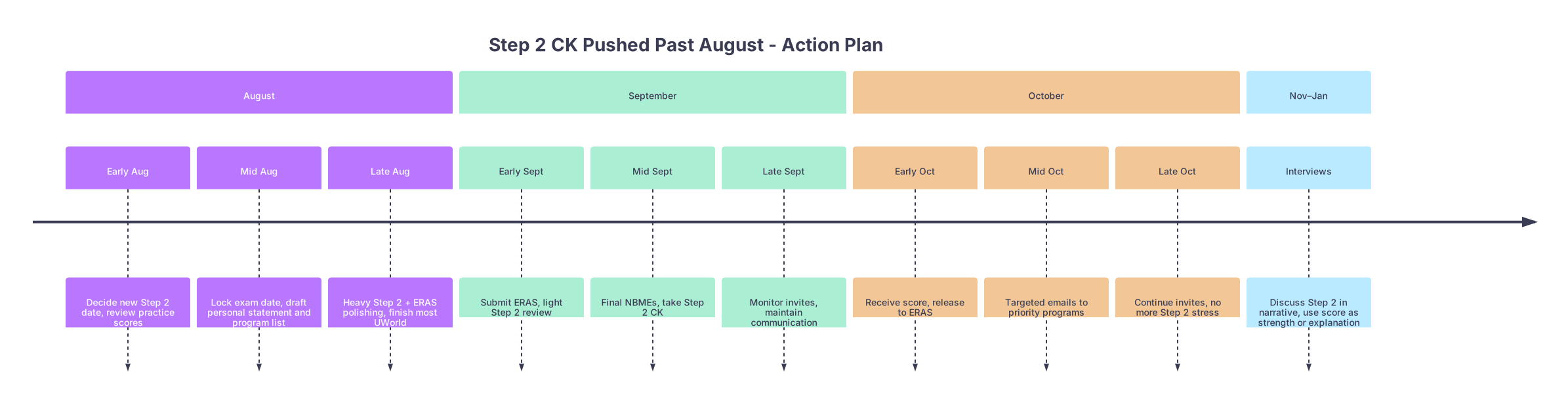
| Period | Event |
|---|---|
| August - Early Aug | Decide new Step 2 date, review practice scores |
| August - Mid Aug | Lock exam date, draft personal statement and program list |
| August - Late Aug | Heavy Step 2 + ERAS polishing, finish most UWorld |
| September - Early Sept | Submit ERAS, light Step 2 review |
| September - Mid Sept | Final NBMEs, take Step 2 CK |
| September - Late Sept | Monitor invites, maintain communication |
| October - Early Oct | Receive score, release to ERAS |
| October - Mid Oct | Targeted emails to priority programs |
| October - Late Oct | Continue invites, no more Step 2 stress |
| Nov–Jan - Interviews | Discuss Step 2 in narrative, use score as strength or explanation |
Final Takeaways
Pushing Step 2 CK past August doesn’t automatically ruin your Match, but it changes the order of operations: you’re now applying first and justifying yourself with scores second.
The later your exam (especially October+), the more you should compensate with a broader program list, clearer communication, and ruthless prioritization of ERAS quality over last-minute content cramming.
Treat the delay like a project slip, not a personal failure—rebuild your timeline, decide what you’re optimizing for (score vs timing), and then commit. Waffling costs you far more than a September test date ever will.