
The harsh truth: if your program director is not supportive about burnout, you are not “overreacting.” You are in a risky environment. And you need a strategy.
This isn’t about “self-care” and yoga. This is about protecting your license, your health, and your future in a system that will absolutely carry on without you if you crash.
Let’s walk through what to do if you’re burning out, you reached out for help, and your PD either:
- Dismissed you (“Everyone is tired.” “This is residency.”)
- Guilt-tripped you (“The team is counting on you.”)
- Threatened you (“If you can’t handle this, maybe this isn’t the right career for you.”)
- Nodded politely and then did absolutely nothing
I’ll break it down into practical moves you can start this week, not fantasy-land ideal-system solutions.
1. First, Get Clear on What You’re Actually Dealing With
Before you plan moves, diagnose the situation like you would a patient.
There are 3 key questions:
How bad is your burnout right now?
Be honest. Are you:- Just exhausted but functioning?
- Numb and detached?
- Making mistakes?
- Having dark thoughts or passive suicidal ideation?
What did your PD actually say and do?
Don’t rely on your memory alone. Write it down. Exact phrases. Tone. Setting.What power does this PD hold over you right now?
- Are they your direct evaluator on this rotation?
- Are they the program director signing off on your graduation and letters?
- Are there associate PDs or chiefs between you and them?
You’re not being dramatic. You’re doing a risk assessment.
Now, put that into something concrete.
| Area | Your Status (Example) |
|---|---|
| Burnout severity | 8/10 - constantly exhausted |
| Functioning at work | Missing minor tasks |
| Safety concerns | Near-miss last week |
| PD response | Dismissive, no action |
| Support network | 1 co-resident I trust |
Fill that out for yourself on paper or your notes app. You’ll use it later when you talk to anyone else about this.
2. Stop Expecting Your PD to Be Your Fix
This is the part nobody likes hearing: a non-supportive PD is unlikely to suddenly have an epiphany and turn into your advocate.
I’ve watched residents waste months hoping:
- “Once they see my evals, they’ll understand.”
- “After this rotation, they’ll realize it’s too much.”
- “Maybe they were just having a bad day.”
Sometimes that’s true. Usually it’s not.
Let me be blunt: once a PD has shown you they minimize burnout, you need to stop treating them as your primary solution. You can still be professional and civil. You just stop expecting emotional or structural support.
That shift matters because it changes your question from:
“How do I get my PD to care about my burnout?”
to
“Given that my PD may never care, how do I protect myself and move forward anyway?”
That’s a much more productive question.
3. Build a Parallel Support Structure (Without Triggering Retaliation)
You need a support network that does not depend on this PD.
Think in three layers: personal, institutional, and external.
Personal: People Who Know You, Not Your Evaluations
Start with 1–2 people you can be fully honest with:
- A trusted co-resident (the one who quietly said, “Yeah, it’s brutal here” on night float)
- A partner/friend who understands you’re not “just tired”
- A family member who doesn’t respond with “But it’s such a good career!”
You’re not just venting. You’re creating witnesses who know:
- How bad it’s been
- When it started
- What you tried
This matters later if you need to step away, explain a gap, or justify a leave.
Institutional: People With Some Power But Less Emotional Entanglement
Your PD is one person. Programs usually have:
- Associate PDs
- Chief residents
- GME office staff
- Wellness committee leads
- Ombuds or institutional mediators (bigger institutions)
Pick one first. Preferably someone with a reputation for being decent.
You’re not going in to cry on their shoulder. You’re going in like a clinician presenting a case.
Phrase it like this:
“I wanted to run something by you and get your perspective. I’ve been feeling significantly burnt out over the last X months. I tried to address it with Dr. Smith (PD) on [date], but I felt my concerns weren’t really addressed. I’m worried about my functioning and safety, and I wanted to ask: what resources or options actually exist here?”
Notice what you didn’t do:
- You didn’t attack the PD.
- You didn’t say “hostile” or “abusive.”
- You kept it specific and safety-focused.
You’re playing the long game.
External: People Bound to You, Not the Program
This includes:
- A therapist/psychiatrist (preferably outside the hospital system if you’re worried about confidentiality leaks)
- State physician health program (if things are severe, or if substance use is creeping in)
- Your specialty’s resident union (if you have one—EMRA, CIR/SEIU, etc.)
- National organizations’ wellness resources (ACP, APA, ACGME resources)
This is your firewall. If the program becomes adversarial, these are the people who help you plan an exit without blowing up your life.
4. Start Quiet Documentation – This Is Self-Defense, Not War
If your PD is unsupportive today, they might become hostile tomorrow when you start setting boundaries.
You need quiet, organized documentation. Not to start a lawsuit. To protect your narrative if questions arise about performance, professionalism, or “attitude.”
Here’s what to track:
- Dates and times of major incidents (e.g., “10/15 – worked 17 hours, no relief, made near-miss on insulin dose”)
- Exact phrasing of concerning comments (e.g., PD: “If you can’t hack this, maybe you chose the wrong field.”)
- When you requested help (and what the response was)
- Any retaliation-like behavior (sudden schedule changes, comments in emails, unfair evals after you spoke up)
Keep this off hospital devices. Use your own phone or personal computer. Keep it factual, neutral, time-stamped.
5. Triage: Do You Need an Immediate Safety Stop or a Strategic Adjustment?
Not all burnout is the same. There’s a difference between “I hate this rotation” and “I am one more night away from making a catastrophic mistake or harming myself.”
This is where you decide: emergency brake vs. long-game adjustment.
Red Flag: You Need an Immediate Stop (Days, Not Months)
If any of these are true:
- You’re having suicidal thoughts, even passive (“If I crashed my car on the way in, at least I’d get a break.”)
- You’ve had multiple serious near-misses or actual patient safety events tied to exhaustion or cognitive fog
- You’re dissociating at work, not remembering key parts of your shift
- You’re using alcohol/benzos/opioids to get through shifts or sleep regularly
Then your next move is not “optimize my schedule.” It’s “get out of active duty right now.”
That means:
Tell someone with authority to pull you from work
- On-call attending
- Chief resident
- GME duty-hour/safety hotline if your institution has one
Use safety language, not vague burnout language. For example:
“I am not safe to work today. I’m severely burnt out, I’ve had near-misses, and I’m having dark thoughts. I need to be evaluated and pulled from clinical duties right now.”
Accept that this may trigger:
- Occupational health eval
- Mandatory mental health assessment
- Short-term leave
Annoying? Yes. But far, far better than a serious incident, a board complaint, or a tragedy.
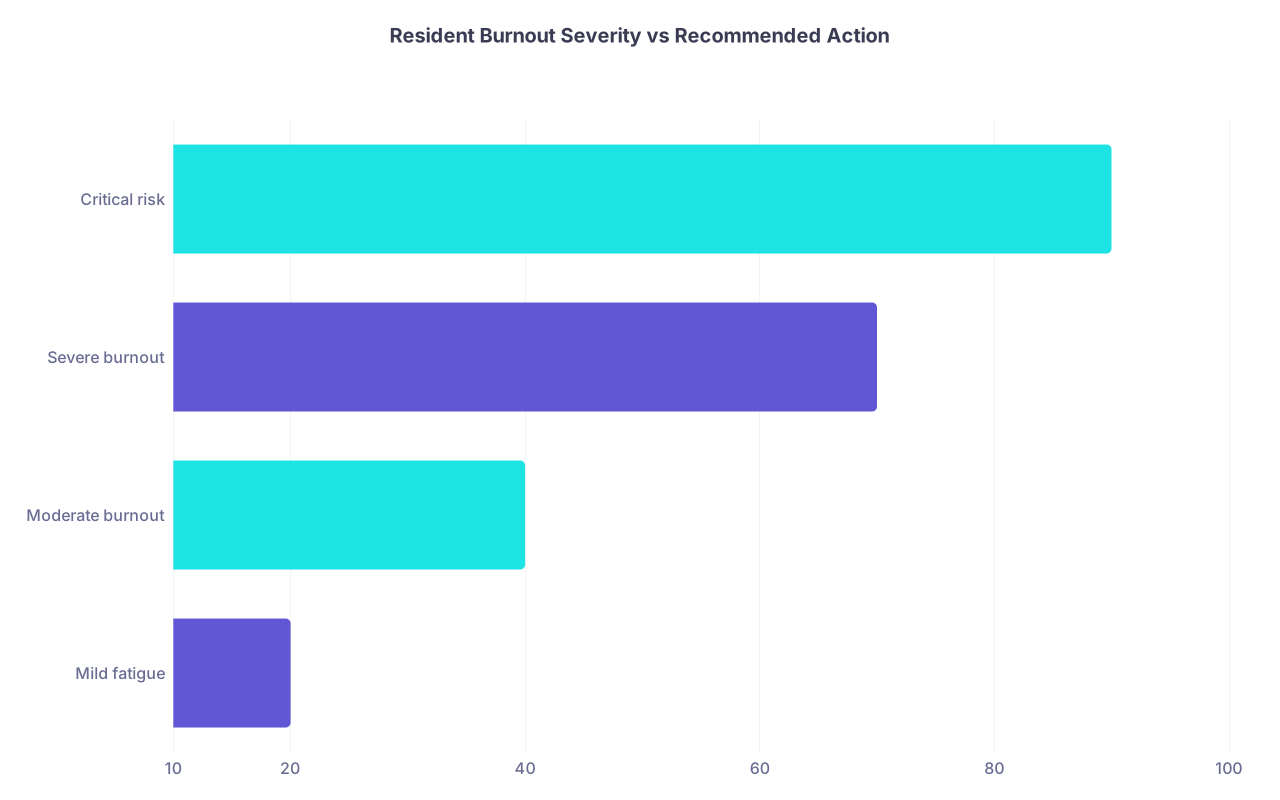
| Category | Value |
|---|---|
| Mild fatigue | 20 |
| Moderate burnout | 40 |
| Severe burnout | 70 |
| Critical risk | 90 |
Reading that and thinking “that’s me at the far right”? Then your next move after this article is not more reading. It’s contacting mental health support today.
Yellow Flag: You’re Bad, But Still Basically Functioning
If you’re:
- Exhausted, cynical, detached
- Not making major safety errors (yet)
- Still able to get through shifts, but at a huge mental cost
Then we plan for structural changes over weeks to months.
This is where the unsupportive PD becomes a problem—but not your only problem.
6. Plan Around Your PD Instead of Through Them
Think strategy, not drama.
If your PD isn’t supportive about burnout, that usually means one of three things:
- They’re old-school “I suffered so you will too” mindset.
- They feel constrained by service demands and won’t push back.
- They see it as a you-problem, not a system problem.
You’re not going to change this through a heartfelt speech. You change your situation by using other levers.
Here are realistic moves, depending on your goals.
Goal A: Survive This Program With Less Damage
If leaving isn’t on the table yet, your focus is:
- Reducing exposure to the worst rotations and people
- Securing minimal mental health stability
- Avoiding flags on your record
Concrete moves:
Ask chief residents about schedule tweaks
Phrase it like: “I’m struggling significantly with X rotation; is there any room to balance with a lighter elective after this block?” Chiefs often have more flexibility than they admit publicly.Use all your allowed sick days and personal days
Stop being a hero. You are not saving the system by showing up half-dead. Call out when you’re truly not functional.Get an outside therapist and treat those weekly sessions like non-negotiable clinic
Don’t ask your PD’s permission. Just schedule sessions outside mandatory hours or use personal time.Learn “gray rock” communication with the PD
Professional. Dull. Minimal emotional exposure.
You: “Thank you for the feedback, I’ll work on that.”
Not you: trying to get them to empathize with your burnout again.
Goal B: Create a Path to Transfer or Exit
If staying feels like a slow death, your energy needs to shift from “hanging on” to planning an escape route.
That can mean:
- Transferring to another program
- Switching specialties
- Taking a leave and reassessing
- Finishing residency then pivoting hard (e.g., non-clinical roles, part-time)
Key steps:
Quietly research other programs and their culture
Ask alumni, fellows, or attendings who trained elsewhere. Identify realistic options (geographically and competitiveness-wise).Get at least one faculty ally who respects your work
This does not have to be the PD. Someone who’s seen you function and can say, “This resident is capable and conscientious.”Talk to GME before things implode
Frame it as:“I’m experiencing significant burnout and feel I’m not thriving in this environment. I’m trying to explore whether a transfer or other options might be possible in the future. Can you explain what that process would look like here?”
Protect your evaluations
Do not give your PD easy ammo like chronic lateness, unprofessional emails, meltdown in front of the team. You’re allowed to be human, but be strategic.
7. The Ethics Piece: You Versus “Patient Care”
Here’s where programs love to guilt-trip you.
You say:
“I’m burning out. I’m not safe like this.”
They say:
“But we need coverage. Think of the patients.”
Let me be clear: knowingly forcing an impaired resident to work is an ethical failure of the program, not you.
You have three ethical obligations:
- To patients – not to work impaired.
- To yourself – not to destroy your health for a system that won’t protect you.
- To colleagues – not to completely vanish on them without warning.
Balancing this means:
- You do communicate when you can’t safely work.
- You do not keep silently grinding until you break.
- You do seek alternative coverage through the proper channels.
- You do not accept “we’re short-staffed” as a reason to risk patient safety.
When your PD frames your burnout as selfish, they’re wrong. Ethically and professionally.
8. Dealing With Subtle Punishment or Retaliation
If your PD is unsupportive, there’s a nontrivial chance they’ll react badly when you:
- Take leave
- Ask for accommodations
- Involve GME
- Push back on unsafe duty hours
Retaliation can look like:
- Suddenly worse evals after you speak up
- Comments about your “commitment” or “resilience”
- Being excluded from opportunities
- Getting all the worst rotations stacked together
This is where your documentation matters.
What to do:
Keep every evaluation, email, and schedule change in a personal folder.
When something feels retaliatory, write down:
- Date
- What changed
- What preceded it (e.g., “2 weeks after my GME meeting”)
Bring a pattern, not a feeling, to GME or ombuds:
“Since I raised concerns about burnout and safety on [date], I’ve noticed a shift in my evaluations and assignments. For example: [three specific instances]. I’m worried this may be retaliatory.”
If there’s a resident union, talk to them early.
They’ve seen this movie before. They know the local players and patterns.

| Step | Description |
|---|---|
| Step 1 | Talk to PD |
| Step 2 | Collaborate on plan |
| Step 3 | Document response |
| Step 4 | Talk to Chief or APD |
| Step 5 | Adjust schedule/resources |
| Step 6 | Contact GME/Ombuds |
| Step 7 | Leave or modified duties |
| Step 8 | Plan transfer/long term exit |
| Step 9 | Supportive? |
| Step 10 | Helpful? |
| Step 11 | Safety risk? |
9. Protecting Your Future Self (Licensing, Boards, Jobs)
You might be quietly panicking about the long-term fallout:
- “If I take leave, will I ever get a job?”
- “If I see a psychiatrist, will this follow me forever?”
- “If I switch programs, will I be blacklisted?”
Here’s the unvarnished version.
Leaves and Gaps
Most credentialing committees care about:
- Unexplained gaps
- Dishonesty
- Significant impairment that affected patient care
A documented, time-limited leave for mental health or burnout, handled professionally, is rarely the deal-breaker people fear—especially if you returned and functioned well.
What they hate: vague “personal reasons” with zero documentation, or messy exits with drama and poor evals.
Mental Health Treatment
State licensing questions are changing. Many now ask about current impairment, not “have you ever seen a therapist.” Know your state’s language.
Seeing a therapist outside your hospital system can feel safer. If things get severe, a physician health program consult can actually protect you by documenting you sought help early.
Transfers
Yes, some PDs trash residents who try to transfer. Not all. If you’ve:
- Maintained decent evaluations
- Built one or two strong faculty advocates
- Documented your concerns reasonably
You’re in a much stronger position than you think.
10. What You Can Do This Week (Not Someday)
Let’s strip this down to immediate next moves.
If your PD is not supportive about your burnout, here’s a realistic 7-day plan.
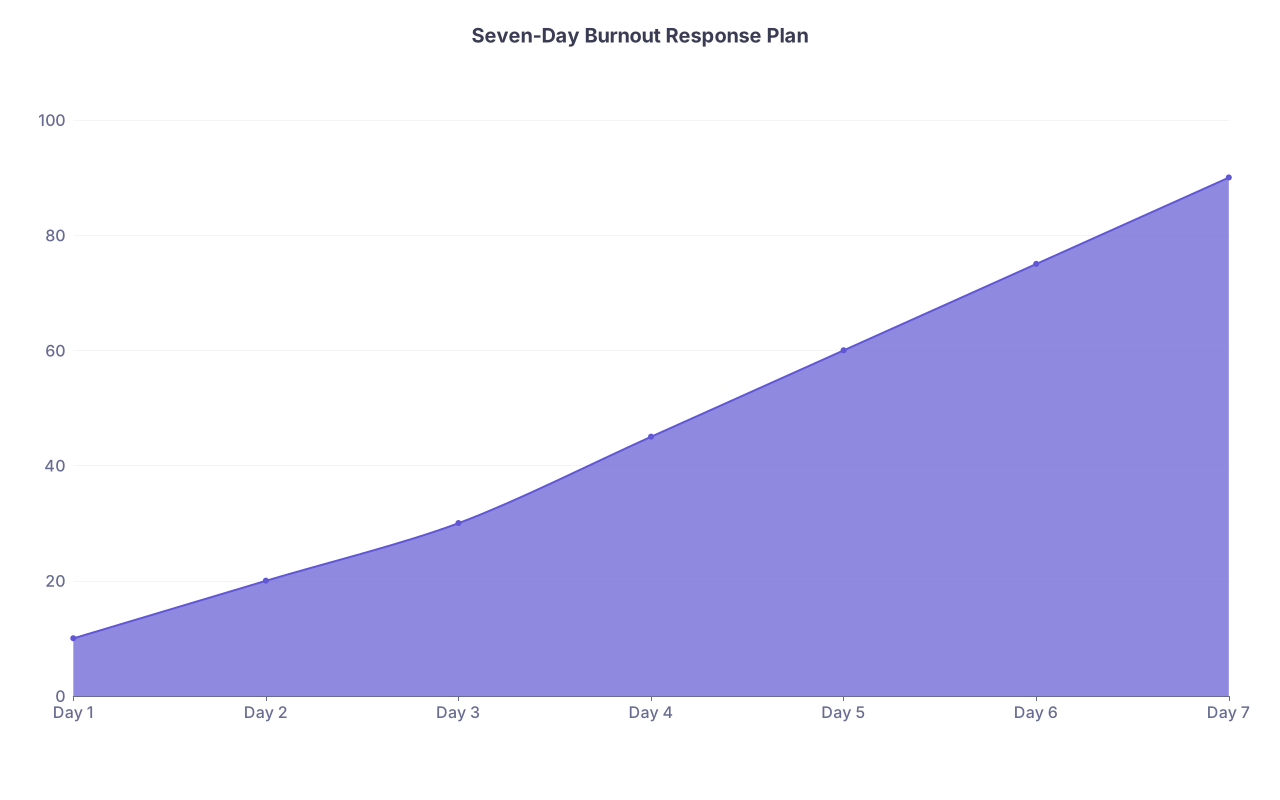
| Category | Value |
|---|---|
| Day 1 | 10 |
| Day 2 | 20 |
| Day 3 | 30 |
| Day 4 | 45 |
| Day 5 | 60 |
| Day 6 | 75 |
| Day 7 | 90 |
Day 1–2:
- Write down your burnout severity and specific concerns.
- Document your last conversation with your PD in detail.
- Tell one trusted person the full truth of how bad it is.
Day 3–4:
- Make an appointment with a therapist/psychiatrist (even if it’s 3 weeks away—get on the calendar).
- Identify one internal person to approach (chief, APD, wellness lead) and schedule a short meeting.
Day 5:
- Meet with that internal person using a calm, clinical script.
- Ask directly: “What options exist here when a resident is this burnt out?”
Day 6–7:
- Look at your upcoming 3–6 months of schedule. Circle the worst blocks.
- Start a private list of:
- Potential transfer programs or alternative paths, or
- Ways to redistribute or soften those worst blocks (electives, research blocks, etc.)
You’re not fixing the whole system this week. You’re building leverage, allies, and options.

11. If You’re on the Edge Right Now
If you’re reading this with a pit in your stomach thinking, “This is me, and I am hanging by a thread,” stop planning and do two things today:
- Tell someone in your real life exactly how bad it is. No minimizing.
- Contact mental health support—your institution’s crisis line, a national physician hotline, or a local therapist.
You do not need your PD’s permission to stay alive.
You do not need to destroy yourself to prove your commitment.
You are allowed—ethically, professionally, and as a human being—to set limits and change course.

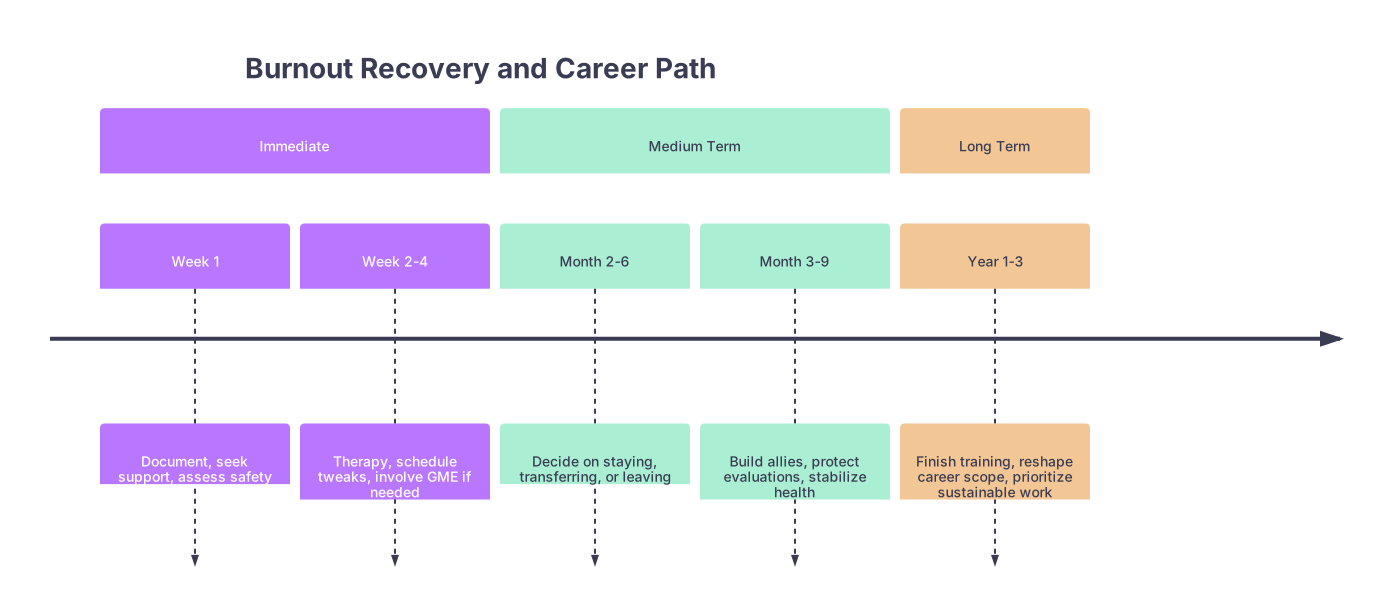
| Period | Event |
|---|---|
| Immediate - Week 1 | Document, seek support, assess safety |
| Immediate - Week 2-4 | Therapy, schedule tweaks, involve GME if needed |
| Medium Term - Month 2-6 | Decide on staying, transferring, or leaving |
| Medium Term - Month 3-9 | Build allies, protect evaluations, stabilize health |
| Long Term - Year 1-3 | Finish training, reshape career scope, prioritize sustainable work |

Your specific, actionable next step today:
Open a notes app or grab a sheet of paper and write down, in 5–10 bullet points, what’s actually happening to you right now—symptoms, incidents, the PD’s response. Then pick one person (chief, APD, therapist, or trusted colleague) and commit to telling them the uncensored version of that list within the next 72 hours.