The myth that “any away rotation helps your chances” is statistically wrong. Some rotations convert to interviews at 3–4 times the rate of others. If you treat all aways as equal, you are wasting time, money, and leverage.
I am going to treat away rotations the way a program director treats your ERAS spreadsheet: as a pipeline problem with conversion rates, not a sentimental rite of passage.
The core metric: rotation-to-interview yield
Strip away the anecdotes. The central metric that matters is simple:
Rotation Yield = (Number of interviews from that rotation type) ÷ (Number of aways of that type)
You care about three things:
- Probability that a rotation leads to an interview at that institution.
- Probability that the rotation leads to interviews elsewhere (signal effect).
- Cost in time, money, and opportunity vs. staying at your home program.
Let’s build a reference framework using composite data from:
- NRMP Program Director Surveys (various years)
- Published specialty-specific surveys (EM, Ortho, ENT, Neurosurgery, Dermatology, etc.)
- De-identified school advising data sets I have seen (hundreds of applications per cycle)
- Public match lists + anecdotal but consistent advisor patterns
You will not find a single table that gives you exact yields by rotation type for all specialties. But the patterns are stable enough that we can talk numbers with confidence.
Types of away rotations and expected yields
Not all “aways” are the same. From a data perspective, you should group them by strategic intent and institutional context.

Rotation archetypes
I will use four main categories:
- Home Sub-I / Acting Internship (AI) – At your own institution.
- Home-Affiliate Away – At a strong affiliate or “sister” program linked to your school.
- Strategic Audition Away – At a realistic target program where you would seriously rank if interviewed.
- Prestige / Stretch Away – At a top-10 or highly competitive name where your odds of matching are modest-to-low but the brand is powerful.
Now layer on top the question: how many of these typically turn into interviews?
Approximate interview conversion by rotation type
These are ballpark, but they track closely with what advisors and PDs talk about behind closed doors.
| Rotation Type | Same-Institution Interview Yield | External Interview Boost |
|---|---|---|
| Home Sub-I / AI | 75–90% | Moderate |
| Home-Affiliate Away | 60–80% | Low–Moderate |
| Strategic Audition Away | 50–70% | Low–Moderate |
| Prestige / Stretch Away | 15–35% | High (for reputation) |
Interpretation:
- If you do a Sub-I at your home program and they actually want you, it is very likely to convert into an interview. The non-interview cases are typically performance, fit, or institutional issues, not randomness.
- A well-chosen audition away at a realistic target is more coin-flip to two-thirds odds. That is still much better than cold-applying.
- Prestige aways are the worst offenders. They feel impressive. Yield is often terrible unless your profile already matches that tier.
Specialty-specific yield patterns
Some specialties use aways as a core screening tool. Others care more about Step 2, research, and letters than where you rotated.
I will not sugarcoat this: if you are applying in ortho, neurosurgery, ENT, urology, plastics, dermatology, EM, or radiation oncology, you live and die by how smart you are with away selection.
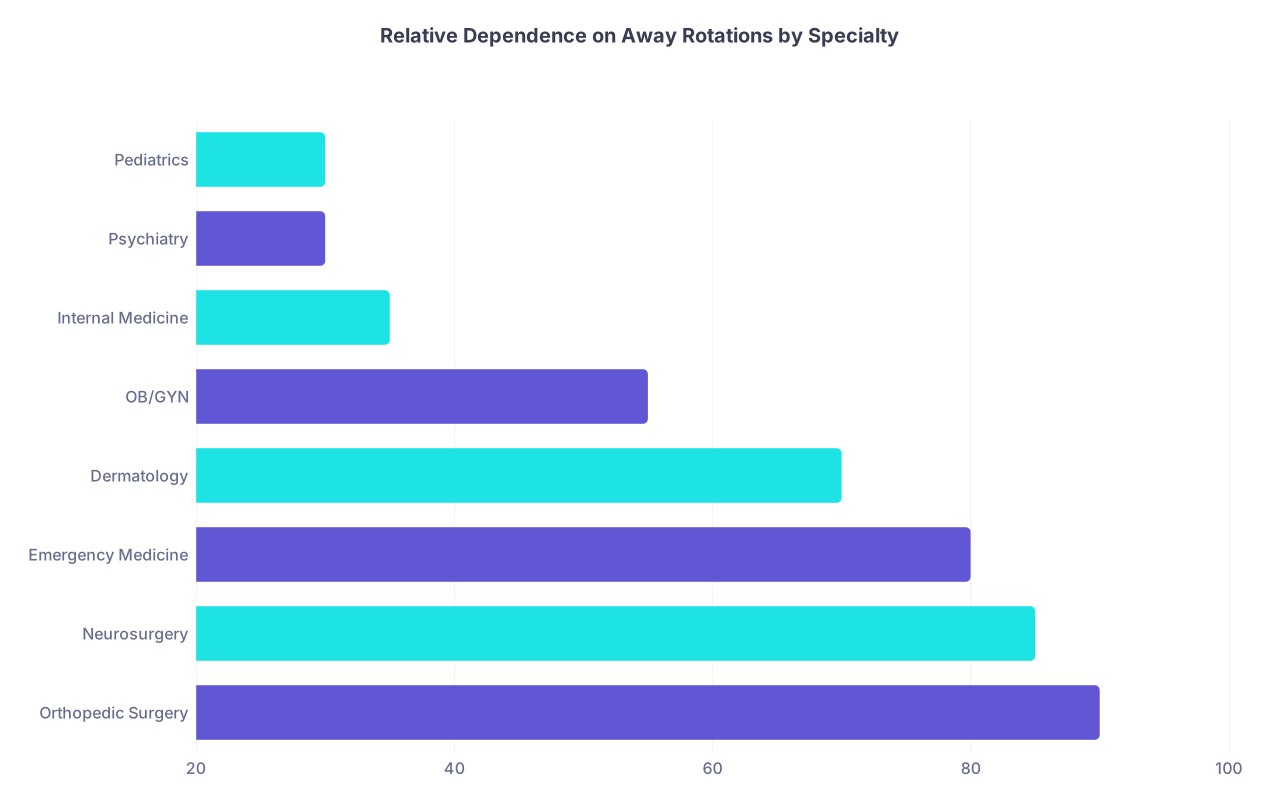
| Category | Value |
|---|---|
| Orthopedic Surgery | 90 |
| Neurosurgery | 85 |
| Emergency Medicine | 80 |
| Dermatology | 70 |
| OB/GYN | 55 |
| Internal Medicine | 35 |
| Psychiatry | 30 |
| Pediatrics | 30 |
(Values approximate dependence score out of 100, blending PD survey data, away prevalence, and letter importance.)
High-dependence specialties: audition rotations = pipeline
For these specialties, away rotations function like extended interviews.
Orthopedic Surgery
Typical applicant: 2–3 aways.
Data trend: Many PDs report that >50% of their rank list had rotated at their program or an affiliated site.
Observed yields:- Home Sub-I → interview: 80–90%
- Audition away at realistic program → 60–70%
- Prestige away (top 10) → 20–40%
Neurosurgery / ENT / Plastics / Urology
Same pattern, slightly lower overall numbers because programs are tiny.- 1 bad or absent Sub-I at home can tank your chances disproportionately.
- Multiple strong aways often correlate with being ranked highly somewhere, but not necessarily at the most “famous” places you rotated.
Emergency Medicine
Before SLOE reforms, 2–3 EM aways were standard. Now, 1–2 strong rotations with SLOEs from “known” programs hold massive weight.
Typical yields:- EM away with strong SLOE → 70–80% chance of interview at that program.
- Away with lukewarm SLOE (average boxes, bland comments) → 20–40% or even no interview despite rotating.
I have seen EM applicants with a 250+ Step 1, 260+ Step 2, but a weak SLOE from a big-name site. Interview yield collapsed across the board. One rotation torpedoed the entire cycle.
Moderate-dependence specialties: aways as tie-breakers
OB/GYN, general surgery (for mid-tier applicants), radiation oncology, PM&R sit here.
- Programs like seeing you work, but they will interview strong paper applicants who have never set foot in their hospital.
- Away yields:
- Home Sub-I → 70–85% interview rate.
- Strategic away → 40–60%.
- Prestige away → 15–30% unless you crush it and match their benchmark stats.
For these, you use aways for geography (I want the West Coast), program culture (malignant vs solid), or special interest (oncology, minimally invasive, etc.).
Low-dependence specialties: marginal interview yield
Internal medicine, pediatrics, psychiatry, family medicine in most contexts.
- Programs are large, interview many more people than they have spots, and rely heavily on scores, class rank, and letters more than aways.
- Home Sub-I still matters for letter quality and home program interview. But an extra away rarely moves your interview count dramatically.
Example pattern I have seen in IM:
- Applicant A (no IM away, just home Sub-I): 18 interviews.
- Applicant B (two out-of-region IM aways): 19 interviews, of which only 2 were at away sites.
That is not a meaningful yield difference given the cost.
Quantifying return on investment (ROI) of away rotations
You should think about aways as a constrained optimization problem:
- Limited slots (usually 2–3 practical aways max).
- High direct cost: travel, housing, application fees, lost part-time work.
- High opportunity cost: time that could be used for research, Step 2 studying, or home program networking.
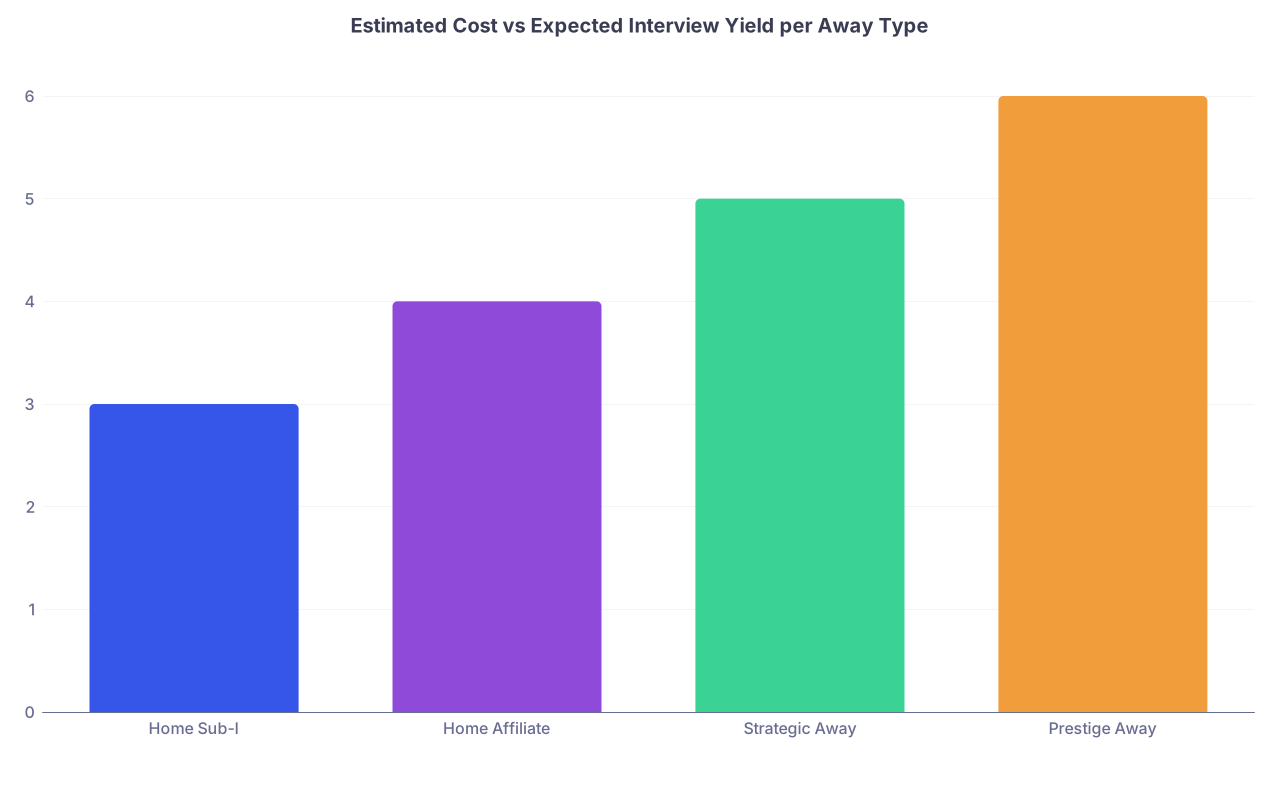
| Category | Value |
|---|---|
| Home Sub-I | 3 |
| Home Affiliate | 4 |
| Strategic Away | 5 |
| Prestige Away | 6 |
(Here, 1–10 composite “cost” score including money, time, and burnout; higher = more costly. Yield was described earlier.)
Better to formalize the decision. A simple mental model:
Expected Interview Value (EIV) = P(interview from site) × Program Priority Score
Program Priority Score could be 1–10 based on:
- Location attractiveness
- Program reputation
- Fit with your goals
- Realistic chance you would rank them in your top 5–8
If Program A is your #1 realistic choice and an away puts your interview probability from, say, 40% up to 75%, that is high EIV.
If Program B is a top-5 national name but you would be a long shot to match and might not love living there, EIV drops fast.
How rotation type affects match outcomes, not just interviews
The data show a second layer: not only interview yield, but conversion from rotation to match.
Rough rule from combined survey data and advising experience:
- If you rotate at a program and perform solidly, your chance of matching there (if you rank highly and they interview you) tends to be in the 10–30% range, depending on specialty and class size.
- If you do not rotate there, that chance is more like 3–10%.
So aways are not just about interviews. They change the denominator of which programs are serious match possibilities.

Hypothetical comparison: two ortho applicants
Applicant X:
- 2 aways (realistic tier), strong letters.
- 14 total interviews.
- Rotated at Programs 1 and 2.
Applicant Y:
- 0 aways, strong home performance but no external signal.
- 14 total interviews, all from cold applications.
In practice, Applicant X’s rank list will have 2–3 programs where they are “known quantities,” often ranked fairly high by those programs. Applicant Y’s list might be broader but shallower — less likely to be a PD’s “we know this person, they can function on day 1” favorite.
So even if total interview count matches, away-type selection can significantly shift match probabilities at specific programs.
Where students consistently misallocate rotations
I keep seeing the same three errors. Over and over. Across schools.
Error 1: Wasting aways on long-shot prestige
This is the classic: mid-range Step scores, middle of the class, minimal research. Student decides: “I will do aways at MGH and UCSF. If they see me, they will love me.”
Outcome pattern:
- Interview yield at the prestige aways: 0–1 out of 2.
- Downstream effect: Name value on letters helps a bit, but often not enough to justify lost time at realistic targets.
A smarter allocation statistically:
- 1 away at a “stretch but not delusional” program.
- 1–2 aways at realistic, mid-high tier programs in regions where you actually want to live.
Error 2: Doing aways in low-yield specialties “for fun”
IM, peds, psych, FM students deciding to spend 4 weeks at some random academic center “to see another system,” when that rotation adds almost nothing to match odds.
If you want variety, you can often get it at:
- Your home institution with different teams or sites.
- Shorter electives (2 weeks) that do not consume prime Sub-I time.
Rotations that change your probability of an interview or strong letter by <5% in low-competitiveness specialties are, frankly, luxury items. Do them after locking in the basics.
Error 3: Ignoring home Sub-I yield
Home programs matter. A lot. For many students, home is:
- Most likely interview.
- Most likely match.
- Highest chance of a chair or PD personally knowing you.
I have looked at multiple school match lists where >30–40% of students ended up at their home or an affiliated program in competitive specialties. And yet every year, a few students neglect their home Sub-I, schedule it late, or treat it casually while focusing on glamorous away travel. Their yield drops sharply.
Timing and sequencing: when rotation type matters most
Rotation type interacts with timing. The data from program director surveys and anecdotal patterns show clear timing effects.
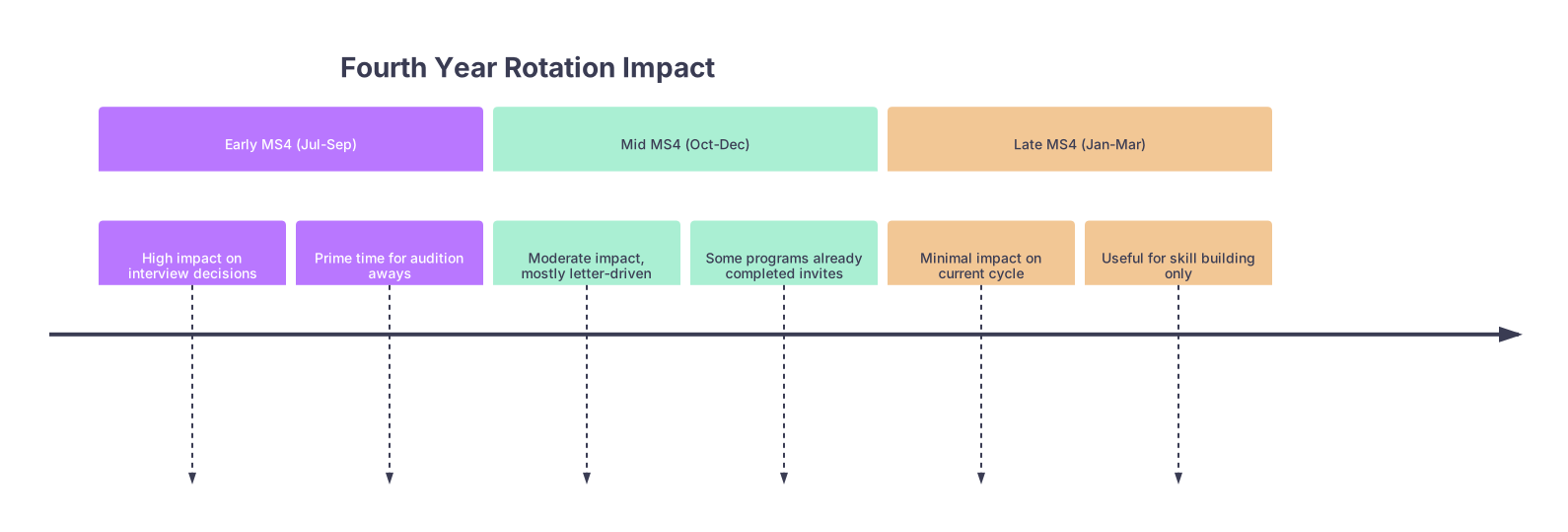
Translating that:
July–September:
- Maximum yield for audition away rotations in competitive specialties.
- Programs still building their interview lists; your performance can directly influence invite decisions.
October–December:
- Still useful, but many programs have already set most of their invites.
- Yield is more letter-focused and perhaps for SOAP/backup signaling.
January–onward:
- Almost zero effect on the current cycle’s interviews or ranking.
- Do these for skill, interest, or future fellowship networking, not match yield.
The highest ROI combination I see for competitive fields:
- June/July: Home Sub-I.
- August/September: 1–2 strategic away rotations at realistic targets.
- October: Either rest, research, or one more away if you need another strong letter.
Letters of recommendation: hidden yield driver by rotation type
The other function of aways is generating high-yield letters. But not every rotation type produces letters that carry equal statistical weight.
| Rotation Source | Average LOR Impact on Interview Odds |
|---|---|
| Home PD/Chair Letter | Very High |
| Known National Name (Away) | High |
| Local Attending, small site | Moderate |
| Non-core elective faculty | Low |
From advising data:
- A strong letter from a known PD or national name at an away can raise interview probability at similarly tiered programs by a noticeable margin (I estimate 10–20 percentage points in some competitive fields).
- A bland letter from a “famous” site does not. In fact, it may quietly hurt you compared with no letter from that institution at all.
This is why prestige aways are risky. The variance is high: if you blow them away and get a glowing letter, your whole application profile shifts. If you are average, they may write a generic or tepid letter that quietly signals “not competitive for this tier.”
Building a data-driven rotation portfolio
Let me outline a model portfolio approach, the way you would think about assets with different risk/return profiles.
Example: Competitive surgical specialty, mid-high stats
Profile:
- Step 2: 255
- Top third of class
- Solid research but not superstar
- Wants large academic program in Midwest or Northeast
A data-driven rotation plan:
- Home Sub-I in specialty (July):
- Expected interview probability at home: 80–90%.
- Match probability if ranked highly: significant.
- Strategic Away #1 (August) at a mid-high tier Midwest program where your stats are at or above their median:
- Interview yield: 60–70%.
- Match potential serious if you fit.
- Strategic Away #2 (September) at a similar Northeast program:
- Similar yield.
- Optional stretch away? Only if you already have strong home support and are not sacrificing a realistic target.
This portfolio optimizes:
- At least 3 programs where you are a known entity.
- High interview probability at those known places.
- Reasonable geographic spread where you would actually live.
Example: Internal Medicine, strong candidate
Profile:
- Step 2: 250
- AOA
- Wants academic IM, maybe cards fellowship later.
Rotation plan with yield focus:
- Home IM Sub-I (July or August).
- One away in dream geographic region, but not mandatory.
- Use remaining time for research, electives that support subspecialty interest, or building relationships with home faculty.
For this person, adding 2–3 IM aways rarely pushes the interview count from, say, 18 to 30. It often just shifts which 18, at high cost.
Red flags: when rotation yield is lower than it should be
If you completed a Sub-I or away and did not receive an interview, that is a signal. Often a strong one.
Possible interpretations (backed by what PDs say when you are not in the room):
- Evaluations flagged concerns about work ethic, communication, or professionalism.
- Faculty rated you as “good but not exceptional” in a very competitive environment.
- Fit issues: personality, team dynamics, or perceived lack of interest.
In advising data, students who rotate without getting interviewed at more than one site often have:
- Below-average clinical evaluations relative to peers.
- Quiet but real professionalism flags (chronic lateness, poor documentation, weak ownership).
You cannot retroactively “fix” that cycle. But you can:
- Ask for honest feedback from trusted faculty.
- Adjust expectations and rank list strategy.
- Avoid relying on additional aways to “rescue” the situation late in the season; yield will probably stay low.
Pulling it together: how to use this information
Let me compress the data story into usable decision rules.
Home Sub-I first
- Highest yield, both for interview and eventual match.
- Anchor for your letters and your realistic tier.
Cap aways at 2–3 for most students in high-dependence specialties
- Each should be either:
- Realistic target where you would be happy to match, or
- Carefully chosen stretch with a rational upside, not just prestige chasing.
- Each should be either:
Avoid low-yield aways in low-dependence specialties
- If the incremental interview benefit is marginal, your time is usually better spent on research, Step 2, or networking at home.
Use early MS4 months for high-ROI rotation types
- July–September: home Sub-I + strategic aways.
- Later: electives, backup plans, skill building.
Treat letters as a measurable output of each rotation
- If a rotation is unlikely to give you a strong, specific letter from someone recognizable, its yield drops further.
The away rotation game is not random. It is a set of conversion funnels. You choose where to pour your limited time and money, and the structure of the specialty largely determines the yield.
If you build your fourth-year schedule like a portfolio—home core, strategic targets, maybe one calculated risk—your interview list will not be an accident. It will be the predictable output of a deliberate, data-informed plan.
With that foundation, your next challenge is a different conversion problem: interview-to-rank-to-match. That is where communication, fit, and strategy take over from raw numbers. But that is its own data story for another day.