You just looked at your fourth‑year schedule grid and felt your stomach drop.
No trauma surgery. No dermatology. No dedicated heme/onc. Maybe your school does not have a PICU. Or you are at a newer or community-based school with zero in-house neurosurgery, ENT, or competitive subspecialties. But you want to match into one of those fields.
And you are realizing: there is no way to take the “classic” audition rotation everyone online keeps talking about… because it literally does not exist where you are.
Here is the good news: lack of a specific home rotation is a handicap, not a death sentence. I have seen students match ortho from schools with no ortho residency. I have seen people get derm interviews with no derm elective at their home institution. It is harder. It is not impossible.
The key is to stop wishing your school were different and start playing the board you are actually on.
Let’s go through how.
1. Get Clear on What You’re Actually Missing (and How Bad That Is)
First thing: diagnose the problem properly.
There are two very different situations:
Your school does not offer any rotation in the specialty you want
Example: No radiation oncology at all. No neurosurgery service. No child psych.Your school offers a basic rotation but missing key variations
Example: You have general surgery but no trauma; inpatient psych but no child/adolescent; adult ICU but no MICU/SICU distinction.
Programs care more about the first scenario, less about the second. But both are fixable.
Make yourself a clear list:
- Desired specialty (e.g., EM, ortho, derm, heme/onc)
- Rotations you have:
– Core rotation (Y/N)
– Any subspecialty electives (Y/N) - Rotations you don’t have that feel important
Then sanity-check how important those missing pieces really are.
Here is a rough reality check:
| Missing Piece | Impact Level | Why It Matters |
|---|---|---|
| No home rotation in your target specialty | High | Harder to get strong specialty-specific letters |
| No home residency program in that field | High | Fewer mentors, less name recognition |
| Missing subspecialty elective (e.g., trauma) | Medium | Can often replace with away or similar experience |
| Limited ICU/acute care exposure | Medium | Especially relevant for EM, surgery, anesthesia |
| Only outpatient exposure for inpatient-heavy field | Medium | Needs supplement but not fatal |
You are going to prioritize filling “High” gaps first, then patch the medium ones with creative options.
2. Use Away Rotations Strategically, Not Emotionally
If your school lacks core exposure in your future field, away rotations are not optional. They are your main weapon.
But you cannot just shotgun VSLO requests and hope something sticks. You do not have the slots or the time. You have to be calculated.
Step 1: Decide what each away rotation is for
Each one should have a clear primary purpose:
- Get a strong letter in the specialty
- Show commitment in a competitive field
- Demonstrate you can handle a specific practice environment (county, academic, high-volume trauma, etc.)
- Fill a genuine clinical knowledge gap
Trying to do all four with one rotation usually fails. Pick one or two goals per away.
Step 2: Choose target programs by function, not brand
Stop thinking “I have to rotate at MGH or I’m done.” Wrong. Think:
- “I need a letter from a place that has a strong reputation in EM”
- “I need proof I can handle high acuity”
- “I need an academic program because my home is community only”
Look for programs where:
- They take students from outside schools regularly
- Your stats are at least in range for categorical residents (check FREIDA, program sites)
- They actually read and value away rotation evaluations (most do, some don’t care; ask residents)
Competitive specialty? You probably get:
- 2–3 away rotations if you are gunning for ortho, ENT, urology, EM, neurosurgery
- 1–2 if it is something like anesthesia, PM&R, radiology and your school is missing that field entirely
And yes, every away should double as a semi-audition, even if you do not love the program. Someone there can write you a letter.
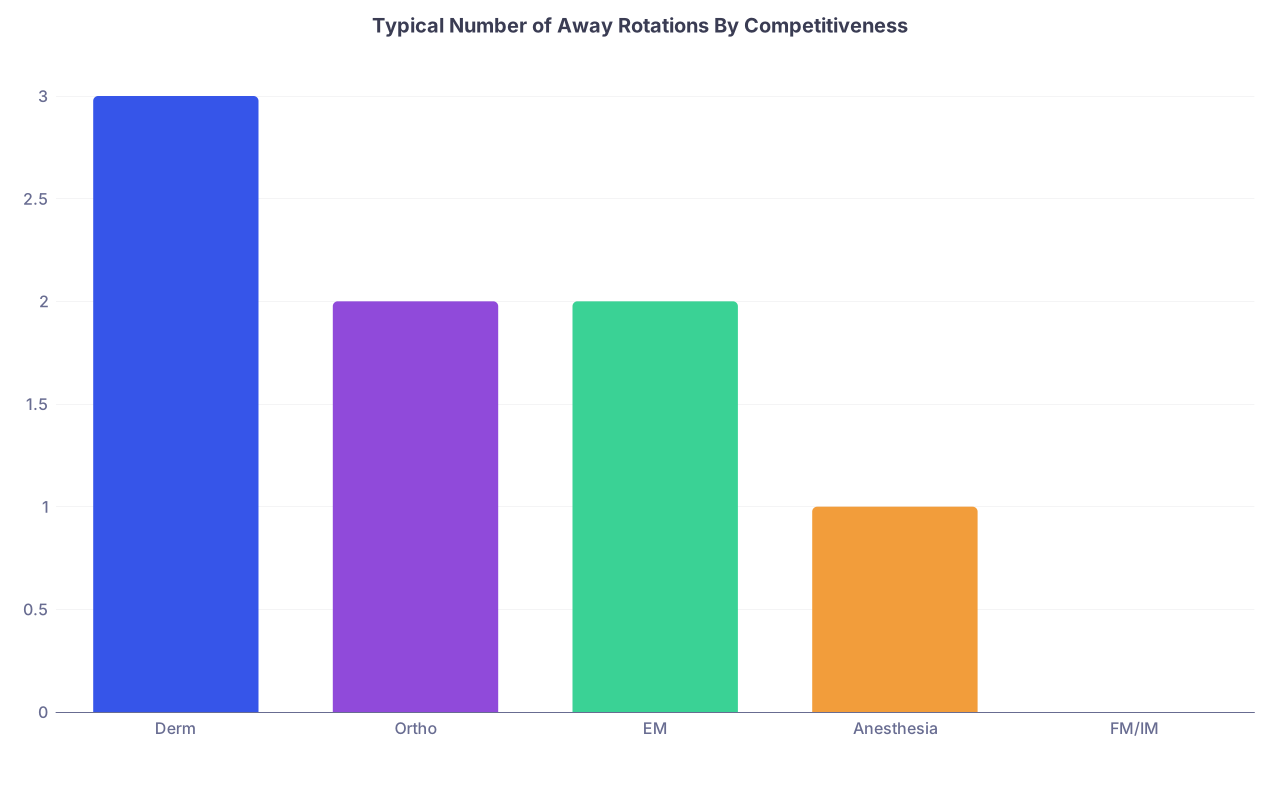
| Category | Value |
|---|---|
| Derm | 3 |
| Ortho | 2 |
| EM | 2 |
| Anesthesia | 1 |
| FM/IM | 0 |
3. Turn “Adjacent” Rotations into Gold
Sometimes you just flat-out cannot get the exact rotation you want. Either your school lacks it or away slots are gone.
Your move: build a credible adjacent portfolio.
You want EM but have no EM home rotation? Stack:
- MICU or SICU
- Trauma surgery or acute care surgery
- Anesthesia (great for airway and resus exposure)
- Hospitalist/inpatient medicine with night float
You want heme/onc but your school has limited oncology exposure?
- Strong inpatient internal medicine with complex patients
- Palliative care
- Infectious disease consults (lots of immunocompromised care)
- Any outpatient oncology/infusion center time you can get, even if “informal”
You want peds subspecialty but only have general peds?
- NICU or PICU (if available anywhere you can go)
- Pediatric ED
- Peds hospitalist service
- And then one away in your desired subspecialty if possible
Programs are not dumb. They know not every school has everything. What makes them roll their eyes is when your application shows zero attempt to approximate the missing exposure.
4. Milk Community and Non-Flagship Sites for What They Offer
Plenty of students are at community-based schools or branch campuses that lack glamorous subspecialties. That does not mean those rotations are worthless. In fact, they can be better for letters and hands-on experience.
Here is what community rotations can quietly give you:
- Massive autonomy – you are actually doing procedures, not just pre-rounding
- Stronger, more personal letters – the one surgeon who loves teaching you will write a better letter than a big-name attending who barely remembers you
- A concrete story – “I managed 15–20 admitted patients a night on call at a rural hospital with one supervising attending on site”
If you do not have a home residency program in your target field, lean into being “the hard-working student who did a ton at a busy community site.” But then you add at least one academic away so programs do not worry you have never seen higher-complexity cases.
5. Use Electives and Research Blocks as Stealth Substitutes
Missing a rotation does not just mean less clinical time. It means fewer mentors and fewer ways to prove to programs you’re truly in the game for that specialty. You can fix that with how you use electives and research blocks.
Turn a research block into a shadow/mini-rotation hybrid
Example: Your school has no neurosurgery rotation, but there is one neurosurgeon on staff who does mostly clinic and a bit of OR.
What you do:
- Email them directly: “I am interested in neurosurgery, we do not have a formal rotation, can I combine shadowing/clinic time with research for 4 weeks?”
- Propose a small project: chart review, case series, retrospective look at something simple.
- Ask to scrub into every case they do. Ask to attend tumor board or M&M.
This gives you:
- A specialty-specific letter from the only neurosurgeon your school touches
- A line on your CV (“Neurosurgery research elective, 4 weeks”)
- Talking points for “Tell me how you explored neurosurgery at a school without a program.”
Build hybrid electives
You may not get “official” credit for some things, but you can often combine:
- Half-day clinic in your interest specialty + half-day something else
- Telehealth clinic with an outside attending who is affiliated with your school
- Hospital consult service that covers patients you care about (e.g., cardio-onc, HIV/onc, etc.)
Ask your dean’s office or clerkship director: “Can we structure a 4-week elective where 2 days/week are X and 3 days/week are Y?” A lot of schools quietly allow this if you bring them a clear plan and a willing preceptor.
6. Letters of Recommendation When You Lack the Perfect Rotations
Here is the part that actually makes or breaks people.
Programs care far more about who is vouching for you and what they say than whether the letter-writer is at your home institution or from the canonical rotation.
You should aim for:
- 2 letters in or near your target specialty
- 1 strong IM/FM-type letter if your field is medicine-related
- 1 character/”this person is outstanding” letter if allowed (dean, research PI, etc.)
When you cannot get letters from ideal rotations, you pivot.
Option A: Letters from away rotations
This is the obvious one. You crush your away rotation and ask:
“Dr. Lee, I am applying to EM this cycle. I have really valued working with you. Do you feel you know my clinical work well enough to write a strong letter in support of my application?”
Be that blunt. You want them to say either “Yes, absolutely” or to hesitate (in which case, do not use them).
Option B: Letters from adjacent fields who ‘translate’ for you
Example: You want EM, no EM home rotation, one EM away. You can add:
- MICU attending: “This student is excellent in critical care and would excel in EM.”
- Trauma surgeon: “They functioned like a sub-I on trauma nights; I’d trust them in any acute care setting.”
You explicitly ask them to connect the dots in their letter: “Would you be comfortable commenting on how my performance on trauma surgery would translate to emergency medicine/residency success?”
Option C: Research or niche mentors in your target specialty
If your only exposure is through research or clinic with a single attending, that is still usable. They may not have seen you run a full service, but they can still say:
- You show up
- You are reliable
- You took initiative to carve this out despite institutional limits
That narrative matters.
7. What to Say on ERAS and in Interviews About Your Missing Rotations
Programs will notice gaps. Some will not care. Some will ask. You need a clean, non-defensive explanation locked and loaded.
Three rules:
Blame structure, not people
Say: “My medical school does not have an in-house neurosurgery service, so formal rotations aren’t offered.”
Not: “My school is terrible and never let us do anything.”Show what you did about it
Example: “Because there was no EM rotation, I arranged two away EM rotations and also prioritized MICU and trauma surgery at my home institution to build acute care skills.”Tie it to a positive trait
You want the subtext to be: limited resources, high initiative.
A decent answer in an interview might sound like:
“Yeah, my school does not have a home dermatology department, so a standard home derm rotation was not possible. Once I realized I was serious about derm, I set up a research elective with an affiliated dermatologist, spent a half day per week in their clinic for 3 months, and then did two audition rotations through VSLO. It forced me to be intentional and proactive, which honestly fits how I approach most things.”
You are not apologizing. You are explaining and demonstrating.

| Step | Description |
|---|---|
| Step 1 | Program asks about missing rotation |
| Step 2 | State structural limitation briefly |
| Step 3 | Describe concrete steps you took |
| Step 4 | Link to skills gained or initiative |
| Step 5 | Pivot back to why you fit their program |
8. International, New, or “Off-Brand” Schools: Extra Moves You Need
If you are at an international school, a very new US school, or a campus that is barely known, the lack of classic rotations hits harder. You have two extra priorities:
US-based, ACGME-affiliated experience in your chosen field
Programs want proof that you can function in their system, with their documentation, their pace.Name-recognition anchors
These are not mandatory, but they help. An away at a place regionally known, or a letter from someone well-respected in the field.
Concretely:
- Stack 2–3 US-based core or sub-I level rotations in your target field or close neighbors
- Hit at least one program in the geographic region you want to match
- Make sure your letters come from people inside the US system if you are applying to US residency
And then double down on Step 2 and Step 7 from above: targeted aways + clean, confident explanation of your path.
9. When You Absolutely Cannot Get Any Rotation in the Field
This is the worst-case scenario. No home rotation, no away accepted, no local specialist who will take you. It happens rarely, but it happens. Usually in very niche specialties (rad onc, neurosurgery at some Caribbean schools, etc.).
If you are dead set on that specialty, you have a few plays:
Maximize everything adjacent
- For rad onc: heme/onc, palliative, radiation physics/biology elective (even if mostly didactic), general oncology clinic
- For neurosurgery: neurology, trauma surgery, ICU, spine ortho if available
- For child psych: general psych, peds, school-based mental health elective, tele-psych exposure
Go heavy on research with someone in the field
Even if remote. Collaborate on a multicenter project, help with data collection.
Your goal: get a letter from a real rad onc/neurosurgeon/whatever who can say, “I have worked with this student extensively; they’re serious and capable.”Be realistic about risk
There are specialties where showing up to interview without any clinical rotation in the field is almost always a rejection, no matter how good you are. For those, you may need a two-step strategy: apply in a neighboring field, then try to laterally move or do a fellowship later.
I have seen people go IM → heme/onc instead of trying to force rad onc with zero exposure.
This is the part most people sugarcoat. I am not going to.
Some combinations of: no home program + no rotation + weak Step scores + mid-tier school + hyper-competitive field = almost zero chance. Your job is to minimize how many of those boxes you check.
10. Build a Rotation Plan That Actually Supports Your Match Story
By now you probably have a mess of possibilities in your head. Let me show you how to turn that into an actual plan.
Say you are at a community-heavy school with:
- No EM rotation
- No trauma surgery
- No derm
- Limited ICU
You want EM.
A smart M4 year might look like:
- Sub-I: Inpatient medicine at your main hospital (show you can run a service)
- Elective 1: MICU at your home or partner site
- Elective 2: Trauma surgery or acute care surgery at an affiliated site or away
- Away 1: EM at a regional academic program
- Away 2: EM at a community program in the region you want to match
- Research/Clinic: Half-day per week EM shadow with local EM doc if you can find one, even urgent care
- Backup: One medicine-heavy elective that keeps you viable for IM if EM does not pan out
Name that plan clearly on your CV and in your personal statement. Program directors reading it should be able to think, “Okay, their school was limited, but they really built an EM-relevant year out of it.”
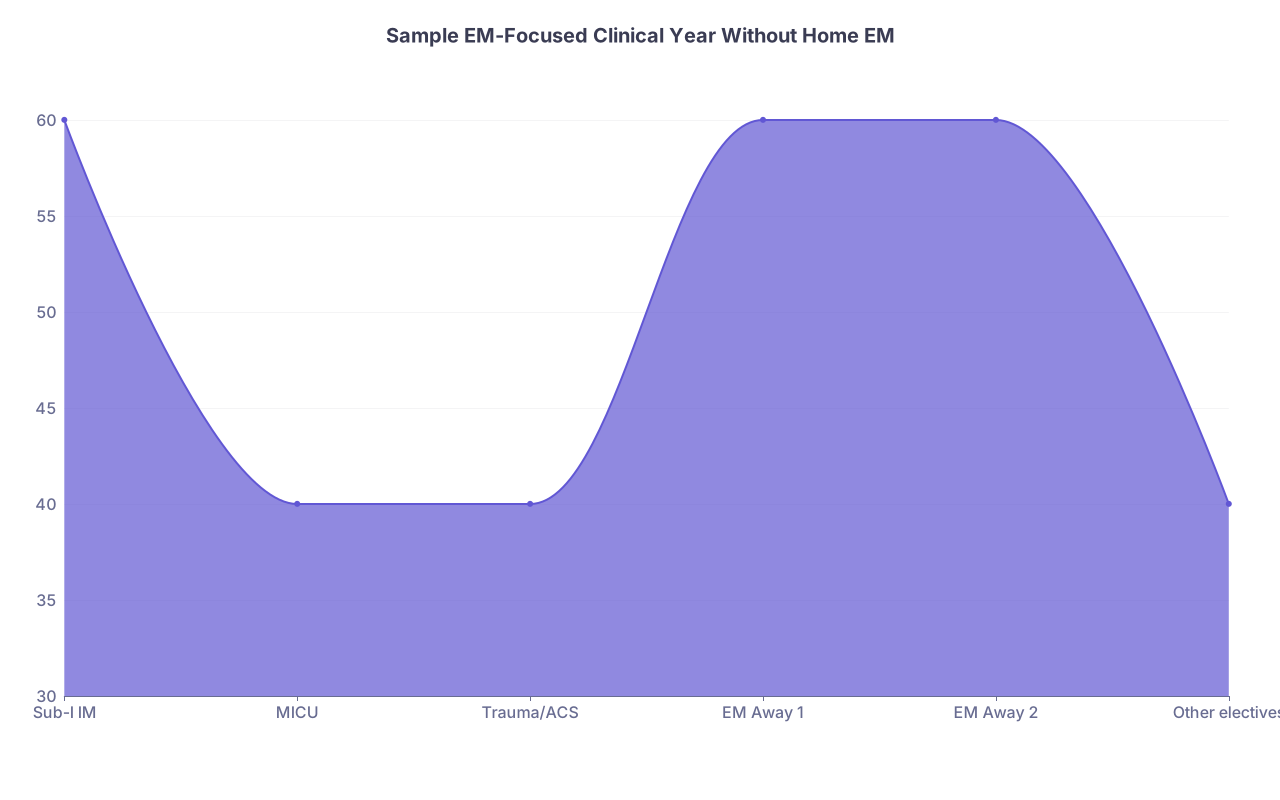
| Category | Value |
|---|---|
| Sub-I IM | 60 |
| MICU | 40 |
| Trauma/ACS | 40 |
| EM Away 1 | 60 |
| EM Away 2 | 60 |
| Other electives | 40 |
(Value units here are “relative EM relevance” points, not hours.)
11. Don’t Forget the Boring Logistics
All this creativity dies fast if you blow the paperwork.
You need to:
- Talk to your dean’s office early (late MS3, not deep into MS4) about what is realistically possible for your schedule
- Confirm your school will actually give you credit for away or hybrid rotations
- Get malpractice coverage, affiliate agreements, and site approvals sorted long before your start dates
- Track VSLO deadlines – some open early and fill within days
If your school has a “no more than X away rotations” rule, get clarity. Sometimes they quietly make exceptions if your home institution structurally lacks a given field.
And one small but real point: do not overload yourself with all the hardest rotations back-to-back. Two straight ICU-level or trauma-style blocks before interview season can break you. You need to still be a functioning human when interviews hit.
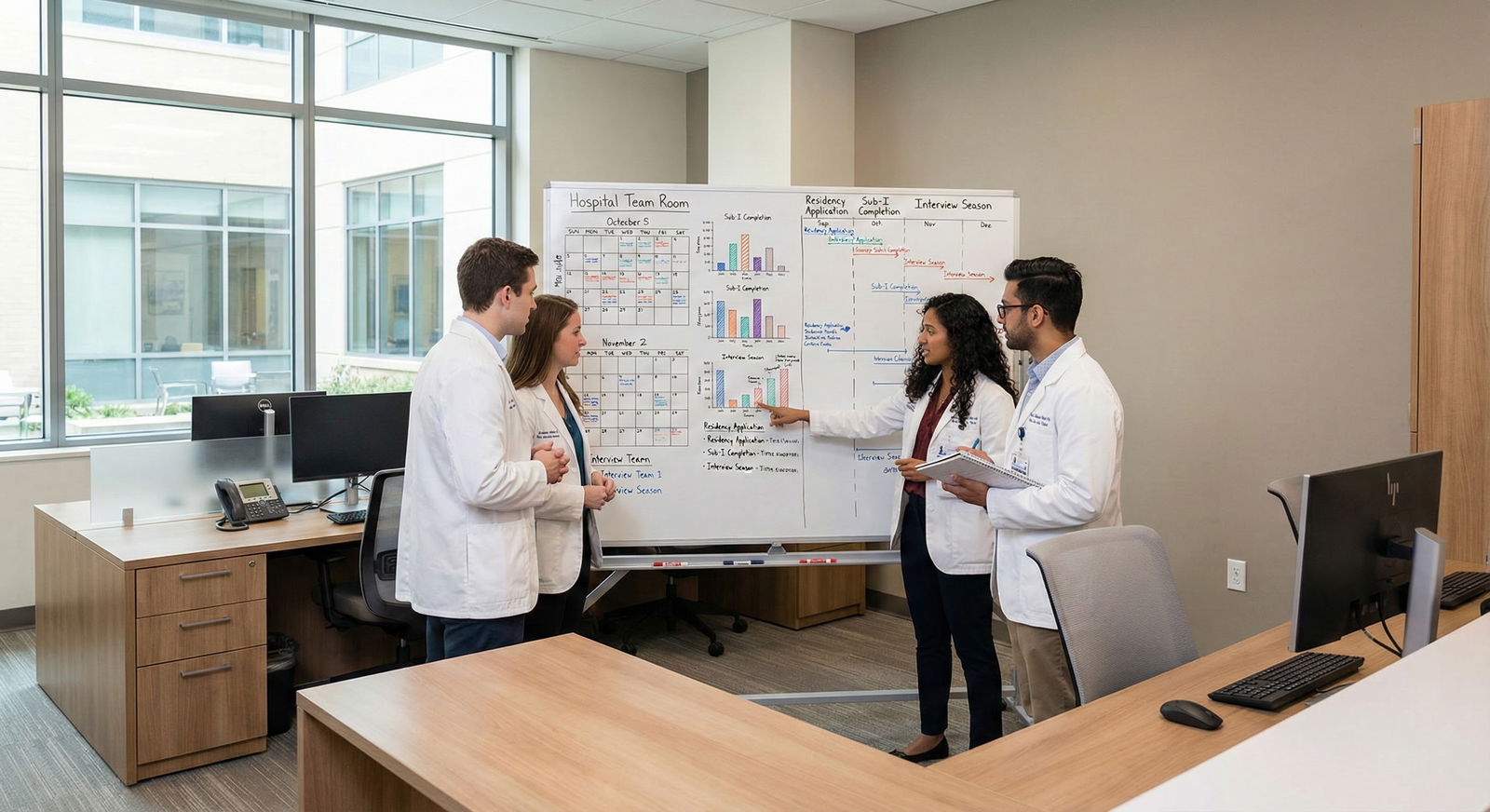
12. How Programs Actually See You When You Lack Certain Rotations
Let me decode the program director brain for a second.
When they see missing or odd rotations, they are asking:
- Did this student get screwed by their school, or are they just unfocused?
- Did they take initiative to fill the gaps, or did they just float through?
- Will this person be overwhelmed the first time they see high acuity or specialty-specific problems?
- Do we have letters from people we trust saying, “No, they will be fine”?
If your file shows:
- Limited rotations + no specialty-specific letters + no clear explanation → they assume the worst.
- Limited rotations + smart adjacent choices + strong letters + proactive narrative → they shrug and move on to more important factors.
Programs match plenty of people every year from imperfect schools with patchwork clinical years. They just do not advertise that on their website.

13. Bottom Line: How to Play a Weak Rotation Hand Well
You cannot magically conjure a trauma service or a dermatology department out of thin air. But you are not powerless.
If you strip this whole situation down, your job is to:
- Identify the real gaps your school leaves for your target specialty.
- Fill them as much as possible with away rotations, adjacent experiences, and creative electives.
- Get powerful letters from people who can credibly say, “Yes, they’re ready for this field.”
- Tell a clean story in ERAS and interviews that turns lack of rotations into evidence of initiative, not evidence of disinterest.
Do that, and missing a few key clerkships becomes a challenge you managed, not a red flag you never addressed.