
The worst mistake students without a home program make is treating away rotations like extended auditions rather than their primary residency application. If you lack a home program, your away is your home. You either own that, or you get owned by it.
You’re in a specific, high‑stakes situation:
- You don’t have a home residency program in your chosen field (or it’s tiny/weak).
- You need letters, face time, and proof that you can function at that level.
- Away rotations are not optional “extras” for you; they are your showcase and your lifeline.
Let me walk you through how to handle this like someone who plans to match, not someone hoping to get lucky.
Know Exactly What You’re Up Against
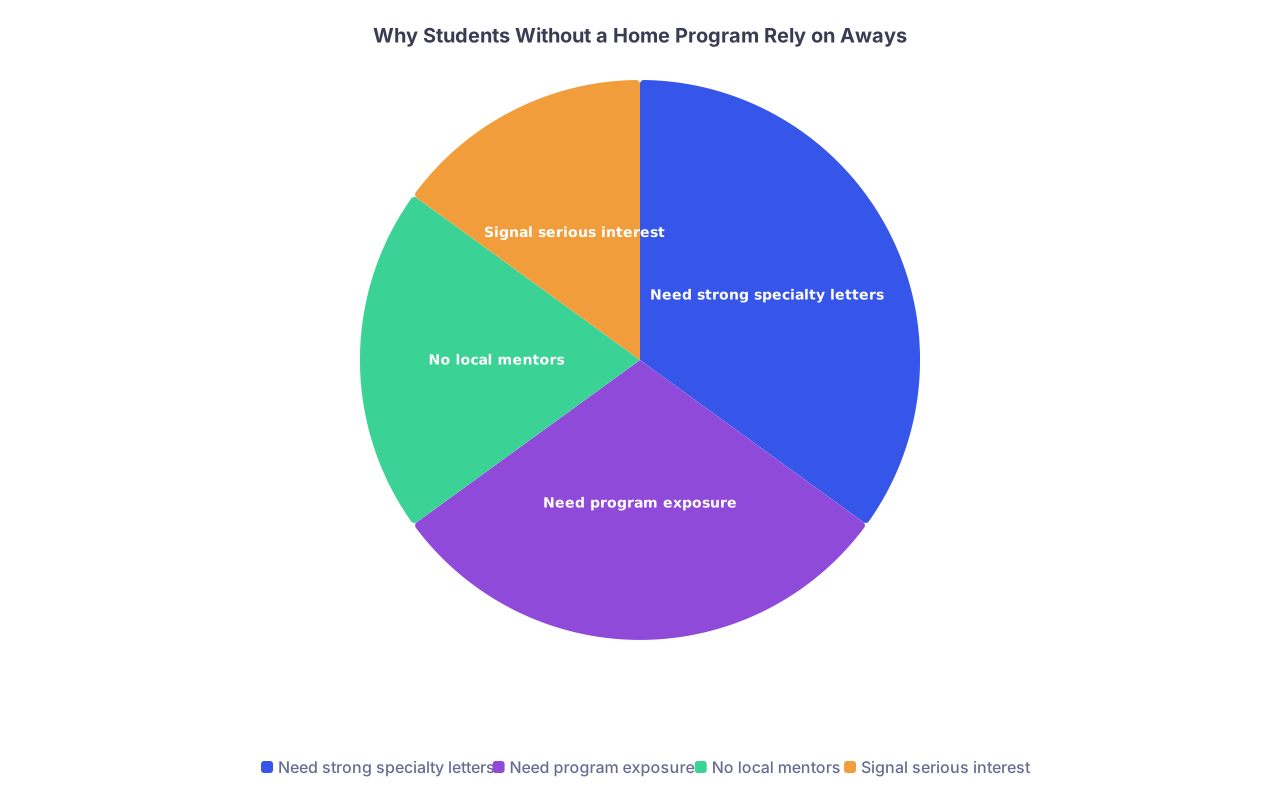
| Category | Value |
|---|---|
| Need strong specialty letters | 35 |
| Need program exposure | 30 |
| No local mentors | 20 |
| Signal serious interest | 15 |
If you lack a home program, three big problems hit you immediately:
Your letters will be questioned.
A great letter from “Community Hospital X – Internal Medicine” is not equal to a strong letter from a recognizable academic program in that specialty. Fair? Maybe not. Real? Yes.You don’t get built-in advocates.
Home students get: “I know this student, they’ll be fine.” You don’t. Programs will look at you and think: “Can this person actually function in our specialty?” Your away is where you prove that.You’re harder to trust on paper.
With no home program data, PDs use surrogates: school name, step scores, research. If those are not elite, you have to show your value in person.
So the entire strategy shifts:
- You’re not just “doing aways.”
- You’re building a portfolio of in-person auditions that collectively replace what a home program would have done for you.
This means:
- Choosing sites with intent.
- Treating each day as an evaluative encounter.
- Walking out with 2–3 weapons: a letter, a champion, and a reputation.
Choosing Away Rotations When You Have No Home Base
Your away choices matter more than you think. Random “big name” chasing is how people burn a rotation and come away with nothing.
Understand your actual goal
You want:
- 1–2 strong letters from recognized faculty in the specialty.
- 1–2 programs that will rank you as if you were a home student.
- A story that explains, convincingly, why you’re serious about this field.
That means you prioritize opportunities where:
- Students are allowed to present, write notes, and be part of the team.
- Attendings actually see your work, not just your name on the list.
- Students without home programs historically get real chances.
If you’re choosing between:
- Super-famous, malignant, student-ignoring powerhouse, vs
- Solid mid-tier/upper-mid-tier program where students work closely with attendings
Go with the second. Famous and invisible gets you nowhere.
How many away rotations?
If you lack a home program, the sweet spot for most competitive fields is usually:
- 2 aways in that specialty (maybe 3 if you’re aiming high and can afford it).
- Plus a strong home sub-I in a related field (IM if you’re aiming heme/onc later, surgery for ortho, etc.) to show you can do inpatient work.
Overdoing aways (4–5+) is often a red flag:
- It can scream desperation.
- You physically cannot sustain “audition-level” intensity for that long without slipping.
- You leave no time to rest, interview, or fix your application if something cracks.
Timeline Strategy: When You Must Be Visible
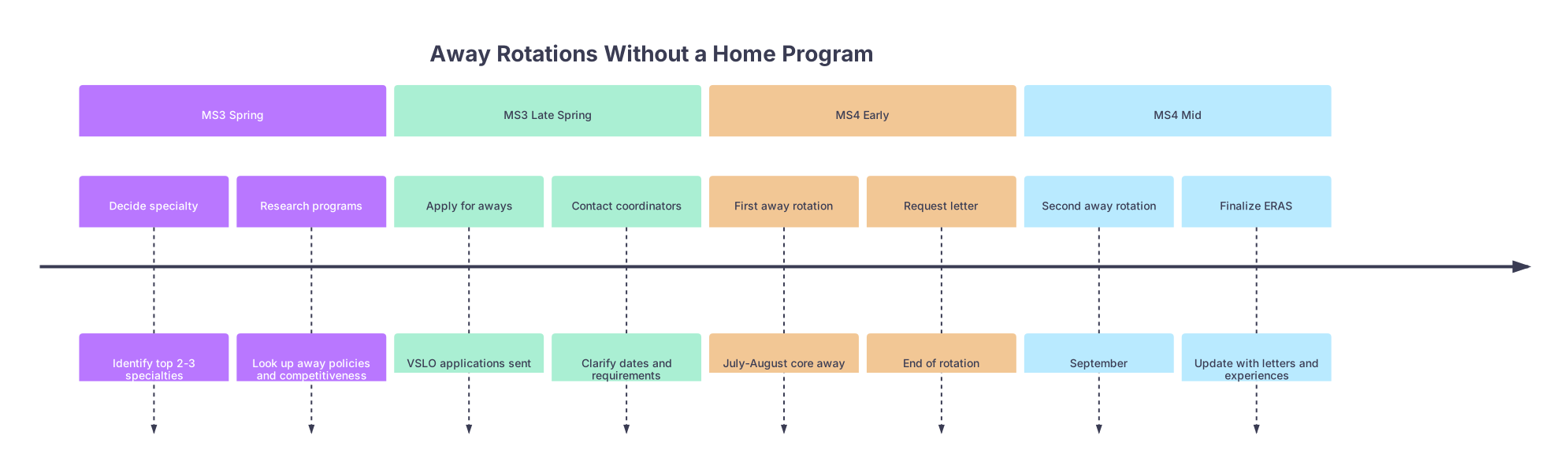
| Period | Event |
|---|---|
| MS3 Spring - Decide specialty | Identify top 2-3 specialties |
| MS3 Spring - Research programs | Look up away policies and competitiveness |
| MS3 Late Spring - Apply for aways | VSLO applications sent |
| MS3 Late Spring - Contact coordinators | Clarify dates and requirements |
| MS4 Early - First away rotation | July-August core away |
| MS4 Early - Request letter | End of rotation |
| MS4 Mid - Second away rotation | September |
| MS4 Mid - Finalize ERAS | Update with letters and experiences |
You don’t have the luxury of sloppy timing. You need letters in hand, or at least “pending” from known faculty, when ERAS opens and interview decisions start.
If possible:
First away: July or August
This is your flagship rotation. The letter from this one should be targeted as a “must be in ERAS by October 1” type.Second away: August or September
This still counts for both:- Late letters (many programs read updates)
- Direct impression for that program ranking you
If you’re extremely late (no away until October):
- You need to be realistic: that away is now mostly about:
- Trying to match at that specific institution
- Getting a late letter that might help at programs that review updates before rank lists
- Don’t count on it to transform your whole cycle.
How to Behave on an Away When You Need It to Count
Here’s the hard truth: if you don’t have a home program, you don’t get a “warm-up” clerkship in that specialty at your own institution. Your first away might be your first real look. That’s dangerous unless you prepare.
Week 0: Before you show up
Do this before Day 1:
- Read a short, practical handbook for that specialty. Example:
- EM: EMRA Basics of Emergency Medicine
- Ortho: Handbook of Fractures
- Surgery: Surgical Recall or equivalent
- Make 1–2 “pocket lists” in your notes app:
- Common consult questions and what you should ask (e.g., for neurosurg: GCS, pupil exam, anticoag status).
- Standard pre-op/post-op orders or admission orders relevant to that field.
- Email the coordinator 5–7 days before:
- Confirm where to be, what time, who to page.
- Ask about required EMR training or modules so you’re not useless on Day 1.
You’re trying to avoid that classic student-opening line: “Uh, sorry, I didn’t know where to go.” That’s not what future residents look like.
Week 1: Prove you’re safe and reliable
Your only job in Week 1:
- Show you are safe, on time, and coachable.
Concrete behaviors:
- Arrive 20–30 minutes early. Every day. Not negotiable.
- Introduce yourself to EVERY resident: “Hi, I’m [Name], visiting MS4 from [School], really interested in [specialty], thanks for having me.”
- Ask the senior: “What do you expect from a student on this service?” Then write it down. And do exactly that.
I’ve seen students ignore this step and then complain, “Expectations were unclear.” No, they just never asked.
What you don’t do:
- Don’t oversell: “I want to do [super competitive fellowship].” Just say you’re very interested in matching in the field.
- Don’t argue about plans. Ask questions later, not in front of the attending unless invited.
Weeks 2–3: Move from shadowing to functioning
This is where you separate yourself from the “nice visiting student” crowd.
You must:
- Own patients or consults (as allowed by the service).
- Present clearly and concisely.
- Anticipate next steps.
Some specific moves:
On day 4–5, ask: “Can I start pre-rounding on 1–2 patients independently?”
Then deliver a focused update: vitals, overnight events, exam, plan.Start drafting notes. If your institution won’t let you write official notes:
- Write them in Word or on paper.
- Ask a resident to review: “Is this the level of detail you expect?”
After a case/shift, ask the resident: “One thing I did well? One thing I should improve?” Then change by the next day. Visibly.
Week 4: Lock in your letter and advocates
By the last week, you’re doing performance and politics at the same time.
You need:
- A specific attending or two who know your name, your work, and your trajectory.
- A clear ask for a letter while your work is fresh in their mind.
Script that actually works:
- “Dr. Smith, I’ve really appreciated working with you this month. I’m very interested in applying to [specialty] and I don’t have a home program. Based on what you’ve seen, would you feel comfortable writing a strong letter of recommendation for me?”
If they say yes:
- Ask if they prefer a CV and draft personal statement.
- Ask when they usually submit letters so you can time ERAS properly.
If they waffle or say something vague like “Sure, I can write you a letter” without the word “strong”:
- That’s a yellow flag. You might still use it, but you’d better have another rotation planned for a stronger letter.
Turning Each Away into a Real Advantage
You’re not just surviving these aways. You’re using them to convert “no home program” from weakness into a talking point that helps you.
Build a visible track record
After each away, you should walk away with:
- A detailed evaluation (if the program does them for visiting students).
- A letter request confirmed, ideally via email.
- At least one resident and one attending who know you well enough that:
- If a PD says, “What’s your impression of this student?” they have a specific answer.
Capture specifics:
- Keep a running note on your phone:
- Cases you saw
- Roles you played
- Feedback and how you improved
Those details turn into interview answers.
Example:
- “On my away at [Program], I started the month needing help structuring my consult presentations. By week 2, my senior specifically commented that my consult notes were at resident level, and they started using my drafts in the EMR as templates.”
That’s the kind of specific arc PDs believe.
Signal interest without turning into a pest
You want to be remembered, not resented.
Reasonable steps:
- End of rotation: email the PD/coordinator thanking them for the opportunity, stating you’ll be applying, and that you really enjoyed [specific things].
- If you get an interview from that program later:
- Mention your rotation early in the interview.
- Reference specific people/cases (without violating privacy) to show you were fully engaged.
Bad moves:
- Sending monthly “Just checking in!” emails.
- Asking, “Where will I be on your rank list?”
- Making it sound like they’re your only hope.
Choosing Programs When You Lack a Home Department
You can’t just throw darts at the map. You need a mix that matches your profile and your away performance.
| Priority Type | Example Program Choice | Goal for You |
|---|---|---|
| Reach Academic | Regional academic powerhouse | Big-name letter, exposure |
| Realistic Academic | Mid-tier university program | Strong letter, rank upside |
| Safety / Community-Based | University-affiliated community | Solid letter, match anchor |
You should aim for:
- 1 away at a realistic “target” program where your stats are aligned.
- 1 away at either:
- A slightly more competitive program you’d love, or
- A program in a geographic area that matters to you (family, partner, etc.)
During interviews at other places, you can then say:
- “Because my school doesn’t have a home program, I used my aways to work in two different settings: [Program A] and [Program B]. At both, I took on near intern-level responsibility under supervision and got very positive feedback.”
That’s you neutralizing the home-program gap.
Common Mistakes That Sink Students Without Home Programs
I’ve watched these play out over and over:
Treating aways like observation.
You stand in the back, follow the intern, and hope someone notices your “interest.” They won’t. You need to ask for responsibility, within reason.Hiding your lack of a home program.
Own it and pair it with action: “My school doesn’t have [specialty], so I specifically sought out aways at programs where I could work closely with residents and faculty.”Overloading on star programs.
Three big-name aways with zero letters is worse than two mid-tier rotations with two outstanding letters.Waiting too long to ask for feedback.
If you only ask, “How am I doing?” in week 4, you’ve wasted your chance to adjust. Ask in week 1. Then fix things visibly.Being “nice” but forgettable.
Plenty of pleasant students rotate every month. The ones who get letters are helpful, prepared, and take actual work off the team’s plate.
How to Talk About Having No Home Program in Your Application
You don’t need a long, emotional explanation. You need a tight narrative that shows you handled a constraint like a future resident.
In your personal statement or interviews, something like:
- “My medical school does not have a [specialty] residency, so I sought opportunities to immerse myself in the field through away rotations. At [Program 1] and [Program 2], I functioned like a sub-intern: pre-rounding on my own patients, presenting on rounds, and following cases from admission through discharge. Those experiences confirmed for me that I thrive in [this environment / patient population / pace of work].”
You’re not a victim of circumstance. You’re someone who built their own path.
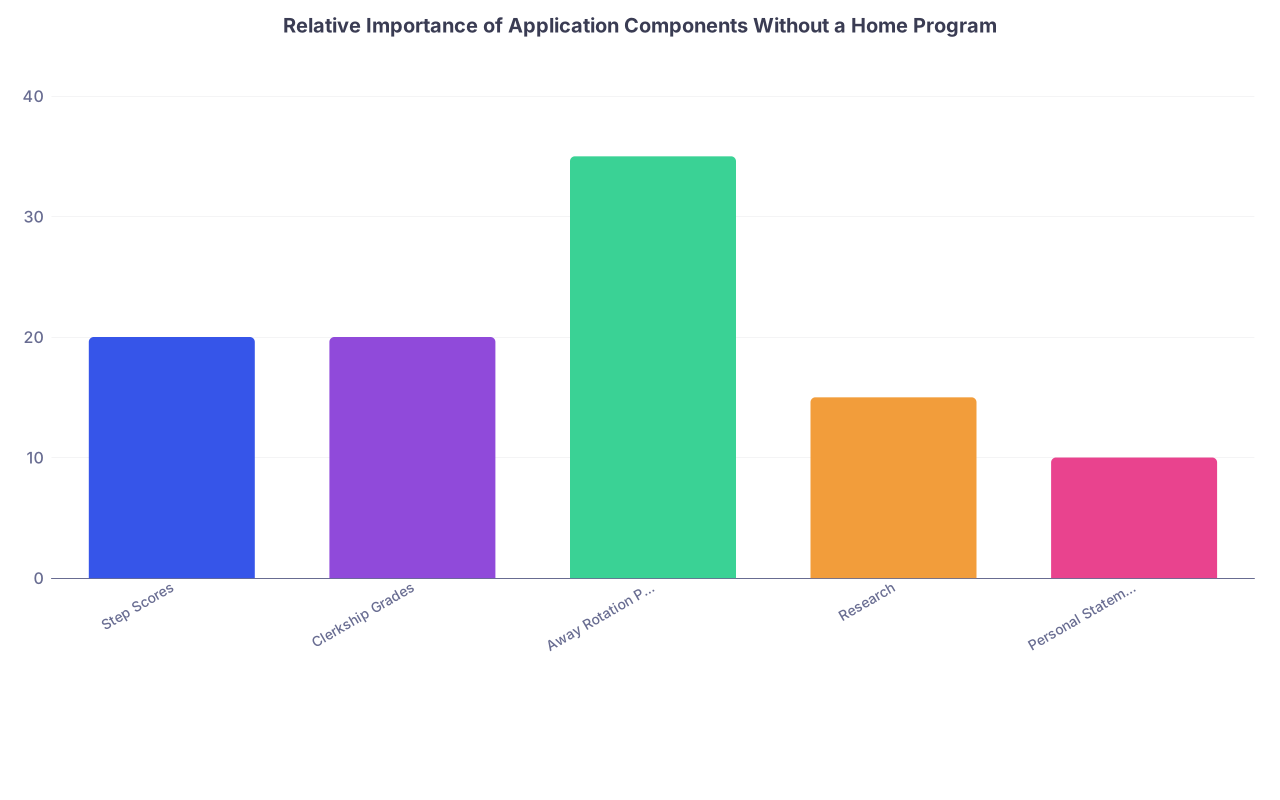
Visual: How Much Your Away Rotations Matter Without a Home Program
| Category | Value |
|---|---|
| Step Scores | 20 |
| Clerkship Grades | 20 |
| Away Rotation Performance | 35 |
| Research | 15 |
| Personal Statement | 10 |
For you, away rotation performance is a disproportionate piece of the puzzle. That’s why this all matters so much.
Quick Behavior Checklist for Each Day of an Away

Use this as a mental script:
Morning:
- Early. On the floor before residents.
- Know your patients before someone asks.
- Update your to-do list before rounds.
On rounds:
- Present clearly, no rambling.
- Offer plans, not just data: “Given X and Y, I’d suggest Z.”
- Write things down. Then actually do them.
Midday:
- Ask: “What else can I help with?” and mean it.
- Volunteer for new consults or admissions.
- Read on one topic from a patient you saw that day.
End of day:
- Ask a resident: “Anything I can do before I go?”
- Review feedback in your head: what will you do differently tomorrow?
- Jot a 2–3 line note of what you learned.
This is how you leave a trail of competence, not just attendance.
Aways Are Your Showcase. Treat Them Like It.

If you lack a home program, you cannot afford a “meh” away. Every rotation is a live audition. People will remember you for being either:
- The student who made their lives easier, or
- The one who stood quietly in the back and disappeared when the workload spiked.
Aim, obviously, for the first.
Key closing points:
- Your away rotations are your home program. Choose them strategically and demand enough responsibility to show what you can do.
- Plan your timing and your asks: early away for a flagship letter, second away for reinforcement and another advocate. Ask directly for strong letters.
- Own the “no home program” story. Pair it with concrete action: aways, responsibility, feedback, and growth. That’s how you stop being a risk and start looking like a resident.