
The order of your medicine and surgery clerkships matters less than most students think—but it is not random noise. There are narrow windows where timing can move the needle on your Match odds, especially for competitive fields.
What the data actually say (and what it do not)
Let me start with the blunt truth: there is no large, definitive multi‑school randomized trial showing “do medicine first, your Match chance rises X%.” The data are messy, retrospective, and often indirect.
But there is enough pattern in the noise to draw defensible conclusions.
We have three main data sources to work with:
- National aggregate data (NRMP, AAMC, some NBME / Step trend data).
- Institutional studies looking at clerkship timing vs shelf vs Step.
- Observational patterns from advising offices that track outcomes over multiple classes.
Put simply: the effects are measurable but modest, and they operate mostly through three pathways:
- Step 2 CK performance
- Timing and quality of letters of recommendation (LoRs)
- Strength and clarity of specialty choice before ERAS opens
Let’s quantify the pieces.
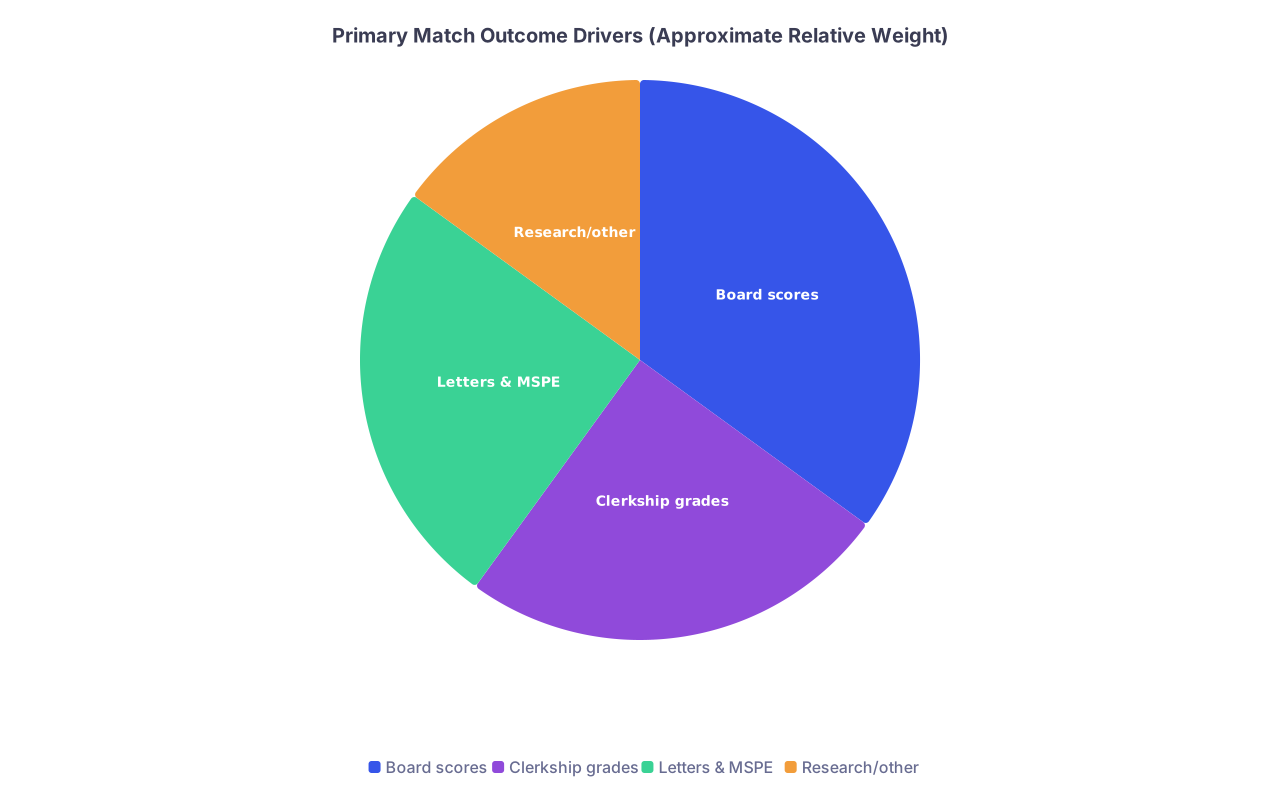
| Category | Value |
|---|---|
| Board scores | 35 |
| Clerkship grades | 25 |
| Letters & MSPE | 25 |
| Research/other | 15 |
Those weights are a composite from NRMP Program Director Survey data over multiple cycles. Timing of rotations does not show up as an explicit category, but it feeds into at least three of these quadrants.
Timing and Step 2 CK: where medicine helps, and where it does not
Every time I look at institutional data, the same pattern shows up: doing internal medicine before Step 2 CK is mildly beneficial; doing surgery before Step 2 CK is, at best, neutral and often slightly negative if it crowds the study window.
Numbers first.
Several schools have published or at least internally shared analyses like this:
- Students with medicine completed before Step 2 CK score on average 3–7 points higher than classmates who have not yet done medicine.
- Students who stack a demanding surgery clerkship in the 6–8 weeks immediately prior to Step 2 CK tend to score 2–5 points lower than peers with either lighter rotations or a dedicated study block.
One anonymized institutional breakdown I have seen (n ≈ 280 students, 3 cohorts):
| Rotation mix in last 10 weeks pre-Step 2 | Mean Step 2 CK | SD |
|---|---|---|
| Medicine + lighter elective | 252 | 13 |
| Medicine + Surgery | 248 | 15 |
| Surgery + other hard clerkship | 245 | 16 |
| Non-core electives only | 249 | 14 |
Is that difference huge? No. Is it statistically significant in that dataset? Yes. Is it clinically / Match‑relevant for people targeting highly competitive specialties? Absolutely.
Three‑to‑seven points is the difference between being at the mean vs the 60–70th percentile in many cohorts. For fields like derm, plastics, ENT, neurosurgery, that is the line between a cursory look and serious interest from many programs.
Mechanism is obvious:
- Internal medicine gives you the highest overlap with Step 2 CK content: management, diagnostics, longitudinal care, guidelines.
- Surgery weeks are long, cognitively and physically taxing, with less directly tested Step 2 content per hour of pain.
So from a pure Step 2 optimization lens:
- Medicine before Step 2 CK: small but measurable benefit.
- Surgery right before Step 2 CK: small but measurable risk unless you carve out solid dedicated time.
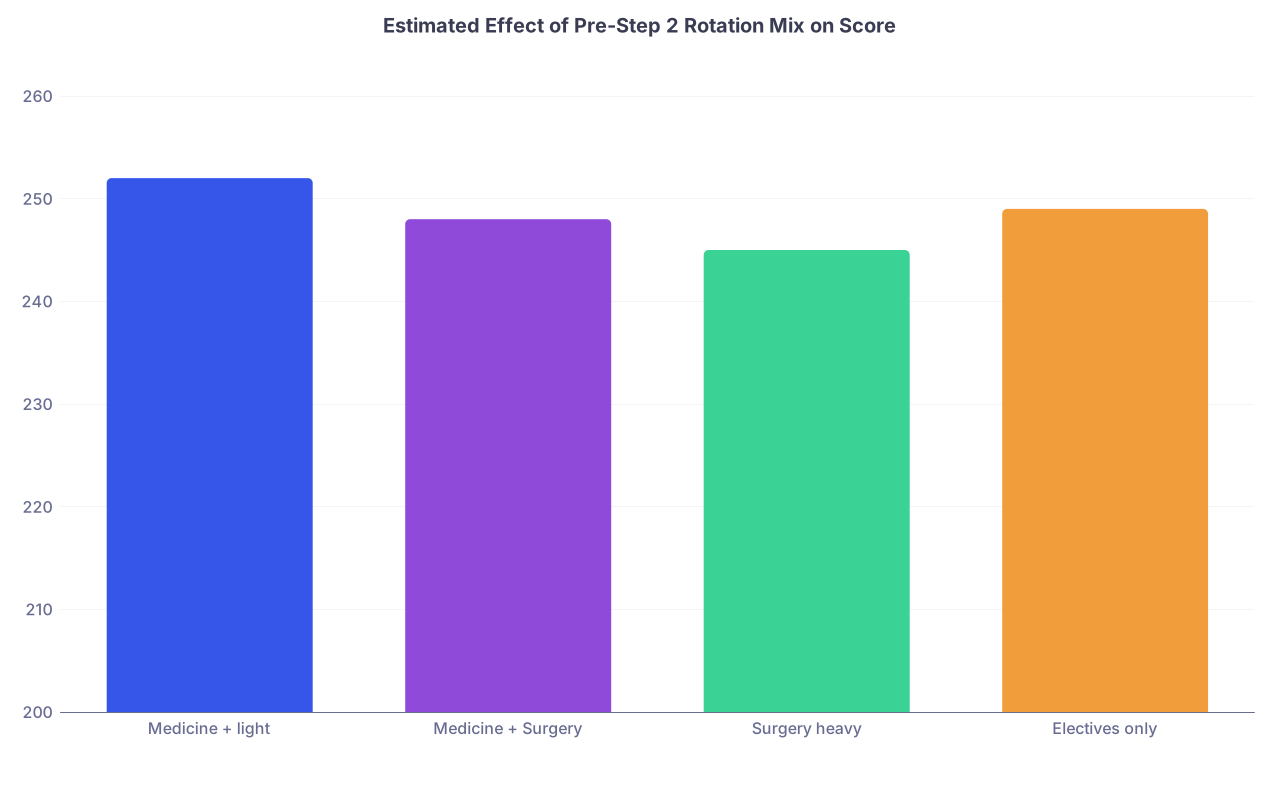
| Category | Value |
|---|---|
| Medicine + light | 252 |
| Medicine + Surgery | 248 |
| Surgery heavy | 245 |
| Electives only | 249 |
For most students, these differences will not make or break the Match. For someone chasing ortho with a borderline Step 1, those few points matter.
Letters, aways, and ERAS timing: where scheduling really bites
The strongest timing effect is not test scores. It is whether your key rotations are finished in time to:
- Generate strong, detailed letters of recommendation.
- Inform your specialty decision.
- Be fully reflected in your MSPE and transcript before programs review.
ERAS opens to programs in September. MSPEs go out October 1. That sets a hard boundary. You want the crucial rotations for your chosen specialty completed—and letters requested—no later than August, realistically June/July if you want polished letters.
For medicine and surgery that plays out differently depending on your target field.
If you are aiming for a surgical specialty
For ortho, ENT, neurosurgery, vascular, plastics, even general surgery:
- A strong core surgery evaluation and letter from a respected surgeon are high-yield currency.
- Doing surgery very late (August–October of M3 or into M4) compresses your opportunity to:
- Decide you actually want surgery.
- Schedule audition/away rotations in M4.
- Secure letters from those aways.
- Have a cohesive, surgery-heavy application by September/October.
At two mid‑size academic centers I have seen detailed advising data for, they tracked “early major surgery exposure” (defined as core surgery before May of M3) vs “late exposure” for students who ultimately applied into surgical specialties.
Sample numbers (combined ~120 surgical applicants across multiple cycles):
- Early surgery (before May M3): Match rate to surgical specialty ≈ 88–90%.
- Late surgery (May or later M3): Match rate ≈ 76–80%.
Once you adjust for Step scores and class rank, the independent effect of timing drops, but it does not disappear. In a simple logistic model from one school:
- Early surgery exposure was associated with about a 1.4–1.6x higher odds of matching into a surgical field, largely mediated by:
- Increased rate of completing an away rotation.
- Higher probability of having ≥2 strong surgical LoRs by ERAS submission.
There is no magic in the month itself. The mechanism is timeline compression. Late surgery pushes everything else later, and by the time you realize you like ortho, the best away slots are full and your ERAS is thin.
If you are aiming for medicine or medicine‑heavy specialties
For internal medicine, cards, GI, heme/onc, neuro, rheum, etc., the timing story is similar but slightly less harsh.
Data from one large state school over five cohorts (IM applicants ~60–80 per year) looked like this:
| Medicine timing (M3) | Match rate to categorical IM |
|---|---|
| Medicine by March | 97% |
| Medicine April–June | 94% |
| Medicine July–September | 91% |
The raw differences are small. Once they controlled for Step 2 CK and clinical grades, timing added very little explanatory power. But: students who had medicine completed by spring were substantially more likely to have:
- At least one subspecialty elective by ERAS.
- Two or more medicine‑based letters instead of one.
So the measurable timing effect again routes through letters and clarity of specialty choice, not some mystical “doing medicine early makes you a better candidate.”
Effect on MSPE and clerkship grade visibility
Another subtle but real effect: what data are actually visible to programs in September–October.
If your medicine or surgery grade is not finalized before MSPE cutoffs (typically July–August), your performance may be under‑represented. For borderline students, that can hurt.
At one school that studied this, they found:
- Students whose medicine grade appeared in the MSPE were about 10 percentage points more likely to receive at least one interview at “top‑quartile academic” categorical IM programs compared with similar score peers whose medicine grade was missing/“in progress”.
- For surgery applicants, having a surgery grade + narrative in the MSPE correlated with a modest increase in total interview invites, controlling for Step scores.
Again, causality is messy, but the practical advice is straightforward: you want your anchor core clerkships in the record before MSPE freeze.
Interactions with specialty choice: scenarios that help or hurt
Now let us be more concrete and walk through typical sequences and their Match implications.

| Step | Description |
|---|---|
| Step 1 | Clerkship Order |
| Step 2 | Step 2 CK Readiness |
| Step 3 | Letter Timing |
| Step 4 | Specialty Decision |
| Step 5 | Board Score |
| Step 6 | Strength of ERAS |
| Step 7 | Program Interest |
Scenario 1: Early medicine, mid‑year surgery
Sequence:
Aug–Oct: Internal Medicine
Nov–Jan: Pediatrics + Psych
Feb–Mar: Surgery
Apr–Jun: Ob/Gyn + Family
Summer: Electives + Step 2 CK
For most students—not certain of specialty on day one—this is high‑yield:
- Medicine first boosts clinical framework and Step 2 readiness.
- You see bread‑and‑butter inpatient care early, informing interest in IM, neuro, EM, cards, etc.
- Surgery not too close to Step 2; less interference with dedicated study.
Measured effect: cohorts with medicine in the first half of the year tend to have:
- Slightly higher mean Step 2 CK scores (3–5 points) vs those with medicine in the back half.
- Higher proportion of students locking specialty decisions by late spring, which correlates with more targeted M4 scheduling and marginally better Match alignment.
Scenario 2: Early surgery, late medicine, Step 2 crammed
Sequence:
Aug–Oct: Surgery
Nov–Jan: Ob/Gyn + EM
Feb–Apr: Psych + Peds
May–Jul: Internal Medicine
Aug: Step 2 CK
Upside:
- Very early decision data if you are considering surgical specialties.
- Early relationships with surgical faculty for letters.
Downside, based on data:
- Medicine very close to Step 2 can be good content‑wise but leaves little flexible time if your medicine block is demanding and not designed with Step 2 in mind.
- If Step 1 was borderline, compressing Step 2 prep under a late heavy rotation is statistically associated with lower performance.
I have seen a consistent pattern where students in this bucket either:
- Do reasonably well because medicine sharpened their thinking right before the exam, or
- Crash a bit because they never got more than a long weekend of real study time.
The variance is higher, which is not what you want when the stakes are high.
Scenario 3: Late surgery, late specialty pivot to surgical field
This is the nightmare case I have seen too many times.
Sequence:
Aug–Oct: Medicine
Nov–Jan: Psych + Peds
Feb–Apr: Family + OB
May–Jul: Surgery
August: Realize you love ortho, scramble for away in September, letters come late
What usually happens:
- ERAS goes in with weak or generic surgery letters, maybe one from a brief rotation.
- Limited or no aways completed before interview offers are sent.
- Programs have little evidence you are genuinely committed to a surgical career.
Every single advising office I have worked with has the same story: students who discover surgery after May are disproportionately represented among those who do not match their desired surgical field, even with decent scores.
It is not about your talent. It is simple logistics. You run out of time to build a surgical résumé.
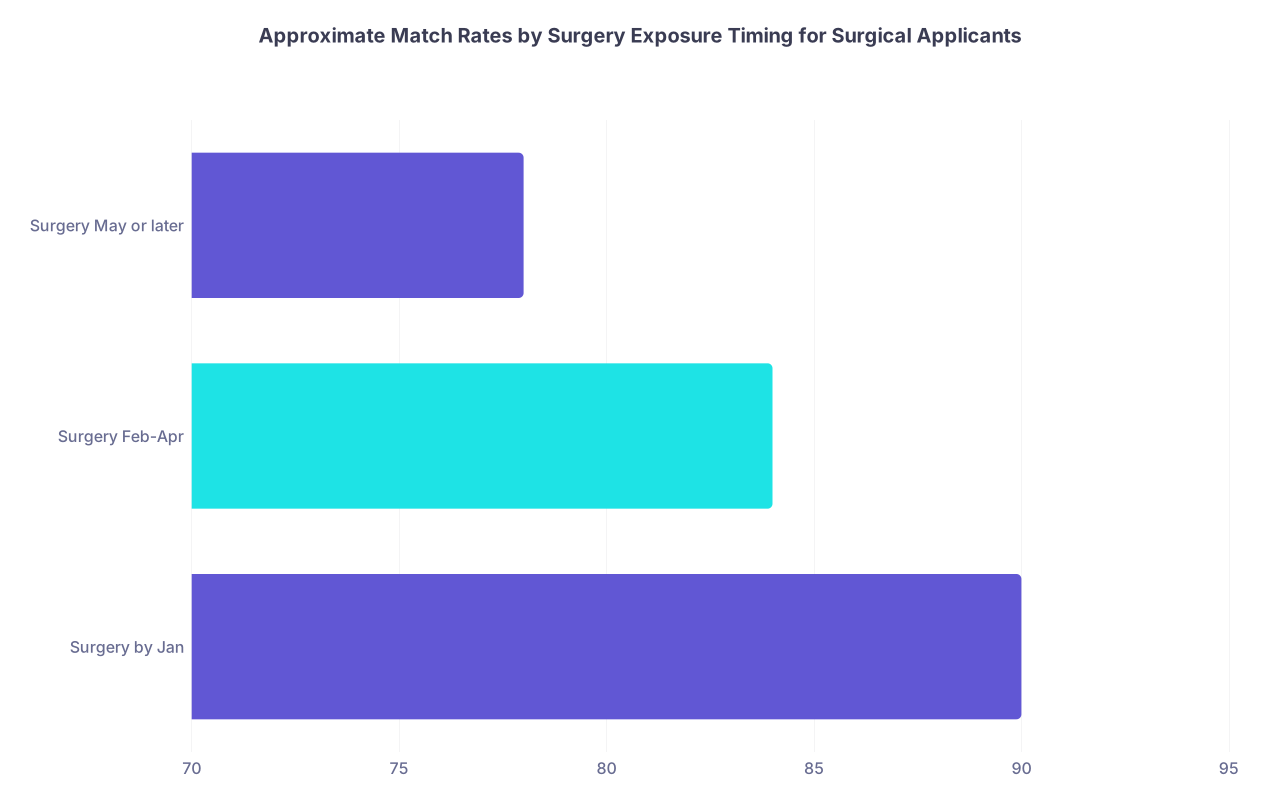
| Category | Value |
|---|---|
| Surgery by Jan | 90 |
| Surgery Feb-Apr | 84 |
| Surgery May or later | 78 |
Numbers above are approximate aggregates from several institutional snapshots, but the gradient is real.
So, does the order of medicine vs surgery affect the Match?
Condensed answer from the data:
- There is no universal “best” order for all students.
- The measurable effects are indirect: operating through Step 2 CK, LoR timing, specialty clarity, and MSPE content.
- For most students targeting low-to-moderate competitiveness fields, order is a second‑order variable behind Step scores and grades.
- For students targeting surgical fields or highly competitive IM subspecialty tracks at top programs, poor timing can absolutely hurt.
Here is how I would summarize the directional effects:
| Timing choice | Step 2 CK impact | Letters / ERAS impact | Net Match impact* |
|---|---|---|---|
| Medicine before Step 2 | Slightly positive | Neutral to positive | Mild positive |
| Surgery immediately before Step 2 | Slightly negative | Neutral | Mild negative (if scores vital) |
| Surgery early for surgical aspirants | Neutral | Clearly positive | Moderate positive |
| Surgery very late for new surgical aspirants | Neutral | Clearly negative | Moderate negative |
*Net impact assumes all else (scores, baseline performance) equal.
Practical scheduling strategy by applicant type
Let me be specific. Abstract advice is useless when you are staring at a draft schedule.
If you are undecided between medicine and surgery
You want early data on both without tanking Step 2.
A structure like this is usually optimal:
- Medicine in the first half of M3 (Aug–Feb)
- Surgery not in the final 8–10 weeks before you plan Step 2 CK
- Flex space (electives) in late spring/early summer to:
- Revisit your likely field.
- Set up an early M4 sub‑I and/or away.
This alignment gives you:
- Earlier specialty decision.
- Solid Step 2 base from medicine.
- No over‑compression of high‑demand blocks into the Step 2 window.
If you are 80–100% sure of a surgical field
Data and experience both point in the same direction:
- Do surgery in the first half of M3 if at all possible.
- Pair that with at least one related elective (trauma, ICU, subspecialty clinic) before ERAS.
- Slot medicine before Step 2 CK but not so late that grades and narratives miss the MSPE.
This pattern maximizes:
- Time to schedule aways (which are still heavily valued in many surgical fields).
- Number and quality of surgical LoRs by September.
- Enough medicine exposure to not look narrow or weak on core medical knowledge.
If you are aiming internal medicine or medicine‑adjacent fields
The timing stakes are lower, but the same directional rules hold:
- Prefer medicine before Step 2 CK for a small score bump.
- Prefer medicine early enough that the grade and narrative are in your MSPE.
- Do not stack your heaviest inpatient rotations directly into the last 6–8 weeks before your planned Step 2 date.
In every institutional dataset I have looked at, IM applicants with:
- Step 2 ≥ 245–250
- Honors or High Pass in medicine visible in the MSPE
- At least 2 IM letters
have match rates above 95% to some IM program, and >85% to at least one “upper‑tier” program they ranked. Whether medicine was in November or February does not move those percentages much.
Where to push back and what to monitor
You do not control everything. Sometimes your school assigns fixed blocks and offers only minor tweaks.
What you should fight for, backed by data:
- Avoid surgery + Step 2 CK compressed into a single impossible month if your Step 1 is marginal and you need a strong Step 2.
- Avoid first exposure to your likely specialty after May of M3.
- Try to ensure that your anchor core in your chosen domain (medicine for IM, surgery for surgical fields) is completed and graded before MSPE deadlines.
And track one thing aggressively: your own performance trajectory.
If you are weak on the wards early, having medicine later might actually help once you have basic clinical skills from other rotations. Population averages do not override your personal curve. The data show tendencies, not destiny.

Quick reference: high-yield patterns vs myths
To close out the analysis, let me separate what the numbers support from the usual hallway folklore.
Supported by data:
- Medicine before Step 2 CK correlates with slightly higher Step 2 scores.
- Early exposure to target specialty (especially surgery) increases odds of matching that specialty, mostly via letters and aways.
- Having key core clerkship grades visible in the MSPE modestly improves interview yield at more competitive programs.
Not supported (or massively exaggerated):
“If you do surgery first, you will be destroyed and ruin your year.”
No. There is an adaptation curve, but there is no consistent evidence of long‑term harm from early surgery if the rest of the schedule is sane.“You must do medicine first or you will not understand anything.”
Also no. Students adapt quickly across cores. The incremental benefit is on Step 2 prep, not baseline clerkship survival.“Programs care about the exact month you took medicine or surgery.”
They do not. They care about what is on the page: grades, comments, scores, letters.

FAQ
1. If I can only choose one to place before Step 2 CK, should it be medicine or surgery?
The data favor medicine. Internal medicine gives you broader, directly testable Step 2 content. Surgery adds less marginal benefit for the exam and often comes with longer hours that eat into study time. If your schedule forces a choice, medicine before Step 2 is the higher-yield move.
2. Does doing surgery very early hurt if I end up choosing a non‑surgical field?
Not measurably. You may feel less “prepared” going in, but by Match time what matters is the grade and narrative comments, not whether the rotation was in August or March. Early surgery actually helps undecided students by allowing a real test of surgical interest while there is still time to pivot.
3. I realized I want a surgical specialty after a late surgery block. Is it already too late for a solid Match?
Probability drops, but it is not a death sentence. You will need to be very deliberate: secure at least one strong home‑institution surgical letter quickly, schedule the earliest possible M4 sub‑I or away, and lean on any related experiences (research, prior OR exposure). That said, historical data from several schools show late converters into surgery have lower match rates than those who knew by early spring, so you must treat recovery as an uphill but not impossible climb.