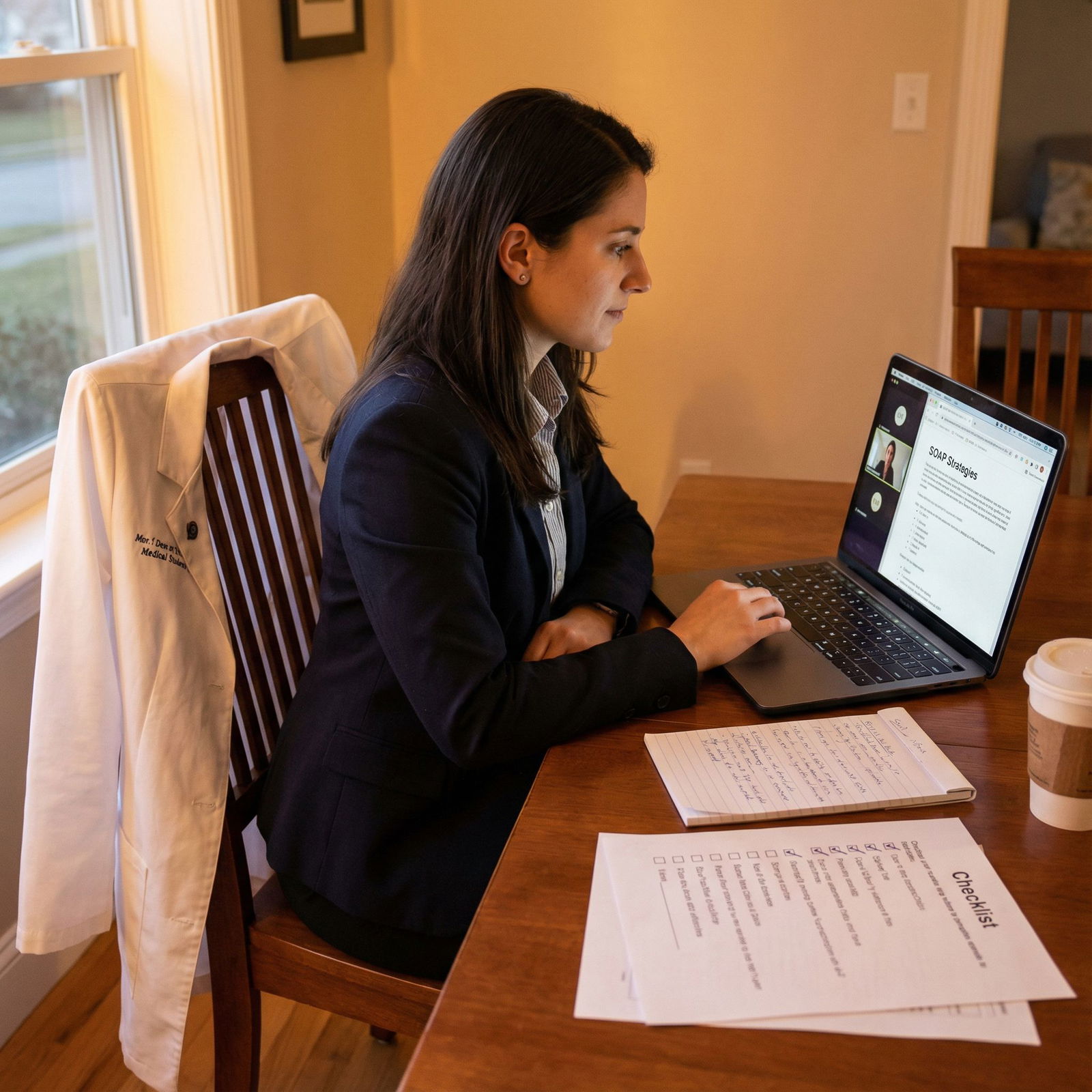
The fastest way to ruin your SOAP is to mismanage Monday.
Most people think the danger is bad applications or weak letters. On SOAP Monday, the real killer is time. You get one chaotic day to set up the entire rest of your week. If you blow it, you will spend Tuesday through Thursday paying for mistakes you could have prevented in the first four hours.
Let me walk you through the time‑management traps I’ve watched people fall into over and over—then show you exactly how to avoid them.
1. Treating Monday Morning Like a Normal Workday
SOAP Monday is not business as usual. If you treat it like any other admin day, you’re already in trouble.
Here’s what people do wrong:
They wake up “on time.” They check email. They chat with classmates. They hop on social media to see who matched and who didn’t. They respond to random messages. Suddenly it’s 11:15 am ET and they haven’t done the one thing that matters: preparing a concrete SOAP plan built around the actual SOAP time windows.
If you don’t structure your day around NRMP’s clock, you’re playing with fire.
| Category | Value |
|---|---|
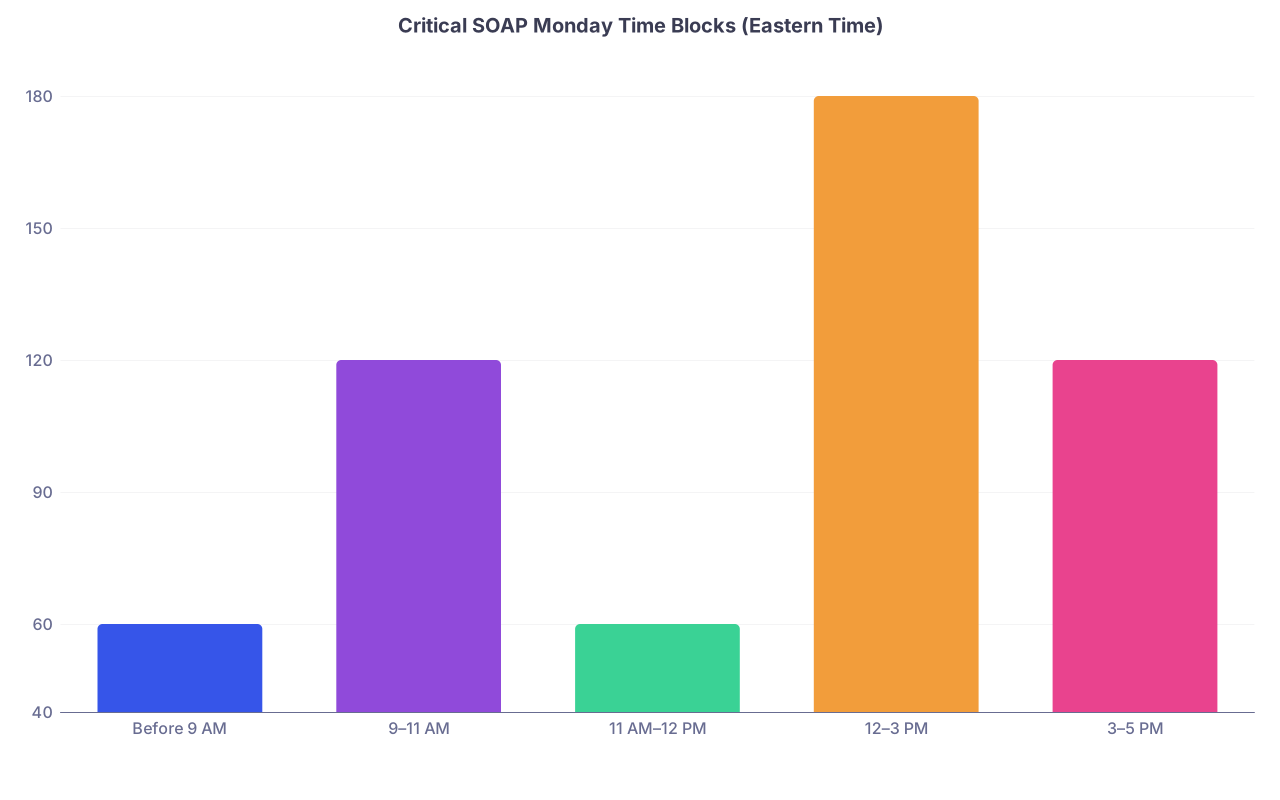
| Before 9 AM | 60 |
| 9–11 AM | 120 |
| 11 AM–12 PM | 60 |
| 12–3 PM | 180 |
| 3–5 PM | 120 |
The mistake: not protecting these blocks as sacred—
- Before 9:00 am ET: Triage, program list finalization, document checks
- 9:00–11:00 am: Unmatched status confirmation, reviewing unfilled list, aligning your targets
- 11:00 am–12:00 pm: Final program selection, drafting templates
- 12:00–3:00 pm: Submitting applications, customizing messages
- 3:00–5:00 pm: Follow‑up prep, communication systems, backup planning
If you treat 9–11 am like “free time before applications open,” you’re misunderstanding what’s happening. You should be running a war room, not scrolling your phone.
Avoid this mistake by:
- Clearing the entire day in advance. No clinic, no moonlighting, no nonessential meetings. If your school tries to schedule a debrief or “support meeting” during core SOAP hours, say no or attend by phone with your laptop open and priorities straight.
- Setting alarms for each critical block. Not just the start of SOAP. Alarms at 8:30, 11:00, 12:00, 2:00, 3:00 pm as hard checkpoints.
- Telling family/friends you are unavailable during set windows. You aren’t being rude—you’re protecting your future.
On SOAP Monday, you are not “busy.” You are on call for your own career.
2. Wasting the 9–11 AM Window on Panic and Gossip
Here’s the most common scenario I see. It’s 9:10 am. The unmatched emails hit. A group chat explodes. You get on FaceTime with friends. People cry. People swear. Someone says they’re quitting medicine. Someone else starts speculating which programs are “definitely” going to SOAP.
By 10:45 am, your emotional tank is empty. Your plan? Barely started.
That two‑hour window is where serious applicants pull ahead. The mistake is letting it evaporate in panic and social noise.
What you actually need to use 9–11 am for:
- Confirming unmatched status and understanding what that means logistically
- Opening ERAS/NRMP and making sure PDWS, documents, and filters are working
- Clarifying your specialty hierarchy:
- Priority specialties you still want
- Fields you’re willing to enter
- Absolute no‑go specialties (decide now, not at 2:55 pm)
- Reviewing your pre‑built rough list of potential SOAP programs and adjusting based on the official unfilled list
If you’re doing this for the first time at noon, you’re behind.
Avoid this mistake by:
- Planning your emotional breakdown for Sunday night, not Monday morning. Brutal, but honest. Do your venting, crying, and “how did this happen” conversations before SOAP starts.
- Mute big group chats from 8:45 am to at least 1:00 pm. Keep 1–2 trusted people available, not 30 anxious classmates.
- Actually rehearsing the Monday flow the week before. Log in, click through NRMP/ERAS, open a dummy spreadsheet, walk yourself through how you’ll use each time block.
You cannot control whether you unmatched. You can absolutely control whether you burn half of Monday on emotional chaos.
3. Not Having a Pre-Built Targeting Framework
The worst time to decide “what kind of programs am I willing to apply to?” is while the clock is ticking down to 3:00 pm.
People make two opposite—but equally dangerous—errors:
- They get stubbornly narrow: “I’m only applying to university categorical IM with robust research.”
- They go totally indiscriminate: “I’ll just apply to any open spot in anything that looks vaguely okay.”
Both are bad uses of time. And both come from not doing the thinking ahead of Monday.
You need a targeting framework that lets you sort unfilled programs quickly.
| Priority Level | Program Type | Include? |
|---|---|---|
| 1 | Categorical, preferred specialty | Always |
| 2 | Categorical, backup specialty | Usually |
| 3 | Transitional/Prelim, preferred specialty link | Selective |
| 4 | Community programs with red flags | Rare |
| 5 | Specialty you really do not want | Never |
The time‑management mistake here isn’t just “bad choices.” It’s decision paralysis. Every minute you spend arguing with yourself about one borderline program is a minute not spent sending a solid application to a place you’d be happy to train.
Avoid this mistake by (before Monday):
- Deciding your non‑negotiables: geography constraints, absolute no‑go specialties, serious program red flags (e.g., recent probation, notorious malignant culture).
- Ranking specialties: “would love,” “would accept,” “would strongly prefer to avoid,” “no.”
- Building a simple spreadsheet with columns for specialty, program type (categorical/prelim), state, your priority level, and a quick notes column.
On Monday, your job is not to start thinking. It’s to execute a plan you already thought through.
4. Underestimating How Long Customization Takes
SOAP isn’t the time to send 45 carbon‑copy, generic applications. Programs can smell desperation and copy‑paste language a mile away.
But here’s where people wreck their schedule: they try to write 35 completely bespoke personal statements from scratch on Monday afternoon. Impossible. They either:
- Don’t finish on time
- Submit rushed, incoherent content
- Or sacrifice targeted programs because they’re stuck wordsmithing paragraph three on one application
You need a modular approach to customization.

The mistake: not preparing templates and reusable components beforehand.
What should already exist before SOAP Monday:
- 1–2 solid, adaptable base personal statements per specialty you might consider
- A bank of 6–10 short, interchangeable sentences highlighting:
- Ties to specific regions
- Fit with community programs vs academic programs
- Interest in underserved care or particular populations
- A list of program‑agnostic strengths that you can plug in anywhere
Then, on Monday, customization becomes:
- Updating program name and location
- Adding 1–2 sentences that specifically fit that program type/setting
- Checking for glaring tone errors (e.g., telling a community hospital you’re obsessed with NIH‑funded bench research)
Time‑wise, you’re aiming for 10–15 minutes per program for targeted edits. Not 45.
Avoid this mistake by:
- Blocking a half‑day the week prior to build these templates. Yes, it hurts to prepare for SOAP before Match, but it’s better than scrambling.
- Creating a simple checklist for each application:
- Correct program name
- Specialty clearly matches position
- 1–2 sentences linked to setting/type
- No obvious copy‑paste artifacts
- Using “good enough” as a standard. Perfect but late is useless in SOAP.
Customization is essential. Perfectionism on Monday is deadly.
5. Ignoring Time Zones and Response Logistics
Another subtle way people sabotage themselves: forgetting that programs, coordinators, and faculty are spread across time zones.
You’ll see this pattern: someone on the West Coast spends all afternoon carefully crafting outreach emails… to East Coast programs that effectively stopped reading email for the day an hour ago.
Or they plan to “follow up later tonight” with programs that closed offices three hours earlier.
| Category | Value |
|---|---|
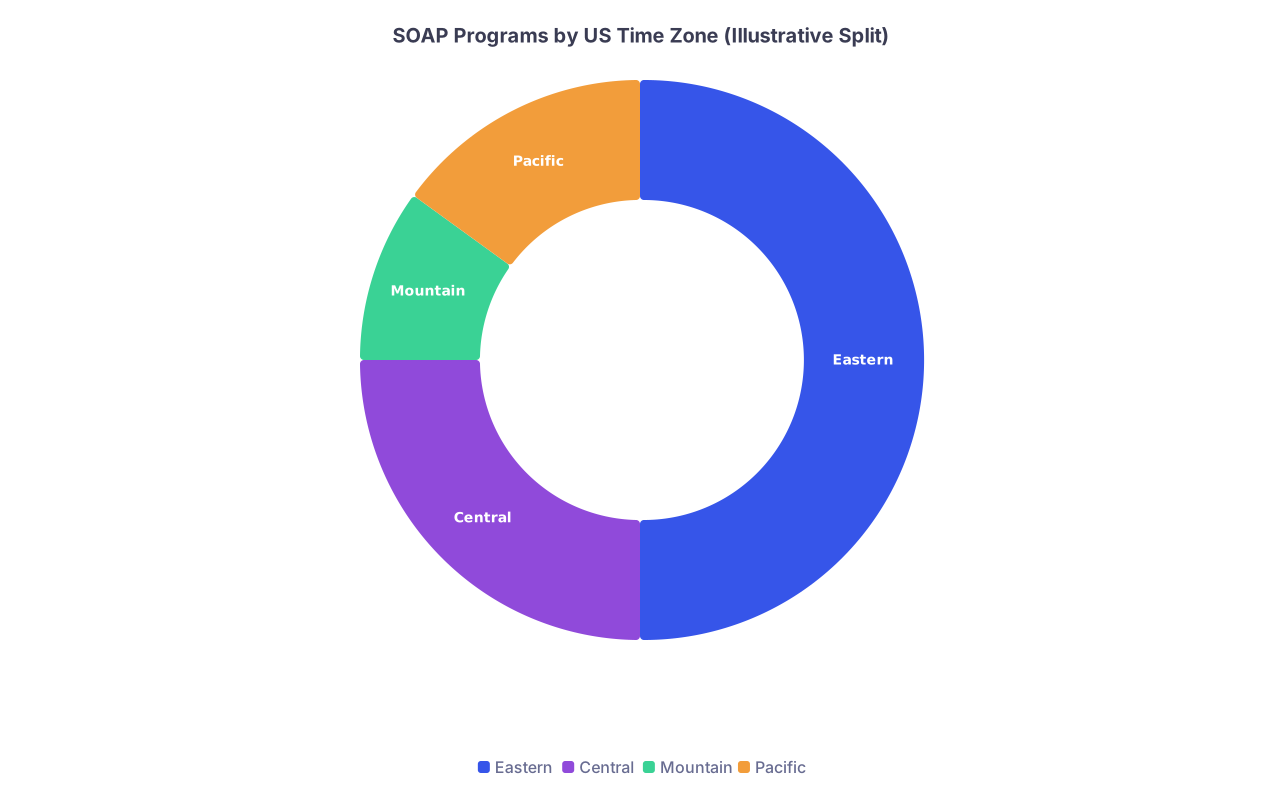
| Eastern | 50 |
| Central | 25 |
| Mountain | 10 |
| Pacific | 15 |
Your follow‑up planning needs to be built around time zones.
The mistake: treating 3–5 pm in your local time as the only critical window, instead of mapping it to the program’s workday.
Avoid this mistake by:
- Adding a “TZ” column to your spreadsheet for each program (ET, CT, MT, PT).
- Prioritizing outreach to East Coast programs earlier in the afternoon, then moving west as the day goes on.
- Understanding that coordinators are humans—most of them are not answering new calls at 4:55 pm local time on SOAP Monday.
Bonus error here: not having a standard call script or email template ready. If you’re writing cold emails from scratch at 4:02 pm ET, you’re losing time you do not have.
Have this ready:
- One short, professional email template expressing interest and confirming application submitted
- A 3–4 sentence call script if you’re advised to reach out (only when appropriate and allowed)
Then it’s plug‑and‑send, not creative writing hour.
6. Letting Tech Problems Eat Your Day
SOAP Monday is when every weak link in your tech setup will break.
I’ve seen:
- People locked out of ERAS because of multi‑factor auth issues
- Old laptops deciding that Monday is the perfect moment for a forced update
- Internet outages in campus housing
- Password reset emails going to an account the student hasn’t checked in a year
If it can break, SOAP will pull it out of hiding.

| Step | Description |
|---|---|
| Step 1 | Log in to ERAS |
| Step 2 | Try password reset |
| Step 3 | Email to old account |
| Step 4 | Call support on hold |
| Step 5 | Miss prime planning window |
| Step 6 | MFA works |
The mistake: not doing a full tech rehearsal days before SOAP.
Avoid this mistake by:
- Logging into every needed system (NRMP, ERAS, email, school portal) the week before and again on Sunday.
- Turning off automatic updates and restarts on your main device for SOAP week.
- Having:
- A backup device charged and ready (laptop or tablet)
- A hotspot option if your home Wi‑Fi dies
- Important phone numbers (IT, your dean’s office, NRMP help line) written down, not just bookmarked
And the big one: do not wait until 11:55 am to test whether your document uploads and filters are working correctly. If ERAS is crawling because thousands of unmatched applicants are all hitting it at once, you’ll wish you tested everything at 9:30.
7. Failing to Set Clear Decision Cutoffs
SOAP Monday is full of micro‑decisions:
- Do I apply to this prelim spot or hold for potential categorical?
- Do I expand to FM or keep IM‑only?
- Do I include this borderline program with some bad reviews?
Most people drag these questions on way too long. They keep everything “open” while the clock runs down. At 2:45 pm, they’re still debating their overall strategy instead of filling in final gaps.
You need time‑based cutoffs, not emotion‑based ones.

Examples of useful cutoffs:
- By 12:30 pm ET: final decision on which specialties you’re applying to during SOAP
- By 1:30 pm: at least 50–60% of your 45 slots identified and tentatively selected
- By 2:15 pm: all must‑apply programs locked in
- 2:15–2:45 pm: fill remaining slots with “would accept” options
- Last 15 minutes: check for obvious errors, not change your whole plan
The mistake is trying to solve strategic questions at 2:50 pm. That is not strategy time; that is error‑check time.
Avoid this mistake by:
- Writing your cutoffs down on paper before the day starts. Put it where you can’t ignore it.
- Giving someone you trust (advisor, mentor) permission to push you to commit when you start waffling past a cutoff.
- Accepting that some decisions will feel uncomfortable. That’s normal. Waiting for perfect certainty is how people end up submitting 22/45 slots or missing obvious opportunities.
You will not “feel ready” to lock your choices. You lock them anyway—on schedule.
8. Forgetting About Food, Breaks, and Cognitive Bandwidth
This one sounds trivial until you watch someone at 2:30 pm, shaky, dehydrated, and trying to decide between two specialties that will define the next 3–7 years of their life.
They skipped breakfast. Drank three coffees. Never got up. Forgot lunch.
By mid‑afternoon, they’re not making reasoned decisions. They’re just trying not to pass out.
SOAP Monday is a cognitive endurance event. The time‑management mistake here is thinking “I don’t have time to eat or breathe” when in reality, a 7‑minute break will probably save you from a 70‑minute mistake.
Avoid this mistake by:
- Preparing ready‑to‑eat food Sunday night. Protein bars, sandwiches, nuts, anything you can grab and eat without cooking.
- Scheduling two short breaks into your calendar (e.g., 10 minutes around 10:30, 10 minutes around 1:30). Set timers.
- Using breaks intentionally: stand, stretch, drink water, do not go on social media or open that one toxic group chat.
You’re not a machine. Treating your brain like disposable hardware is how you end up applying to the wrong program or missing a field you would’ve actually liked.
9. Over‑Involving Too Many People in Real Time
Here’s a subtle but nasty time sink: involving five different people in every decision on Monday.
“I’ll just run this by my mentor.”
“And my classmate.”
“And my sibling who’s a lawyer.”
“And my parents.”
“And the specialty advisor.”
That’s five different communication threads, five different sets of opinions, and zero consistent plan. Every message you send for reassurance is time not spent executing.
You do need input. But you don’t need a committee.
The mistake: turning SOAP Monday into a group project.
Avoid this mistake by:
- Deciding your core decision circle ahead of time: 1–2 people max who understand SOAP and your priorities.
- Doing a pre‑SOAP call with them to outline your framework, so Monday is about quick clarifications, not building your plan from scratch.
- Giving them specific roles: “I’ll text you only if I’m stuck between two options” vs “please approve every program I pick.”
The more people you try to keep updated in real time, the less time you have to actually submit strong applications.
10. Not Capturing What You’ve Done As You Go
On a day where you might look at dozens of programs, multiple specialties, and lots of moving pieces, your memory will not keep up.
People waste an absurd amount of time on:
- Re‑checking whether they already applied to a program
- Forgetting why they ruled out certain spots and reconsidering them over and over
- Getting confused about which template they used for which application
A simple, ugly spreadsheet would fix this. But many don’t build one, or they build it too late.
Avoid this mistake by:
- Keeping a live document open all day with columns for:
- Program name
- Specialty
- Time added to list
- Status (applied / rejected by you / maybe)
- Notes (e.g., “geography no,” “previous interview,” “program on probation”)
- Updating it immediately after each major decision, not “later.”
- Using filters to sort by priority so you can see at a glance how many of your 45 slots are high‑value versus “filler.”
If your brain is your only tracking system, you will lose track. And you will lose time backtracking.
FAQ (Exactly 5 Questions)
1. How early should I start planning for SOAP Monday if I think I might not match?
Start at least 2–3 weeks before Match Day. That doesn’t mean you’re “planning to fail.” It means you’re mature enough to have a contingency plan. Build your specialty priorities, draft personal statement templates, and set up your spreadsheet and tech checks in that window. By the Sunday before SOAP, you should be rehearsing the exact Monday flow, not inventing it.
2. If I feel overwhelmed Monday morning, is it better to pause or push through?
Pause—but in a controlled way. Take a 5–10 minute break, step away from screens, breathe, drink water, and then come back to your written plan. Do not take an unstructured 45‑minute spiral through text messages and social media. Short, intentional breaks protect your decision‑making. Unbounded breaks wreck your schedule.
3. How many programs should I realistically plan to customize on Monday?
Aim to fully customize your highest‑priority 15–20 programs and use lighter, modular customization for the rest. All 45 should be clean, accurate, and at least minimally tailored by specialty and setting, but you don’t have time for 45 ultra‑bespoke essays. Your time is better spent getting more strong fits in rather than obsessing over perfect wording for a handful.
4. Should I spend time calling programs on SOAP Monday or just focus on applications?
Applications first, always. If your institution or specialty leadership specifically advises limited, targeted outreach, that comes after your core applications are in and only during reasonable local business hours for those programs. Random cold calls to every program with an open spot is a bad use of time and can annoy coordinators.
5. What’s the single biggest time‑management decision that helps on SOAP Monday?
Setting and honoring hard time cutoffs for big decisions. For example: “By 12:30 pm my list of specialties is final; by 2:15 pm my must‑apply programs are locked.” Those cutoffs prevent you from endlessly re‑debating your whole strategy when you should be executing. Without those, you drift. With them, you move.
Here’s what I want you to remember:
- SOAP Monday is a logistics and time‑management test as much as it is an academic one.
- You will not “find time” for planning in the middle of the chaos—you build the plan before and then protect it hour by hour.
- The applicants who avoid these time traps don’t just feel more in control; they usually end the week with better options on the table.