Evaluating Fellowship Opportunities After Your Surgical Residency: What to Consider
Completing a surgical residency marks a major transition point in your training and career development. As residency winds down, you face a pivotal choice: enter practice directly, or pursue additional specialization through a surgical fellowship.
For many surgeons, a fellowship is a strategic next step. It can sharpen advanced operative skills, open doors to niche practices, enhance your academic profile, and shape your long-term career trajectory. At the same time, committing to one or more additional years of training affects your finances, geography, lifestyle, and timeline to independent practice.
This guide provides a structured approach to evaluating fellowship opportunities after surgical residency. It will help you reflect on your goals, understand core features of fellowship programs, navigate the application process, and balance personal and professional growth during the residency transition.
Understanding Surgical Fellowships and Their Role in Your Career
What Is a Surgical Fellowship?
A surgical fellowship is a period of subspecialty training completed after a core surgical residency. It provides focused experience in a narrower area of surgery—examples include:
- Cardiothoracic surgery
- Vascular surgery
- Surgical oncology
- Minimally invasive and bariatric surgery
- Pediatric surgery
- Transplant surgery
- Trauma and critical care
- Colorectal surgery
- Hand surgery
- Breast surgery
- Orthopaedic subspecialties (e.g., sports, spine, joints, trauma)
Most surgical fellowships last one to three years, depending on the discipline and whether research years are built in. Some are accredited by bodies such as the ACGME, while others are non-ACGME but well recognized in specific niches.
Why Pursue a Fellowship?
Your decision to seek further specialization should align with your long-term career development strategy. Fellowships can:
- Increase clinical expertise: Gain mastery in complex procedures, technology (e.g., robotics), or disease-specific management.
- Strengthen your job market position: Many employers now prefer or require fellowship training for certain roles or service lines.
- Enable academic careers: For those pursuing research and teaching, a fellowship often provides the foundation for grant-writing, publications, and academic promotion.
- Shape your clinical focus and lifestyle: Different subspecialties carry varying call patterns, case types, patient populations, and practice locations.
- Support leadership aspirations: Training in high-demand specialties can set you up for leadership in departments, service lines, or health systems.
In short, your choice of surgical fellowship can significantly influence your eventual practice type, geographic options, compensation potential, and scope of work.
Clarifying Your Career Goals Before Choosing a Fellowship
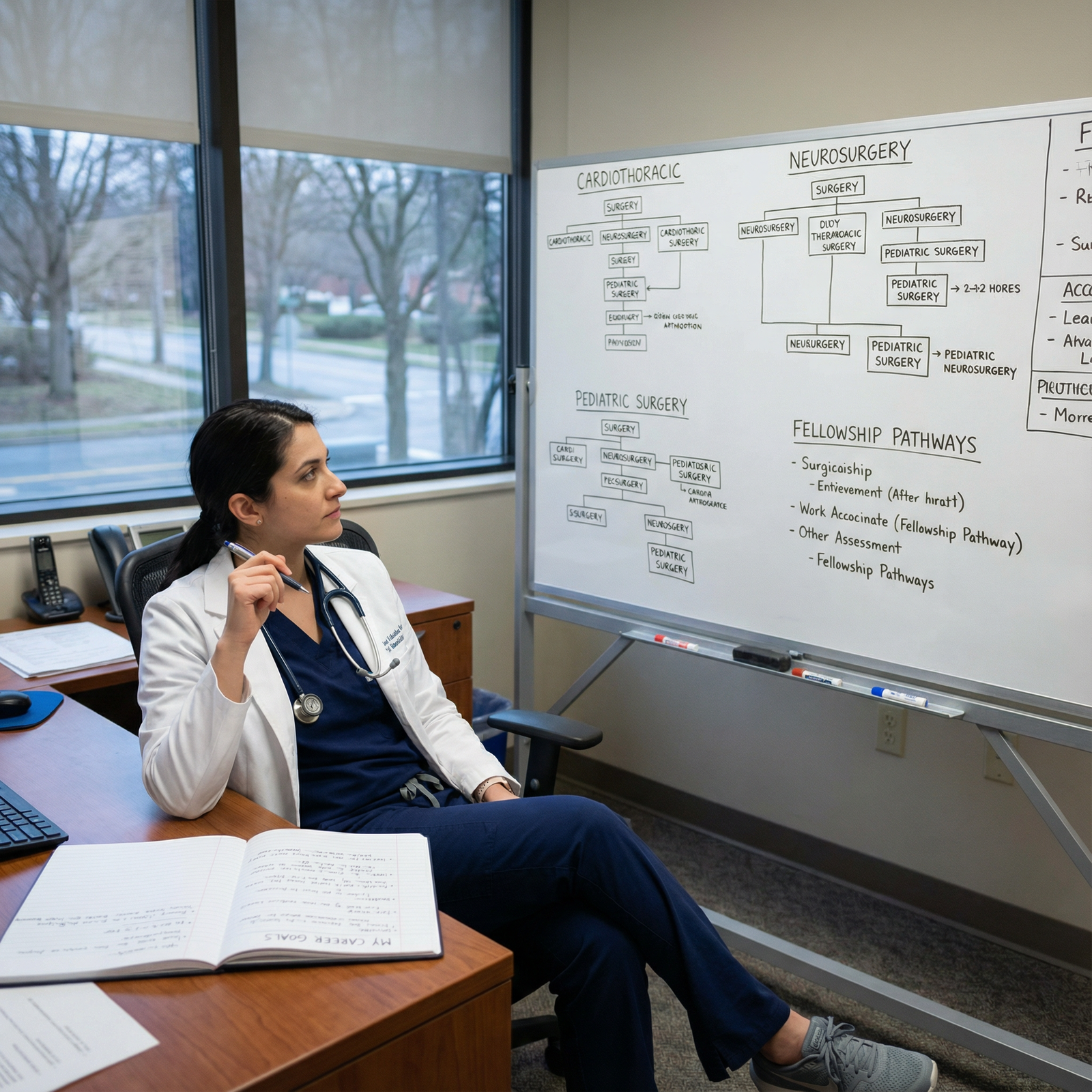
Before you compare specific programs, get clear on what you want your career to look like 5–10 years after residency. This reflection will help you decide whether to pursue a surgical fellowship at all—and if so, which kind.
Key Questions to Guide Your Decision
1. What is your ideal practice setting?
Ask yourself:
- Do you envision a primarily academic career (research, teaching, complex referrals)?
- Are you drawn to private practice or large health system employment, where volume and efficiency may predominate?
- Would you consider a hybrid role—e.g., community practice with a university affiliation?
Certain fellowships (e.g., surgical oncology, pediatric surgery, transplant) are more tightly linked to academic or quaternary centers. Others (e.g., minimally invasive, breast, colorectal) are in demand across academic and community settings.
2. What type of work do you enjoy most?
Reflect on your residency experiences:
- Which rotations left you energized vs. drained?
- Do you prefer long, complex cases or shorter, higher-volume operations?
- Are you drawn to acute care and trauma, or more elective, planned surgery?
- Do you enjoy caring for critically ill patients, or would you rather limit ICU exposure?
Your genuine interests should outweigh perceived prestige. You are more likely to thrive long-term in a subspecialty that matches your temperament and preferred pace.
3. How important are research and teaching to you?
If you want:
- A career as a clinician-investigator
- To lead clinical trials or outcomes research
- An academic appointment with substantial protected time
…then choosing a fellowship with robust research infrastructure, mentorship, and funding pathways is critical. On the other hand, if you primarily want to be a high-volume clinician, focus on programs known for operative exposure and efficient, practice-ready training.
4. What lifestyle and geographic constraints do you have?
Consider:
- Family or partner needs (career, schooling, support systems)
- Willingness to relocate for training or long-term practice
- Desired call schedule and work-life balance
- Tolerance for nocturnal or high-intensity emergency work
For example, trauma/critical care or transplant may involve frequent nights and unpredictable hours, whereas some elective subspecialties may offer more predictable schedules.
5. What doors will this fellowship open—or close?
Each surgical fellowship both expands and narrows your future options:
- Some fellowships are highly niche, with limited job markets in certain regions.
- Others are broadly applicable, providing flexibility to pivot in practice focus.
- Talk to recent graduates about where they found jobs, in what settings, and how long their searches took.
Be sure the subspecialty aligns with your long-term aspirations rather than short-term trends or perceived prestige.
Core Characteristics to Evaluate in Surgical Fellowship Programs
Once you know your general direction, it’s time to evaluate specific fellowship opportunities. Beyond the specialty label, programs vary widely in training style, culture, and outcomes.
1. Program Reputation and Track Record
Reputation is not everything, but it matters—particularly for early career opportunities and academic positions.
Key considerations:
- Institutional prestige: Well-known academic centers may confer advantages in networking and national visibility.
- Faculty reputation: Are there leaders in the field? Guideline authors? Society presidents? Prolific researchers?
- Alumni success: Where are graduates practicing? How many obtained the type of job you want (academic vs. community, urban vs. rural)?
- Board and certification outcomes: For accredited fellowships, review board pass rates and case log completeness.
Use multiple sources: faculty mentors, alumni, national society contacts, and current fellows.
2. Case Mix, Curriculum, and Hands-On Training
The day-to-day training experience is the core of your fellowship.
Ask:
- Case volume and complexity
- What is the annual operative volume?
- Are fellows primary operators or mainly assistants?
- Is there sufficient exposure to the procedures you care most about (e.g., complex aortic cases, advanced laparoscopy, pediatric oncology)?
- Curriculum structure
- Is there a clear, progressive curriculum or is training more ad hoc?
- How are rotations organized (e.g., services, disease-based teams, off-service rotations)?
- Educational components
- Regular conferences, journal clubs, morbidity and mortality (M&M), simulation labs, skills courses?
- Access to specialty training modules (e.g., robotic surgery credentialing, endoscopy certification)?
Red flags include limited operative autonomy, competition with other fellows or senior residents for key cases, or unclear expectations about fellow responsibilities.
3. Research and Academic Opportunities
If research is part of your career development plan, evaluate:
- Availability of clinical databases, biostatistical support, and mentorship for projects.
- Track record of fellows publishing papers, presenting at national meetings, and obtaining grants or awards.
- Availability of dedicated research time vs. “research on your own time.”
- Opportunities to participate in clinical trials, quality improvement projects, or translational research.
Ask current fellows how many projects they are realistically able to complete and whether the program supports travel to present their work.
4. Call, Workload, and Culture
Fellowship is demanding, but culture and workload vary.
Consider:
- Call responsibilities
- In-house vs. home call?
- Frequency of nights and weekends?
- How often are fellows in the hospital overnight or post-call?
- Relationship with residents
- Is the fellow a true learner or primarily a service provider?
- How is case allocation handled between fellows and chief residents?
- Program culture
- Are faculty approachable and invested in fellow education?
- Is feedback constructive and consistent?
- Are there formal mechanisms to address issues?
Talk candidly with current and recent fellows. Ask what they would change about the program if they could.
5. Location, Resources, and Logistics
Geography and resources affect both your training and day-to-day life.
Consider:
- Cost of living and housing near the hospital
- Commuting time and transportation
- Availability of childcare and schools (if relevant)
- Proximity to family or support systems
- Institutional infrastructure (robotics platforms, hybrid ORs, ICU resources, multidisciplinary clinics)
While you will be extremely busy, your environment still matters for your well-being during this intense phase of career development.
Navigating the Fellowship Application Process Strategically
The fellowship application process is competitive and time-sensitive. Planning ahead during residency can markedly improve your options.
1. Building a Competitive Profile During Residency
Start early—ideally by your PGY-2 or PGY-3 year:
- Seek out mentors in your potential subspecialty.
- Get involved in research projects that are likely to lead to abstracts or publications before you apply.
- Take on leadership roles (chief resident, committee participation, quality improvement projects) that demonstrate initiative.
- Keep a meticulous case log and note particularly complex or interesting cases you might discuss during interviews.
2. Application Platforms and Timelines
Many surgical fellowships use formal match systems (e.g., NRMP, SF Match, specialty-specific matches), while others rely on independent applications.
Key steps:
- Identify the matching system and application deadlines for your chosen specialty early.
- Compile a timeline backward from the application deadline for:
- Finishing your CV
- Finalizing your personal statement
- Requesting letters of recommendation
- Submitting applications before peak deadlines
Missing an application cycle can delay your residency transition by a year, so treat timelines seriously.
3. Crafting an Effective Personal Statement
Your personal statement should:
- Clearly articulate why you are pursuing this specific surgical fellowship.
- Highlight key experiences that shaped your interest—cases, mentors, research, or patient encounters.
- Demonstrate insight into the future of the field and how you hope to contribute.
- Reflect your personality and values without resorting to clichés.
Tailor your statement to each program where feasible—note unique program features, faculty, or clinical strengths that align with your goals.
4. Securing Strong Letters of Recommendation
Strategic recommendation letters can significantly strengthen your application.
Aim for:
- 2–4 letters from surgeons who know you well, can comment specifically on your operative skills, judgment, work ethic, and professionalism.
- At least one letter from someone in your target subspecialty.
- If possible, a letter from a department chair or program director summarizing your performance in residency.
Provide your letter writers with:
- Your updated CV
- A brief summary of your career goals
- A list of programs you are applying to
- Plenty of lead time (at least 4–6 weeks)
5. Interview Preparation and Performance
Interviews are your chance to assess programs as much as they assess you.
Prepare to:
- Discuss your case experiences, including complications and what you learned.
- Explain your career goals and how their program fits into your development.
- Summarize your research projects succinctly and clearly.
- Ask meaningful questions about operative autonomy, feedback, fellowship outcomes, and culture.
Practice with mentors or peers. Be prepared for both standard questions and open-ended discussions. After each interview, document your impressions for later comparison when it’s time to rank programs.
Balancing Personal and Professional Growth During Fellowship
Choosing a surgical fellowship isn’t only about technical training; it’s also about setting yourself up for a sustainable, fulfilling career and healthy residency transition into independent practice.

Mentorship, Networking, and Career Development
Look for programs that:
- Provide formal mentorship structures—assigned mentors for clinical, academic, and career guidance.
- Encourage national society involvement (committee work, presentations, young surgeon groups).
- Support participation in courses, boot camps, and specialty meetings that expand your skills and network.
These connections can be crucial for job placement, letters for academic promotion, and ongoing collaboration long after fellowship ends.
Professional Identity and Autonomy
Fellowship is where many surgeons truly define their professional identity.
Consider:
- How much autonomy you will have in the OR and in clinical decision-making.
- Opportunities to teach residents and medical students, if you enjoy education.
- Whether you will participate in service development, protocols, or quality initiatives.
Programs that treat fellows as emerging colleagues rather than only as extra labor often provide better preparation for independent practice and leadership roles.
Work-Life Balance and Well-Being
Even during intense training, you should not neglect your health and relationships.
Evaluate:
- Program attitudes toward time off, vacations, and parental leave.
- Availability of wellness resources, mental health support, and peer support.
- Flexibility for major life events (weddings, births, family emergencies).
Burnout in surgery is real. A fellowship that models sustainable practice patterns and supports your well-being will better equip you for a long career.
Feedback, Evaluation, and Growth
Effective feedback is essential to your continued development.
Ask:
- How often are fellows formally evaluated?
- Is there a competency-based framework (e.g., milestones, EPAs)?
- How is feedback delivered—informally after cases, scheduled meetings, written evaluations?
- Are fellows able to provide upward feedback to improve the program?
Programs with a transparent, supportive feedback culture are more likely to help you close skill gaps and thrive.
Conclusion: Making a Thoughtful Decision About Fellowship Training
Pursuing a surgical fellowship after residency is a deeply personal decision with long-term implications for your specialization, practice setting, and lifestyle. Thoughtful evaluation of your goals, careful analysis of program characteristics, and strategic navigation of the application process can help ensure that your chosen path truly supports your career development.
As you consider your options:
- Be honest with yourself about what kind of work you love and how you want to live.
- Seek input from mentors, recent graduates, and current fellows—real-world experiences often reveal more than program brochures.
- Remember that “best” is not generic; the best fellowship for you is the one that aligns with your skills, values, and long-term vision.
Handled intentionally, fellowship training can transform you from a capable resident into a confident, specialized surgeon ready to lead, innovate, and provide exceptional care.
Frequently Asked Questions About Surgical Fellowships
1. Do I need a fellowship to have a successful surgical career?
Not necessarily. Many general surgeons and other specialists build highly successful, fulfilling practices without additional fellowship training. However:
- Certain fields (e.g., transplant, pediatric surgery, surgical oncology) essentially require a fellowship.
- In other areas, fellowship training may improve job prospects, case complexity, and earning potential. Your decision should be based on your desired practice scope, local job market, and personal interests rather than perceived pressure to subspecialize.
2. When during residency should I decide on a fellowship and start preparing?
Aim to narrow your interests by the middle of residency (PGY-3 for five-year programs). By then you should:
- Have rotated through potential subspecialties
- Identified at least one mentor in your area of interest
- Started or joined one or more related research projects
Formal preparation for the application process—drafting your CV and personal statement, requesting letters, and selecting programs—typically begins 9–12 months before fellowship start dates, depending on specialty-specific timelines.
3. How many fellowship programs should I apply to?
This depends on the competitiveness of your chosen field and the strength of your application. As general guidance:
- For highly competitive fellowships (e.g., pediatric surgery), applicants often apply broadly to many programs.
- For less competitive fields, a more targeted list may be appropriate.
Discuss your specific situation with mentors who understand your subspecialty’s landscape. In all cases, only apply to programs you would realistically consider attending.
4. How can I compare job prospects across different fellowships and subspecialties?
To understand job prospects:
- Review specialty society workforce reports and projections.
- Talk to recent graduates about their job search experiences.
- Ask programs for data on where fellows practice after graduation and how long it takes them to secure positions.
- Consider regional differences—some subspecialties are saturated in major cities but in demand in smaller markets.
Remember that job markets can change, so pair current data with your adaptability and willingness to relocate.
5. What if I’m undecided between two subspecialties?
If you are genuinely torn:
- Use remaining residency time to get additional exposure to both fields—elective rotations, shadowing, or research.
- Discuss pros and cons with mentors from each specialty, focusing on long-term lifestyle, case mix, and practice opportunities.
- Consider how each option aligns with your core values and what you enjoy day to day, not just perceived prestige or short-term trends.
In some cases, choosing a broader fellowship that maintains flexibility (e.g., minimally invasive surgery, trauma/critical care) can keep more doors open while you refine your interests.
By approaching fellowship decisions with clarity, curiosity, and strategic planning, you can make this residency transition a powerful step toward a rewarding surgical career.