
Navigating General Surgery Residency Choices: A Comprehensive Guide for Applicants
Choosing a general surgery residency is one of the most consequential decisions in your medical career. Beyond determining where you will live for the next five to seven years, your choice influences the type of surgeon you become, the patients you serve, and the career opportunities that are available to you afterward.
This Residency Guide is designed specifically for medical students and preliminary residents considering categorical General Surgery positions. It expands on the classic “program factors” list with practical, specialty-specific insights so you can evaluate programs with the mindset of a future surgeon.
Understanding General Surgery and Your Long-Term Goals
Before comparing individual programs, it helps to clarify what you want out of surgical training and what kind of surgical career you envision.
The Scope and Demands of General Surgery
General Surgery encompasses a broad range of operations and patient populations. Depending on your training environment, you may gain extensive experience in:
- Acute care surgery and trauma
- Gastrointestinal and hepatobiliary surgery
- Breast, endocrine, and soft tissue surgery
- Colorectal procedures
- Minimally invasive and robotic surgery
- Surgical oncology
- Vascular access and basic vascular procedures (in some programs)
- Critical care and perioperative management
This breadth is part of what makes General Surgery both demanding and rewarding. It requires:
- Technical precision and spatial reasoning
- Rapid, high-stakes decision-making
- Resilience in the face of complications and poor outcomes
- Excellent communication with patients, families, and multidisciplinary teams
Your residency is where these skills are built and tested. A strong training environment will challenge you while also providing the supervision, feedback, and mentorship you need to grow.
Clarifying Your Career Direction Early
You do not need to know your exact subspecialty when you apply, but having some preliminary preferences will help you evaluate programs more intelligently. Ask yourself:
- Am I leaning toward:
- Community general surgery?
- Academic surgery (with research and teaching)?
- A fellowship (e.g., trauma/critical care, colorectal, MIS, surgical oncology, vascular, pediatric surgery, transplant)?
- Do I want a career that is:
- Primarily operative?
- A mix of operative, ICU, and clinic time?
- Strongly academic with research and leadership responsibilities?
Keep these preferences in mind as you review each factor below; the “best” program is the one aligned with your long-term goals, not just the one with the most prestige.
1. Program Reputation and Institutional Strength
Program reputation often shapes first impressions—and future opportunities. While it shouldn’t be your only criterion, it does matter.
Why Program Reputation Matters
A well-regarded General Surgery residency often offers:
- Robust clinical training
High operative volume, strong case diversity, and graduated responsibility. - Institutional resources
Access to subspecialty services, advanced technology (e.g., robotic platforms, hybrid ORs), and excellent ancillary support. - Career leverage
Name recognition that can help when applying for competitive fellowships or faculty positions. - Network effects
Alumni and faculty who are well-known in Surgical Training and who can advocate for you.
How to Evaluate Program Reputation Effectively
Instead of relying only on word-of-mouth or generic “top program” lists, use more targeted strategies:
- Check accreditation and standing
- Confirm ACGME accreditation and note any citations or warnings.
- Review board pass rates for the American Board of Surgery.
- Look beyond overall hospital rankings
General hospital rankings may not reflect surgical training quality. Seek:- Specialty-specific rankings or reputation surveys.
- NIH funding and research productivity in surgery.
- Talk to insiders
- Ask your home institution’s surgeons where they would send their own children for General Surgery residency.
- Connect with alumni from your school who matched there and ask candidly about their experience and outcomes.
Remember: a “mid-tier” program with strong operative experience and supportive culture can be a better fit than a “top-tier” program where you feel anonymous, unsupported, or underexposed to the OR.
2. Curriculum, Operative Experience, and Training Structure
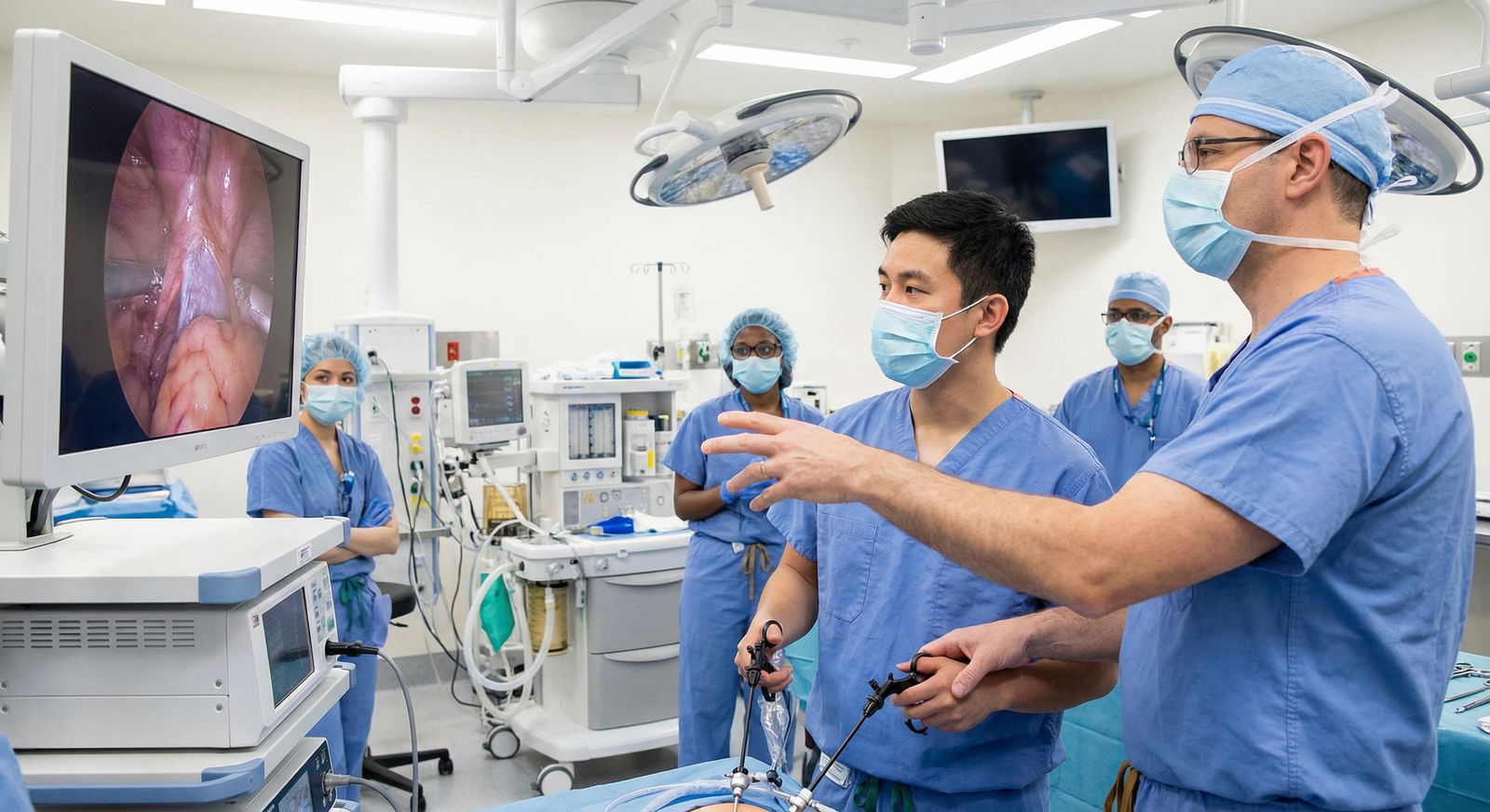
General Surgery is fundamentally an apprenticeship. The structure and content of a program’s curriculum will shape how quickly and safely you progress from intern to independent surgeon.
Operative Volume and Case Mix
Review and compare:
- Case numbers by PGY year
- Are interns getting meaningful OR experience, or mostly scut work and floor calls?
- Can senior residents log more than the minimum case numbers required by the ABS?
- Breadth of exposure
Ensure the curriculum includes:- Emergency general surgery and trauma
- Oncologic resections
- Endoscopy (EGD, colonoscopy) if important to you
- Minimally invasive and/or robotic surgery
- ICU and complex perioperative management
- Level of autonomy
Ask current residents:- Do senior residents commonly act as primary surgeon under supervision?
- Are there “chief-only” services where chiefs run the service and lead complex cases?
Rotation Design and Educational Structure
Key elements to explore:
- Rotation mix and settings
- How many rotations are at the main academic hospital vs. VA vs. community affiliates?
- Is there exposure to rural or resource-limited settings if that aligns with your interests?
- Didactics and simulation
- Is there protected time for conferences and teaching?
- Are there simulation labs for laparoscopic, endoscopic, and open techniques?
- Does the program use a defined skills curriculum (e.g., FLS, FES, robotics training)?
- Trauma and ICU exposure
- Level I vs. Level II trauma center status.
- How much time is spent in surgical ICU as a resident?
- Are residents integral to critical care decision-making?
Research Time and Academic Pathways
For those interested in academic surgery or competitive fellowships:
- Research infrastructure
- Is there a dedicated research year or two? Is it optional or required?
- What kind of support exists: protected time, mentors, grants, biostatistics support?
- Track records
- How many publications, presentations, and grants do residents typically achieve?
- Are residents presenting at major meetings (ACS, SAGES, EAST, etc.)?
A program with a balanced, well-structured curriculum ensures you graduate both competent and confident—whether you head into community general surgery or subspecialty fellowship.
3. Mentorship in Medicine and Faculty Support
Mentorship in Medicine is particularly critical in surgical fields. Effective mentors help shape your clinical skills, research portfolio, and long-term career development.
Types of Mentorship to Seek
- Clinical mentors
Attendings who:- Give you real responsibility in the OR and on the wards.
- Provide constructive, timely feedback.
- Model professionalism and patient-centered care.
- Career and academic mentors
Faculty who:- Help you plan fellowships, jobs, and academic pathways.
- Connect you with opportunities (committees, research projects, leadership roles).
- Near-peer mentors
Senior residents and fellows who:- Help with day-to-day survival (workflow, efficiency, exam preparation).
- Provide honest, practical advice about the program and specialty.
How to Assess Mentorship During the Interview Process
During interviews, specifically probe:
- Ask residents:
- “How easy is it to find mentors here?”
- “Do faculty actively advocate for residents when applying to fellowships or jobs?”
- Ask faculty:
- “How do you support residents interested in academic surgery or specific subspecialties?”
- “Are there formal mentorship pairings or is it more informal?”
Also look at:
- Faculty engagement
- Are attendings present at conferences and M&M?
- Are they approachable in person, or do residents describe a hierarchy that feels rigid or intimidating?
- Surgical Training philosophy
- Programs that explicitly emphasize resident education (rather than service) often have faculty who see themselves as educators, not just supervisors.
Strong mentorship is a powerful predictor of satisfaction and success in General Surgery residency.
4. Workload, Wellness, and Program Culture
General Surgery is intense. A healthy program culture can make the difference between being challenged and being crushed.
Duty Hours, Call, and Support
While all accredited programs must follow ACGME duty hour rules, the lived experience can differ:
- Typical weekly workload
- Ask for realistic estimates (e.g., “On average, what are your hours on trauma, ICU, or night float?”).
- Call structure
- In-house vs. home call, night float vs. 24-hour calls.
- How often you’ll work weekends and holidays.
- Ancillary and system support
- Are there scribes, APPs, or hospitalists to offload some tasks?
- Is the EMR reasonably efficient, or does it create excessive after-hours documentation?
Wellness and Work–Life Integration
Wellness initiatives matter more in high-intensity specialties:
- Formal wellness resources
- Confidential mental health services and counseling.
- Wellness stipends or time off for medical/dental appointments.
- Program attitudes
- How do residents describe leadership’s response to burnout concerns?
- Do people take vacations without guilt or retaliation?
- Leave policies
- Clear, humane policies for parental leave, medical leave, and emergencies.
Program Culture and Professional Climate
Culture determines whether you feel like part of a team or just a cog in a machine.
- Teamwork and collegiality
- Are residents supportive of one another, or is there a competitive or toxic vibe?
- How do residents interact with nursing, anesthesia, and other services?
- Psychological safety
- Can residents admit uncertainty or mistakes without fear of humiliation?
- Are M&M conferences constructive or punitive?
- Diversity, equity, and inclusion
- Representation among residents and faculty (gender, race/ethnicity, backgrounds).
- Active efforts to foster inclusion and address bias or harassment.
Ask, “If you had to choose again, would you pick this program?” The honesty of that answer is often very revealing.
5. Location, Lifestyle, and Personal Fit
Residency is long. Where you live and how you live during these years will affect not only your happiness but also your ability to perform at your best.
Geographic and Lifestyle Considerations
Consider:
- Urban vs. suburban vs. rural
- Urban centers: high acuity, diverse pathology; busier lifestyle, potentially higher cost.
- Smaller cities or rural locations: closer-knit communities, possibly more autonomy at smaller hospitals, but fewer amenities.
- Cost of living
- Compare resident salaries with housing and transportation costs.
- Ask about call rooms, parking, and meals during call.
- Support system
- Proximity to family or close friends.
- Community or cultural groups that matter to you.
Fit with Your Personal Life and Goals
Reflect honestly on:
- Your tolerance for weather extremes.
- Your partner’s/job needs, if applicable.
- Whether you might want to stay in that geographic region long term (for post-residency jobs).
A slightly less “prestigious” program in a location where you can see yourself thriving may be a better choice than a famous program in a city that feels isolating or unsustainable for you.
6. Research, Fellowship Outcomes, and Career Development
A strong General Surgery Residency Guide would be incomplete without addressing what comes after residency: fellowships and jobs. Your program choice can influence these trajectories significantly.

Research Opportunities and Academic Pathways
If academic surgery or competitive subspecialty fellowships are on your radar:
- Research expectations
- Are residents expected to produce research? How many projects per year is typical?
- Are projects meaningful and publishable, or mostly low-impact retrospective reviews?
- Protected time
- Do residents have genuine protected research blocks?
- Is dedicated research time optional vs. mandated for all?
- Mentor availability
- Are there established, productive research mentors in your areas of interest (e.g., oncology, trauma, outcomes research, basic science)?
Ask programs for concrete examples of resident projects and where they were presented or published.
Fellowship Match Rates and Patterns
If a fellowship is in your future, pay close attention to:
- Match statistics
- Where have recent graduates gone? Which subspecialties?
- Are graduates matching into programs you’d be excited to attend?
- Support for applications
- Formal fellowship advising, mock interviews, and personal statement guidance.
- Faculty who will actively call program directors on your behalf.
- Alignment with your goals
- If you’re aiming for pediatric surgery or surgical oncology, have prior residents successfully matched into those highly competitive fields?
Even if you are currently unsure about fellowship, choosing a program with solid fellowship outcomes keeps more doors open.
Community Connections and Outreach
Programs deeply engaged with their communities often provide richer training and professional satisfaction:
- Community outreach
- Free clinics, health fairs, surgical mission trips (domestic or international).
- Trauma prevention or public education initiatives.
- Patient population
- Diverse socioeconomic and cultural backgrounds that broaden your clinical perspective.
- Safety-net hospitals that expose you to complex, advanced disease and systems-level challenges.
These experiences build not only clinical skill but also a sense of purpose and responsibility as a physician.
Alumni Network and Long-Term Career Development
A robust alumni network is an underappreciated asset in surgical training.
- Where alumni end up
- Are they in academic leadership, high-volume community practices, or prestigious fellowships?
- Do their career paths align with what you hope for yourself?
- Ongoing engagement
- Does the department host alumni events or mentorship programs?
- Are alumni accessible for career advice and job leads?
Graduating from a program that actively supports your career for years after you leave can make transitions to fellowship and faculty positions far smoother.
Putting It All Together: How to Decide Between Programs
When you reach the stage of building your rank list, you may find that several programs look similar on paper. A systematic approach can help:
Define your top 3–5 priorities
Examples:- “High operative volume and early autonomy”
- “Strong mentorship in trauma/critical care”
- “Location near family with reasonable lifestyle”
- “Dedicated research time and strong fellowship outcomes”
Score each program on these priorities
Create a simple spreadsheet where you rate each program (e.g., 1–5) on your priorities plus secondary factors (wellness, diversity, cost of living).Weigh first-hand experiences heavily
Your impressions from:- Pre-interview socials
- Interview day interactions
- Post-interview conversations with residents
Trust your gut—but verify
If a program “feels” right, make sure the key structural elements (case volume, mentorship, outcomes) support that feeling.Seek advice from trusted mentors
Ask mentors who know you well whether your list seems aligned with your goals and strengths. They may highlight blind spots or confirm your instincts.
FAQs: Choosing a General Surgery Residency
1. How long is a General Surgery residency, and are research years included?
Most categorical General Surgery residency programs are five clinical years, with some offering or requiring one to two additional research years, making the total 5–7 years. Research years typically occur after the second or third clinical year and may be optional or built into an “academic track,” depending on the program.
2. How competitive is General Surgery, and what strengthens my application?
General Surgery is moderately to highly competitive, especially at academic and high-volume programs. Strong candidates often have:
- Solid USMLE/COMLEX scores and clerkship performance
- Enthusiastic, detailed letters of recommendation from surgeons
- Evidence of commitment to surgery (sub-internships, electives, interest group involvement)
- Some research experience, especially if aiming for academic or competitive fellowship tracks
- Professionalism, resilience, and strong communication skills demonstrated during interviews and rotations
3. Is research mandatory to match into a good General Surgery program?
Research is not absolutely required to match into General Surgery, but it is increasingly common and can significantly strengthen your application—particularly for academic programs and those with strong fellowship pipelines. Even a few well-executed projects or case reports with posters or publications can demonstrate curiosity, follow-through, and familiarity with scholarly work.
4. What skills should I focus on developing during General Surgery residency?
Beyond operative technique, you should focus on:
- Clinical decision-making in acute and complex surgical conditions
- Perioperative management of critically ill and high-acuity patients
- Communication skills with patients, families, consultants, and multidisciplinary teams
- Leadership and teamwork, especially as you become a chief resident
- Time management and efficiency to handle OR, floor, clinic, and documentation demands
- Resilience and self-care, to maintain performance and prevent burnout
These skills are as critical as your ability to suture or dissect.
5. Can I switch General Surgery residency programs once I start?
Switching programs is possible but logistically difficult. It generally requires:
- Open positions at another program (often due to attrition)
- Strong support from your current program leadership
- A formal application and interview process at the new institution
Transfers are most successful when there are clear, compelling reasons (e.g., family relocation, severe mismatch of training goals) and when performance at the original program has been strong. Because switching is uncertain and disruptive, it is far better to choose carefully from the outset.
Choosing your General Surgery residency is about far more than prestige. It is about finding an environment where you can operate, think, lead, and grow—supported by mentorship in medicine, a healthy culture, and career development pathways that match your aspirations. Invest the time now to research, reflect, and ask hard questions; your future surgical career will be built on the foundation you choose today.